
3,553 views ·
15 replies
4k views
15 replies
Wall mount on plastered Woodwool.
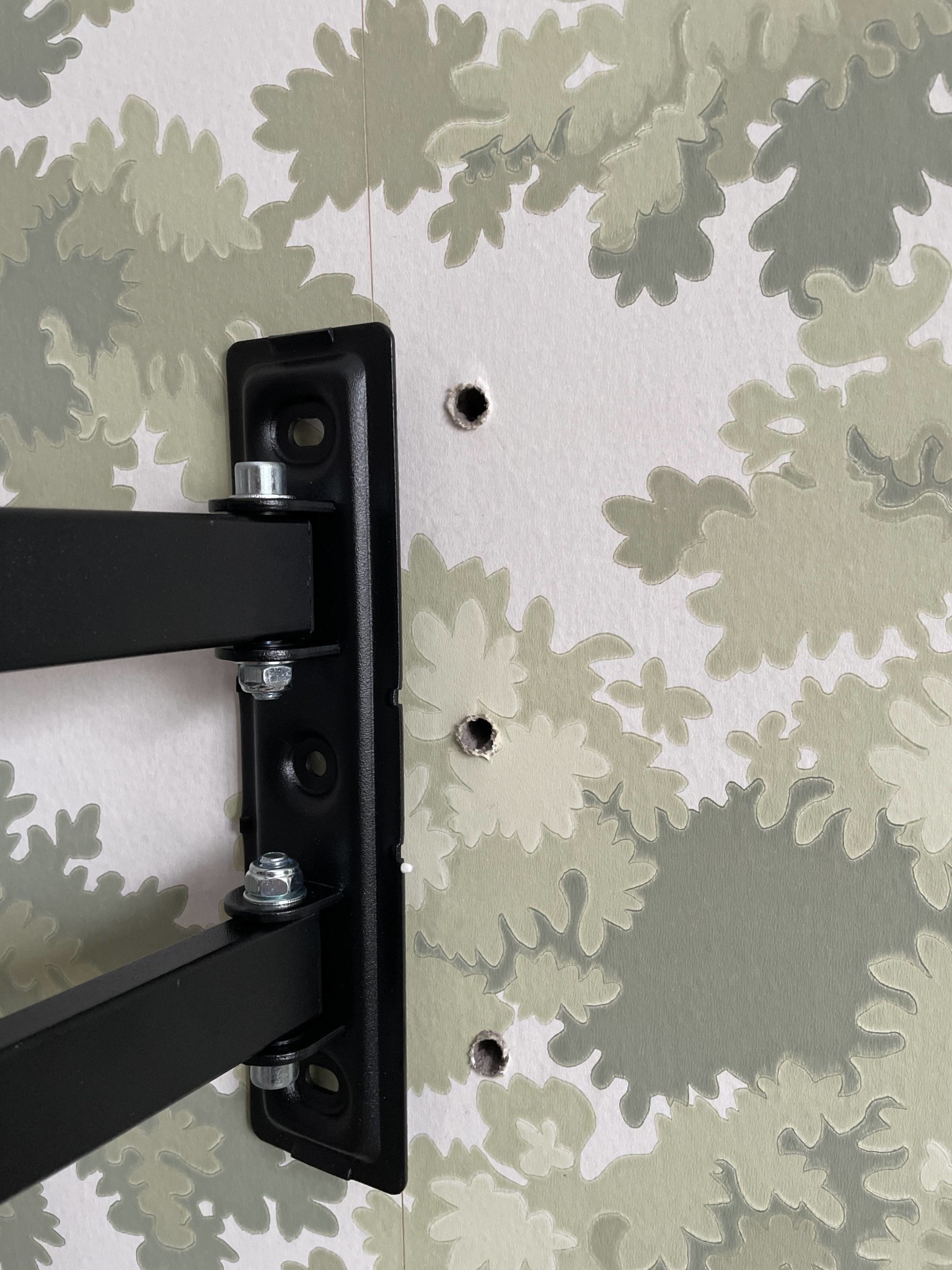
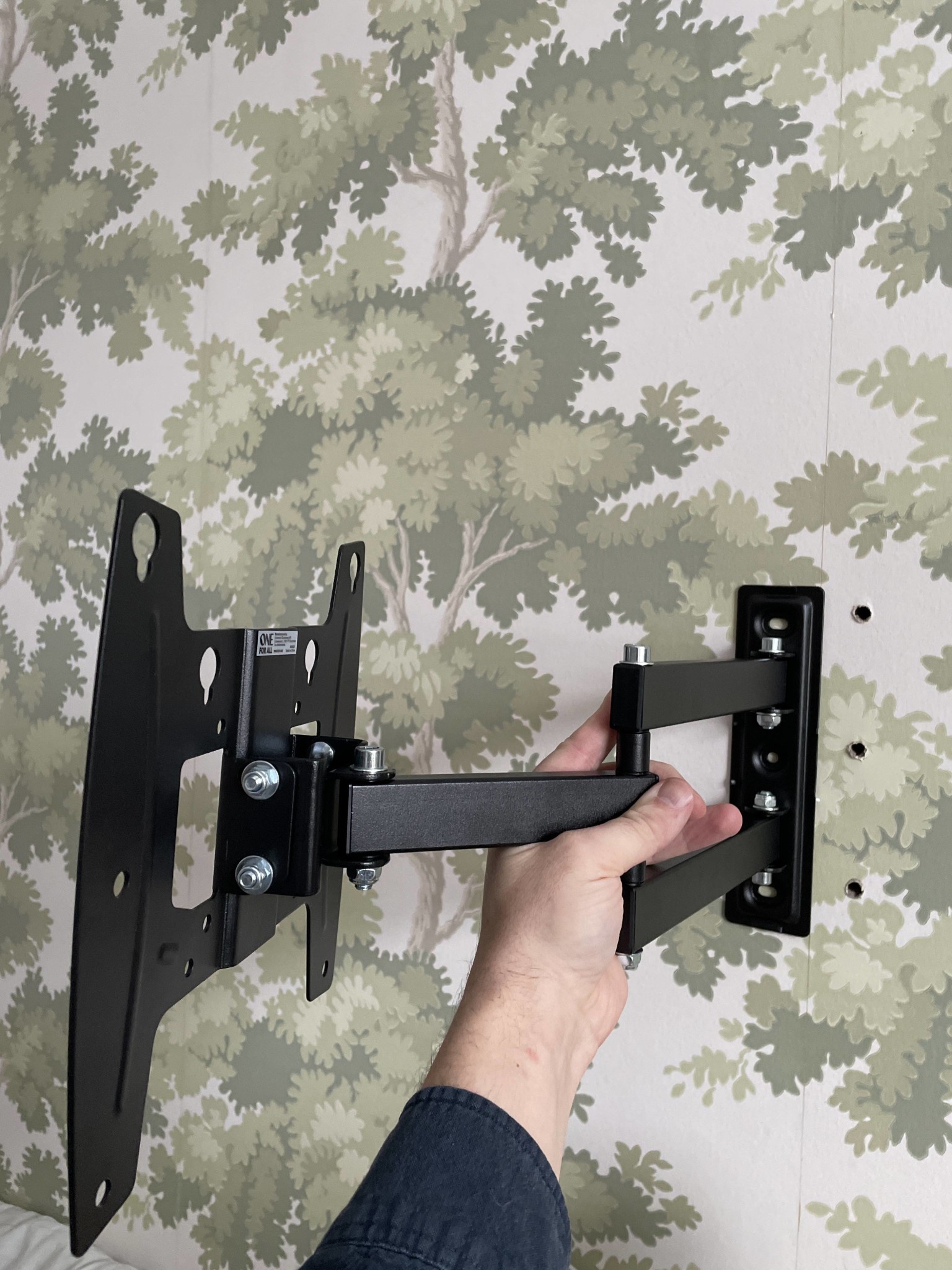
The teenager wants a TV by the bed. Since the TV has to necessarily be placed along the wall where the TV needs to be (according to both the teenager and myself), a TV and wall mount for the purpose have been acquired. The wall mount allows the TV to be angled out from the wall 90 degrees on an arm. In other words, there will be a certain moment on the mounting even though it is a very light, small TV. And a teenager who will be pulling the TV out and in daily.
The wall consists of plastered Träullit on lightweight concrete. Plaster and Träullit are over a decimeter before the lightweight concrete begins. So now to the actual question; how do I best secure it?
The recommendation for stone walls is three vertical holes with accompanying plugs and screws (ST6.3x55 in plug 10x50). This doesn't feel reliable in this case.
All suggestions are welcome.
The wall consists of plastered Träullit on lightweight concrete. Plaster and Träullit are over a decimeter before the lightweight concrete begins. So now to the actual question; how do I best secure it?
The recommendation for stone walls is three vertical holes with accompanying plugs and screws (ST6.3x55 in plug 10x50). This doesn't feel reliable in this case.
All suggestions are welcome.
Chem-anchors & threaded rod, then washer and nut on thatD Drutten2000 said:The teenager wants a TV by the bed. Since the TV is along the wall where the TV necessarily has to be (according to both the teenager and myself), a TV and wall mount for the purpose have been acquired. The wall mount allows the TV to now be angled out from the wall 90 degrees on an arm. In other words, there will be a certain torque on the mount even though it's a very light small TV. And a teenager who will pull the TV out and in daily. The wall consists of plastered Träullit on light concrete. Plaster and Träullit are about a decimeter before the light concrete begins. So now to the question itself; how do I best attach it?
The recommendation for stone walls is three vertical holes with accompanying plugs and screws (ST6.3x55 in plug 10x50). It doesn't feel reliable in this case.
All suggestions are welcome.


As stated, put a nut and washer on the threaded rod behind the bracket, with the washer aligned with the edges and a washer and nut outside the bracket. If you tighten towards the träulliten, it will crunch and everything will go into the wall.
I got so restless that I went to a larger hardware store to buy anchor fixings and some suitable tools. I wanted to confirm my excellent solution with the boss of screws and plugs himself. He didn't want to sell me any of it; he said my wall was crap and that I should buy a suitable piece of furniture instead. So I left empty-handed and a bit deflated.
But now you're advising me to do exactly what I was thinking, which of course changes everything. May I ask how confident you are with this? The screw and plug boss's hope died entirely when I described that the wall mount is an arm that will be pulled. He insists that it will eventually give way.
But now you're advising me to do exactly what I was thinking, which of course changes everything. May I ask how confident you are with this? The screw and plug boss's hope died entirely when I described that the wall mount is an arm that will be pulled. He insists that it will eventually give way.
Suitable piece of furniture?D Drutten2000 said:I became so restless that I went to a larger hardware store to buy anchor fix and some suitable tools. I wanted to confirm my excellent solution with the very boss of screws and plugs. He didn't want to sell any of it to me; he said my wall was crap and that I should buy a suitable piece of furniture instead. So I left empty-handed and a little dejected. But now you're advising me to do exactly what I had in mind, which of course changes everything. Can I ask how confident you are with this? The boss of screws and plugs completely lost hope when I described that the wall mount is an arm that will be pulled on. He claims that it will eventually give way.
No offense to the screws and plugs boss you mention, but it sounds more like he doesn't know anything and wants to free himself from liability in case it doesn't work. In my opinion, this is a common problem today around hardware stores, especially the big wholesalers. MY opinion, of course (though after spending hours and hours in the aforementioned stores).
You could mount a board or something behind the mount to distribute the pressure/enable more attachment points.

If you're not supposed to compress the wood wool, there must be spacers against the wall, and then three mounts are not enough, a plate about 400x400 with three mounts at the top and three mounts at the bottom is required. It's quite a strong pressure when a TV is pulled out, a bit tricky but it can be assembled.
You're onto something. It's not a basement wall. I assumed it was Träullit behind the plaster because I've revised the basement walls several times. But in hindsight, I'm not sure it's Träullit on the outer walls as well. I was surprised when I pushed into the wall and it just collapsed. Cursed to myself about damn Träullit but if you mean it was only used on basement walls, then I suddenly became very uncertain. It's definitely porous. I'll need to investigate it further. There are some sockets and air inlets where I might get a better view.J jonaserik said:
A bit like that. I suggested a board. Thought along the same lines and maybe even glue up the board. Then he referred me to the guys at the Glue department, but I decided to wait. Would have preferred to avoid a board, but it is certainly worth considering if nothing else works.P Pumabjörnen said:Suitable furniture?
No offense against the screw and plug boss you mentioned, but it sounds more like he doesn't know anything and wants to distance himself in case it doesn't work. In my opinion, this is a common problem today around the building supply stores, especially the big wholesale stores. MY opinion, of course (though after spending hours and hours in the aforementioned stores).
You could mount a board or something behind the bracket that spreads the pressure/allows for more attachment points.
I had 7 cm to the foundation wall, 5 cm träulit, and 2 cm plaster. Mounted some heavier items in my garage. Cut distance tubes to size. Thick-walled plastic tubes can be purchased to cut yourself. Drilled about 170 mm in, 10 mm plugs 100 mm long. Made the hole in the plaster/träulit larger with a knife, inserted the plug into the wall, then the tube, 150 mm long 6 mm screw. NOTE!! For plastic plugs, you must not use a screw with a drill tip or cutting thread. If the hole of the tube is equal to or larger than the plug, first place a washer with a smaller hole so that the plug doesn't slip out when tightening.
That sounded solid and well thought out! Was the foundation wall lightweight concrete? If so, was there a specific type of plug you used? The gentleman in the store (who was actually both nice and seemingly knowledgeable if I gave any other impression) mentioned that he wouldn't have been able to recommend plug and screw even without the träulit if the attachment was in lightweight concrete.Isakare said:
I had 7 cm to the foundation wall, 5 cm täulit, and 2 cm plaster.
Mounted some heavier stuff in my garage.
Cut spacers. You can buy thick-walled plastic pipes to cut to size yourself. Drilled about 170 in, 10 mm plug 100 long.
Made the hole in the plaster/täulit larger with a knife, inserted the plug into the wall, then the pipe, 150 long 6 mm screw.
NOTE! For plastic plugs, you must not use screws with a drill bit or cutting thread.
If the hole in the pipe is the same size or larger than the plug, you should add a washer with a smaller hole first, so the plug doesn't slip out when tightened.