
61,406 views ·
127 replies
61k views
127 replies
Why did the ceiling sink, took down interior wall
Another question regarding a load-bearing wall, I'm in the process of taking down the wall between the kitchen and living room. I and several others assessed the wall as non-load-bearing. The house is a Gullringshus from 1966. The wall is longitudinal with the roof ridge. The distance between the outer walls is 7.4m. The only walls I can find marked as load-bearing in the drawings are the basement walls.
I have truss roofs, and the studs in the wall were, in my assessment, very weak, 50x35mm. Also, the distance between the studs was over 100 cm in one place, none of the studs were centered with the floor joist. The wall was between 2 door openings and ends with an opening of 4 m.
During demolition, there was pressure on the last stud closest to the outer wall, but when sawing, the stud cracked easily, and the roof dropped about 10 mm... the roof is now supported back to the height before demolition. So my question is, did the wall have a load-bearing function, or is it normal for the roof to sink somewhat over time?
I have truss roofs, and the studs in the wall were, in my assessment, very weak, 50x35mm. Also, the distance between the studs was over 100 cm in one place, none of the studs were centered with the floor joist. The wall was between 2 door openings and ends with an opening of 4 m.
During demolition, there was pressure on the last stud closest to the outer wall, but when sawing, the stud cracked easily, and the roof dropped about 10 mm... the roof is now supported back to the height before demolition. So my question is, did the wall have a load-bearing function, or is it normal for the roof to sink somewhat over time?
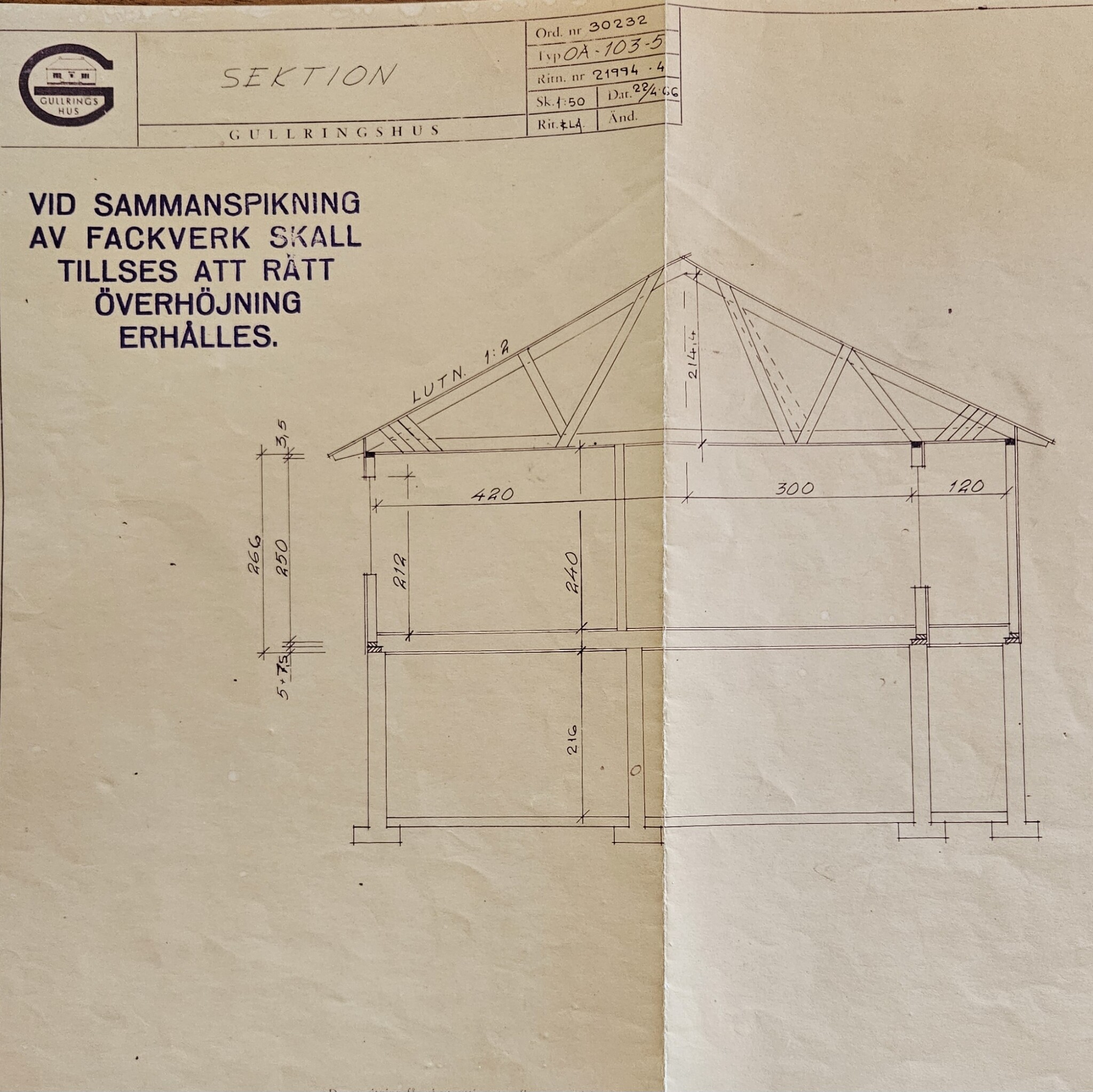
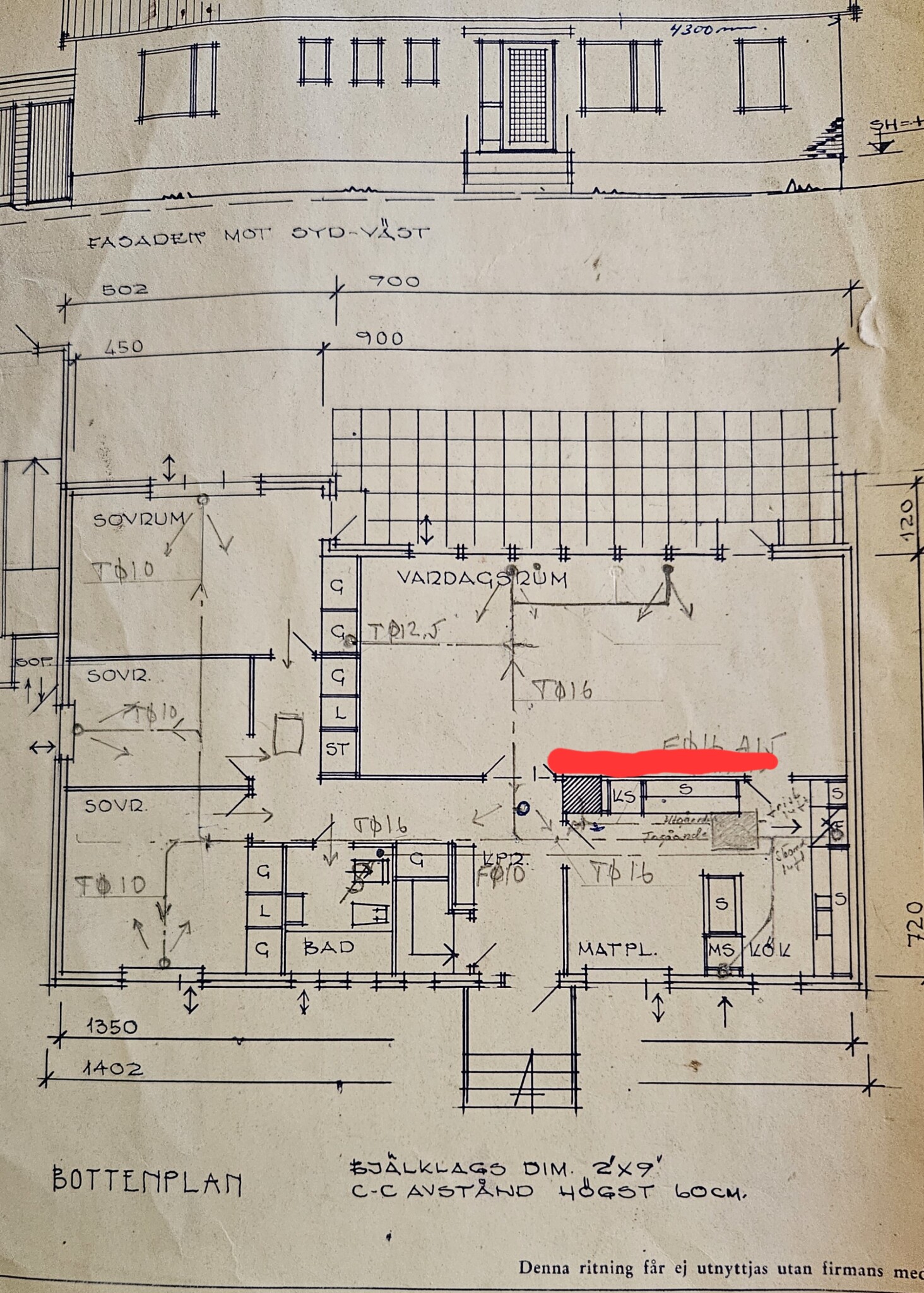

The only thing I can contribute is that if you removed the wall and the ceiling sank, you've removed a load-bearing wall. Something normally settling due to age doesn't happen by chance at the same time as you demolish the wall.

Homeowner
· Småländska höglandet
· 5 091 posts
The wall you have torn down is marked on the sectional drawing (the one with the house cross-section seen from the gable) and usually only load-bearing walls are. Now, the relevant wall is not entirely aligned with the heart wall/wall in the basement, but it is still something that makes one a little concerned.

Ossian K Olsson
Hobby electrician
· Limhamn
· 1 968 posts
Ossian K Olsson
Hobby electrician
- Limhamn
- 1,968 posts
I live in a similar house (LB), and several neighbors have removed the corresponding wall. That the roof sags isn't so strange when the span becomes longer. It doesn't necessarily mean the wall is load-bearing.G Gullringen said:Another question about load-bearing walls, I'm in the process of taking down the wall between the kitchen and the living room. I and several others assessed the wall as non-load-bearing. The house is a Gullringshus from 1966. The wall runs parallel with the roof ridge. Distance between exterior walls is 7.4m. The only walls I can find marked as load-bearing in the drawings are the basement walls.
I have truss rafters, and the studs in the wall were, in my assessment, very weak, 50x35mm. The distance between the studs was over 100 cm in one place, none of the studs were centered with floor joists. The wall was between 2 door openings and ends with an opening of 4 m.
During demolition, pressure had been applied to the last stud closest to the exterior wall, but when sawing, the stud was easily snapped, and the roof dropped about 10 mm.. the roof is now propped up to the height before demolition. So my question is, did the wall have a load-bearing function, or is it normal for the roof to sink somewhat over time?
So you mean that the sectional drawing shows a non-load-bearing wall in TS's case?
Ossian K Olsson
Hobby electrician
· Limhamn
· 1 968 posts
Ossian K Olsson
Hobby electrician
- Limhamn
- 1,968 posts
I'm really not saying anything at all. More than that it's quite possible that it actually isn't!J Jansson69 said:
That said, things may have changed since the houses were built. For example, opening up for windows or similar and thus altered the load-bearing capacity in different ways.

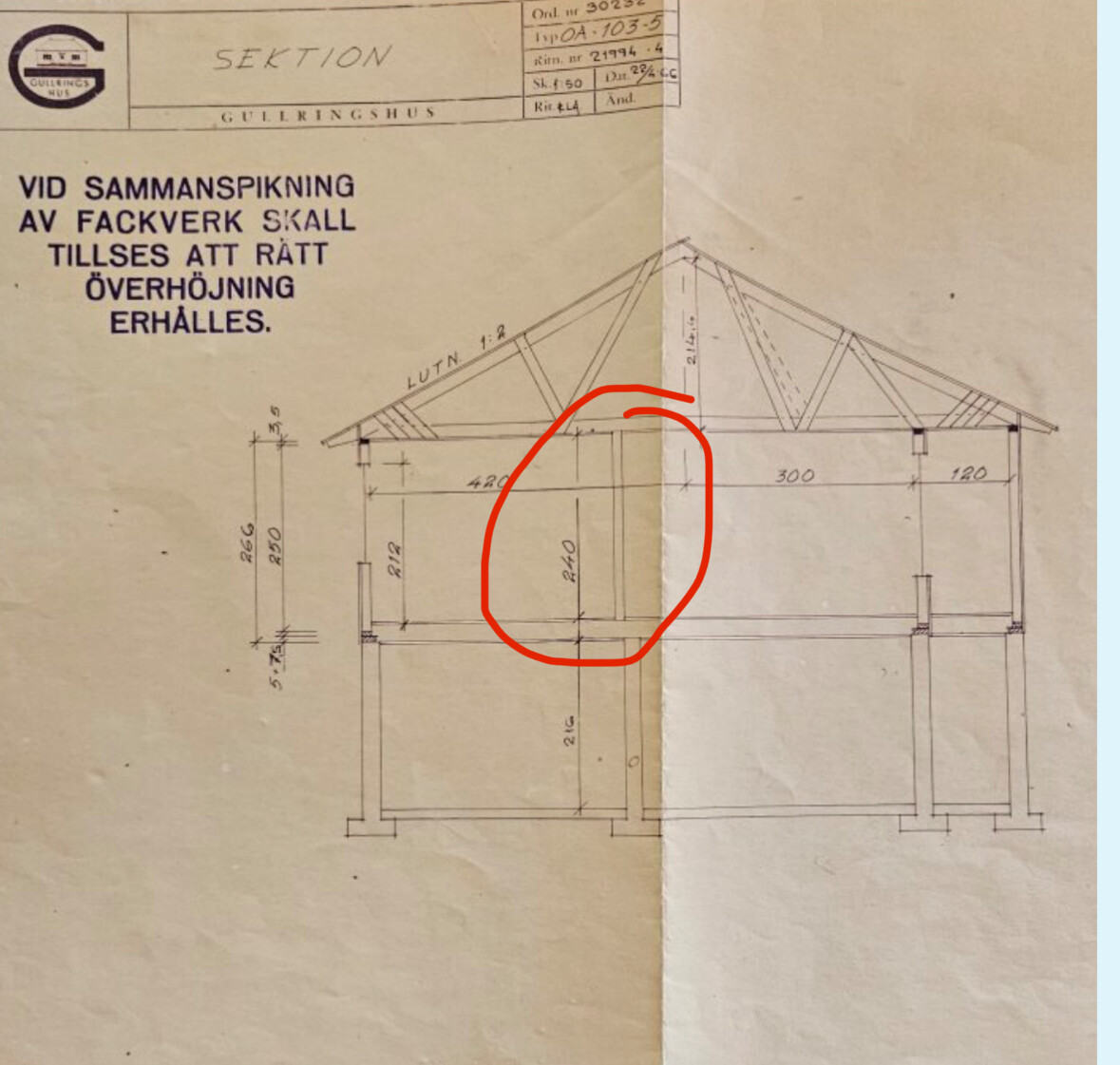

Besides the wall being drawn on the section drawing, I note that the roof trusses are asymmetrical. Which would be a bit strange if they were supposed to be self-supporting over the entire span between the outer walls.
The outer wall is 1.20m further out in the bedroom section than it is in the living room.C cpalm said:
Earlier you wrote, “I live in a similar house (LB) and there are several neighbors who have removed the corresponding wall. It's not so strange if the roof comes down since the span becomes longer. It doesn't necessarily mean that the wall is load-bearing.”
And now you're saying nothing at all?
According to the drawings, it strongly appears to be load-bearing as it has been included in a sectional drawing..
But what do I know, maybe you have enough knowledge since your neighbors have removed their walls in their houses!


Ossian K Olsson
Hobby electrician
· Limhamn
· 1 968 posts
Ossian K Olsson
Hobby electrician
- Limhamn
- 1,968 posts
J Jansson69 said:You previously wrote, "I live in a similar house (LB) and several neighbors have removed the equivalent wall. That the roof sags is not so strange since the span becomes longer. It doesn't have to mean that the wall is load-bearing."
And now you say nothing at all?
According to the drawings, it strongly appears to be load-bearing as it has been included in a section drawing..
But what do I know, you might have enough knowledge given that your neighbors have removed their walls in their houses!
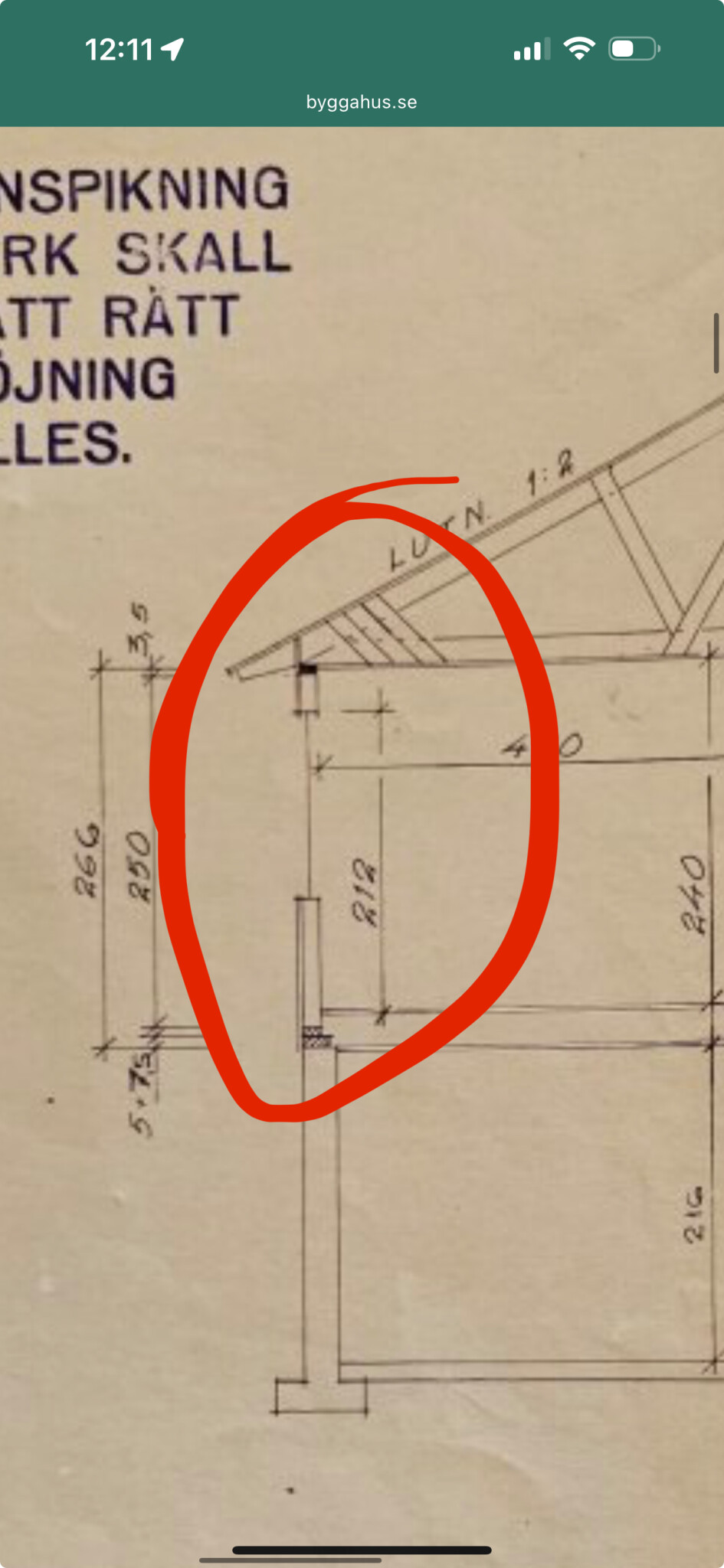
Yes, but according to the same drawing, no exterior wall is needed either because the roof is flying in the air!
You, however, seem to be an expert who has an incredibly clear picture of how it is thanks to a post on a forum. Maybe you should become a structural engineer?
You're circling the external wall!
Maybe you shouldn't write on these matters since you can't interpret drawings, it's a recommendation for your own sake so that you don't embarrass yourself further!