
6,393 views ·
28 replies
6k views
28 replies
Why do walls and floors "mold" in the basement?
About 2 years ago, I renovated a room in the basement. The walls were plastered so I scraped off paint (the plaster fell off easily), replastered the walls, painted with primer and then paint. I scraped loose paint off the floor as well as I could, treated it with primer and painted it. I bought primer and paint from Flügger and did everything carefully, so it should be well and properly done.
But in the past six months, mold-like growth has appeared on the floor and one wall. It started to bubble up a little on one wall, then white foam bubbles appeared on the floor, and today, to my horror, I saw that a very large part of that wall has developed fluff that has broken through the paint.
Initially, when the problem appeared, I thought it was due to a lack of ventilation because we had a month where we had closed off existing ventilation, but it took a while before our FTX was in place. But even after the FTX was installed six months ago, the problem has continued to grow.
What is causing this and what should I do?
But in the past six months, mold-like growth has appeared on the floor and one wall. It started to bubble up a little on one wall, then white foam bubbles appeared on the floor, and today, to my horror, I saw that a very large part of that wall has developed fluff that has broken through the paint.
Initially, when the problem appeared, I thought it was due to a lack of ventilation because we had a month where we had closed off existing ventilation, but it took a while before our FTX was in place. But even after the FTX was installed six months ago, the problem has continued to grow.
What is causing this and what should I do?
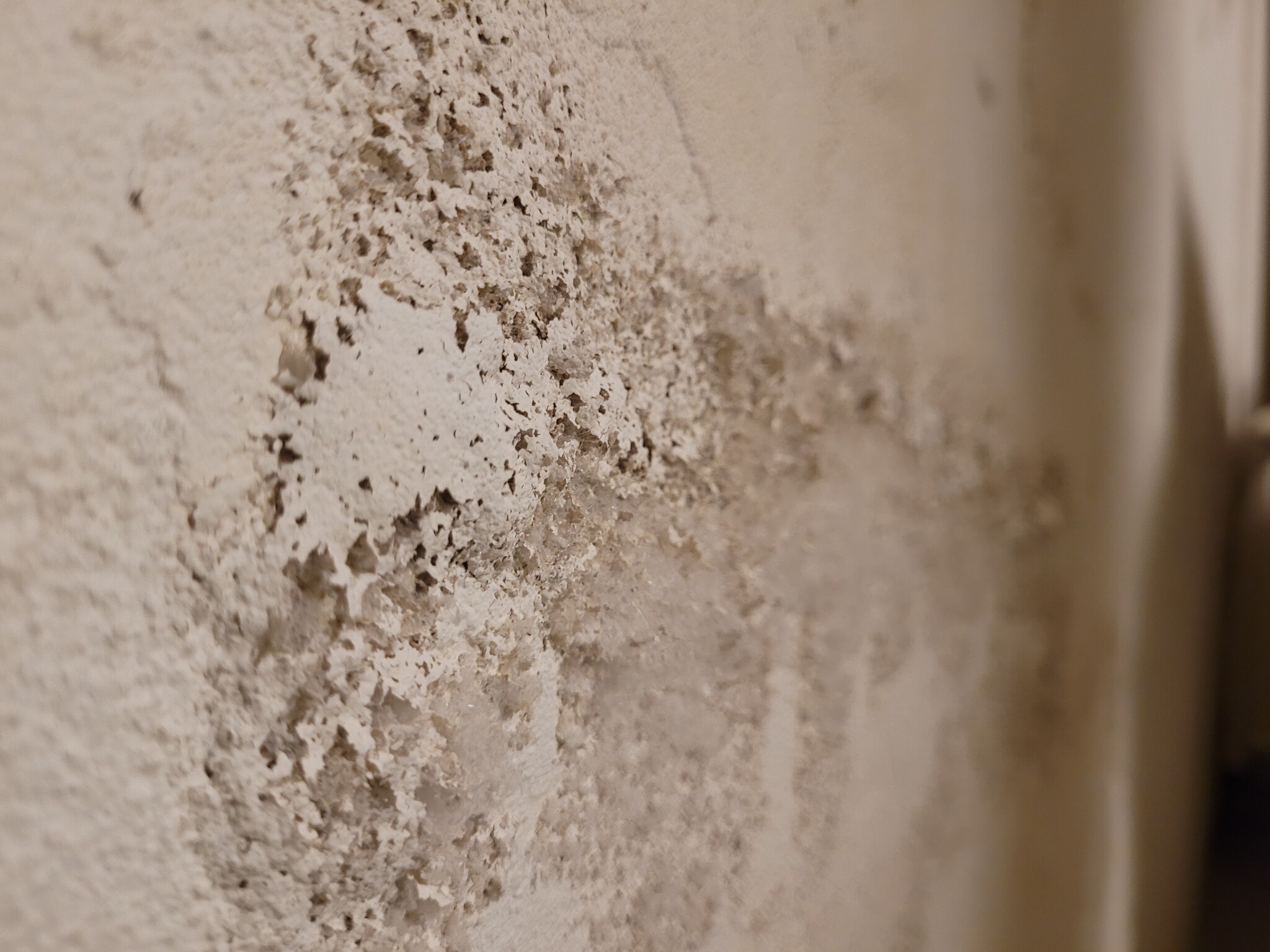
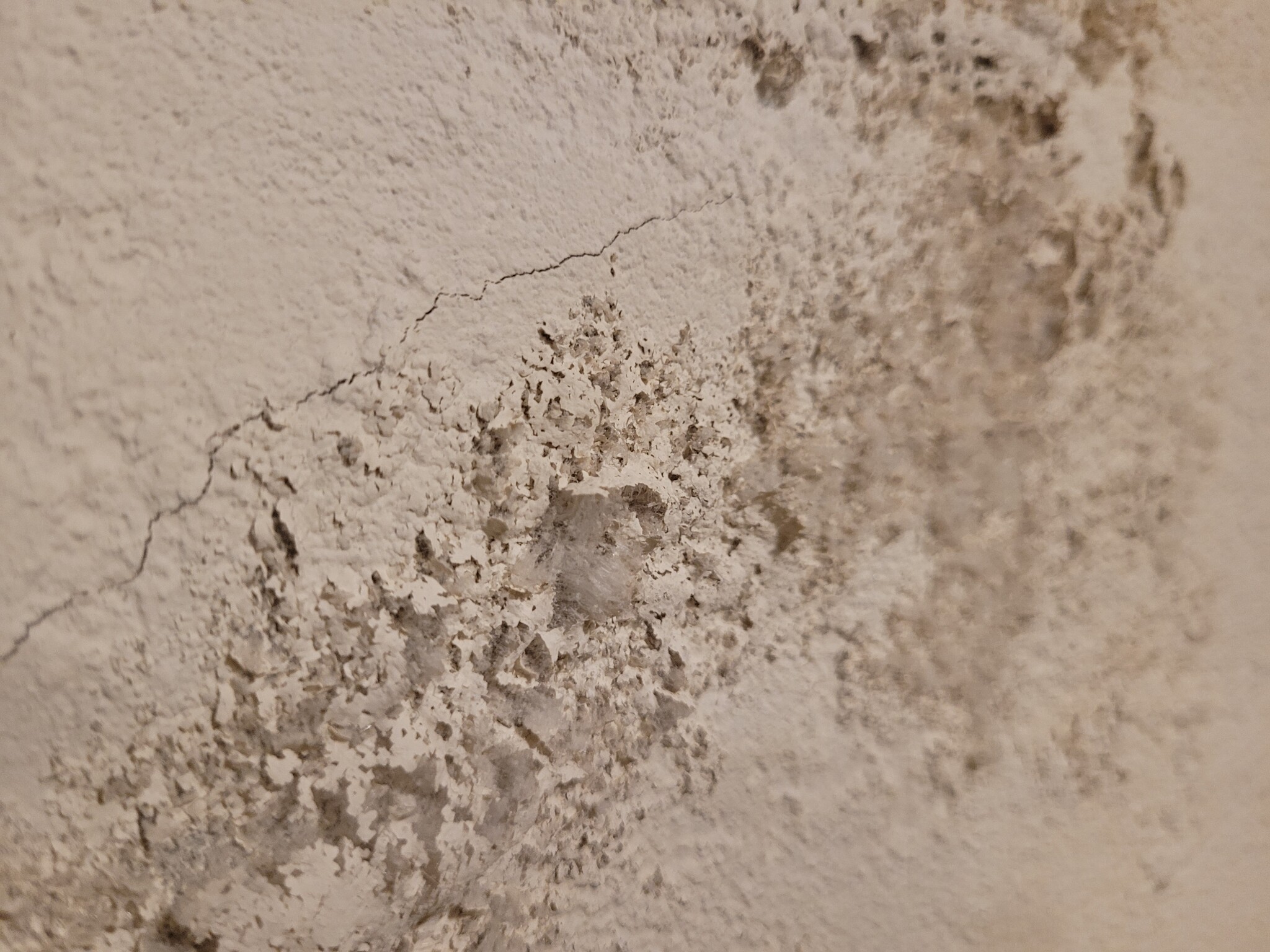
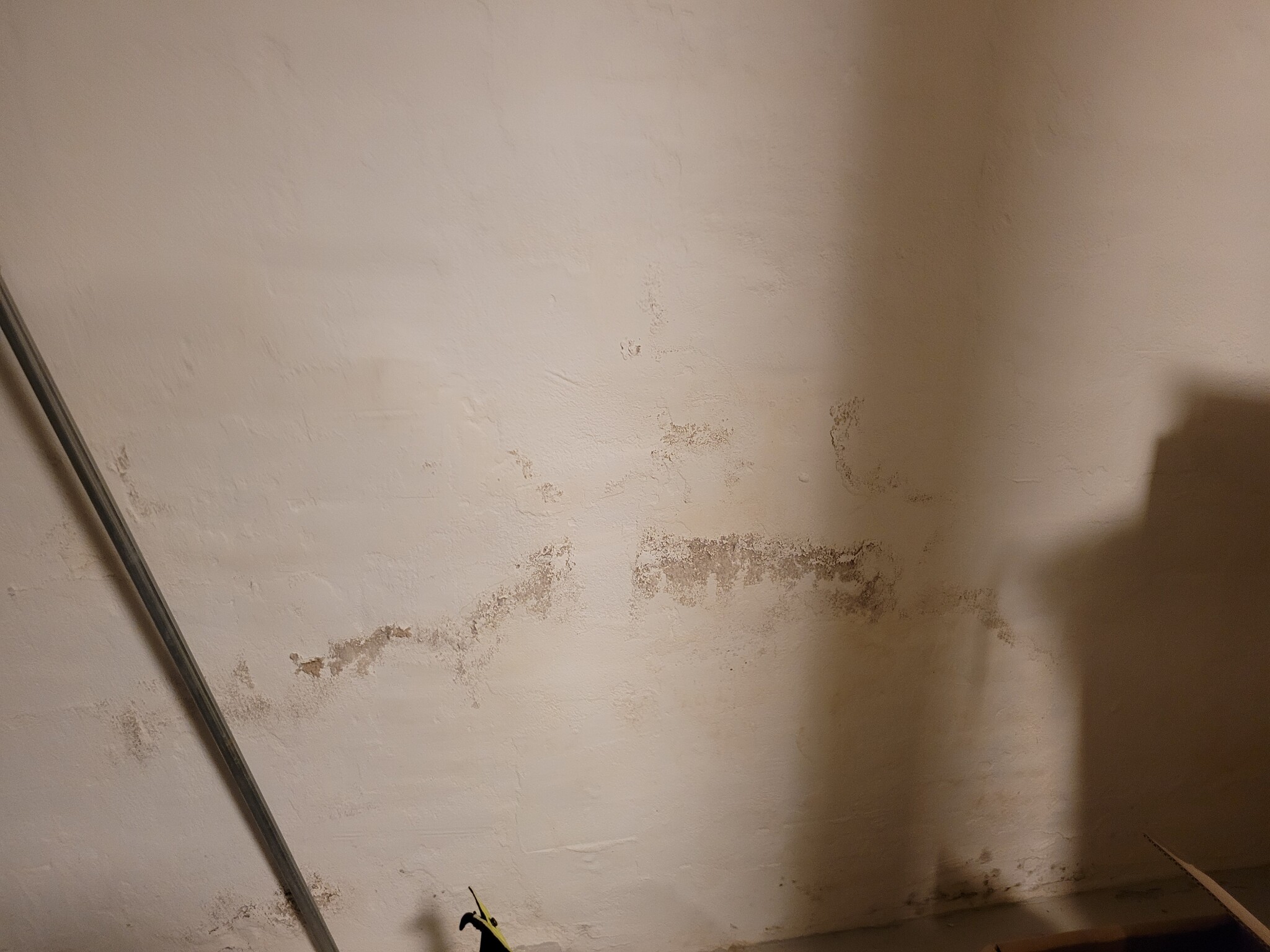
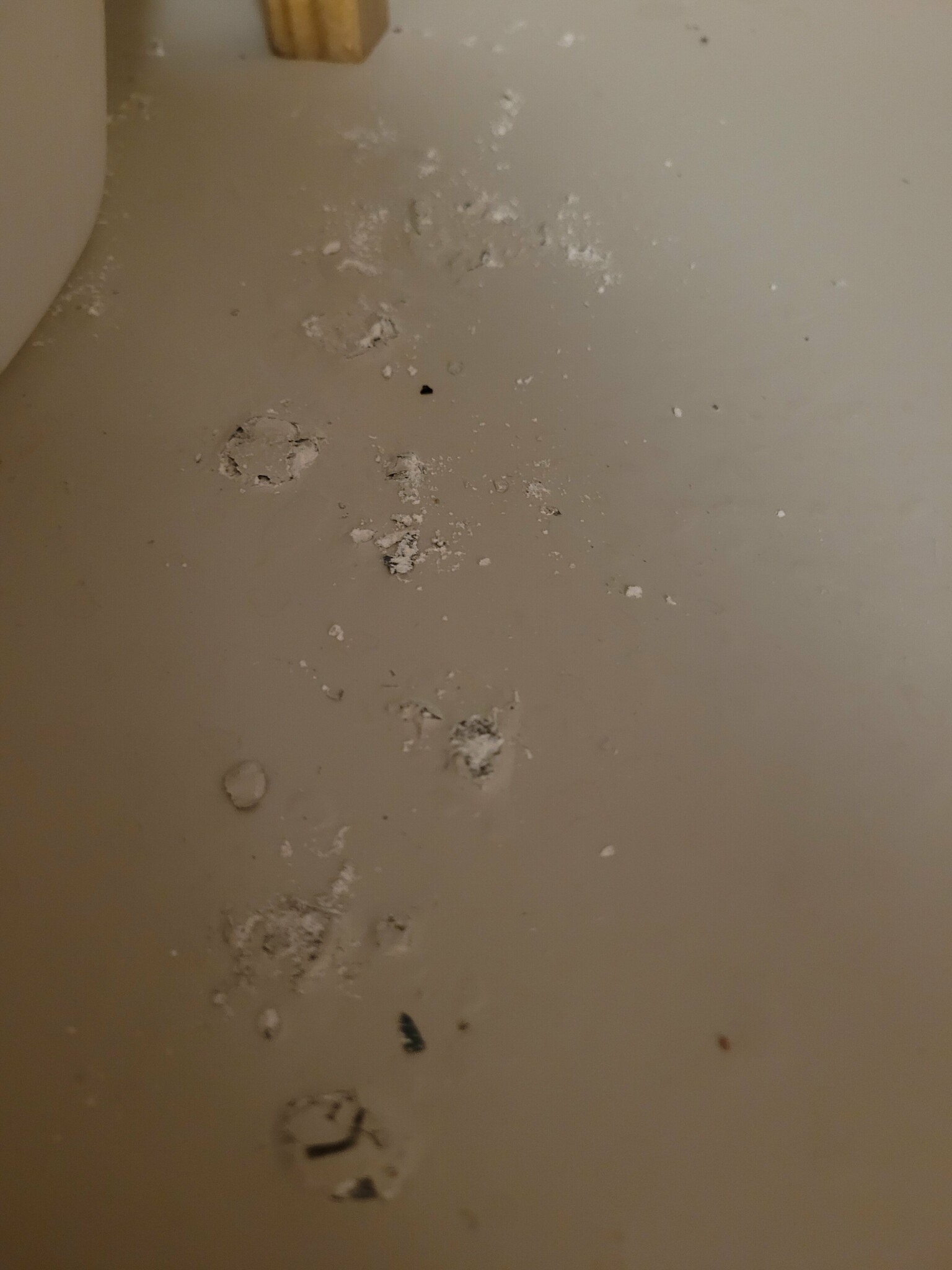
The fluff is probably salts that the moisture brings with it. Re-draining is the expensive solution; you have water pressing from the outside. Not painting the plaster would have been a bit cheaper. Efflorescence will still occur, but it doesn't look as unsightly. And the plaster doesn't take as much damage when it isn't trapped behind paint.


Was the paint intended for painting on basement walls?
Otherwise, what they said before is true, it is salt, which is slightly less boring than mold but still a problem.
Fingers crossed that it gets resolved!
Otherwise, what they said before is true, it is salt, which is slightly less boring than mold but still a problem.
Fingers crossed that it gets resolved!
Painted with what Flügger gave me.FreQa said:
First, Flügger anchoring primer drops
Then for walls: Flügger Archaia Composition Paint - Wall & Ceiling
And for floors: Flügger Floor Paint PU - Polyurethane floor paint
The strange thing is where the salt efflorescence is coming from.D Drburr said:The fluff is probably salts that moisture carries with it. Re-draining is the expensive solution; you have water pressing from the outside. Not painting the plaster would have been a bit cheaper. Efflorescence will occur anyway, but it won't look as bad. And the plaster doesn't take as much damage when it's not trapped behind paint.
Two walls are entirely exterior walls. There are no problems there at all.
One wall is an interior wall, so of course no problem.
On the wall where the problem is, the bottom 80 cm is an exterior wall, and above that, it's an interior wall. (That wall faces the center of the house, and due to height difference in the basement, only the bottom part is an exterior wall and the larger upper part is an interior wall.)
If the problem were drainage, shouldn't it have appeared on the two walls that are also exterior walls?
Have you done anything about it?D Drburr said:
Does it increase over time, or is it constant once it has appeared?
I have been advised to scrape efflorescence with a wire brush and then treat with Jape.
Is it mögelfri I should use then?
I thought it was prickfri but that is for outdoor use while mögelfri is for indoor use.
Now, efflorescence isn't mold, that's why I'm asking.
https://www.jape.se/produkt/mogel-fri-direkt-0-5-l
Is it mögelfri I should use then?
I thought it was prickfri but that is for outdoor use while mögelfri is for indoor use.
Now, efflorescence isn't mold, that's why I'm asking.
https://www.jape.se/produkt/mogel-fri-direkt-0-5-l
Now I have scraped the wall and will brush with Jape mold-free. It felt sad to scrape off the paint when I had made it look nice :/
As I said, I first polished the walls and asked Flugger what I should paint with, and they gave me a primer and a composition paint. After that, I heard that you should always use silicate paint in a basement because it breathes. Flugger knew it was a basement but still gave me composition paint.
The question I'm now pondering is, if I had painted with silicate, could it have prevented the problem, or would I have had problems with salt efflorescence regardless?
As I said, I first polished the walls and asked Flugger what I should paint with, and they gave me a primer and a composition paint. After that, I heard that you should always use silicate paint in a basement because it breathes. Flugger knew it was a basement but still gave me composition paint.
The question I'm now pondering is, if I had painted with silicate, could it have prevented the problem, or would I have had problems with salt efflorescence regardless?


Why mold free? Isn't there any mold?
Paint manufacturers assume you have a dry modern basement. If you don't, they think you should tear down your house and build a new one.
So you should never listen to them when you have an old house.
Paint manufacturers assume you have a dry modern basement. If you don't, they think you should tear down your house and build a new one.
So you should never listen to them when you have an old house.
I was recommended to scrape off and treat with Jape.O [old rusty] said:
Jape Mold-Free is for indoor use "in walls, joists, crawl spaces, basements, bathrooms, and attics" and against "growth of mold and blue stain and microbial odor."
Prickfri is for outdoor use, used on wood surfaces, and against "black spots caused by mold and algae."
That's why it's not Prickfri and then I assumed I should use Mold-Free.
Do you have "growth of mold and blueness as well as microbial odor"?
I only see salt deposits and peeling paint?
I only see salt deposits and peeling paint?