
147,687 views ·
28 replies
148k views
28 replies
Indoor staircase - Buy cheap or build yourself?
We will need two new staircases, one to the upper floor and one to the basement. One under the other. We will have curved U-stairs or alternatively a staircase with a landing (straight stairs halfway, landing, stairs the last bit up, shaped like an "angular U").
But oh, stairs are so expensive. It feels like two stairs will take up a large part of our budget. Two stairs at 25000 kronor each!
A staircase divided into two parts with resting steps shouldn't be too difficult to make oneself if one is careful and more than normally handy. Maybe you could use laminated boards 30-40 mm thick for the steps and laminated beams for the stringers... But it seems like everyone avoids building stairs themselves. Am I wrong, or why shouldn't you build the staircase yourself?
1. I would love tips on cheap staircases. Should I take the car to Poland or Latvia and buy them there?
2. Has anyone built themselves? Tips? Drawings? Links?
Construction start spring -07
But oh, stairs are so expensive. It feels like two stairs will take up a large part of our budget. Two stairs at 25000 kronor each!
A staircase divided into two parts with resting steps shouldn't be too difficult to make oneself if one is careful and more than normally handy. Maybe you could use laminated boards 30-40 mm thick for the steps and laminated beams for the stringers... But it seems like everyone avoids building stairs themselves. Am I wrong, or why shouldn't you build the staircase yourself?
1. I would love tips on cheap staircases. Should I take the car to Poland or Latvia and buy them there?
2. Has anyone built themselves? Tips? Drawings? Links?
Construction start spring -07
I built my own staircase to the upper floor and it wasn't easy! Some tips:
* I used some floor wood and it had to dry in place for quite a while, so if you're in a hurry it's not recommended
* Measure and calculate many times before making the stringers!
* Consider how the first and last step should be...
* Make a model in "scrap wood" before you cut into the "fine lumber"
* Test the riser height in the model so it feels okay. Also, let any other family members walk the model to avoid complaints in the future.
Good luck!
* I used some floor wood and it had to dry in place for quite a while, so if you're in a hurry it's not recommended
* Measure and calculate many times before making the stringers!
* Consider how the first and last step should be...
* Make a model in "scrap wood" before you cut into the "fine lumber"
* Test the riser height in the model so it feels okay. Also, let any other family members walk the model to avoid complaints in the future.
Good luck!
We received our tight U-shaped staircase from the carpenter team 2 weeks ago. I wouldn't dream of making such a staircase myself anyway! Just over 200 kg of finely crafted pieces of wood that fit together with a precision as if they make ball bearings otherwise... Before we had a straight staircase, which I built myself, this was during the construction period, but even though it was made of "ordinary" building lumber, the material cost was just under 2000 kronor, and it was straight, open, untreated, and the railing was not included. 25 or 30-thousand for a finished staircase is cheap!! Save on the plumber or paint yourself, but buy the staircase! Best regards, greenbay

Don't forget the formula if you weren't already aware of it!
2 risers + 1 tread = between 61-63 so the staircase doesn't feel uncomfortable to walk on.
Maybe you'll find one on Blocket; there's a lot available both from individuals and businesses!
Admittedly, DIY tips for an outdoor staircase, but maybe a bit of inspiration!
http://www.viivilla.se/gordetsjalv.asp?mode=ShowSubKat&sCat=141
2 risers + 1 tread = between 61-63 so the staircase doesn't feel uncomfortable to walk on.
Maybe you'll find one on Blocket; there's a lot available both from individuals and businesses!
Admittedly, DIY tips for an outdoor staircase, but maybe a bit of inspiration!
http://www.viivilla.se/gordetsjalv.asp?mode=ShowSubKat&sCat=141
Am in need of a new staircase, contacted a local manufacturer who said 15 thousand for their simplest model.
Have been searching around for which other companies are available.
Also read the article that Byggahus wrote where they mentioned "Trappteknik.com sells plans for those who want to build their own staircase." But the question is if it's worth the risk, it might just end up with a lot of creaking and trouble. Would be interesting to know the price of a plan though, might see if I call them...
Had a look on blocket for straight staircases but those are scarce.
www.onsalatrappan.se mentioned here can no longer be visited.
But raising the question if more updated tips might come in.
Have been searching around for which other companies are available.
Also read the article that Byggahus wrote where they mentioned "Trappteknik.com sells plans for those who want to build their own staircase." But the question is if it's worth the risk, it might just end up with a lot of creaking and trouble. Would be interesting to know the price of a plan though, might see if I call them...
Had a look on blocket for straight staircases but those are scarce.
www.onsalatrappan.se mentioned here can no longer be visited.
But raising the question if more updated tips might come in.
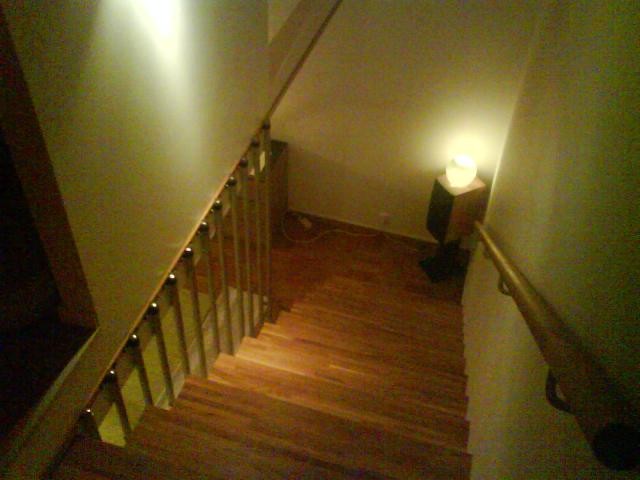
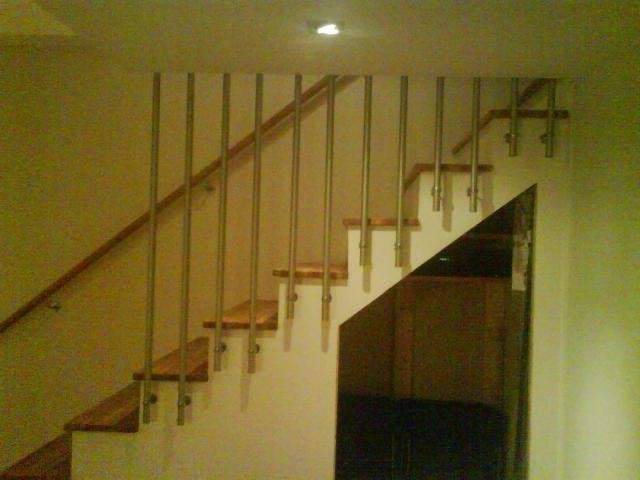
I built Our staircase myself.
Extremely satisfied with both the result and the price!
Simple rule frame, clad with plaster and a cut countertop.
A door is now mounted in the opening, and presto, we also had a storage space.
Custom-designed pipe railing that doesn't entirely follow the rules as it doesn't go all the way down, but sometimes you have to sacrifice for the feel.
The staircase is completely solid and creak-free.
The cost came to 7500:- including the railing and door.
Extremely satisfied with both the result and the price!
Simple rule frame, clad with plaster and a cut countertop.
A door is now mounted in the opening, and presto, we also had a storage space.
Custom-designed pipe railing that doesn't entirely follow the rules as it doesn't go all the way down, but sometimes you have to sacrifice for the feel.
The staircase is completely solid and creak-free.
The cost came to 7500:- including the railing and door.
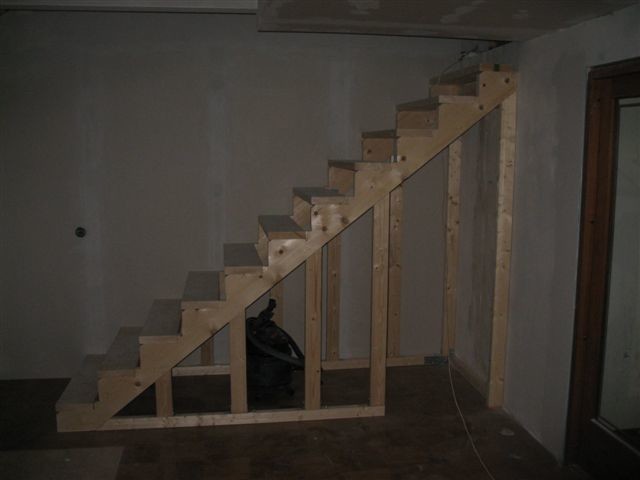
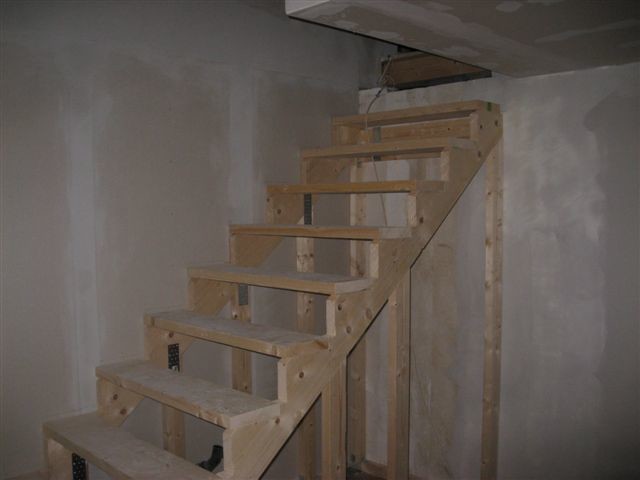
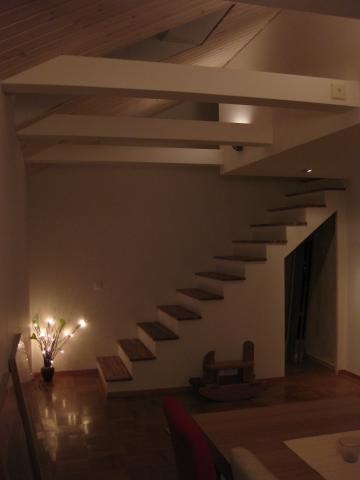
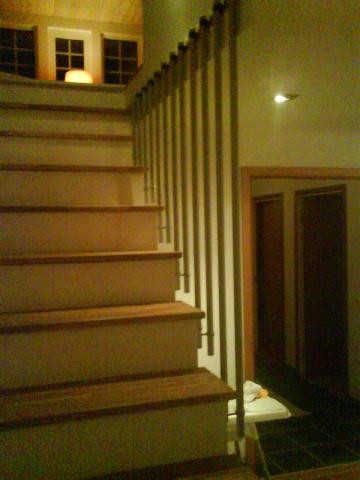
Great job!
I was thinking about possibly having a furniture carpenter build ours. The idea is that it should look solid in oak or walnut. It should be covered and with a landing. The question is whether it's worth ordering it completely solid or if one should first build a frame in construction timber and then cover it with sheets of fine wood. It might be a price question, but also perhaps an aesthetic one since I guess it's harder to hide fastenings if it's solid.
It's important that it doesn't creak. Yours is brand new, the question is if it will creak later. How did you plan to minimize the risk? Did you screw, for example?
I was thinking about possibly having a furniture carpenter build ours. The idea is that it should look solid in oak or walnut. It should be covered and with a landing. The question is whether it's worth ordering it completely solid or if one should first build a frame in construction timber and then cover it with sheets of fine wood. It might be a price question, but also perhaps an aesthetic one since I guess it's harder to hide fastenings if it's solid.
It's important that it doesn't creak. Yours is brand new, the question is if it will creak later. How did you plan to minimize the risk? Did you screw, for example?
New and all, the stairs have now been used for 1.5 years.Savoy said:Well done!
I was considering possibly getting an interior carpenter to build ours. The idea is to make it feel like solid oak or walnut. It should be covered and with a landing. The question is whether it's worth ordering it completely solid or if one should first build a frame with construction timber and then cover it with sheets of noble wood. I guess it's a price question, but maybe also an aesthetic question as I suspect it's harder to hide fasteners if it's solid.
It's important that it remains creak-free. Yours is brand new, the question is if it will creak later. How did you plan to minimize the risk? Did you, for example, screw?
My steps (oak steps) are just coverings and are screwed from underneath. I had to retighten those screws last winter, so I have now decided to glue them instead.
The frame construction is screwed and has yet to show a tendency to creak.

Have ordered one now, they haven't been here to measure yet though, plus they were fully booked for a few months so it will take some time.
One said that there were no difficulties assembling it yourself, or letting a carpenter do it.
Considering just buying the frames and arranging the oak steps and stuff myself.
-Would it be foolishly frugal to do this on one's own, I wonder?
One said that there were no difficulties assembling it yourself, or letting a carpenter do it.
Considering just buying the frames and arranging the oak steps and stuff myself.
-Would it be foolishly frugal to do this on one's own, I wonder?
OK...what's the downside of gluing?Immobil said:
I have glued the top and bottom steps since it wasn't possible to screw them. I haven't noticed any drawbacks, quite the opposite as I don't have to retighten.
Sure, it gets a bit tougher to possibly disassemble and replace steps...
I used PL400
The glue can make the staircase creak, the same goes for silicon. If you screw it together, you have the opportunity to retighten it during different seasons.
However, I have no experience with PL400 in connection with stairs. What I do know is that if the glue is solvent-based, it can cause discoloration on steps and stringers.
However, I have no experience with PL400 in connection with stairs. What I do know is that if the glue is solvent-based, it can cause discoloration on steps and stringers.
Built a staircase myself with dad for about 4-5', turned out really well. Tried to draw it in CAD but it didn't turn out so good, so we drew it up on a large board and copied from there instead.
Glued with PL400 and so far no creaking.

Glued with PL400 and so far no creaking.