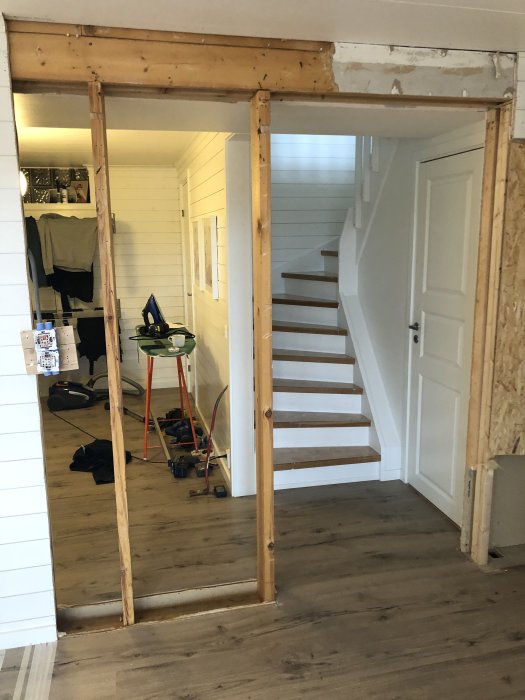
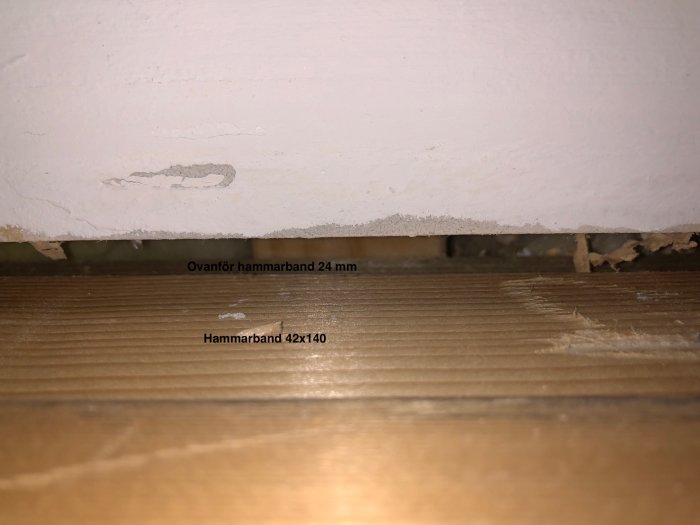
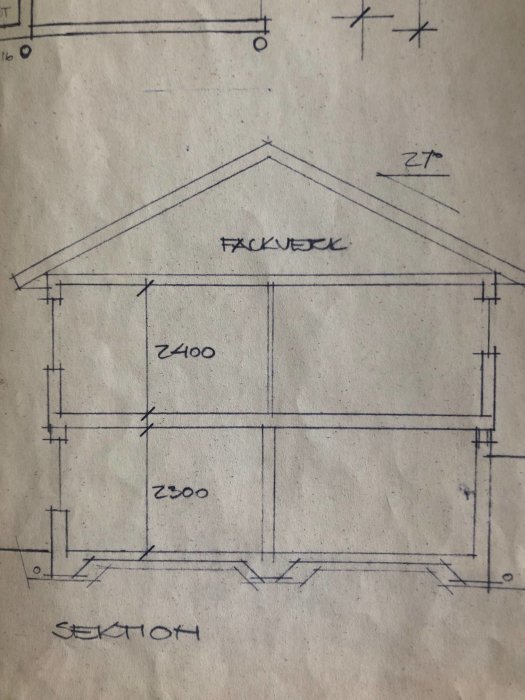
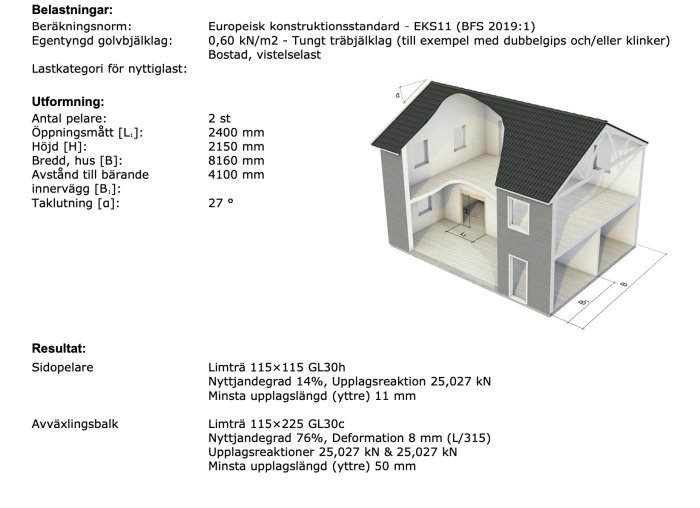
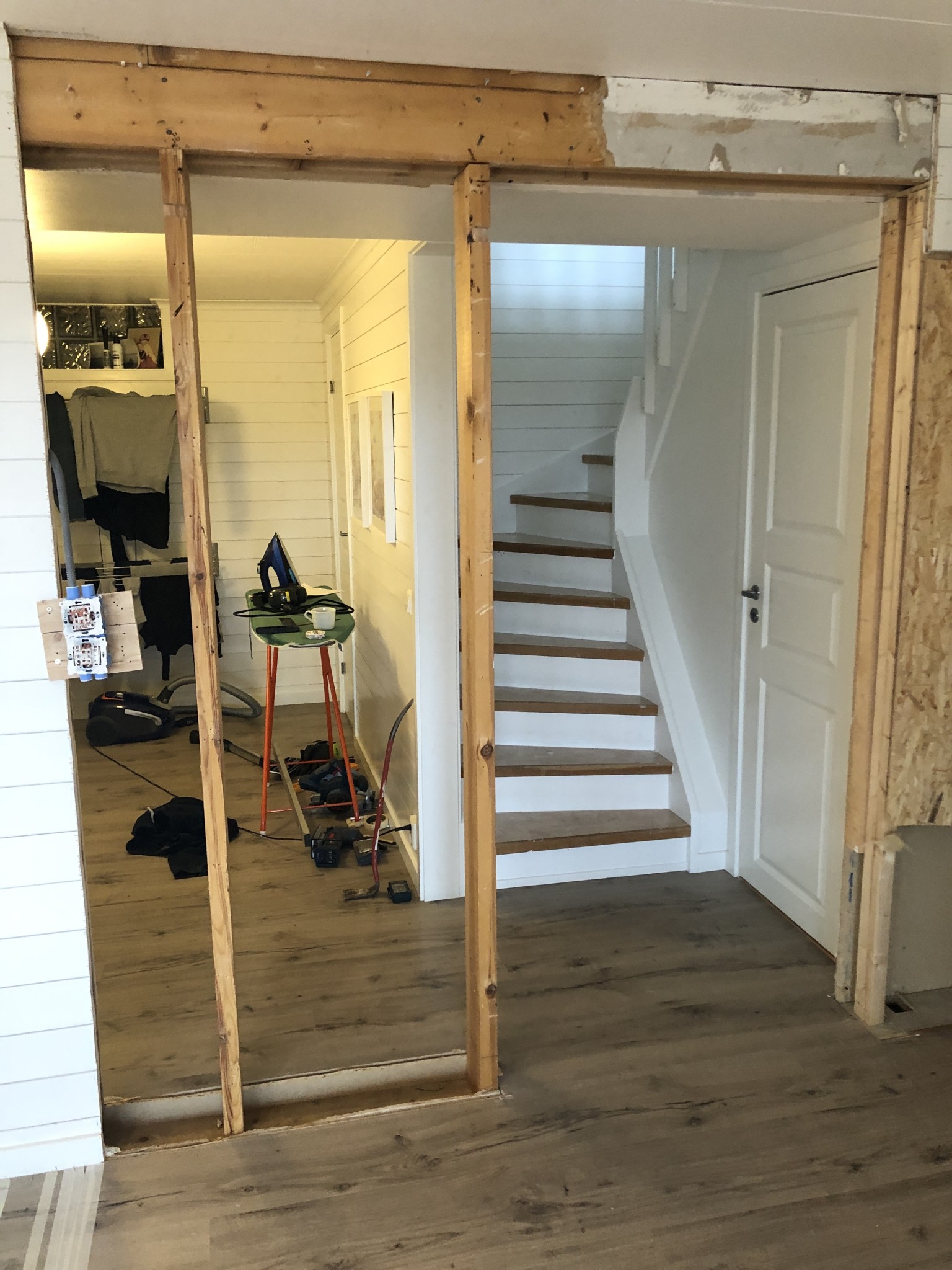
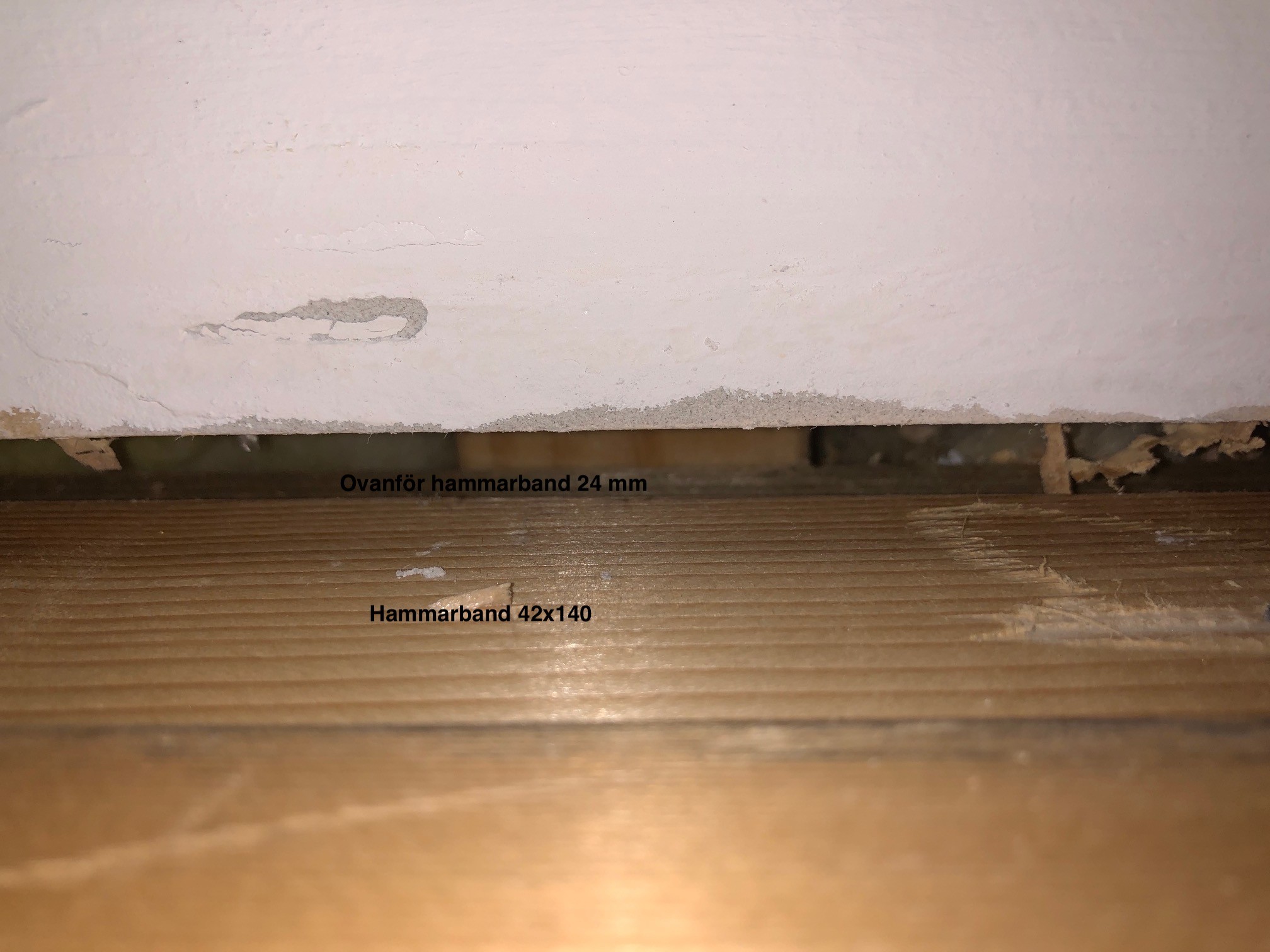
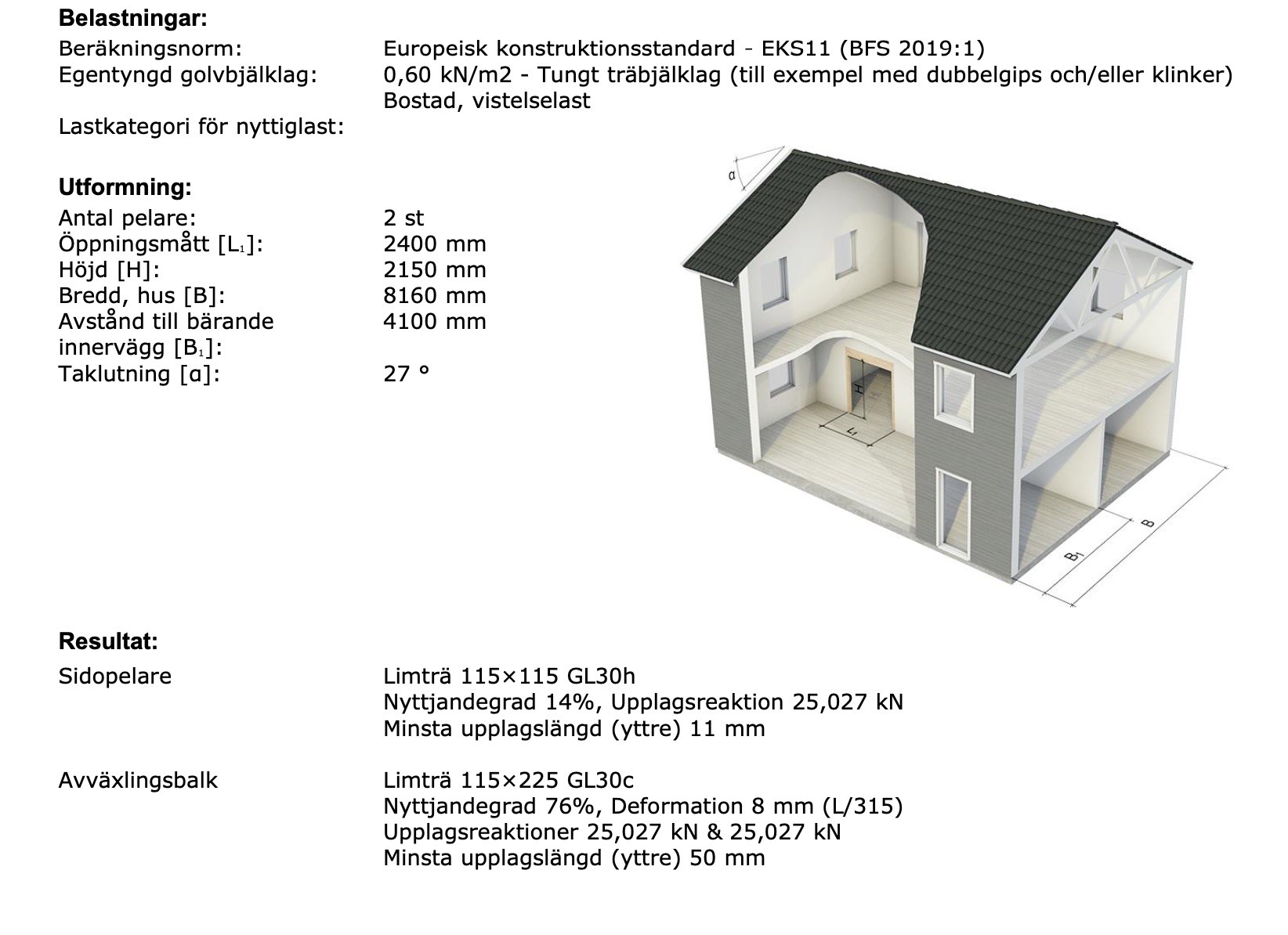
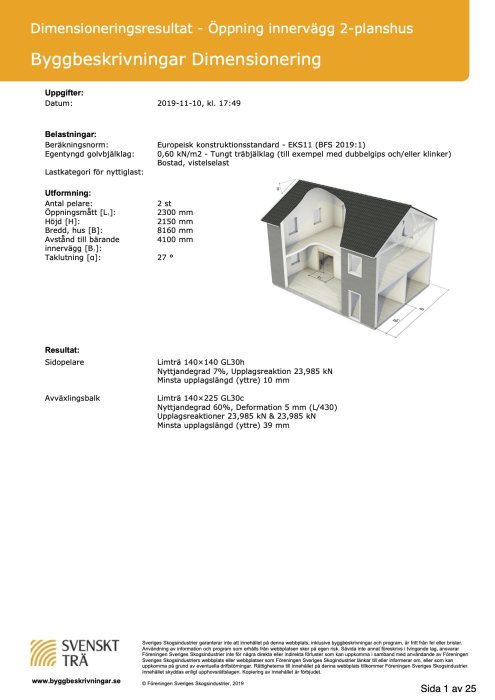
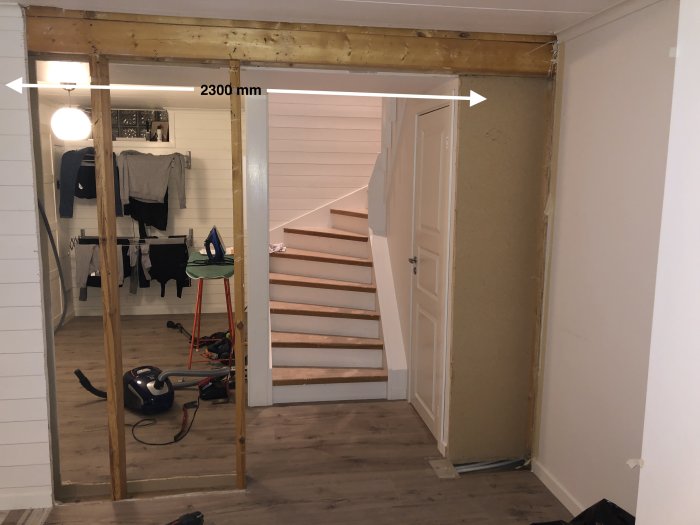
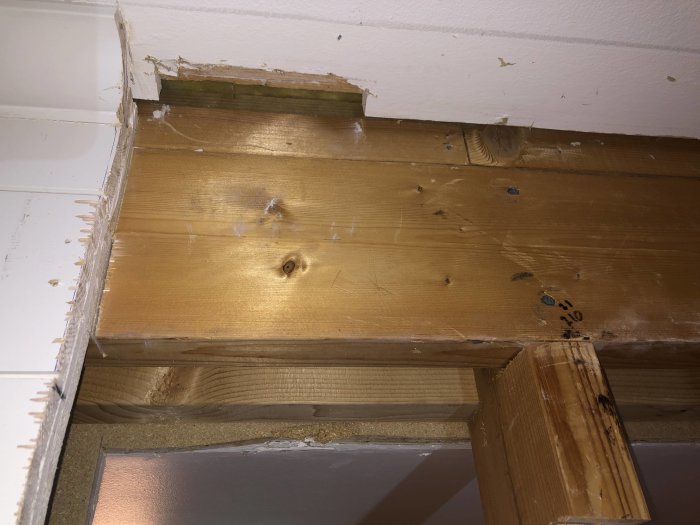
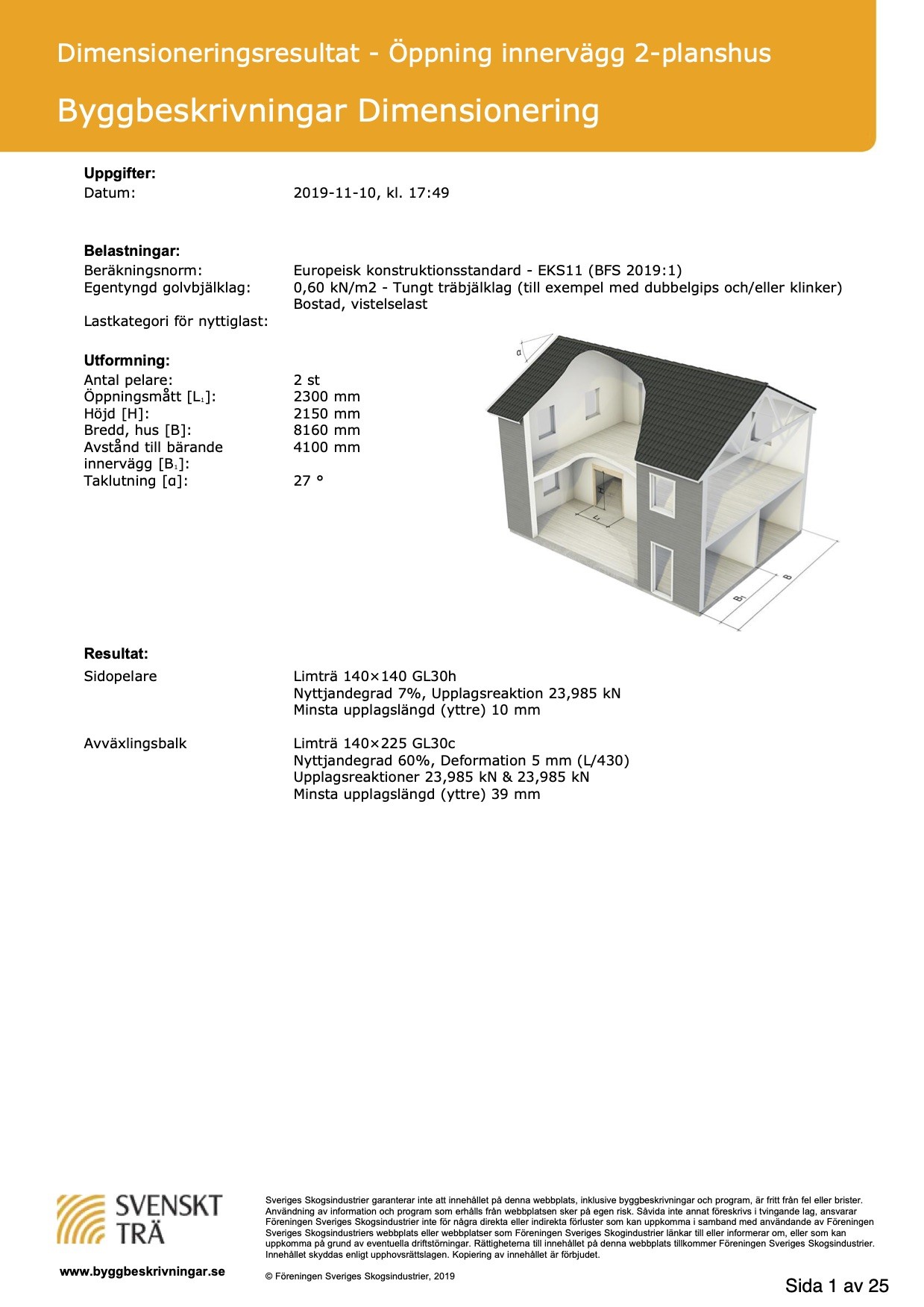
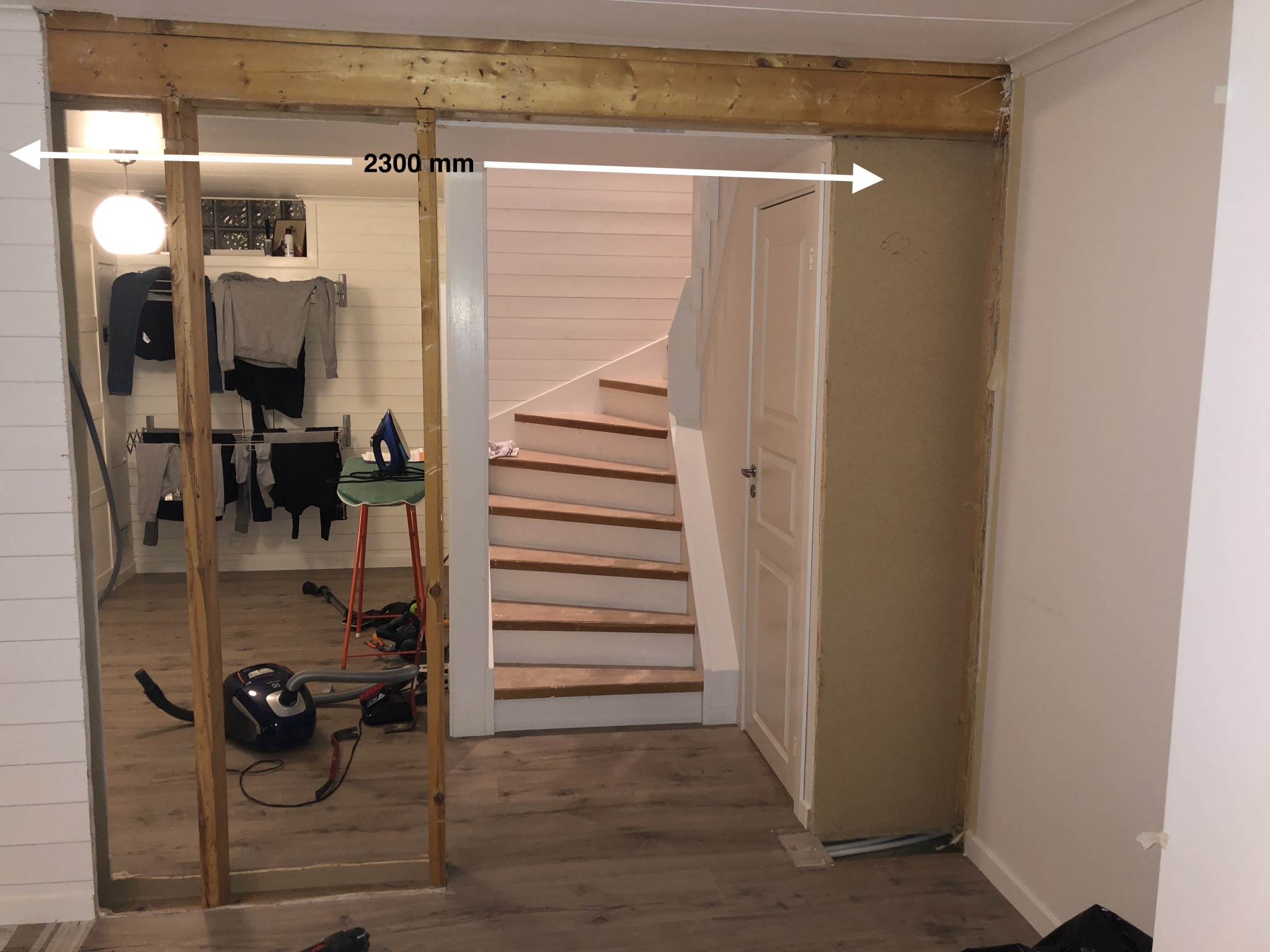
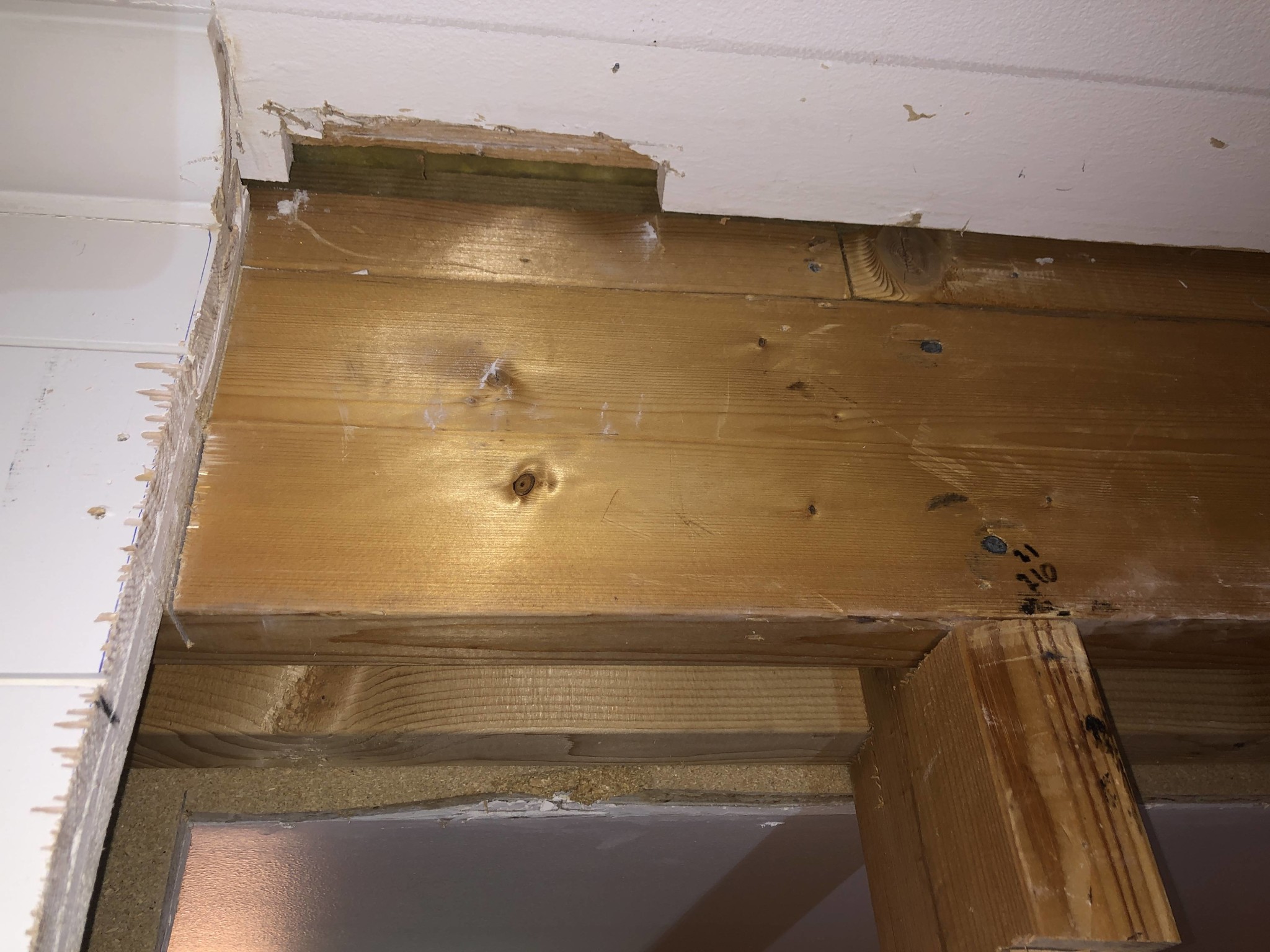
We live in a split-level villa built in '88. While waiting for our carpenter to come home and take a look at this project in 2 weeks, I've started tearing down the panels on the load-bearing wall that we are going to open up. We want to get an idea of how big a glue-laminated beam we need. Initially, the opening was 1500 mm, and we plan to widen the opening to 2400 mm. Currently supporting the flooring are two 42x140 + top plate 42x140 and a 25 mm on top of the top plate, strange dimensions There are two posts (42x140) that need to be removed and replaced with a beam. On the upper floor, there are no load-bearing interior walls as the house has self-supporting roof trusses. According to byggbeskrivningar.se, a beam of 115x225 is required. The downside is that it will be quite low in the ceiling. Can we remove the top plate where the beam will be pushed up, or is it meant to stabilize? Maybe we could leave one of the two load-bearing beams (45x140) and put up a glue-laminated beam 115x180 next to it? What do you think?
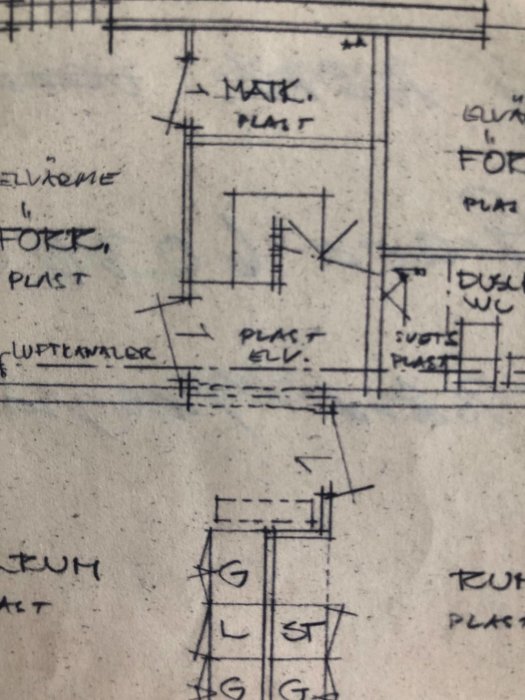
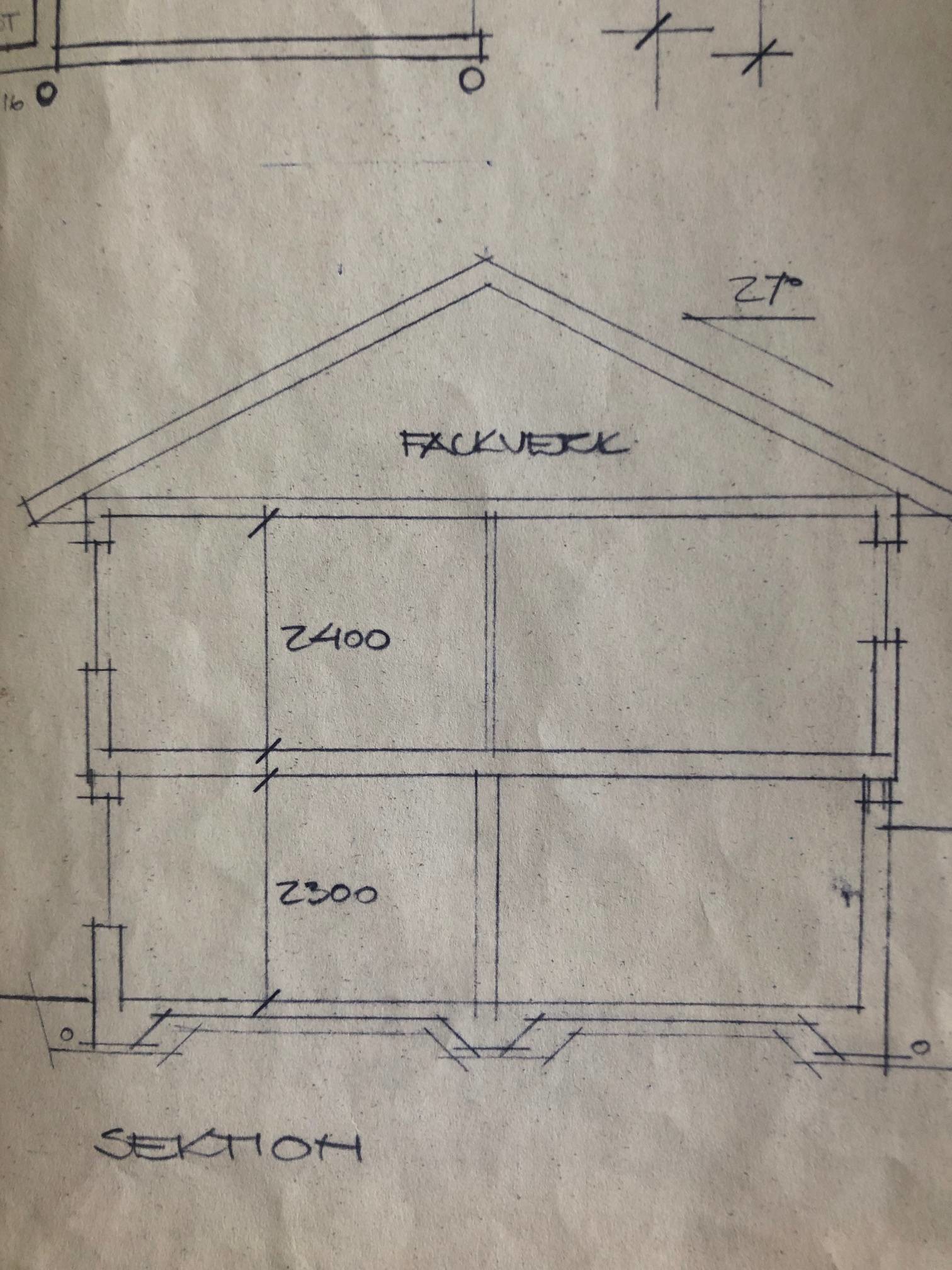
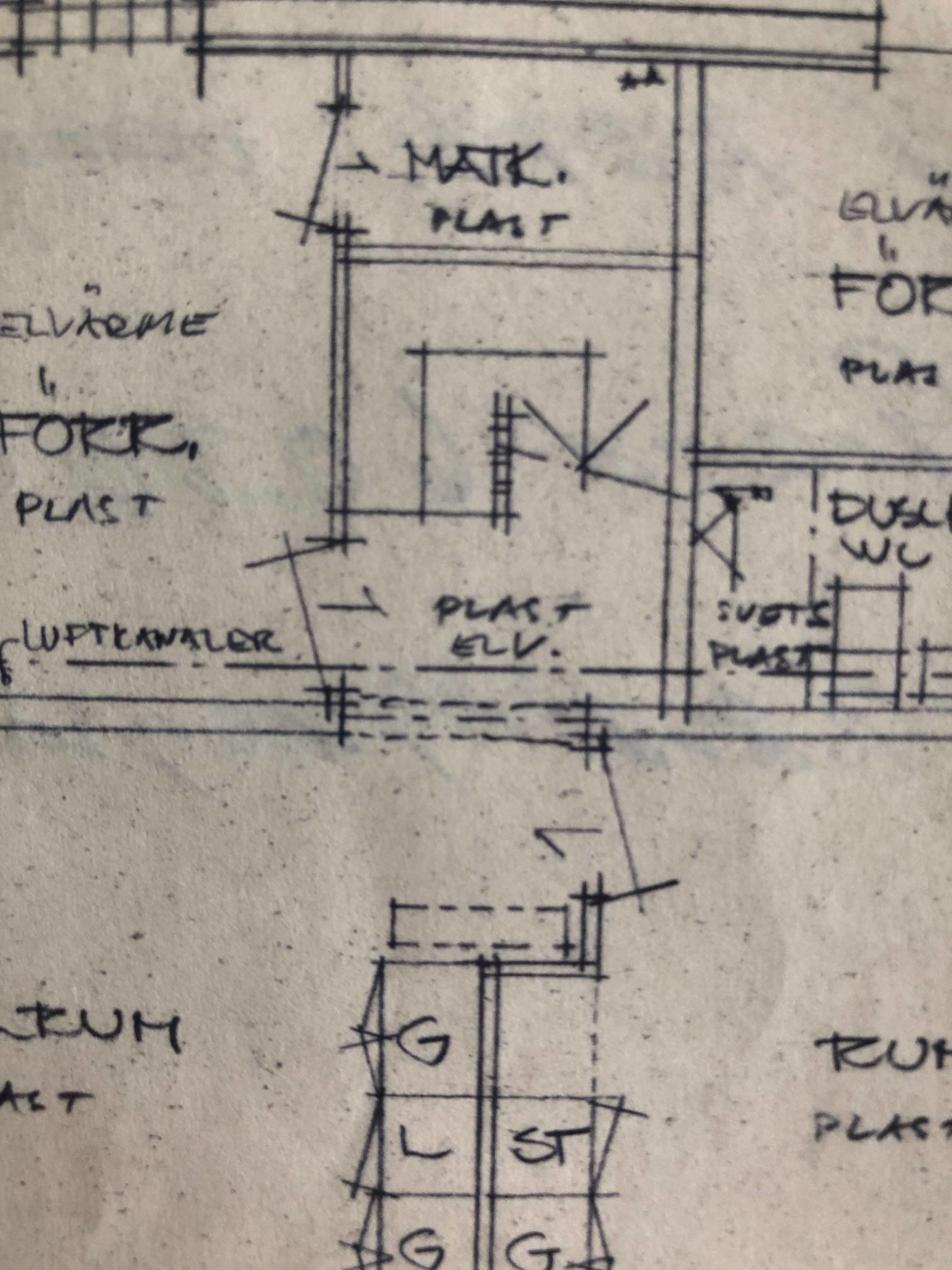
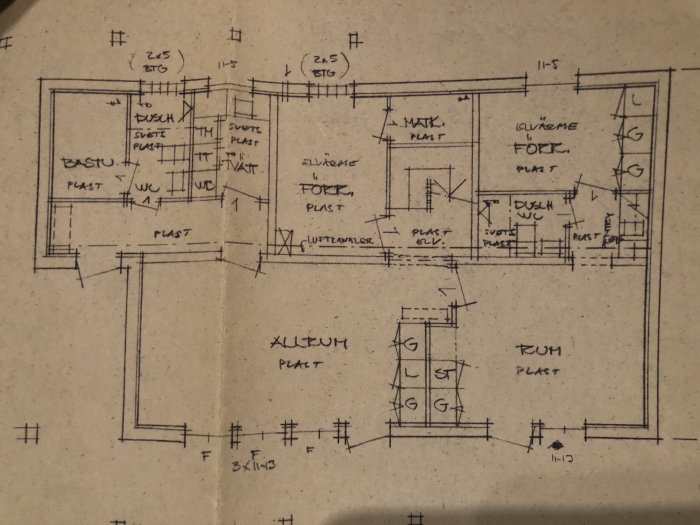
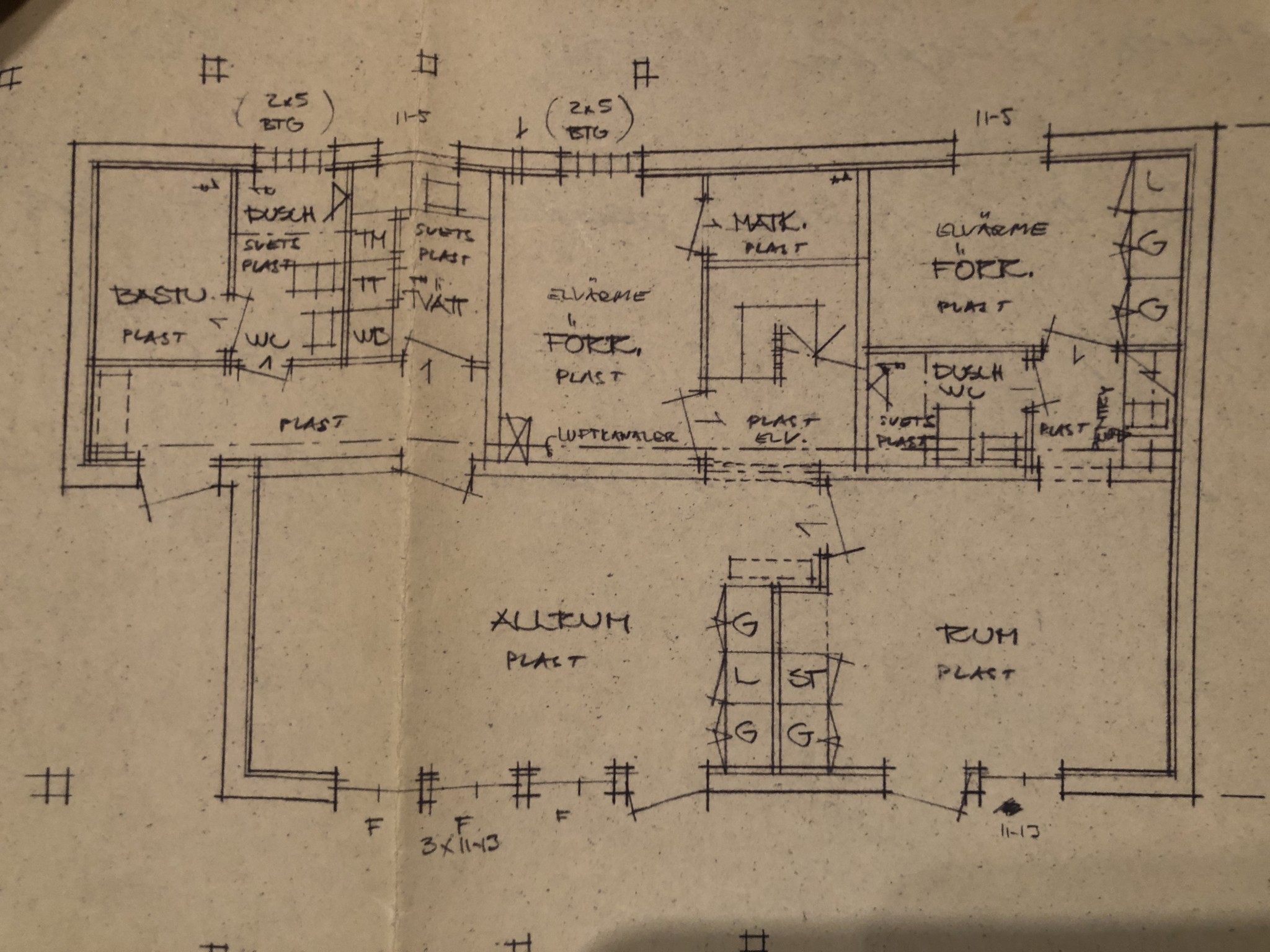
If 115x225 mm is the correct dimension for a glulam beam, which I'm not sure about, you can replace it with 215x180 mm, which is completely equivalent in terms of stiffness. What you call a tie beam can be removed. The floor joists above can rest directly on the beam. I would like you to show the entire ground floor plan so that the calculation can be verified. The photo of the opening towards the staircase shows that the house is not built entirely according to the floor plan at this point. This probably doesn't mean anything for the calculations as long as your opening dimensions are correct, but it's still a small warning point.
I have removed a bit more of the wall on the right side. The previous owners built a closet under the stairs, and the door to the right has also been removed. That's probably what's confusing with the drawing.
It's great if we can remove what I call hammarband. Then we can fit in a beam of 140x225 and still have 206 cm of ceiling height. It looks like there is a pressure-treated (25mm) above the hammarband, maybe it's easiest to let it remain?
What is the interior width measurement of the house? The best is that the beam is flush against the floor joists. Pressure-treated indoors? If it exists, it should definitely be removed. What change did you make to suddenly arrive at 140x225?
From inner wall to inner wall, the house is 7600 mm wide.
Initially, I was thinking of keeping one of the two support beams and placing a laminated beam (115 wide) right next to it.
But now that the wall plate is being removed, isn't it just as well to put up a laminated beam sized 140x225 since there's space anyway?
Yes, it is strange if there's a pressure-treated one there; I will check more thoroughly tomorrow. Are toxic gases or odor a problem with pressure-treated indoor use?
They were more toxic before, but they should never be indoors. It is usually a reason for remediation. It is not a good solution to keep any of the old ones.
I am doubtful about the dimensions you are suggesting. For an opening of 2.4 m, it should be sufficient with 90x225 or alternatively 165x180.
Okay, it will be interesting to see if it's impregnated, I'll take a closer look at it this week.
I saw now that 90x225 is available as an option. 140x225 might be a bit over-dimensioned
If I use 90x225 and posts 90x90, is it easiest to attach with a hole plate and anchor screw?
Thanks for all the answers!
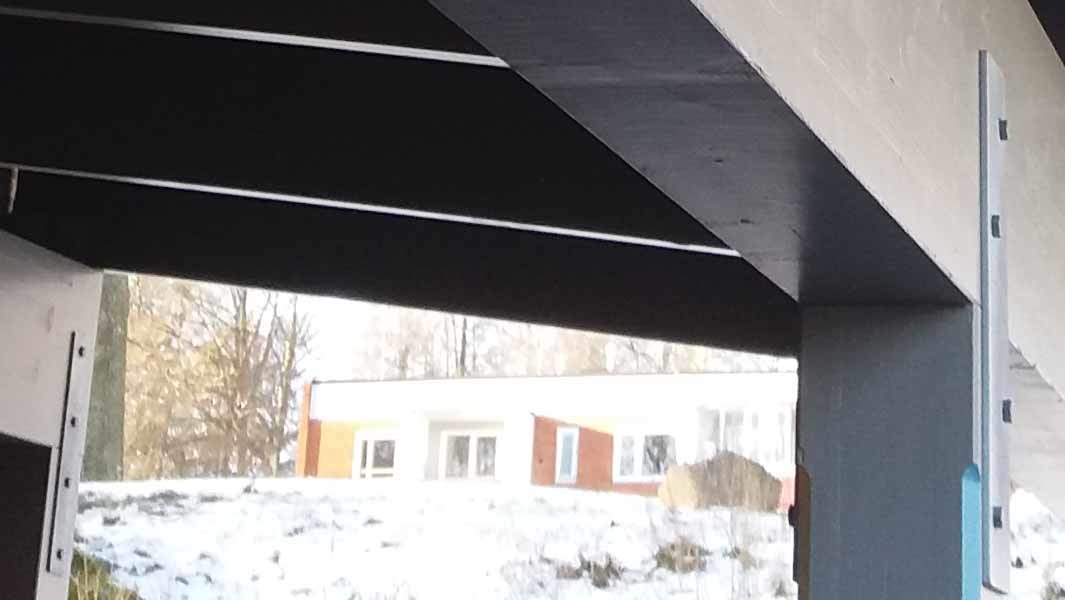
The best option is stronger brackets and through bolts. If the installation is visible, it absolutely has to be something like that. Nail plates and anchor screws are too weak. I usually use the attached image as an example.
Click here to reply
Vi vill skicka notiser för ämnen du bevakar och händelser som berör dig.

 There are two posts (42x140) that need to be removed and replaced with a beam. On the upper floor, there are no load-bearing interior walls as the house has self-supporting roof trusses. According to byggbeskrivningar.se, a beam of 115x225 is required. The downside is that it will be quite low in the ceiling. Can we remove the top plate where the beam will be pushed up, or is it meant to stabilize? Maybe we could leave one of the two load-bearing beams (45x140) and put up a glue-laminated beam 115x180 next to it? What do you think?