
4,871 views ·
13 replies
5k views
13 replies
Thermal bridge and condensation - balcony protruding from cast intermediate floor
Hello
I have a balcony that extends along the short side of the house (about 10 meters). The balcony is made of concrete and is an extension (connected to) the cast intermediate floor in the house. The balcony is a thermal bridge, in other words. This past summer, the balcony was renovated with new waterproofing, flashings, and surfacing. There were some cracks in the concrete from rust attacks on the reinforcement that had "blasted" the concrete, but these cracks were deemed not to affect the structure. During the renovation, the underside of the balcony was also painted with silicone resin paint.
After the renovation, I noticed that water droplets formed on the underside of the balcony around the areas where the previous cracks were in the concrete. I suspected that the new waterproofing was leaking, but the builder insisted it was very unlikely. Almost exclusively, I noticed these water droplets on the underside in connection with precipitation, but I could not see it running via the flashing (i.e., from the exterior top side) but rather that the water seemed to just appear on the underside around these cracks.
Now in January, I have noted that all the paint is peeling (silicone resin paint) from the underside of the balcony. I interpret this to mean that it is not external moisture that has condensed on the underside of the balcony because that would only result in external water droplets, which wouldn’t cause the paint to peel. My interpretation is that it is moisture/water coming through/from within the balcony causing the paint to peel on the underside.
Could this be a "natural" condensation phenomenon manifesting in this way, or is it likely to be a problem with the waterproofing?
I have a balcony that extends along the short side of the house (about 10 meters). The balcony is made of concrete and is an extension (connected to) the cast intermediate floor in the house. The balcony is a thermal bridge, in other words. This past summer, the balcony was renovated with new waterproofing, flashings, and surfacing. There were some cracks in the concrete from rust attacks on the reinforcement that had "blasted" the concrete, but these cracks were deemed not to affect the structure. During the renovation, the underside of the balcony was also painted with silicone resin paint.
After the renovation, I noticed that water droplets formed on the underside of the balcony around the areas where the previous cracks were in the concrete. I suspected that the new waterproofing was leaking, but the builder insisted it was very unlikely. Almost exclusively, I noticed these water droplets on the underside in connection with precipitation, but I could not see it running via the flashing (i.e., from the exterior top side) but rather that the water seemed to just appear on the underside around these cracks.
Now in January, I have noted that all the paint is peeling (silicone resin paint) from the underside of the balcony. I interpret this to mean that it is not external moisture that has condensed on the underside of the balcony because that would only result in external water droplets, which wouldn’t cause the paint to peel. My interpretation is that it is moisture/water coming through/from within the balcony causing the paint to peel on the underside.
Could this be a "natural" condensation phenomenon manifesting in this way, or is it likely to be a problem with the waterproofing?

I know nothing about silicone resin paint, but I spontaneously wonder if it might not be too vapor-tight? Concrete is a very hygroscopic material that can absorb moisture from all sides, so it shouldn't necessarily be a problem with the waterproofing layer, although it's most likely. Is there not a steel beam (U-profile) that surrounds the balcony slab?
Silicone resin paint is used, among other things, as facade paint and often on the plinth. The documentation states that it breathes well and allows vapor to pass through. No, no steel beam/profile, it's a "self-supporting" extension (reinforced concrete) from the facade.J justusandersson said:I don't know about silicone resin paint, but spontaneously I wonder if it's not very vapor-tight? Concrete is a very hygroscopic material that can absorb moisture from all angles, so it must not necessarily be a problem with the seal layer, even if it's most likely. There is probably a steel beam (U-profile) surrounding the balcony slab?
Since the extension/balcony and the cast intermediate floor are the same unit, I wonder if this type of thermal bridge could cause some condensation phenomena when the heated intermediate floor meets the colder extension/balcony.
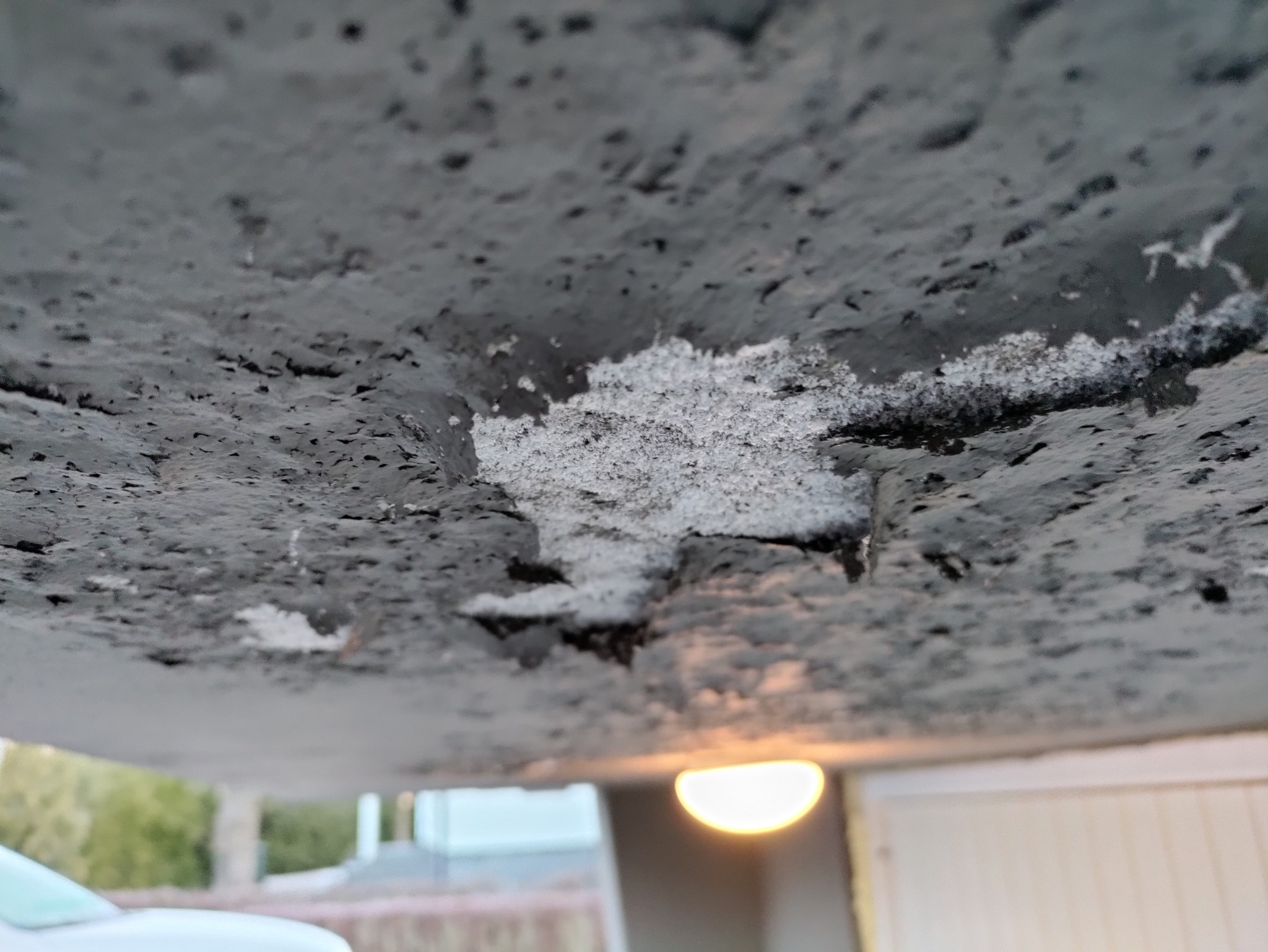
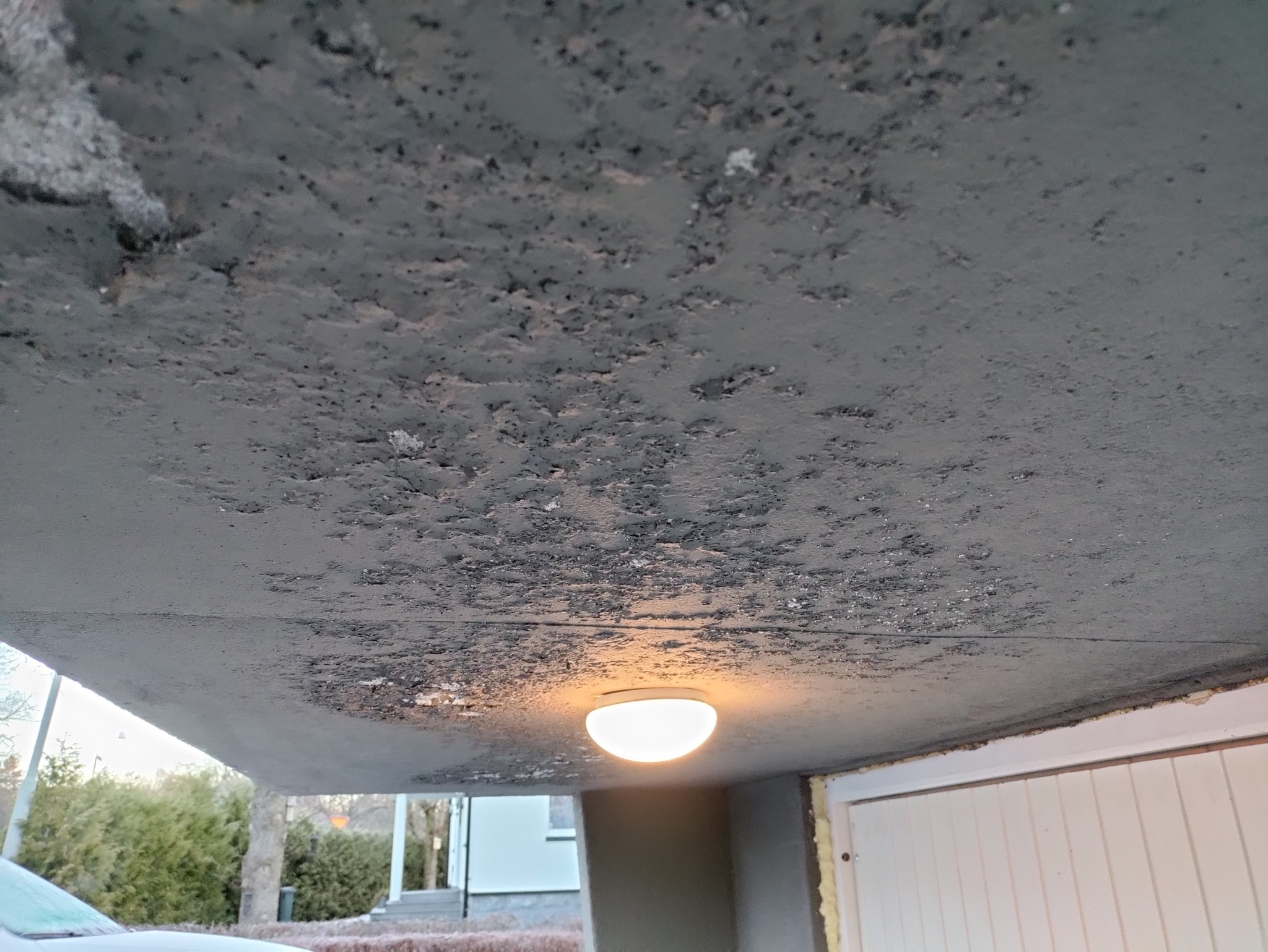
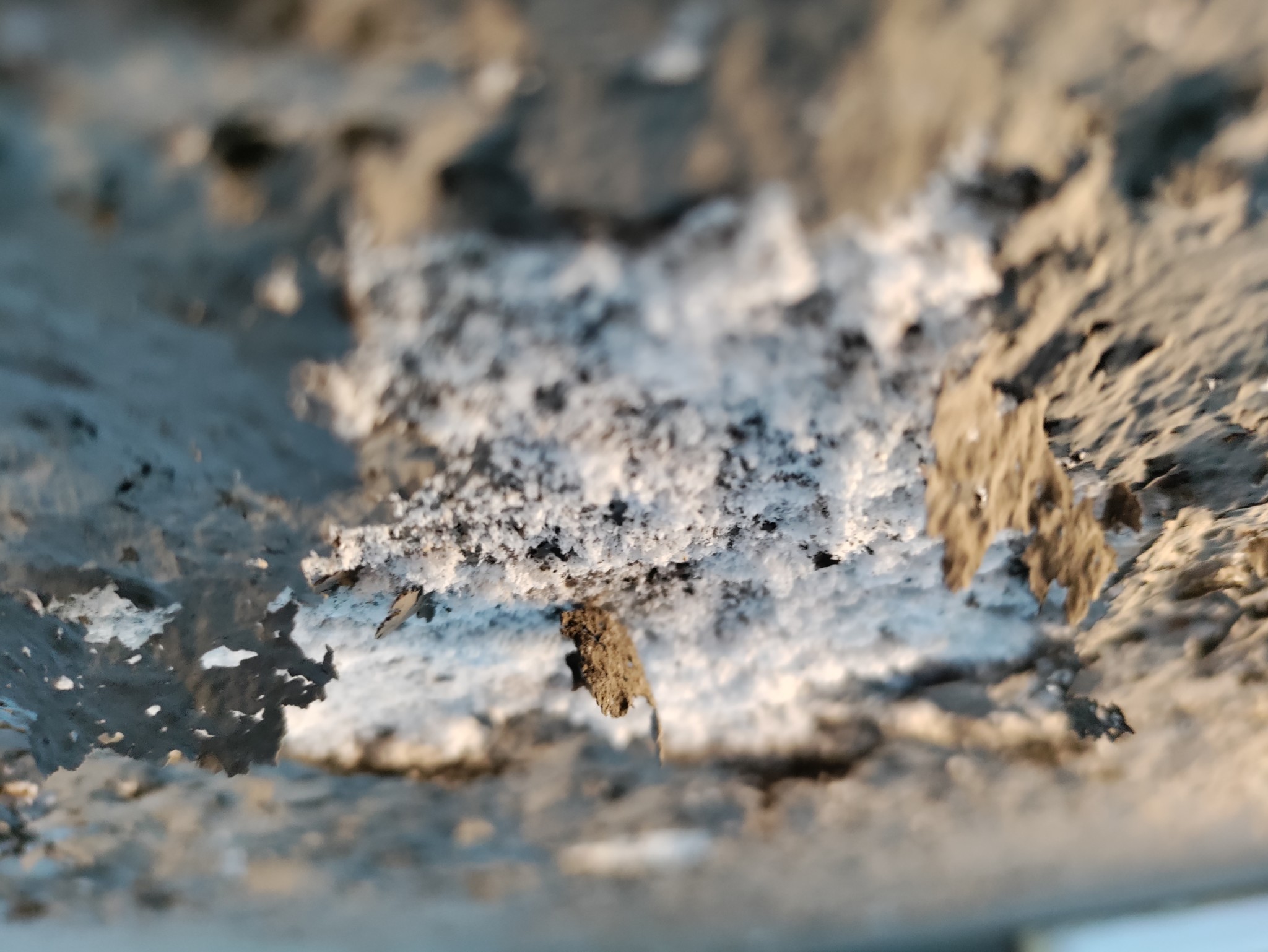
Of course, it constitutes a significant cold bridge. You can't build like that today. If the silicone resin paint breathes, I have no reasonable explanation for why it looks the way it does.
In hindsight, it might have been cheaper and better/easier if I had sawed off the balcony, inserted a new carrier into the joist space, and then supplemented with an I-beam with about 3-4 posts and screw beams.
Regarding the paint, I will soon scrape off the old one and try silicate paint instead, as it is more breathable. However, it feels concerning that there is so much moisture in a balcony that is now supposed to be "sealed" with the new waterproofing layer. I find it hard to believe that it is condensation from indoors traveling through the concrete out onto the balcony.
Regarding the paint, I will soon scrape off the old one and try silicate paint instead, as it is more breathable. However, it feels concerning that there is so much moisture in a balcony that is now supposed to be "sealed" with the new waterproofing layer. I find it hard to believe that it is condensation from indoors traveling through the concrete out onto the balcony.
Yes, such a construction is a "disaster" overall, and will cause you problems as long as it remains. And silicate paint is a good paint, but I suspect you have a lot of lime leaching from the concrete on the balcony, and it erodes everything away!. Lime leaching can be seen on almost all dried mortars such as concrete, plaster, brick, etc., and it occurs because moisture travels through the material and thus carries lime from within the concrete.
You can either put on some heat coils directly inside the exterior wall of the house on the concrete, which constantly keeps the concrete/balcony warm and thereby directs moisture from the inside outwards.
It will consume many kW/h, but you will avoid moisture getting into the rest of the house's construction, and the paint will stay put.
I would seriously consider completely "redoing the balcony" and removing the concrete part that extends into the house's construction. Building a new smart construction balcony doesn't have to be particularly expensive, nor does cutting away the old one and addressing what you need to get a "sealed" house without a massive thermal bridge.
Regards, jawen
You can either put on some heat coils directly inside the exterior wall of the house on the concrete, which constantly keeps the concrete/balcony warm and thereby directs moisture from the inside outwards.
It will consume many kW/h, but you will avoid moisture getting into the rest of the house's construction, and the paint will stay put.
I would seriously consider completely "redoing the balcony" and removing the concrete part that extends into the house's construction. Building a new smart construction balcony doesn't have to be particularly expensive, nor does cutting away the old one and addressing what you need to get a "sealed" house without a massive thermal bridge.
Regards, jawen
@jawen,
is there any treatment that can be done to reduce/stop the "calcium leaching"? Placing a heating cable is not practically possible in my case. Then it's almost as easy/tough to tear down and rebuild the balcony.
Despite the new waterproofing layer on the balcony, I'm considering whether I should treat the top side with a sort of "concrete sealer" like Betsil or equivalent ( https://betsilwebbshop.se/produkt-kategori/betsil-betong ). I don't know if it's worth doing the same on the underside (where the calcium problem is significant...)
is there any treatment that can be done to reduce/stop the "calcium leaching"? Placing a heating cable is not practically possible in my case. Then it's almost as easy/tough to tear down and rebuild the balcony.
Despite the new waterproofing layer on the balcony, I'm considering whether I should treat the top side with a sort of "concrete sealer" like Betsil or equivalent ( https://betsilwebbshop.se/produkt-kategori/betsil-betong ). I don't know if it's worth doing the same on the underside (where the calcium problem is significant...)
If droplets form on the underside of the balcony when it rains, water is somehow seeping into the concrete. We probably have a similar construction but the paint remains on the underside. Do the balcony and waterproofing slope correctly?
It becomes a bit problematic when you want to make the "balcony/concrete" waterproof while still allowing moisture migration. One way is to wait for a longer dry period of about 3-4 weeks (and maybe protect the top of the concrete against any precipitation, but don't lay plastic directly on it as it needs to be able to air out/dry).
Once the concrete has achieved a low moisture content, you could ensure that the balcony slopes outward (preferably 1 cm per meter) and fill if you need to increase the slope.
And once you have sanded the surface and are satisfied, you can treat the surface with Betongglas in 3 layers, the first diluted with water 1:5, then 2 coats with the mixture 1:3.
This will seal the pores in the concrete & strengthen the surface, making it almost waterproof and more stable to a depth of a few mm (which is sufficient).
Then paint in a pleasant epoxy color that you like, and mix sand into the paint if you want it to be "non-slip" (rolling is best). And now that the top is sealed & the concrete is dry, you can scrape and paint the underside with silicate paint.
Best regards, Jawen
Once the concrete has achieved a low moisture content, you could ensure that the balcony slopes outward (preferably 1 cm per meter) and fill if you need to increase the slope.
And once you have sanded the surface and are satisfied, you can treat the surface with Betongglas in 3 layers, the first diluted with water 1:5, then 2 coats with the mixture 1:3.
This will seal the pores in the concrete & strengthen the surface, making it almost waterproof and more stable to a depth of a few mm (which is sufficient).
Then paint in a pleasant epoxy color that you like, and mix sand into the paint if you want it to be "non-slip" (rolling is best). And now that the top is sealed & the concrete is dry, you can scrape and paint the underside with silicate paint.
Best regards, Jawen
J jawen said:Yes, a construction like that is a "disaster" overall and will give you problems as long as it remains. Silicate paint is a good paint, but I suspect you have a lot of lime release from the concrete on the balcony, and it crumbles away everything! Lime release can be seen on almost all dried mortars such as concrete, plaster, bricks, etc., and it emerges because moisture travels through the material & in doing so, brings lime from inside the concrete.
Either you need to install a heating cable directly inside the house's outer wall on the concrete, which constantly keeps the concrete/balcony warm & thus leads the moisture from the inside outwards.
It will use a lot of kW/h, but you will avoid getting moisture into the rest of the house's construction, and the paint will stay on.
I would strongly consider completely "redoing the balcony" & removing the concrete part that goes into the house's construction. Building a new, construction-smart balcony doesn't have to be especially expensive, nor does sawing off the old one & addressing what you need to achieve a "tight" house without a huge thermal bridge.
Regards, jawen
Hi, I'm a bit curious about how it has gone? I've done roughly the same renovation and have similar issues.R RichardRR said:Hi
I have a balcony that extends along the short side of the house (about 10 meters). The balcony is made of concrete and is an extension (connected to) from the cast intermediate floor in the house. The balcony thus becomes a thermal bridge. This past summer, the balcony was renovated with a new waterproofing layer, footplates, and surface layer. There were some cracks in the concrete from rust damage to the reinforcement, which had "exploded" the concrete, but these cracks were deemed not to affect the structure. As part of the renovation, the underside of the balcony was also painted with silicone resin paint.
After the renovation, I noticed that water droplets formed on the underside of the balcony around the areas where the previous cracks were in the concrete. I suspected that the new waterproofing layer was leaking, but the builder argued that it was very unlikely. Almost exclusively, as I noted, these water droplets on the underside occurred in conjunction with precipitation, but I could not see it flowing via the footplate (i.e., from the outside from the "topside") but rather that the water just seemed to appear on the underside around these cracks.
Now in January, I have noticed that all the paint is peeling off (silicone resin paint) from the underside of the balcony. I interpret this as not being external moisture that condensed on the underside of the balcony, for if that were the case, there should just be external water droplets that wouldn't cause the paint to peel off. My interpretation is that it's moisture/water that's coming through/from inside the balcony that's causing the paint to peel off on the underside.
Could this be a "natural" condensation phenomenon manifesting in this way, or is it likely that there might be a problem with the waterproofing layer?
// Niklas
Hi NiklasN NBj said:
Regarding the cold effect/cold bridge, it's probably just about accepting the situation. If I had known this from the start before "renovation" of sealing and surface layers + new railings, I would probably have cut the balcony and built a new one in wood instead...
Regarding the underside of the balcony (carbonation, moisture, and paint peeling), I have been in contact with Weber and will treat the underside of the balcony in the spring when the temperature allows.
Flex the underside clean and then use Weber Rep 990 ( https://www.se.weber/betong/ytskydd/weber-rep-990-betongskydd ). Then the underside will "seal" and be protected against the penetration of CO2 and moisture.
Regarding the newly made top side, the slope is perhaps quite steep, I would say 2cm per meter. Furthermore, it is also new concrete which in itself is somewhat waterproof. I therefore think it is less likely (in theory at least) that the water I see on the underside has migrated from the top side through the sealing layer.
After speaking with an expert at Weber, it could be moisture/condensation in the air/rising from the ground to the underside of the balcony and creating water droplets on the underside. Also, the intrusion of CO2 via the underside causing carbonation.J JockeHX said:
As for the paint that comes off, it was the wrong type of paint (in addition to problems with moisture and carbonation). The underside is painted with silicone resin paint, which is too dense and unsuitable for this purpose.
If I still have problems after treating the underside, I will also do something with the topside (like Betsil or Betongglas).
Regarding the underside of the balcony (carbonation, moisture, and peeling paint), I have contacted Weber and will treat the underside of the balcony in the spring when the temperature permits. Strip the underside clean and then use Weber Rep 990 (https://www.se.weber/betong/ytskydd/weber-rep-990-betongskydd). Then the underside will be "sealed" and protected against CO2 and moisture intrusion.
As for the newly made topside, the slope might be quite significant, I would say 2cm per meter. Furthermore, it is new concrete, which is, to some extent, waterproof. I therefore think it is less likely that (at least in theory) the water I see on the underside has traveled from the topside through the waterproof layer.
Thanks for the detailed explanation. As you can see from my additional responses, I will start by treating the underside (Weber Rep 990) and then evaluate if I need to do anything with the top side.J jawen said:It becomes somewhat problematic when you want to make the "balcony/concrete" watertight, but still allow it to let moisture migrate through. One way is to wait for a longer dry period of about 3-4 weeks (and maybe protect the top side of the concrete from any precipitation, but not with plastic directly on it because it needs to be able to ventilate/dry).
When the concrete has reached a low moisture level, you could check that the balcony slopes outward (preferably 1 cm per meter) and use filler if you need to increase the slope.
And when you have then sanded the surface and are satisfied, you can treat the surface with Concrete Glass in 3 layers, the first diluted with water 1:5, then 2 rounds with the mixture 1:3.
This fills the pores in the concrete & makes the surface stronger, and it becomes almost waterproof and more stable to a depth of a few mm (which is sufficient).
Then paint with a nice epoxy paint that you like, and mix in sand with the paint if you want a "non-slip" surface (rolling is best). And now that the top side is watertight & the concrete is dry, you can scrape and paint the underside with silicate paint.
Regards, Jawen
Click here to reply
Similar threads
-
Fukt på kallvind - kondens eller läckage?
Tak & Vind -
Flyttat in i gammalt hus med "självdrag" - kondensvatten vid ventiler
Ventilation -
Grunfos alpha+ 25 - 40 hur få loss kopplingshöljet. Byt kondensator. Vilken?
Värme allmänt -
Kondens på 3glas-fönster med rf på 36%?
Fönster & Dörrar -
Kondens från rör i kylskåp - hur bäst åtgärda?
Vitvaror