Hello forum friends.
I am in the process of demolishing a wall between the kitchen and living room. The house is from Lingheds sawmill, approximately 8x15 m, built in 72-73.
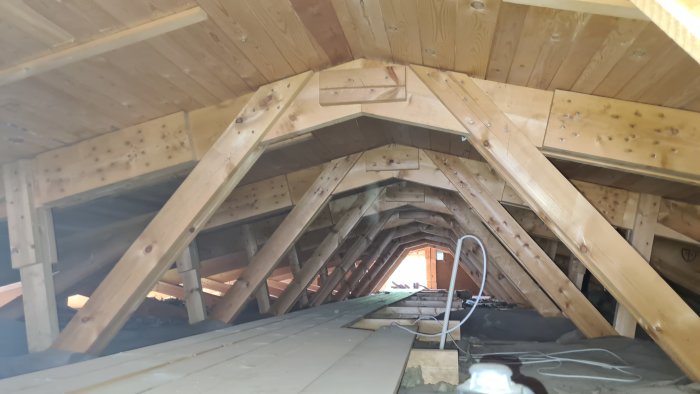
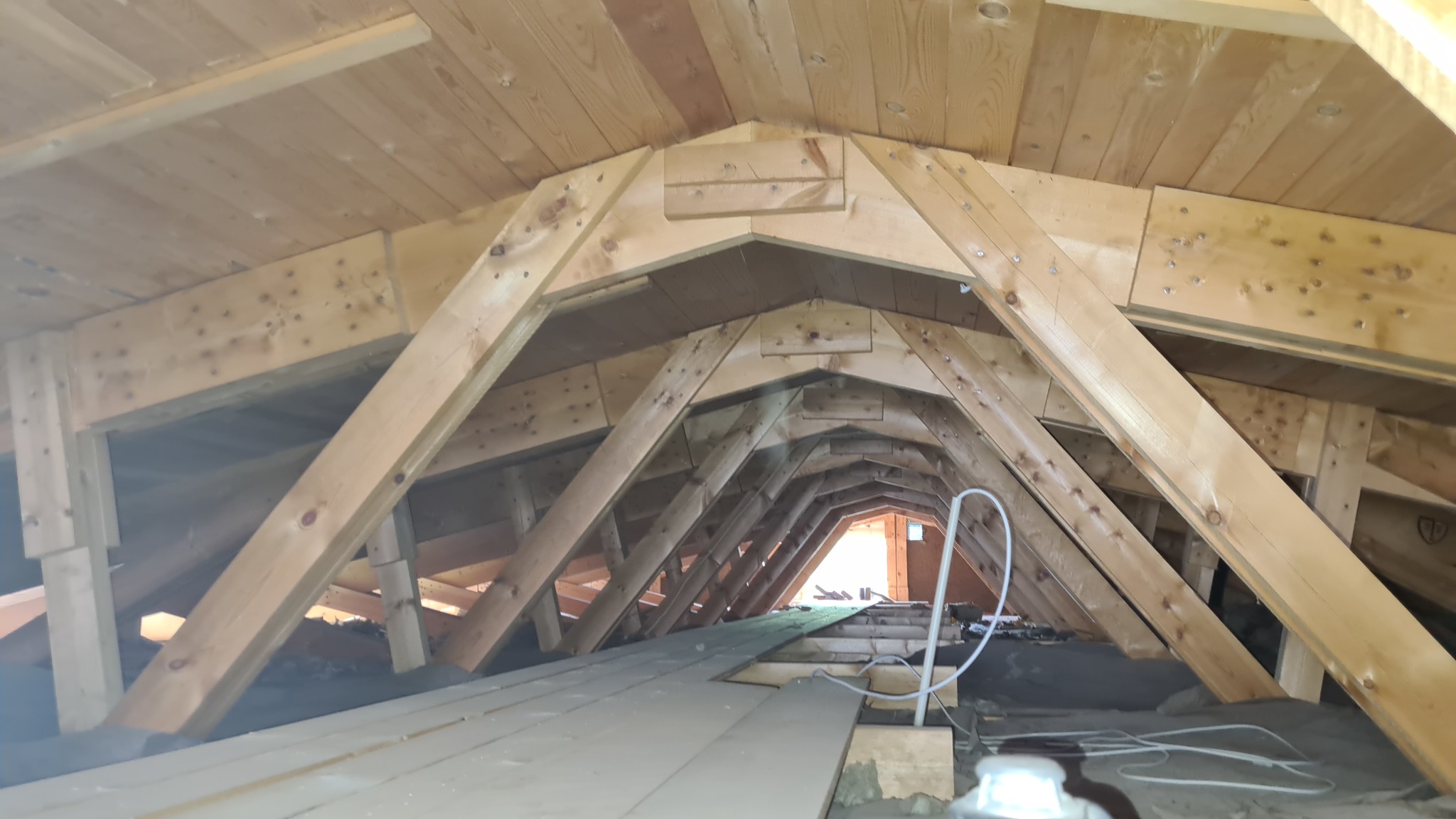
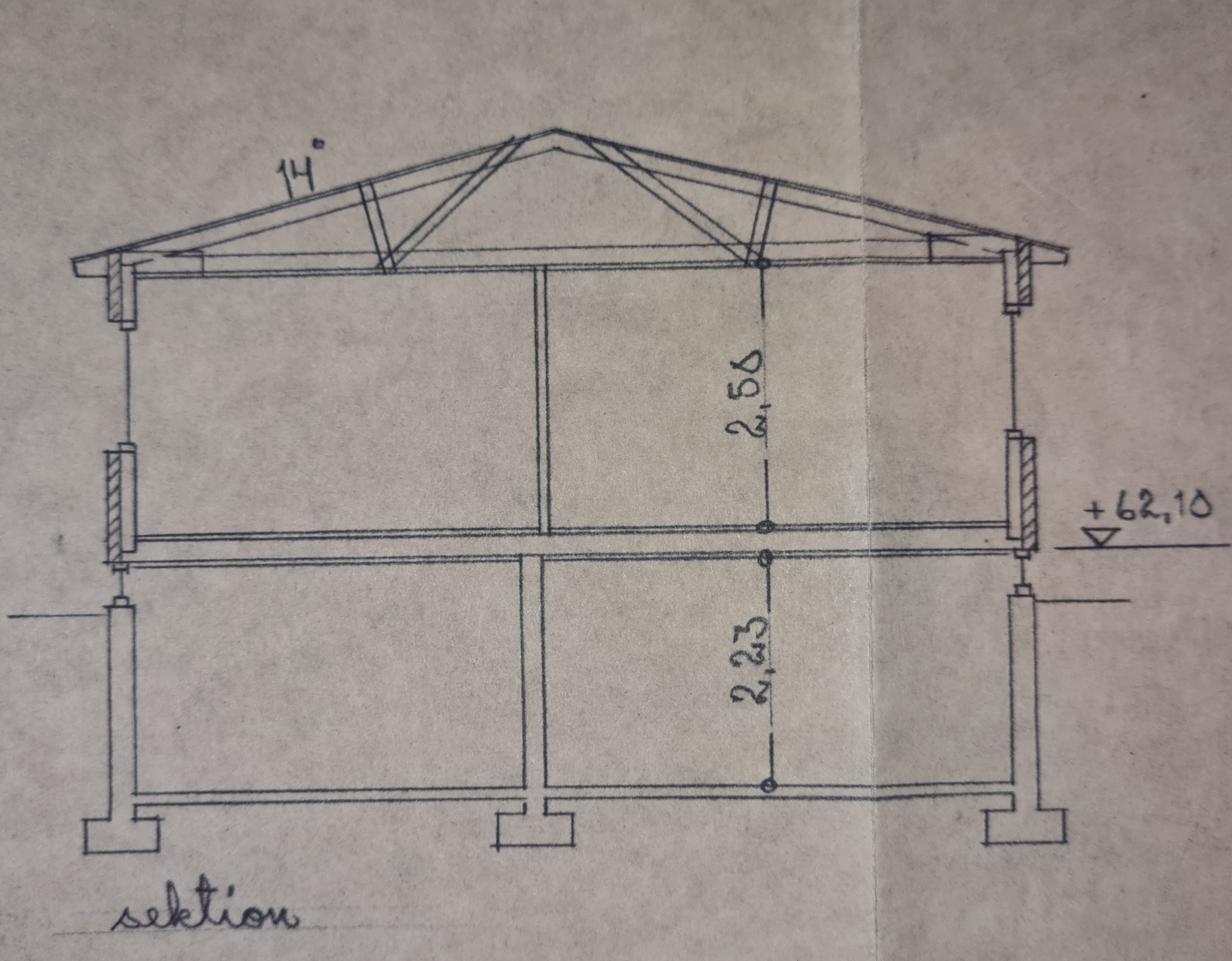
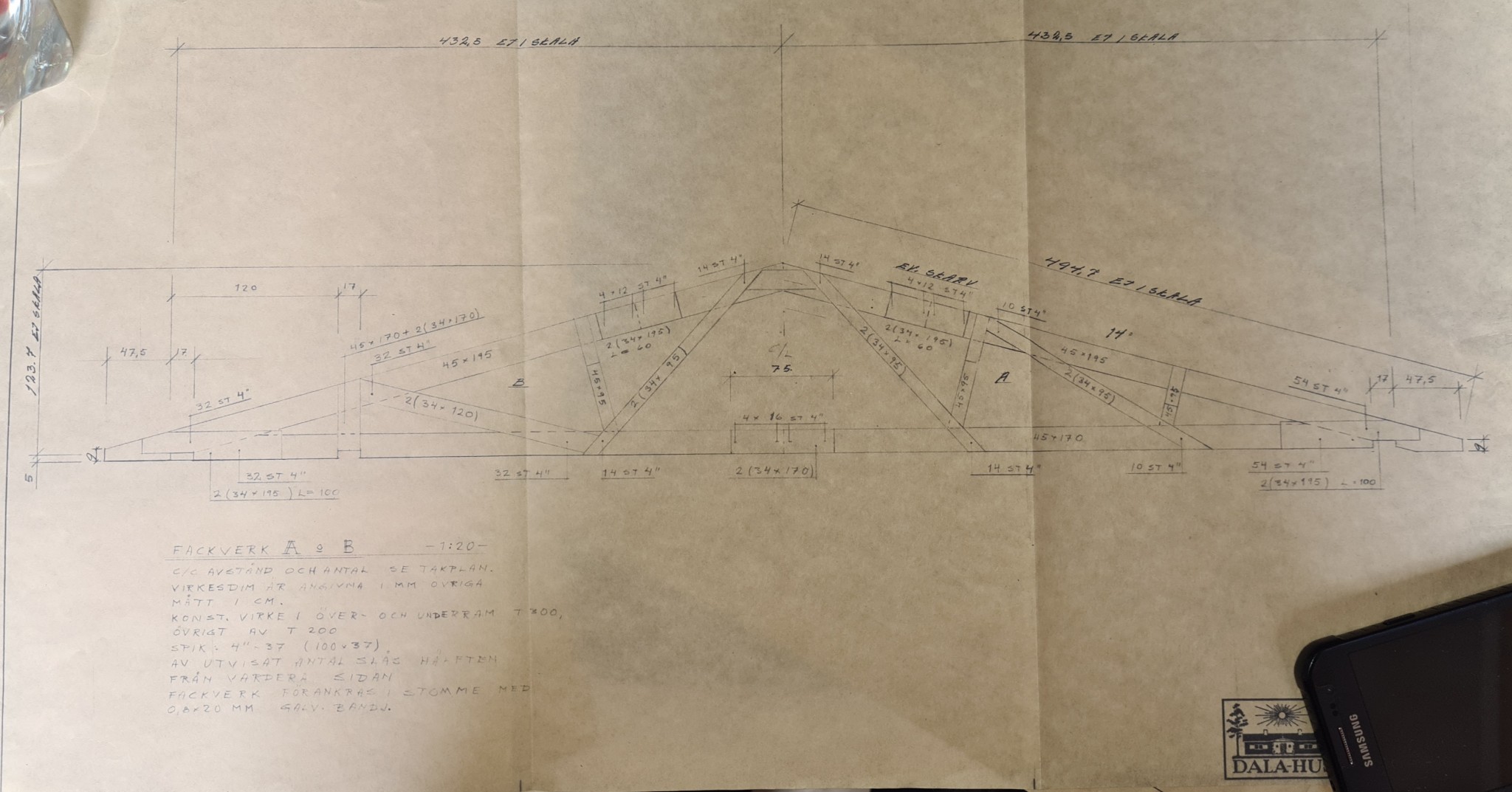
It has trusses according to the attached image. The distance between exterior walls is 8400cm (truss support) and over the lower chord on the trusses is 170/200 cc120, which should support a span of 9000cm according to the wood guide.
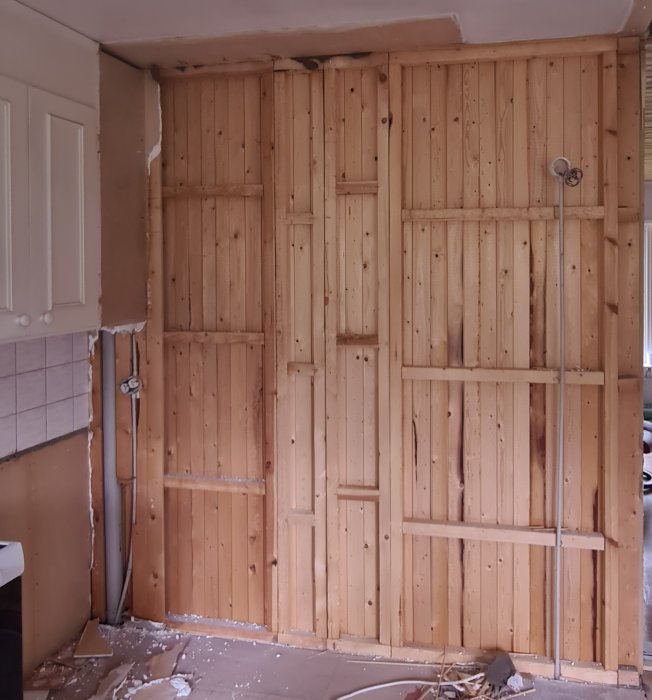
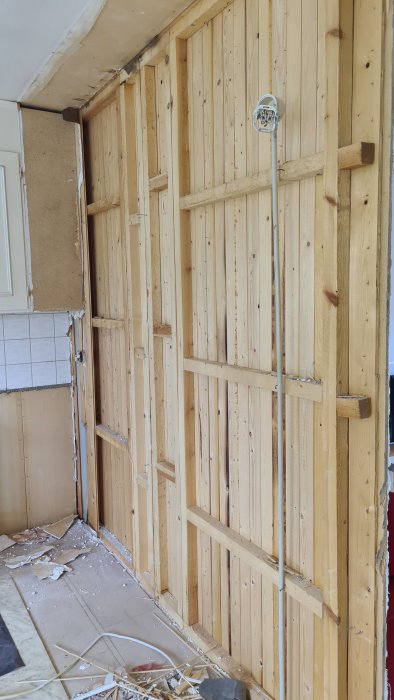
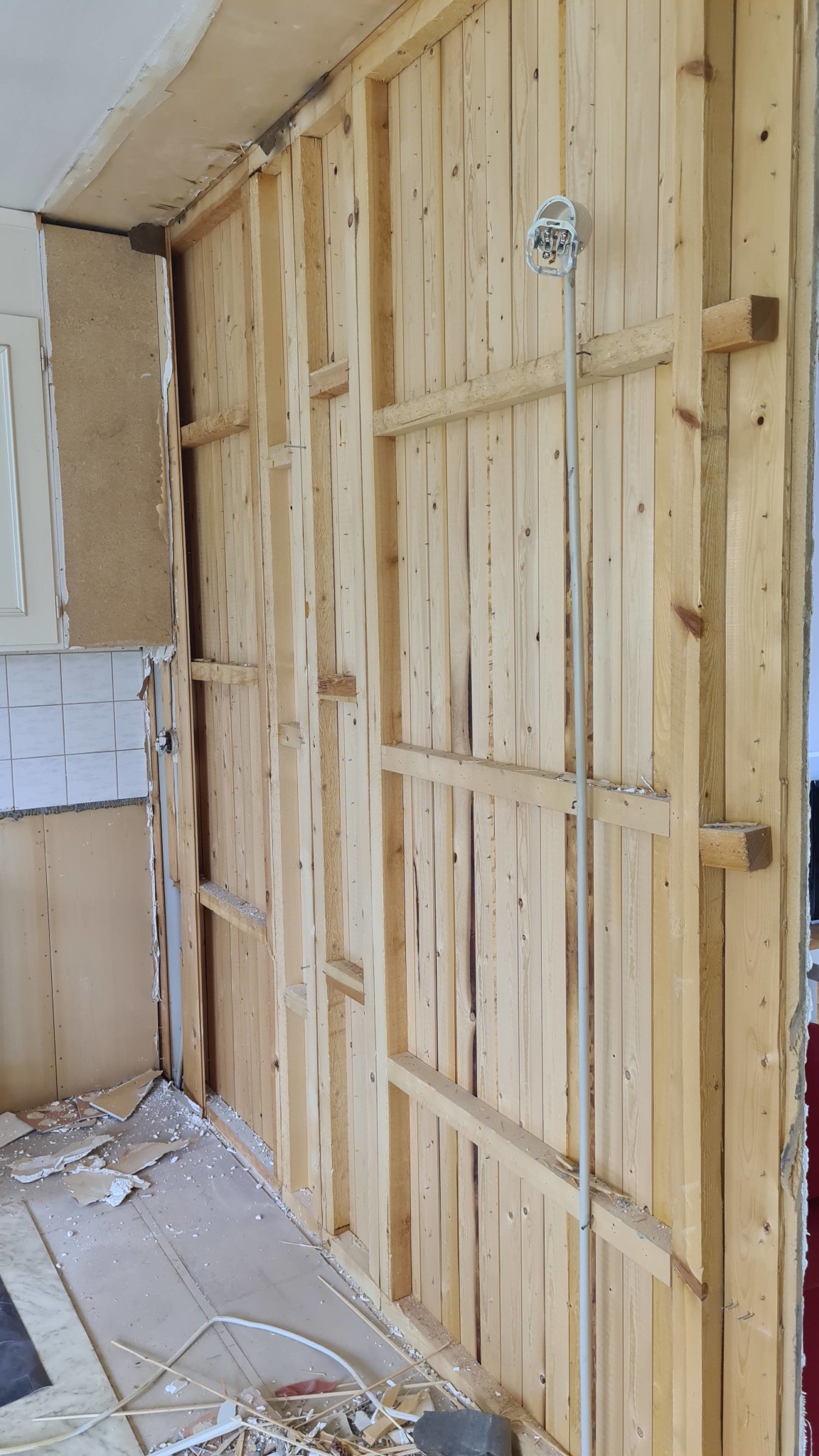
The wall to be removed consists, from the living room side, of (tretex 12mm, tongue and groove 10mm, studs 45mm with varied spacing (23-85cm) followed by tongue and groove 10mm and gypsum 12mm). See image.
There have also been kitchen cabinets on the wall before they were removed. There are no lintels or similar above doors, etc., in the rest of the house.
I've heard from an acquaintance's acquaintance that the roof might sag a bit with the potential demolition but that it shouldn't affect the structure otherwise since the attic cannot be converted, etc. Does anyone else have any thoughts...?
A hjärtvägg means that the wall is load-bearing and thus serves as a support for the rafters. Whether it is there to reduce deformations or for load-bearing purposes needs to be checked.
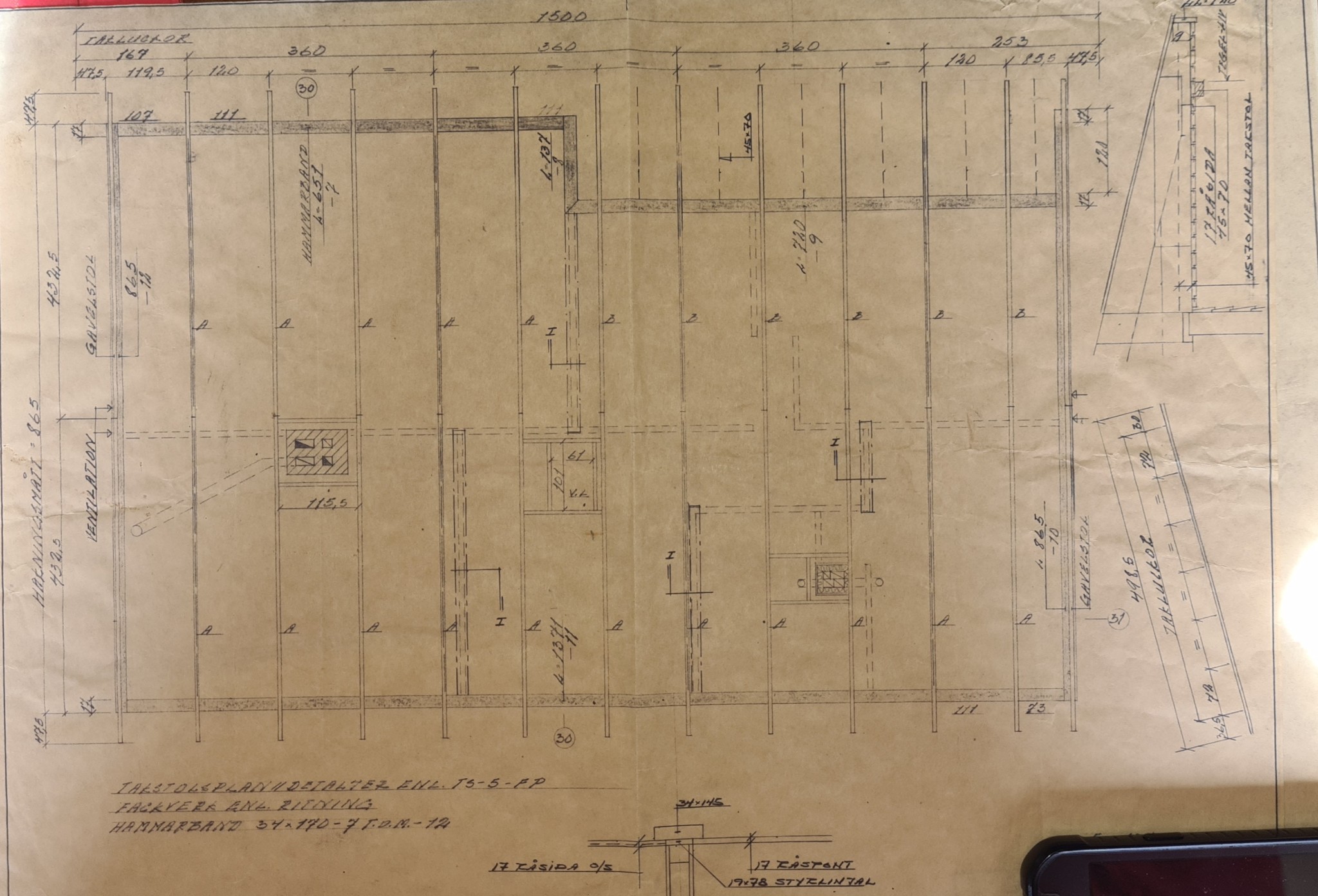
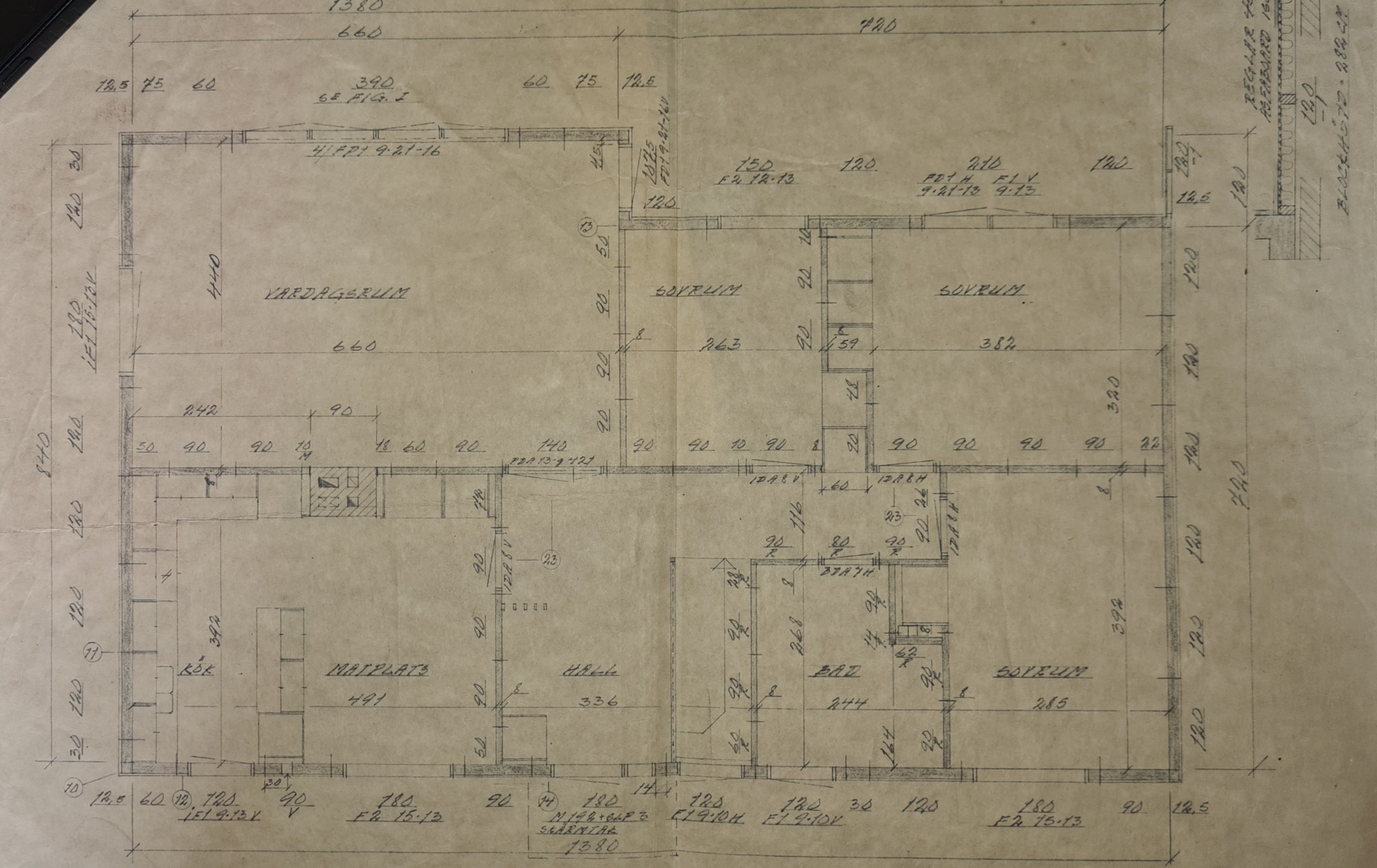
Upload the drawings you have of the house to make it easier. Does the wall run along the direction of the roof trusses or cross them? IF it is a hjärtvägg, you need to pause in the demolition now.
You don't just tear down a load-bearing wall just like that! But I find it hard to believe that the relatively frail wall you've posted a picture of is a load-bearing wall, what makes you think that? You need to answer the question about the wall's positioning compared to the roof trusses, and also checking against the blueprint would be good.
Thank you for your responses.
I will pick up the drawings today and upload them, which might shed some more light on the question.
I thought a "hjärtvägg" was a wall that went through the middle of the house along the ridge, regardless of whether it was load-bearing or not. But you see, you learn something new every day. Personally, my guess is that the wall isn't load-bearing, but I've paused the demolition for now. It's not good to rely on guesses. There are also several doors and closets in the wall, and only a 45x45 that is nailed to the attic ceiling joists with randomly placed 45mm standing unbraced studs. It feels very flimsy. What makes me hesitate is that the wall is situated in the middle of the house across the roof trusses. But as I said, the wall may serve purposes other than just being load-bearing...
No, a heart wall is a wall that is transverse to the roof trusses and roof load, which is directed down into the ground via the floor joists and foundation. Simply being transverse is not enough to call it a heart wall. https://sv.m.wikipedia.org/wiki/Hjärtvägg
How is that wall attached? It certainly looks very flimsy, and if you can "rock" it a little at the attachments on the floor and/or ceiling, you'll immediately see if it bears anything or even has a stiffening effect (though I strongly doubt both).
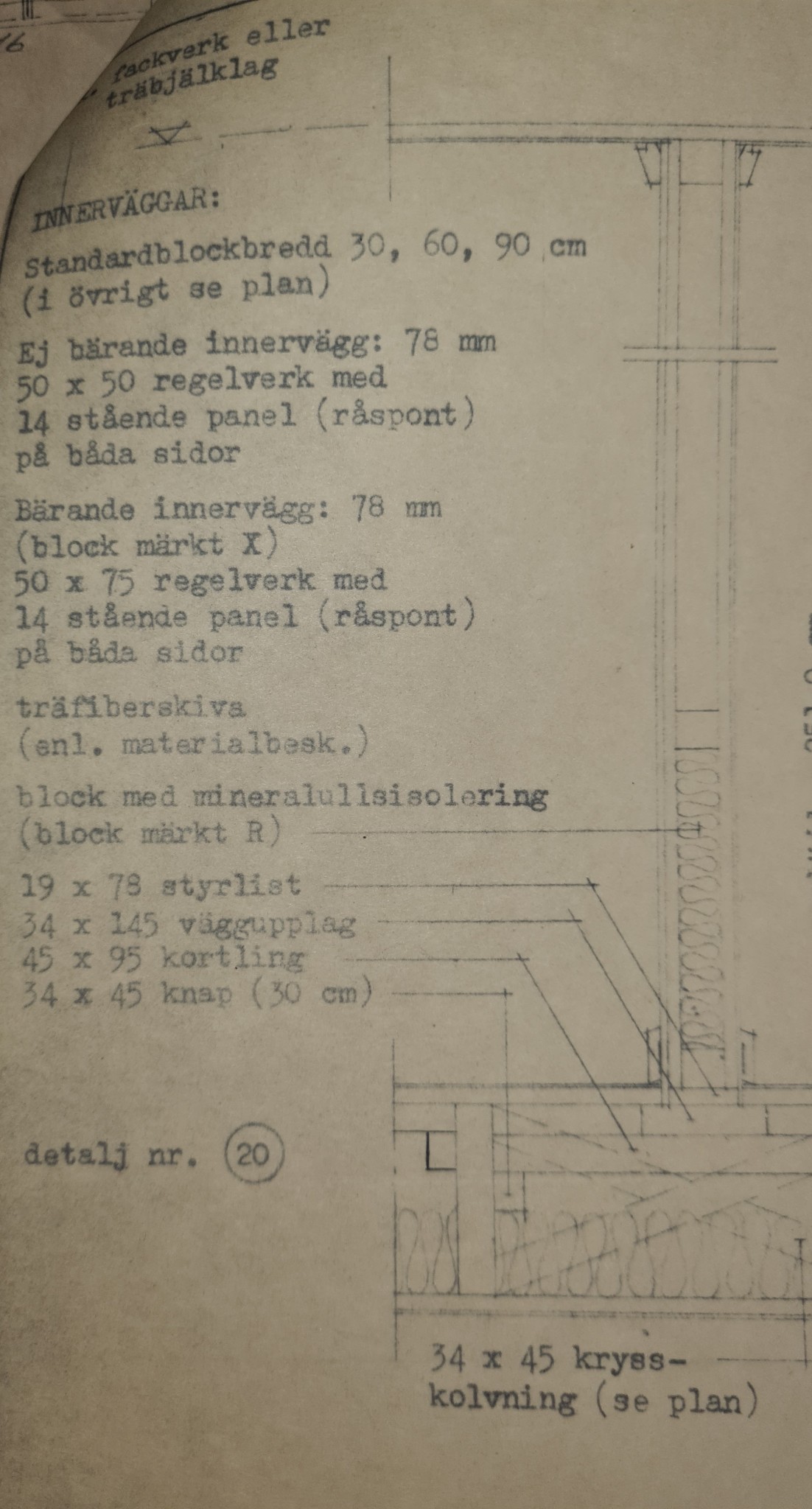
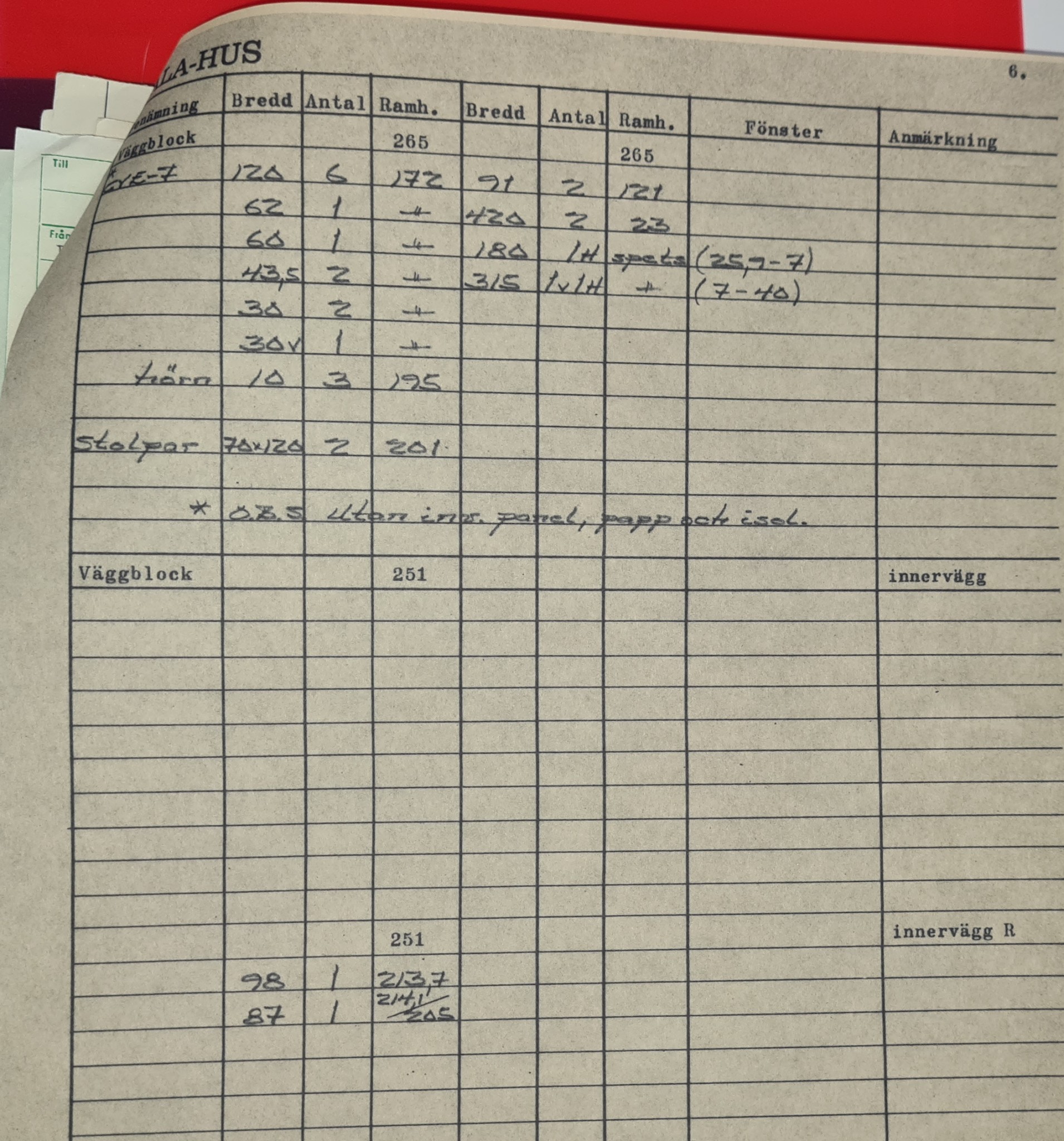
There are only two of all the wall blocks that are under interior wall R.
Load-bearing studs are 75 mm thick and non-load-bearing 50 mm thick according to the pictures. You previously wrote that they were 45 mm. Are they 45 mm on all sides?
If so, they are not load-bearing.
There are only two of all the wall blocks that are under inner wall R.
Load-bearing studs are 75 mm thick and non-load-bearing 50 mm thick according to the pictures. You previously wrote that they were 45 mm. Are they 45 mm on all sides?
If so, they are not load-bearing.
The walls in question are 50x50 not 45x45, I didn't measure before. It's only the bathroom that is insulated. Other walls seem to be non-insulated 50x50 plus tongue and groove, etc.






BirgitS said:
