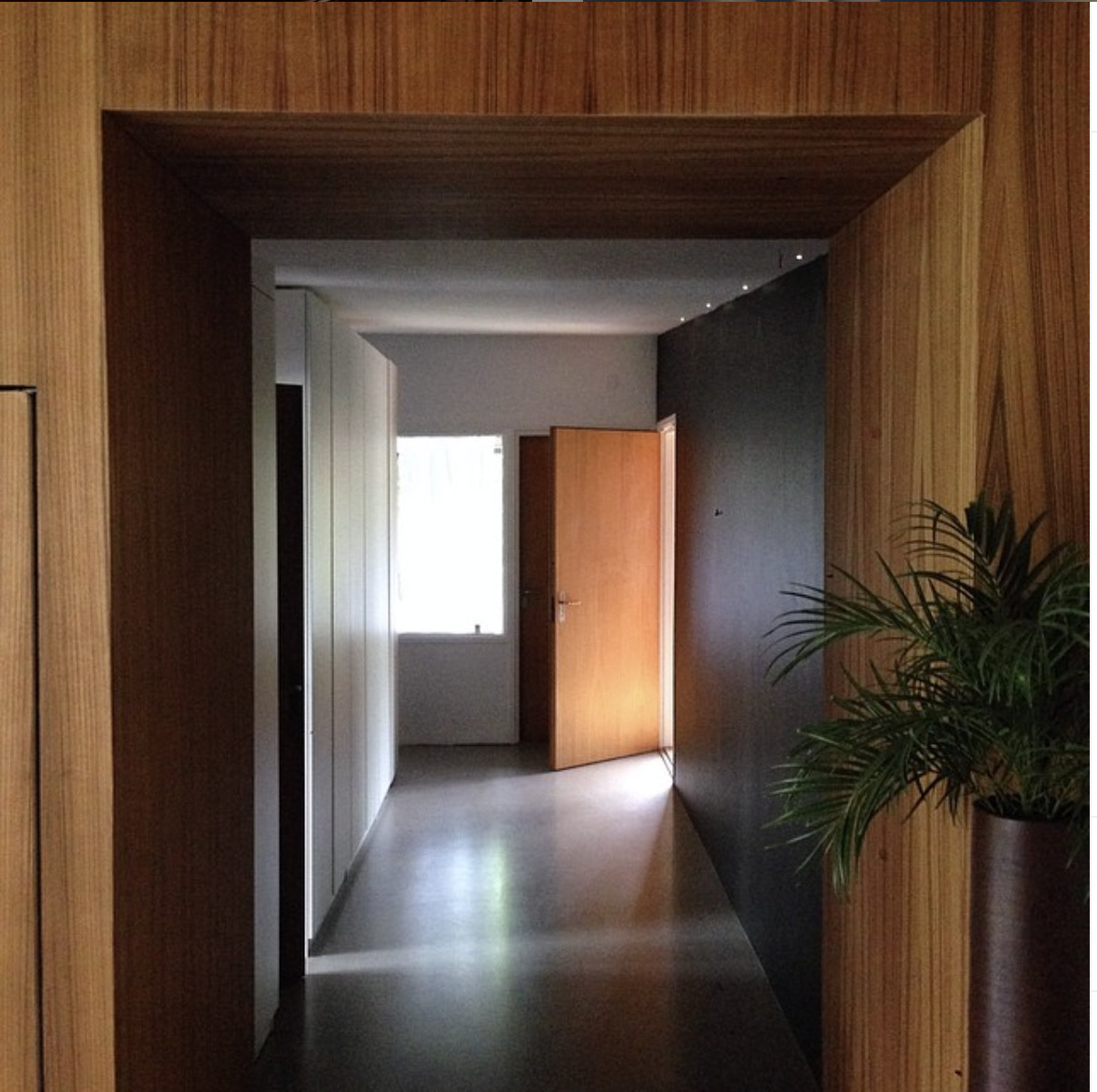
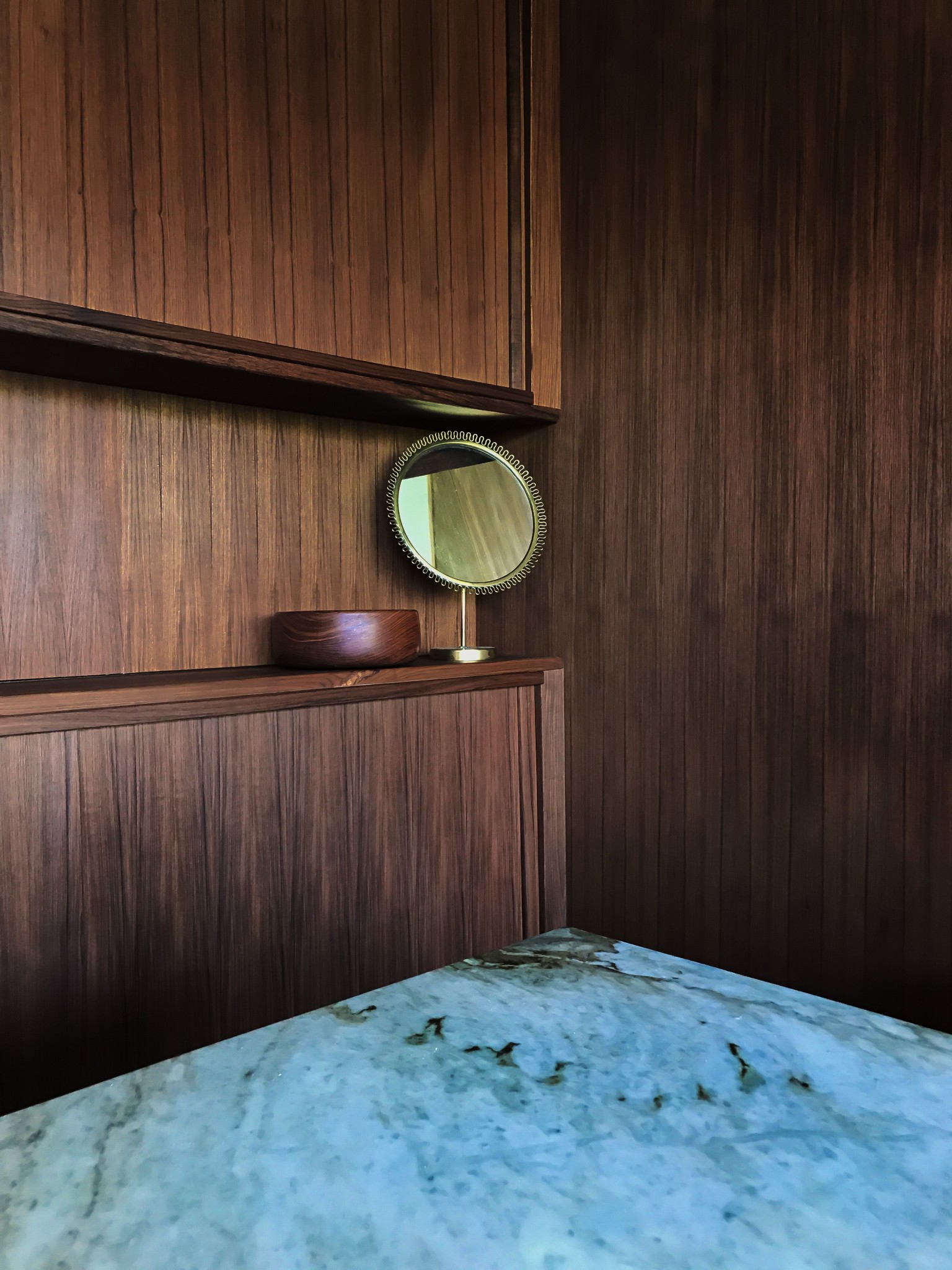
I have long been interested in putting up teak plywood on one of the walls in my apartment, and now I'm going to realize the "dream." The idea is an homage to the 60s case-study houses with one of the walls in the apartment in teak.
But to the practical part. Teak plywood is available at calexico and at various boat stores. I was recommended K-5650638ABJ Teak plywood, 6x1250x2500 (3.78 kg, single-sided) by Calexico. The pieces are standard 1250x2500, and the wall I plan to put it on is about 5x2.7 meters.
What method do you recommend for installing it? I first thought of a framework attached to the concrete wall with screws spaced 600 mm apart and then securing the panels to it with nails. The wall behind is a typical indoor wall made of lightweight concrete.
Are there simpler and more elegant solutions to attach the teak plywood panels to the wall than using beams and nails?
Are there more stylish ways to install teak plywood than with nails? I'm concerned the nails will be visible.
Since it is a rental, it must also be relatively easy to remove in case of a move.
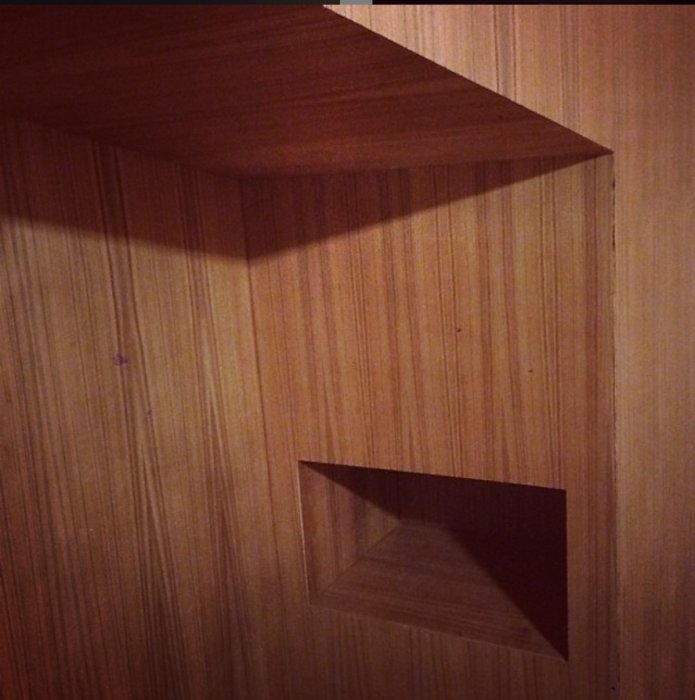
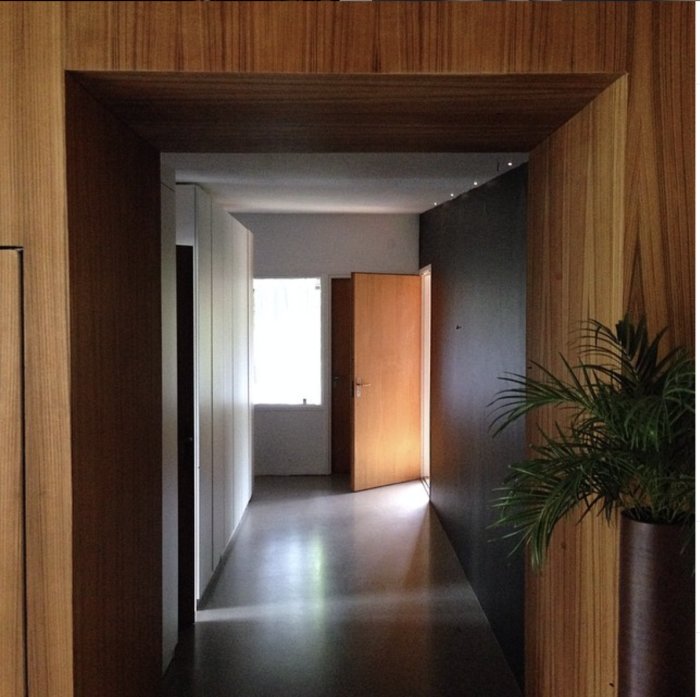
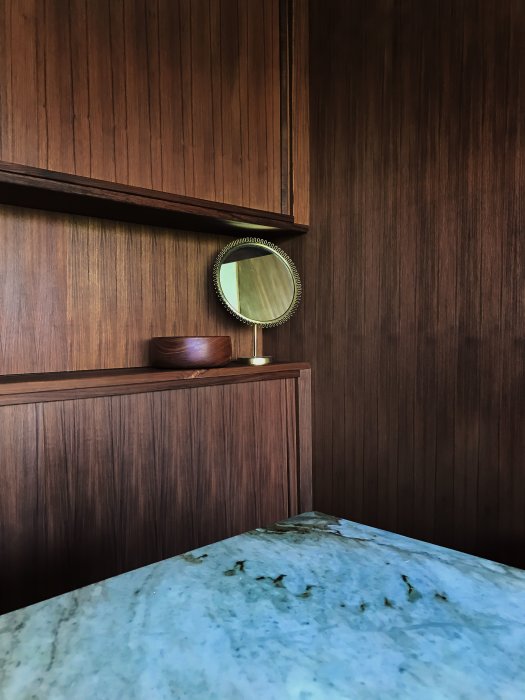
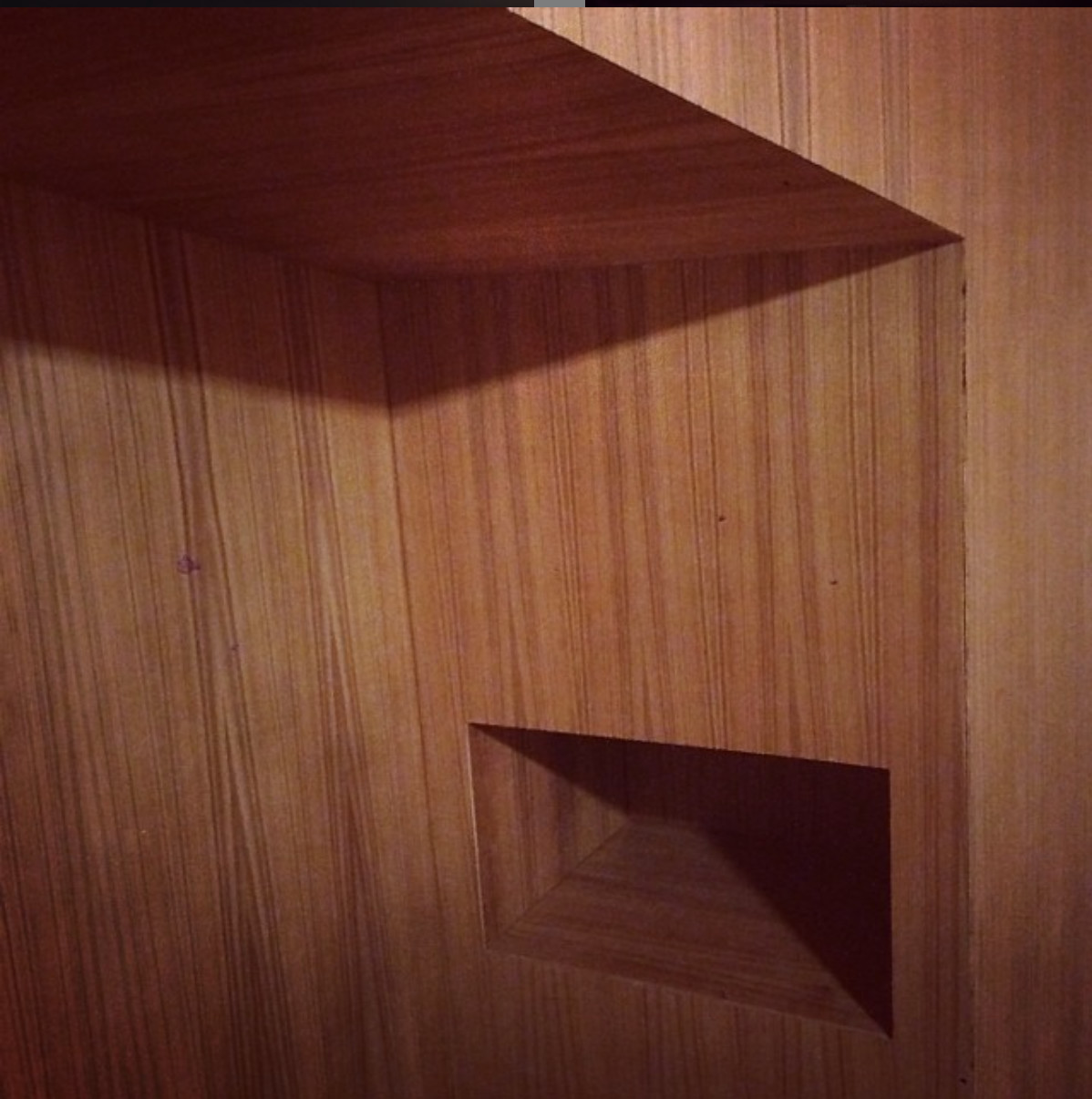
Attached are two pictures of a house with teak walls.
Cool project! You're going to go through quite a bit of plywood on these surfaces, but go for it!
A frame, or something behind it, is definitely required. Your idea to place studs at 600 mm centers is sufficient for your relatively lightweight teak plywood to support itself. However, it will obviously be challenging to hang or attach anything to this wall since your plywood won't have much load-bearing capacity and will be quite unstable. If you know for sure that this will be a bare surface with maybe just a few paintings, it will work, but all short and long joints must have support underneath.
If there might be things to attach eventually, it's of course possible to install a plywood backing that you attach to your lightweight concrete wall with countersunk screws. This can then serve as a base and load carrier for whatever you might screw on. Attaching it to the underlying lightweight concrete should be fairly straightforward, even though there will be some screw holes to fill in later. Thickness should allow both for hanging load and fastening of the teak plywood. There is, of course, also thicker veneered plywood with a teak side from the start, but it depends on how we feel about the visible fastenings.
For teak plywood, there are several ways to attach it. The most concealed fastening is probably with small-headed nails, and if you want very little visibility of these heads, you can countersink them and wax over. This type of fastening will be quite weak. A middle ground with a retro vibe is using brass slot screws intended to be visible and age over time. The invisible option is, of course, to glue it, but then all future reuse goes out the window.
Fun project! A lot of plywood is needed for these surfaces, but go for it!
A framework, or something behind, is absolutely necessary. Your idea of framing at cc-600 is fully sufficient for your relatively light teak plywood to support itself. However, it will obviously be challenging to hang or attach anything on this wall since your plywood will not have much bearing capacity and will be very unstable. If you absolutely know that this will be a plain surface and maybe just hang a few paintings, then of course it works, but all short and long joints must have support underneath.
If you might attach things after all, it is of course possible instead of beams to put up a plywood that you attach to your lightweight concrete wall with countersunk screws. This can then serve both as a base and load carrier for whatever stuff you then screw up. Attaching it to the underlying lightweight concrete should be reasonably easy even if there will be some screw holes that you then have to fill. Thickness that allows both suspended load and attachment of teak plywood. There's also thicker veneered plywood with a teak side from the start, but then it depends on how we accept the attachment being visible.
For teak plywood, you have several ways to attach, the most concealed attachment is probably nails with small heads, and if you want very little visibility on those heads, you can countersink them and wax over. This type of attachment, however, will be very weak. A middle ground with a retro vibe is obviously slotted brass screws intended to be visible and darken with age. The invisible option is of course to glue it up, but then all future reuse goes in the trash.
Thanks for the reply! One idea that occurred to me is to build a drywall directly on the wall, attaching with countersunk screws in plugs, and then glue veneer on the drywall. Provided that veneer on a roll is cheaper to purchase than veneer on plywood?
thanks for the response! An idea that struck me is to build a gypsum wall directly on the wall, attached with countersunk screws in plugs, and then glue veneer on the gypsum myself. Assuming that veneer in rolls is cheaper to purchase than veneer on plywood?
That sounds like a bad idea as you will end up with a lot of holes in your rental apartment wall. The gypsum needs to be screwed relatively tightly. If it wasn't necessary to restore, I might have gone along with this, but then I would have recommended gluing the gypsum to the concrete wall behind.
If you check with one of the wholesalers (Fredricssons, Holms, etc.), there should be teak plywood in larger sizes so you can avoid horizontal seams. 18ga brad nails become almost invisible and will work well to fasten the plywood.
Then I think I'll go for putting OSB boards or plywood against the wall with countersunk screws as you recommended and nail teak plywood against it with small brads.
Update: now moved in and it's time to kick off this project. Discovered positively that the wall I planned to put teak plywood on is a drywall with studs at cc 60. My question now is. The easiest way is probably to nail 6mm teak plywood directly onto the drywall with brads? How many nails per sheet do you think are needed or should I still screw up plywood or OSB board first to attach the teak plywood to?
No one? Torn between OSB board on the drywall (thickness?) and 6mm teak plywood on it with brads or if a solution is 6mm teak plywood directly on the drywall with longer brads into where the drywall studs are. Provided I find teak plywood with a length over 270cm.
It was a long time ago... how did it go and please include a photo with a description of how you did it. I am about to do something similar but in my own property.
Click here to reply
Vi vill skicka notiser för ämnen du bevakar och händelser som berör dig.



Jhelje said: