After a few months in a new build, I'm itching to take on a small miniature project. I'm thinking of building a smaller pergola that will support grapevines. I would appreciate some feedback on construction and dimensions!
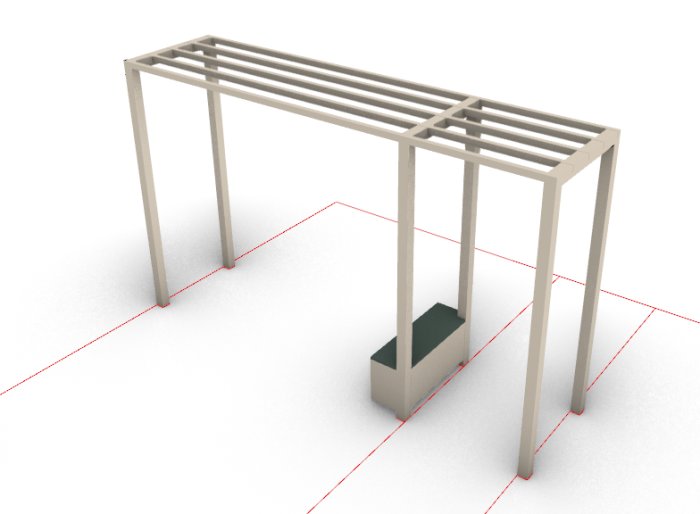
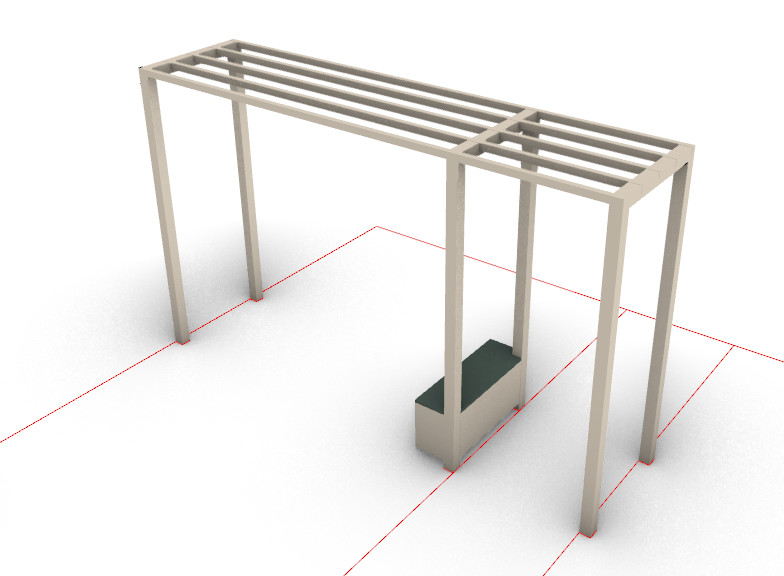
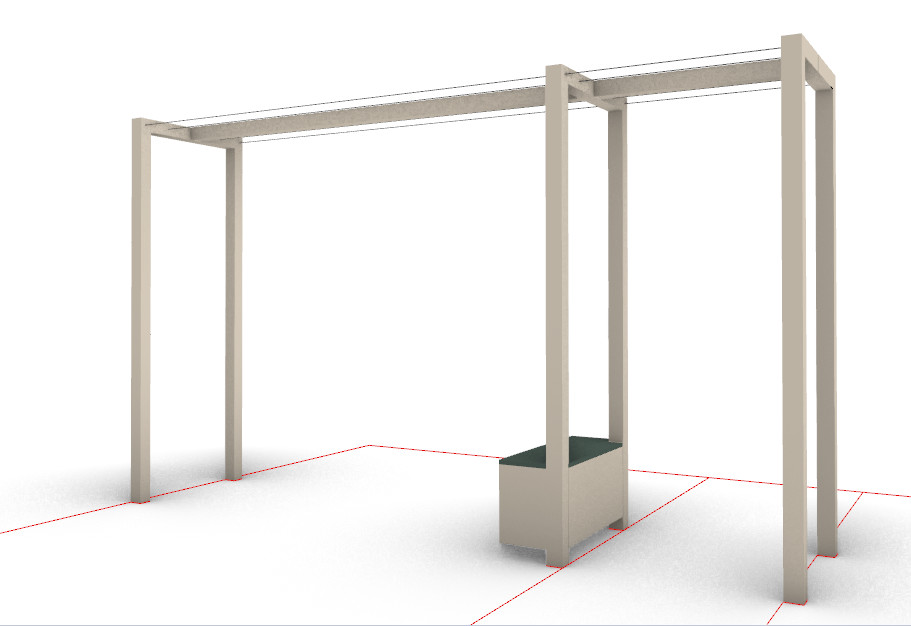
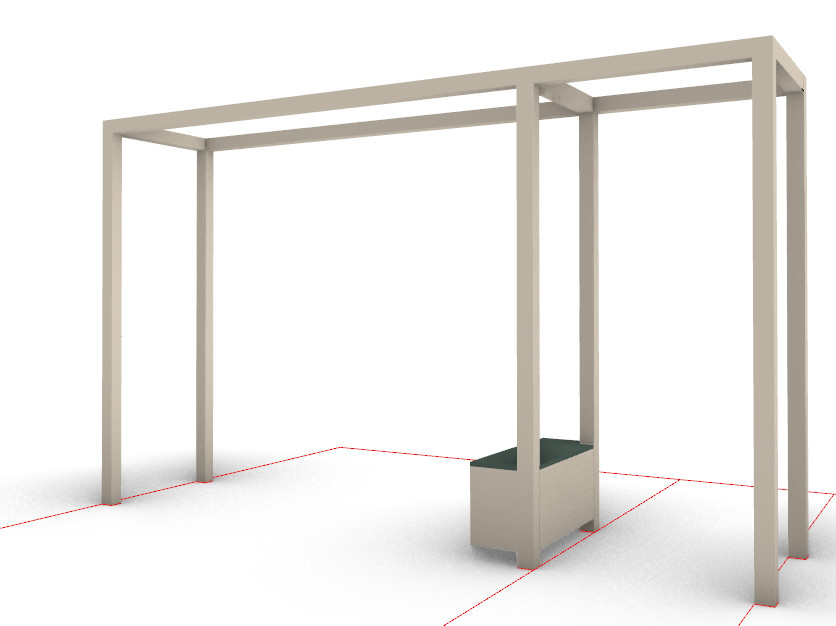
The structure will be about 3.5 x 0.8 meters in plan, and 2.2 meters high. The longest span is 2.5 meters. I'm planning to build it in untreated oak (mainly because the facade, decking, and planks are already such) and place the whole on six plinths that are dug into the ground.
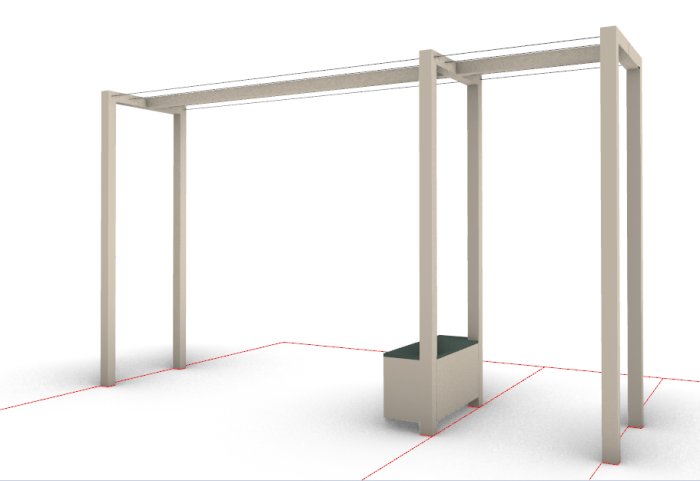
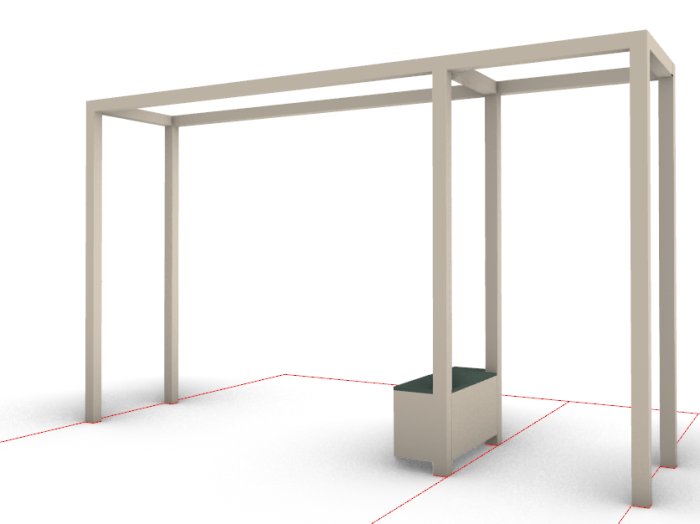
There are three different construction options at the moment.
Option 1. 3 "arches" are connected with 5 strips/rafters, approximately 3.5 meters long, preferably dimension 21x43 or something similar.
Option 2. All three arches are joined with a central beam of the same dimension. 4 wires are tensioned lengthwise, which the grapevines will hang/climb on.
Option 3. Beams connect in both directions. Crosswise wires support the grapevines.
Now to some questions I'd like some input on! I want to keep everything as neat as possible. I guess the maximum weight of the grapevines that will be supported is 50kg, but the vines themselves have quite a bit of load-bearing capacity that helps transfer loads to the columns.
1. Beam dimensions. Is 75x75 sufficient, or do I need to go up to 95x95?
2. Plinth foundation. I'm planning to dig in plinths with post shoes. Are 700 deep necessary, or will 500mm do? Does it matter how they are placed; do they take more torque in one direction?
3. Are all three options viable? It would be nice to be able to hang a hammock between the columns...
4. Dimensioning the top beams in option 1. How far down can I go in dimensions? I assume there's a considerable risk they'll start bending quite heavily..?
5. Joining. I preferably don't want to use building brackets or overlap them. Use dowels with round bars? Should the dowels then be oak, or a softer wood? Do I also need to saw half and half, or are the round bars enough? Is there another easier/better solution?
Oak has 20% higher modulus of elasticity than pine and spruce, which means everything can be made thinner. Since the construction is not meant to handle any significant loads, it's mainly about achieving a design that remains aesthetically pleasing over the years. The biggest challenge is stabilizing the construction without the use of diagonals. It should be possible to join using dowels, halving, or something similar, provided that the upper rails have sufficient height. It will be a woodworking project. Using fittings available in general stores will not look attractive. I would probably prefer option 3.
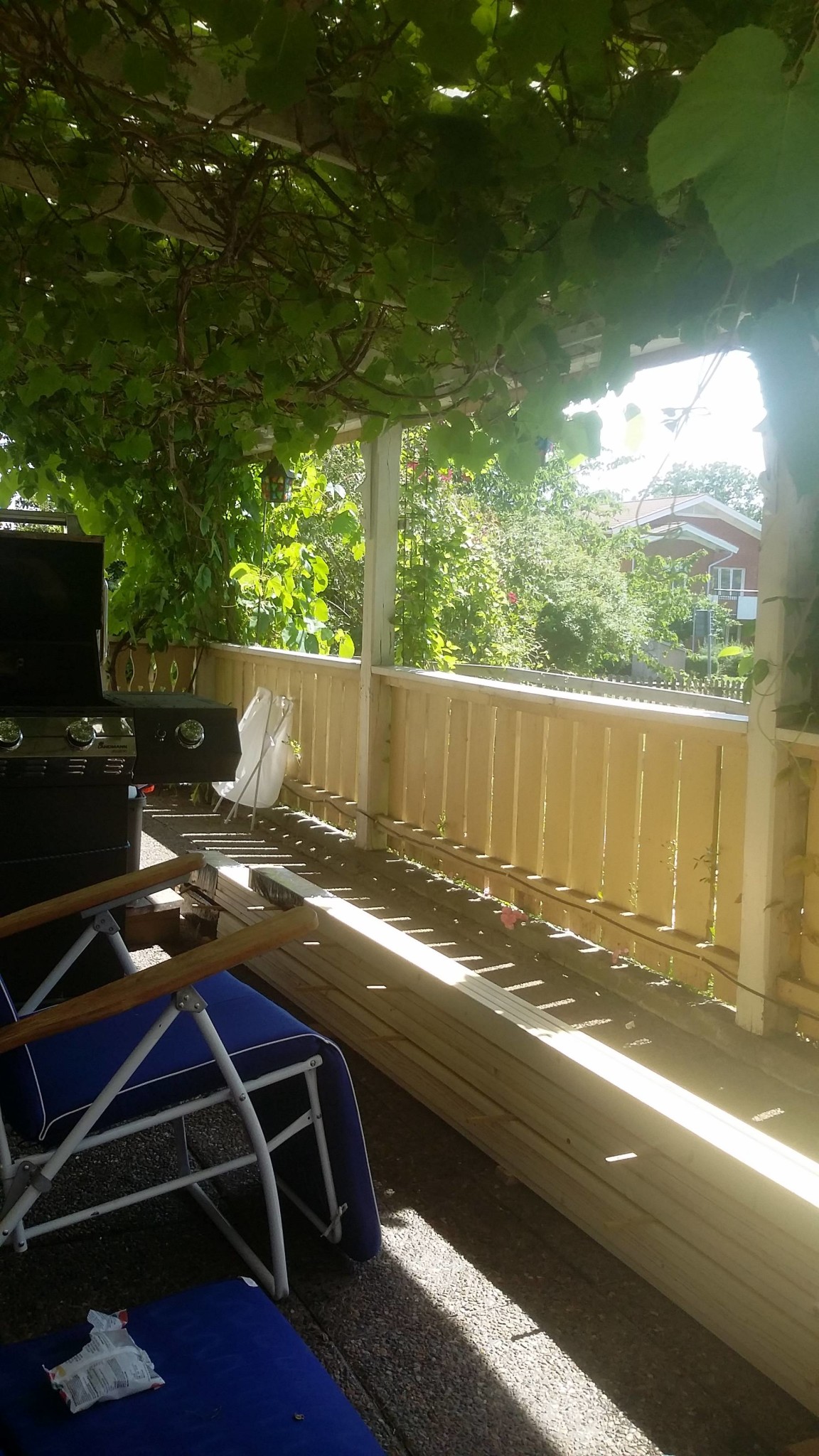
My thought is that it will look best with slats. And that grapes can get heavy... My house came with this "little" vine. Not pruned for many years so it is quite overgrown now. The wood is 3.6m to give some perspective on the jungle.
Yes, it can get heavy, you have to keep up with it! We had two logs on the ceiling of the conservatory at our previous house, there were about 50 kg of grapes from it. But that was a significantly larger area than what is intended here.
It sounds like 75x75 might work then, which would be nice. The main argument against option 3 is that the joints become quite complicated, I think. Option 1 feels like there's a high risk of significant deflection on the slats, and in that case, wires are nicer...
But considering horizontal stability, it might be necessary to go for the deepest pillars I can find and make sure to pack them well. To compensate for the lack of braces...



 We had two logs on the ceiling of the conservatory at our previous house, there were about 50 kg of grapes from it. But that was a significantly larger area than what is intended here.