I really need some help and advice from you knowledgeable and experienced people here. It concerns a wall under our dormer window that, upon demolition, we discovered according to suspicions supports the collar beams for the dormer and two collar beams in the attic. The dormer was added in the 1950s. The house is otherwise from '39.
When we moved in this spring, we were a bit too eager to bring in a structural engineer to check the possibility of moving the knee walls. At that time, we didn't consider that this wall could be load-bearing. It was after much ado that we managed to get hold of a structural engineer. Everyone down here in the countryside seems to work with companies, and this one made an exception for us. Of course, it would be easiest to contact an engineer again, but it was difficult enough to get one here in the spring, and he pointed out that he was making an exception for us. It also feels sour to pay again. But maybe we have no choice?
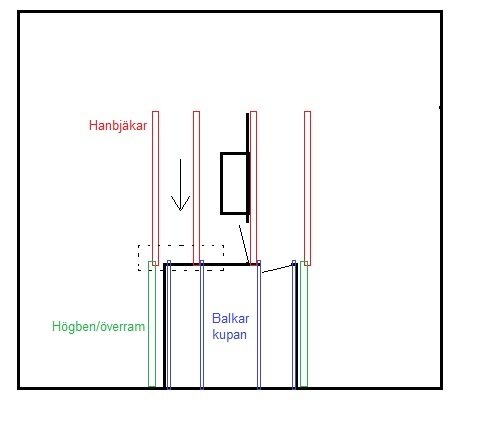
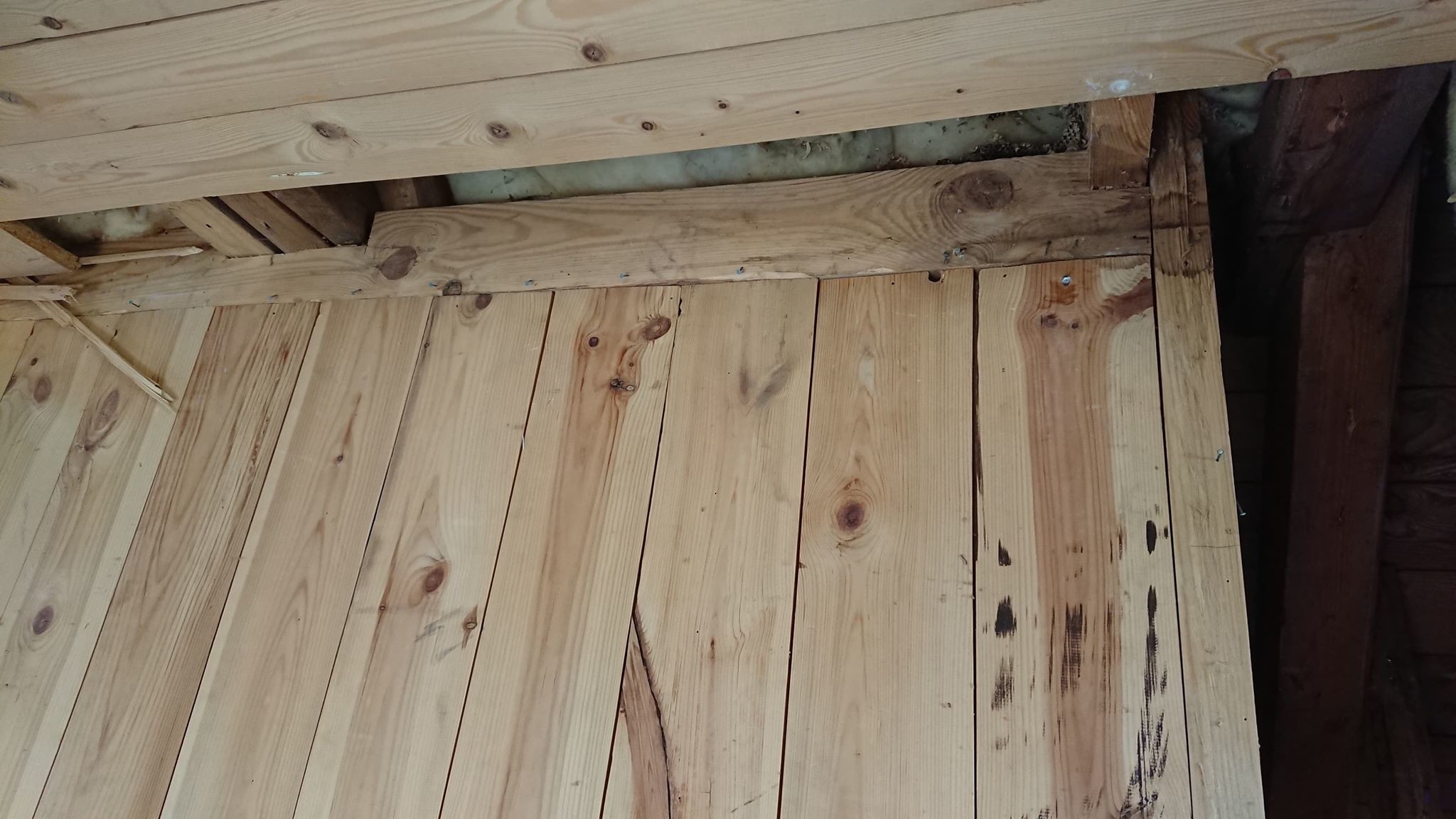
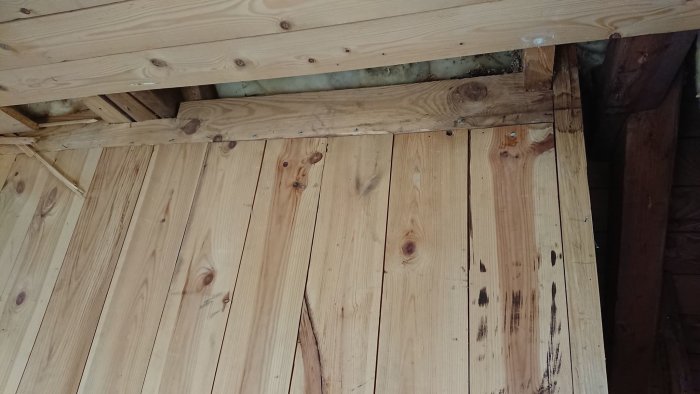
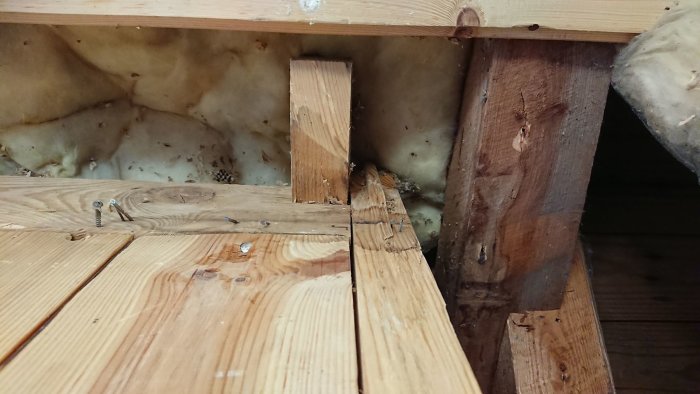
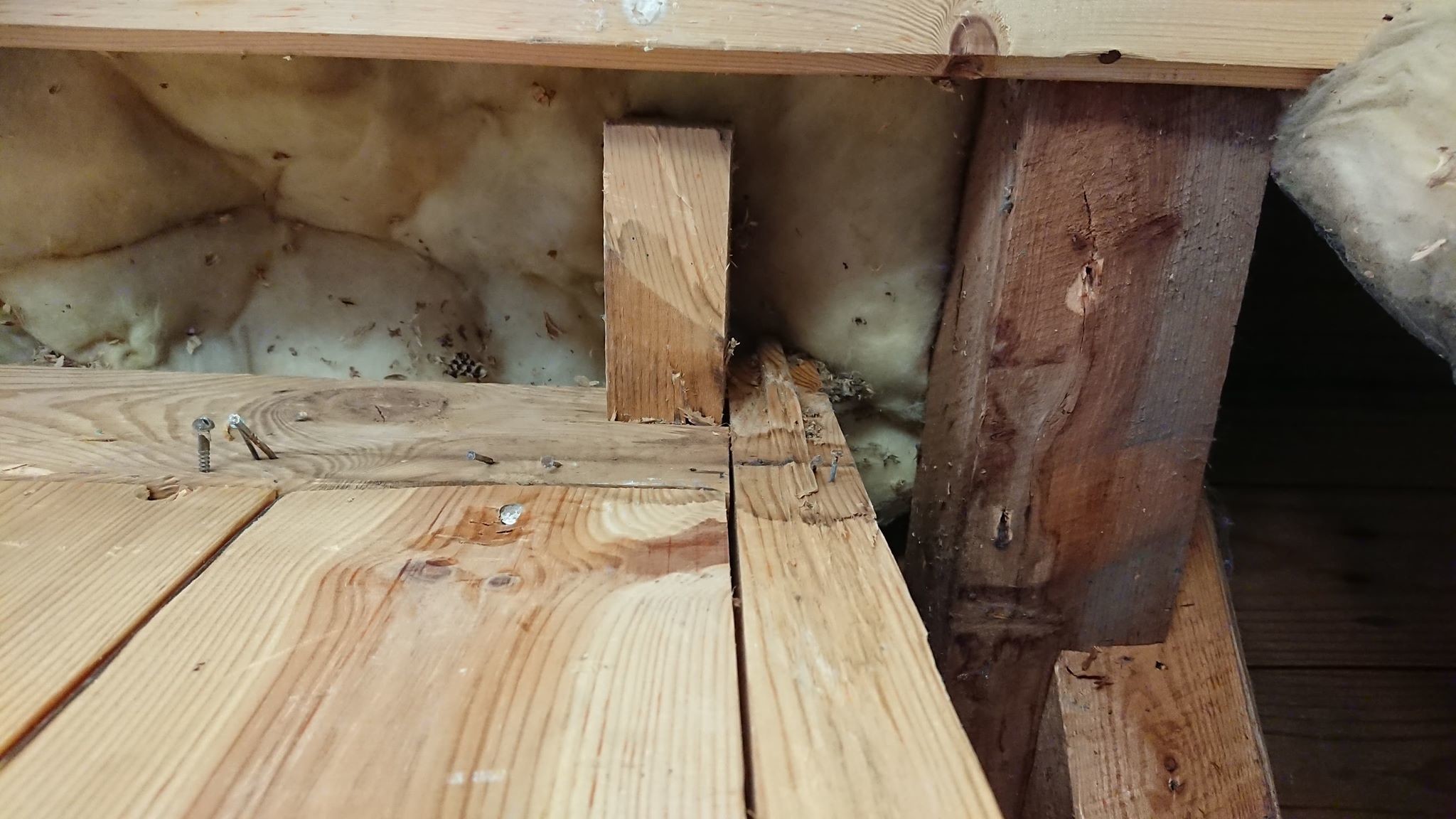
Info about the wall: (See the first picture and detailed images)
The wall, which is 290 cm long, supports 2 collar beams in the house's attic and 4 collar beams for the dormer. The beams rest on a wooden beam that sits on standing wood paneling, thickness 4 cm. The outermost part of the wall on each side stands on a beam in the intermediate floor.
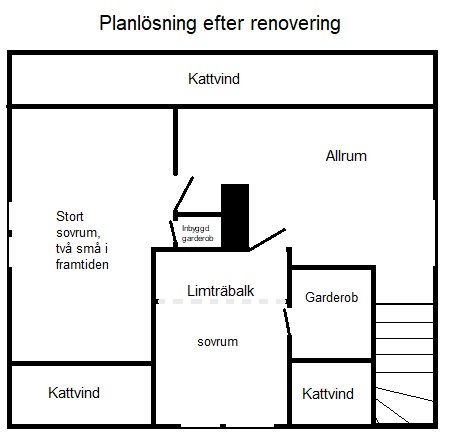
Since the new floor plan involves building a new wall parallel to this one, the beam will not need to support the two collar beams to the house; the new wall can do that. (see picture of the new floor plan) But the beam needs to support the 4 collar beams for the dormer. So we are not talking about an extreme amount of weight, and it doesn't feel particularly advanced, but maybe I'm wrong?
Neither of us is experienced, but we are handy and well-read. This feels like something we should be able to handle ourselves. What do you think?
Size of glulam beam to replace the old wall?
The new wall parallel to the old one should be able to be of simpler load-bearing construction with a horizontal stud and then vertical studs and no glulam beam since the bedroom door opening does not end up between the collar beams?
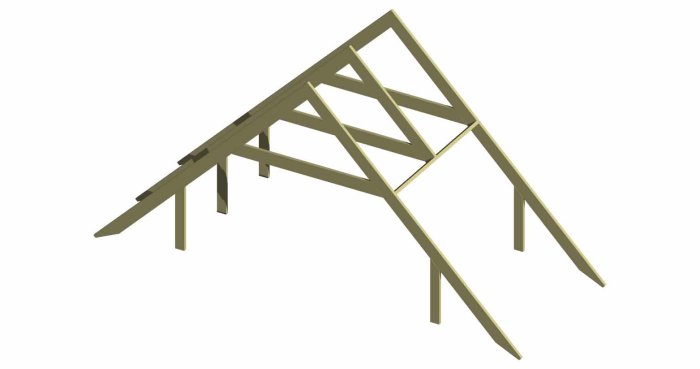
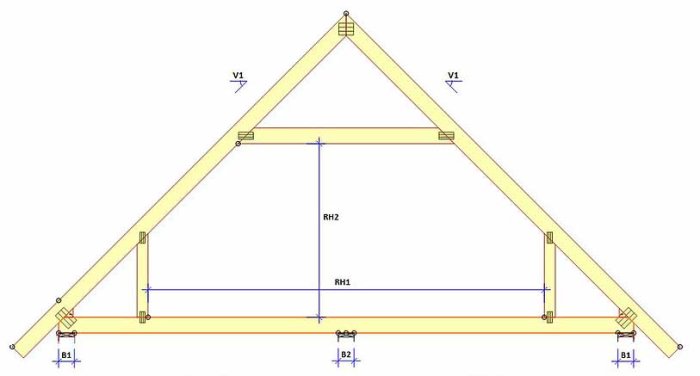
I think there might be some confusion regarding terms. The following image applies to a framework truss, which your house is likely equipped with.
The sloping beams supporting the outer roof are called "högben." In a truss, they are called upper chord members. "Hanbjälke" is the upper horizontal beam. Its main purpose is to prevent the "högben" from pushing out the outer walls. Additionally, the inner ceiling in the attic is usually nailed to the "hanbjälke." A "hanbjälke" does not need support from below. The short vertical pieces are called struts. The presence of "hanbjälkar" and struts also allows the "högben" to be made with smaller dimensions. The lower horizontal beams are the floor joists for the attic floor.
When adding a dormer, you need to cut one or more "högben," which then must be redirected to adjacent trusses. However, this usually never involves any "hanbjälkar."
With the help of this little digression regarding terminology, perhaps you can describe the problem in a way that is at least a bit more understandable to me?
Only if it's a truss. In a formal sense, the floor joists do not belong to the truss. Their dimensions do not affect the truss otherwise. There is indeed some carelessness with the terminology even among professionals.
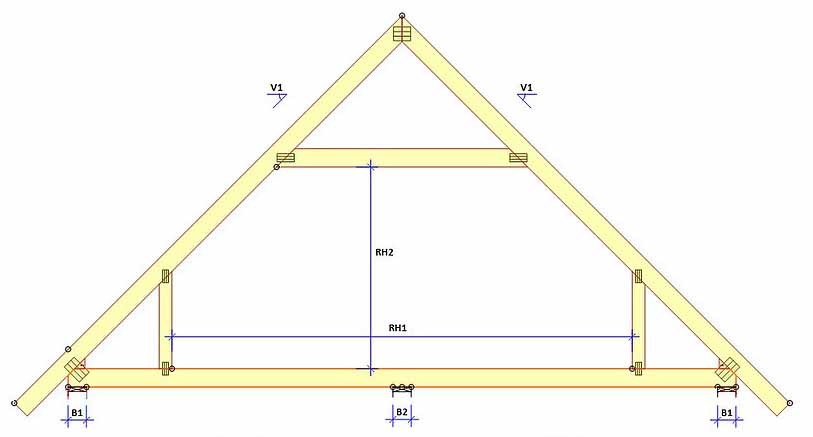
I think there's a bit of confusion regarding terminology. The following image pertains to a framework truss, which your house is likely equipped with.
[image]
The slanted beams supporting the outer roof are called högben. In a truss roof, they are called top chords. Hanbjälke is the upper horizontal beam. Its main task is to prevent the högben from pushing out the outer walls. Additionally, the interior ceiling in the attic is usually nailed to the hanbjälke. A hanbjälke does not need support from below. The short vertical pieces are called stödben. The presence of hanbjälkar and stödben also allows the högben to be made of lighter dimensions. The lower horizontal beams are the floor joists of the attic floor.
When creating a dormer, you need to cut off one or more högben, which then need to be transferred to nearby trusses. However, this rarely involves any hanbjälkar.
With the help of this small digression regarding terminology, perhaps you can describe the problem in a way that is at least a bit more comprehensible to me?
I might have expressed myself confusingly but was basing it on the information we got from the engineer. He wrote the following regarding the stödben. "The greatest deformation change occurs in the upper frame (the slanted beams that go from the ridge to the gutter). An increase
from 8.1 to 8.6 mm. This is a change that is marginal and insignificant. It's important that the hanbjälke (the horizontal
beam in the ceiling B7) is attached to the upper frame. As additional reinforcement, you can also nail a board to the side of the upper frame."
So I'm a bit unsure which terms I've gotten wrong. The engineer called it an upper frame, so I assumed it was called that, but it's högben that's correct for a framework truss then, I guess? I called it mellanbjälklag because I read it can be called that as it separates two floors, even in a 1.5-story house. But the correct term is vindsbjälklag? ^^
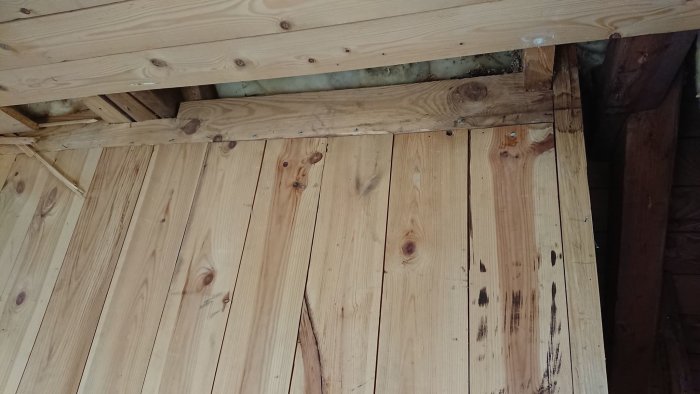
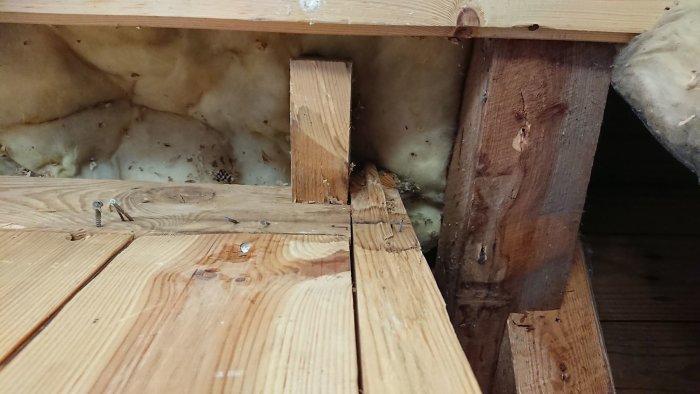
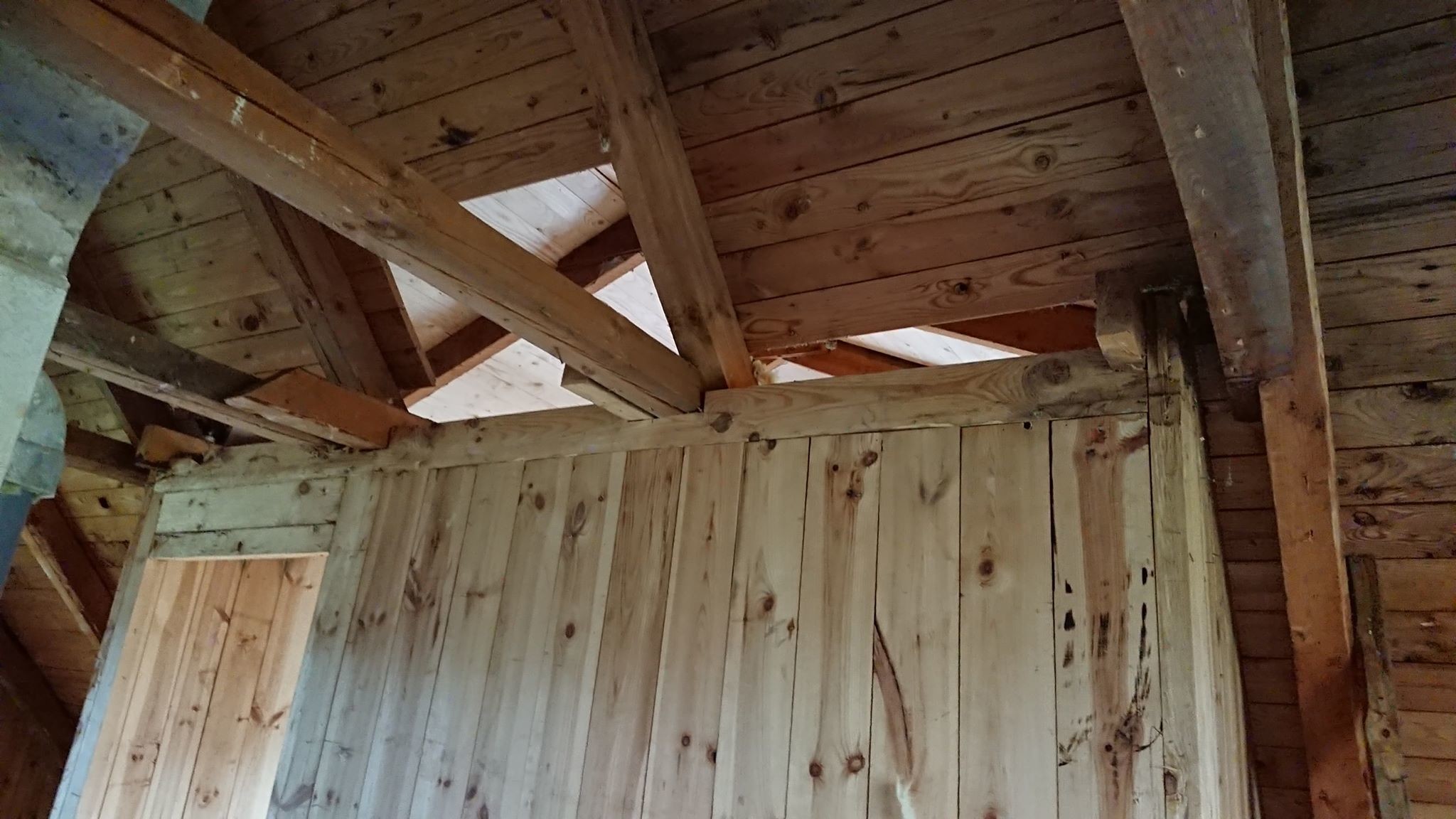
Yes, when they built our dormer, they removed two högben. But these seem not to be transferred to nearby trusses in our house? See picture two and three. On both sides, the trusses are completely separate from the affected trusses, and no transferring seems to have occurred to them. I understand that typically the hanbjälke is attached to the högben, and that's the case with our other trusses. But here it actually looks like two hanbjälkar rest on the wall we want to remove next to the new hanbjälkar for the dormer? See to the left in the second picture.
Your designer was probably a bit young. I have no problem with him calling the high legs "upper frames," but it was the frequent mention of "hanbjälkar" that confused me. Can you explain from which angles images 2 and 3 are taken?
I might have incorrectly called the new beams under the dormer "collar beams," and that's why it got so confusing? Because the beams that run in the attic ceiling are probably collar beams? The ones in the dormer might be called something else since they aren't part of the truss framework?
Anyway, sorry if I muddled it up
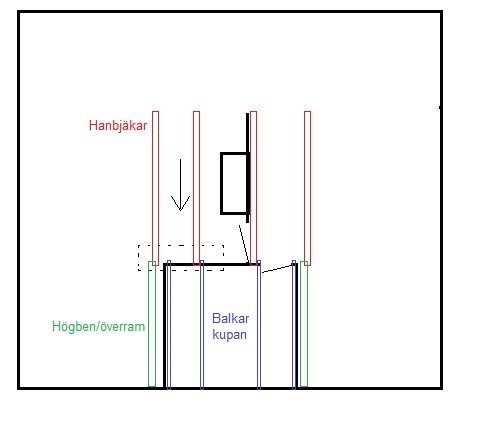
But I drew a new picture in paint, hope it's a bit clearer. I've drawn an arrow showing where the picture is taken from and made a dashed marking on which beams are in the picture.
The following sketch shows how the opening in the roof structure is normally created, which a dormer requires. In the opening, the dormer's own walls and roof are then constructed, which can look quite different. Is your dormer built in a different way?
The following sketch shows how one normally creates the opening in the roof structure that a dormer requires. In the opening, you then build up the dormer's own walls and roof, which can look quite different. Is your dormer built in a different way?
[image]
Hi! Sorry for the late reply, been away for the weekend.
I've been up in the attic to take a closer look and draw up how our dormer is constructed. It’s not built the usual way, I suppose? The whole roof trusses are entirely separate from the dormer as you can see in my drawing as well as in images 4 and 5. So no load transfer has been done to the adjacent roof trusses.
If you check my drawing, it seems that wall 1 and beam 1 in the dormer together create a substantial beam on which the dormer's king posts rest. (The same applies, of course, to beam 4 and wall 3.) Unfortunately, I don't have a picture of it as it was difficult to access, but from the attic, you could see that wall 1 went up next to beam 1, creating a wider base for the king posts. Beam 1 rests on wall 2.
Beams 2 and 3 don’t seem to support anything directly. But the collar beams from the house lie next to them on the possibly load-bearing wall.
So I don't know how to present this less confusingly. I hope you can get some sort of idea with the help of my pictures.
Now I think you have been very clever! Everything has become much clearer. Two of the old high legs have been cut off, but they rest on a plank wall that transfers the loads to the floor structure. Beams 2 and 3 probably only have the task of supporting the ceiling in the dormer. I assume they rest on something at the front edge. The only thing I miss is that the dormer's rafters should also have had collar ties, but there is probably a beam at the front edge that replaces these. The distances are small. (An alternative to collar ties is steel tension rods. Those are barely noticeable.)
Now that we have a description of reality that we agree on, the question remains: Which beams do you want to saw off? Is it 2 and 3? As far as I can judge, that should be fine in that case.
Now I think you have been very skillful! Everything has become much clearer. Two of the old rafters are cut off but rest on a plank wall that transfers the loads to the joists. Beams 2 and 3 only seem to have the task of supporting the ceiling in the dormer. I assume they rest on something at the front edge. The only thing I miss is that the dormer's rafters should also have had tie beams, but there is probably a beam at the front edge that replaces these. The distances are small. (An alternative to tie beams is steel rods. Such are hardly noticeable.)
Now that there is a description of reality that we agree on, the question remains: Which beams do you want to cut off? Is it 2 and 3? As far as I can assess, it should be fine
Thank you And thank you for your responses so far. Now we have demolished further and really brought everything out, I thought I would show it to you so you can see the construction in its entirety. But just as you wrote, there seems to be a beam at the front edge that replaces the dormer's tie beams? Could it be the one seen in picture no. 1 at the dormer's gable?
Above all, we want to be able to remove the plank wall and build a new wall 1 meter further into the house at the chimney. Which I assume then has to transfer the loads from the cut-off rafters down to the joists. However, aren't the dormer's roof trusses on beam 1 and 2? But it should work to just support these with some sturdy pillar/stud where the plank wall is? What dimensions do you think one should use for such a pillar if so?
The idea from the beginning was not to remove beam 2 and 3. But if their only task was to support an interior ceiling, they are very unnecessary since we might want an open ceiling up to the ridge. Moreover, it would be nice to avoid installing a beam in the ceiling to support them when the plank wall disappears.
Could it be the one seen in picture no. 1 at the gable of the dormer?
The truly supporting function is carried out by the plank wall in the gable, but the board that is nailed to it helps.
It becomes a bit speculative when there is no finished drawing to consider. There are many ways to do it. Anything related to the dormer can be extended and possibly given new dimensions. Columns usually aren’t very large, but they must rest on points that can handle the loads. When the sawn-off rafters can't rest on a plank wall, they must land on a beam in some way. The best thing is to create a finished proposal that can be calculated.
Click here to reply
Vi vill skicka notiser för ämnen du bevakar och händelser som berör dig.

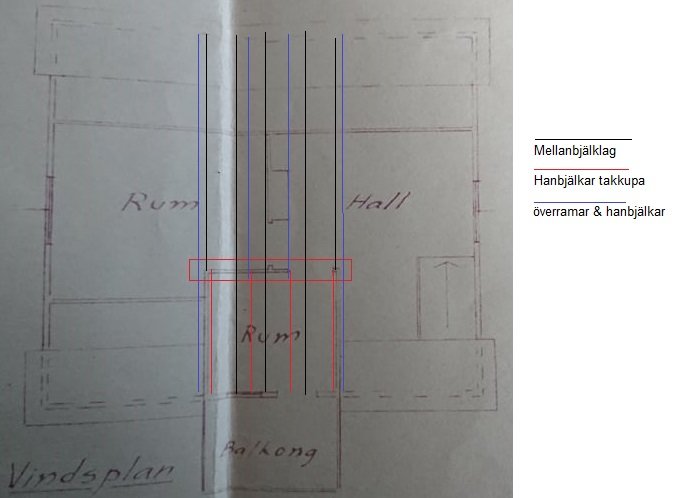




 I called it mellanbjälklag because I read it can be called that as it separates two floors, even in a 1.5-story house. But the correct term is vindsbjälklag? ^^