
456 views ·
6 replies
456 views
6 replies
Seal/cover gap between wall panel and baseboard
Hello,
A complete beginner here, so all tips and recommendations are warmly welcomed – bonus points for educational and detailed answers so I can understand
Long story short. We have a room where one of the walls is an exterior wall. The exterior wall is brick and inside there are boards that are framed. There are certain gaps between the baseboard and the board which create drafts and lower the room's temperature. We wish to seal these in some way.
In picture 1 and 2, I'm thinking you could simply use acrylic sealant to seal since the hole is quite small. Then just paint the acrylic sealant with the same color as the wall. What do you think of that plan? If it's good, does anyone have a good recommendation for an acrylic sealant to use?
For picture 3, 4, and 5, my feeling is that the gap is too large for acrylic sealant to work? Or should one apply a layer on the baseboard, let it dry, then a new layer until you “reach” the wallboard? I've also read about sealing tape, mineral wool strips, sealing strips, etc... The gap varies between 1-2 cm, I’d say. An advantage is that at the two ends of the largest gaps there are studs that might be usable...
The dream would be to paint over an even nice surface with wall paint so it's visible as little as possible. At the same time, a bed will probably be placed there so I could consider a pragmatic solution if it's a difficult-to-achieve dream.
As mentioned, complete beginner here so all tips and tricks are appreciated.
Many thanks in advance.
A complete beginner here, so all tips and recommendations are warmly welcomed – bonus points for educational and detailed answers so I can understand
Long story short. We have a room where one of the walls is an exterior wall. The exterior wall is brick and inside there are boards that are framed. There are certain gaps between the baseboard and the board which create drafts and lower the room's temperature. We wish to seal these in some way.
In picture 1 and 2, I'm thinking you could simply use acrylic sealant to seal since the hole is quite small. Then just paint the acrylic sealant with the same color as the wall. What do you think of that plan? If it's good, does anyone have a good recommendation for an acrylic sealant to use?
For picture 3, 4, and 5, my feeling is that the gap is too large for acrylic sealant to work? Or should one apply a layer on the baseboard, let it dry, then a new layer until you “reach” the wallboard? I've also read about sealing tape, mineral wool strips, sealing strips, etc... The gap varies between 1-2 cm, I’d say. An advantage is that at the two ends of the largest gaps there are studs that might be usable...
The dream would be to paint over an even nice surface with wall paint so it's visible as little as possible. At the same time, a bed will probably be placed there so I could consider a pragmatic solution if it's a difficult-to-achieve dream.
As mentioned, complete beginner here so all tips and tricks are appreciated.
Many thanks in advance.
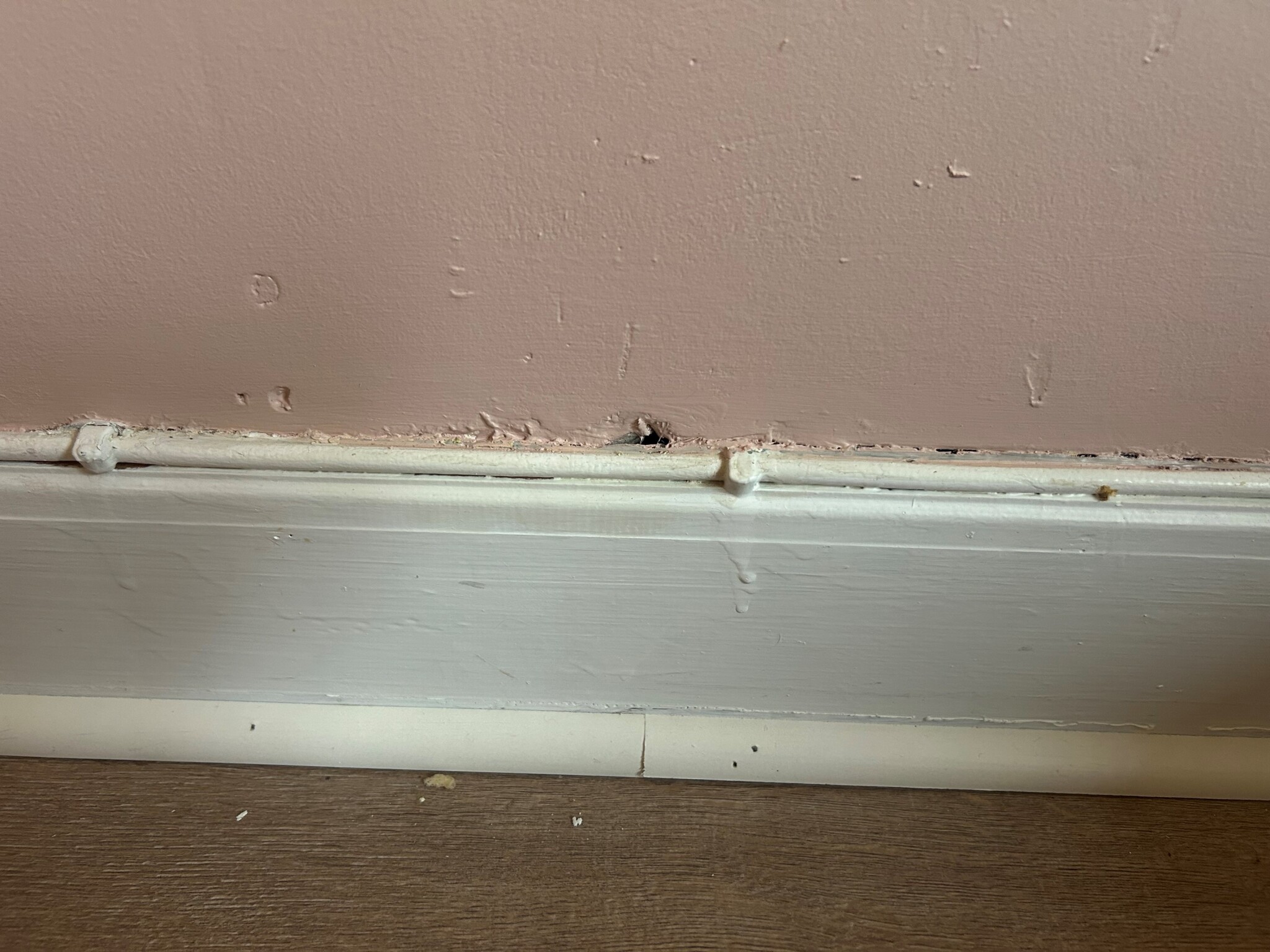
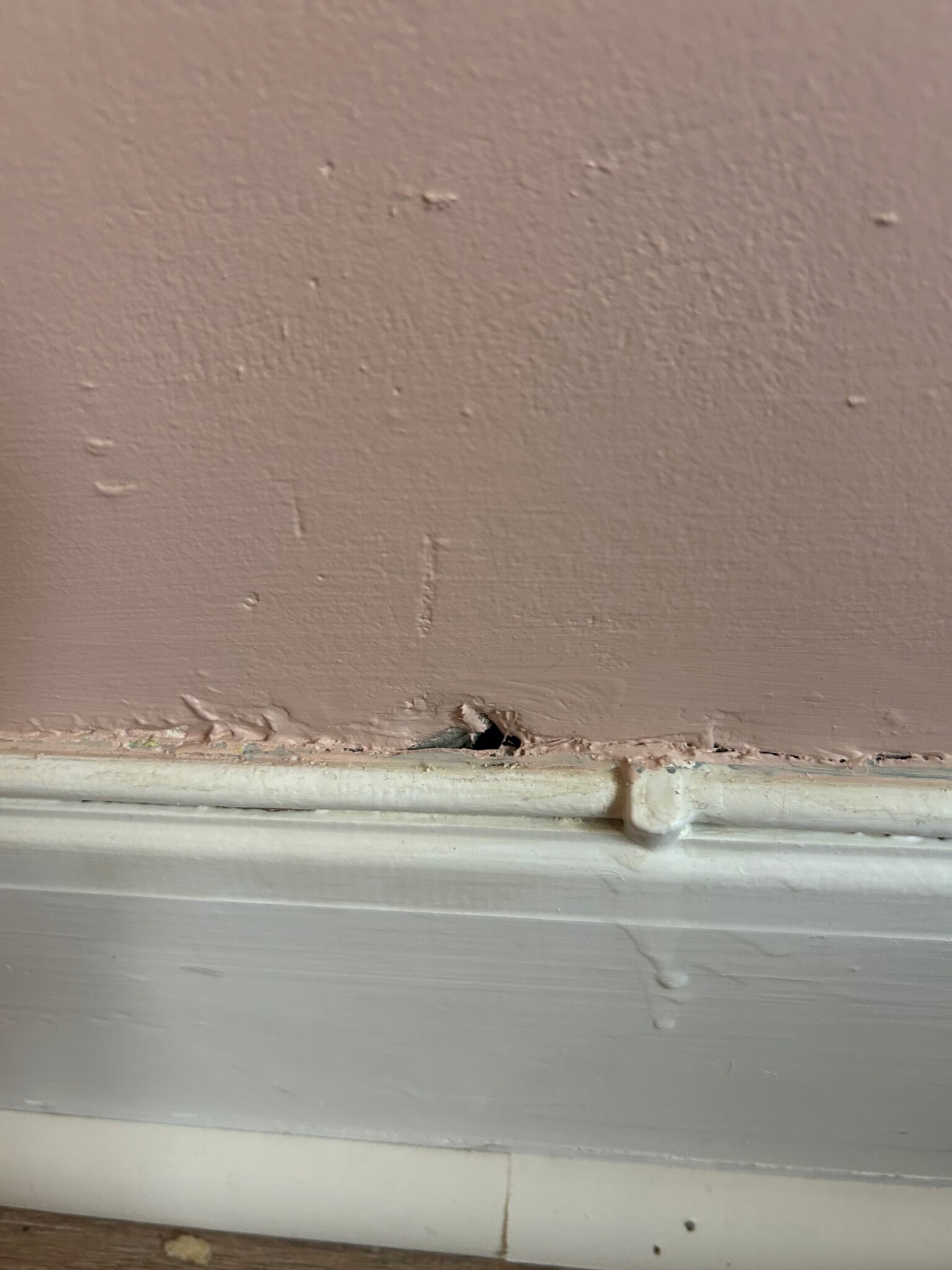
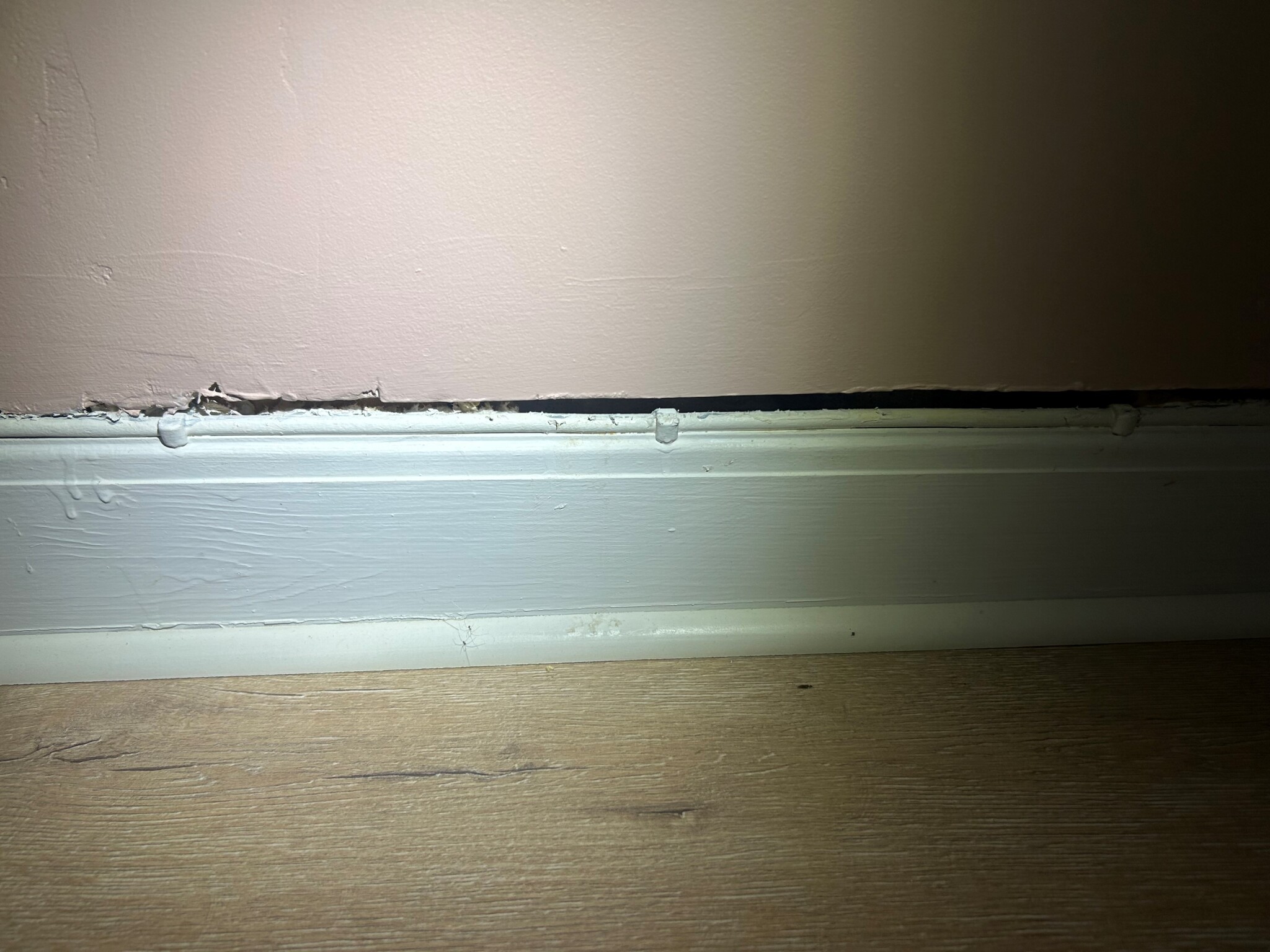
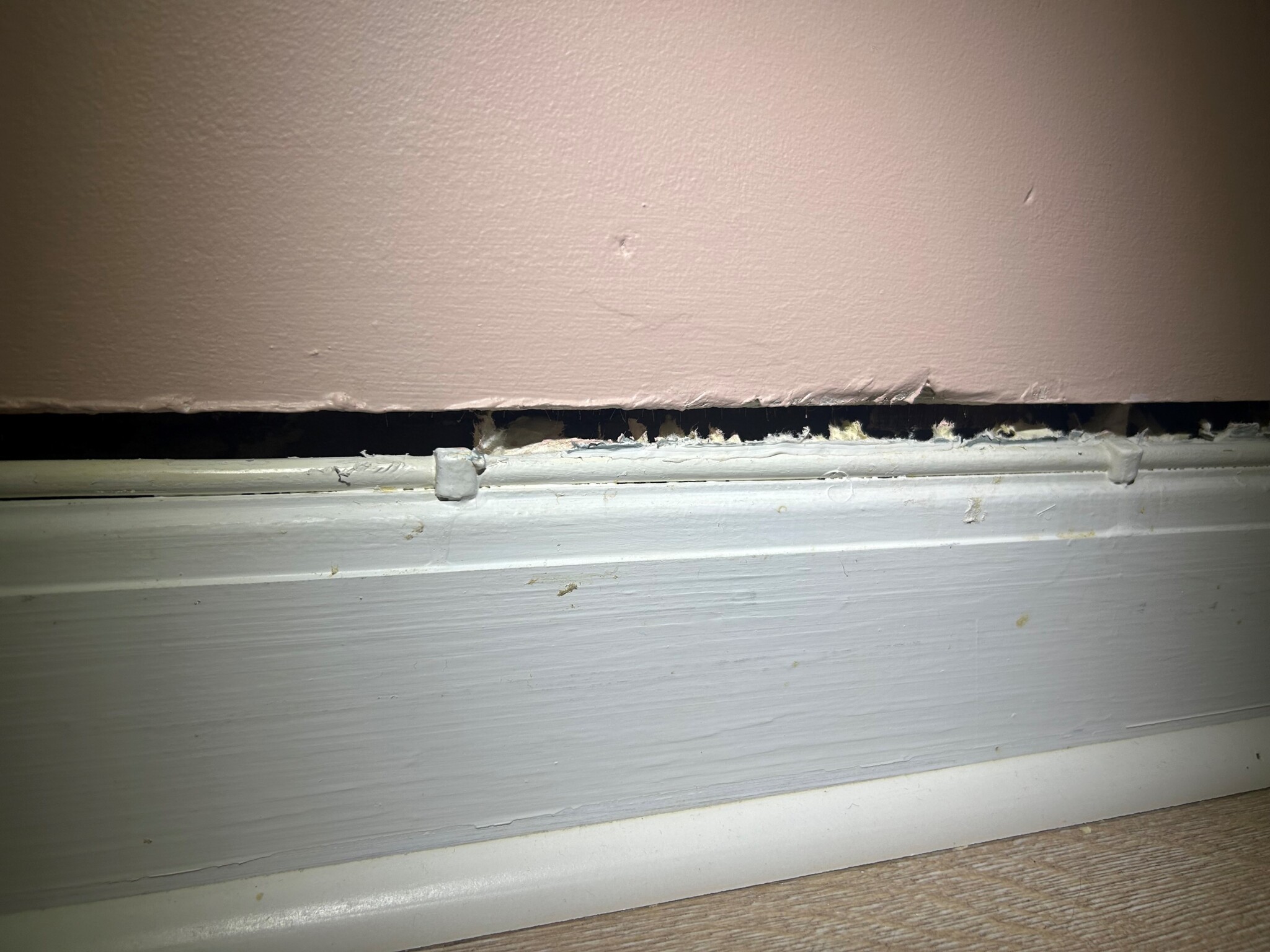
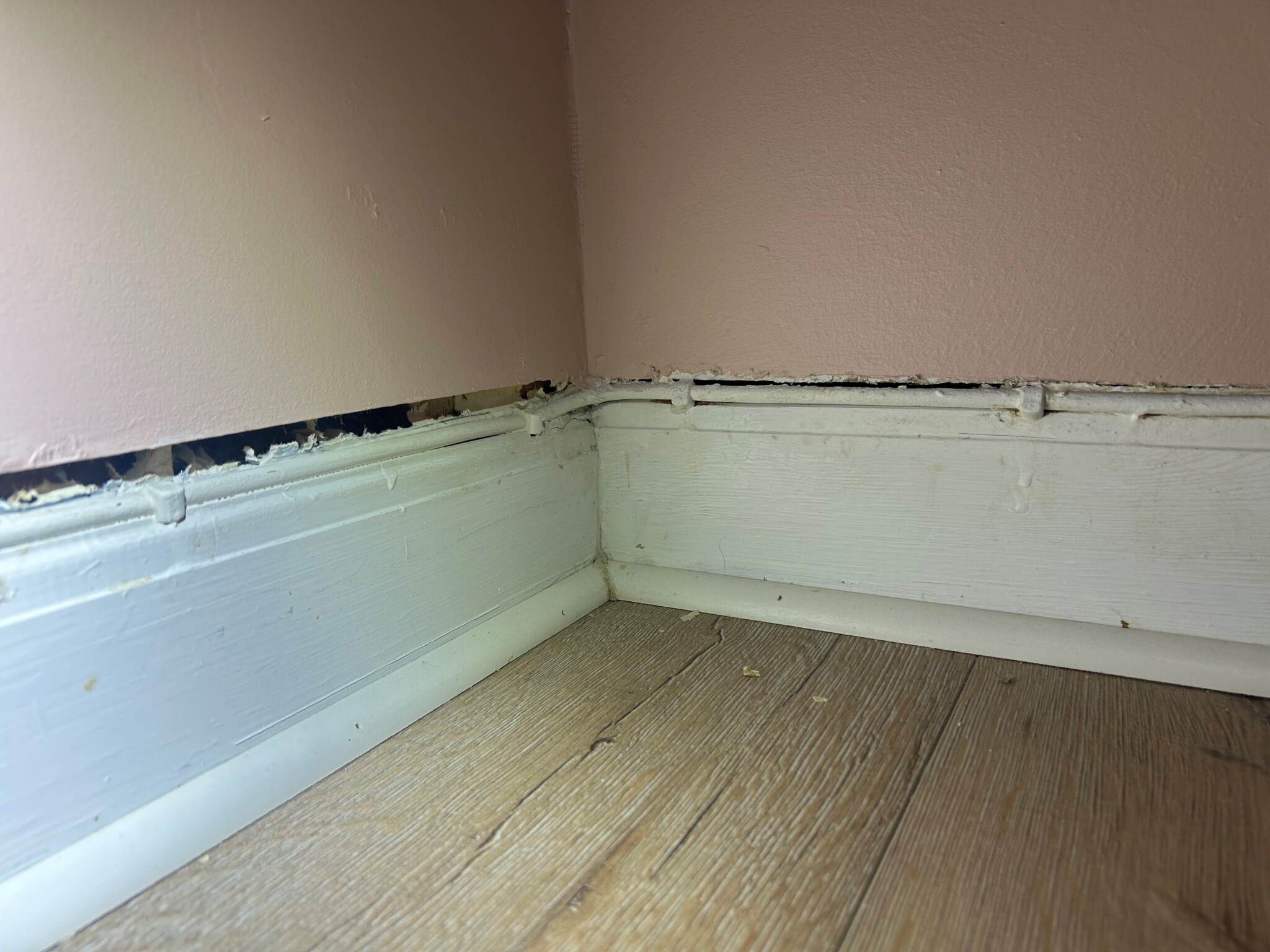
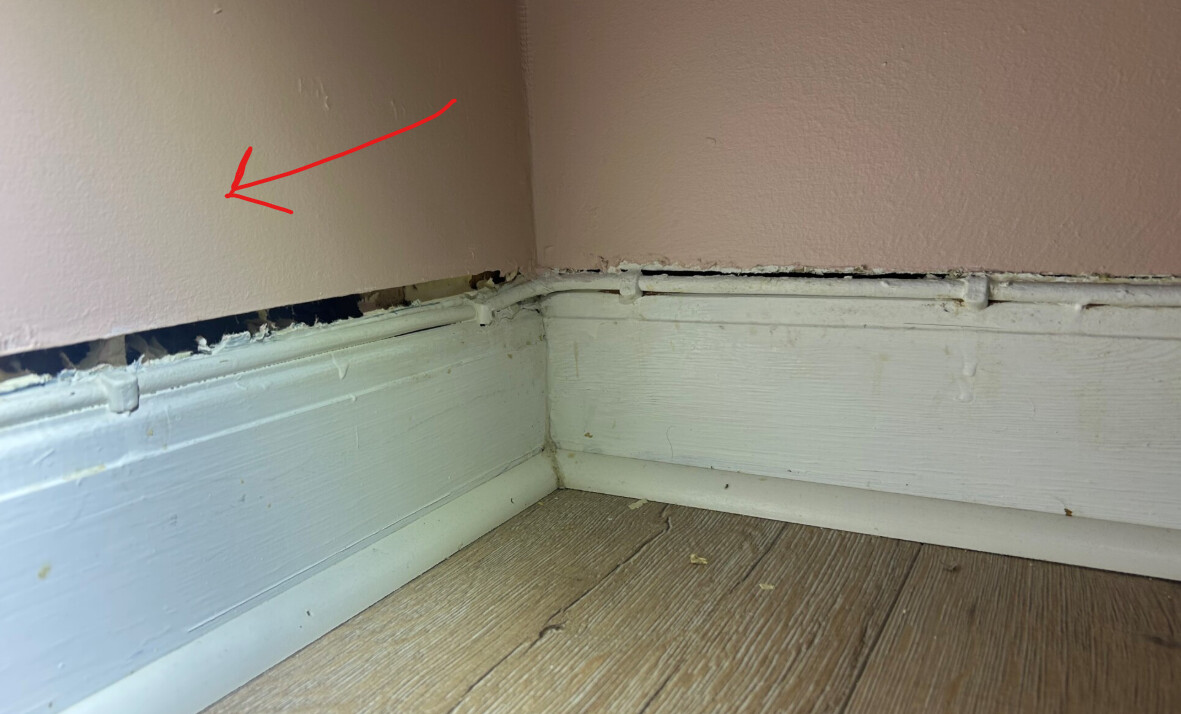
Is it an old house with plastered interior walls (kloasongväggar) that someone has put gypsum over? Then I would suggest filling it with gypsum filler, making sure it bottoms out so that it adheres to something behind. First, detach the electrical wire so you can access it properly. If you need to fill more later, you can do the fine-tuning with regular wall filler (but it does require a solid base which you get with the gypsum filler).
Been living here for almost 2 weeks, so unfortunately I don't have much background/history about the constructionCentano said:
The left wall is the outer wall, yes!What you see in the gap is probably just wallpaper remnants. We tore down all the wallpaper and painted directly on the board/the plastered walls. Then you might also see one of the studs slightly.
The board is too short in relation to the baseboard - so a "solid" solution would be to get new higher baseboards, I suppose, but I'm looking for a bit of a "quicker" simple solution that's temporary. (it's my daughters' room that I'd like to finish quickly).
Old house, yes! Well, I think it's brick, brick, stud/air gap, and then panels on the studs, I believe. However, the panels don't go all the way down, and not even down to the baseboard in some placesD Dublin said:Is it an old house with plastered interior walls (kloasongväggar) that someone has put gypsum over? Then I would suggest filling with gypsum filler, making sure it reaches something solid behind it to adhere to. First, remove the electrical wiring to ensure proper access. If you need to fill more later, you can fine-tune with regular wall filler (but that requires a solid base, which you achieve with the gypsum filler).
But the baseboards must be attached to some original inner wall. If you try to look just inside the baseboard, can you see what it's attached to?L lembitlembit said:
When was the house built?
Good point you make..! Now the girls are sleeping, so I can't confirm tonight, but could it be so bad that they've attached the baseboards to the studs..? The reason I suspect this is because we have an identical room next door that also has an exterior wall in the same way. In this room, you have three wall moldings that are a bit lower and one wall (which is the exterior wall) where the baseboard is higher than the other three. It's like they've had the same "gap problem" there and simply solved it by putting a higher baseboard on just that wall...D Dublin said:
But now I'm speculating!
The house was built in 1939.
Click here to reply