
833 views ·
4 replies
833 views
4 replies
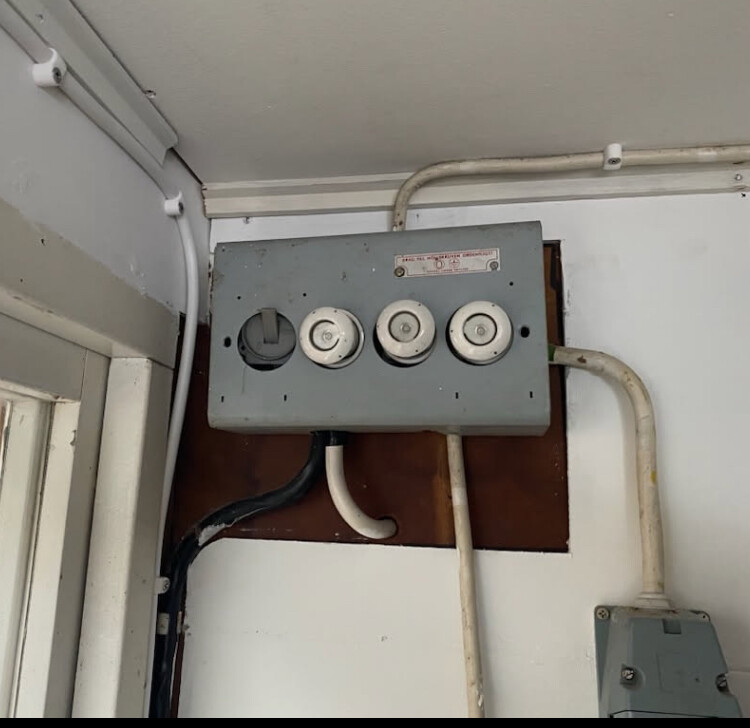
Rules for upgrading 3 ceramic fuses, 16 A sub panel?
Older installation understood.
Realize the following needs to be considered:
Incoming wires:
1) properly routed?
2) Correct diameter 16A
2.5) Acceptably insulated, material, age…
3) grounding?
Other:
Fire protection?
Approved equipment?
Location: Indoors/Warm garage
Residual-current device should be included.
What applies?
/ Chief Engineer Roger
Realize the following needs to be considered:
Incoming wires:
1) properly routed?
2) Correct diameter 16A
2.5) Acceptably insulated, material, age…
3) grounding?
Other:
Fire protection?
Approved equipment?
Location: Indoors/Warm garage
Residual-current device should be included.
What applies?
/ Chief Engineer Roger
Last edited:

You might need to describe the case a little better.
If we assume it's about upgrading an existing 10A group to 16A, you primarily need the correct dimension for the wiring.
And even if "rule of thumb dimensioning" suggests 2.5 sq mm for 16A, you need to assess if the conditions are suitable to apply this rule of thumb. It involves the length of the wiring and the pre-impedance, which is the resistance from the network's transformer station to your electrical panel. If you live in an urban area, you can generally assume that the pre-impedance is okay. In rural areas, the distance to the transformer station may prevent the use of rule of thumb dimensioning. Also, consider how long the wiring is after your 16A fuse.
It's about ensuring the fuse trips quickly enough in case of a short circuit. If an appliance becomes faulty with a live casing, the ground protection should create a short circuit, causing the fuse to trip. But before the fuse trips, you'll have approximately half the mains voltage on the casing. If you're holding the machine, current will flow through you until the fuse trips. If the short-circuit current is too low (due to high total resistance from the network to your device) for the fuse to perceive it as a short circuit, the fuse will trip after a number of seconds instead of tenths of a second.
Fire protection, assuming the wiring is properly dimensioned, requires no additional fire protection measures compared to any existing 10A wiring.
Regarding grounding, we assume you already have grounded connections in the room if it's a heated garage. There must be no ungrounded outlets in the room.
Edit: The post about the cabinet appeared while I was writing. Still, more information is needed.
If we assume it's about upgrading an existing 10A group to 16A, you primarily need the correct dimension for the wiring.
And even if "rule of thumb dimensioning" suggests 2.5 sq mm for 16A, you need to assess if the conditions are suitable to apply this rule of thumb. It involves the length of the wiring and the pre-impedance, which is the resistance from the network's transformer station to your electrical panel. If you live in an urban area, you can generally assume that the pre-impedance is okay. In rural areas, the distance to the transformer station may prevent the use of rule of thumb dimensioning. Also, consider how long the wiring is after your 16A fuse.
It's about ensuring the fuse trips quickly enough in case of a short circuit. If an appliance becomes faulty with a live casing, the ground protection should create a short circuit, causing the fuse to trip. But before the fuse trips, you'll have approximately half the mains voltage on the casing. If you're holding the machine, current will flow through you until the fuse trips. If the short-circuit current is too low (due to high total resistance from the network to your device) for the fuse to perceive it as a short circuit, the fuse will trip after a number of seconds instead of tenths of a second.
Fire protection, assuming the wiring is properly dimensioned, requires no additional fire protection measures compared to any existing 10A wiring.
Regarding grounding, we assume you already have grounded connections in the room if it's a heated garage. There must be no ungrounded outlets in the room.
Edit: The post about the cabinet appeared while I was writing. Still, more information is needed.
I still don't understand.
You don't need to conduct any preliminary investigation at all, right?
Contact an electrician, preferably via email and attach the photo, and write that you want this panel replaced with a modern one with circuit breakers and a ground fault circuit interrupter.
You don't need to conduct any preliminary investigation at all, right?
Contact an electrician, preferably via email and attach the photo, and write that you want this panel replaced with a modern one with circuit breakers and a ground fault circuit interrupter.
Click here to reply