Hi, I would like some help with how one might consider building as we might be constructing a new small stable with a hayloft above. I don't know the exact measurements yet, so dimensions of the flooring and such will be addressed later. What I'm curious about is mainly how to construct the trusses and such as we plan to store hay to maximize space in the loft.
I have made two very simple sketches of my general idea and would appreciate any feedback.
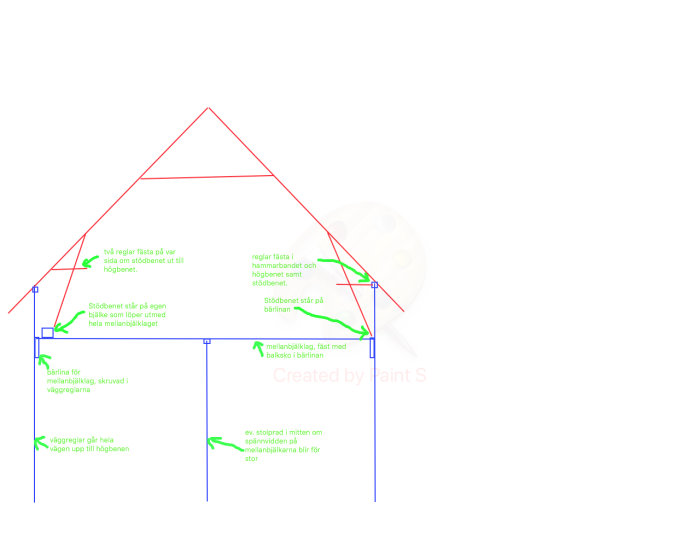
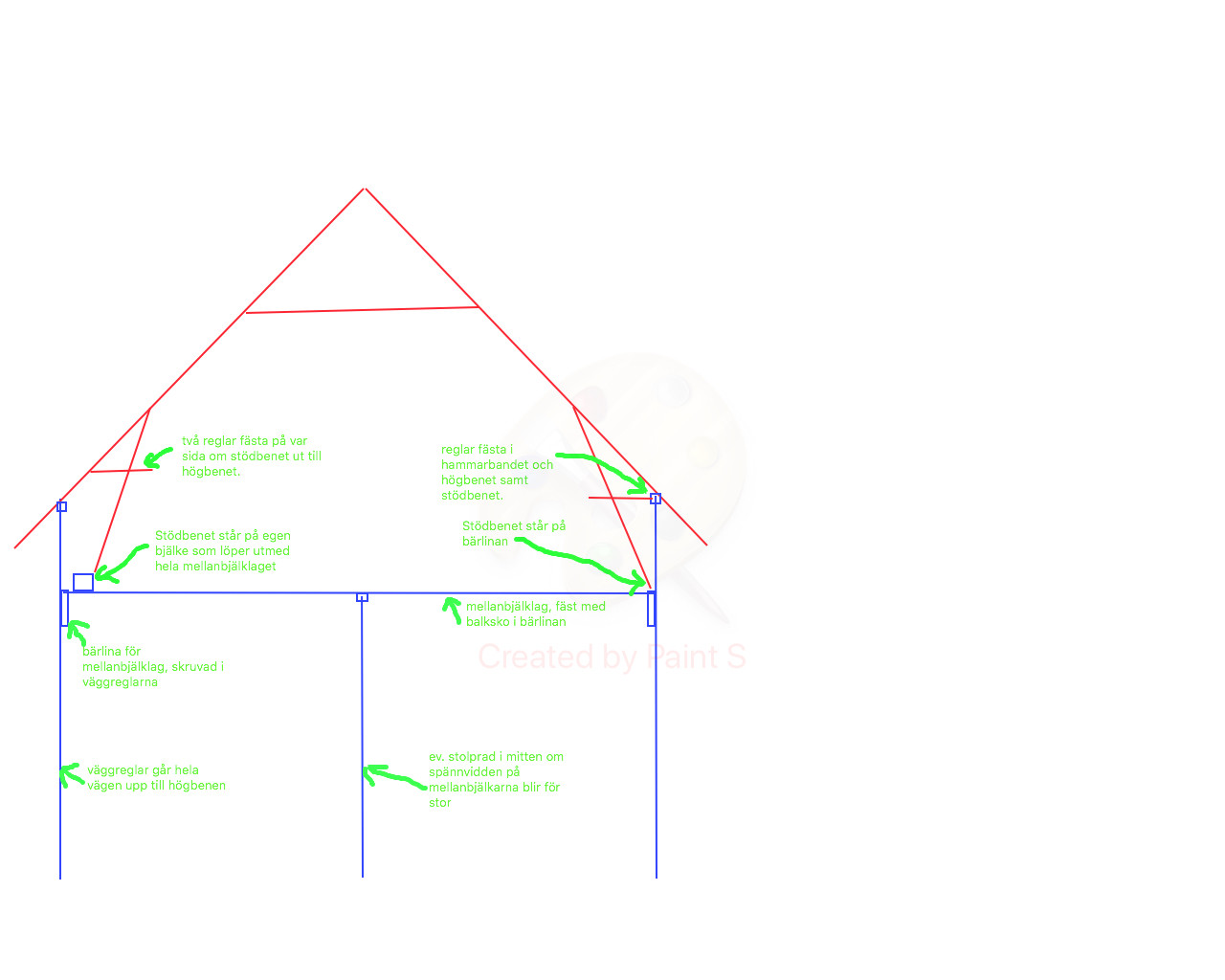
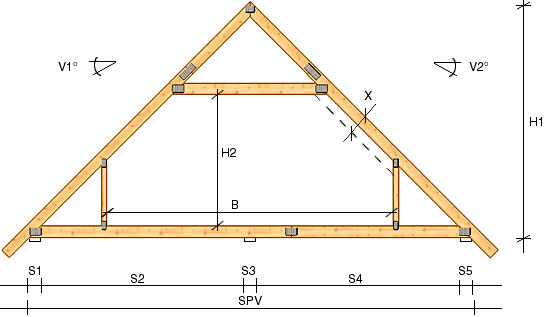
Option 1: This provides a bit more space in the loft and I've seen this type of truss construction in old barns. What I'm puzzled about is the function of the various support legs and how they should be attached. As you can see, I've sketched two different attachment points on the left and right truss support legs.
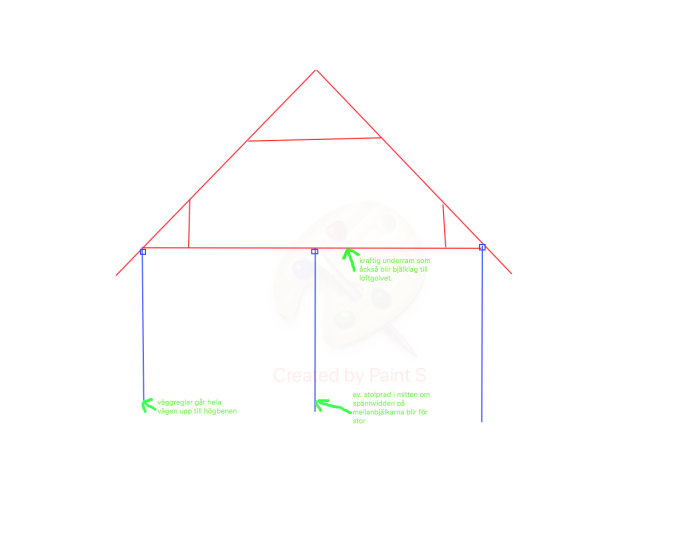
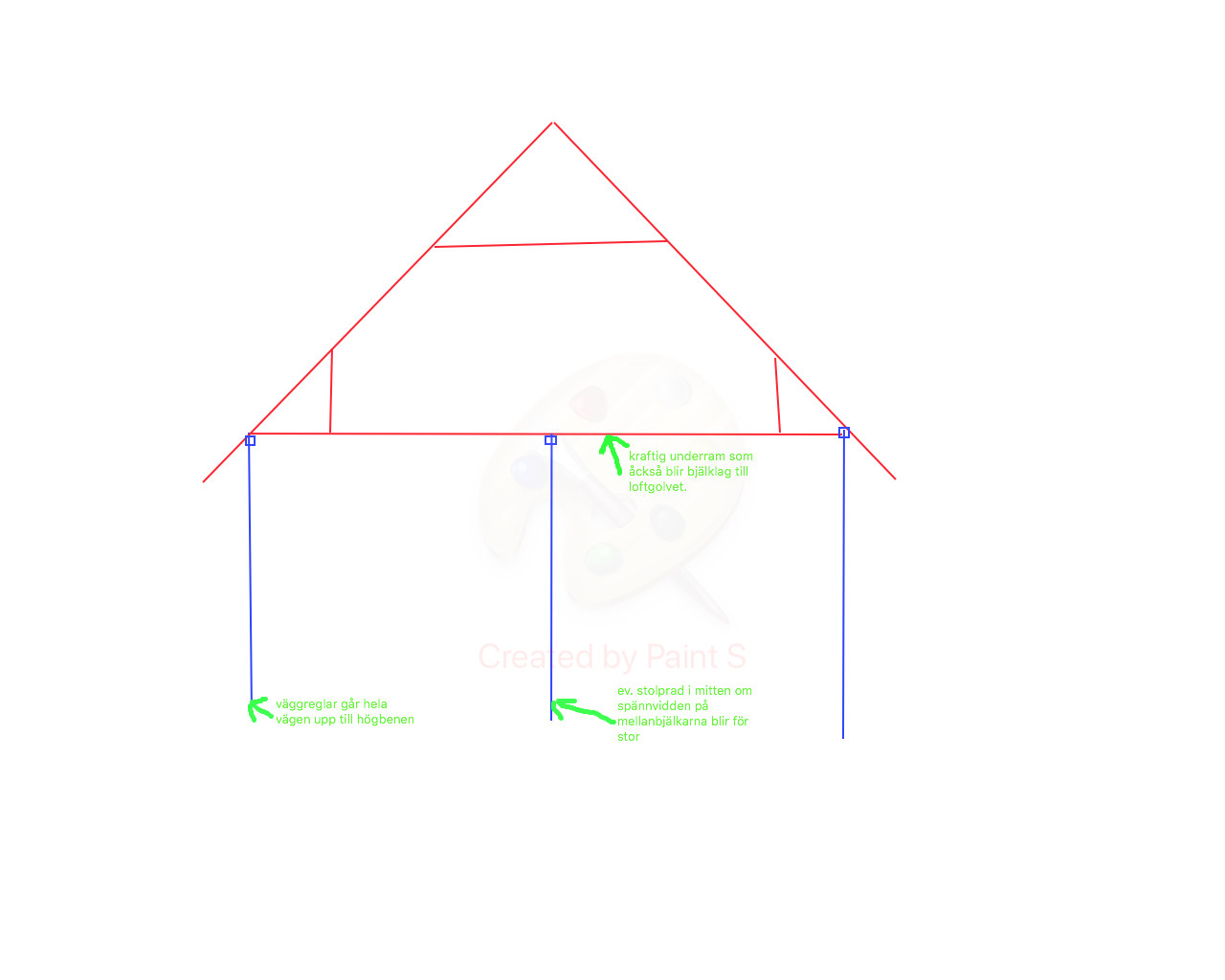
Option 2: Perhaps easier to build. Can use the lower beam of the trusses as the flooring structure.
We chose Nässjö Truss Factory when we built a garage and a stable 9 years ago.
Good products and good service: https://www.takstolsfabriken.se/takstolar
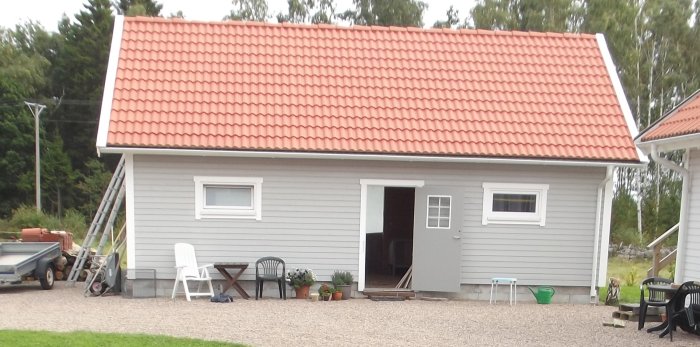
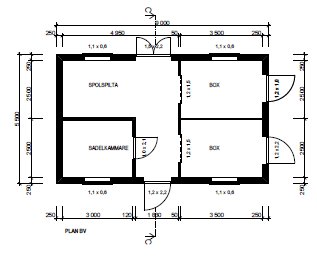
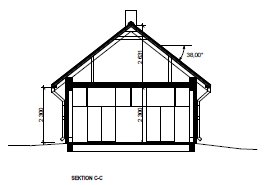
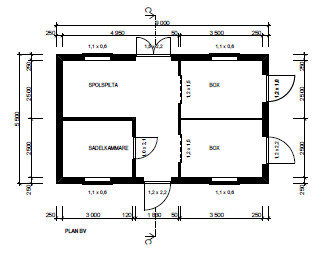
We built with a 38° roof slope, the garage 9 x 4.5 m and the stable 9 x 5.5 m.
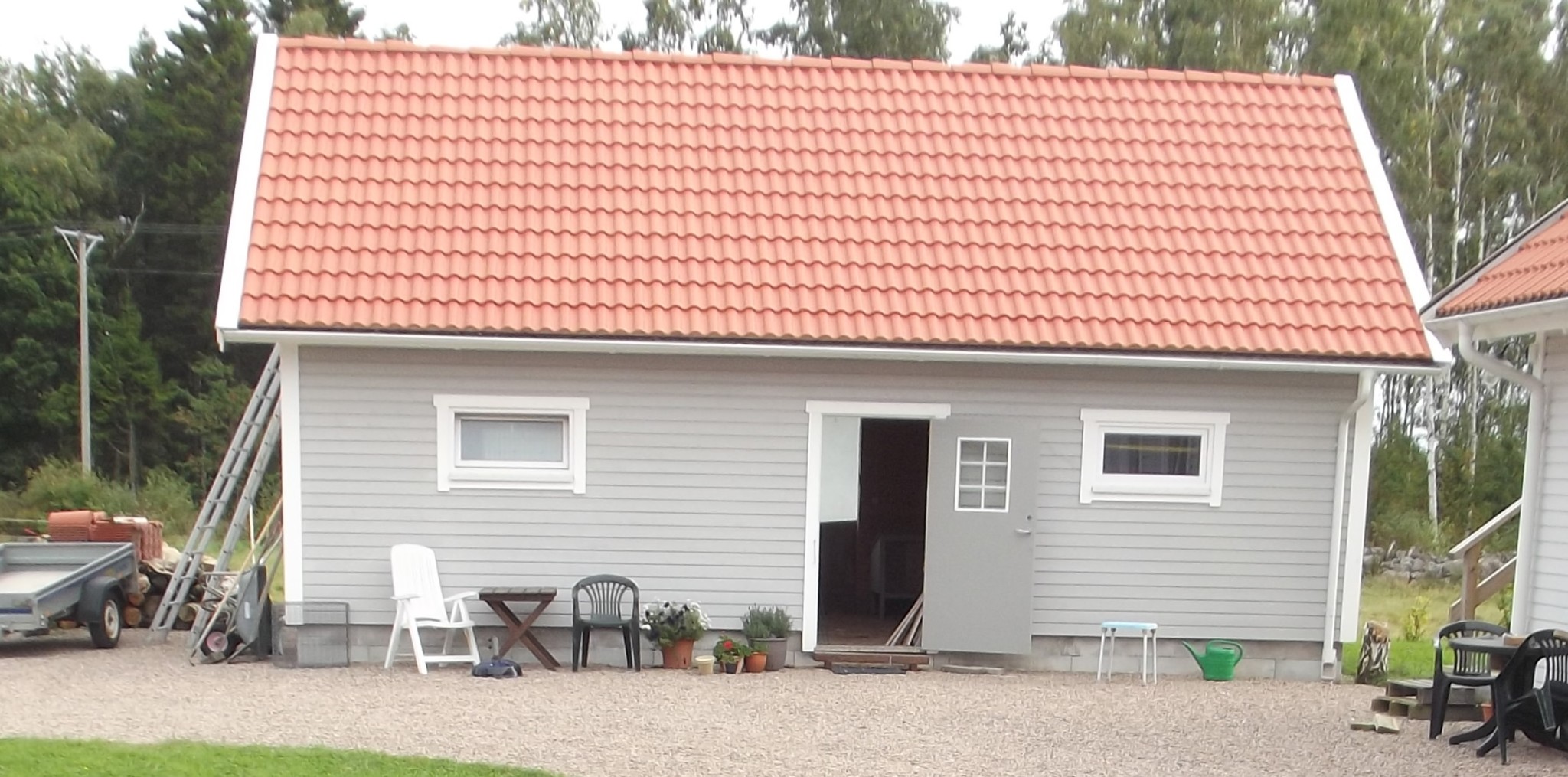
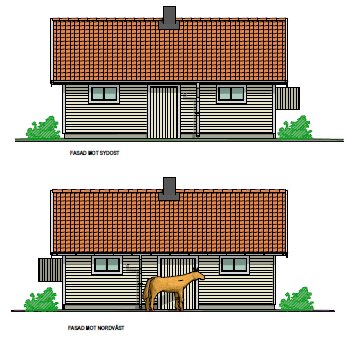
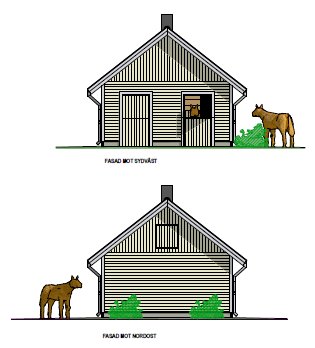
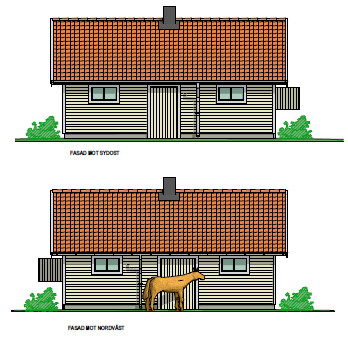
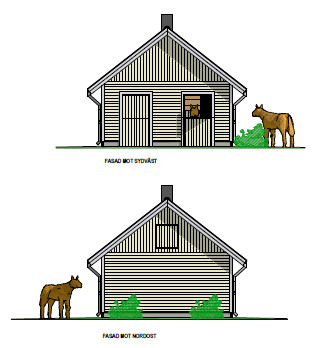
Here is the stable:
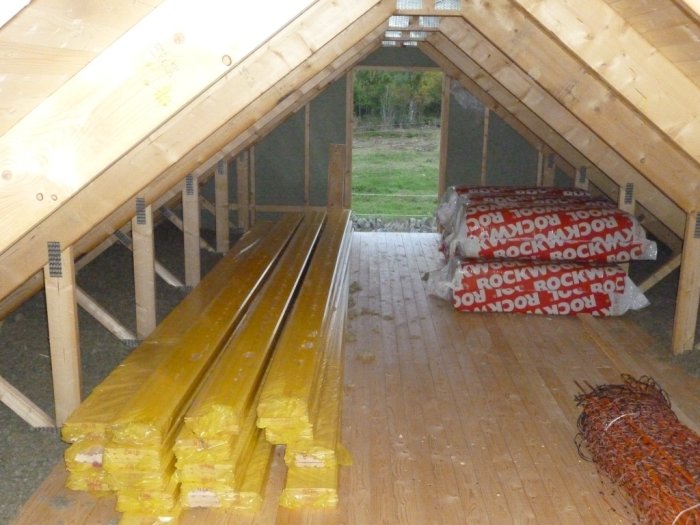
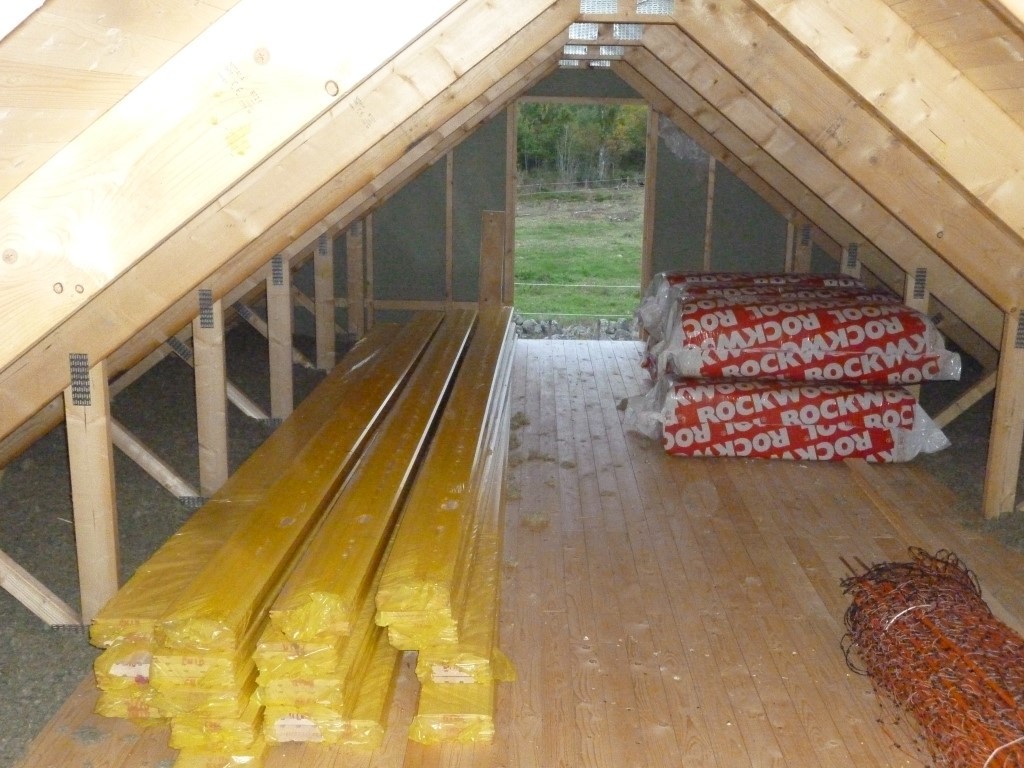
And the attic, when it was newly built:
Consider carefully if you really should have hay in the loft! In the past, there was a feeding pole with a hay hoist, and most of the animals were not horses. In the part of the stable where it wasn't separated, the roofs would rot, and feed couldn't be stored above horses because they sweat and release significantly more moisture than cows. Today, with plastic and vents, moisture can be managed better than before, but why break your back to first get the feed up and then bring it down again. Build lengthwise so you can back in and offload the feed; there will also be some bedding. It's important to have air so the feed doesn't mold or become otherwise ruined/unpalatable. (Possibility for drying if needed) Should the interest in horses change over the years, the space can later be used for a boat or caravan, and the stable for another hobby. (It's elves you should have in the attic.)
I like feed in the loft. Don't fool anyone into thinking it's less work to have the feed on the ground. It's easy to count how many times you have to move the feed. The loft is also completely free space.
I would have chosen option 2, easiest and cheapest.
Think about whether you really should have hay in the loft! In the past, there was a beam with a hay lift and the majority of animals were not horses. In that part of the stable, if it wasn't separated, the roofs rotted and the feed couldn't be stored above the horses since they sweat and emit considerably more moisture than cows.
Today, with plastic and ventilation, you can handle moisture better than before, but why break your back trying to get the feed up and then down again. Build lengthwise so you can back in and dump off the feed. There's quite a bit of straw as well. It's important to have airflow so the feed doesn't mold or otherwise become spoiled/unpalatable. (Possibility for drying if needed)
If the interest in horses changes over the years, you can use the space for boats/caravans and the stable for another hobby.
(It’s elves you should have in the loft.)
Stable may be misleading. It's going to be a sheep barn. The reason for loose hay is that I've been using loose hay for many years and have machines for the purpose.
I have had the privilege to help on my father's farm, but hundreds of tons of hay and straw on the days when others were on the beach. We've had access to all kinds of tools when filling the barn, but it's been the loft that, in tons, is the fastest to fill. Throwing a bale on a sack truck and rolling away feels to me a bit easier than running up to the loft, throwing down the bales, gathering the ones that break, and putting them in a wheelbarrow.
In recent years, large bales and bale grabs have made the work much easier, and for the horse stable, the barn floor was used to spread out the large bale.
Over the years, there have been various livestock, but Chickens, Ducks, Sheep, Pigs, Cows/Beef cattle, Horses, probably forgot something. (Horses for my sister)
Remember that Horses are flight animals and drink accordingly. If the power goes out and you have to carry water, a gulp of water is about 15 Liters. A pond is not a bad idea.
Sheep only need wind protection and a roof. The feed is more important. To bring it in quickly and green, yet dry. There are fans on almost every barn that are not used anymore. Invest in drying possibilities for the sake of the feed.
The main function of the support legs is to act as an extra bearing for the uprights so these can be made slimmer. The collar beams also have this function and prevent the uprights from pushing out the outer walls. Alternative 1 with an elevated wall requires some form of stabilization, for example, as it is drawn on the right side. I find it difficult to have a good discussion without knowing what measurements are involved. Large volumes can be built more efficiently using glulam. There's a lot to learn from old barn constructions, but they were also shaped by material and skill shortages.
I have had the privilege of helping on my father's farm, with hundreds of tons of hay and straw on the days when others were lying on the beach. We have had access to all types of tools when filling the hayloft, but it's been the barn that fills up the fastest in tons. Throwing onto a sack truck with some bales and rolling away feels a bit easier to me than running up to the loft, throwing down the bales, gathering the broken ones and up into a wheelbarrow.
In recent years, large bales and bale grips have greatly eased the work, and for the horse stable, the barn floor was used to open up the large bale and spread it out.
In addition, there have been various livestock over the years, including Chickens, Ducks, Sheep, Pigs, Cows/Beef cattle, Horses, probably forgetting something. (Horses for my sister)
Remember that Horses are flight animals and drink accordingly. If the power goes out and you have to carry water, a sip of water is about 15 Liters. A pond is not a bad idea.
Of course, there is a chute directly down into the feed trough. Loose hay is very laborious to move around outdoors and incredibly messy.
Onto the skull - down into the feed trough - into the sheep's stomach - out into the loose housing - out onto the manure pile.
The main function of the support legs is to act as an extra bearing for the high beams so that these can be made slimmer. The tie beams also have this function and to prevent the high beams from pushing out the outer walls. Alternative 1 with an elevated wall requires some form of stabilization, e.g., as it is drawn on the right side. I find it difficult to have a good discussion without knowing the dimensions in question. Large volumes can be built more efficiently with the help of glulam. One can learn a lot from old barn constructions, but they were also shaped by material and skill shortages.
Thanks for your input.
It is precisely the elevated wall I am aiming for to get more space in the loft. However, the idea is that the wall posts go all the way up without any joint along the way. Therefore, the idea of a screwed or recessed beam for the intermediate floor in the wall posts.