I have tried to find previous threads about this but couldn't find any that really answered my questions. I believe there are several people here who have knowledge of how this should be done, including @heimlaga@TorpAnders but there are certainly more here who have good knowledge.
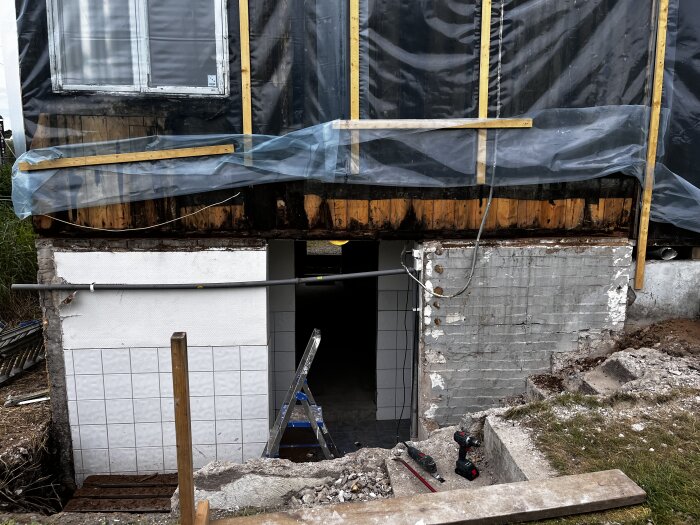
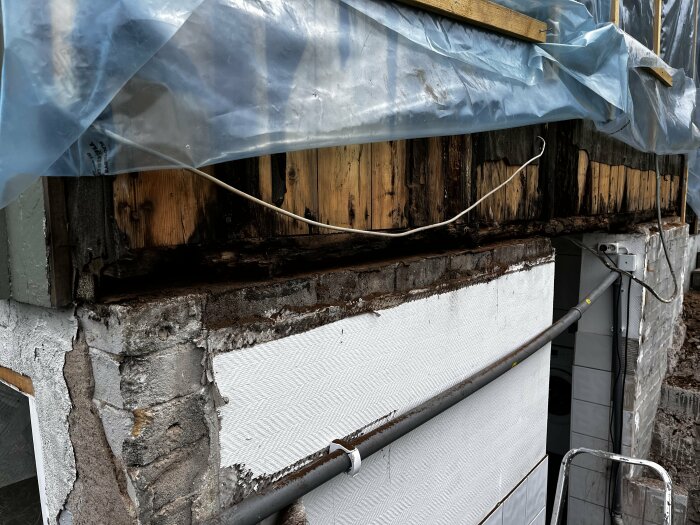
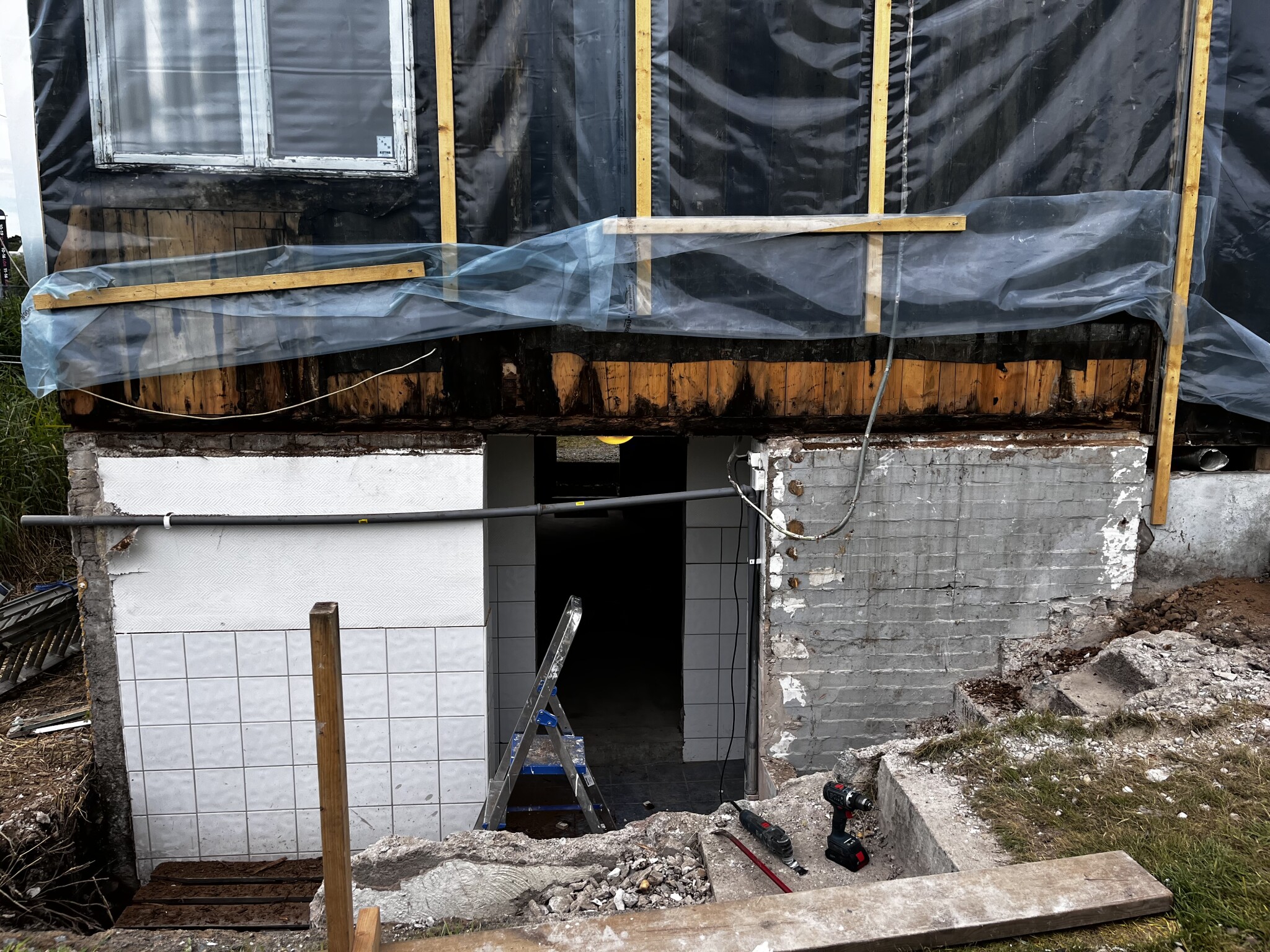
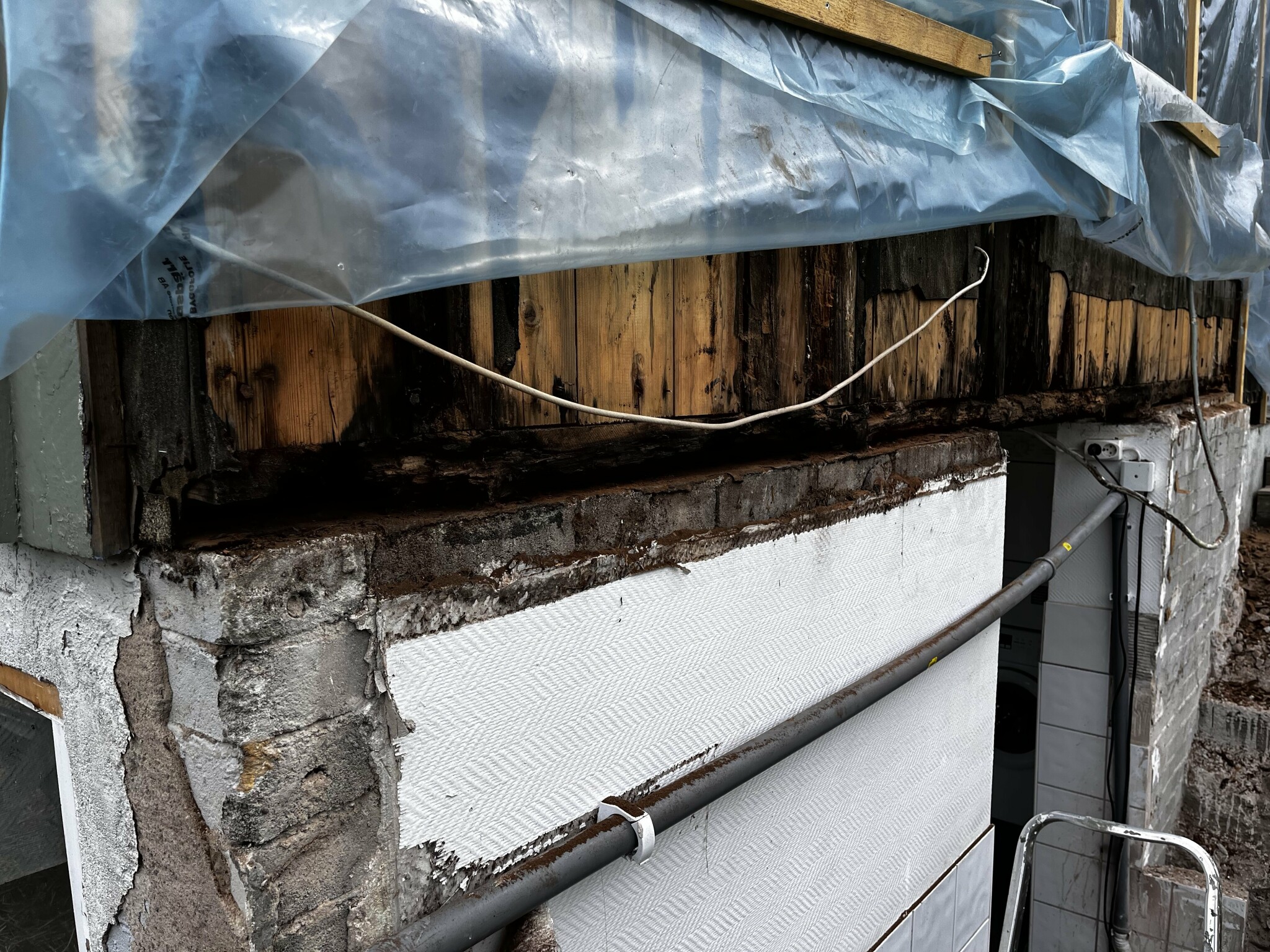
The sill is almost entirely rotten throughout its depth, varying against the foundation wall or the upper part. Possibly a small part can be saved, but we're talking about at most 1 meter out of over 4.5m in total.
The question is how best to approach this. I read a tip about placing beams on the inside and outside that are screwed with through-bolts in each plank which can then be lifted. I'm considering if this might be a viable method even though I would prefer to avoid tearing up the interior wall for that method.
I can only lift from the outside and hopefully on each side of the gable but also in the middle.
There are several questions:
* Isn't it impossible to get a whole new sill in since the jacks are in the way? How do you splice the sill, and where is it best to do so?
* Is one through-bolt per plank enough?
* Then there's the problem that several of the standing planks are also rotten. I hope to be able to place the "lifting beam" above the damage if so, but two planks are rotten in almost 3-meter lengths.
Unfortunately, no cheers, but I'm following the thread for purely selfish reasons. Here in the house, the busy ant traffic into the exterior wall by the entrance stairs suggests that it looks about like your pictures. But we'll deal with that later, right now we're putting up a new roof.
Thanks for the feedback anyway. My biggest question concerns whether the method of screwing planks on both sides of the wall is the approach that's used?
I am not envious of you, but what seems hopeless can always be fixed with a little determination, time, and some visits to the wallet.
Syll and plank undeniably appear to have passed their best-before date, now I don't see how the rest of the wall/house looks, but I would seriously consider replacing that entire part of the wall as this patching here and there often takes more time than it's worth, no matter how much you like building conservation, there is a practical limit you must dare to set.
That said, I would look at a solution to brace/support the wall so that the entire section can be removed efficiently.
Thanks for some feedback anyway. My biggest question is whether the method of screwing planks on both sides of the wall is the method used?
Is it tongue and groove 3x7" in the wall?
Everything of course depends on the pressure you have from above on that particular section and how the surrounding wall sections will react/be affected, but through-bolted joints with rods are preferable to screwed.
Hello Mexitegel! The question is, how do you attach the sill to the house? I would suggest using heavy-duty house nails or French wood screws. They come in sturdy dimensions. The downside of nails is that you might damage nearby screws if you hammer carelessly. Screws are used on joist hangers and beams.
I'm not jealous of you, but what seems hopeless can always be fixed with some determination, time, and a few visits to the wallet.
The sill and planks undeniably look past their best before date. Now, I can't see how the rest of the wall/house looks, but I would seriously consider replacing that entire section of the wall since tinkering and patch repairs often take more time than they're worth. No matter how much you like building preservation, there is a practical limit you have to dare to establish.
That said, I would look at a solution to brace/shore up the wall so that the entire section can be removed efficiently.
This isn't about building preservation but just about function. However, I'm reluctant to start tearing up the floor etc. inside as it leads to a lot more work. So the question is how can you brace? I've thought about that too.
It's true that the wall planks are tongue-and-groove 3” with slightly varying widths.
Click here to reply
Vi vill skicka notiser för ämnen du bevakar och händelser som berör dig.


mexitegel said:
TorpAnders said:
I'm not jealous of you, but what seems hopeless can always be fixed with some determination, time, and a few visits to the wallet.