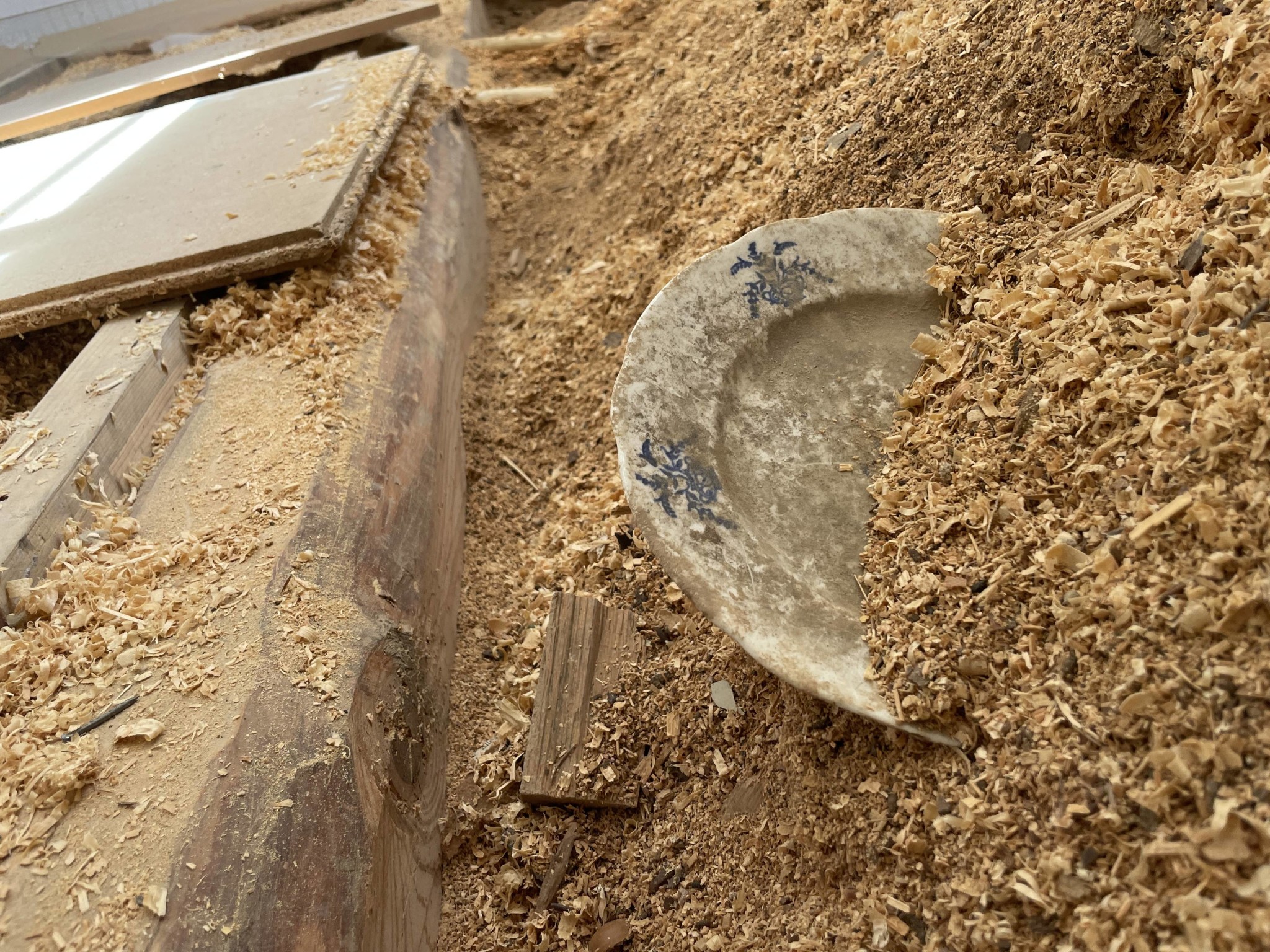
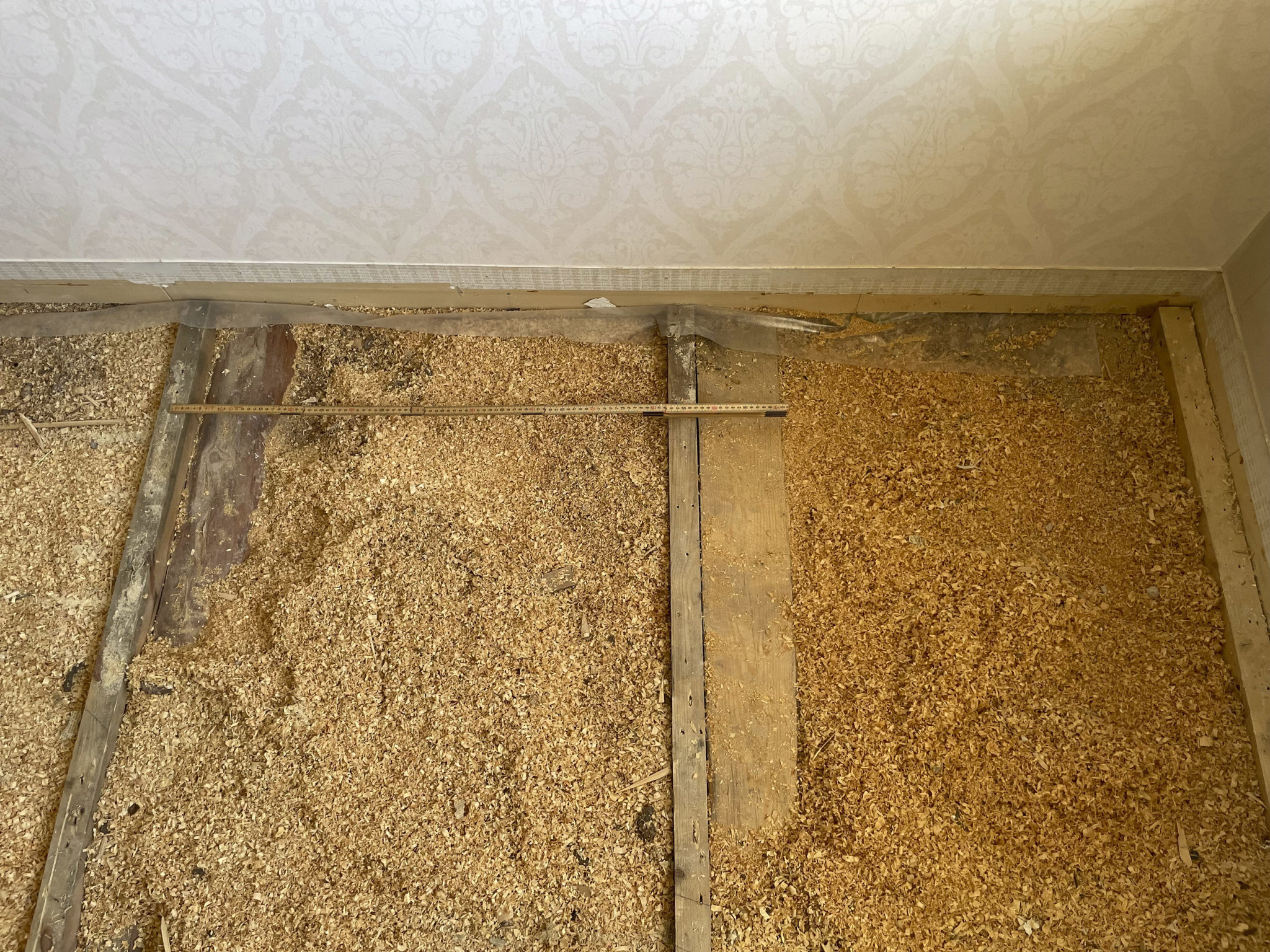
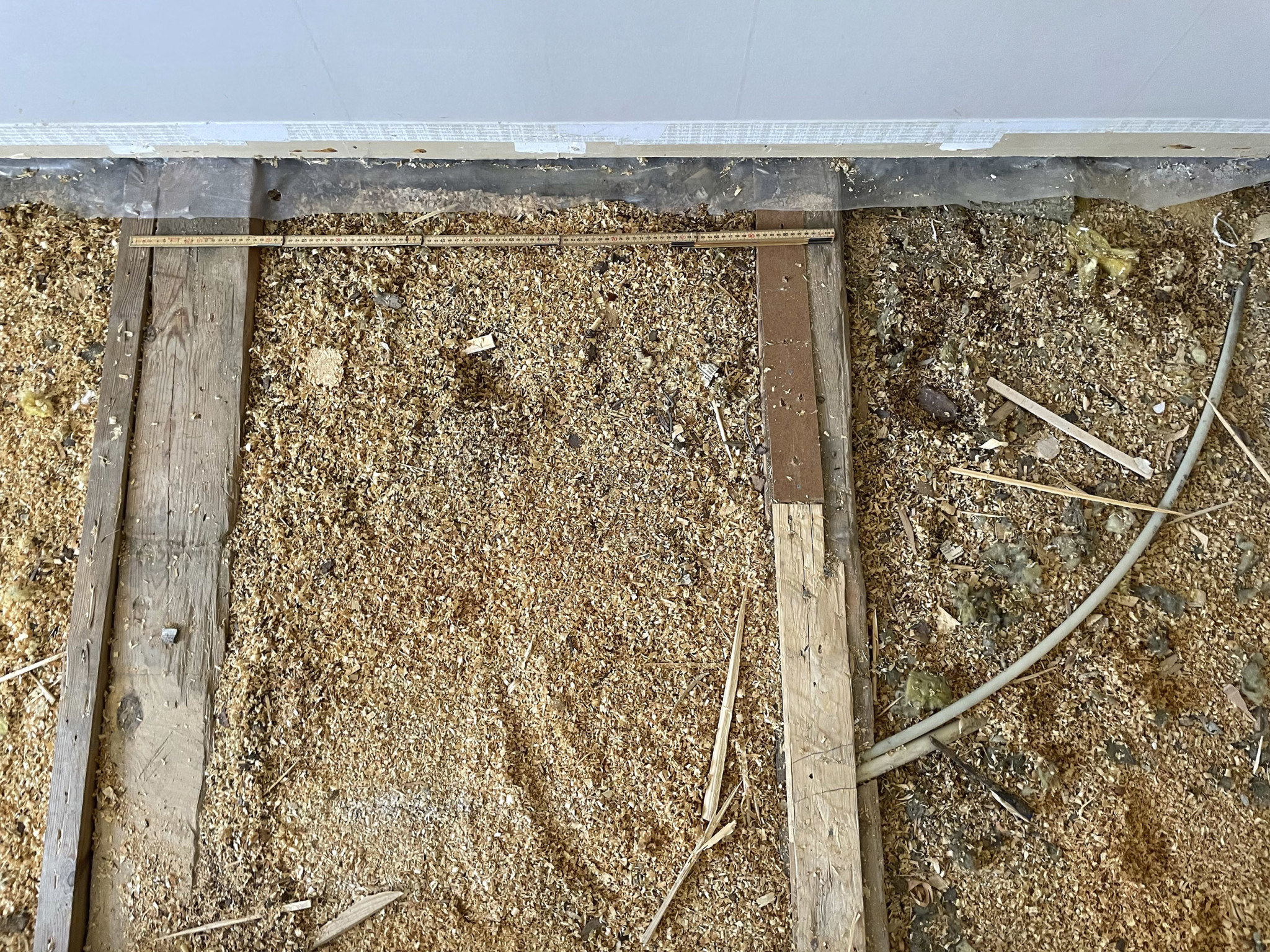
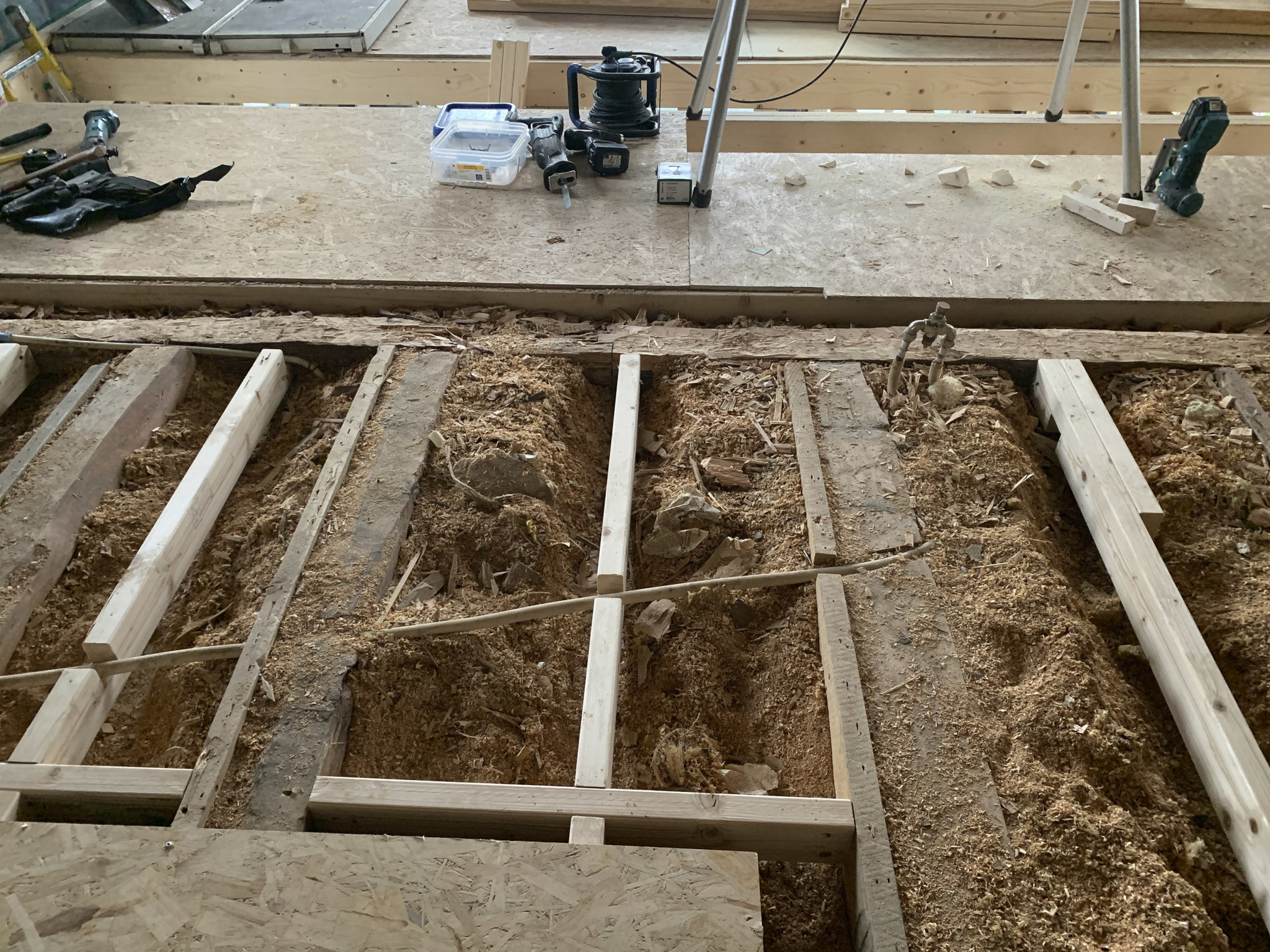
Hello! I have torn up a slightly uneven tongue and groove floor and want to lay chipboard instead, followed by a 14 mm wood floor over it. The spacing between the joists varies from 75 to 95 cm. I need tips on how to best level the joists in order to lay the chipboard. It's a middle floor structure.
The house was originally a cottage from the turn of the last century, which was renovated in 1968. It was then that they nailed joists onto the original beams to level the floor, I assume.
All the new studs appear to be on the left side of the beam. If you place one on the right side as well, what will be the distance between them then? If it approaches 60 cm, you can find various subfloor materials that can handle that span.
All the new studs appear to be on the left side of the beam. If you add one to the right side as well, what would the distance be between them then? If it's approaching 60 cm, you can find different materials for subfloors that can handle that span.
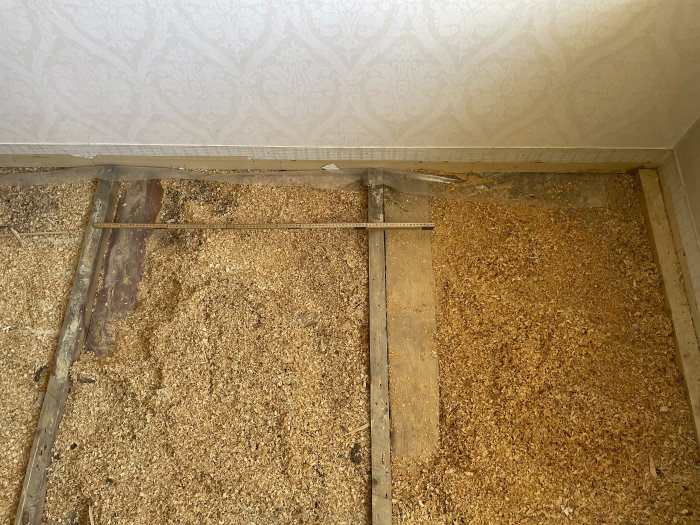
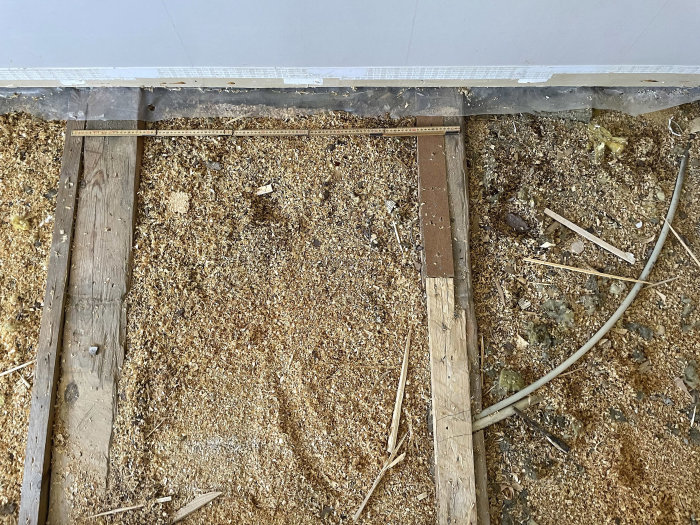
The pictures are taken in two different directions. Some studs are on the right side. I would come down to around 70/75 cc if I place studs on both sides of each beam.
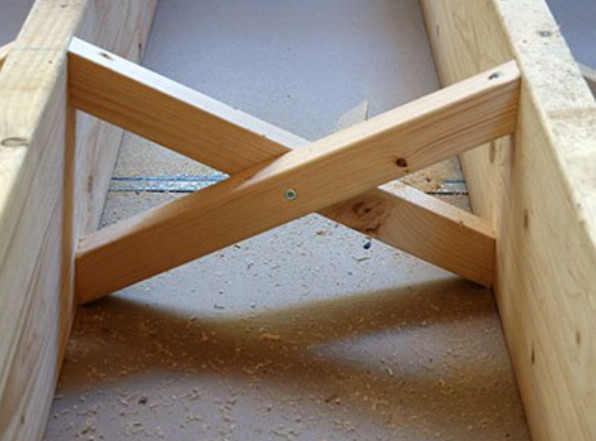
Cross bracing can help.
[image]
Not to be confused with nogging which doesn't help at all.
Regards, Findus
Does the cross bracing need to be attached to the original beams, or is it okay to attach to the studs that are nailed to the beams? The beams are old logs and most are rounded on the sides. Not easy to attach cross bracing there.
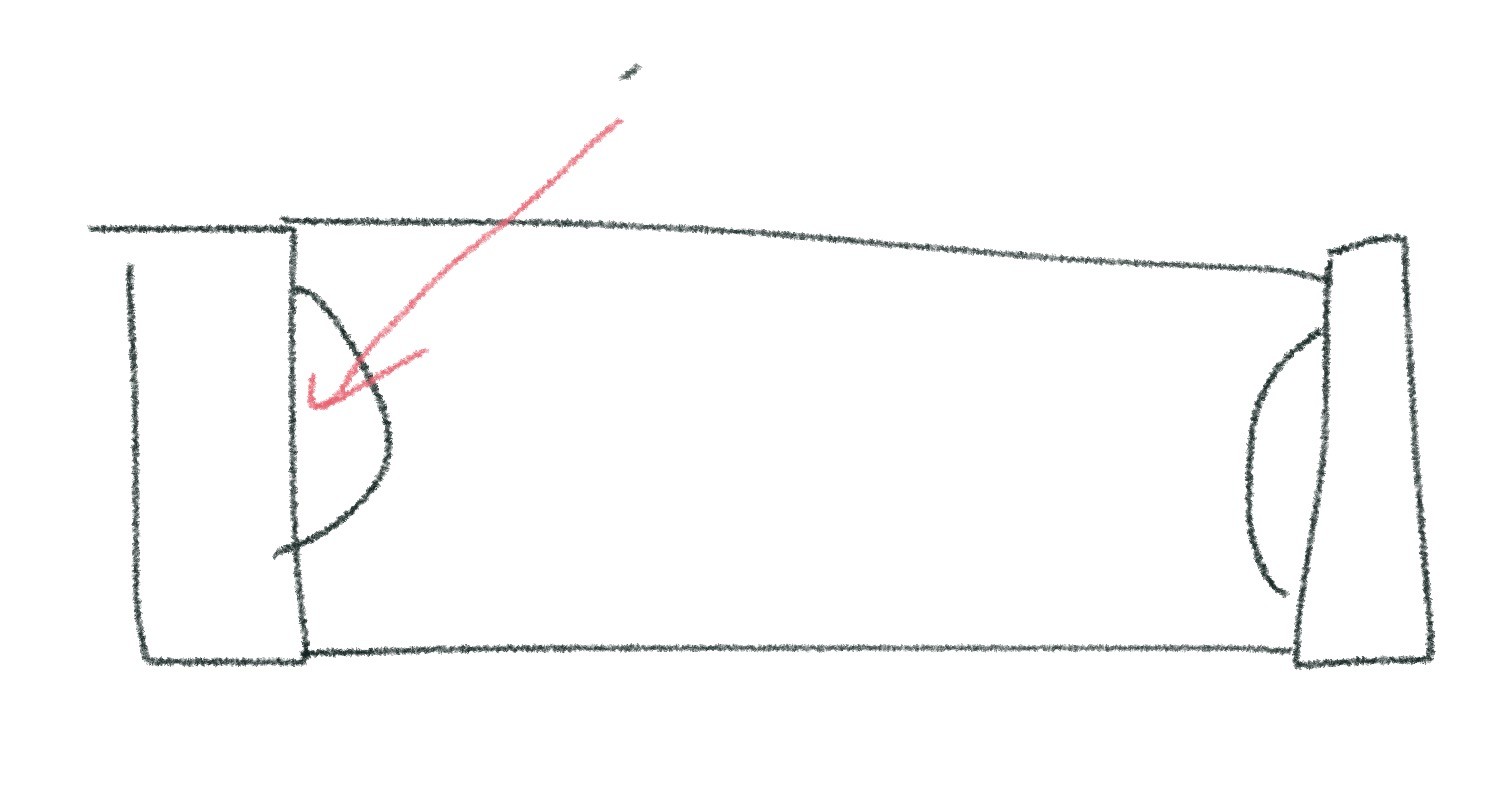
Because blocking is virtually impossible to span and therefore becomes loose after a few seasonal changes. To stiffen a floor structure, it must be completely tight. Otherwise, it doesn't prevent movement at all. Possibly blocks work better if the ends are notched (see image) so that they only press in the corners. I have never seen a construction carpenter do that. Moreover, it doesn't solve the problem of inserting blocking without any gaps.
Regards, Findus
Because cross bracing is basically impossible to span over and therefore loosens after a few seasonal changes. To stiffen up a floor structure, it must be completely tight. Otherwise, it doesn't prevent sagging at all. Possibly cross bracing works better if the ends are beveled (see picture) so that they only press in the corners. I've never seen a construction carpenter do that. Additionally, it doesn't solve the problem of pressing in cross bracing without any gap.
Best regards, Findus
Huh, I've never heard of that before. It'll be interesting to see how my newly laid floor joists fare in a few years
Cross-bracing can stiffen the floor structure but it doesn't help to reduce the c/c distance of the framing. You'll probably have to do what the carpenters have done. It should not be more than c/c 600 on the framing when you lay the floor chipboard.
Cross-bracing can stiffen the floor structure but it won't help reduce the c/c spacing of the framing. You will probably have to do what the carpenters have done. It should not be more than c/c 600 for the framing when you lay the floorboard.
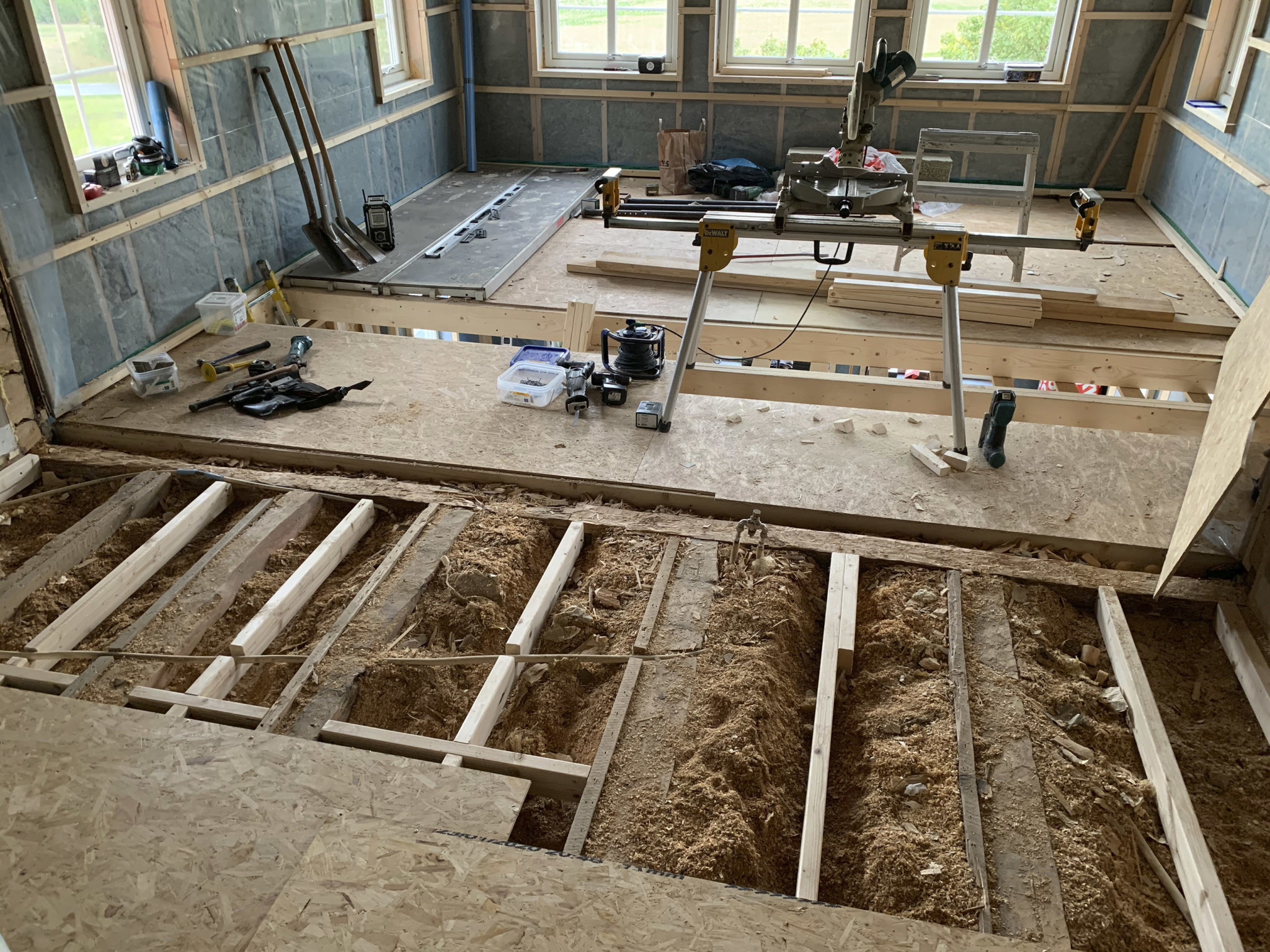
Yes, it's just about going to buy more studs. 45x120 should be enough, right? There will be a noggin in each bay to be able to get under the heating pipes with the studs.
What are the dimensions now and how long is the room? I'm not quite sure what you mean by a kortling in each section to get under with the heating pipes?
What are the dimensions now and how long is the room? I'm not quite following what you mean by a nogging in each bay to get underneath the heating pipes?
The studs that are nailed onto the beams today are 50x100 mm. The joist height is 190 mm. The length of the room is 3.3 m. The beam span is 5.5 m (with attic spaces on both sides).
There are heating pipes (prisolrör) in the joist, which means I can't fit "full lengths" (3.3 m) of the studs down. I need to place noggings in each bay to be able to insert new studs under the heating pipes. In the same way the carpenters have done in the pictures I uploaded earlier.
Vi vill skicka notiser för ämnen du bevakar och händelser som berör dig.

Åsa Lund said:

findus42 said:
LoweW said: