
11,755 views ·
24 replies
12k views
24 replies
Pipes with asbestos insulation in the basement
Hello,
We are about to start renovating the basement and have quite a few pipes that we would like to conceal. Most of the pipes are insulated with asbestos.
Do you have any tips on what we should do, should we first remove the stuff or is it okay to just enclose the pipes with MDF boards and some inspection hatches?
Please share your experiences 🙂
We are about to start renovating the basement and have quite a few pipes that we would like to conceal. Most of the pipes are insulated with asbestos.
Do you have any tips on what we should do, should we first remove the stuff or is it okay to just enclose the pipes with MDF boards and some inspection hatches?
Please share your experiences 🙂


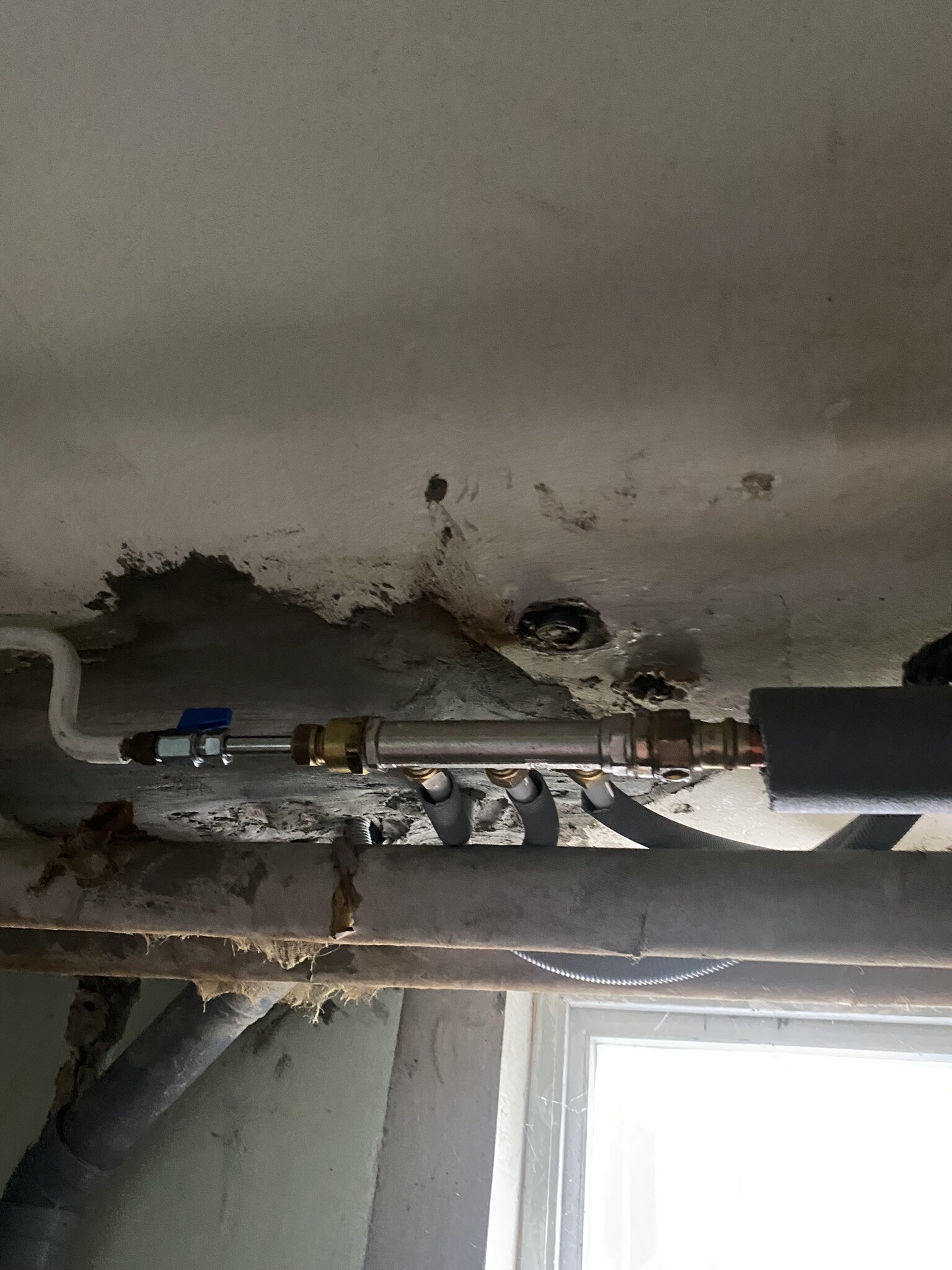


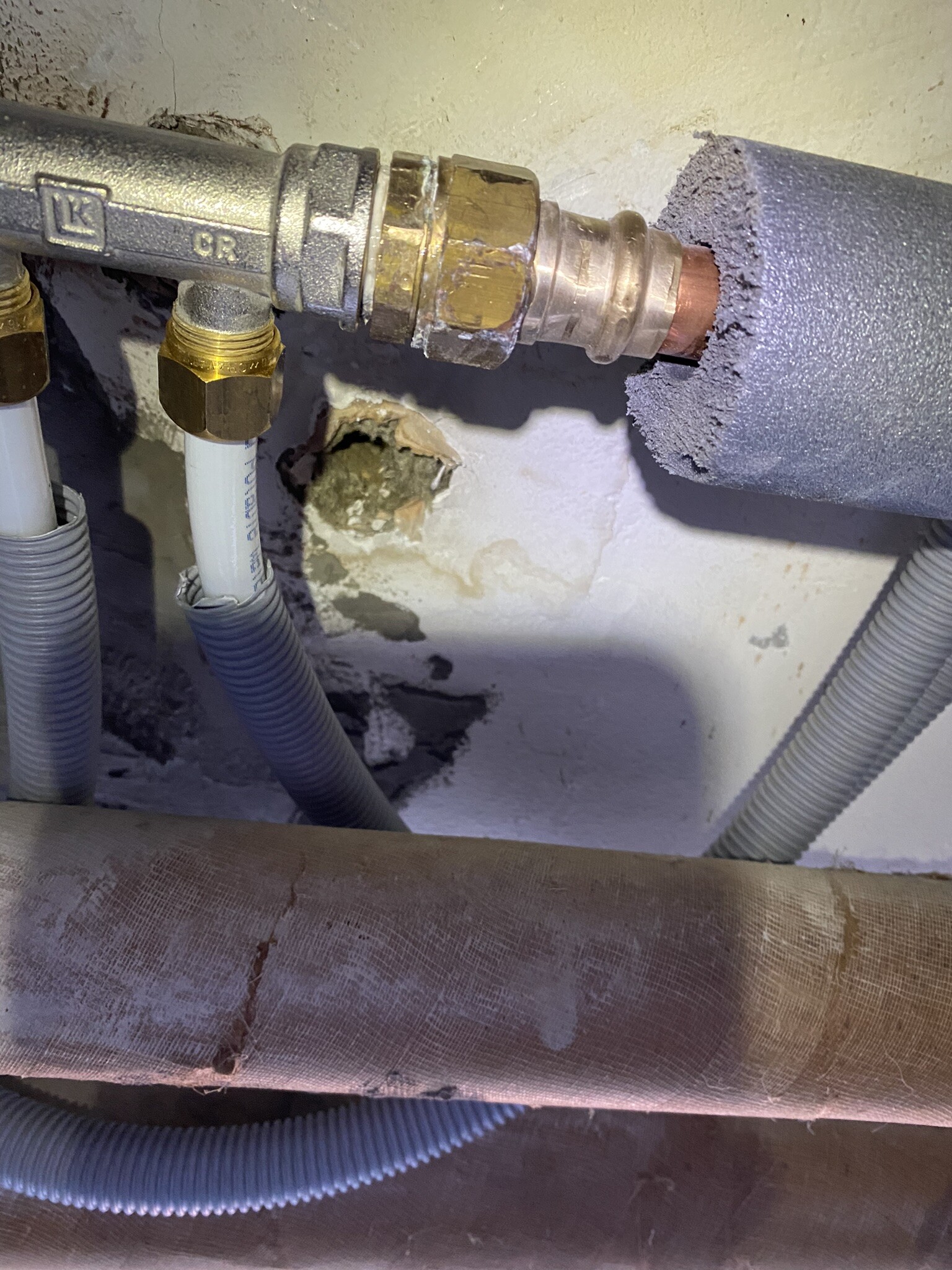
I mostly see styrofoam, glass wool, and stone wool in those pictures. Possibly there's asbestos in a pipe bend in the sixth image.
Pipe bends, branches, and similar used to be insulated with a form of "asbestos powder" which was often orange in color. The straight pipes used to, like now, be insulated with pipe sleeves made of stone wool or glass wool. A pipe sleeve is thus a preformed tube of insulation that's slit so it can be fitted onto the pipe. Today there are special pipe sleeves for bends, etc., or you have to cut and miter pipe sleeves, but in the past, it was done simply by filling with loose insulation powder in the form of asbestos where straight pipe sleeves couldn't be used.
Since it is powder, there's no really good way to remove asbestos from pipes without dedicated equipment. It will create dust. You don’t want that dust in your regular vacuum cleaner.
Call a restoration company, and they'll fix it in an afternoon, and safely. They can also easily distinguish between the different types of insulation.
The alternative is to do nothing and encapsulate it. But now the insulation is already so damaged (both the potentially asbestos-containing and all other insulation) that it's best to replace it. It's not for fun that pipes are insulated, but to avoid energy losses from hot pipes and condensation on cold pipes.
Pipe bends, branches, and similar used to be insulated with a form of "asbestos powder" which was often orange in color. The straight pipes used to, like now, be insulated with pipe sleeves made of stone wool or glass wool. A pipe sleeve is thus a preformed tube of insulation that's slit so it can be fitted onto the pipe. Today there are special pipe sleeves for bends, etc., or you have to cut and miter pipe sleeves, but in the past, it was done simply by filling with loose insulation powder in the form of asbestos where straight pipe sleeves couldn't be used.
Since it is powder, there's no really good way to remove asbestos from pipes without dedicated equipment. It will create dust. You don’t want that dust in your regular vacuum cleaner.
Call a restoration company, and they'll fix it in an afternoon, and safely. They can also easily distinguish between the different types of insulation.
The alternative is to do nothing and encapsulate it. But now the insulation is already so damaged (both the potentially asbestos-containing and all other insulation) that it's best to replace it. It's not for fun that pipes are insulated, but to avoid energy losses from hot pipes and condensation on cold pipes.




Okay, so you're recommending that we start by cleaning out all the old insulation via a remediation company and then add new insulation.PNO said:
I mostly see foam plastic, glass wool, and stone wool in those pictures. There might be asbestos in a pipe bend in the sixth picture.
Pipe bends, branches, and similar parts were often insulated with a form of "asbestos powder" which was often orange in color. The straight pipes used to be and still are insulated with pipe sections made of stone wool or glass wool. A pipe section is a pre-formed tube of insulation that is split so it can be placed over the pipe. Today, there are special pipe sections for bends, etc., or you have to cut and miter pipe sections, but in the past, it was simpler to fill in with loose insulating powder in the form of asbestos where straight pipe sections couldn't be used.
Since it's powder, there is no good way to remove asbestos from pipes without proper equipment. It will create dust. You don't want that dust in your regular vacuum cleaner.
Call a remediation company, and they'll handle it in an afternoon, safely. They can also easily distinguish between different types of insulation.
The alternative is to do nothing at all and build it in. But now the insulation is already so damaged (both the one that possibly contains asbestos and all other insulation) that it's best to replace it. Pipes are insulated for a reason, to avoid energy losses from hot pipes and condensation on cold pipes.

In my world, it looks like mineral wool with gauze and plaster.
Put on a good mask and the Mumin painting suit and carefully cut away the insulation. Pack it into bags directly. Sweep and wet mop thoroughly afterwards, done! A company is likely to charge quite a bit due to people's fear.


Homeowner
· Bergeforsen
· 1 727 posts
"Mumin-målardräkten"Jonatan79 said:
The most important new word of the year! 😃❤️
I actually don't want to do anything about the mess, just want to hide all the pipes. Can I tape the mess with duct tape before boxing them in with MDF boards?
Just my perception. It looks quite messy and perhaps a cleanup of the pipework would be good. Now they are there, and either you paint the pipe insulation with a plastic paint or just enclose them. The latter would involve a lot of construction and result in low ceilings in some places.
Okay, I'd like to know more about the plastic paint you mention here. Does the paint hold in all the dust that might be released from areas where the pipe insulation is damaged? What do you think about duct tape?J jonaserik said:
One way to encapsulate the asbestos is to wrap them with a layer of fabric. Take old sheets that you tear into 1 dm wide strips, attach them with ample wallpaper paste, wrap them around the pipes in a spiral (I think you get it), make sure they overlap. When the paste has dried, you can paint a layer with the cheapest ceiling paint. Done!
NJA silvertape. It's a bit tricky to apply. Better then to wrap with regular thicker gauze and paint on it, as it's gauze that is placed on the outside of any asbestos and then only in the curves. The straight sections have fiber insulation under paper and gauze.