
48,301 views ·
125 replies
48k views
125 replies
New central - is this installation okay?
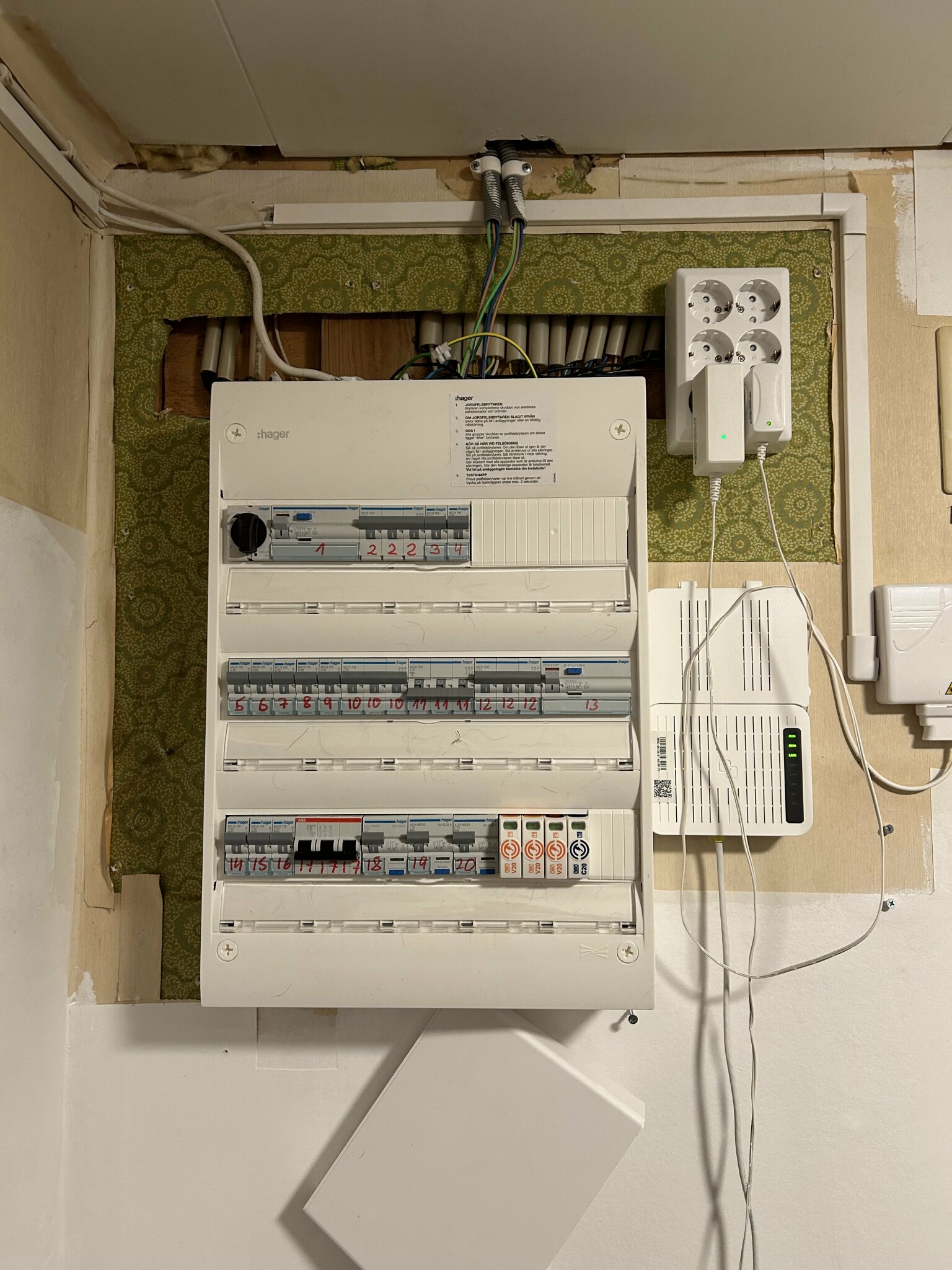
I had a new central installed yesterday and I'm wondering if this installation is okay? I guess I can put some cabinet or something over it but first want to ensure that this is correct.
I'm personally a bit surprised about the placement but don't know myself if it's safe or not in terms of electrical safety.
I'm personally a bit surprised about the placement but don't know myself if it's safe or not in terms of electrical safety.
Find five errors!
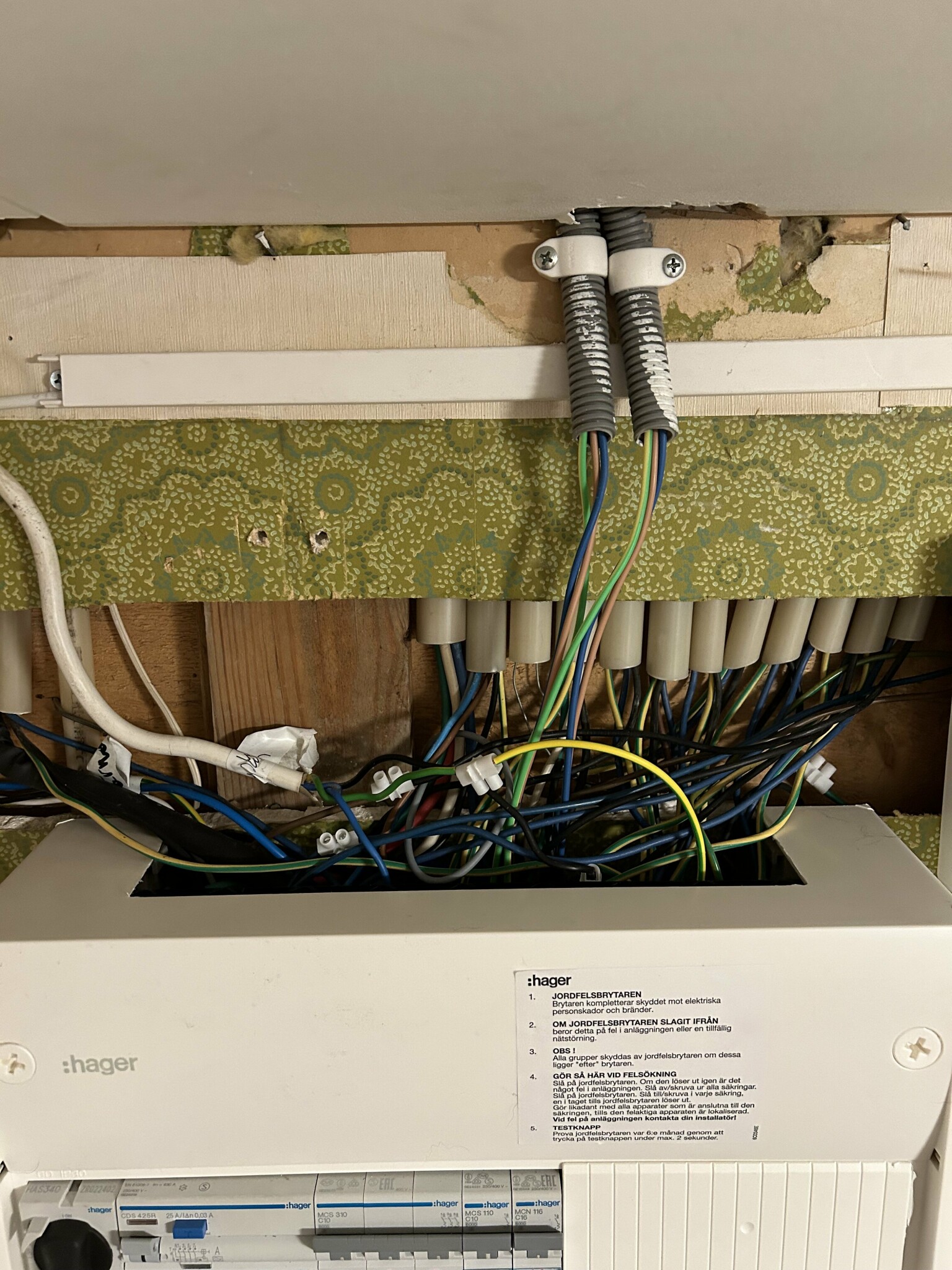
No, that is not correct. The leaders must not hang freely accessible.
He should have installed a central unit that is wider and covers the hole in the nice wallpaper. Do not pay!
No, that is not correct. The leaders must not hang freely accessible.
He should have installed a central unit that is wider and covers the hole in the nice wallpaper. Do not pay!
S
SueCia
Electronics enthusiast
· Dalarna
· 5 297 posts
SueCia
Electronics enthusiast
- Dalarna
- 5,297 posts
Absolutely not correctly executed. The person who did that should not be dealing with electricity.
Direct errors:
Basic insulated conductors freely accessible
Way too large hole in the enclosure
The loose cable coming from the left
Amateur stuff that's not necessarily wrong:
Used terminal blocks...
Written with a pen on all fuses...
Can't see a central directory, or is that what's hanging below?
Direct errors:
Basic insulated conductors freely accessible
Way too large hole in the enclosure
The loose cable coming from the left
Amateur stuff that's not necessarily wrong:
Used terminal blocks...
Written with a pen on all fuses...
Can't see a central directory, or is that what's hanging below?
Yesterday? On a Sunday.
You should probably ask your moonlighting electrician when they're going to finish the job.
You should probably ask your moonlighting electrician when they're going to finish the job.

As stated, it's hardly a real electrical company that works on a Sunday, unless you're paying a hefty on-call surcharge.
And it doesn't look like a real electrician did it either. And then you become worried about how it looks inside the casing too. What we see are major errors on what's easiest to get right. On the inside, the slightly more difficult errors might be present.
And it doesn't look like a real electrician did it either. And then you become worried about how it looks inside the casing too. What we see are major errors on what's easiest to get right. On the inside, the slightly more difficult errors might be present.
Damn it...S SueCia said:Absolutely not correctly executed. Whoever did that shouldn't be dealing with electricity.
Direct mistakes:
Basic insulated conductors freely accessible
Way too large hole in the enclosure
The loose cable coming from the left
Amateur stuff that's not necessarily wrong:
Used terminal blocks...
Written with a pen on all the fuses...
I don't see a central record, or is that what's hanging underneath?
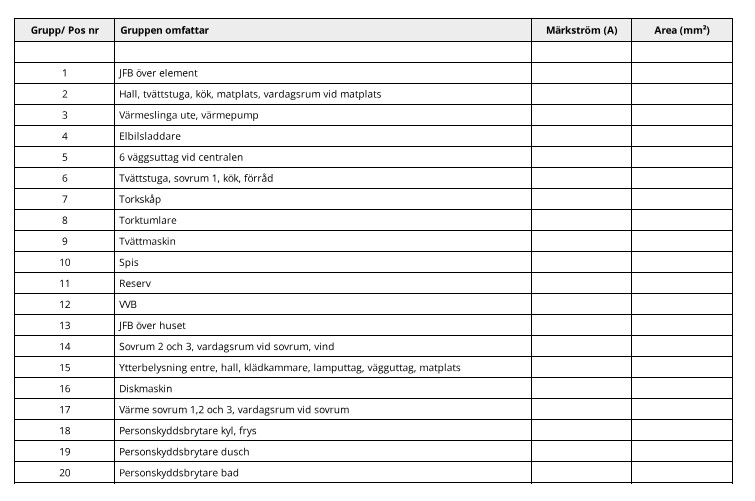
Well, I guess it's just a matter of starting over then. We did get a record. Which also looks a bit strange. The circuit breaker is for the charger in the carport (number 4) and heating (numbers 3 and 17). The other circuit breaker goes to the other fuses. I don't really know why number 2 is a different fuse when it's just lights.
I'm not really sure how to proceed from this, but an inspection that also goes through the panel on the inside is the best option?
Last edited:
But how did you get hold of the "elektrikern"? Some friend?

Is it allowed to splice conductors in the central unit? If yes, are sugar cubes the right way to go (I assume not)?
I've been thinking about this myself if I should consider replacing the central unit at home. I have a lot of surface-mounted cable that's nailed to the ceiling in the basement and it would probably be extremely expensive to replace all the cables there.
I've been thinking about this myself if I should consider replacing the central unit at home. I have a lot of surface-mounted cable that's nailed to the ceiling in the basement and it would probably be extremely expensive to replace all the cables there.
S
SueCia
Electronics enthusiast
· Dalarna
· 5 297 posts
SueCia
Electronics enthusiast
- Dalarna
- 5,297 posts
Splicing in the panel is no problem. I would splice on a terminal block on the DIN rail unless the panel is very cramped. But there is nothing wrong with splicing in the panel with something like Wago either. Splicing with terminal blocks isn't wrong, even if it screams "DIY."M Maledictus said:Is it allowed to splice conductors in the panel? If yes, are terminal blocks the right way to go (I assume not)?
I've been thinking about it myself if I should have the panel at home replaced. I have a lot of surface-mounted cables that are nailed to the ceiling in the basement, and it would probably be violently expensive to replace all the cables there.
S
SueCia
Electronics enthusiast
· Dalarna
· 5 297 posts
SueCia
Electronics enthusiast
- Dalarna
- 5,297 posts
There's some information missing in the panel listing, such as rated current and Area, but it's not a disaster. I think it looked pretty decent anyway. I don't understand the point of having so many personal protection breakers, but that's a matter of taste and not direct errors.SoderD said:
Damn...
I guess the only thing to do is to start over then. We received a listing. Which also looks a bit strange. The ground fault circuit interrupter is for the charger in the carport (number 4) and heating (number 3 and 17). The other ground fault circuit interrupter goes to the remaining fuses. Why number 2 is a separate fuse even though it's just lights, I don't really know.
I'm not quite sure how to proceed from this, but an inspection that also goes through the panel on the inside is the best?
Placing the ground fault circuit interrupter on the right on the middle row, even though according to the documentation it protects the entire middle row and lower row, is a bit odd, but not a mistake.
The most serious issue we can see from the pictures is definitely the basic insulated conductors outside the panel and the large cutout in the enclosure.