
2,392 views ·
11 replies
2k views
11 replies
Need opinions on basement construction in extension on purchase object, help!
Hello all house builders!
We have just looked at a house that we really like. It's nicely located in a central part of a small town, with a large beautiful plot that includes an older double garage + workshop. We've received two different pieces of information about when the house was built; the realtor has it listed as 1940, while the owner indicated 1915 in a questionnaire.
Now to the considerations.
It's a solid 1.5-story villa with a basement foundation. The basement is a typical "basement" with a boiler room, washing machine, and storage room. Around 2008-2009, an angled extension with a basement + kitchen + bedroom on the upper floor was added. In the basement, the old basement wall has been knocked out where the extension was made.
It's built with leca blocks, and the drainage is prepared (the idea was to build a bathroom/spa for the previous owner). The floor is cast, but I don't know what the construction looks like underneath, what the floor/slab rests on. Similarly, I'm unsure how the leca blocks are built to constitute the basement foundation. There are unsealed openings intended for window installation.
However, I noted a very (!) damp area in one of the leca block walls. I don't think it comes from the "windows," but it looks as though it's seeping through the leca wall. The extension is also supported by some kind of post, which can be seen in the image.
Do you have any wise advice, what should I consider regarding this? What should be done to resolve or make the area less risky?
Attaching some pictures. In the last image, you can also see the old basement foundation.
We have just looked at a house that we really like. It's nicely located in a central part of a small town, with a large beautiful plot that includes an older double garage + workshop. We've received two different pieces of information about when the house was built; the realtor has it listed as 1940, while the owner indicated 1915 in a questionnaire.
Now to the considerations.
It's a solid 1.5-story villa with a basement foundation. The basement is a typical "basement" with a boiler room, washing machine, and storage room. Around 2008-2009, an angled extension with a basement + kitchen + bedroom on the upper floor was added. In the basement, the old basement wall has been knocked out where the extension was made.
It's built with leca blocks, and the drainage is prepared (the idea was to build a bathroom/spa for the previous owner). The floor is cast, but I don't know what the construction looks like underneath, what the floor/slab rests on. Similarly, I'm unsure how the leca blocks are built to constitute the basement foundation. There are unsealed openings intended for window installation.
However, I noted a very (!) damp area in one of the leca block walls. I don't think it comes from the "windows," but it looks as though it's seeping through the leca wall. The extension is also supported by some kind of post, which can be seen in the image.
Do you have any wise advice, what should I consider regarding this? What should be done to resolve or make the area less risky?
Attaching some pictures. In the last image, you can also see the old basement foundation.
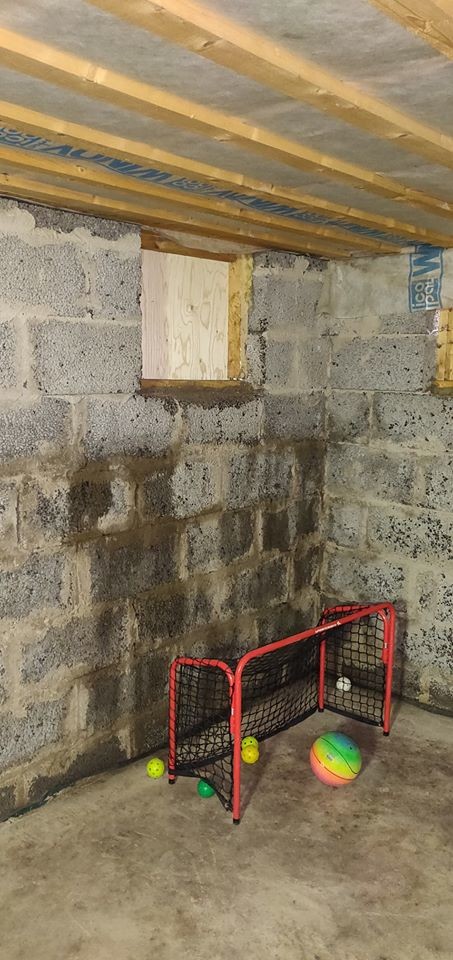
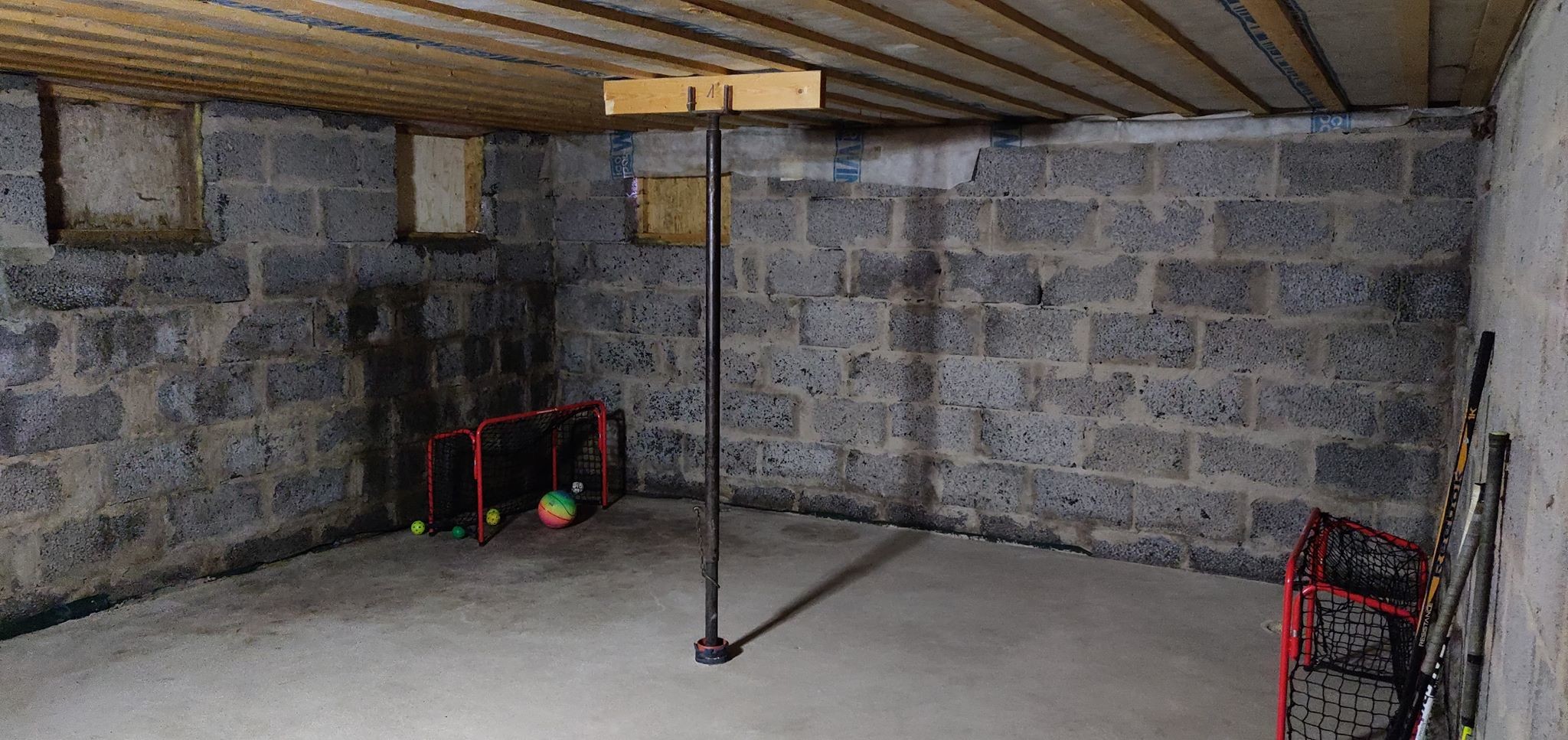
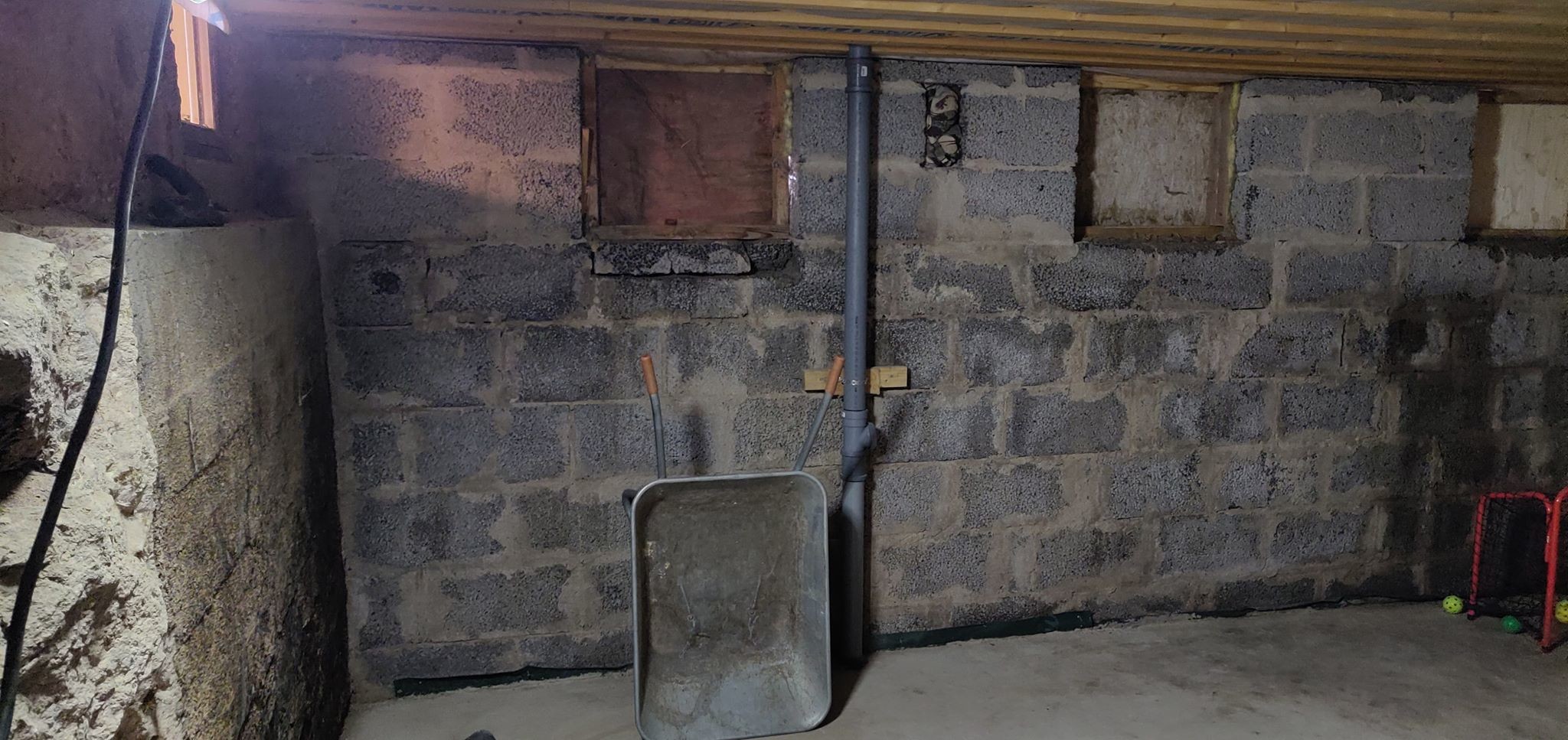
Is it drained? I assume the ground level is below the window openings?
The "support column" looks like a prop, likely because they've noticed that the floor sagged too much in the middle of the room - if so, the framework may be undersized.
If it's such a recent extension, there should be documentation, calculations should also be submitted for building permits these days (not sure though). Ask if a structural engineer was involved in the extension.
The "support column" looks like a prop, likely because they've noticed that the floor sagged too much in the middle of the room - if so, the framework may be undersized.
If it's such a recent extension, there should be documentation, calculations should also be submitted for building permits these days (not sure though). Ask if a structural engineer was involved in the extension.
Thank you so much for the reply! Yes, it should have been drained in connection with the extension, from what I understood. The entire house should have been drained then, so I assume the extension is as well. Yes, the ground level is quite precisely below the "windows." Do you have any input regarding this? I think it looks like a lot of moisture has been pressed into that particular wall(?)P patrikd84 said:Is it drained? I assume the ground level is below the window openings?
The "support pillar" looks like a shore, probably because they noticed that the floor was sagging too much in the middle of the room - in that case, the joists may be undersized.
If it's a relatively new extension, there should be documents, as calculations are usually required for building permits these days (though I'm not sure). Ask if an engineer was involved in the extension.
Sounds like a likely scenario that the support pillar serves that purpose. I'll take a look at this! Yes, I have emailed the municipality about documents and records, and I'm also waiting for a response on how and who has been involved in the extension. The owner has a contracting company, so I think they've done a lot themselves as well.
If he has his own, there is a pretty big chance (or risk) that he fixed it himself - and unfortunately, the stamp doesn't really indicate that he has full control in that case. However, it doesn't necessarily mean that.
If it's drained, it doesn't seem to be doing its job there, is it only that part of the entire basement - or is there more fixed elsewhere that isn't visible?
That it's concentrated right there could be due to how the water flows outside, it could be accumulating there for some reason, maybe there is a blockage in the pipe or something is broken/damaged so that the water doesn't flow further.
Do you have any pictures of the outside of the walls? Maybe it can give a hint.
If it's drained, it doesn't seem to be doing its job there, is it only that part of the entire basement - or is there more fixed elsewhere that isn't visible?
That it's concentrated right there could be due to how the water flows outside, it could be accumulating there for some reason, maybe there is a blockage in the pipe or something is broken/damaged so that the water doesn't flow further.
Do you have any pictures of the outside of the walls? Maybe it can give a hint.
The space is approximately square 3x3 meters extended at an angle. The entire basement, extension, and old basement are supposed to be drained. On the outside, there are bare live blocks on the side where the photos are. Other external sides have had some plaster applied. The left wall and half of the front are "bare."P patrikd84 said:If he has his own, there is a pretty big chance (or risk) that he fixed it himself - and the stamp unfortunately doesn't speak for him having full control in that case. However, it doesn't necessarily mean that.
If it's drained, it doesn't seem to be doing its job there properly, is it only that part of the whole basement - or is it more fixed elsewhere so it isn't visible?
The fact that it's concentrated right there may be due to how the water runs outside to that spot, it can accumulate there for some reason, maybe there's a blockage in the pipe or something is broken/damaged so the water doesn't flow further.
Do you have any pictures of the exterior of the walls? Maybe it could give a hint.
Difficult to say much more without pictures or other documentation. But it could be that the platonmatta or equivalent was missed against the lecablocks externally, or that it leaks behind the platonmatta for some reason. I don't think the cause is that the wall isn't plastered externally in any case, but it can of course be a contributing factor since it isn't a homogeneous layer outward and the water is then probably more easily absorbed by the blocks.
Is there gravel around the entire house? Any pictures from the outside you can share?
Is there gravel around the entire house? Any pictures from the outside you can share?
Completely missed this answer, sorry!P patrikd84 said:Hard to say much more without pictures or other documentation. But it might be that they've missed laying a Platon mat or equivalent against the Leca blocks externally, or that it leaks in behind the Platon mat for some reason. I don't think the reason is that the wall isn't plastered externally in any case, but it could of course be contributing since it isn't a homogeneous layer outward and the water might then be more easily absorbed by the blocks.
Is there gravel around the whole house? Any pictures from the outside you can share?
The sale is on pause during the holiday. But we still don't really know how to think.. we like the house and it feels like a lot of house for the money.
I'll see if we can talk to the owner a bit and then I'll get back to you.
Hello again. I have now gotten some newer pictures since the house is listed again. The basement has been freshened up, and windows have been installed and plastered both inside and outside.P patrikd84 said:Difficult to say much more without pictures or other materials. But it could be that they missed installing a platonmat or similar against the lightweight concrete blocks externally, or that it's leaking behind the platonmat for some reason. I don't think the cause is that the wall isn't plastered externally in any case, but that could of course be a contributing factor since it's not a homogeneous layer outward and the water would likely be more easily absorbed by the blocks.
Is there gravel around the entire house? Any external pictures you can share?
New pictures of the same room as the pictures earlier in the thread show. What do you think about this?
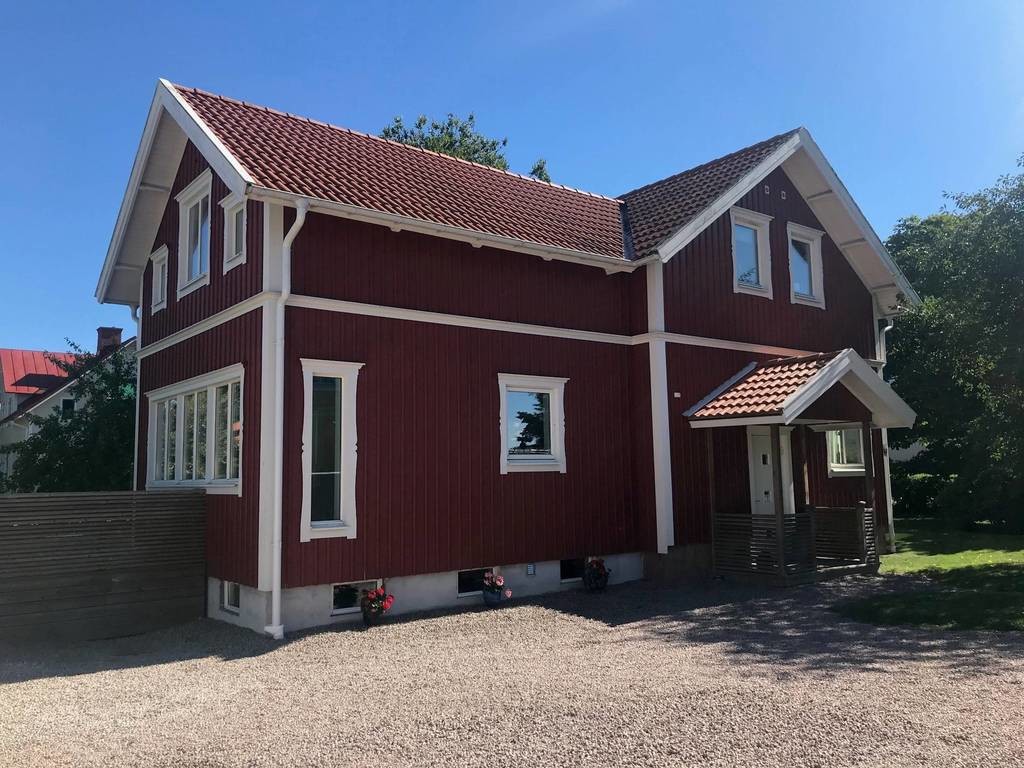
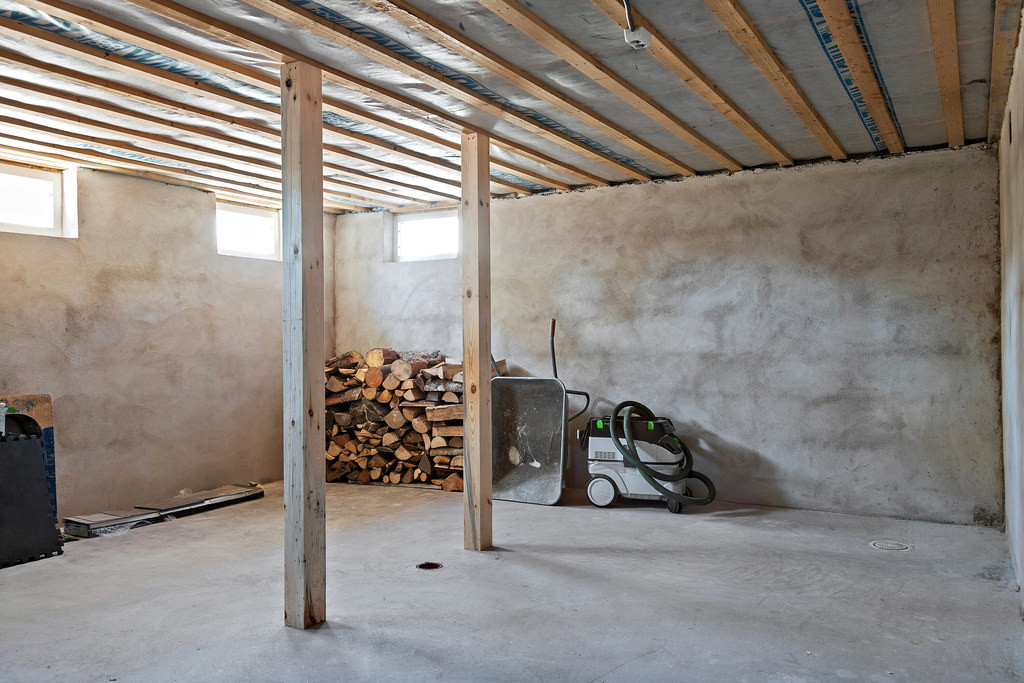
Everything looks nice when it's new, but the question is whether the moisture will go through the corner during the fall or if they've also addressed something outside that turned out to be the cause.
Are the pillars attached to the floor and ceiling? Hard to see. If everything is dry, it's probably fine, but if the floor gets damp, the pillars could be damaged at the bottom in the long term.
Since they've fixed it, they should be able to say what was done and why. The answer shouldn't be "to make it look nice"
Are the pillars attached to the floor and ceiling? Hard to see. If everything is dry, it's probably fine, but if the floor gets damp, the pillars could be damaged at the bottom in the long term.
Since they've fixed it, they should be able to say what was done and why. The answer shouldn't be "to make it look nice"
Exactly.P patrikd84 said:Everything looks nice when it's new, the question is if the moisture will get through the corner during the fall or if they've also addressed something outside that has proven to be the cause.
Are the pillars attached to the floor and the roof? Hard to see. If everything is dry, it's probably fine, but if the floor becomes damp, the pillars might get damaged at the bottom in the long run.
Since they fixed it up, they should be able to say what was done and why. The answer shouldn't be "to make it look nice"
This is what I'm worried they've only done. Could it be that the wall blocks are so open that they've let in so much water before? Now that the windows are in instead of open holes with wooden boards. And they've plastered the outside and inside. Feels like there should have been something more behind it all (???)
I think it's only part of it because it's not as humid and there's not the same spread of moisture under all the window openings - however, the top blocks do look equally humid. There's something more at the corner, especially on the same side as the front door.
The realtor should be able to answer what has been done to address the moisture problem, if they don't have anything sensible to offer and have just plastered, I would probably expect the problem to return in the corner.
The realtor should be able to answer what has been done to address the moisture problem, if they don't have anything sensible to offer and have just plastered, I would probably expect the problem to return in the corner.
I should hear what response I get at the beginning of next week. Yes, the wall in that corner was honestly really wet during the viewing. However, they have probably had it this way since 2009(?) when the extension and drainage were done. Strange why it hasn't been addressed? Especially as a professional.P patrikd84 said:I think it's probably just a part of it, as it's not equally damp and widespread under all window openings - however, the top blocks do appear equally damp. There's a bit more near the corner, especially on the same side as the front door.
The agent should be able to answer what has been done to address the moisture problem. If they have nothing sensible to offer and have only done plastering, I would assume the problem will return in the corner.
Click here to reply
Similar threads
-
Behöver jag förstärka bjälklag? amatör ber om synpunkter.
Golv -
Renovering: Behöver synpunkter på golvvärme
Värme allmänt -
Behöver synpunkter ang robot och stor gräsmatta
Robotgräsklippare -
Behöver synpunkter på plintantal/placering för altandäck.
Altan & Uteplats -
Behöver synpunkter på konstruktionförändring av altan inför inglasning.
Altan & Uteplats