This summer, I am planning to build an outdoor wood-fired oven for baking bread and pizza. I'm thinking of constructing it as a dome/igloo made of fire bricks, with each layer sloping inward. Inside the oven, hopefully, there will be no joints, just bricks touching edge to edge. In practice, of course, there will inevitably be visible mortar here and there. On the outside, the joints will likely be about 10 mm. The thickness of the wall will be ½ a brick, approximately 12 cm. On the outside of the dome, I plan to apply 5-10 cm of rock wool as insulation and then coat it with some cement-based plaster. There will be a chimney with a rain cap. I have found construction descriptions and inspiration from fornobravo.com, an American website.
What I am having trouble finding is suitable mortar. I thought it would be simple to just buy refractory mortar in 25 kg bags, but I can't find anything appropriate. I've considered clay mortar but am unsure if it's suitable since the oven will be outdoors. Weber has a product called refractory mortar that might work (?), but it's sold in 5 kg packages and is quite expensive (139 kr at K-rauta) http://www.weber.se/fasad-puts-och-murbruk/produkter-och-system/murbruk/weber-eldfast-bruk.html Since I will need at least 60 kg of mortar according to the building instructions (which sounds like a lot), I would like to find another alternative. Maybe I can cut the bricks so that the butt joints aren't as thick.
I would gratefully accept any tips on mortar that would be suitable for my build.
Lime-cement mortar should be suitable.
I think 60 kg sounds a bit light.
Most bread ovens in Swedish houses are regular brick, it is heat resistant enough for a bread oven.
Thanks for the response! Should I, for example, buy http://www.weber.se/betong-cement-v...stem/cementbindemedel/weber-kalkcement-c.html and mix it with masonry sand (0-2/0-4?)? I have read that some people mix their own mortar from cement-lime-fire clay and sand (1-1-1-3). The fire clay is used to increase temperature resistance. Perhaps it would be possible to mix 2 parts lime cement +1 part clay + 3 parts sand. However, I have had difficulty finding fire clay without iron filings. The oven will not be very large. Inner diameter around 1 meter. I don't know how high the temperature might get against the brick and mortar, maybe it would work with regular bricks, but I don't want to take any chances.
In the past, bread ovens were mainly constructed from clay mortar - it withstands heat and can expand upon firing and then return to its original state. If you mix the clay mortar with brick dust (chamotte sand) as aggregate instead of mortar sand, it becomes completely fireproof. However, it doesn't withstand rain, so if the oven is to be placed outdoors, it needs a roof. But that applies in any case.
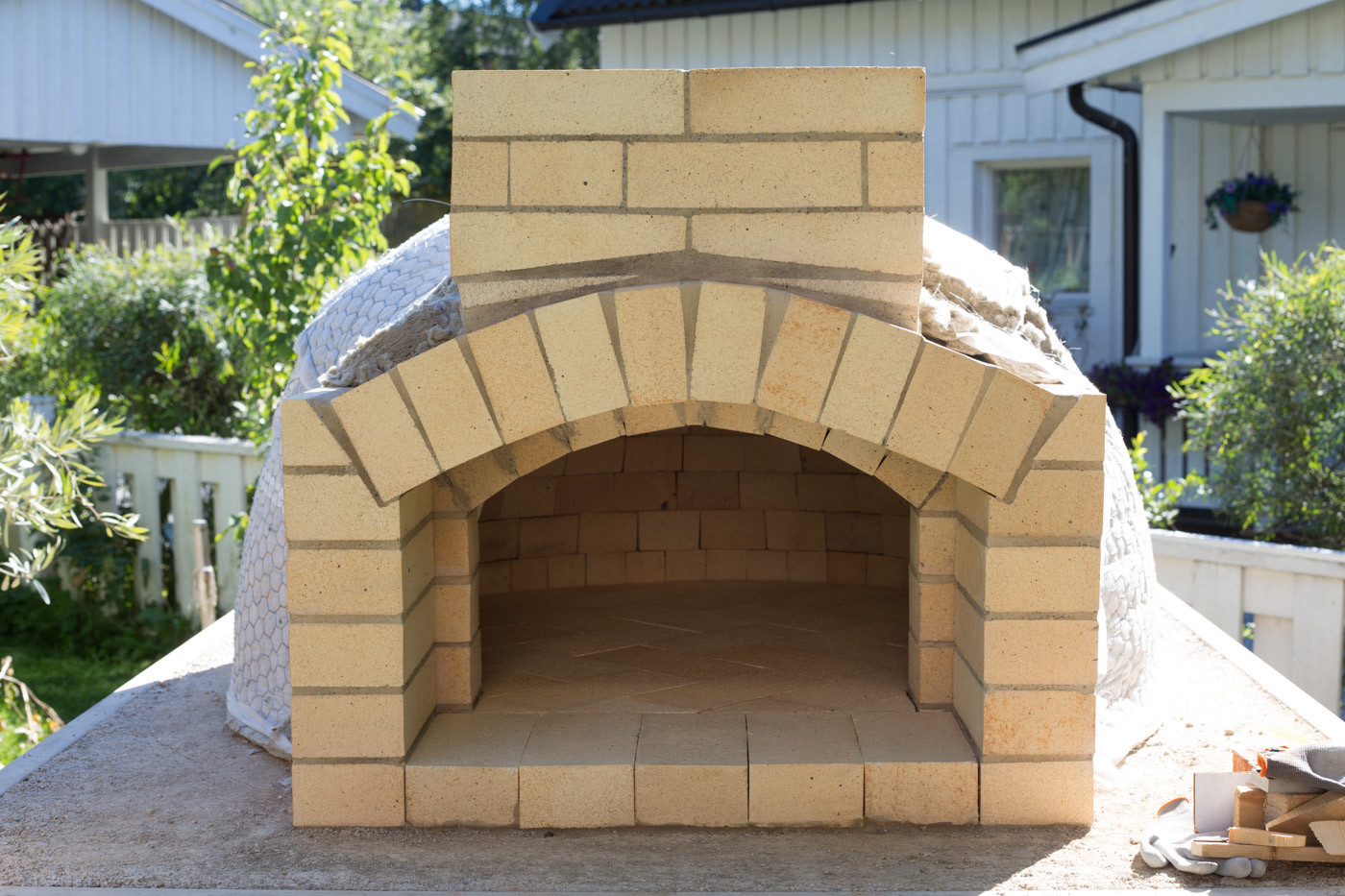
Great to hear you're about to start building. It's incredibly fun but can be quite exhausting. I should have followed up the thread with some results earlier, but it hasn't happened until now. The oven was essentially completed during the summer of 2015 and has been used quite a bit since then. Mostly for baking pizza, but also for other food and bread. What's left is the mosaic over the dome, and I plan to do that this summer. I decided to make my own refractory mortar according to a recipe from fornobravo, but also considered doing as Claes Sörmland suggests. The problem was getting hold of chamotte sand, and since so many others on fornobravo mix their own mortar successfully, I did the same. The temperature in the oven gets up to about 500-550 degrees (I haven't measured the wall temperature) when you fire it up properly. The recipe I used was: sand (I chose weber dried 0-4mm) + portland cement + lime (weber hydrated lime E) + fireclay in a ratio of 5:1:1:1. There's debate on fornobravo regarding the amount of sand, and an older common recipe is 3 parts sand to 1 part others. The mortar is incredibly pleasant to work with. It's plastic and holds the stones well. I was able to build the entire dome without using a form, thanks to the properties of the mortar. Just hold the stones for a few seconds, and they stick in place. Remember to wet the stones beforehand.
I bought firebricks in standard size and sawed each brick into 2 pieces using a Husqvarna stone cutter with water. The stones were cut with the help of a homemade jig into two angles so that they could be mortared without mortar in the head joints (each row holds itself even without the mortar) and so there wouldn’t be gaps at the top of each course between the stones (since each course is smaller at the top than at the bottom as the circle decreases towards the top). No mortar between the stones inside the oven.
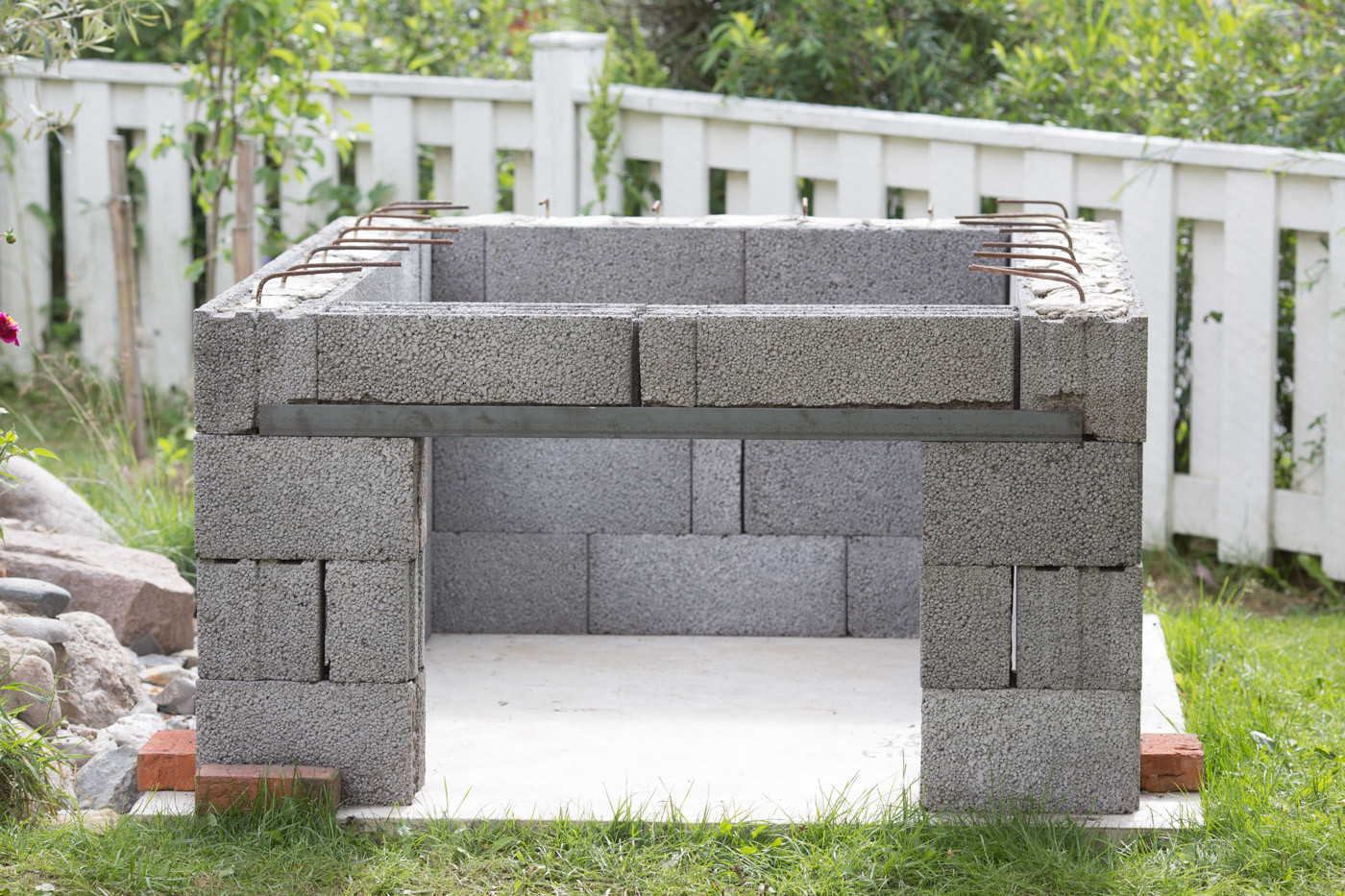
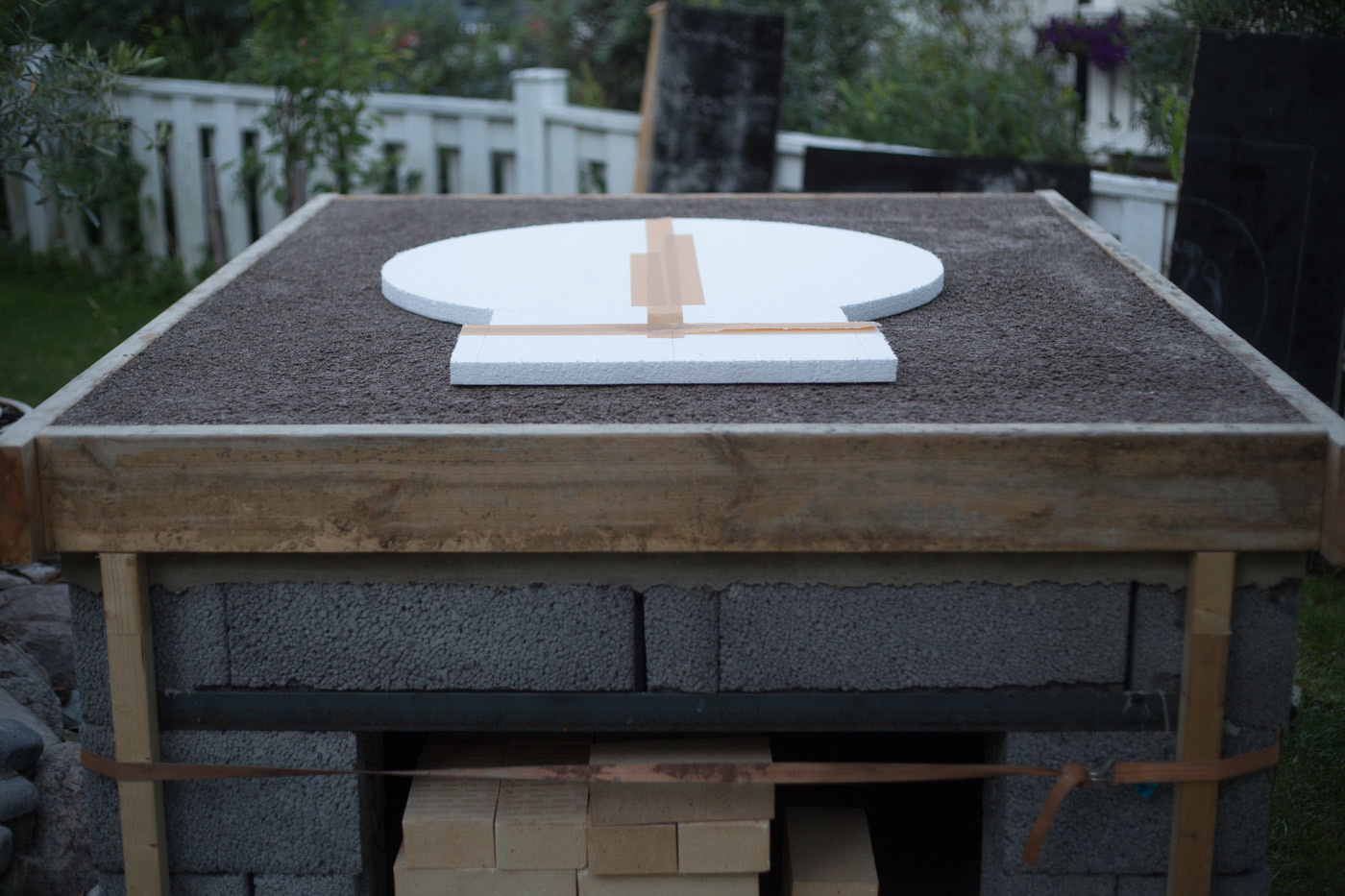
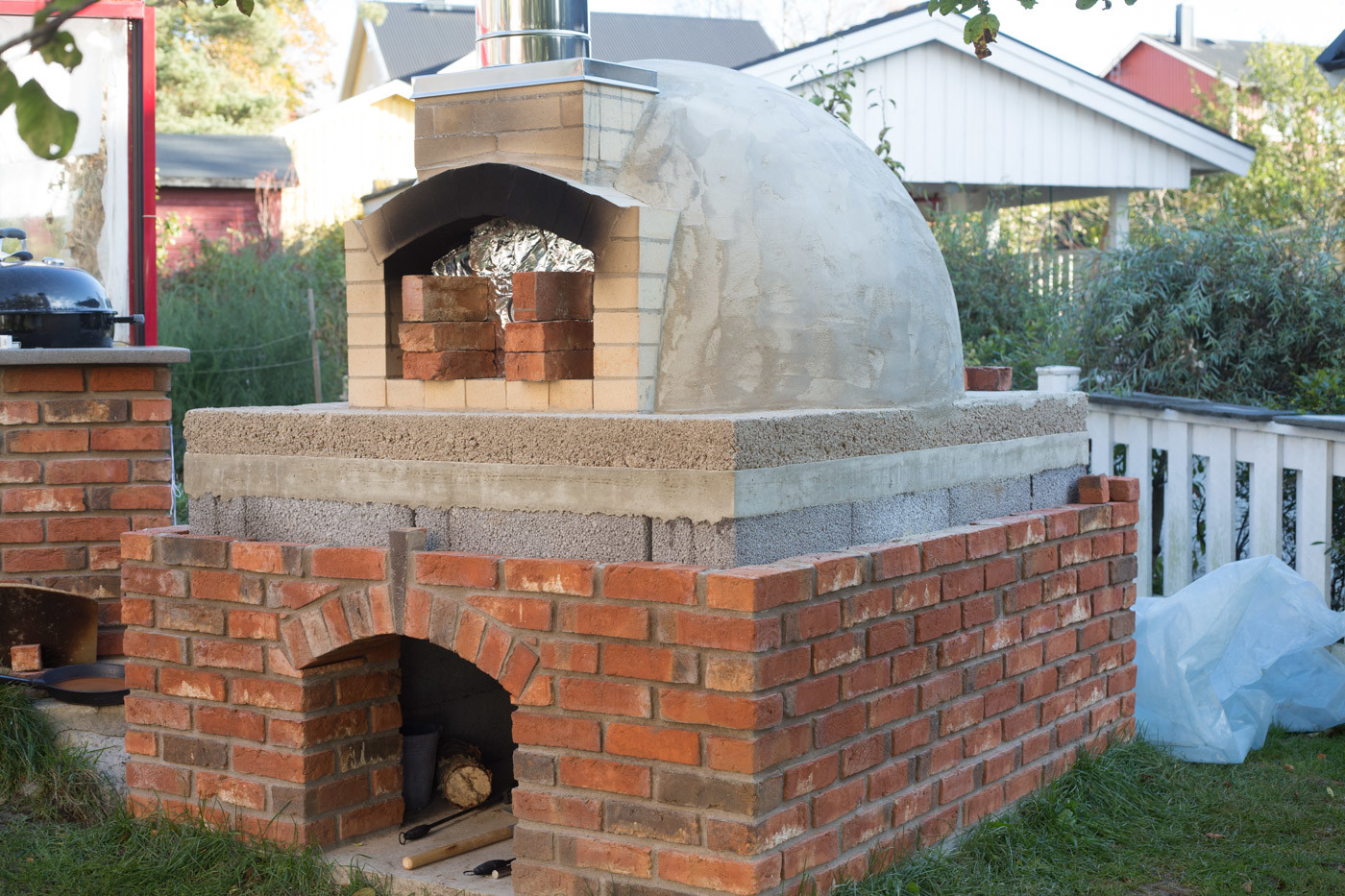
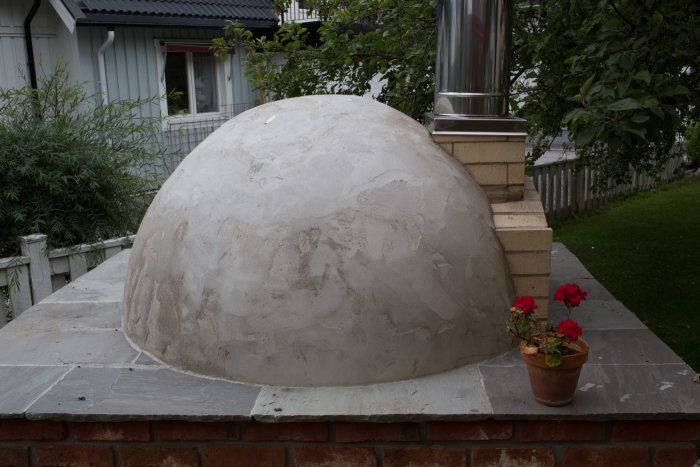
At the bottom, an insulated slab. On that, lightweight concrete blocks that were reinforced vertically and the holes filled with concrete. On the lightweight block support, I cast an upper slab/table and on top of this, a layer of insulating concrete made of vermiculite and portland cement in a ratio of 5:1. On this, leveling with fireclay and chamotte sand from the cutting, and then the oven itself was built. Insulation on the dome first with rockwool fire mat to create a flexible joint and on top of that insulating vermiculite concrete in a weaker mix of 10:1. On top of that, plaster, and this is where the mosaic will be added later. I'll try to include some pictures but in a separate post.
Ask if there's anything you're wondering about. There are lots of great people on fornobravo to discuss with. Best regards
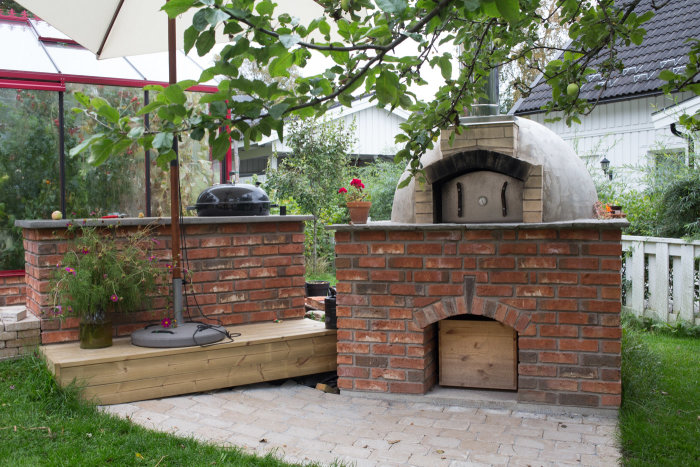
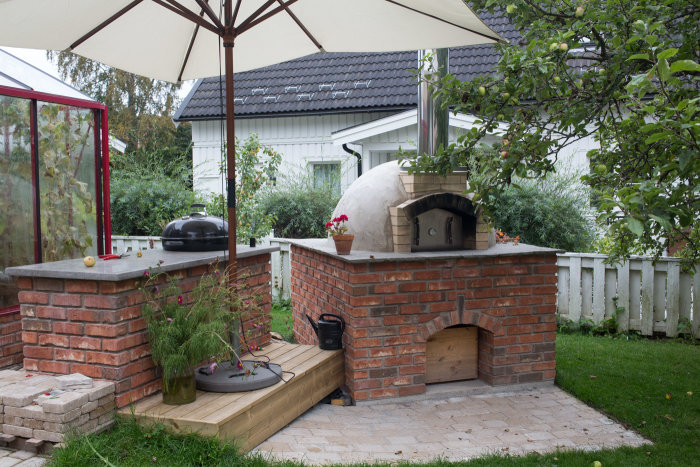
The images above show how far I got during 2015. The chimney is stainless steel and was purchased from Germany. In 2016, I continued to brick the base and placed limestone slabs on top as counter surfaces. This is how the oven looked in the fall of 2016.
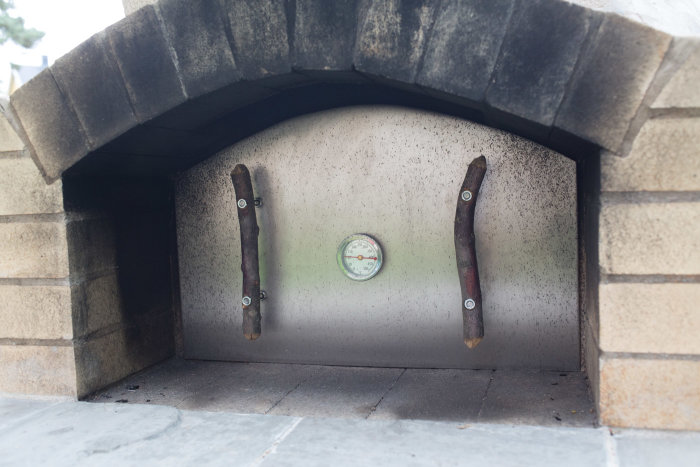
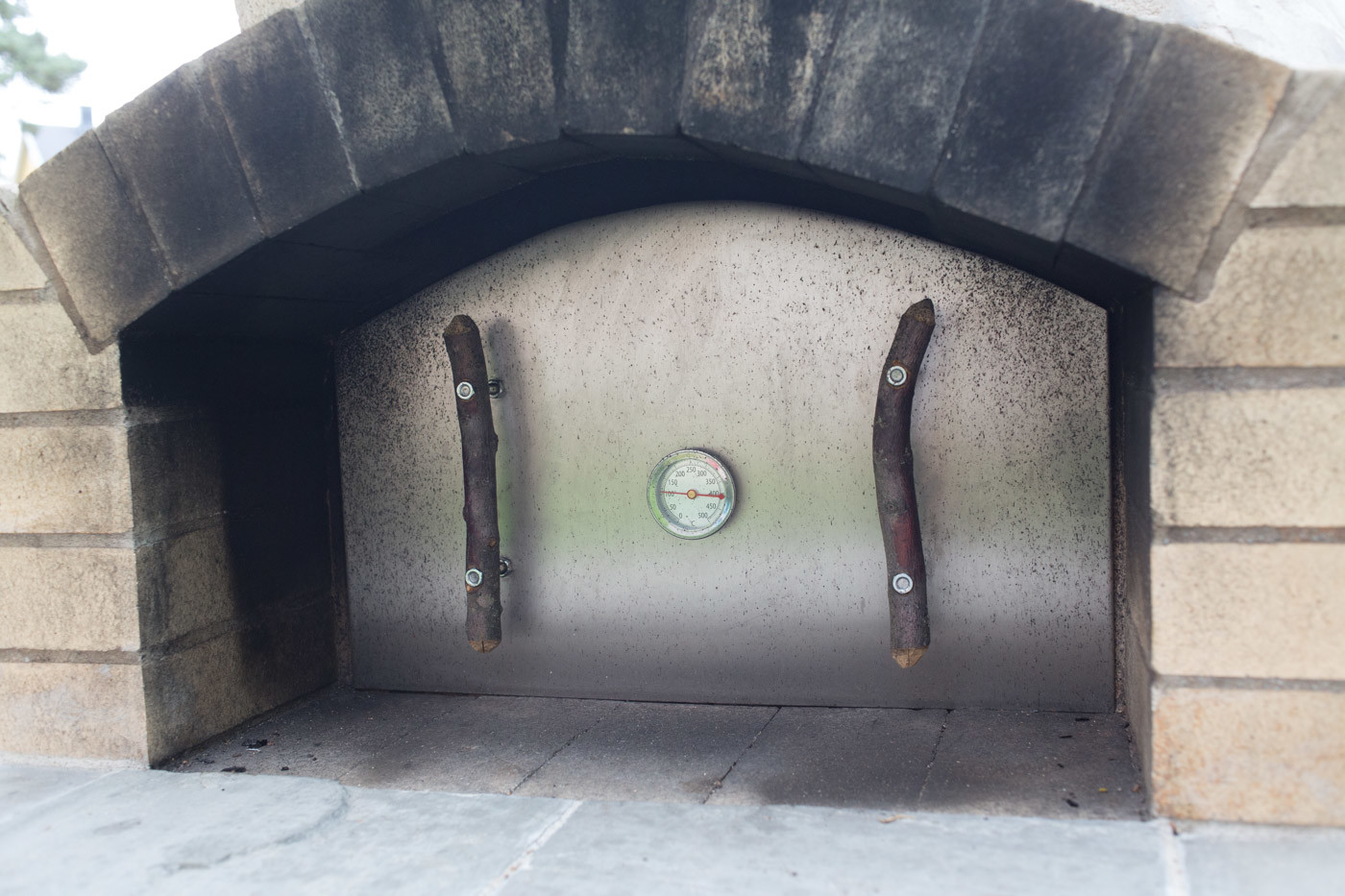
Oh, and I had an insulated door made of stainless steel that works really well and helps retain heat for a long time.
The pizza turns out perfect and bakes quickly, around 90 seconds. It's mostly been pizza and bread in various forms. Trying to attach some pizza pictures from the summer.