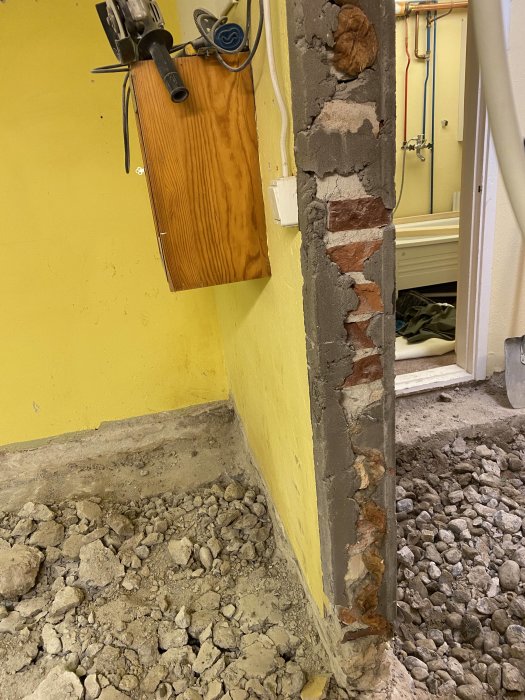
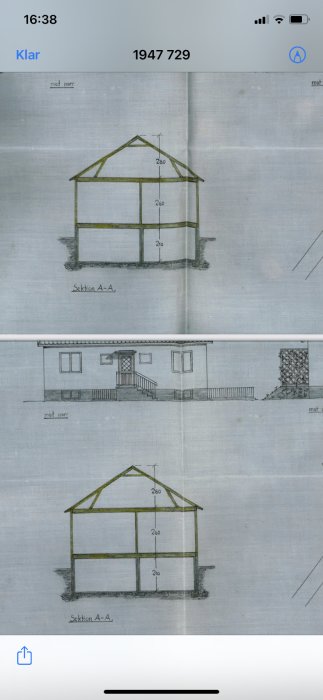
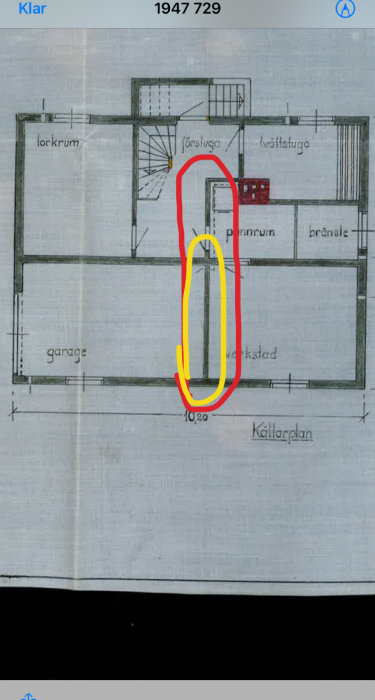
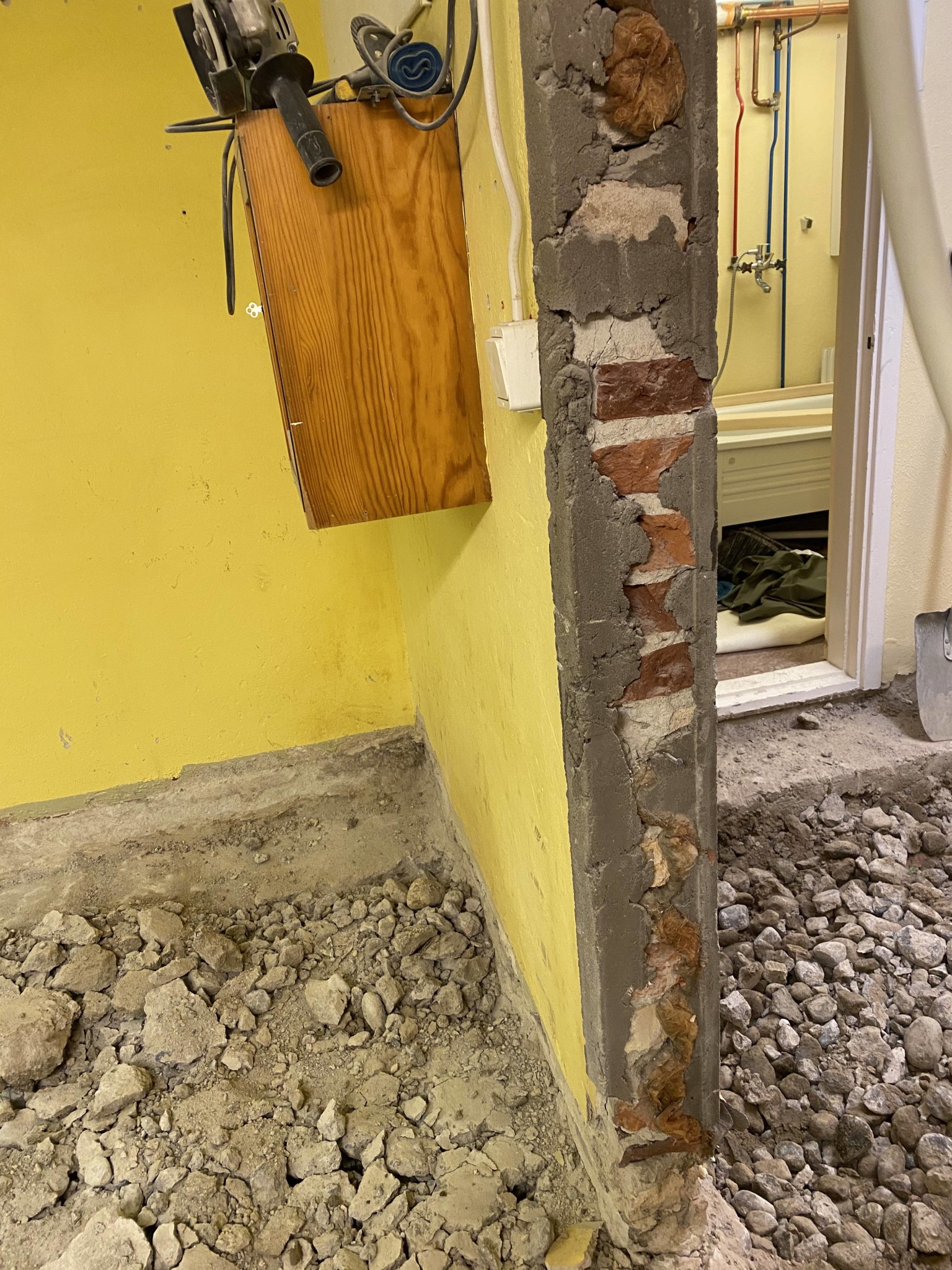
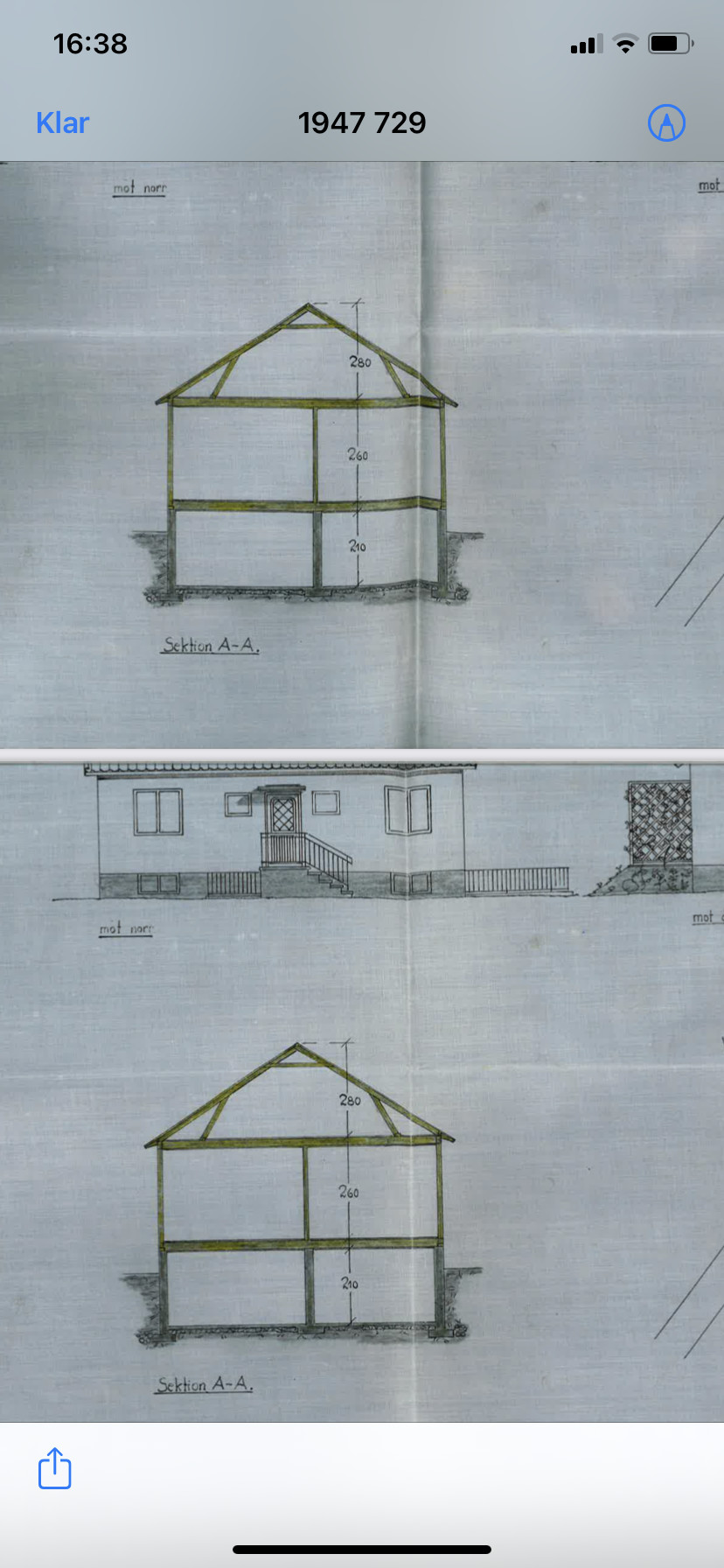
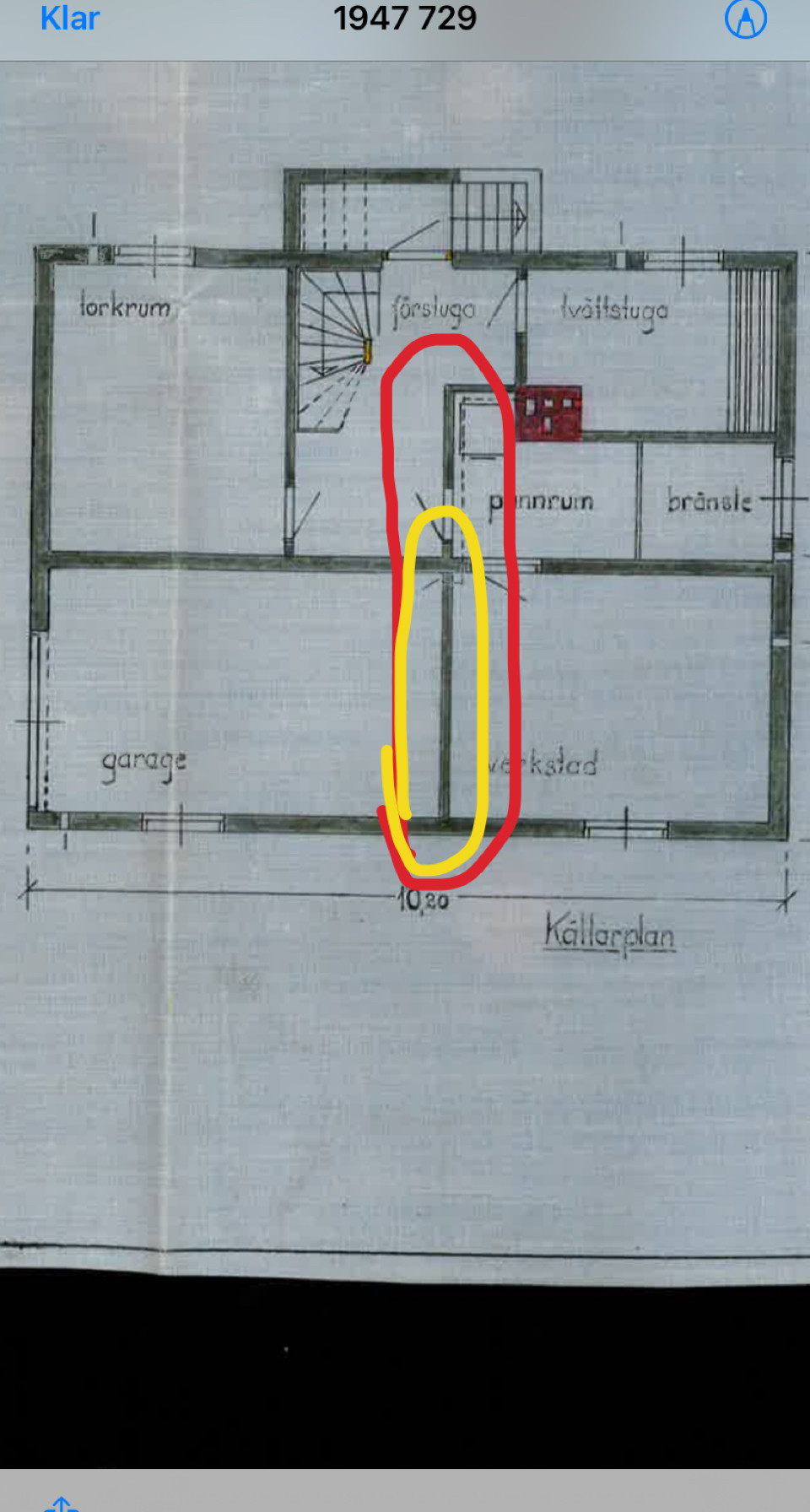
I am in the process of digging out the basement and just wanted to double-check that this wall does not have any load-bearing function. Attaching pictures, it's the wall circled in yellow in the pictures. The house is built on concrete footings.
Do the studs, between the floors, run parallel with this wall or perpendicular to it?
If parallel, I would say it is not load-bearing. But maybe supportive towards the heart wall?!
Do the joists, between the floors, run parallel to this wall or perpendicular to it?
If parallel, I would say it is not load-bearing. But perhaps supporting against the main wall?!
thanks for the reply.
They run parallel to the wall.
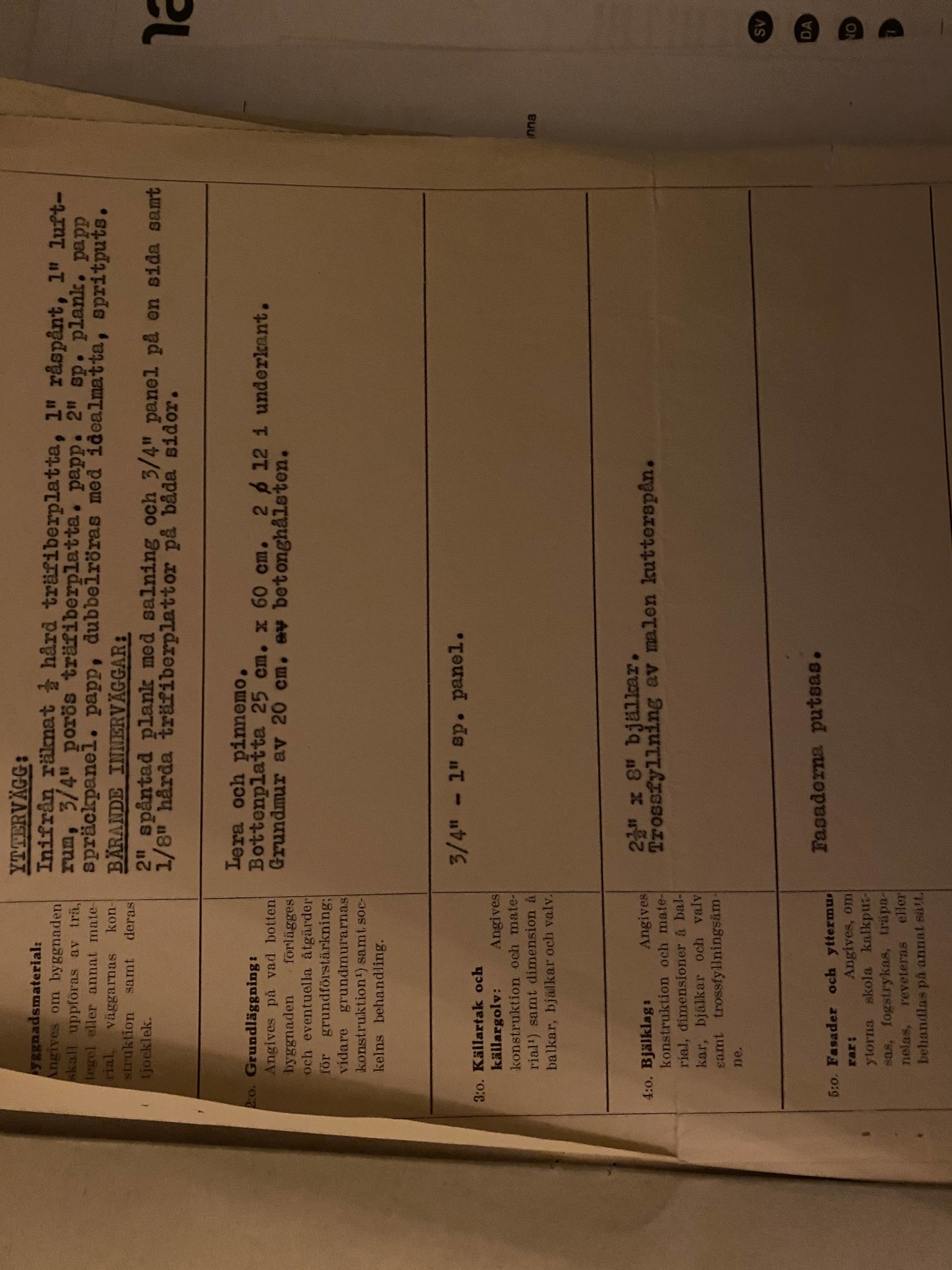
A half-brick wall that is perpendicular to the internal wall is normally non-load-bearing. What is the flooring between the basement and the ground floor made of? When was the house built?
Then we can rule out that the wall is load-bearing.
Jjustusandersson said:
Then we can rule out that the wall is load-bearing.
Hi! Thanks for the help last time. I'm working on another part of the basement and hope you can assist again.
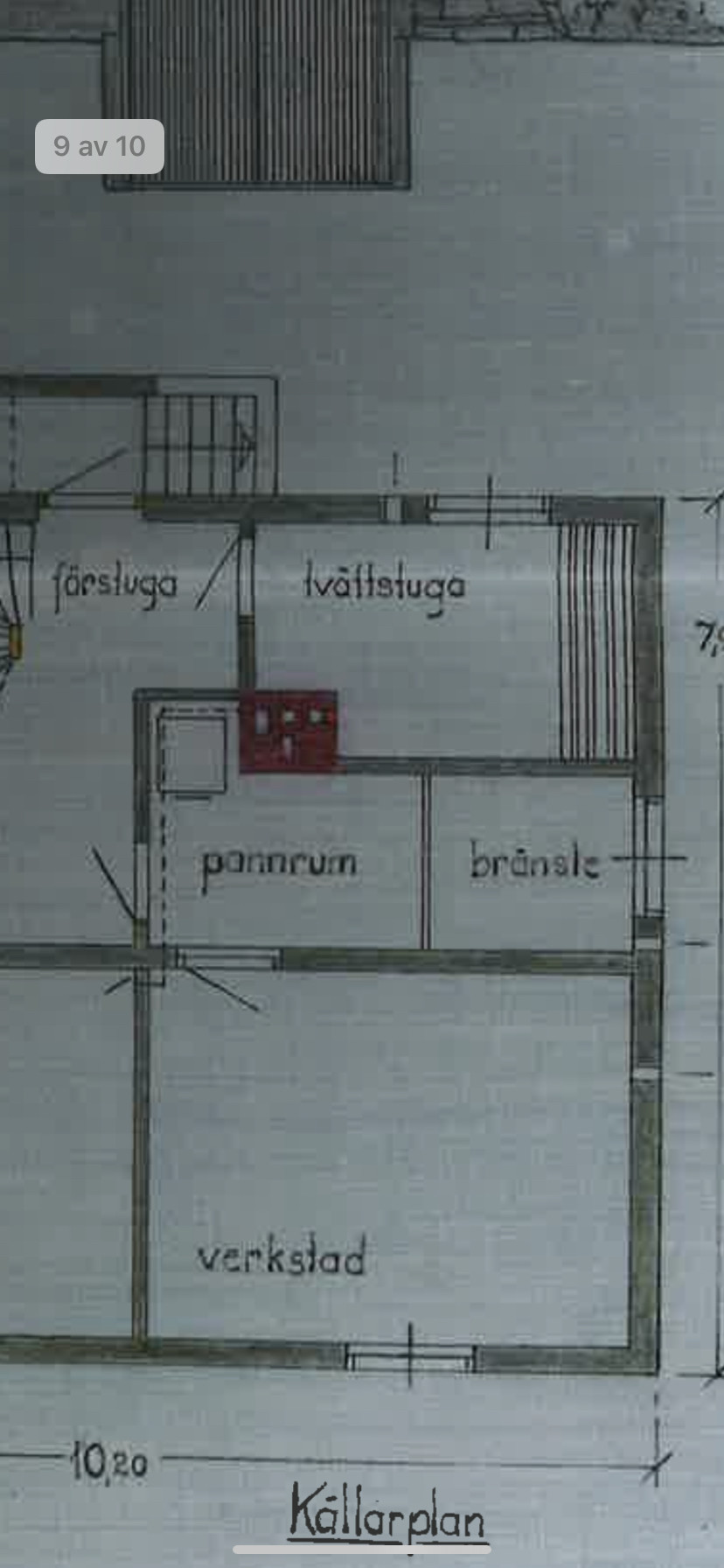
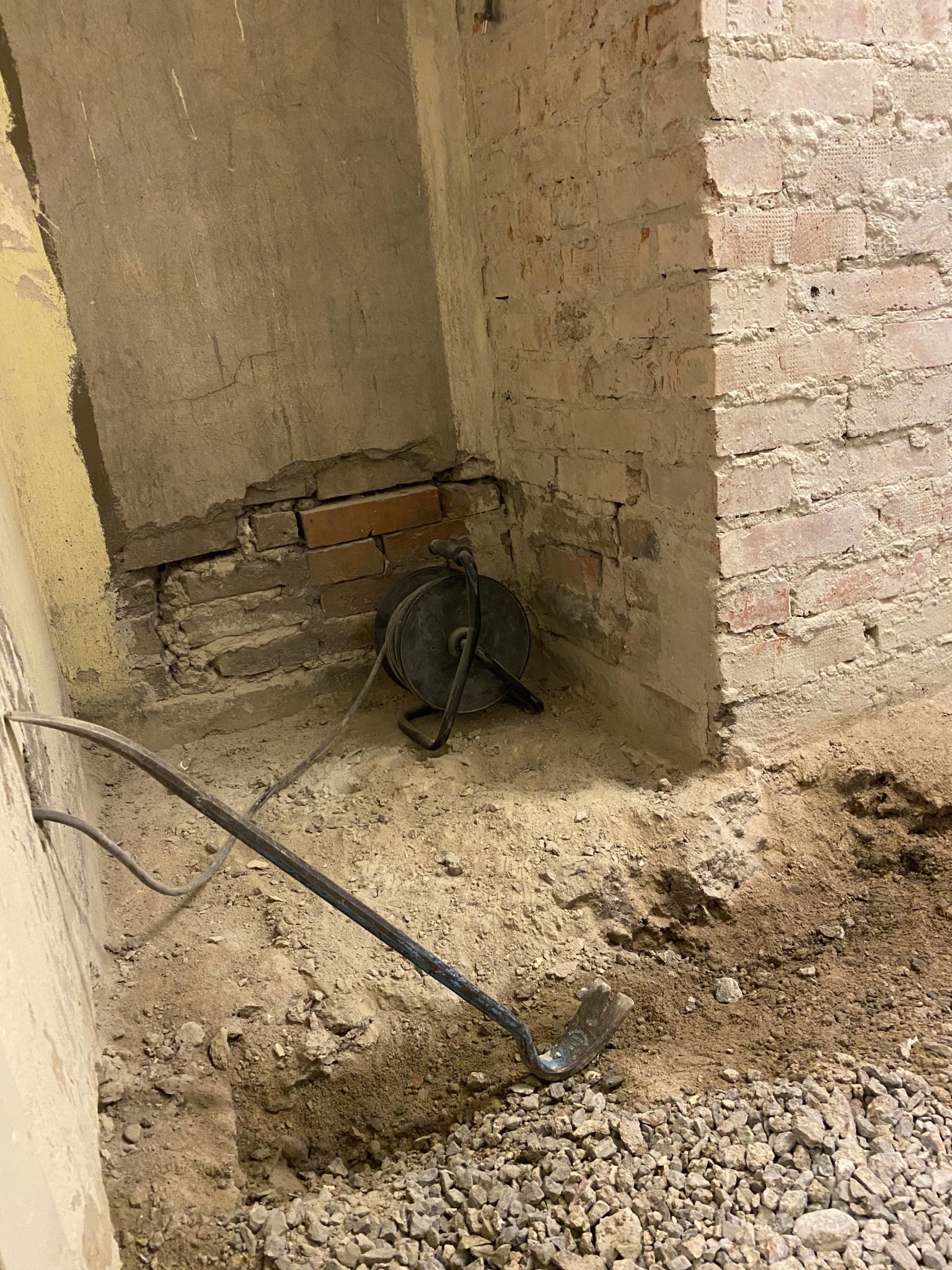
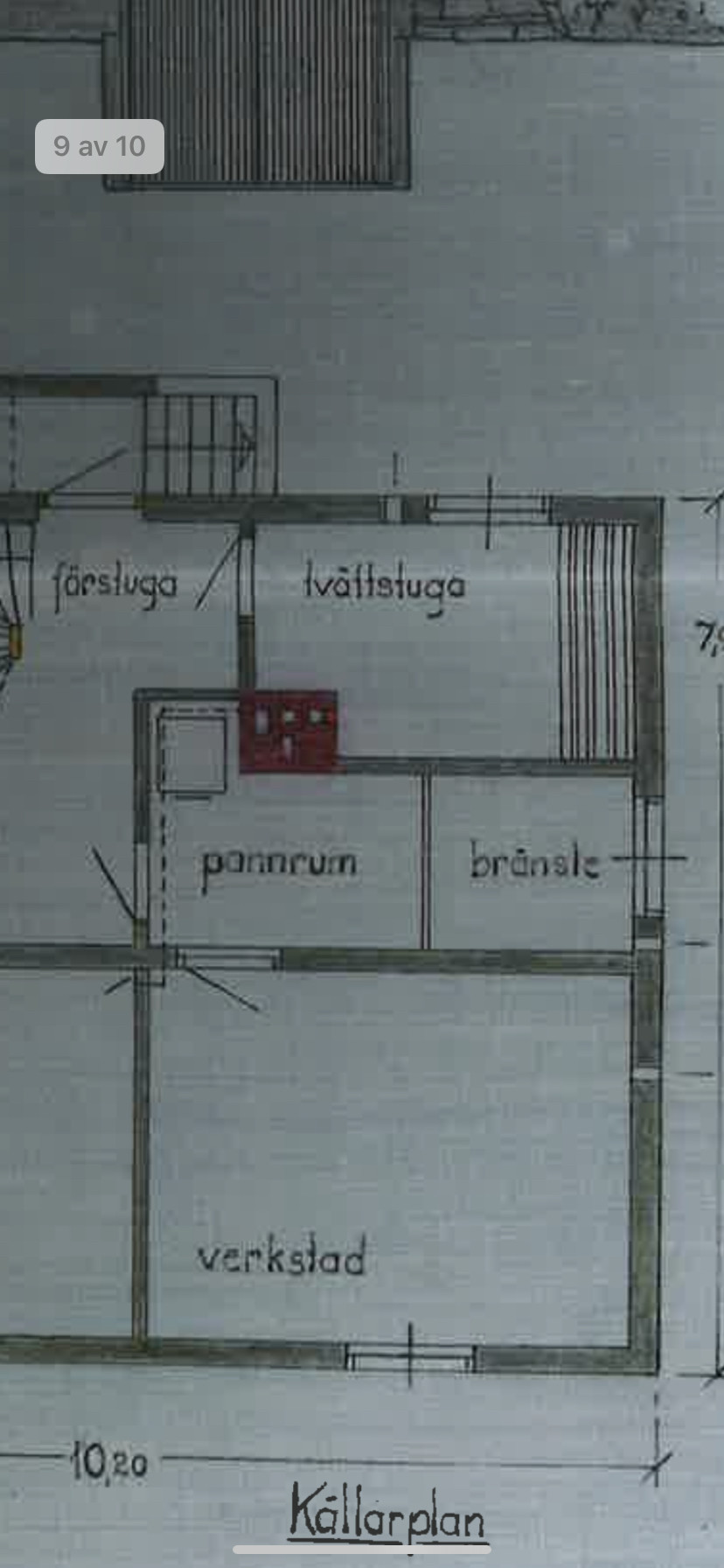
Now it's about the boiler room next to the chimney where the boiler used to be. There was a concrete plinth where the boiler stood next to the chimney about 5-10cm higher than the rest of the floor. However, when I started chiseling, I noticed that the concrete is significantly thicker cast just in that square than the rest of the room. Could this part have any load-bearing/stabilizing function for the chimney?
Can this part have any load-bearing/stabilizing function for the chimney stack?
Not for the chimney stack itself, only for the boiler. The basement does not have a full slab. Under the walls and chimney stack, there are thicker footings, which can be reinforced. Between the footings, the floor consists of unreinforced thin (about 7 cm) concrete.
Not for the chimney itself, just for the boiler. The basement does not have a full slab. Under the walls and chimney, there are more robust foundations, which may be reinforced. Between the foundations, the floor consists of unreinforced thin (about 7 cm) concrete.
Thanks, yes the concrete is not that thick, I was a bit puzzled when there was such thick concrete right where the boiler stood if it had any function.
The wall between the boiler room and the laundry room consists of bricks, and I assumed it didn't have any load-bearing function, but I noticed now that it was reinforced at the bottom. Do you think it has any load-bearing function?