I am in the process of taking down a wall that I am 99.99% sure is not load-bearing, because I don't know what it could possibly be supporting. The wall I want to take down is in the same direction as the rafters above. However, I had some uncertainty when I removed the plasterboard and saw that the studs are set at cc45 (45x70 studs), and thought it wouldn't hurt to ask. None of the house's building descriptions or documents mention cc45 in any wall, only cc60.
The house is a split-level house from 1973 with a hipped roof, with approximate external dimensions of 18x10 meters.
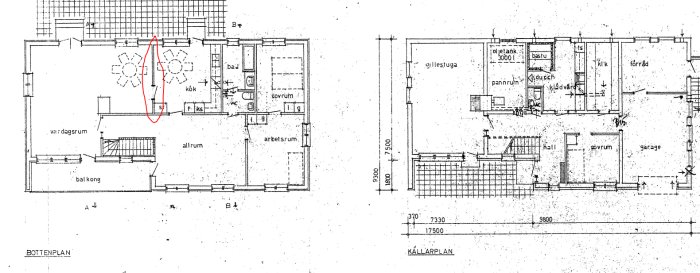
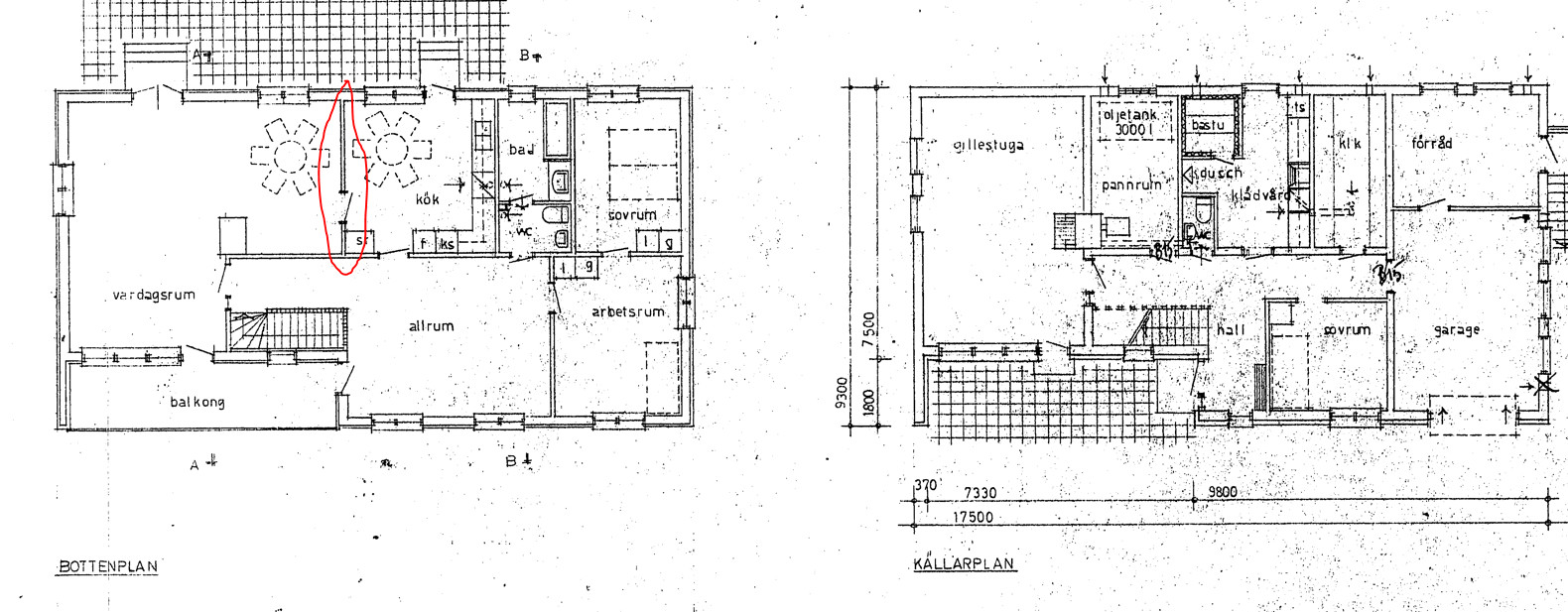
The wall I want to take down is included in the original floor plan:
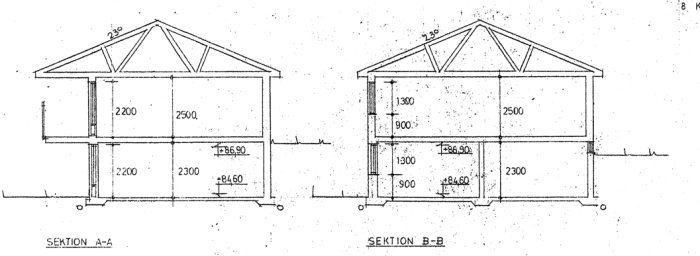
The sectional drawings look like this: I interpret it as no wall on the ground floor (split-level) is actually load-bearing.
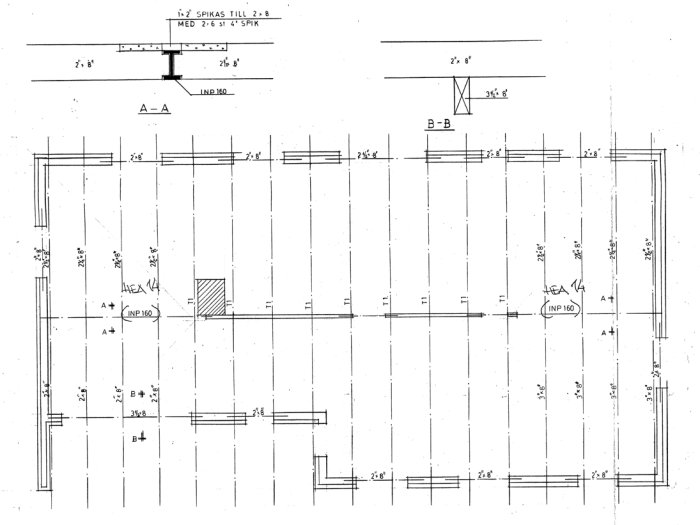
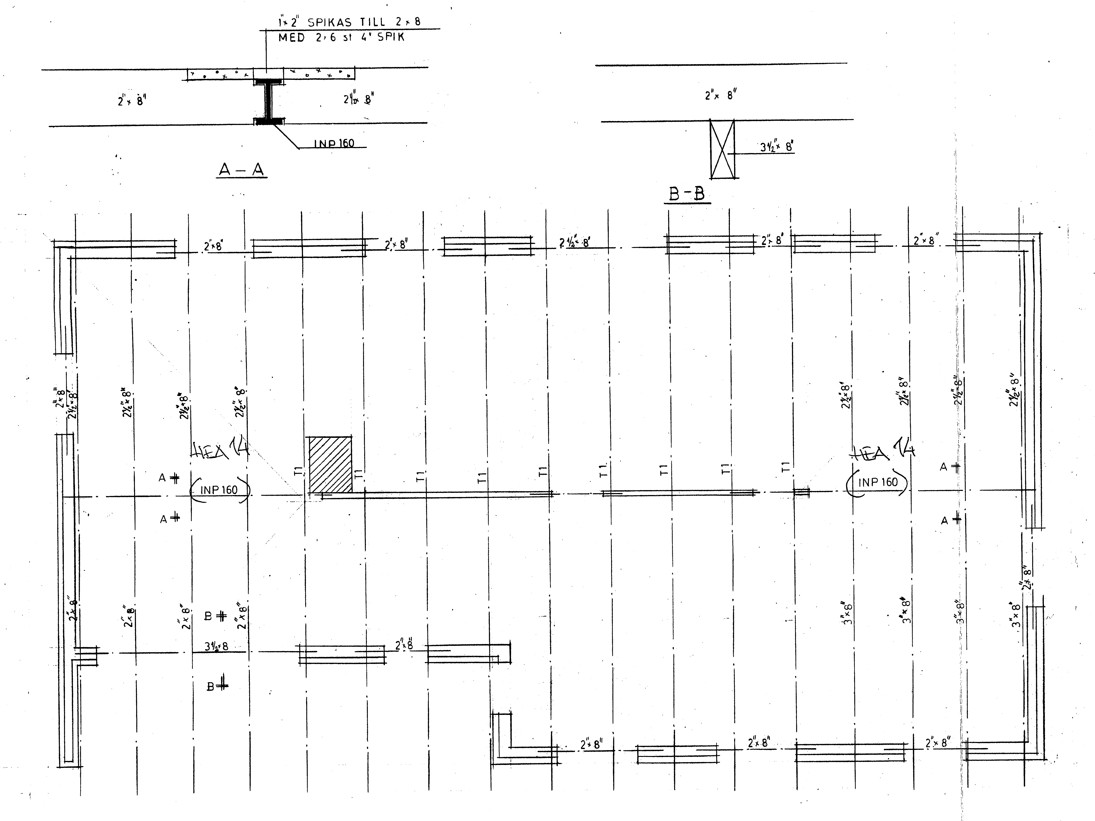
A drawing titled attic floor looks like this:
Here, it appears that a wall on the ground floor is load-bearing, but not the one I want to remove. There are also a couple of beams drawn in.
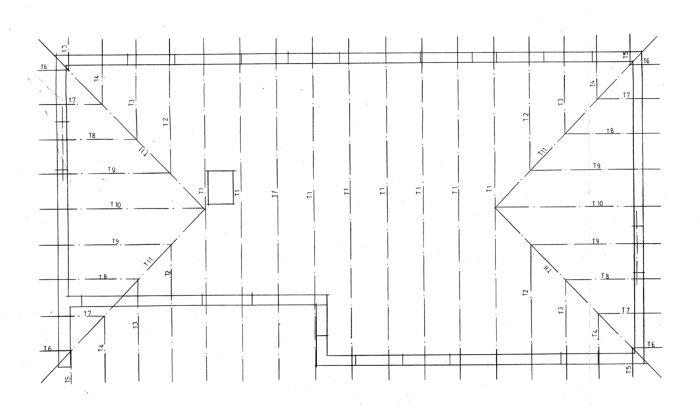
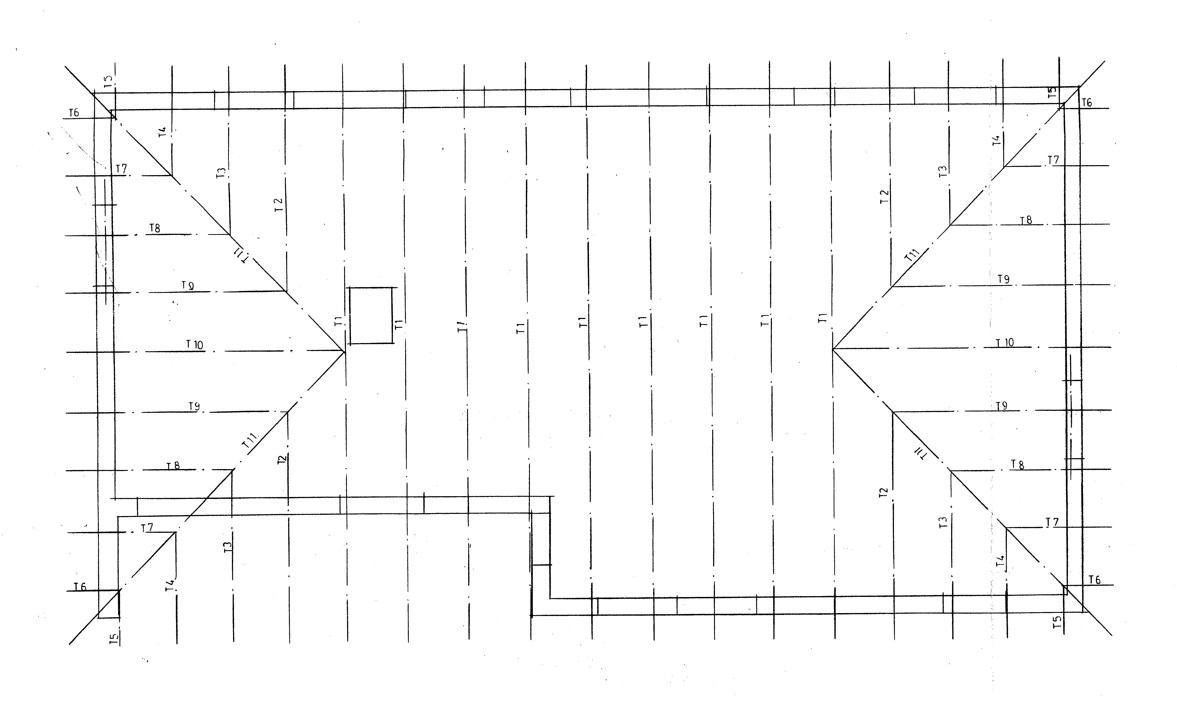
Finally, a drawing of how the rafters are to be placed:
I find it hard to imagine that it would be load-bearing, but it might be worth checking up in the cold attic to make sure there's no beam resting on the wall...
Just locate the wall up in the attic, pull away the insulation so you can see if the nearest roof trusses have a beam under them.
I'm not a building expert, but that wall can't possibly be load-bearing. Others know better. Could it have been installed later using 90 cm plasterboard and thus 45 cm c/c?
I'm not a construction expert, but that wall can't be load-bearing. Others know better. Could it have been installed later so that 90 cm gypsum is used and thus 45 cm c/c?
Or do as the father-in-law said, start sawing and if the saw gets stuck, it's load-bearing...
I find it hard to imagine that it would be load-bearing, but it might be worth checking in the attic to see if there is a beam on the wall there...
Just find the wall up in the attic, pull away insulation so you can see if the nearest roof trusses have a beam under them.
I can go up and check how it looks above tomorrow. I don't quite understand how you mean the beam could be positioned but I'll notice if it looks different than at other roof trusses.
I'm not a construction expert, but that wall can't be load-bearing. Others know better. Could it have been installed later using 90 cm drywall and therefore 45 cm c/c?
I also thought about whether the wall was rebuilt later, or if it was simply built robustly when the house was constructed. The wall is, as mentioned, included in the original floor plan and it matches otherwise, the cleaning closet against the wall is still there, etc.
Can go up and check what it looks like above tomorrow. I don't completely understand how you mean the beam could be positioned, but I'll probably notice if it looks different than other roof trusses.
In our split-level house, we have transverse steel beams that lie under the roof trusses to support the roof above balconies.
These steel beams extend across the entire length of the house.
I was also wondering if they rebuilt the wall later, or if they simply built sturdily when they made the house. The wall is, as mentioned, on the original layout, and it matches otherwise; the cleaning closet against the wall is still there, etc.
Were there even 90 cm construction boards back then, wasn't everything 120 cm and super heavy? Maybe the distance between the door and walls made them choose 45 cm all the way rather than fiddling with small distances at the door. Is it 45 cm c/c in the rest of the house even though the blueprints talk about 60 cm? They might have wanted stiffer walls to reduce sound transmission.
On our split-level house, we have transverse steel beams that lay under the rafters to support the roof above the balconies. These steel beams span across the entire length of the house.
Then I understand what you mean. Yes, the wall is aligned with one side of the balcony…
Were there even 90 cm building boards then, wasn't everything 120 cm and super heavy? Maybe the distance between the door and walls made them choose 45 cm all the way rather than fiddling with small distances at the door. Is it 45 cm c/c in the rest of the house even though the drawings talk about 60 cm? They might have wanted stiffer walls to reduce sound transmission.
Not very good at knocking and hearing/feeling, but I think it feels like it would be 45cm on the wall that runs in the middle of the house along the long side, and 60 on one of the others that runs along the short side. It might be that they wanted a stiffer wall between the kitchen and living room, but it was also completely uninsulated which doesn't feel optimal if they wanted to dampen the sound.
Even if it is not load-bearing, it is certainly stabilizing.
It helps to withstand wind loads and makes all houses cope with wind loads better without creaking when it blows hard.
I noticed it myself when I had to move a similar wall 60cm.
When it was gone, you could clearly hear that the house moved more when it "stormed" outside.
When it was erected again after a few months, it was as quiet as before.
Older houses are rarely designed for open floor plans and will move more when it blows hard.
Click here to reply
Vi vill skicka notiser för ämnen du bevakar och händelser som berör dig.



anders07 said:
