
Hello
I am continuing the renovation in my apartment and I'm about to demolish a wall that "is most likely load-bearing" according to the Architect/Engineer.
Now, however, I have stripped the plaster off the wall and what remains are the wooden studs, and now I am wondering if this wall is truly load-bearing.
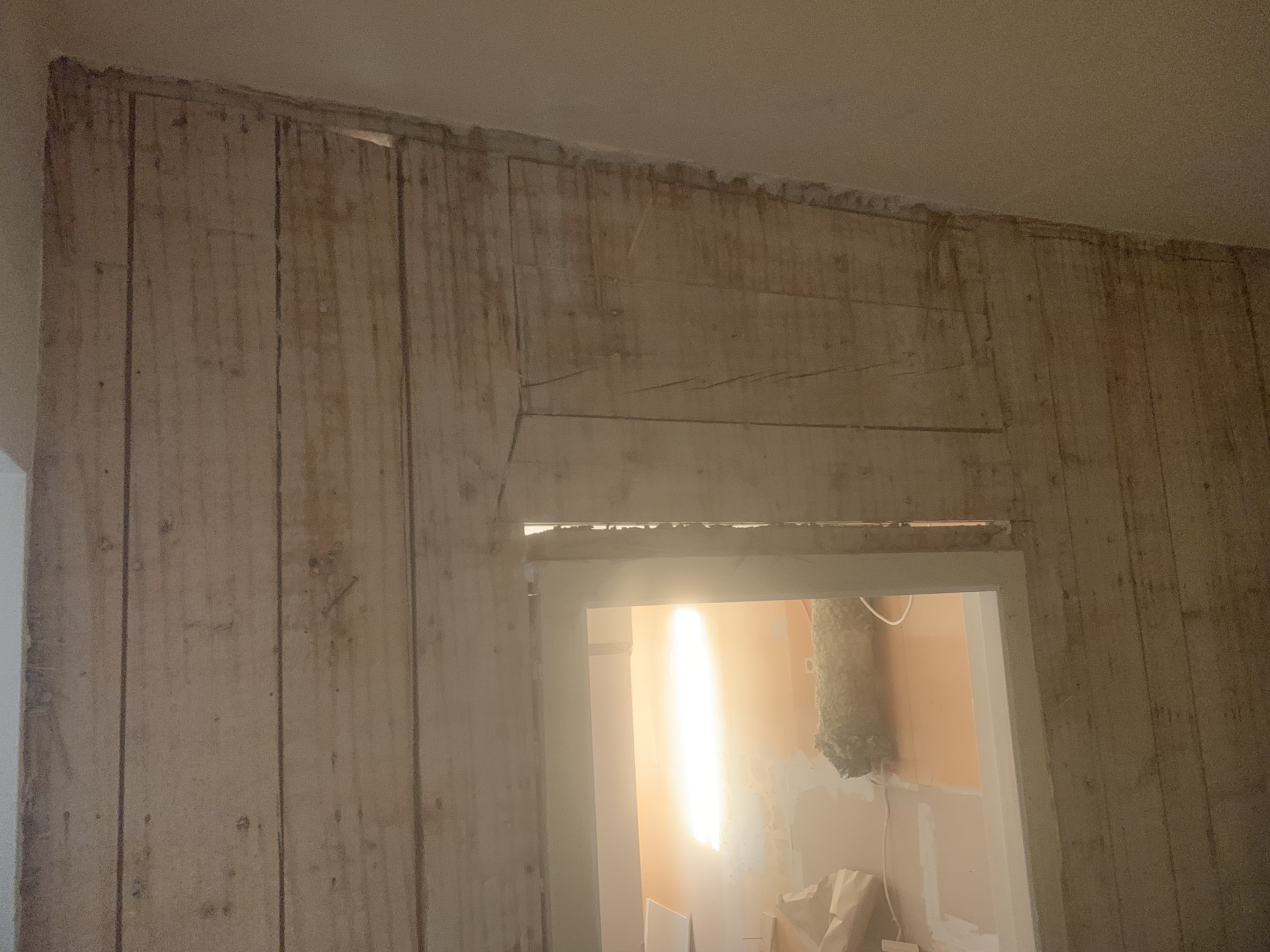
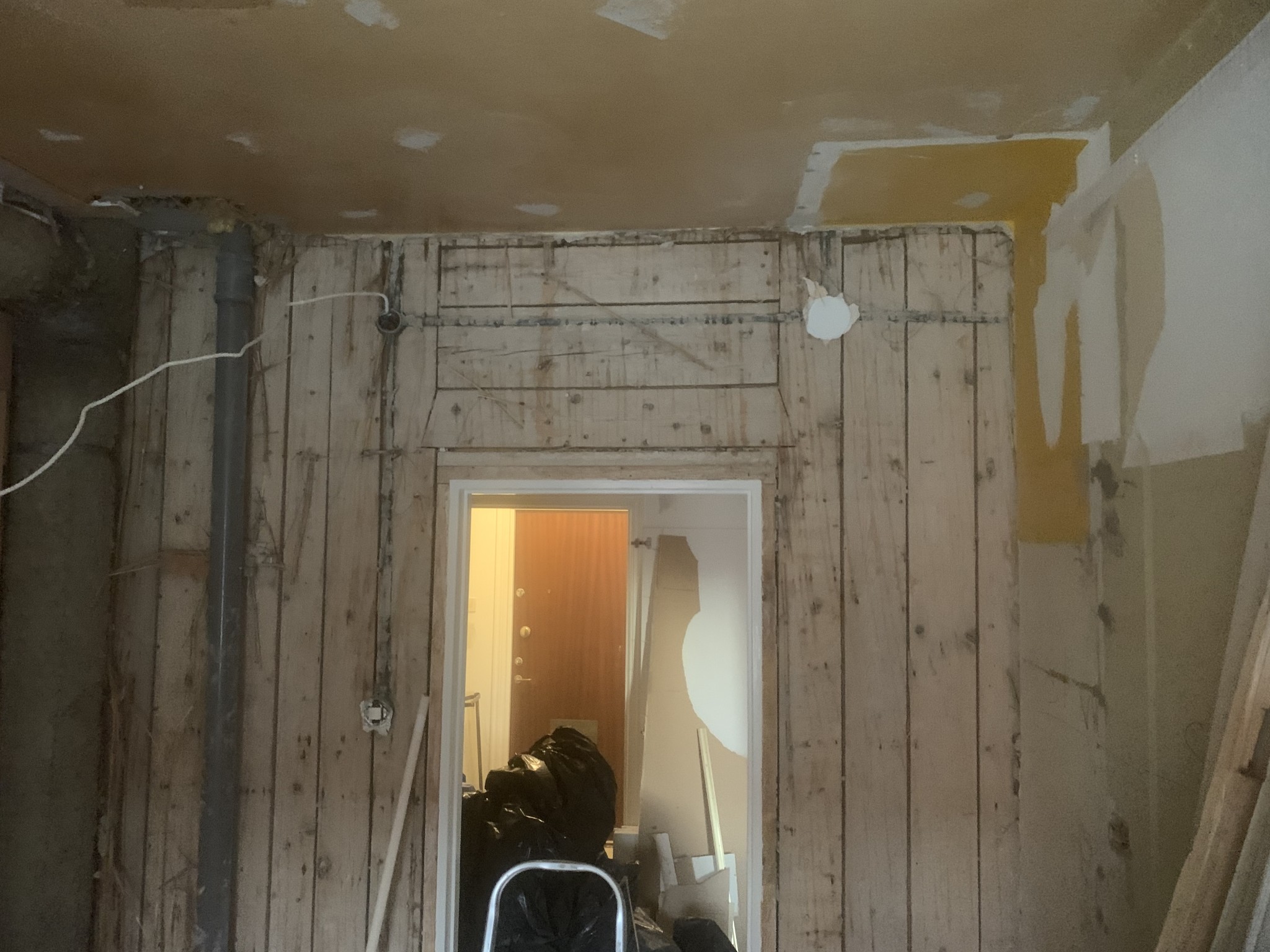
When you look at the images below (10, 11), it's only the outer studs and the two studs by the door that are directly against the beam in the ceiling.
All the wooden studs (columns) look the same and are 15 cm wide and 6 cm thick. The beam in the ceiling is only 6 cm thick, and the height is at most 15 cm.
Is the wall really load-bearing?
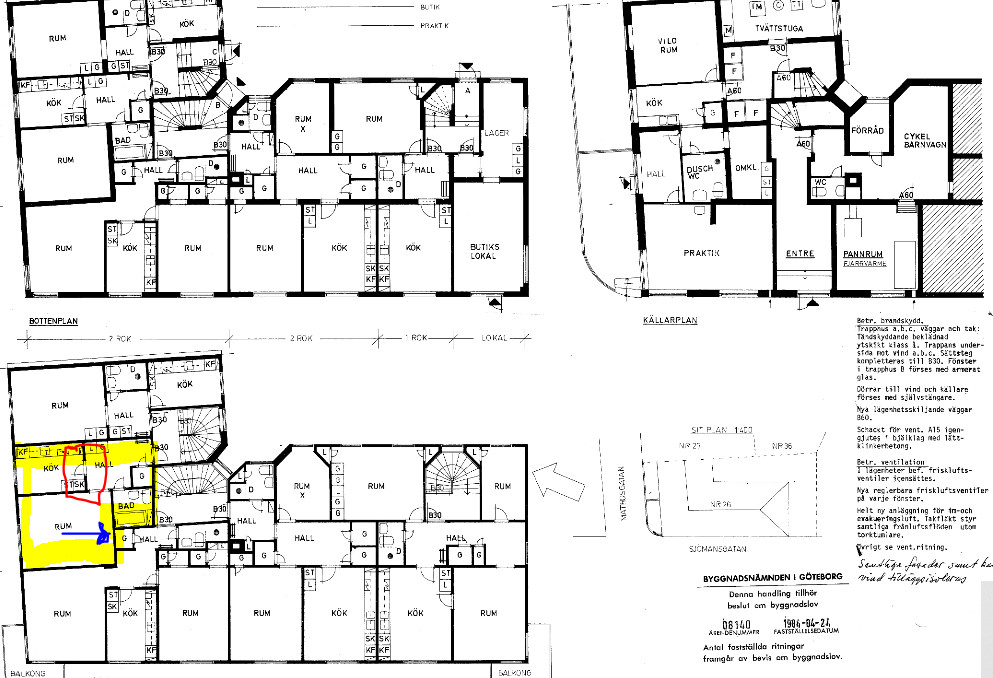
I am also attaching a drawing of the house below, circled in yellow is the apartment in question (top floor with an attic above), the red circled part is the wall I intend to demolish, about 2.4 meters long.
The blue arrow in the picture indicates the confirmed main wall.
The architect is not entirely sure but refers to the fact that the wall exists on all floors except the ground floor, which is somewhat strange (unless I have been misinformed).
He has then recommended the following:
Steel beam HEA160 or IPE180 in the ceiling.
Glued laminated timber column 115x115
The reason I am asking the question here and seeking your good input is because I want to consider a second opinion. I really want to ensure the wall is load-bearing and then inquire if there are alternatives to the support structure.
I am continuing the renovation in my apartment and I'm about to demolish a wall that "is most likely load-bearing" according to the Architect/Engineer.
Now, however, I have stripped the plaster off the wall and what remains are the wooden studs, and now I am wondering if this wall is truly load-bearing.
When you look at the images below (10, 11), it's only the outer studs and the two studs by the door that are directly against the beam in the ceiling.
All the wooden studs (columns) look the same and are 15 cm wide and 6 cm thick. The beam in the ceiling is only 6 cm thick, and the height is at most 15 cm.
Is the wall really load-bearing?
I am also attaching a drawing of the house below, circled in yellow is the apartment in question (top floor with an attic above), the red circled part is the wall I intend to demolish, about 2.4 meters long.
The blue arrow in the picture indicates the confirmed main wall.
The architect is not entirely sure but refers to the fact that the wall exists on all floors except the ground floor, which is somewhat strange (unless I have been misinformed).
He has then recommended the following:
Steel beam HEA160 or IPE180 in the ceiling.
Glued laminated timber column 115x115
The reason I am asking the question here and seeking your good input is because I want to consider a second opinion. I really want to ensure the wall is load-bearing and then inquire if there are alternatives to the support structure.
Landshövdingehus? Do you have a sectional drawing as well?

Definitely a Landshövdingehus on Sjömansgatan in Majorna in Gothenburg! The wall is a plank wall in its original design. It must be considered load-bearing. The beams in the attic floor above are probably spliced through overlapping, which may involve more walls. It's not particularly systematically built. However, I think the structural engineer's specification of an HEA 160 steel beam is vastly exaggerated considering the limited length of the wall. It seems as if someone guessed rather than calculated. A bit suspicious.
Click here to reply
Similar threads
-
Avgöra om en vägg är bärande eller inte
Planlösningar -
Riva vägg/ bärande eller ej
Planlösningar -
Är väggen bärande eller ej?
Planlösningar -
hur vet man att denna markerade vägg är bärande eller inte i villan?
Utbyggnad och tillbyggnad -
Hur kan jag bli säker på om innervägg är bärande eller inte?
Utbyggnad och tillbyggnad