
659 views ·
4 replies
659 views
4 replies
Large pieces missing in interior wall around opening for doorframe

Intro: I bought a fixer-upper from the 50s (condominium) that seemed decent enough to shape to my liking and according to the papers was last renovated in '91. I got access, excited, with a toolbox in hand and discovered that what had actually been done was applying a third layer of wallpaper directly on the concrete plaster and a tiny bathroom covered with waterproof flooring that we won't even talk about. In the rest of the apartment, I'm planning to rip out everything except the floors and will use renovation plasterboard. Then the nightmare began: porous lightweight concrete and overuse of concrete nails in all the moldings.
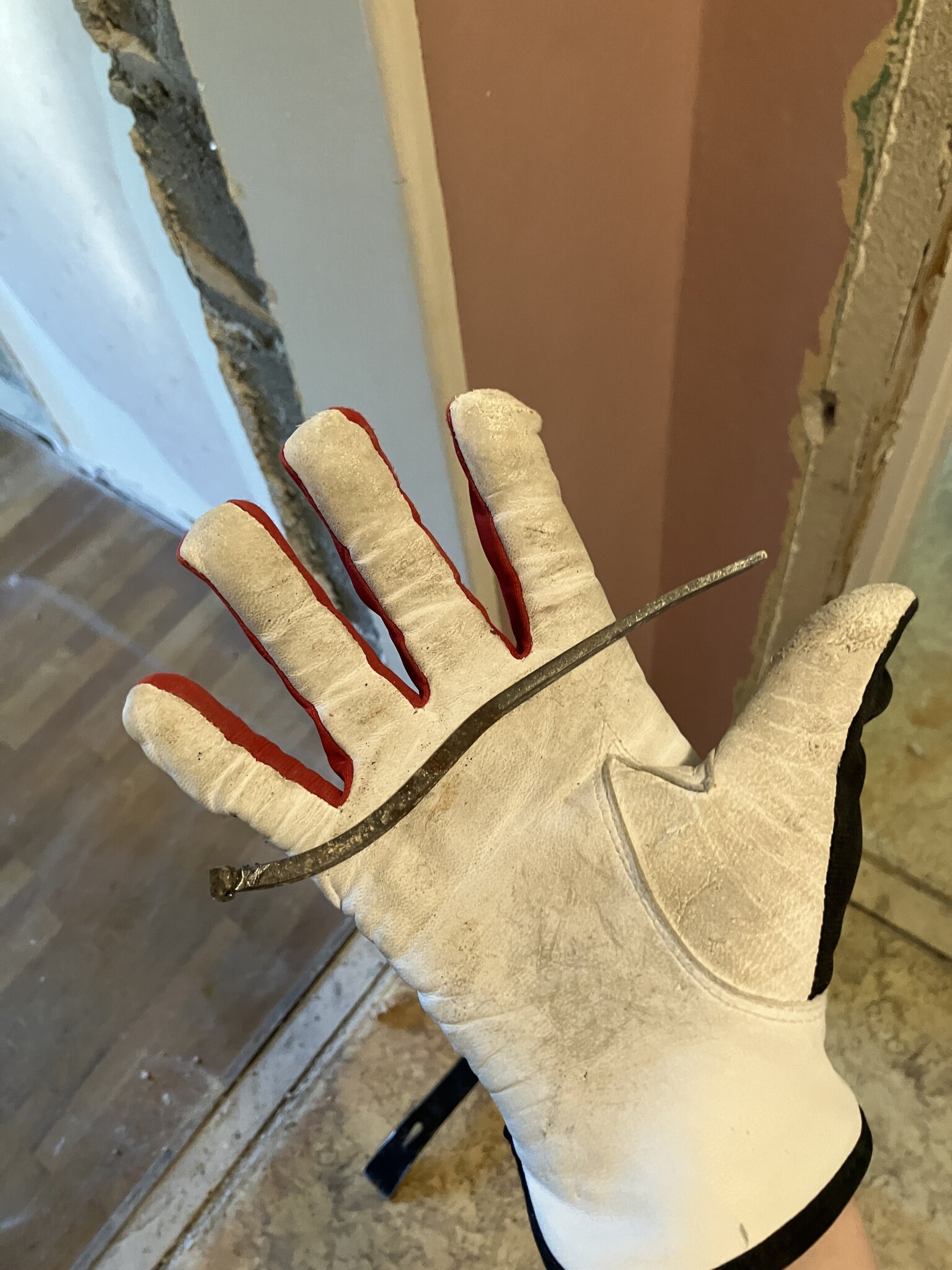
Yesterday, I was supposed to remove an old door frame that will later be replaced with a new one, and it turned out that builders from about '53 had mortared in the nails (about 15cm concrete nails, see image no. 4) and then attached the wood on top. All the walls in the apartment are made of porous lightweight concrete, so the nails that followed the planks ripped out more or less half the wall.
I don't think coarse filler is adequate and it feels beyond my skills since this is more than patching "ordinary" fist-sized holes. Should I call a craftsman, and if so, what type (mason?)?
The electrician is supposed to rewire the electricity in about a week and chip away, and I dread this now when I see just how porous the walls are.
Yesterday, I was supposed to remove an old door frame that will later be replaced with a new one, and it turned out that builders from about '53 had mortared in the nails (about 15cm concrete nails, see image no. 4) and then attached the wood on top. All the walls in the apartment are made of porous lightweight concrete, so the nails that followed the planks ripped out more or less half the wall.
I don't think coarse filler is adequate and it feels beyond my skills since this is more than patching "ordinary" fist-sized holes. Should I call a craftsman, and if so, what type (mason?)?
The electrician is supposed to rewire the electricity in about a week and chip away, and I dread this now when I see just how porous the walls are.
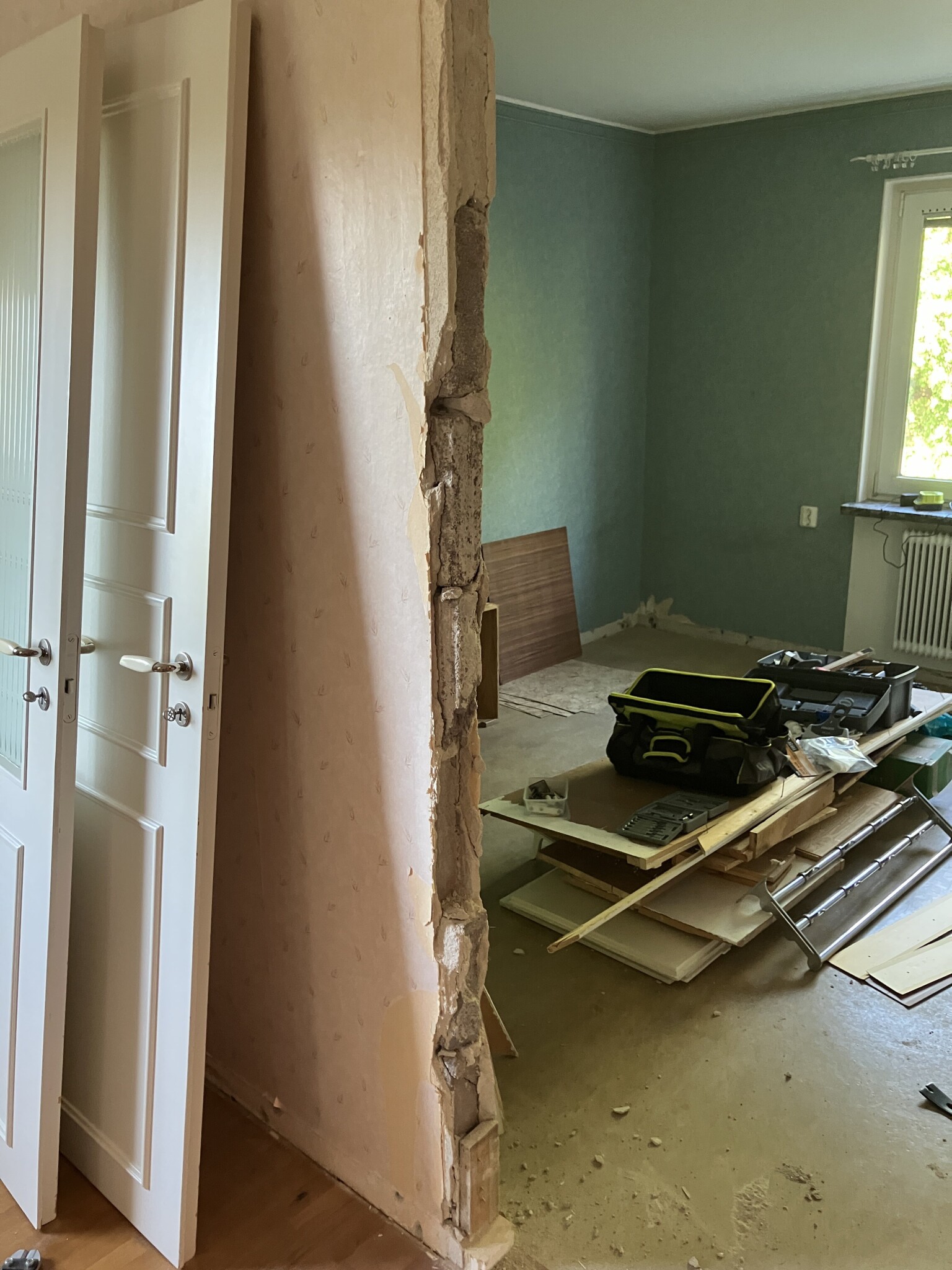
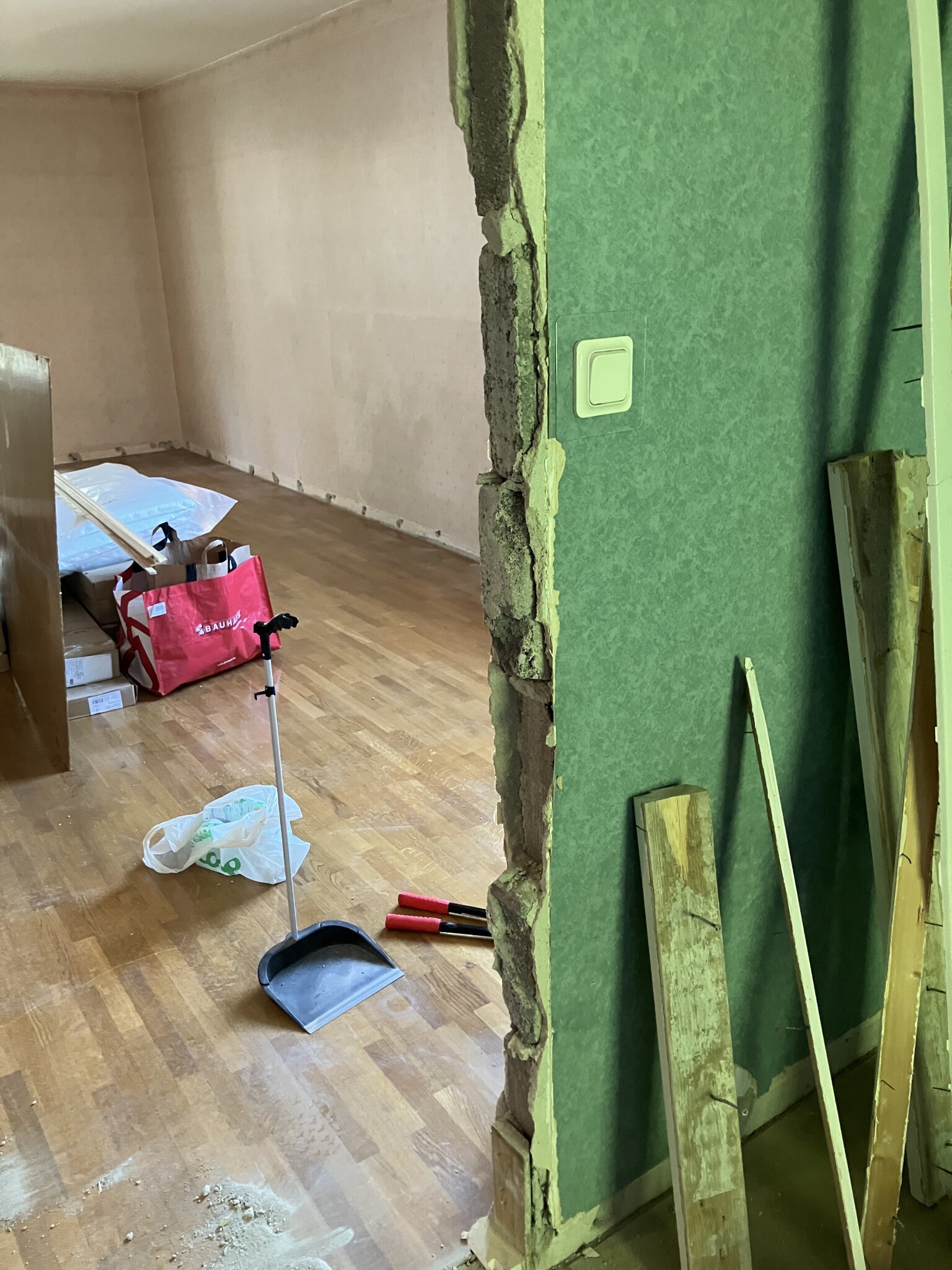
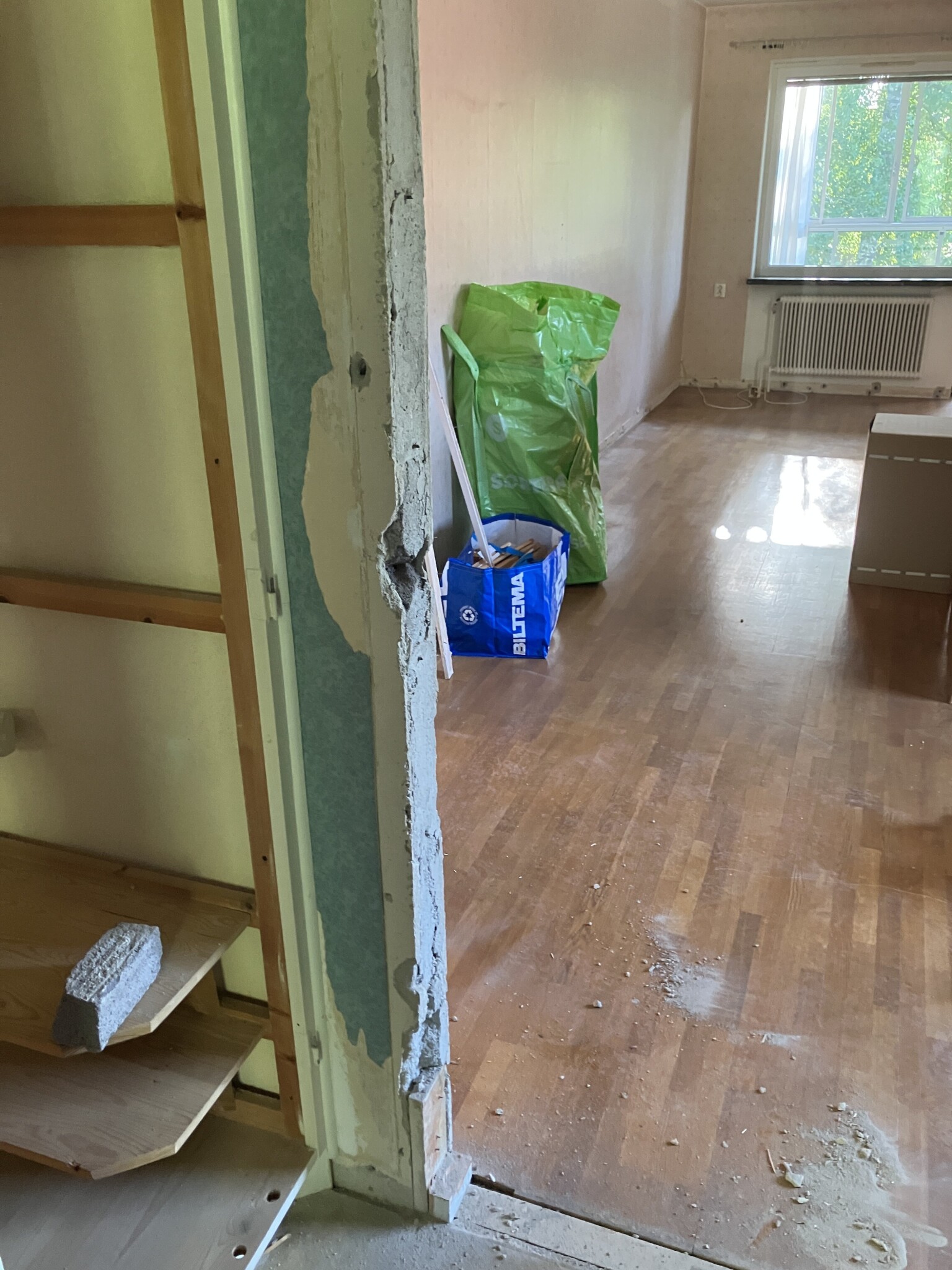

Quite common in older apartments. In an apartment my son had, we fixed the kitchen. It was impossible to get any kind of plug to hold in the porous wall. The plug just spun around in the hole. We ended up using chemical anchors to put up the cabinets. It worked well.
But those damages we see in the pictures, I don't think they are that difficult to fix with some mortar. Not much different from regular spackling.
But those damages we see in the pictures, I don't think they are that difficult to fix with some mortar. Not much different from regular spackling.

Thanks for the tip about chemical anchors, it will probably be needed for my own kitchen! I've previously lived in older concrete buildings, but in different parts of the country and slightly different building techniques, the heaviest I've put up was a large electric bass.H hempularen said:Quite common in older apartments. In an apartment my son had, we fixed the kitchen. It was impossible to get any type of plug to hold in the porous wall. The plug just spun around in the hole. We ended up using chemical anchors to hang the cabinets. It worked well.
But those damages we see in the pictures, I don't think they are too difficult to fix with a little mortar. Not much different from regular spackling.
Mortar and wall putty will have to do, and a lot of patience. It felt a bit hopeless when I was standing with half a block of lightweight concrete in my hand yesterday.
Click here to reply