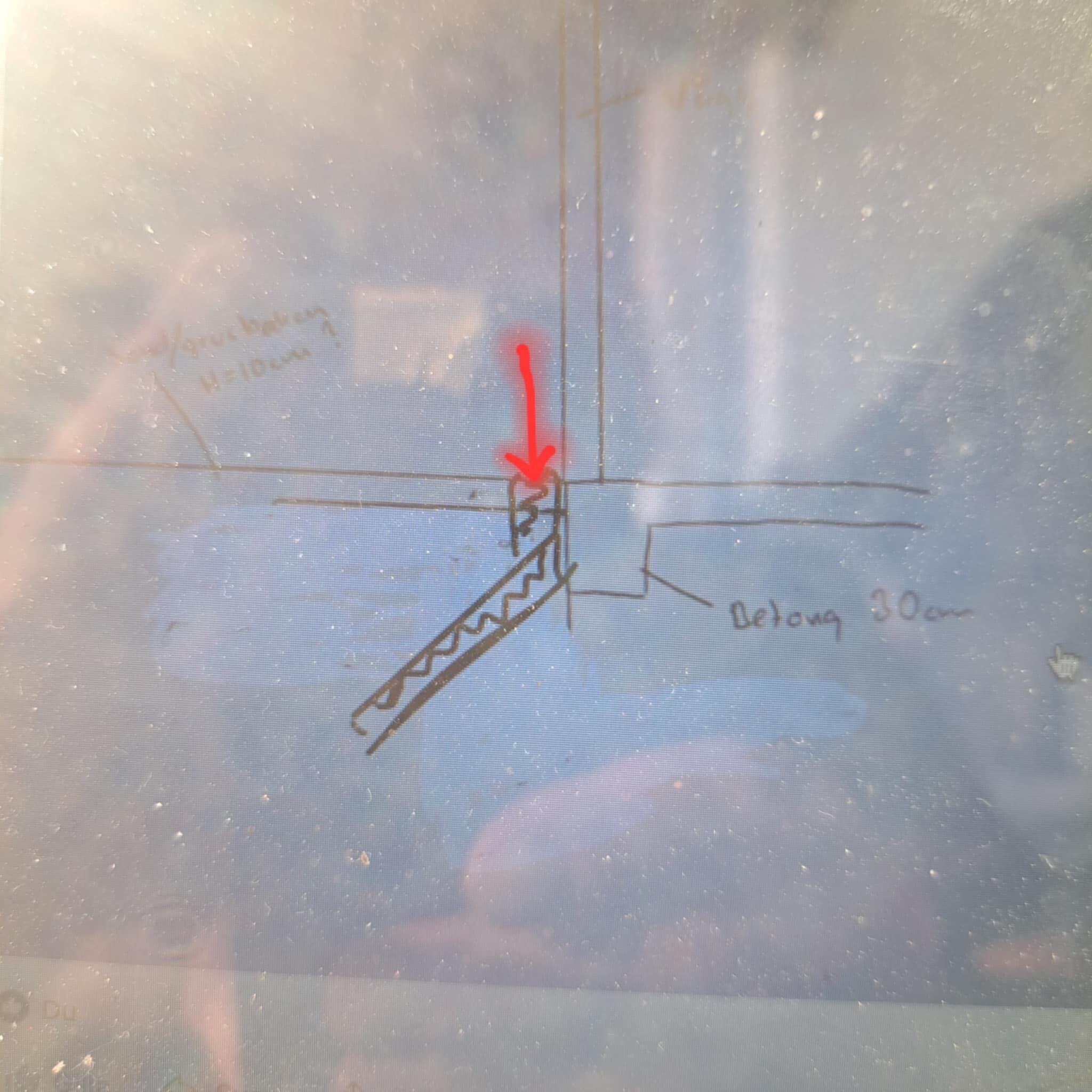
We have a machine hall measuring 15x8m that we are going to insulate walls and roof, probably with ecowool. The concrete floor is old and uninsulated, so we are considering digging around the building and installing L-elements around it.
Has anyone done this, and it should make a difference, right?
We have a machine hall 15x8m and we are going to insulate the walls and ceiling, probably with ekofiber. The concrete floor is old and uninsulated, so we are considering digging around the building and installing L elements around it.
Has anyone done this and it should make a difference, right?
Thanks in advance
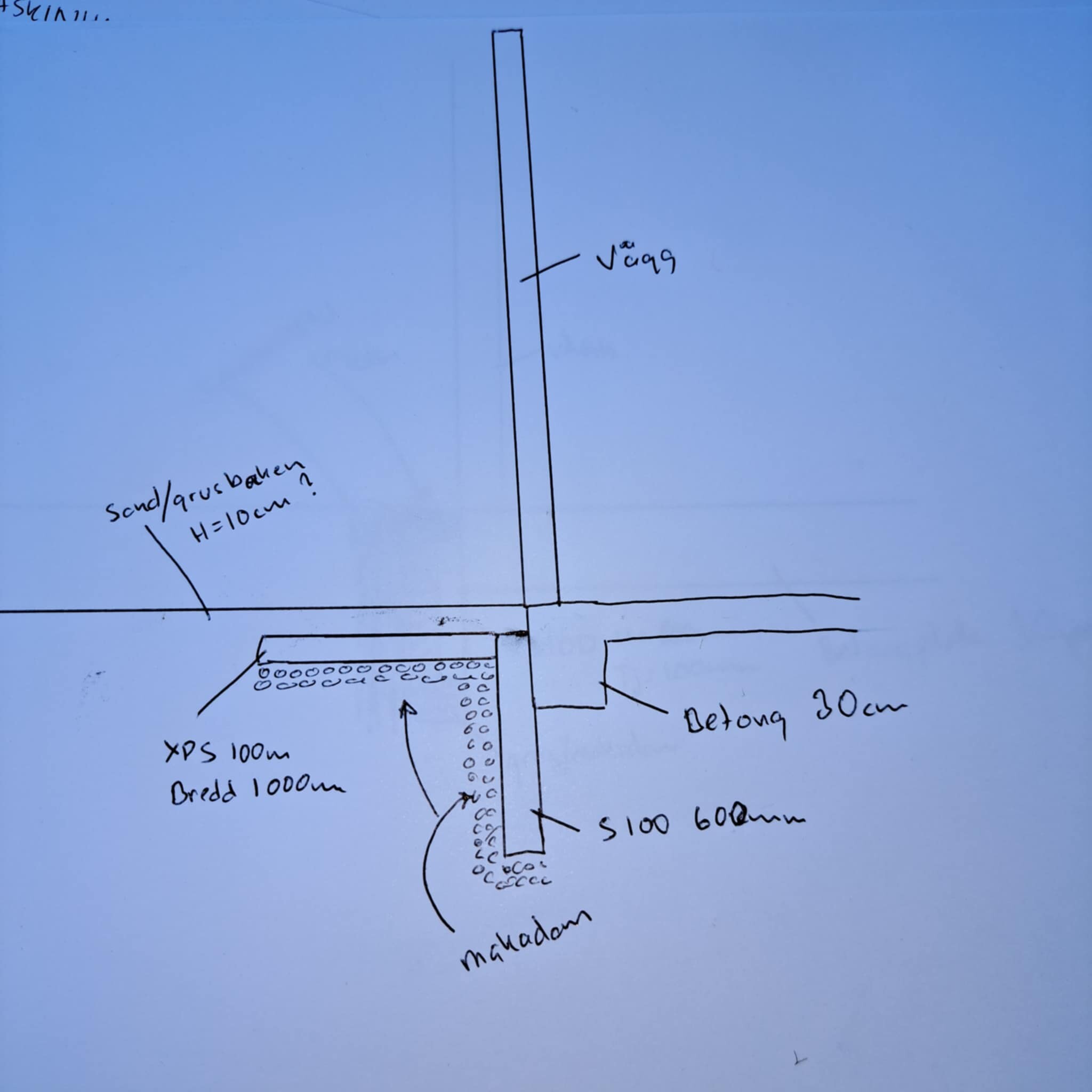
Is the purpose of the L element to insulate the plate walls? Then perhaps isodrän is better and easier to work with?
Follow Matti's suggestion and use I-elements. Possibly complement with edge insulation around the building to get a little better insulation. But trying to work with L-elements and make it work will never be good and not worth the potentially small savings this would yield.
Aha, you think it might crack? But if you only dig for one element at a time, place the element, and fill it in before the next?🤔
In my opinion, there's not a significant risk of it cracking if you only dig out a couple of meters at a time. However, I would argue that it is an expensive/time-consuming task that will never pay for itself. L-blocks aren't even insulated on the horizontal part. Anyway, it's much easier to dig out piece by piece and lay sheets with ground insulation. Likewise, it's faster and easier to screw ground insulation onto the side of the foundation and plaster it. L-blocks are complicated to lay in the way you're thinking. Getting it to sit correctly and evenly, and provide support, is nearly hopeless.
In my opinion, there is no significant risk of it cracking, as long as you only excavate a couple of meters at a time. However, I would argue that it is an expensive/time-consuming task that will never pay off. L-blocks are not even insulated on the horizontal part. In any case, it is much easier to excavate piece by piece and lay sheets with ground insulation. Similarly, it is quicker and easier to screw up ground insulation on the side of the foundation and plaster. L-blocks are tricky to lay in the way you're thinking. Getting them to lie correctly and evenly, and provide support, is downright hopeless.
The problem is that you will never be able to compact the material you refill with in a satisfactory manner.
The problem is that you never manage to compact the material you're backfilling with in a satisfactory way.
No, that's kind of what I mean is the hopeless part with L-block. If any insulation is to be placed under the edge beam, it has to be loose sheets. It's not easy to get it packed then either, but it's at least doable, I know from experience.
No, that's kind of what I mean is the hopeless thing about L-blocks. If any insulation is to be under the edge beam, it has to be loose boards. It's not easy to get it packed then either, but it's at least doable, I know from experience.
Thank you very much for your response AG. I take that to heart. It also seems reasonable as you say if you think about it.
Does it make any difference if I tell you that the foundation for the machine hall is a gravel ridge/sand?
Do as Matti suggests and use I-elements. Possibly complement with perimeter insulation around the building for slightly better insulation. But trying to use L-elements and make them work will never be good and not worth the possibly small savings this would give.
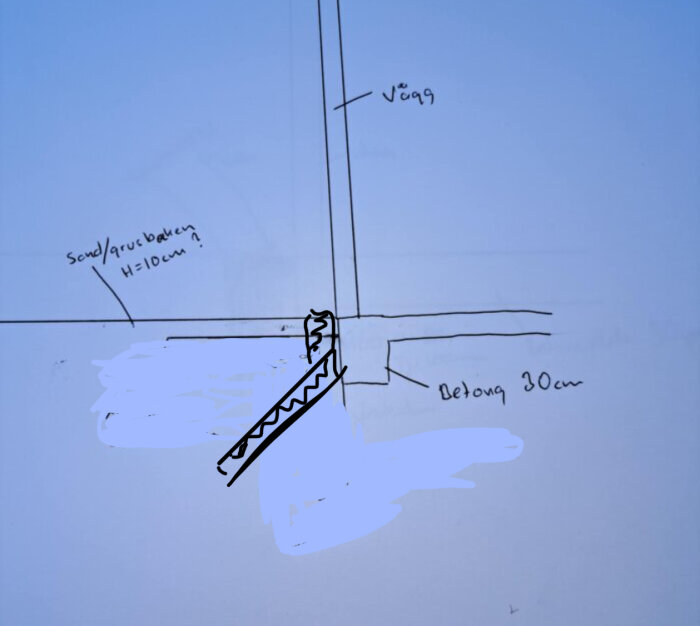
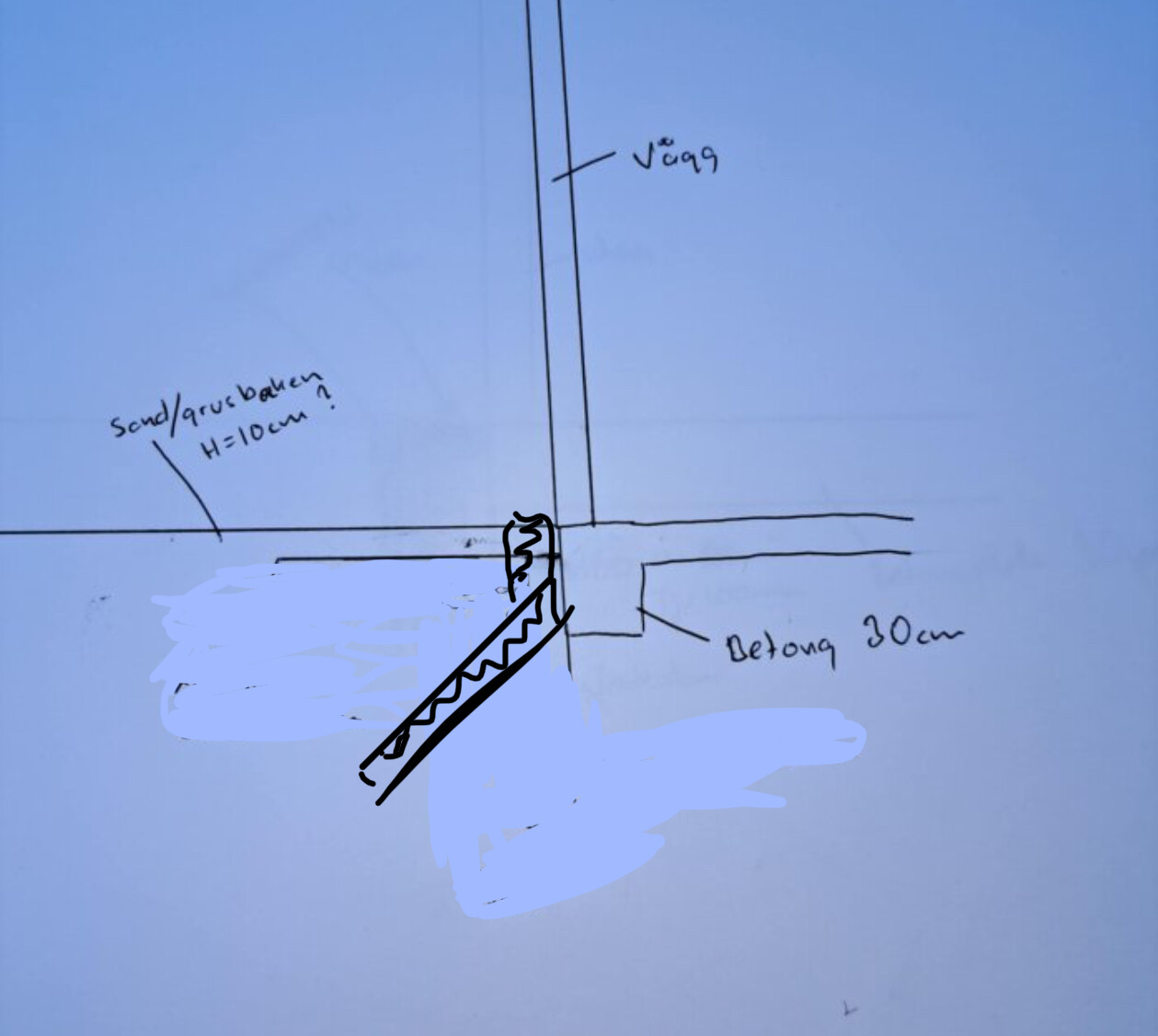
My amateur suggestion is to lay the insulation sloping outward downward and not dig below the level of the edge footing that the walls stand on. I did just that on an extension with slab on ground at my previous house. I was very satisfied with the result.
My amateur suggestion is to install the insulation sloping outward and downward and not to dig below the level of the edge beam on which the walls stand.
I have done just that on an extension with slab-on-grade at a previous house. I was very pleased with the result.
My amateur suggestion is to place the insulation sloping outward downward and not dig below the level of the edge footing that the walls stand on.
I did just that on an extension with slab on grade on the house before last. I was very pleased with the result.
[image]
how does it work on top of the insulation? is it exposed?
Thank you very much for your response AG. I will take that into consideration. It also sounds reasonable as you say when you think about it.
Does it make any difference if I tell you that the foundation for the machine hall is a gravel ridge/sand?
You're welcome.
Yes, it makes a difference! It will make the work significantly easier, in every way😃. However, you should bring home a few cubic meters of crushed stone/stone dust, type 0-8. You should lay out a layer of that before you push in an insulation board under the edge beam. On, or mixed with the crushed stone, you should also lay some expanding concrete.
Good luck.
Vi vill skicka notiser för ämnen du bevakar och händelser som berör dig.


Matti_75 said:
blackarrow said: