
3,681 views ·
19 replies
4k views
19 replies
buying house= uninsulated concrete slab with 14% moisture in interior wall
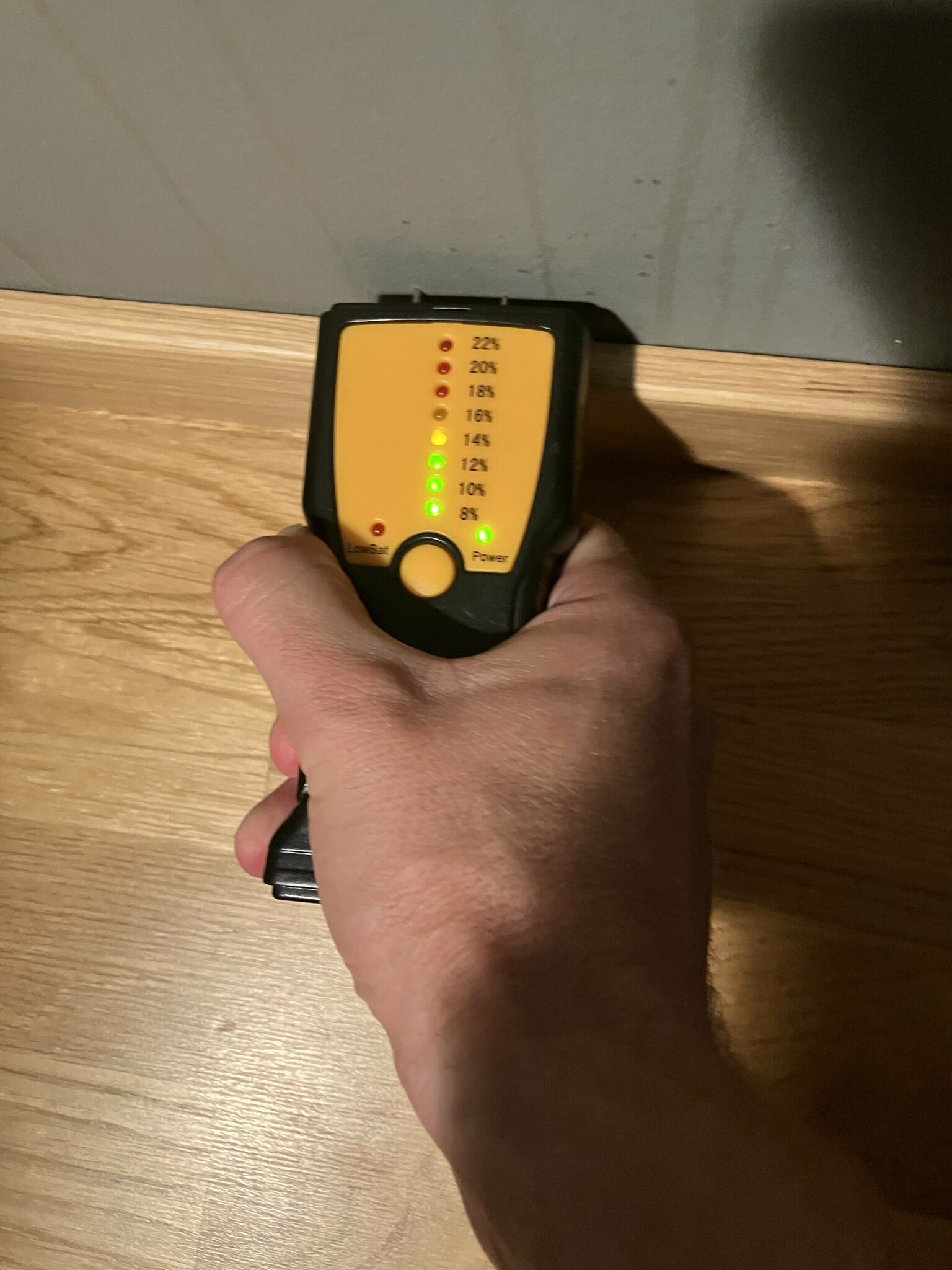
I was looking at a house, considering making an offer but still attended the second viewing of the house. I brought a moisture meter with me, and it showed 12-14% moisture in the interior walls (all the interior walls I measured, and even the interior walls against the exterior wall). There is no smell in the house, but they previously had underfloor heating for heating and have now switched to geothermal heating.
The house was built in 1979, with an uninsulated concrete slab on the ground. I'm quite interested in the house and, to be honest, I was very surprised that it was damp in the walls. My thought is that if it's 12-14% about 1 dm up in the walls from the floor, there's a risk that the base plates under the floor are damp since I assume the moisture must somehow migrate upwards and that it's even worse there.
The house is insanely expensive, 9 million SEK, but I'm thinking, am I exaggerating? Maybe this is how it looks in most houses with an uninsulated concrete slab, and as long as there is no smell, it's okay?
The house was built in 1979, with an uninsulated concrete slab on the ground. I'm quite interested in the house and, to be honest, I was very surprised that it was damp in the walls. My thought is that if it's 12-14% about 1 dm up in the walls from the floor, there's a risk that the base plates under the floor are damp since I assume the moisture must somehow migrate upwards and that it's even worse there.
The house is insanely expensive, 9 million SEK, but I'm thinking, am I exaggerating? Maybe this is how it looks in most houses with an uninsulated concrete slab, and as long as there is no smell, it's okay?

Self-builder
· Stockholm
· 8 221 posts
14% doesn't sound dangerous.
The recommendation is that Wood (such as studs, e.g., pine) should not exceed 17-18% and at >24% you can encounter problems with rot.
So 14% during summer sounds reasonable and not worrisome at all.
Were there any signs of rot/growth?
The recommendation is that Wood (such as studs, e.g., pine) should not exceed 17-18% and at >24% you can encounter problems with rot.
So 14% during summer sounds reasonable and not worrisome at all.
Were there any signs of rot/growth?
No, not that I can see, but as mentioned, these 12-14% are a decimeter up the wall, so my concern is that it is likely significantly higher further down inside the wall/floor joist that I cannot see. I mean, I think the moisture should be higher the closer to the source (which should be somewhere under the floor where I can't measure).
I pushed the two prongs straight into the wall, see the picture. So I didn't measure far in. It felt dry indoors. When I measured higher up on the wall, it was zero. The indoor temperature was around 20.Matti_75 said:

surris
Construction veteran
· Sverige
· 1 466 posts
surris
Construction veteran
- Sverige
- 1,466 posts
Self-builder
· Stockholm
· 8 221 posts
If the house has stood for 45 years without moisture issues and even in the summer it doesn't show more than 14% and there are no signs of moisture problems, I wouldn't worry at all.
I don't know how representative such a measurement is for how damp the sill is, it's hard to see that you measure anything other than the lower part of the drywall.T Tommy12345302 said:
If the house is expensive, it's a small cost in the grand scheme of things to have an inspection company drill inspection holes and sniff, measure humidity and assess the construction (pressure-treated sills that can emit odors? cast-in-place studs?)
Then I'll leave it to others on the forum to determine a strategy during the bidding process; if there are many bidders who don't care about the technicalities of the house, it might be better to win the bidding and sign a contract with a clause for your own inspection? Then perhaps the likelihood is greater that you can negotiate the price down if an in-depth investigation shows a need for costly measures.
But I'm not sure which strategy is best.
can add that I am tired of house hunting, so I am quite eager to make a bid here, but this thing I don't know what to think about. If it is tiring to look for a house then it is no
I'm wondering if I'm overreacting to this and should just place a bid on the house
nah, probably not, but what does it matter? (I don't know this)
I'm wondering if I'm overreacting to this and should just place a bid on the house
so there is more moisture in the summer as I understand it? (and less in the winter, is it because it's cold outside that it becomes less?)
no exactly, it's the interior wall I'm measuring here, not the sill but I think if the interior wall is like this, then the sill should be at least this but more likely even more, but as I said, I might be making something out of nothing here, maybe I should just make an offer and not worry about thisF FellanD said:I don't know how representative such a measurement is for how damp the sill is, it's hard to see that you're measuring anything other than the lower part of the drywall.
If the house is expensive, it's a small cost in the context to ask an inspection company to drill inspection holes and smell, measure moisture, and assess the construction (pressure-treated sills that may emit odor? embedded studs?)
Then I'll leave it to others on the forum to decide on the strategy during the bidding; If there are many bidders who don't care about the technical aspects of the house, maybe it's better to win the bidding and sign a contract with a clause for your own inspection? Then maybe there's a greater chance you can negotiate the price down if further investigation reveals the need for costly measures.
But I'm not sure which strategy is best.
the house is expensive, but what can an independent inspection cost, there has been an inspection done on the house but they didn’t measure anything, they just wrote that it's a risk construction etc.
You have several options here; Use your frustration to allow yourself to take a risk. Make an offer and see what happens. But I think you have to be mentally prepared for it potentially costing several hundred thousand to convert to a ventilated floor if you're unlucky. The likelihood of that is maybe not so high if the house has stood for 45 years and doesn't smell strange at the viewings. But we don't know how it looks under the floor.T Tommy12345302 said:no exactly, it is the inner wall I'm measuring here, and not the sill but I think if the inner wall is like this then the sill should be at least this but more likely even more, but as said, maybe I'm making something out of nothing here, maybe I should just make an offer and not worry about this
the house is expensive, but what can a private inspection cost, an inspection has been done on the house but they didn’t measure anything just wrote that it's a risk construction etc
Or as I suggest and advocate (even if I didn't listen to the same advice when I bought) do an in-depth inspection.
I guess it costs between 10-15k depending on where you live and which company you hire.
There may be an opportunity to do an additional inspection with, for example, test drilling by the ones the seller hired, ask the realtor.
However, it's usually not recommended, and instead, you are advised to hire your own inspector to avoid them taking the seller's side.
But if you feel that you have a good buffer left in your finances after the purchase, you could buy and hope for the best; I guess that's what most do in areas with many bidders and high prices.
Self-builder
· Stockholm
· 8 221 posts
Exactly.T Tommy12345302 said:
Warm air holds more moisture and is thus more humid, which also increases the moisture content in wood, etc.
Normal humidity in the air during the summer can easily be around 70-80% compared to the winter's maybe 40-60%
thanks for the response, the thing is that the house has heating coils in the floor but these are now turned off as the house instead has geothermal heating, so I thought maybe you can just turn on these heating coils and hope they dry up a bit if needed. I feel pretty ready to buy the house as long as it doesn't become too expensive.F FellanD said:You have several options here; Use your frustration to allow yourself to take risks. Make an offer and see what happens. But I think you must be mentally prepared that it might cost several hundred thousand to convert to a ventilated floor if you're unlucky. The likelihood of that is maybe not so high if the house has been standing for 45 years and doesn't smell strange during viewings. But we don't know what it looks like under the floor.
Or as I suggest and advocate (even though I myself didn't listen to the same advice when I bought) do an in-depth inspection.
Guessing it costs between 10-15kkr depending on where you live and which company you hire.
There might be a possibility to do an additional inspection with, for example, core drilling by those hired by the seller, ask the realtor.
However, this is usually not recommended, and they recommend hiring your own inspector to avoid them siding with the seller.
But if you feel you have a good financial buffer left after the purchase, then you can buy and hope for the best; which I guess most people do in areas with many prospective buyers and high prices.
Sounds like you're willing to take the risk for the house. One shouldn't underestimate gut feeling.T Tommy12345302 said:Thanks for the reply, the thing is the house has heating coils in the floor but these are now turned off as the house instead got geothermal heating, so I was thinking maybe one could just turn on these heating coils and hope they dry up a bit if needed. I feel pretty ready to buy the house if it doesn't become too expensive.
Without knowing anything about the heating coils, I wouldn't place much hope on them. Now, I don't know what kind of coils they are; but heat in cold concrete floors is said to potentially cause moisture migration in the "wrong" direction. Therefore, descriptions of underfloor heating often recommend a lot of insulation underneath and a moisture barrier in the "right" place.
I'm no expert, just encouraging some thought so that you aren't disappointed.