I purchased a house where we are now conducting a renovation that includes moving walls, etc. To keep costs down, we're trying to do as much as possible ourselves, including the demolition of the existing walls that need to be removed.
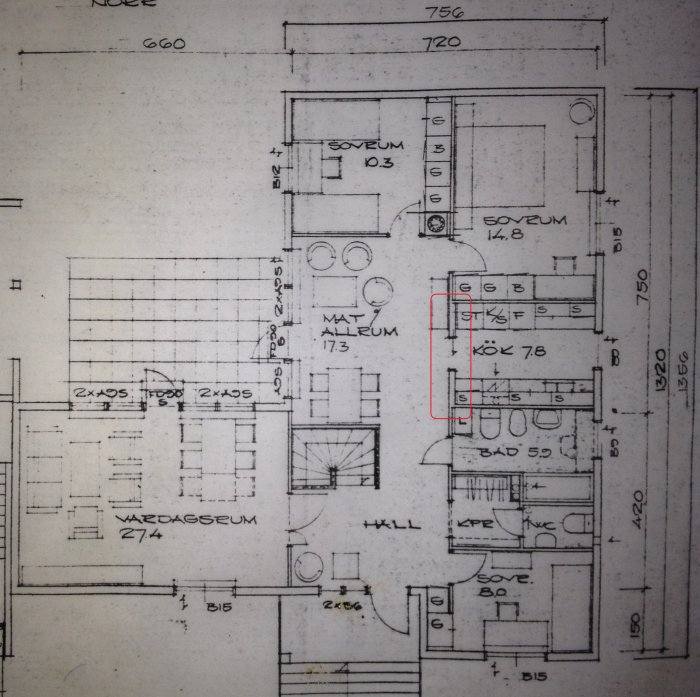
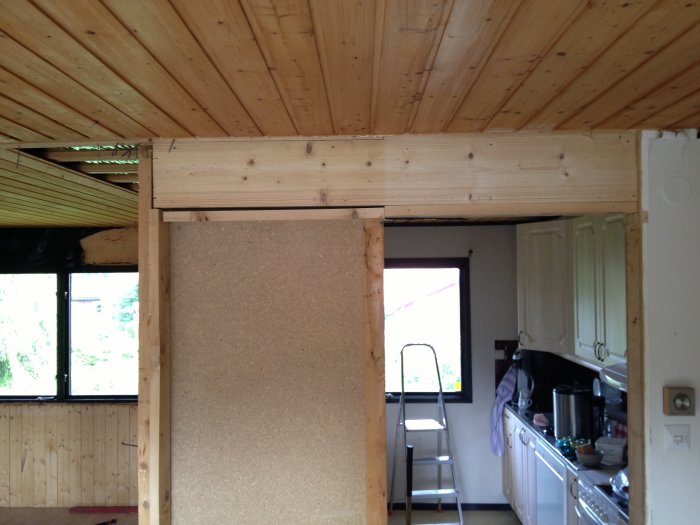
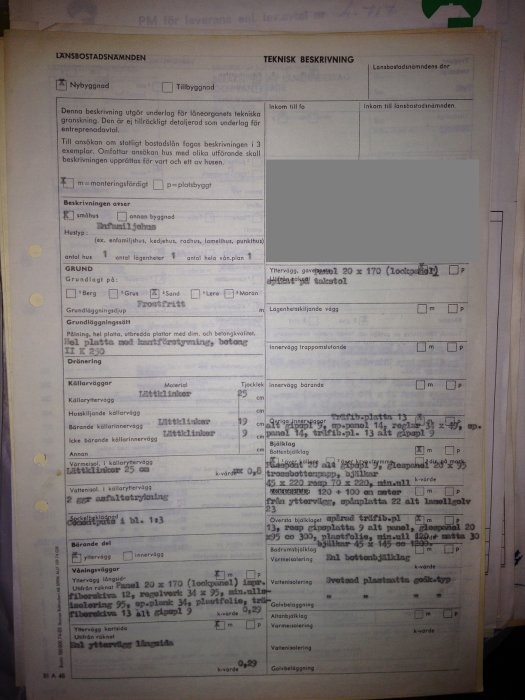
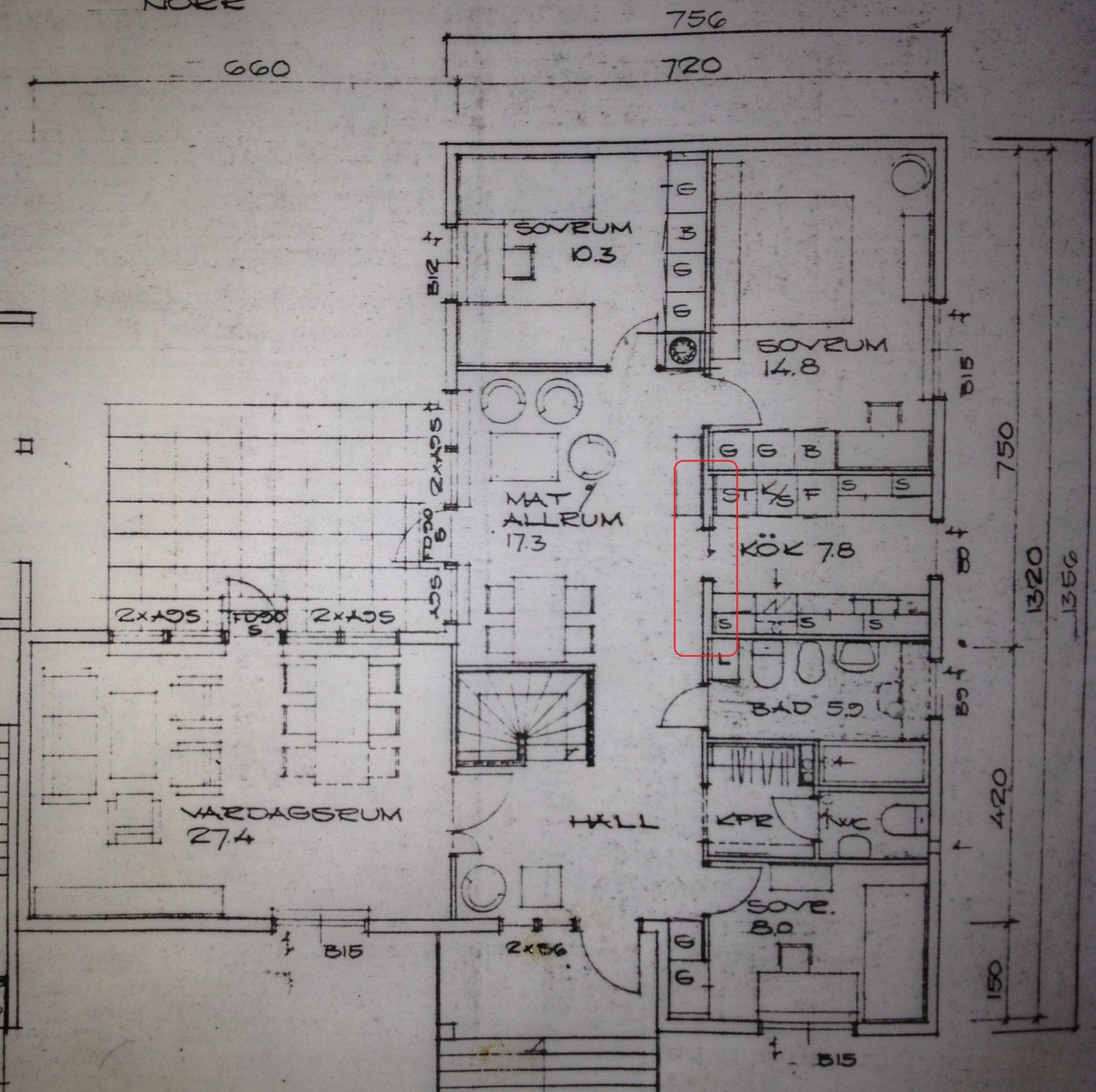
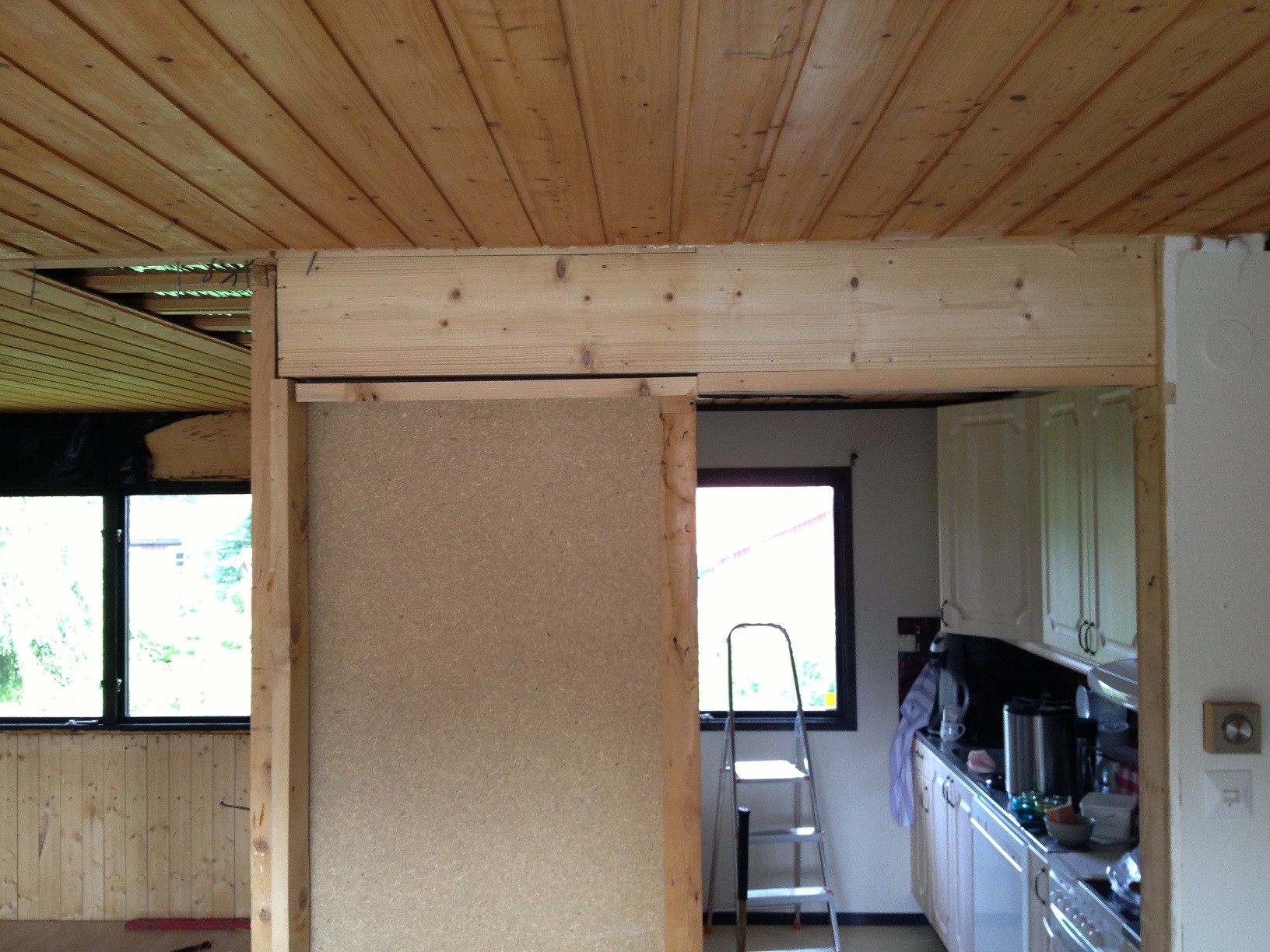
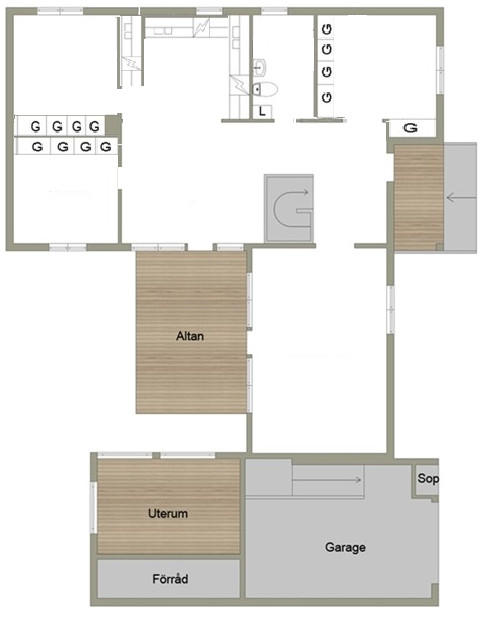
According to the documents from when the house was built, the exterior walls are load-bearing, and no load-bearing interior walls are documented. Reality has matched these documents, except in one aspect. "In the middle" of the house, perpendicular to the roof trusses, there is a 160 cm wide wall section where a sliding door has been placed. This wall section is constructed as a load-bearing structure with a 220*90 beam resting on two ~34*90 (mm). Looking at the house's blueprint, this section is drawn thicker and extends slightly into the wall we are not demolishing (red marking).
.
My question, according to the title, is the wall load-bearing only for the sliding door or for the entire house structure?
I think there seems to be a lack of a beam or heart wall to the left of that large glulam beam! :eek:
Have previous owners demolished the wall between bedroom 14.8 and bedroom 10.3?
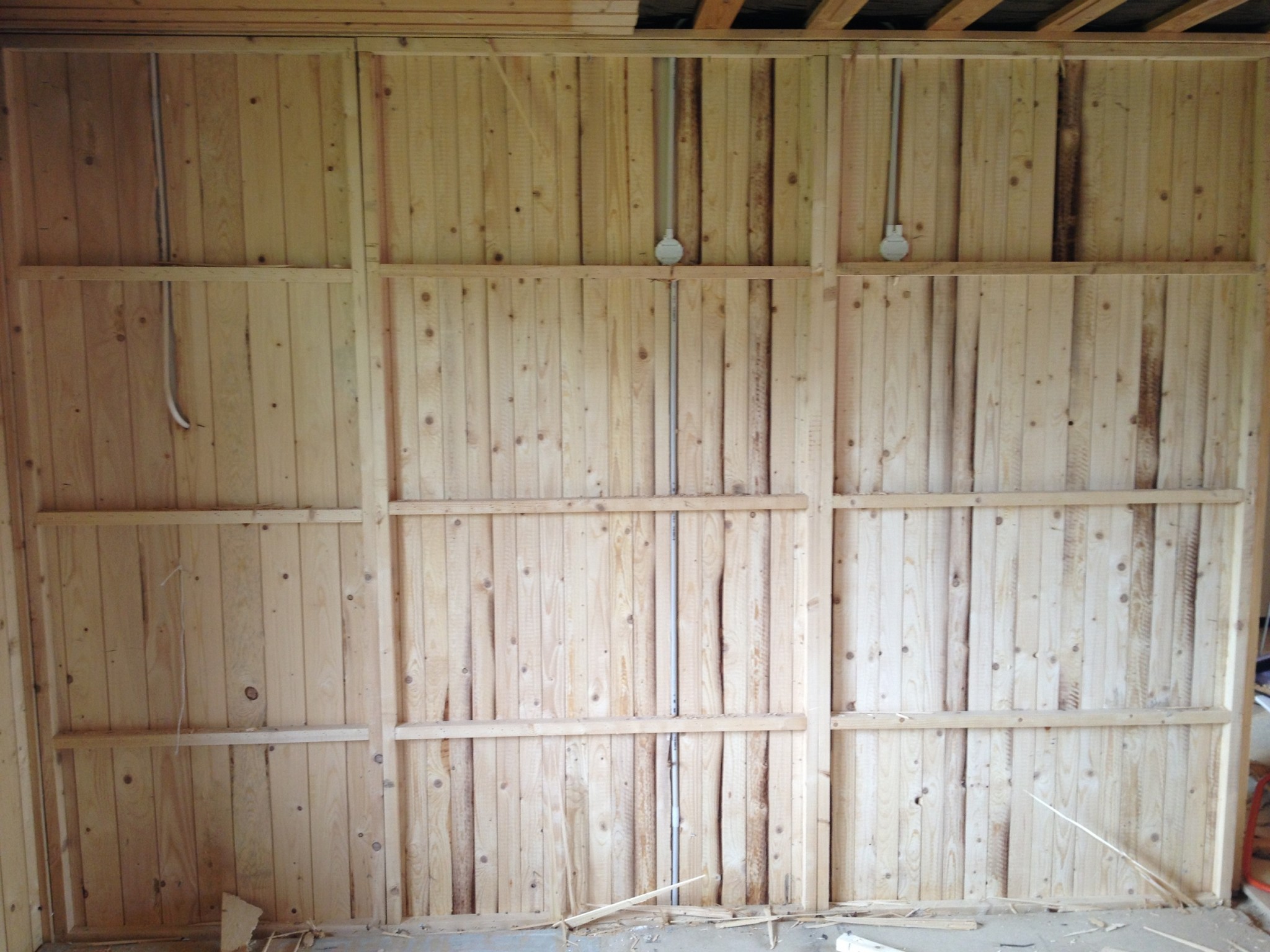
We demolished the wall between the bedrooms after consulting with a carpenter who said that "that wall barely supports the roof decking" (or something similar). Furthermore, the wall was constructed in the same way as the non-load bearing walls (like the one between bedroom 14.8 and the kitchen). Below is a picture of what the wall between bedroom 14.8 and 10.3 looked like, no beams anywhere.
Yes, that wall looked a bit weak to be a load-bearing heart wall, mostly because the standing studs are so sparse in combination with there being no load-bearing beam at the top.
But a load-bearing interior wall doesn't need to have a load-bearing beam in it at all, nor does it need to have an overly large dimension on the studs. I have two load-bearing interior walls here in the house that consist of 45x70 standing studs and no load-bearing beam. But there is a standing stud directly under each floor joist instead.
You seem to have a span of over 7 meters, for which a load-bearing heart wall or some kind of support is usually required. But if there's no living area above, or if it's a very narrow one (= small load + possible help from roof trusses), it might be OK without it.
Yes, that wall looked a bit weak to be a load-bearing core wall, mostly because of the sparse spacing between upright studs in combination with the absence of a load-bearing beam at the top.
But a load-bearing inner wall doesn't necessarily need a load-bearing beam within it, and the studs don't always have to be of excessive dimensions. I have two load-bearing inner walls here in the house consisting of 45x70 upright studs with no load-bearing beam. But there's an upright stud directly under each floor joist instead.
You seem to have a span of over 7 meters; usually a load-bearing core wall or some support is required then. However, if there's no living space above or if it's very narrow (= small load + possible help from trusses), it might be okay without it.
The wall between the bedrooms will be rebuilt, but more robust this time, so the open plan is temporary. However, the wall between the kitchen and bedroom 14.8 will be moved to align with the wall between bedroom 10.8 and dining/living room, while the wall between the kitchen and dining/living room is removed. This is where my problem lies, and the question is then whether that small piece of load-bearing wall supports the whole house or was just a support for the sliding door that hung on a track in the beam. (The picture shows approximately how it will look with the new layout).
I assume that the joist for the upper floor goes straight across the house in the direction of the outer wall-terrace -> outer wall-kitchen. Furthermore, I assume that the floor area on the upper floor is at least 5-6 meters wide.
And if you don't have some serious beams in the joist (significantly more than 45x220 wood), you probably need a load-bearing wall or beam.
Additionally, when you rebuild the wall between the bedrooms, make sure the joist/floor is straight. If not, lift and prop it up until everything is straight before finishing the wall.
I assume that the flooring for the upper floor goes straight across the house in the direction exterior wall-patio -> exterior wall-kitchen. And furthermore, I assume that the floor space on the upper floor is at least 5-6 meters wide.
And unless you have some real heavy-duty beams in the flooring (significantly more than 45x220 wood), you probably need a load-bearing wall or beam.
And furthermore. When you rebuild the wall between bedrooms, make sure to check that the floor structure/floor is straight. Otherwise, lift and prop up to make everything straight before finishing the wall.
Thanks for the answers and tips! It feels like I've done as much as I dare without bringing the carpenter back in; I was planning to let him set the frame for each wall anyway, so he might as well come now.
I assume that the "attic" is not furnished, or possibly used as light storage.
In that case, the "heart wall" primarily functions to stabilize the lower frame of the truss so that it doesn't flex uncomfortably when walking there and placing bags and similar items. The load is therefore small, and the "heart wall" can be lightly dimensioned, just as Mikael_L writes.
I myself have a "heart wall" that only consists of 70x45 studs, with storage and a small guest room on top.
I imagine (but I am not an "expert") that the opened section can be stabilized with noggings, or in the worst case, with a beam.
I assume that the "attic" is not furnished, or possibly used as light storage.
In that case, the "heart wall" mostly functions to stabilize the lower frame of the truss, so it does not sway unpleasantly when you walk there and place bags and similar items. The load is therefore small, and the "heart wall" can be lightly dimensioned, just as Mikael_L writes.
I myself have a "heart wall" that only consists of 70x45 studs, with storage and a small guest room above.
I can imagine (but am no "expert") that one can stabilize the opened part with noggins, or in the worst case, with a beam.
The upper floor, if you can call it a floor, is just an unfinished attic without furnishings or other clutter. The house is a modular house from Anebyhus if that matters.
But, regardless of whether the house's description says that the external walls are load-bearing and nothing about the internal walls (the field for load-bearing internal walls is empty), can the internal walls still be load-bearing? Or has new knowledge accumulated over the years that sets other requirements? At the same time, load-bearing internal walls are shown on the drawing where the sliding door was placed. It feels somewhat contradictory.
The extreme case would be if the entire floor was cleared of internal walls and just became one large room, would this be possible if the roof, etc., only rested on the external walls, or do internal walls have other functions separate from load-bearing, such as stabilizing properties?
If by bearing interior walls you mean that the wall is a bit thicker at the kitchen sliding door, it could simply be that it is drawn thicker and should be built thicker to accommodate the sliding door itself.
Not easy to say exactly what.
But you write something like "unfinished raw wind."
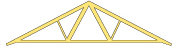
If it is, for example, truss rafters, it can look a bit different, but for example:
then it is not at all impossible that the trusses are free-spanning across the entire span = heart wall/beam in the middle of the house is not needed.
If by load-bearing interior walls you mean that the wall is a bit thicker by the kitchen sliding door, it may simply be that it is drawn thicker and should be built thicker to accommodate the sliding door itself. Not entirely easy to say why.
But you write type "unfinished attic".
Is it, for example, truss rafters, which can look a bit different, but for example,
[image]
then it's not at all impossible that the rafters are free-spanning the entire width = heart wall/beam in the middle of the house is not needed.
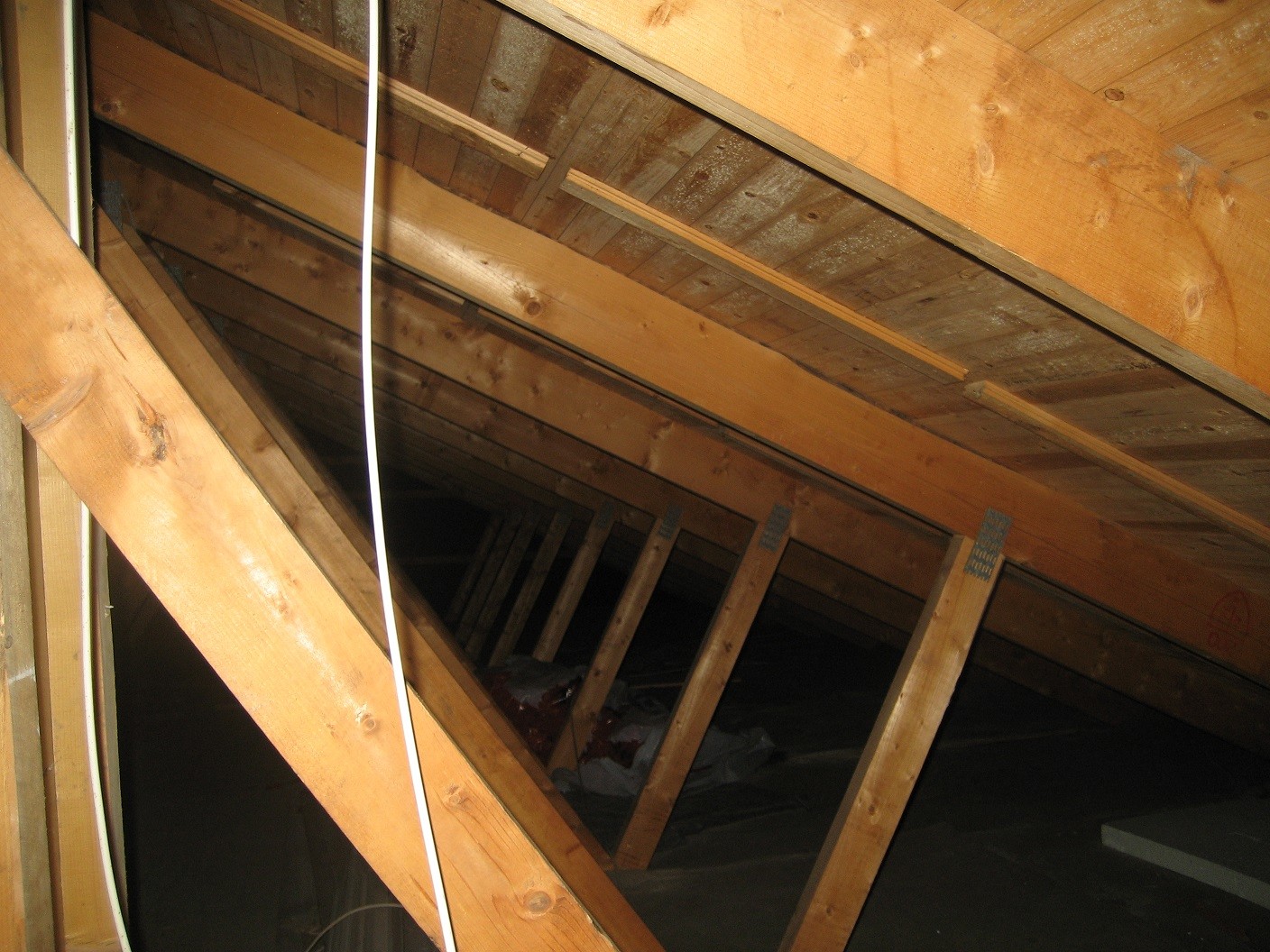
Luckily, I took a picture the last time I was up there, even though it doesn't show the entire construction:
Well. Yes, they are truss rafters. And they can absolutely be self-supporting over the entire width of the house so you don't need to have any central wall or other support.
I was misled by seeing a staircase in your floor plan.
But if you plan to start loading things in the attic, support underneath might be required.
If you want, I can input some values for your roof trusses into my roof truss program and calculate if they seem to be self-supporting and have the capacity for some extra load.
In that case, you'll need to measure dimensions, angles, distances, and span (approximately). And preferably see if the timber is possibly k-rated, and if so, what class. And snow zone or location.
I probably don't need too much information. Dimensions on top chords and bottom chords, and span. The roof pitch seems to be about 27°. I can only calculate with either 14° or 27°, so ...
But considering how the internal wall looked and that these are truss roof rafters, I have now changed my mind and think that you have self-supporting roof trusses and can avoid all the hassle.
Last edited:
Click here to reply
Vi vill skicka notiser för ämnen du bevakar och händelser som berör dig.