I have a barn section that I plan to insulate from the inside to maintain around 5-10 degrees Celsius during the winter. The barn's walls consist of exterior paneling, timber, and interior paneling. Inside this, I want to build an insulated wall, but despite several online searches, I haven't found a good solution on how to create a proper air gap.
I've thought about having the air gap inside the insulation with small gaps between the top and bottom of the wall, connecting the air gap to the room, but then I can't have a vapor barrier.
Is there anyone who has had similar projects, and how did you manage to ensure you didn't have moisture problems?
Am no expert on the subject. But after a lot of reading and common sense, I did this with about the same conditions as you. Converted my storage into a guesthouse/office. Where I couldn't create an air gap against the outer walls. However, I built a 3cm air gap in the ceiling.
Built diffusion-open. So no plastic at all. And not too thick insulation. Since I don't mess around with any water in the space, there won't be much moisture. Also chose electric heaters as they supposedly create a rather dry indoor climate? You should also have a fairly low temperature, I believe it's even better conditions for building diffusion-open.
Insulated the walls with 95cm + 45cm added wind paper directly against the wood facade. Insulated the ceiling 145cm + 45cm with a 3cm air gap against the outer roof.
All houses/constructions probably have different conditions. In my case, the storage was built in 2017 and I carefully checked everywhere for signs of moisture. Which there were none. It has nevertheless stood there for many years without becoming moisture damaged from the outside. My theory is to build diffusion-open because the construction dries out from the inside to the outside. And not too thick insulation.
Had an extremely small budget for my build. If it lasts 7 years? Then I'm happy, I can tear the thing down and build properly. Need somewhere to work in peace, as the real house is full of animals, kids, women, and who knows what... 24h per day.
I must say that I don't quite understand your description of the current wall...
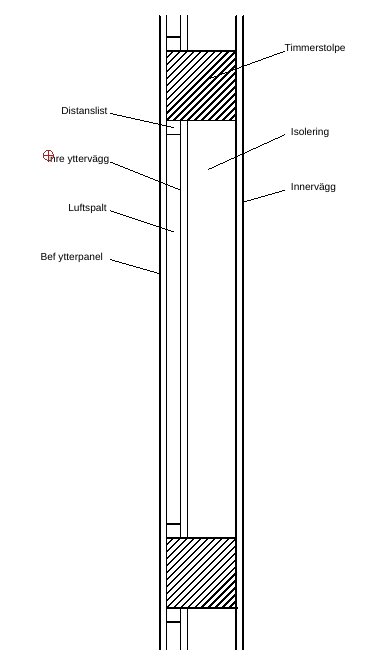
In my case, it's a timber frame with horizontal paneling on the outside. My plan is to attach spacers to the timber posts against the existing exterior panel and place some form of boards that will become a windproof outer wall inside the existing panel with a small air gap. Then insulate this and put boards on the inside.
No idea if it's a good construction, but it feels sensible in my head...
I must say I don't really understand your description of the current wall...
In my case, it's a framework with horizontal cladding on the outside. My plan is to attach furring strips to the wood studs against the existing exterior cladding and put some kind of boards that will become an airtight outer wall inside the existing cladding with a small air gap. Then insulate this and put boards on the inside.
No idea if it's a good construction, but it makes sense in my head...
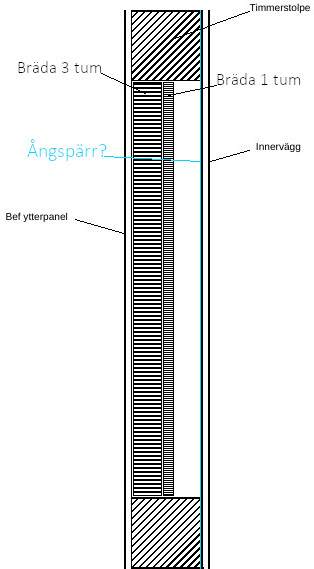
Something like this:
[image]
Your drawing is clearly better, hope it's okay if I borrow it a bit to describe my wall better.
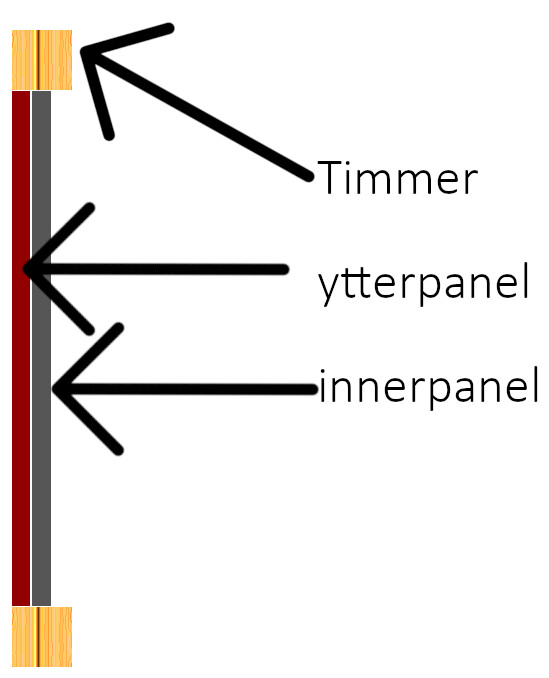
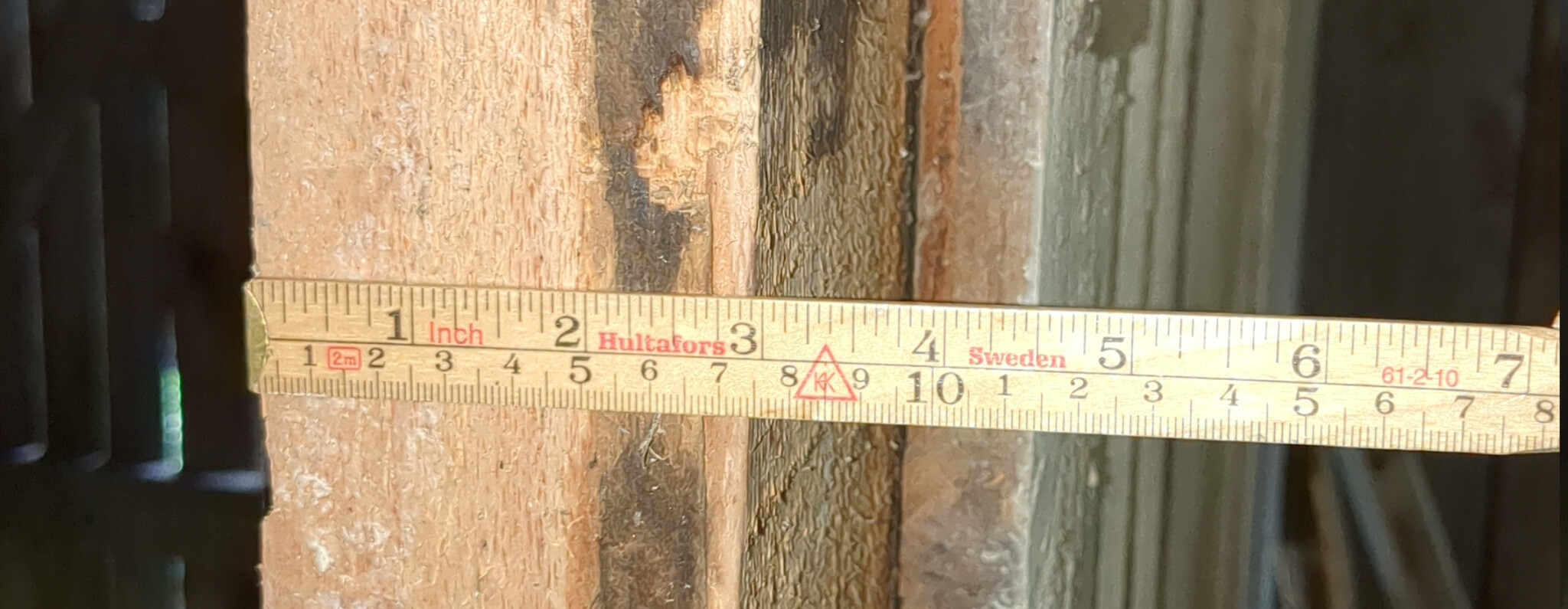
I've found out what it consists of, and it is a plank of 3 inches followed by interior cladding with 1 inch nailed together from both sides. No gap in between.
Considering that I just want it frost-free, I'm wondering if it's enough to put up a 17mm thick rough sawn panel on the inside, but is it safe to have a vapor barrier inside? Or should one, as Gandalfeln wrote, keep it vapor open to allow the wood to breathe as much as possible?
Haven't mentioned the roof, but I think a ceiling panel and sawdust that I can put on from above should cover my needs, there's about 20cm of space I can utilize, and I can open up the floor above the barn section and fill from above.
I don't have a direct answer to the question, but regarding the vapor barrier, etc., I personally think on one hand that I want to be able to cold set the space (and frost-free is basically equivalent to cold setting most of the year), and on the other hand, I won't use the space for anything that creates a constant moisture load from the inside. So that's something one must consider regarding moisture movement in the wall.
What you describe is essentially an old, well-proven wall construction. I would skip the vapor barrier and replace it with wind paper = diffusion-open in both directions.
I also need fire protection myself and thus cannot use traditional hygroscopic and moisture-resistant materials.
Keep it diffusion-open is my advice. There's usually a lot of moisture in those kinds of buildings, and it gathers as soon as there is a piece of plastic.
Thanks for all the responses, and going without plastic sounds like a solid way to proceed. The plan is to use wind barrier paper when the facade is replaced, as it's mostly the wind I want to stop from coming in, not to prevent the wall from breathing.
Thanks for all the replies and it will be without plastic, which sounds like a solid way to go. The plan is to use wind barrier paper outside when the facade is to be replaced, and it's mainly the wind I want to stop from coming in, not that the wall can breathe.
Time to buy rough sawn timber and boards!
and that the wall can breathe.
Click here to reply
Vi vill skicka notiser för ämnen du bevakar och händelser som berör dig.




Cyklon78 said:
Thanks for all the replies and it will be without plastic, which sounds like a solid way to go. The plan is to use wind barrier paper outside when the facade is to be replaced, and it's mainly the wind I want to stop from coming in, not that the wall can breathe.