
1,796 views ·
6 replies
2k views
6 replies
I think I demolished a partition wall replaced floor joist.

Construction rookie
· Nässjö
· 45 posts
Hello.
I am renovating the kitchen and therefore tore down a wall to enlarge the space. The kitchen has already been purchased and everything is basically ready for guessing and lowering the ceiling to install hutonit.
Previously, I fixed up my son's room on the upper floor (just put flooring over the existing vinyl and skim coated) and was in there today and thought the floor was swaying a bit in the middle. If you stomp, it makes noise on the changing table and a shelf in there. I have begun to suspect that I dismantled an interior wall that functioned as a floor joist... the house is from the 1920s. What do I do now? I can't install a beam from underneath because I have already bought the kitchen and there's no room for it now... Can I tear up the floor and anchor a new floor joist into the exterior wall? Can I brace to reinforce the upper floor? Is it urgent or can it wait? Grateful for an answer...
I am renovating the kitchen and therefore tore down a wall to enlarge the space. The kitchen has already been purchased and everything is basically ready for guessing and lowering the ceiling to install hutonit.
Previously, I fixed up my son's room on the upper floor (just put flooring over the existing vinyl and skim coated) and was in there today and thought the floor was swaying a bit in the middle. If you stomp, it makes noise on the changing table and a shelf in there. I have begun to suspect that I dismantled an interior wall that functioned as a floor joist... the house is from the 1920s. What do I do now? I can't install a beam from underneath because I have already bought the kitchen and there's no room for it now... Can I tear up the floor and anchor a new floor joist into the exterior wall? Can I brace to reinforce the upper floor? Is it urgent or can it wait? Grateful for an answer...

Construction rookie
· Nässjö
· 45 posts
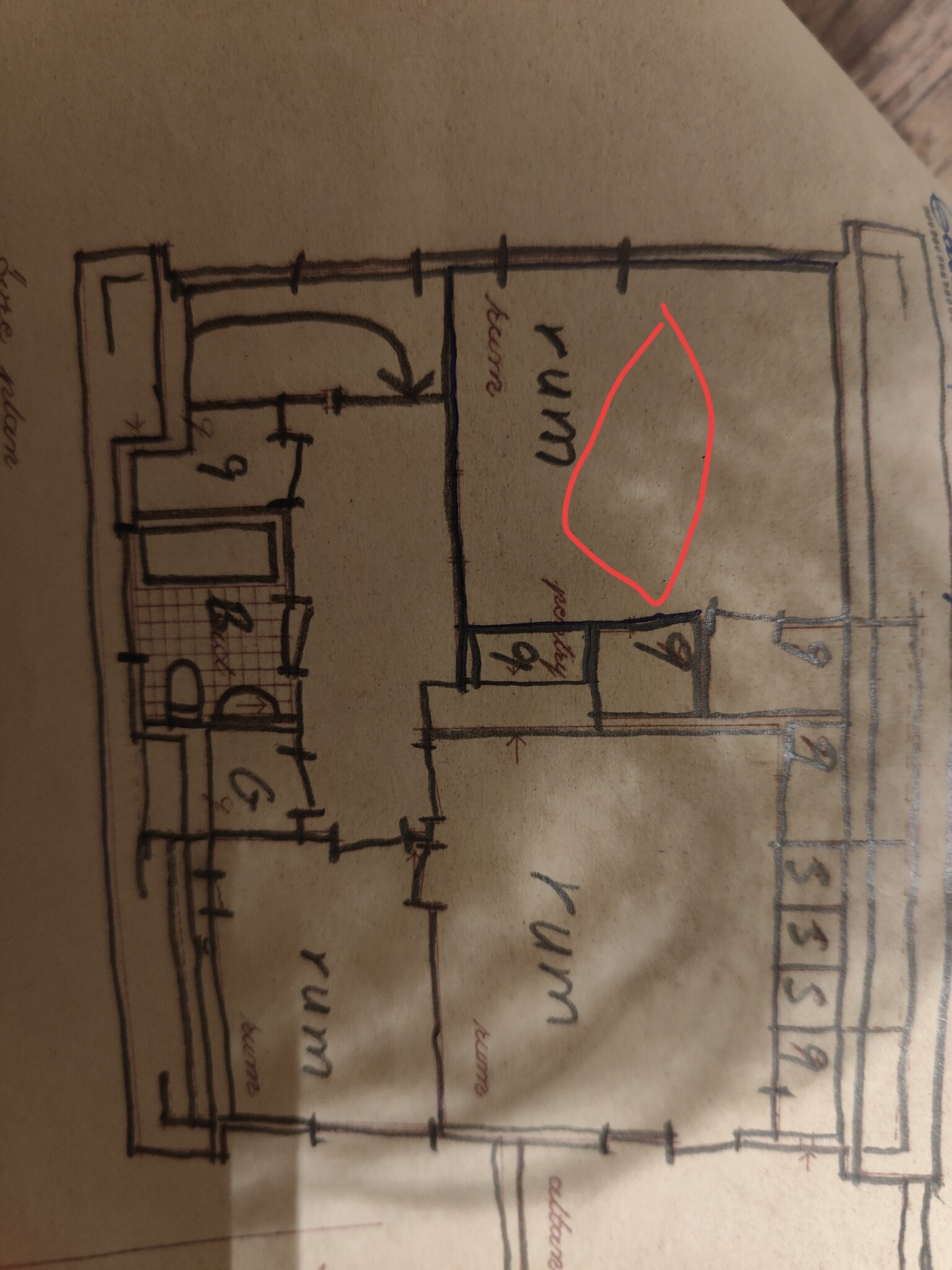
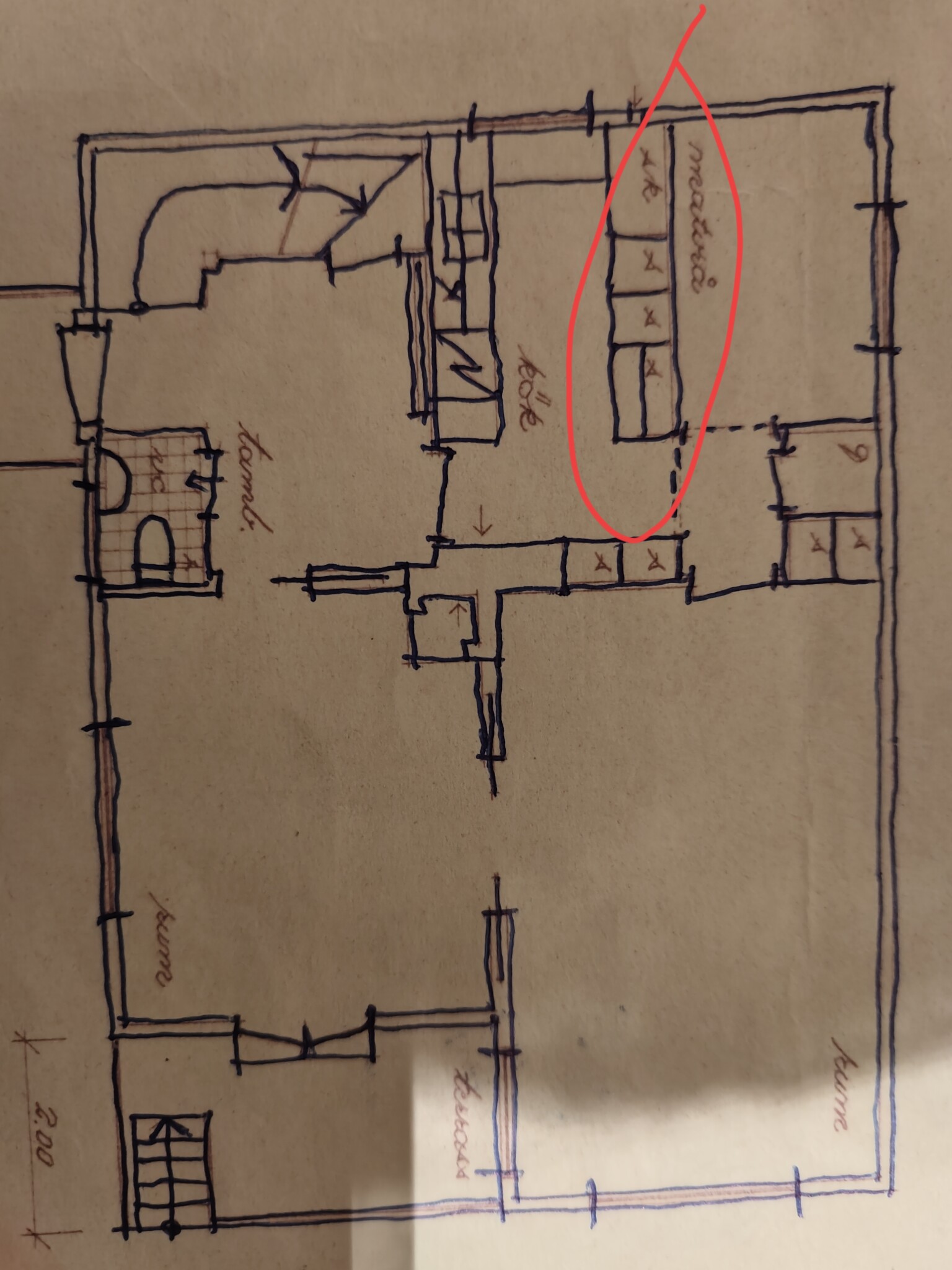
Construction rookie
· Nässjö
· 45 posts
The only drawings I have are hand-drawn. I assumed it wasn't load-bearing as I have always assumed that all the ones going from the chimney are. Maybe I'm worrying unnecessarily.


I had more wobble than that. Four-meter long 145 joists without blocking. Tore up the floor, sawed all the joists in half and cast a concrete beam across. Also installed blocking.Hi.
I am renovating the kitchen and thereby tore down a wall to enlarge it. The kitchen is already purchased and everything is basically ready for guessing and lowered ceiling to set hutonit.
Previously, I fixed up the boy’s room on the upper floor (just laid flooring on existing vinyl and did some wide spackling) and was in there today and felt that the floor was a bit wobbly in the middle. If you stamp, it makes noise with the changing table and a shelf that is in there. I have begun to suspect that I tore down a partition wall that acted as a floor joist...the house is from the 1920s. What do I do now? I can't put a beam from the underside as I have already bought the kitchen and there is no way it will fit now...can I tear up the floor and anchor a new floor joist in the outer wall? Can I use blocking to reinforce the upper floor? Is it urgent or can it wait? Grateful for an answer...
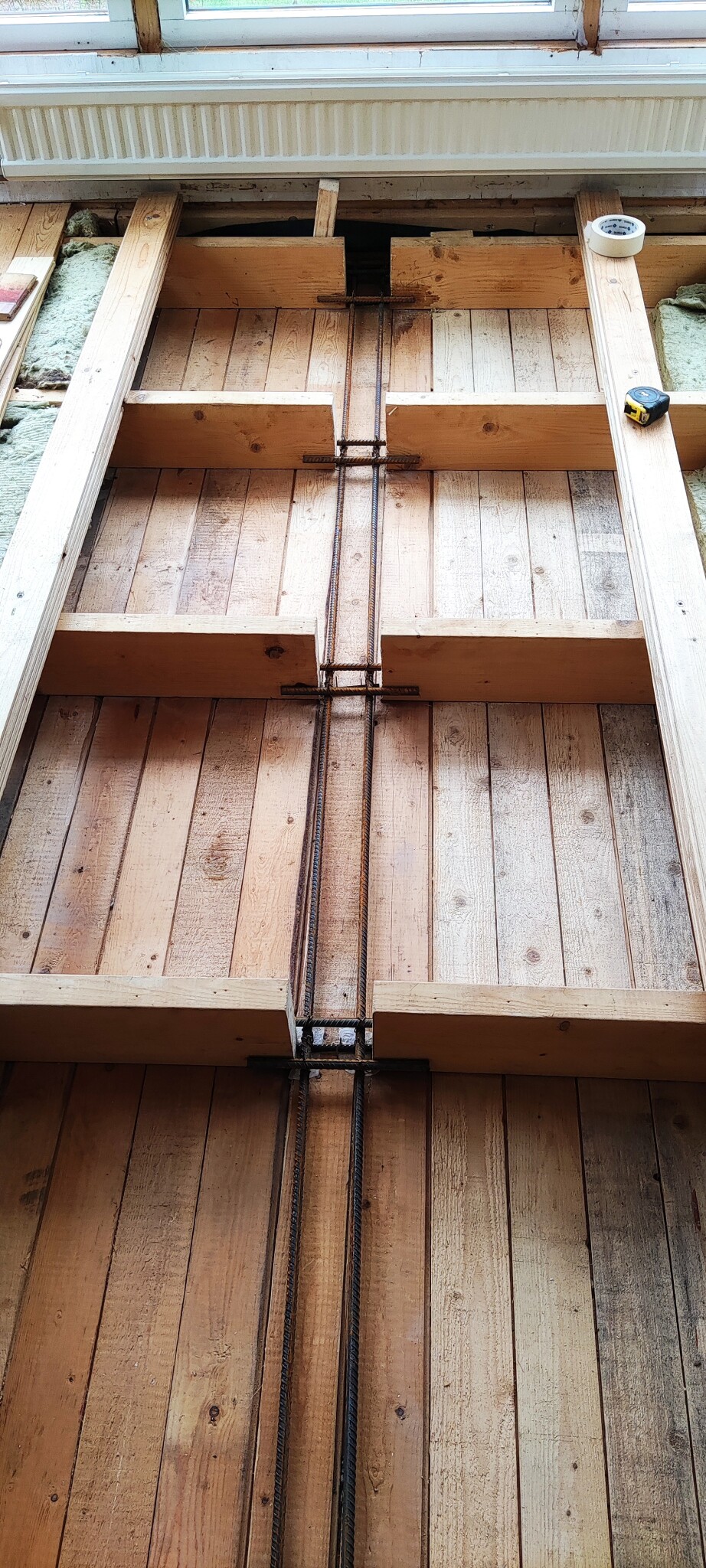
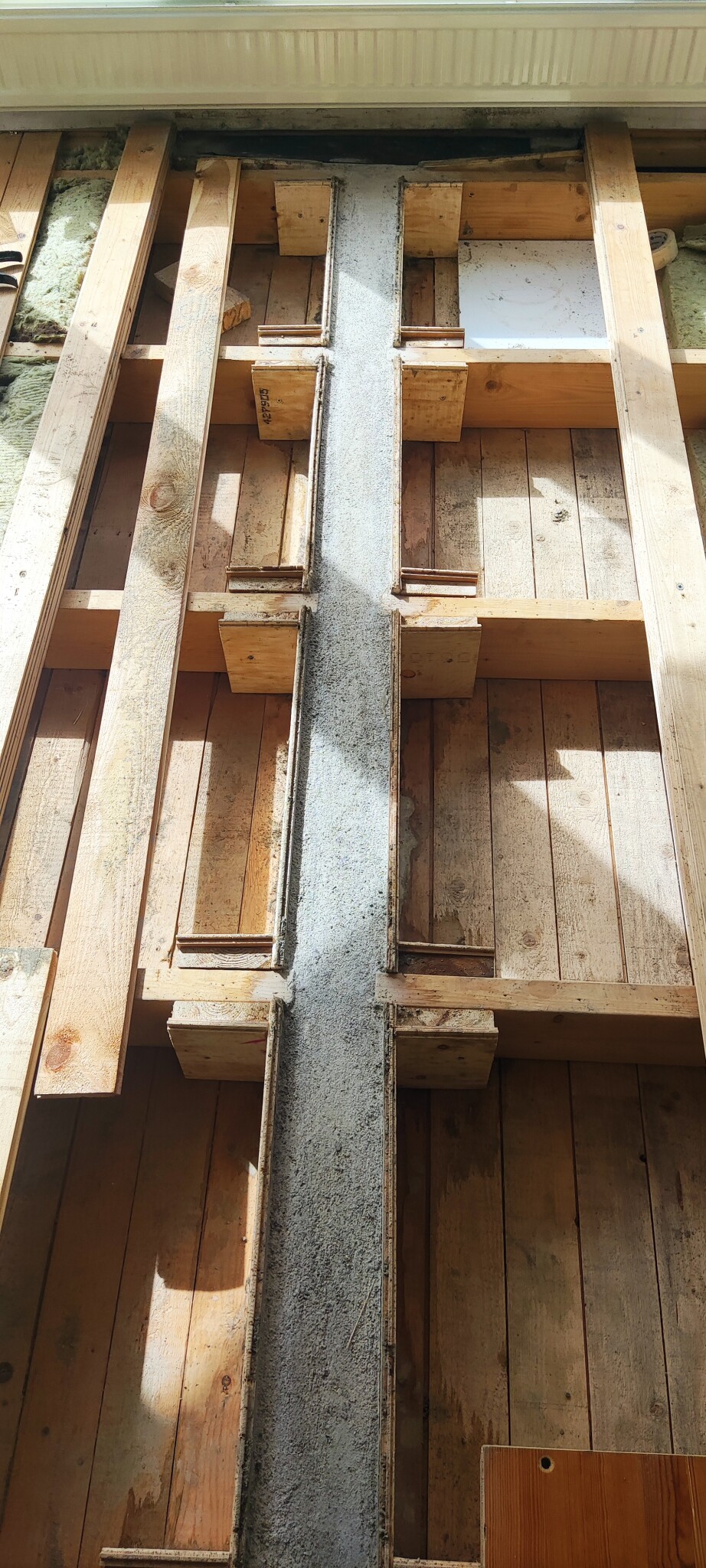
Now it feels sturdy.
Click here to reply
Similar threads
-
Reparera tak efter rivit vägg
Färg, Måla & Tapetsera -
Om mäklare ej skrivit in avtalstid alls, vad betyder detta?
Köpa & Sälja hus -
Vad tror ni om att ersätta vanlig varmvattenberedare med en bredare me
Vatten & Avlopp -
Granne har rivit eternitrör ovetandes.
Gifter, farliga byggmaterial & skadedjur -
Livrädd - tror jag rivit i asbest idag!
Gifter, farliga byggmaterial & skadedjur