I will be running the electrical wiring inside the wall, adding more insulation on the sides facing the outside of the house, and covering with 10mm OSB and 13mm drywall. The ceiling will be removed and replaced with a new drywall ceiling with spotlights. The electrical work will be handled by an electrician; I'll do the rest.
The house was built in 1969 with surface-mounted electrical wiring. The walls consist of prefabricated modules 2400x1200. The modules have laminated 9mm boards that look like masonite (tretex?). The modules are placed side by side and are connected by being diagonally screwed from the inside through the wall panel. The walls facing the outside of the house have 120mm studs, with mineral insulation glued in the prefabricated modules. The studs in the interior walls are about 77mm (!) thick, and there is no insulation in those walls. An upper floor was added in the 1980s. We are on the ground floor.
Below is a concrete slab with a wooden floor (about 13mm in total, about 3mm wear layer and chipboard inside, as far as I can see). I won't remove the wooden floor now; it's too big a project.
Upward (the ceiling) is also the same masonite/tretex (10mm) as in the walls. It seems like the joists upward are also prefabricated modules 1200 wide, unknown length. That is, the modules for the outer walls were erected first, then the modules for the roof were added. This means that the upper floor "rests" not only on the wall beams but also on the masonite that covers the roof modules.
First, I thought of putting a 45x95 stud underneath (sill?) and screwing up a 45x95 stud on top (top plate?). Then vertical 45x95 with cc60. Add insulation and then vapor barrier. But then come the electrical questions.
One alternative is to have 45x45 for extra insulation and then 45x45 as an "installation wall" (I think that's what it’s called). Then I'm considering which layer is best to have standing vs. lying.
Option 1: Is it easier to run the wiring on horizontal studs? That is, standing outermost and horizontal innermost? You can first screw standing 45x45 onto existing standing studs, add insulation, and apply the vapor barrier. Then cross-set the inner horizontal studs.
Option 2: Or do you take horizontal outermost and standing innermost? That is, cross-screw horizontal 45x45 onto the existing wall and then again cross-screw standing 45x45 closest to the interior wall. After I've screwed the horizontal 45x45, I place insulation and add the vapor barrier. Then the innermost standing 45x45. The electrical flex conduits will need to cross the standing studs, but you just "tuck" in the vapor barrier where it crosses, right?
Option 3: Or should I just use 45x95 studs and skip the installation wall? That is, apply the studs and add insulation. Then the electrician can lay flex conduits and boxes. After that, apply the vapor barrier and tape carefully where I need to cut for the boxes.
Regardless of how I do it, I plan to attach the new studs to the existing ones.
How do I handle the floor? Remove the floor and lay a new sill against the concrete? That is, cut away about 100mm with a circular saw and lay a 90x45 (if two 45x45) or 95x45 stud at the bottom. Or should I leave the floor as is and place a stud against it? Or maybe let the existing floor function as a sill, so I don't screw any stud downward at all and just let the new studs, which will be screwed to the existing ones, simply rest on the floor?
How do I handle the ceiling? Keep the masonite where the wall is extended or remove it and expose the ceiling studs? Should I install a top plate? (Again, 90 or 95 mm.) How thick should the top plate be in that case? I plan to screw the new studs to the existing ones, so maybe 28mm is enough thickness for the top plate?
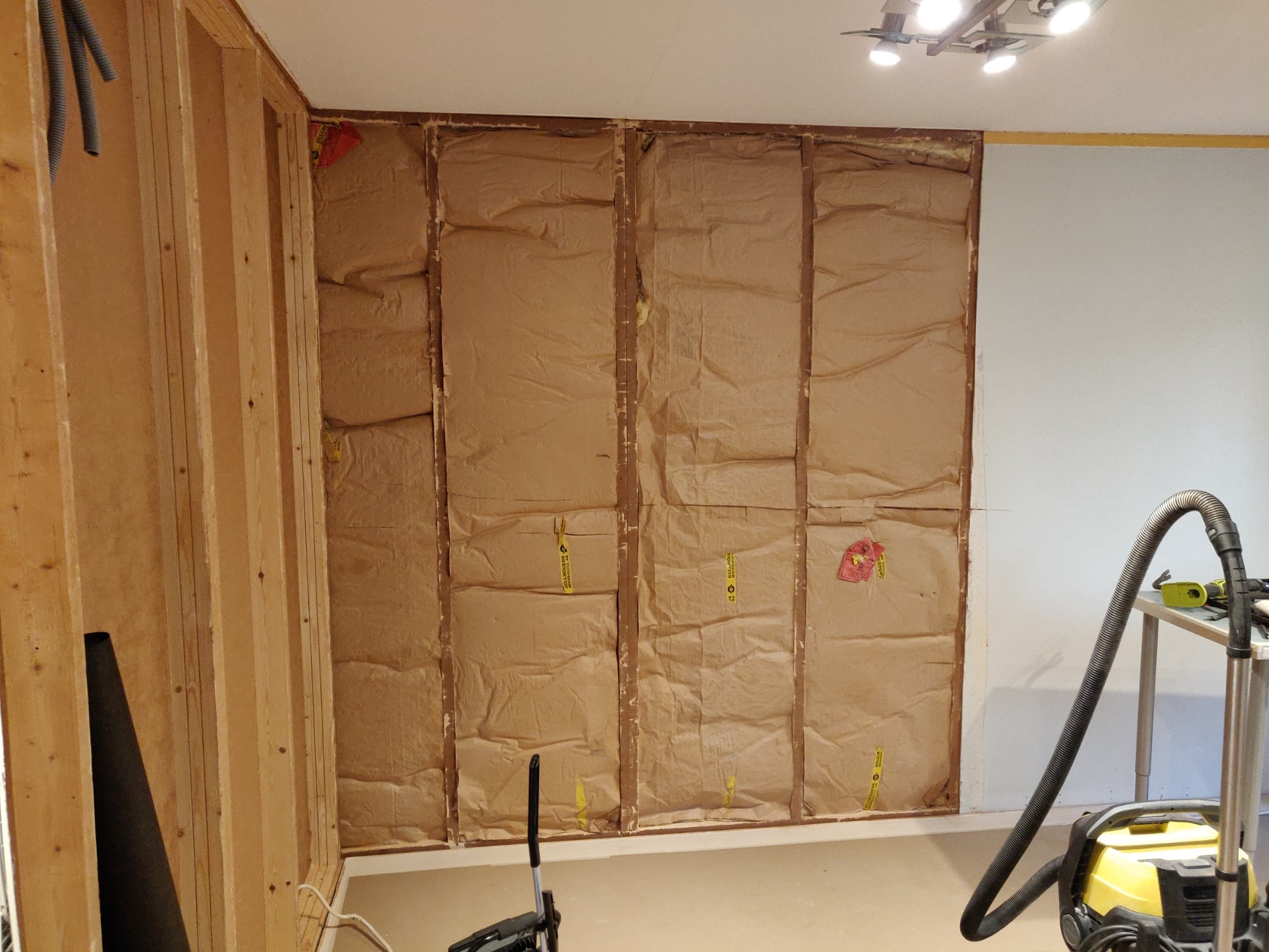
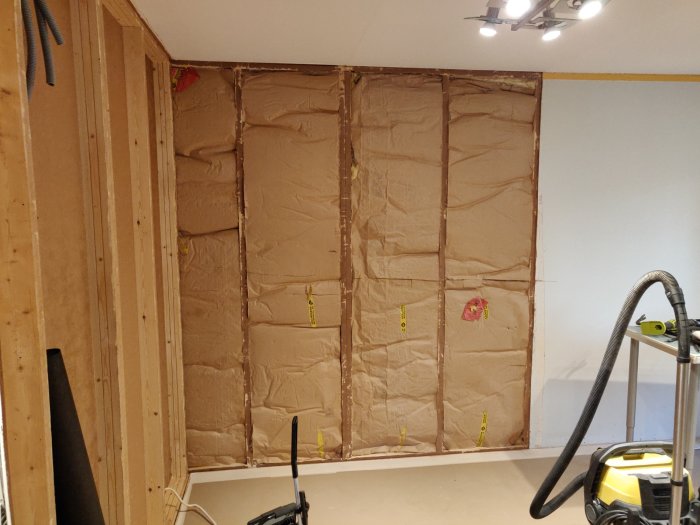
Straight ahead is the outer wall. The two open compartments to the right are a module that is angle-screwed against the modules to the right and left. Inner wall to the left in the image. You can see where the wall panels have been glued where I used a multi-tool to scrape off the masonite that remained after tearing off the wall panels.
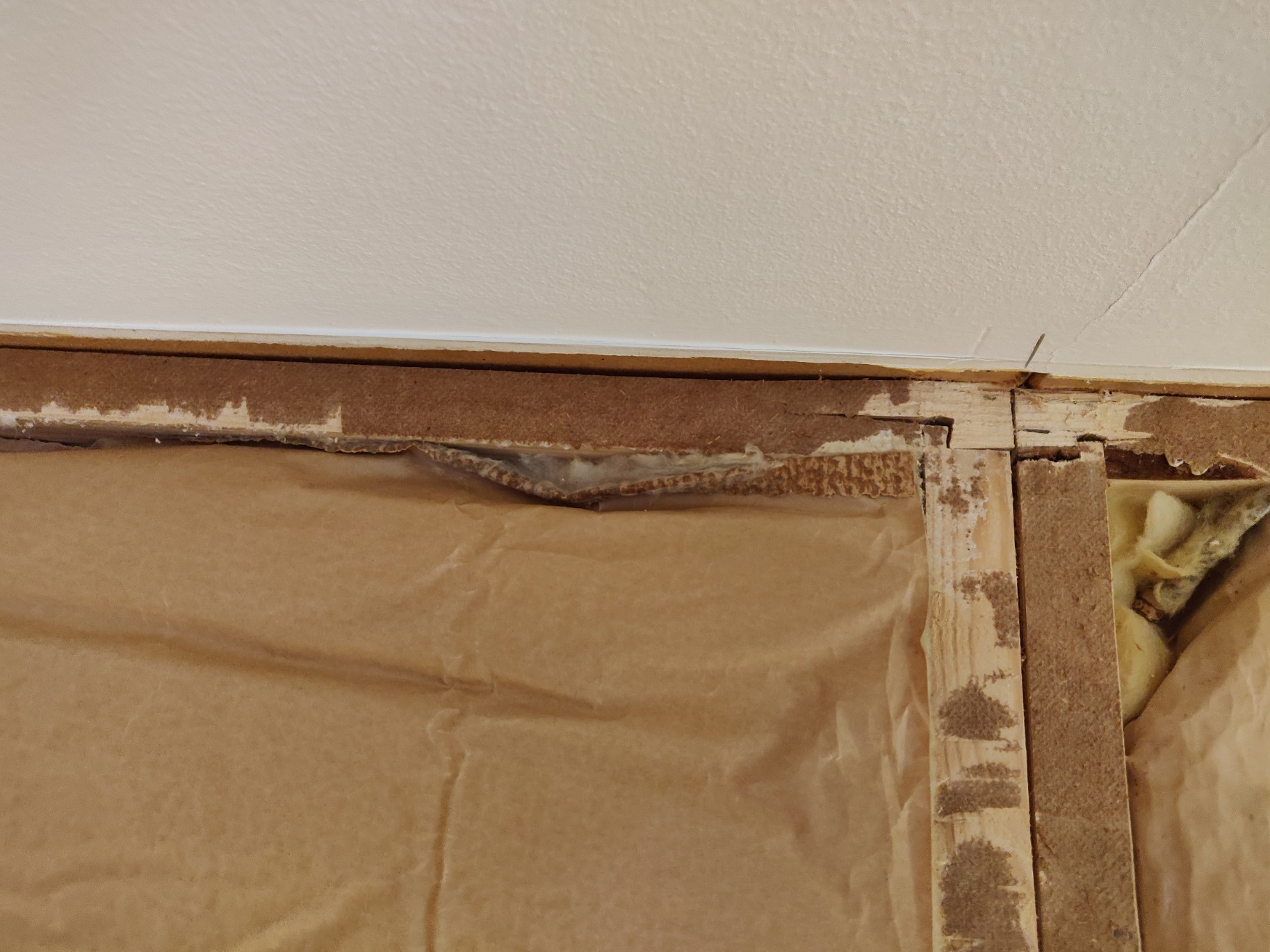
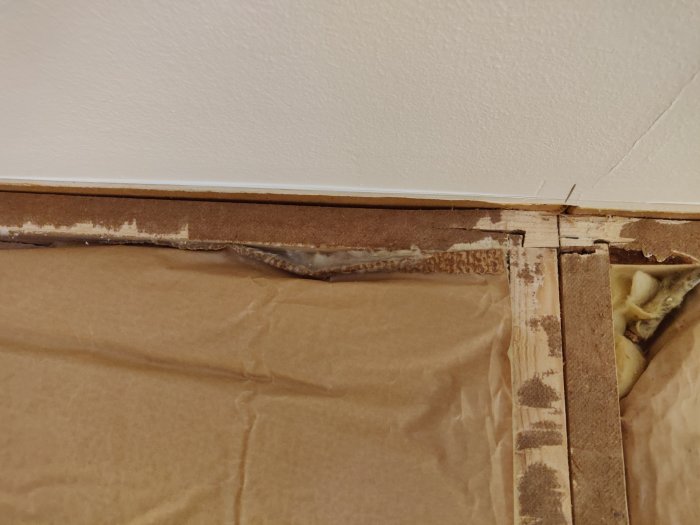
This is how it looks upward, where you can see that the entire upper floor rests not only on the wall modules but also on the lying masonite, i.e., the ceiling.
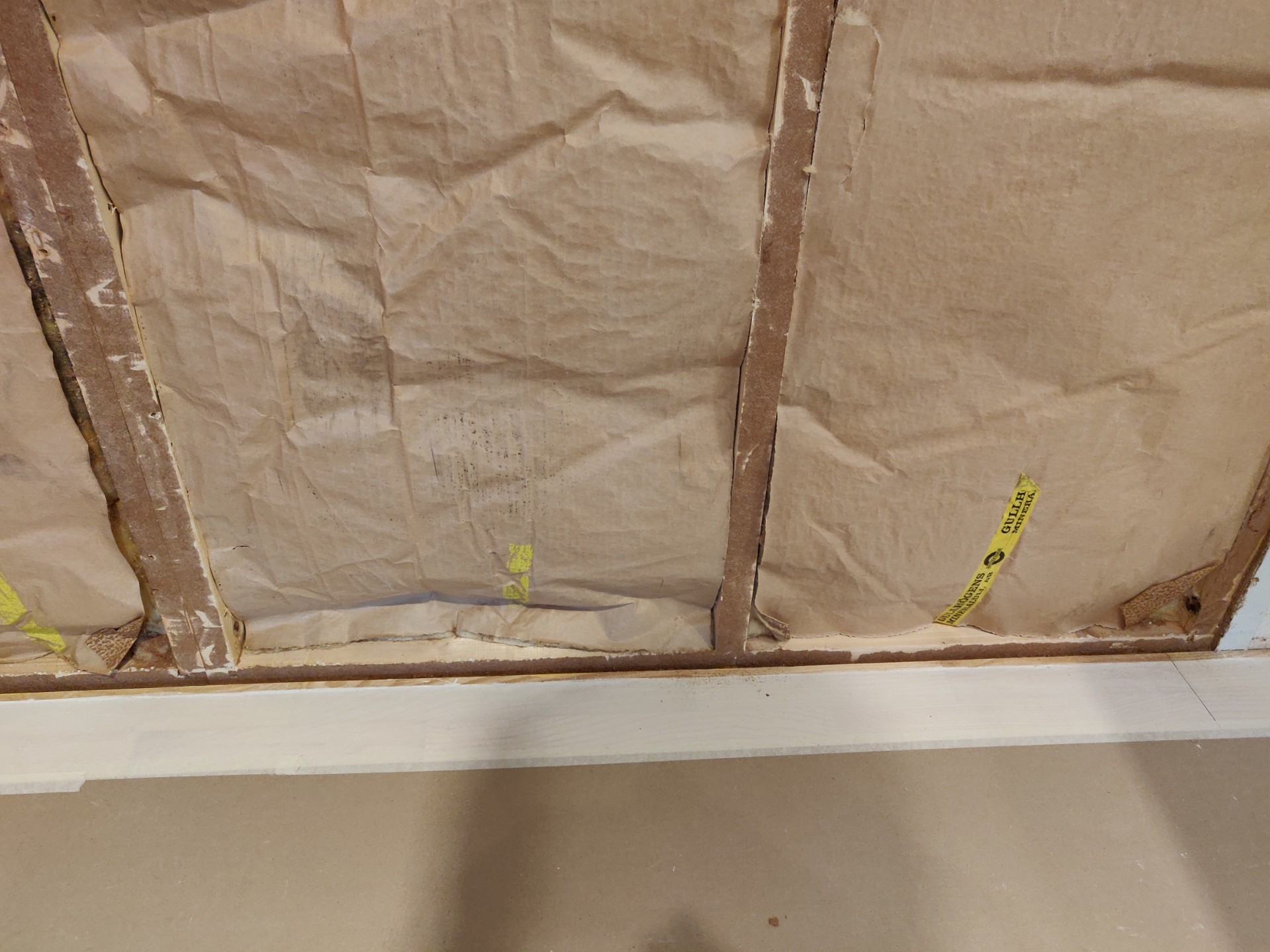
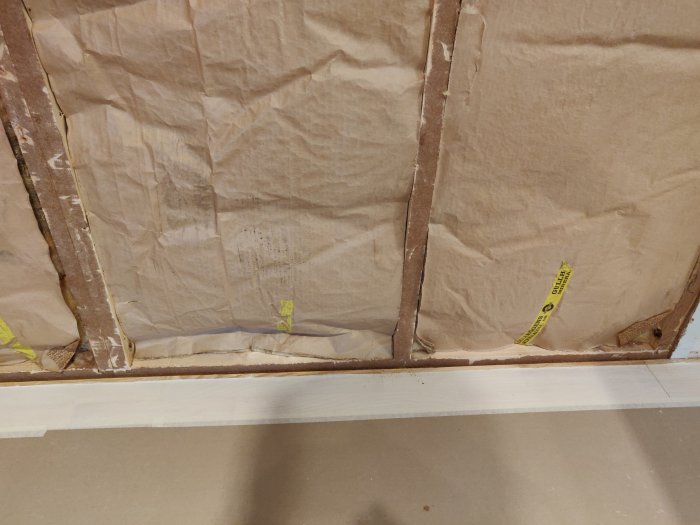
This is how it looks downward. The wall modules rest on the sill, and inward towards the room, there is approximately 12mm of wood flooring (particleboard core with about 3 mm wear layer in some type of wood) with concrete underneath.
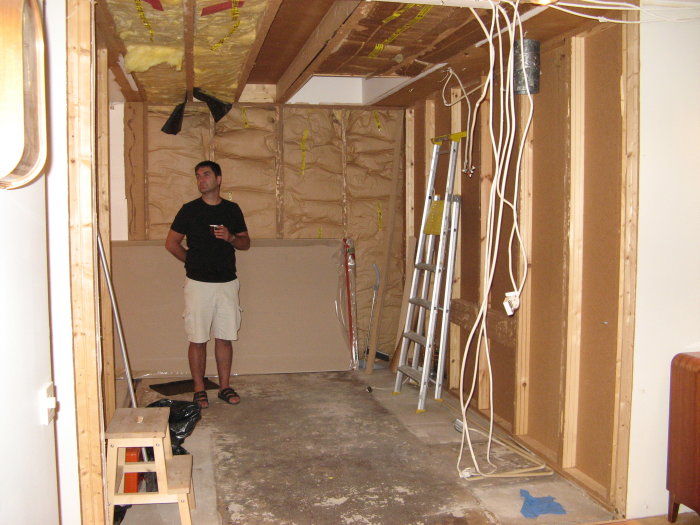
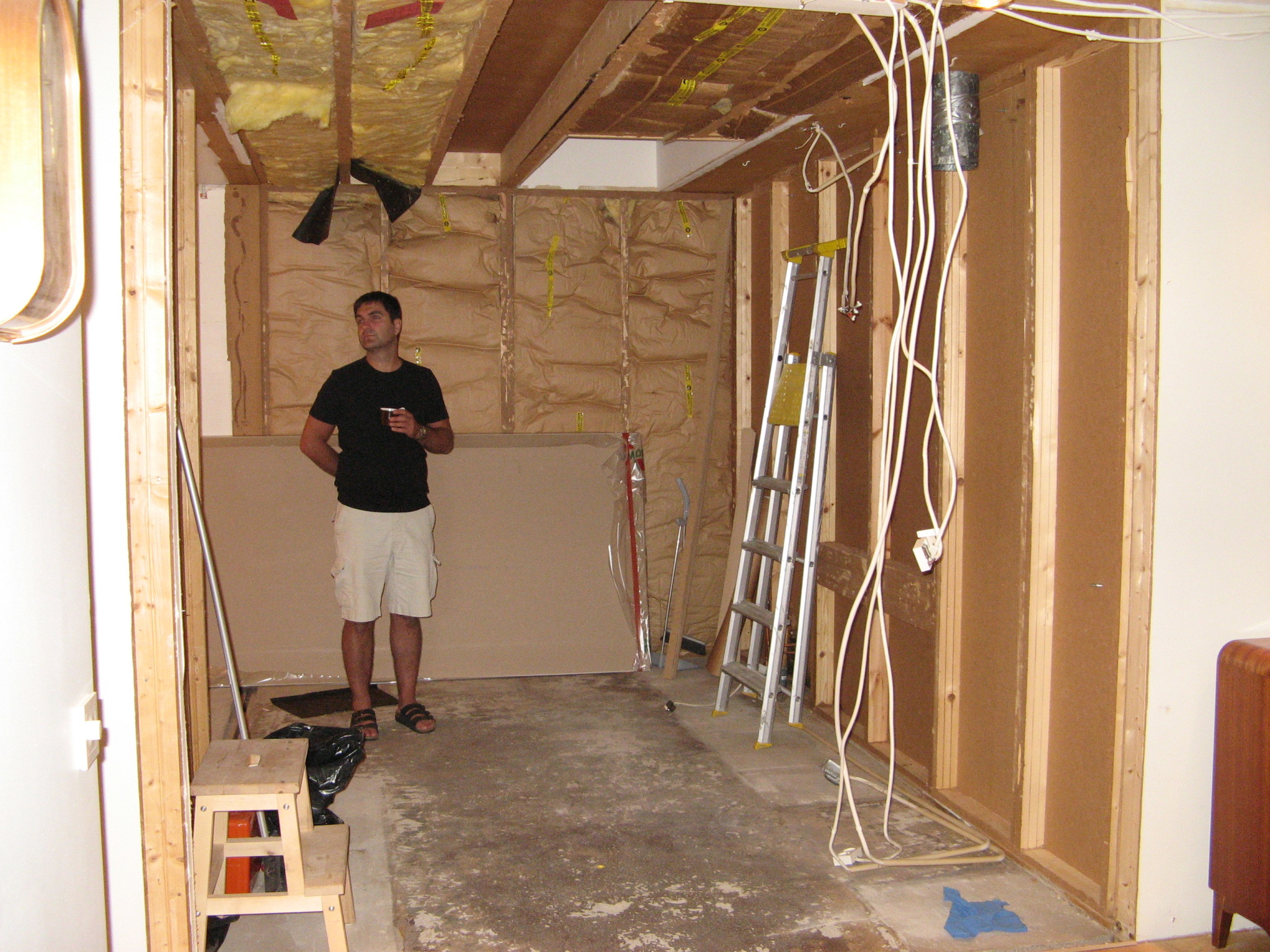
And here is a picture from 2006 when we renovated another room, where you can see how the ceiling has been removed and the exposed beams upwards. (You can ignore my 17 years younger posing .)


 .)
.)