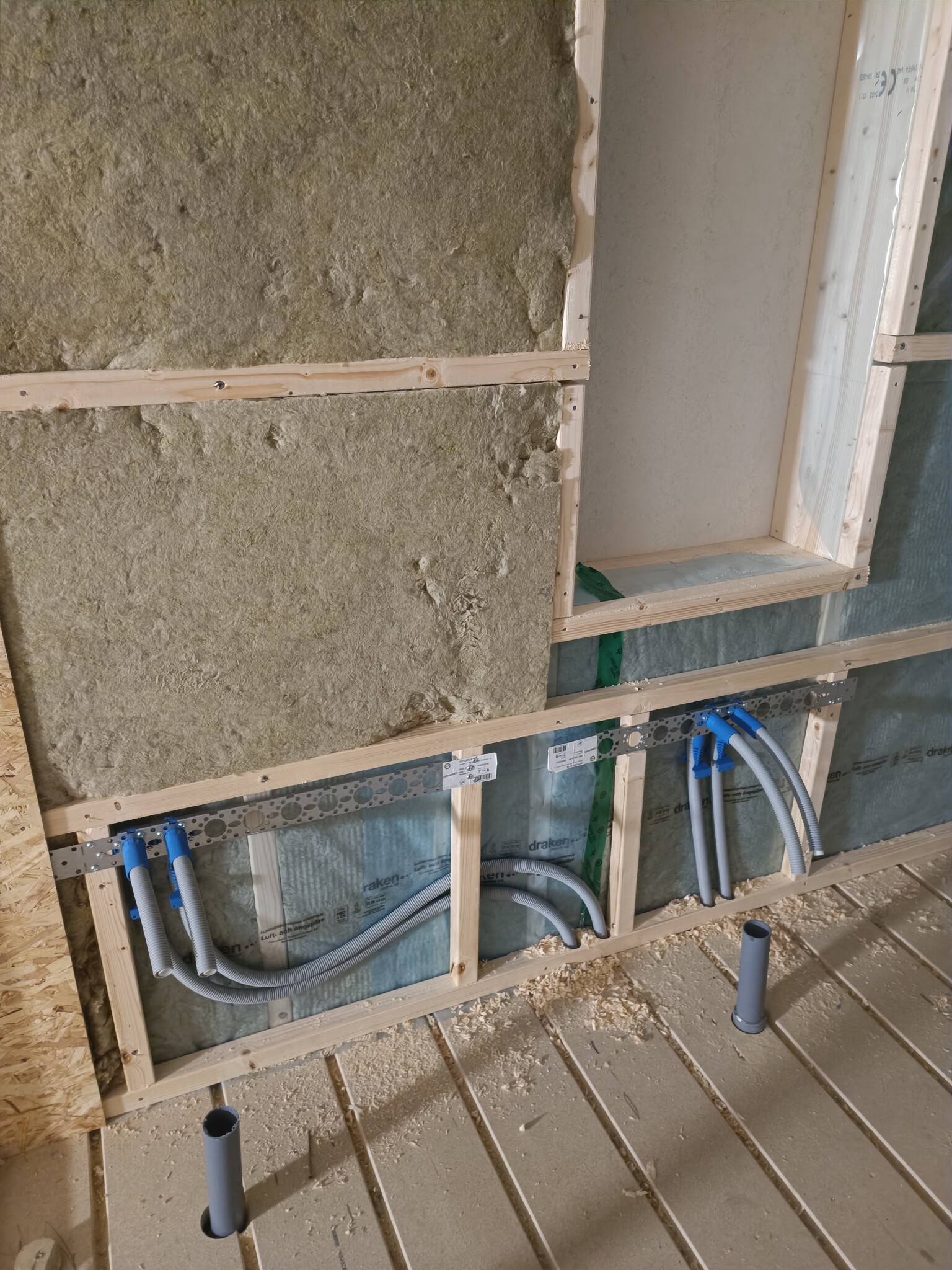
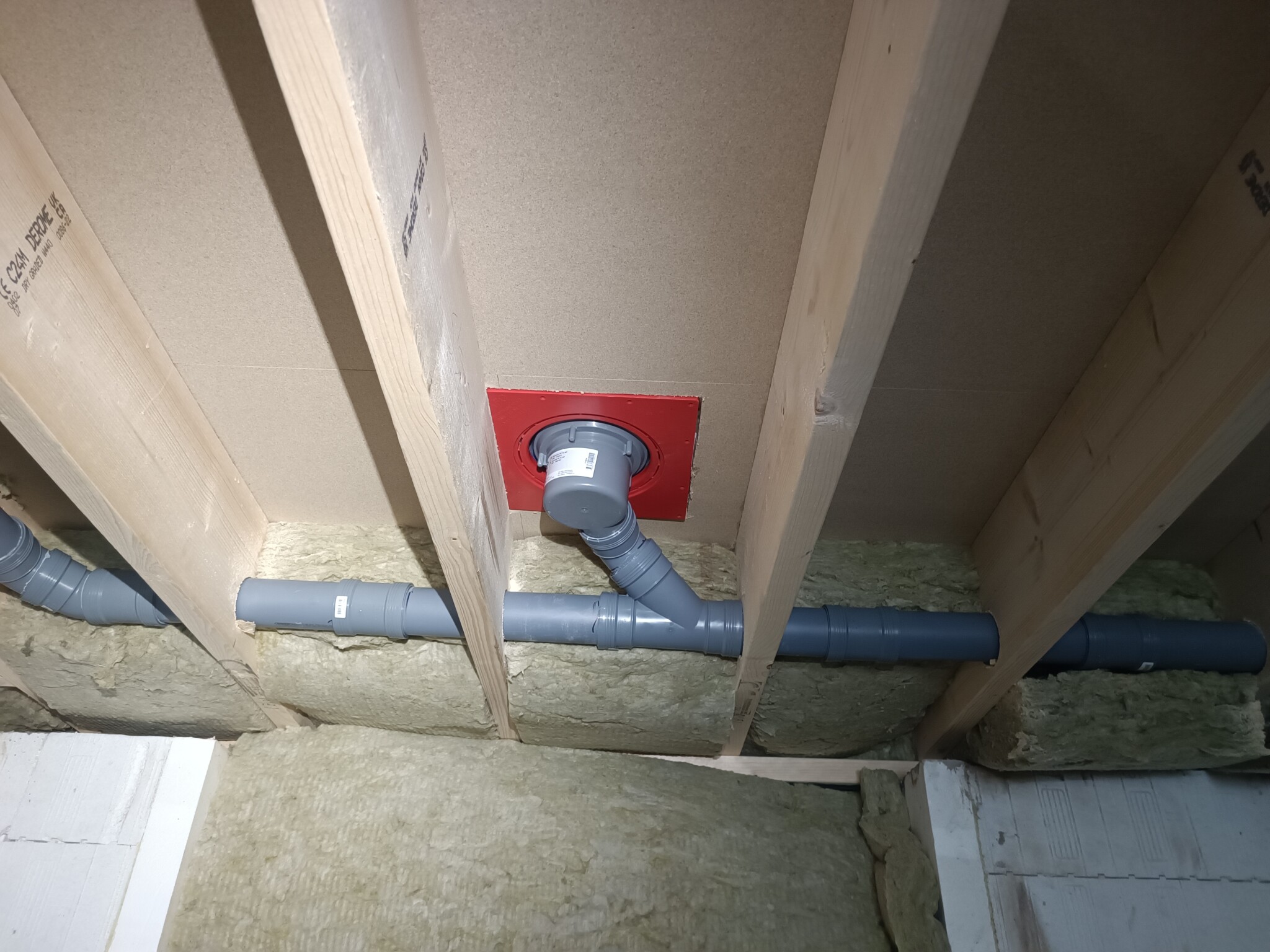
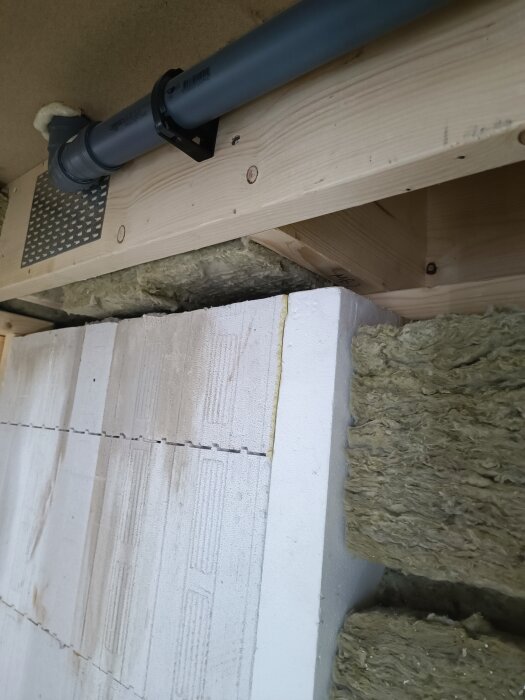
Basement with thermomur (which should not have any) construction foil/vapor barrier.
On the entry level, the carpentry firm used construction foil in the wall as usual, but it does not extend into the basement and likely stops somewhere at floor level - a bit uncertain.
How do I now seal the vapor barrier around the outer side of the floor joists? I need to insulate and thin the basement ceiling. Has something gone wrong somewhere?
The foil should have actually gone down through the
Flooring down to the thermowall.
Either taped to the thermowall or clamped under the sill.
Looks a bit difficult now, since it's fully insulated etc.
Oh. Yes, it feels like there's been a gap here. One company made the drawing, another company built the upper floor and a third is now going to space the interior ceiling.
Is it possible to salvage this and make the best of the situation?
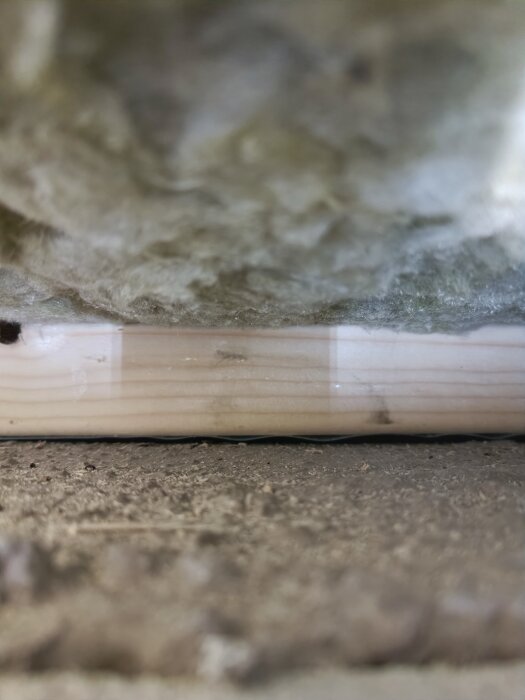
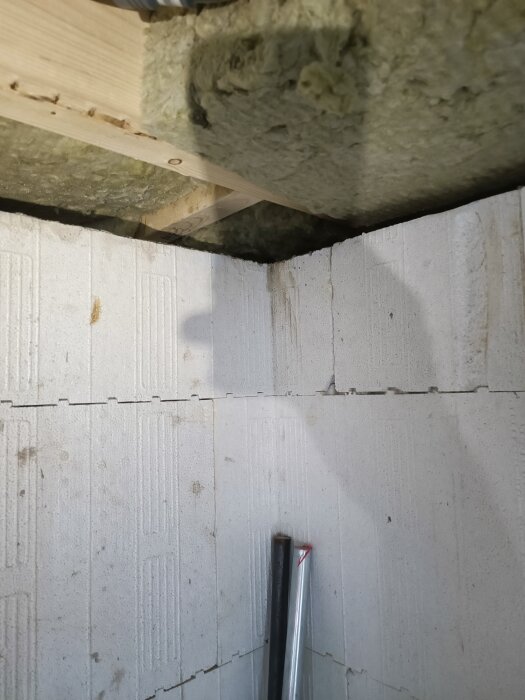
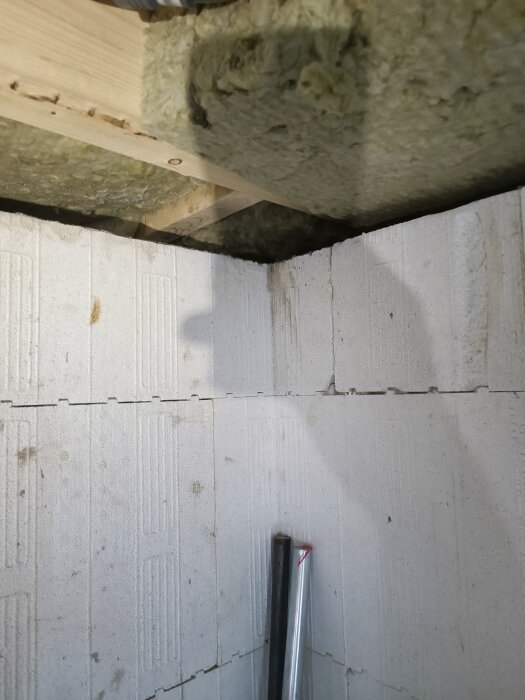
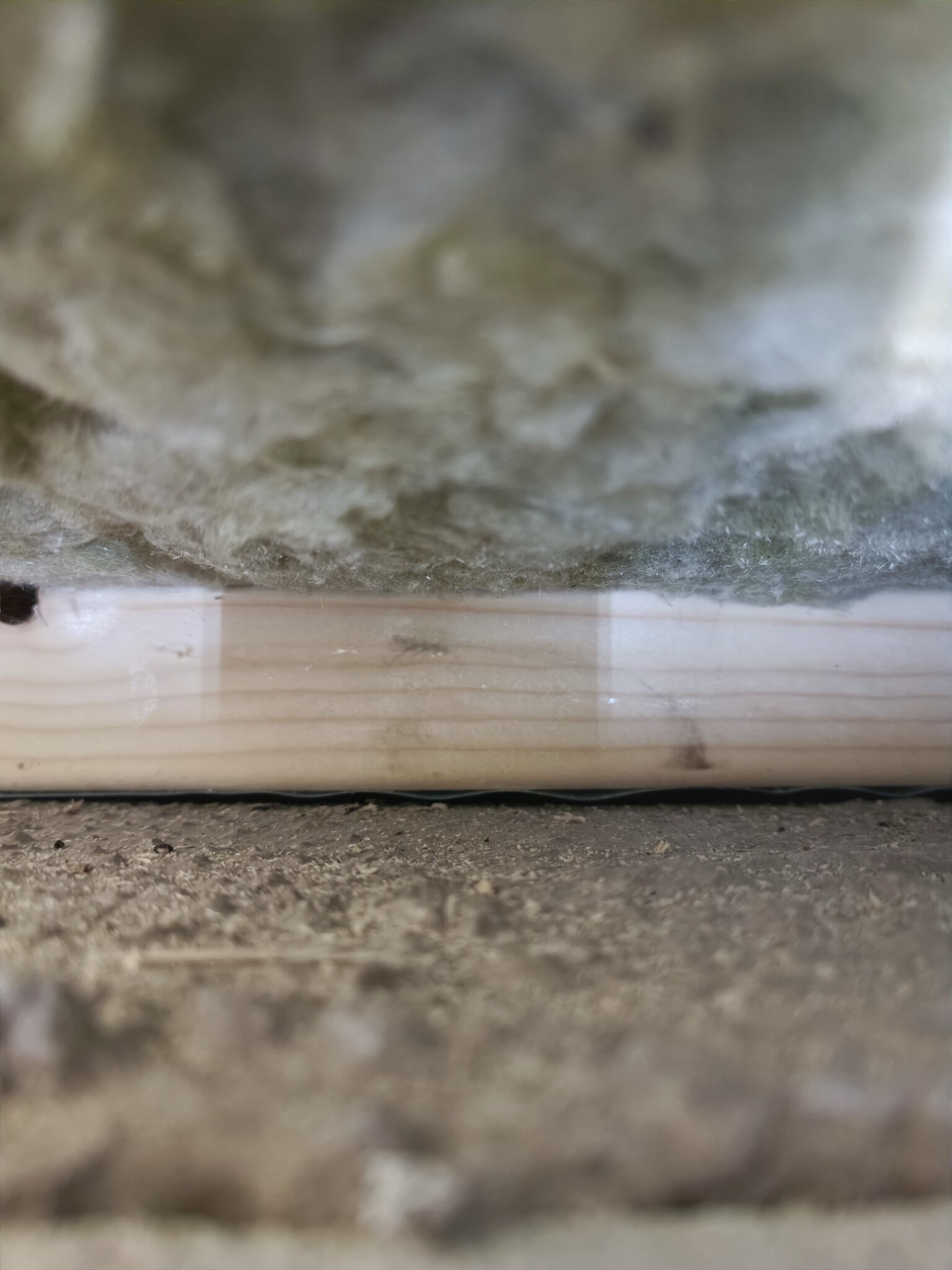
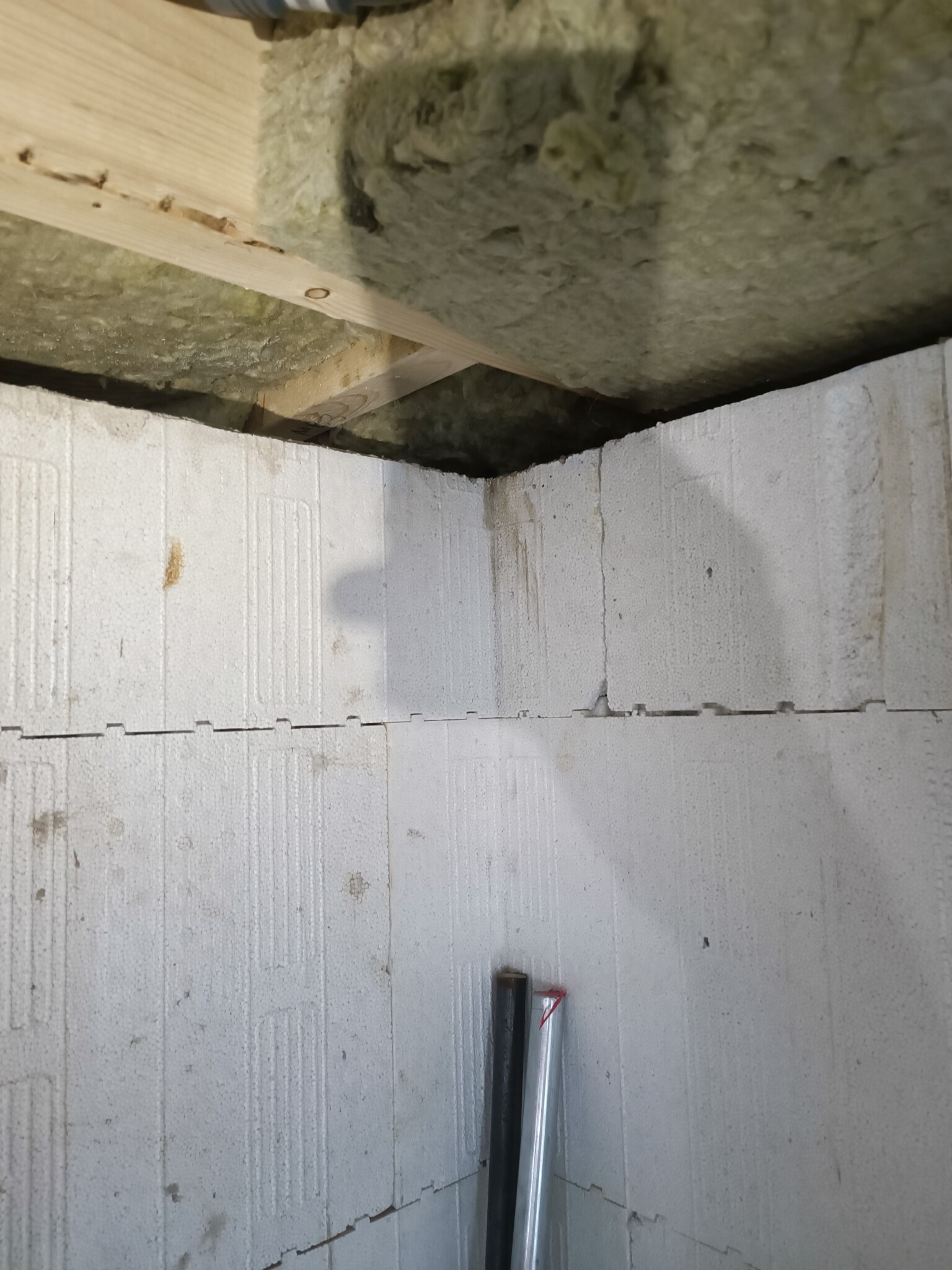
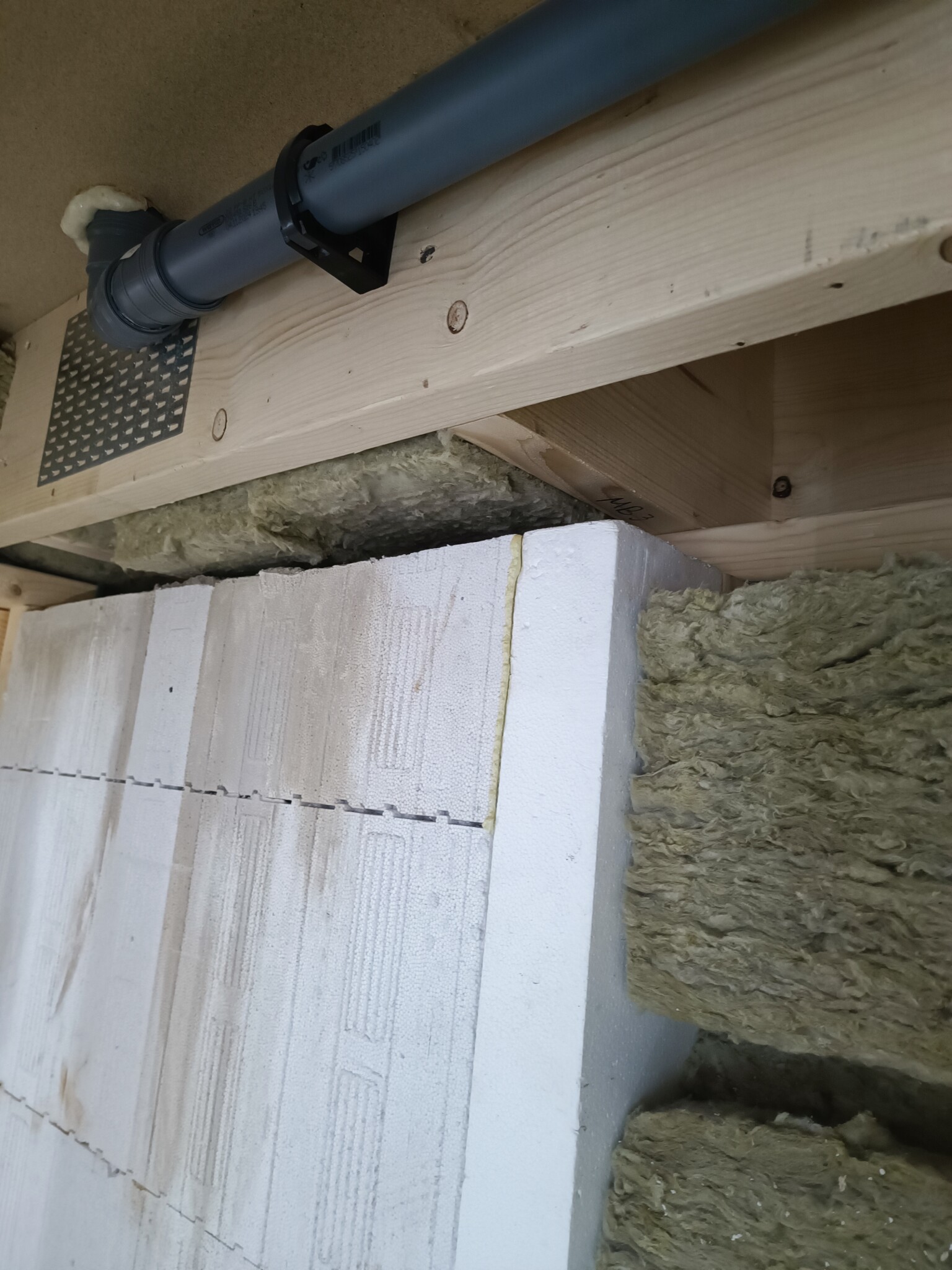
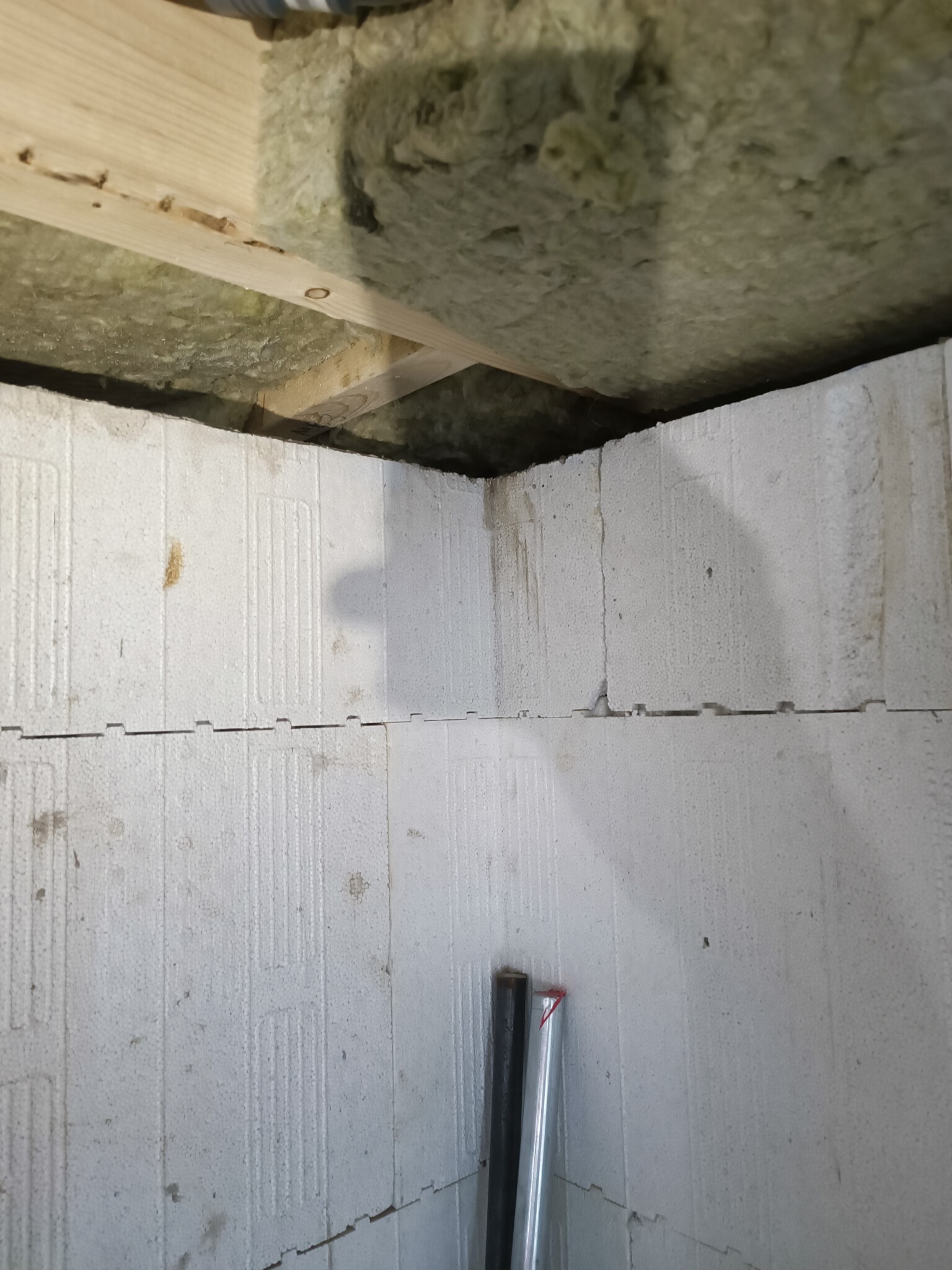
This is how it looks from above and below. From above, the plastic was pressed against the edge of the chipboard. Now it's completely impossible to connect to it.
The closest you can get without tearing too much is to connect a piece of place against the underside of the floor chipboard
not becoming completely airtight of course with a little risk of condensation and moisture on the outer edge of the chipboard and what lies around it
but the floor chipboard is relatively airtight in itself.
You do that with studs too, i.e. tape against them.
So remove insulation that protrudes outside the wall and place a plastic taped to the chipboard and the studs and then continue insulating.
It would only solve the problem of rising warm air from the first floor and up but not entirely if warm air goes into the wall from the floor above via the joists. It is definitely easier to do, but not as tight and secure a solution.
It would only solve the problem of rising warm air from the first floor and up but not entirely if warm air exits into the wall from the floor above via the floor structure. It's definitely easier to do, but not as tight and secure a solution.
Thank you for your answers.
I will have to pull plastic from the thermowall upwards and tape it to the underside of the floorboard.
Should it have been done differently from the start?
I think this happens quite often, as it's a common solution against the ground, but didn't consider that there is another floor below. Ideally, they should have hung a strip of plastic past the floor spån down between the beams, so it could end against the wall. In your case, I guess the floor spån was installed before the plastic, making it difficult to access. However, if it had been planned, they could have placed a piece there just around the junction.
How common is it for moisture damage to actually occur in places like the above? Has anyone seen it IRL? Is there an imminent risk if care is neglected?
How common is it for moisture damage to actually occur in places like the one above? Has anyone seen it IRL? Is there an imminent risk if one is careless?
Difficult to say generally, there is probably an unreported number, where it's discovered long after when one replaces paneling or so.
Damage that can occur hidden is difficult to detect.
Condensation damage itself is not entirely uncommon, but the problems are often larger/more severe in roofs or higher up on walls as heat rises and vapor pressure is highest there.
Click here to reply
Vi vill skicka notiser för ämnen du bevakar och händelser som berör dig.


Marko Koistinen said: