
897 views ·
6 replies
897 views
6 replies
How to best connect radiators in the winter garden.
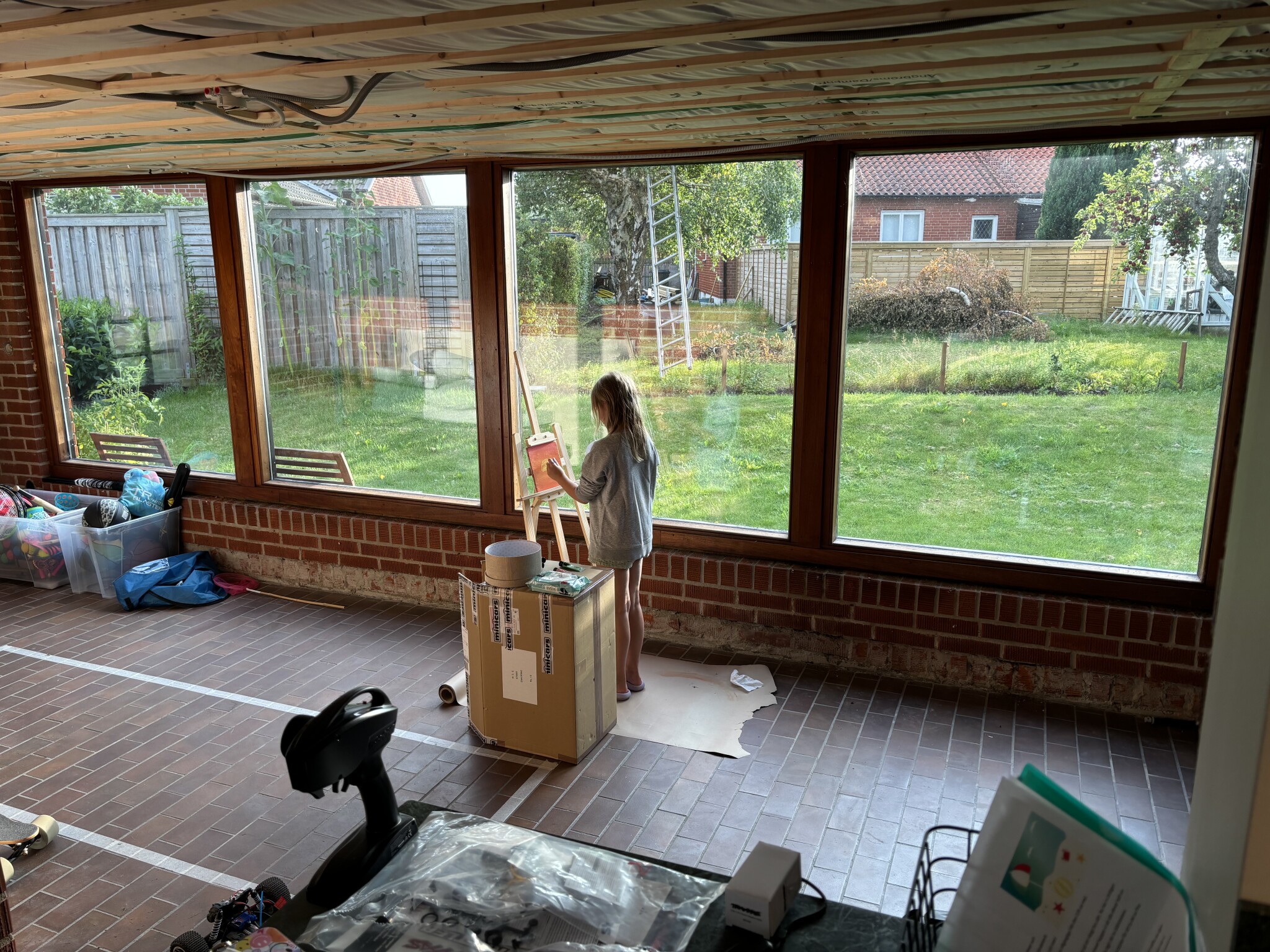
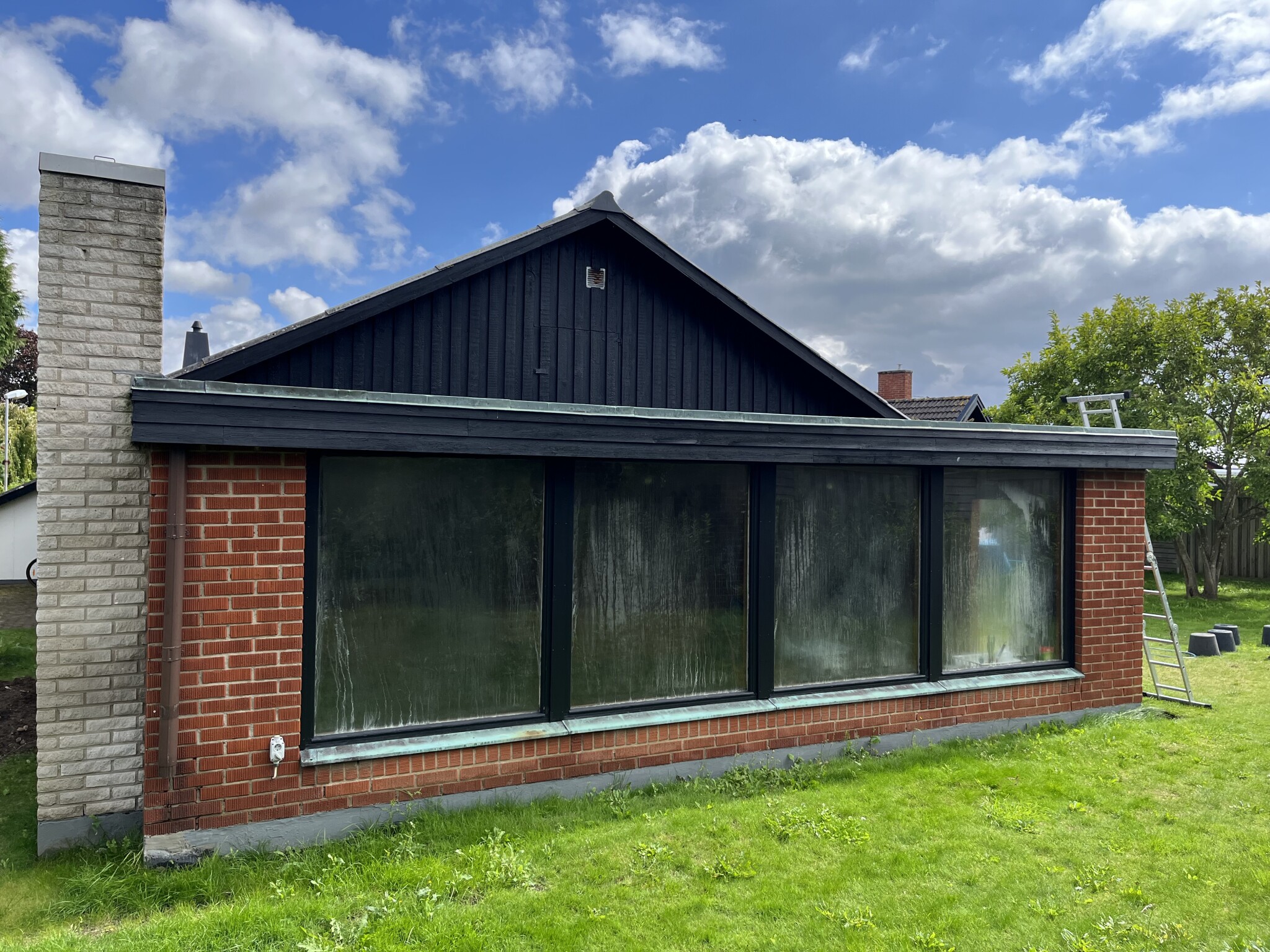
I have a house with an extended winter garden that we are converting into a dining room.
There is a single-pipe loop running along the exterior walls of the original house. However, it has full circulation, and to get hot water to the radiators, there is a valve in a T-joint that controls a small flow upwards. Therefore, it is possible to control each radiator individually if desired (in the bedroom), but the rest are completely open.
My thought is to cut the loop where it passes near the winter garden and connect the radiators that will go in the winter garden.
The question is what is the best way to do this. Should they be connected in series, with a thermostat on the first one, or should they be connected in parallel with three thermostats, or should thermostats be skipped altogether?
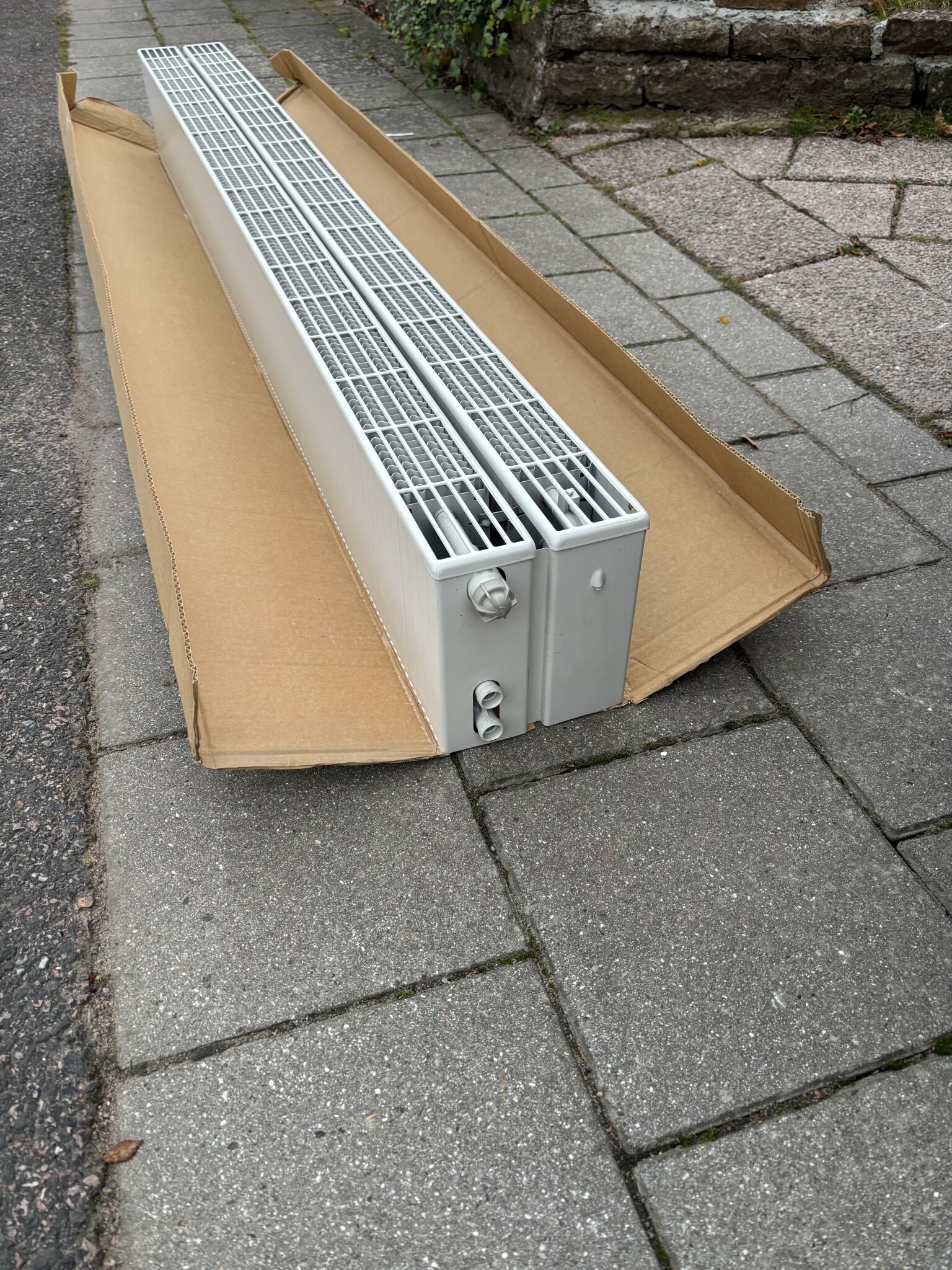
The radiators are of the Thermocon type with built-in valves and several connection options if I understand correctly.
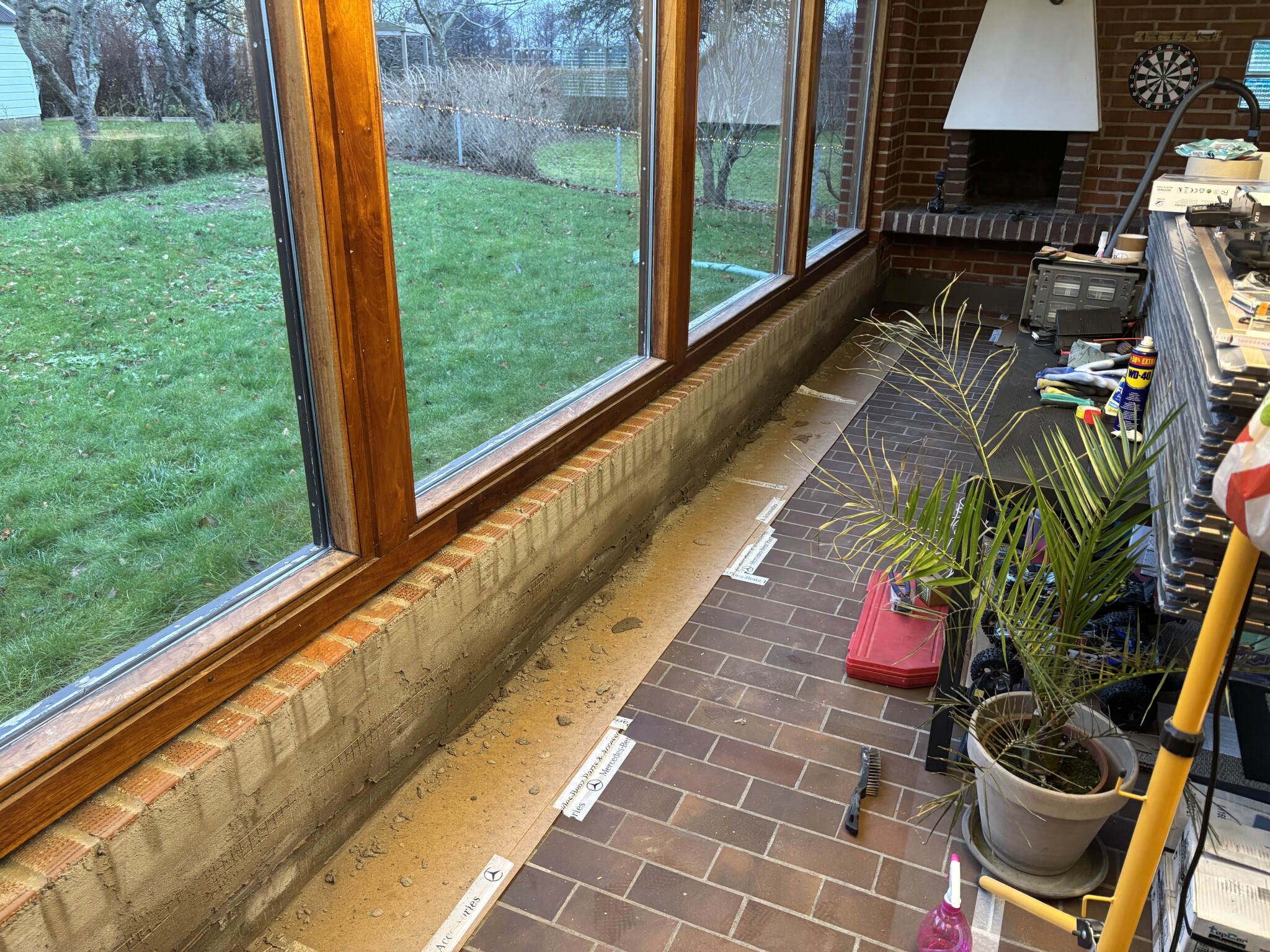
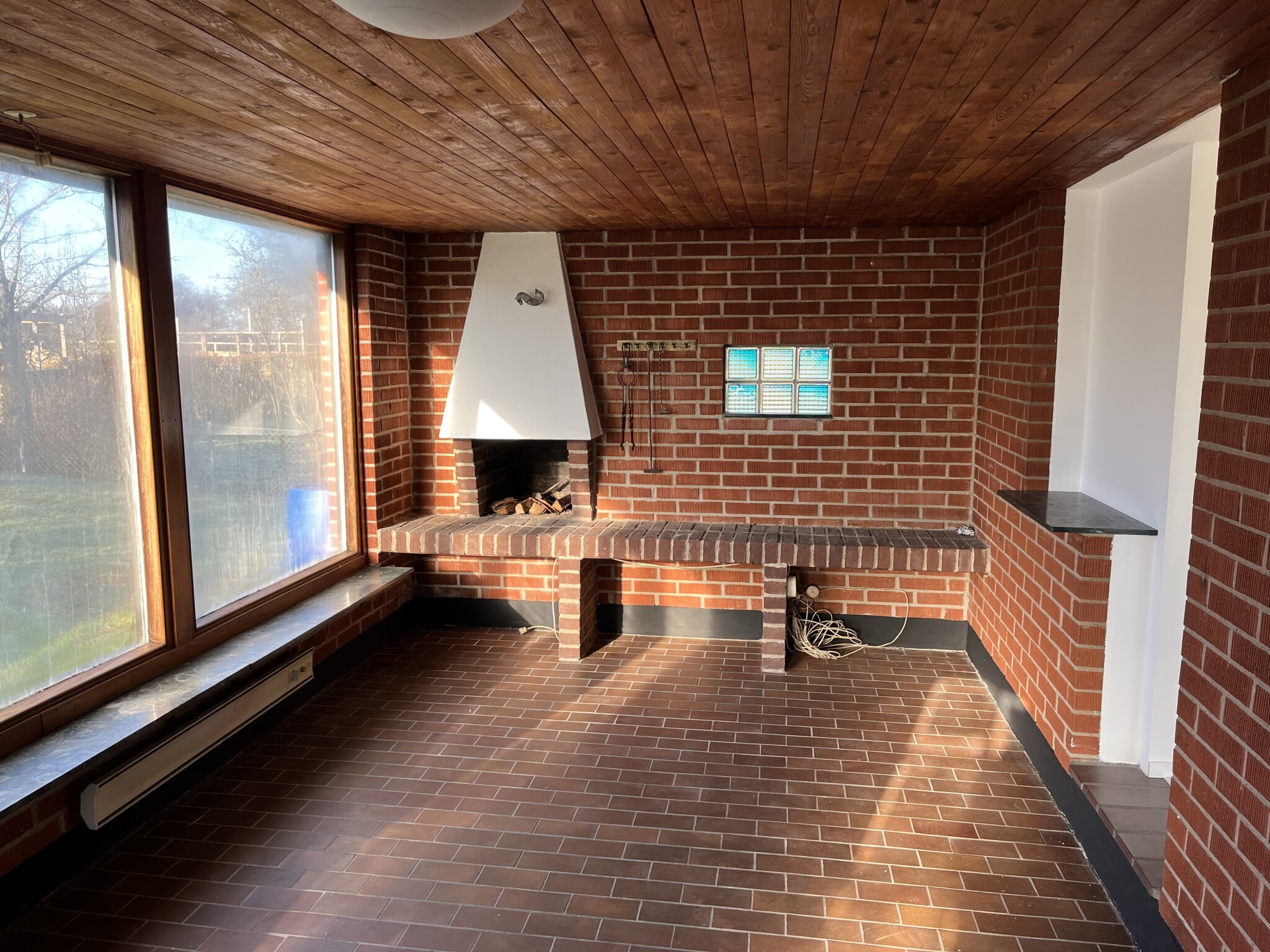
The loop will come from the right under the counter by the stove. Then the radiators will be placed under the glass and will be about 5.60 meters long. The entire room is approximately 7.50 meters.
The roof is new. Newly insulated. New glass units. So it should be reasonably good. Previously, there were electric radiators, but I want to run everything on water so that it's convenient when we switch from gas to air-to-water heat pump (LLVP) later. That's a bit why I’m trying to maximize the heating surface.
What do you think?
There is a single-pipe loop running along the exterior walls of the original house. However, it has full circulation, and to get hot water to the radiators, there is a valve in a T-joint that controls a small flow upwards. Therefore, it is possible to control each radiator individually if desired (in the bedroom), but the rest are completely open.
My thought is to cut the loop where it passes near the winter garden and connect the radiators that will go in the winter garden.
The question is what is the best way to do this. Should they be connected in series, with a thermostat on the first one, or should they be connected in parallel with three thermostats, or should thermostats be skipped altogether?
The radiators are of the Thermocon type with built-in valves and several connection options if I understand correctly.
The loop will come from the right under the counter by the stove. Then the radiators will be placed under the glass and will be about 5.60 meters long. The entire room is approximately 7.50 meters.
The roof is new. Newly insulated. New glass units. So it should be reasonably good. Previously, there were electric radiators, but I want to run everything on water so that it's convenient when we switch from gas to air-to-water heat pump (LLVP) later. That's a bit why I’m trying to maximize the heating surface.
What do you think?
In a one-pipe system, you can't connect just "any way you like," but it's best to create a new one-pipe loop that starts from the "boiler." You need to adjust the preset correctly on the new units, and also ensure the flow to both the new loop and existing loops is balanced so that all units receive sufficient energy/heat.
Yes, but then maybe it's wrong to call it a one-pipe system? There are flanges that capture a small portion of the water up to the radiator. Then ONLY the thermostat controls if there will be any flow through the radiator. If I had thermostats on all the radiators and they were closed, the water would still circulate in the system. So, a hybrid? Between a one- and two-pipe system?
The flow is not "significantly" affected whether it goes up into a radiator or not. What might be something to consider is that some temperature-reduced water mixes with the flow after the radiator. But that's a risk I have to take.
The alternative is to create a completely new loop that involves running 12 plus 12 meters of hose in the crawl space. That is, 24 m of extra pipe and also in the foundation which presents a risk of lowering the temperature even more.
So the idea is to build it as a kind of two-pipe system in the conservatory itself. With supply and return and connect the three radiators in that way.
But the question is whether the coupling allows this so that the flow is forwarded when they are closed without impact, but when the thermostat opens, parts go through the radiator.
Hope you understand what I mean.
The flow is not "significantly" affected whether it goes up into a radiator or not. What might be something to consider is that some temperature-reduced water mixes with the flow after the radiator. But that's a risk I have to take.
The alternative is to create a completely new loop that involves running 12 plus 12 meters of hose in the crawl space. That is, 24 m of extra pipe and also in the foundation which presents a risk of lowering the temperature even more.
So the idea is to build it as a kind of two-pipe system in the conservatory itself. With supply and return and connect the three radiators in that way.
But the question is whether the coupling allows this so that the flow is forwarded when they are closed without impact, but when the thermostat opens, parts go through the radiator.
Hope you understand what I mean.
It is a single-pipe system.Dr Benz said:
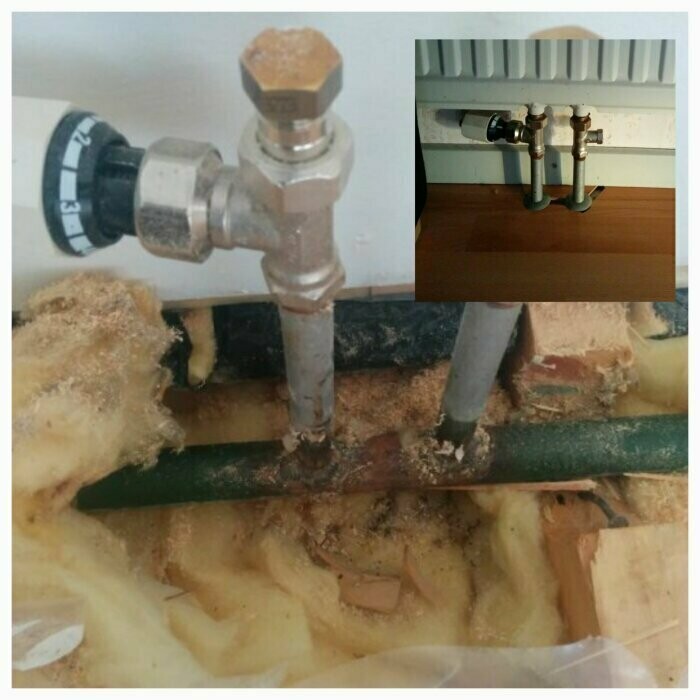
This is a single-pipe system with the bypass down in the floor.
Single-pipe system:
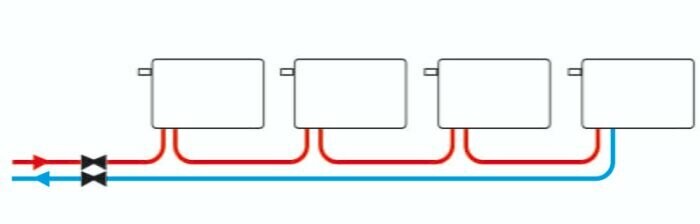
Two-pipe system:
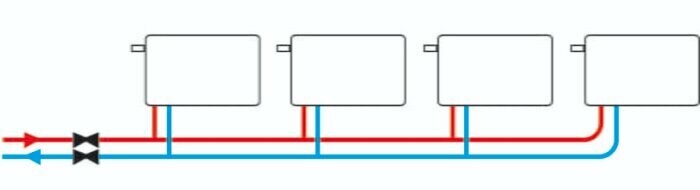
In a single-pipe system, it's not possible to have as many/large radiators as you want; usually, it's 4-5 at most.
The energy content in the water decreases for each radiator that is on.
Then it's a one-pipe system I have.Demmpa said:
It is a one-pipe system.
[image]
This is a one-pipe system with the bypass down in the floor.
One-pipe system:
[image]
Two-pipe system:
[image]
In a one-pipe system, it is not possible to have as many/large radiators as you want, usually, it's 4-5 at most.
The energy content in the water decreases for each radiator that is turned on.
Why can't you have too many large radiators on the same loop?
What would be the technical difference in creating several loops?
So that I understand the advantages and disadvantages.
Will the boiler freak out if the return differs too much? Or will it just be that the radiators get colder and colder? But nothing stranger than that?
Would you still say it's better to draw 24 tubing with insulation so that it becomes its own loop? I'm thinking partly about the way water has to travel, being 24 m extra, but also that you lose temperature when it's lying in the crawl space?
I'm open to whatever.
Right now I have gas for heating but an LLVP is on the wishlist and then I want as many radiators as possible.
It is not LLVP (air/air) but an LVVP (air-water).
A heat pump wants the lowest possible supply temperature, underfloor heating is the most optimal from a heat pump's perspective.
The more radiators on a single-pipe loop, the higher the supply temperature and/or higher flow in the loop and/or small radiators in the beginning and large ones at the end. This also results in a bigger temperature difference between the first and the last radiator.
The first radiator needs a small partial flow, and the last radiator needs the largest partial flow, and the radiators in between need a rising partial flow.
A heat pump wants the lowest possible supply temperature, underfloor heating is the most optimal from a heat pump's perspective.
The more radiators on a single-pipe loop, the higher the supply temperature and/or higher flow in the loop and/or small radiators in the beginning and large ones at the end. This also results in a bigger temperature difference between the first and the last radiator.
The first radiator needs a small partial flow, and the last radiator needs the largest partial flow, and the radiators in between need a rising partial flow.
Yep, there was a typo.It is not LLVP (air/air) but an LVVP (air-water).
A heat pump wants the lowest possible supply temperature; underfloor heating is the most optimal from a heat pump's perspective.
The more radiators in a single-pipe loop, the higher the supply temperature and/or higher flow in the loop and/or small radiators at the beginning and large ones at the end.
There will also be a greater temperature difference between the first and last radiator.
The first radiator needs a small partial flow and the last radiator needs the largest partial flow, and the radiators in between require increasing partial flow.
I'm on board with that. That's why I want to increase the heating area with more radiators.
The loop originally had 10 radiators. I've removed two when we changed the floor plan. One more will be removed eventually when we make a door out to the garden. So if I place three in the winter garden, it evens out "in theory," not considering flows and areas.
Then there's one at the other end of the house (guest room) where I plan to create a separate loop for the guest room, laundry room (currently none), and storage/garage (currently none); otherwise, we agree.
I'm thinking the three I want to add now should have thermostats to avoid overheating the room, or can you control the flow with the valves built into the radiators?
That would be ideal as it would just be experimenting and trial and error.
What do you think about that?
Click here to reply
Similar threads
-
Hur är det bäst att koppla radiatorer?
Värme allmänt -
Hur kopplar man bäst en utedusch med vanlig blandare till utkastare?
Vatten & Avlopp -
Hur kopplas bäst spot med inbyggt drivdon med fast kabel?
El -
Vad är detta som är kopplat till radiatorerna, Elman TY 140?
El -
Hur åtgärdar jag bäst ett golvvärmesystem som är kopplat direkt till högtemperatur radiatorer?
Värme allmänt