I'm thinking of installing a bench between two walls. I thought the material for the bench should be a 27mm oak countertop to make it really stable. My hope is to solve this without any support legs, to make it look like it's floating.
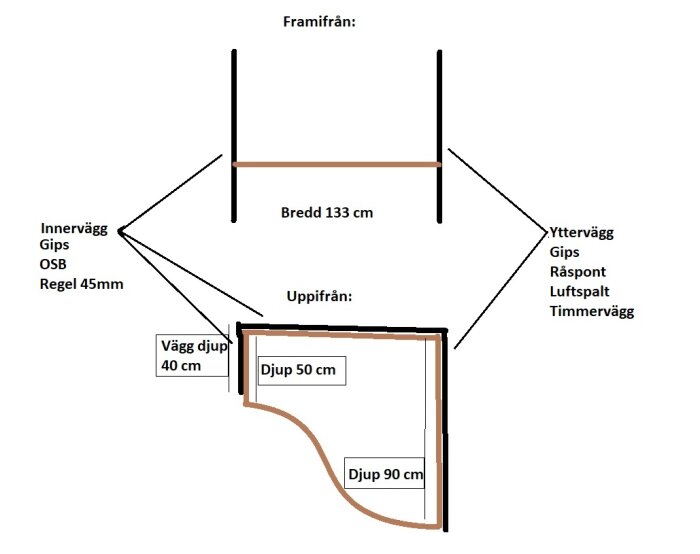
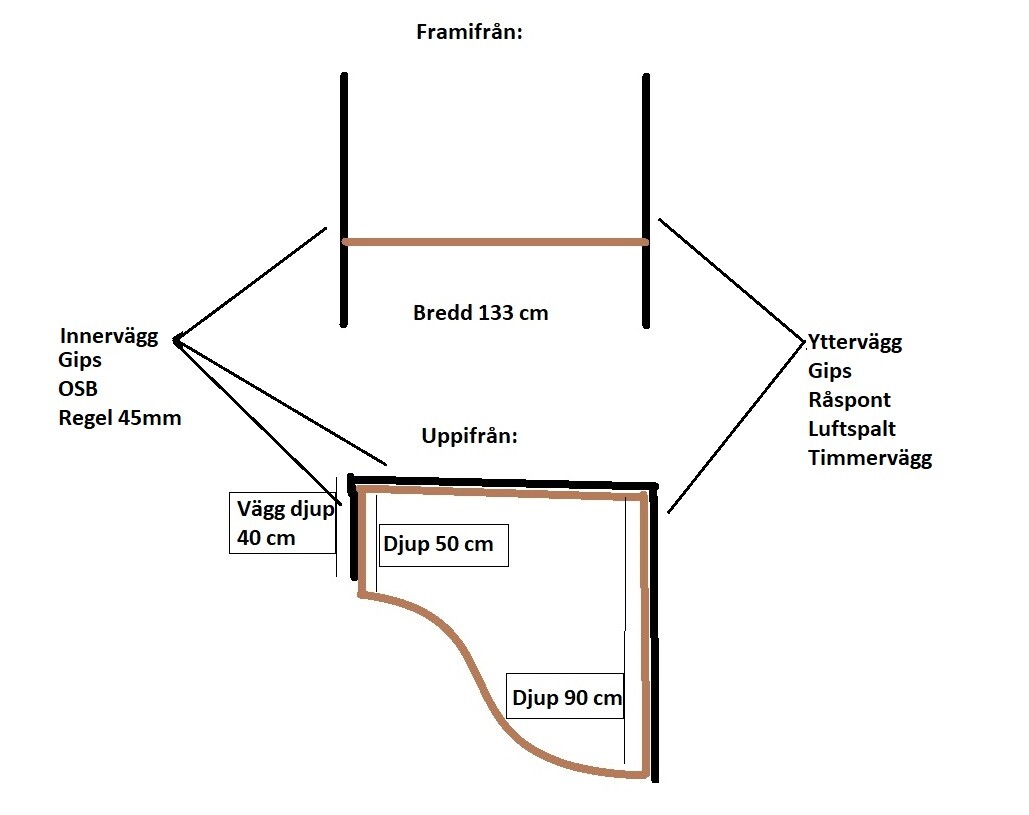
The conditions and how I've thought about the design of the countertop:
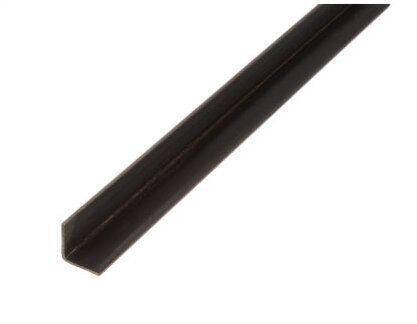
Now to the challenge. To avoid brackets, large beams, or legs, I thought about angle brackets. But since the load will be high (2-3 full-grown people maybe), I'm doubtful if the attachment will hold.
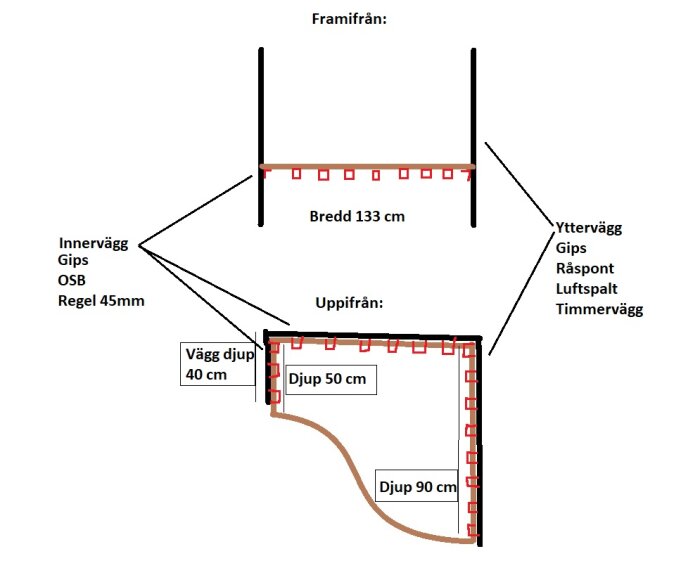
Could a lot of angle brackets work? Like this:
Possibly combined with a strip/beam on top of the slab against the walls, which prevents the back end from lifting. (will be covered with cushions)
Is this doomed to fail? Or is there someone wise with a smarter solution that is primarily sustainable, but also looks nice?
Thanks for the response. Does anyone know how much worse the load-bearing capacity of an angle iron becomes if you turn it upside down? In that case, you can recess it into the countertop to make it completely invisible.