
11,622 views ·
18 replies
12k views
18 replies
Filling screw holes in kitchen cabinet doors
Hello,
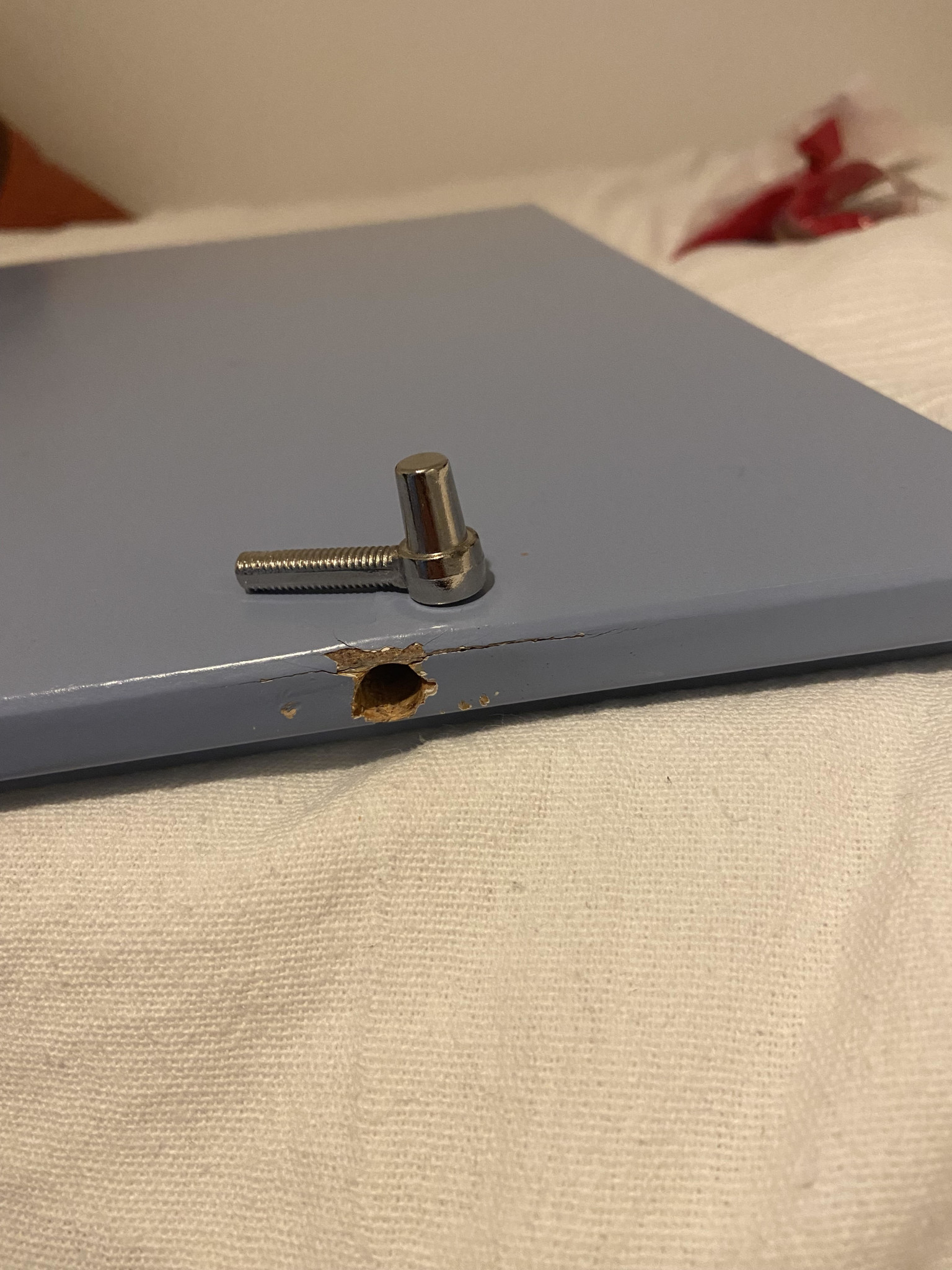
We have several kitchen cabinet doors from the 70s where the hinge pins have broken off. We've had help drilling out the screws that were stuck in the doors, but now the holes are too large to screw in the hinges (see picture). I'm considering the best solution for this, one that holds as well as possible.
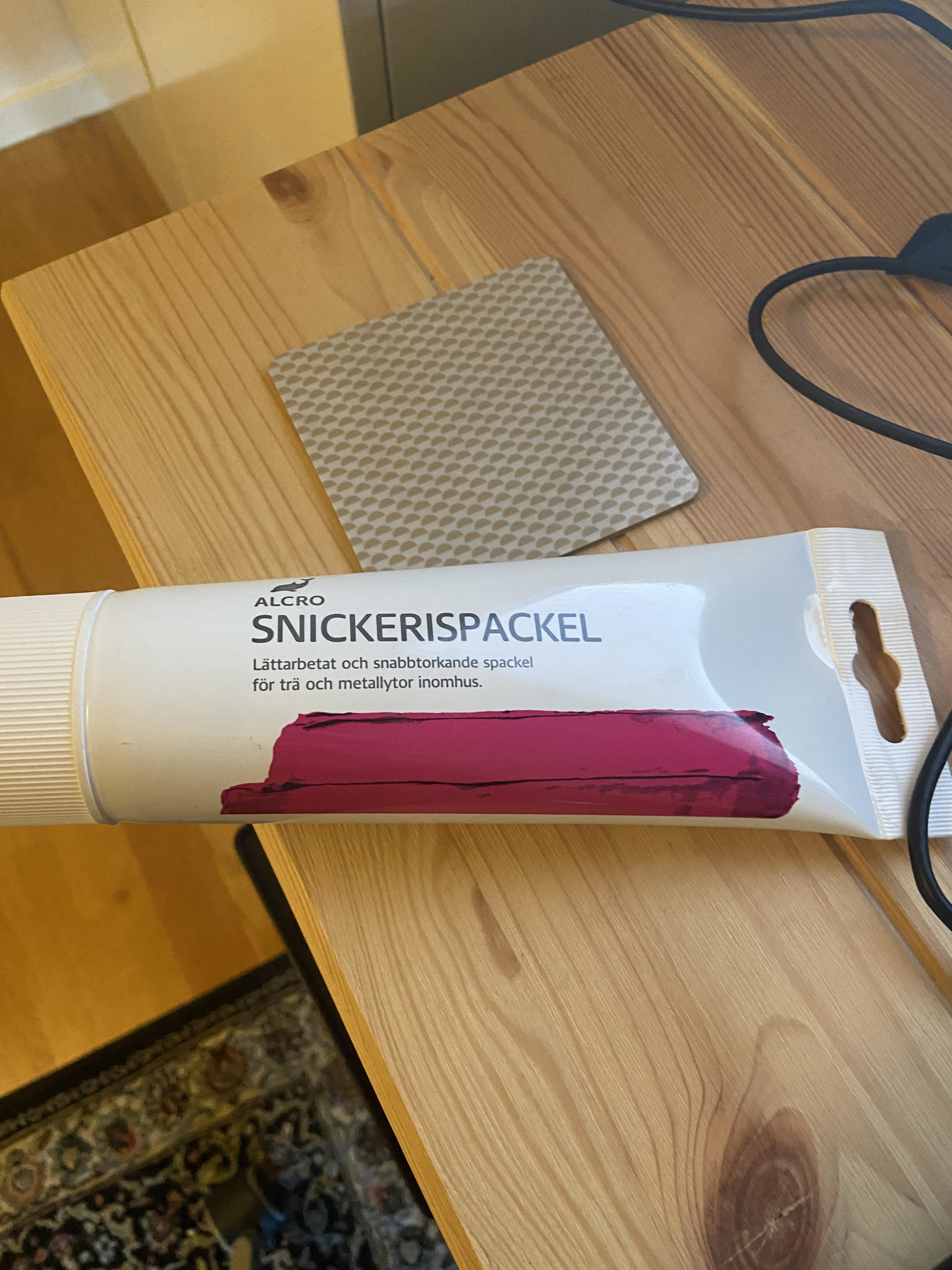
The carpenter's advice was to use wood filler, fill the hole, and then drill a new hole for the hinges. Will that hold, and if so, have we bought the right type of filler (picture)?
The doors themselves are heavier than modern Ikea versions since they're made of solid wood, so the weight is not insignificant, and they're held up by just two screws (hinges).
We have several kitchen cabinet doors from the 70s where the hinge pins have broken off. We've had help drilling out the screws that were stuck in the doors, but now the holes are too large to screw in the hinges (see picture). I'm considering the best solution for this, one that holds as well as possible.
The carpenter's advice was to use wood filler, fill the hole, and then drill a new hole for the hinges. Will that hold, and if so, have we bought the right type of filler (picture)?
The doors themselves are heavier than modern Ikea versions since they're made of solid wood, so the weight is not insignificant, and they're held up by just two screws (hinges).
I wouldn't trust that solution at all.E EJW said:Hello,
We have several kitchen cabinets from the 70s where the pin hinges have broken off. We had help drilling out the screws that were stuck in the cabinets, but now the holes are too big to screw in the hinges (see picture). I'm considering the best solution for this, which holds as well as possible.
The carpenter's tip was to use wood filler, fill the hole, and then drill a new hole for the hinges. Will that hold, and if so, have we bought the right type of filler (picture)?
The cabinets themselves are heavier than modern Ikea versions since they are made of solid wood, so the weight is not insignificant, and they hang on only two screws (hinges).
The hinges have screws of 6 mm, but I also have the 7 mm ones you linked to at home, and unfortunately, at least one of the holes is too big for them as well.T tergo said:
Would something like this work, or do you mean regular epoxy glue? It's not a problem if we never get those hinges out of the door again, as long as it hangs securely.AXS said:
https://www.clasohlson.com/se/Repair-Putty-Universal-Loctite/p/34-9016
But you can also fill it and then drill.E EJW said:The hinges have screws at 6 mm but I also have the 7 mm ones you linked to at home and unfortunately, at least one of the holes is too big for them as well.
Would something like this work or are you thinking of regular epoxy glue? It's not a problem if we never get those hinges out of the door again, as long as it hangs securely.
[link]
Hard to know what works best, you can try one and see how it feels.


You've received some good tips. I would have filled it with a wooden plug. You can probably putty and drill if you buy two-component putty, it works. But you must thread the hole with a suitable tap for the screw, otherwise it won't hold.

Wood dowels and glue, why complicate it?
I did something similar today, trying to screw a kitchen fan into end grain on old particle board in the cabinets' frames. Impossible to get the screws to hold properly. The solution was exactly this: first drill with a 5 mm drill bit, then a 10 mm drill bit to center it as much as possible, insert a 10 mm wood dowel glued with wood glue. Wait an hour for the glue. Pre-drilled and countersunk slightly where the screws would go to guide. It turned out perfect, rock solid installation.
In your doors, you might need to use thinner wood dowels, but this is a very good method. If the doors are thin, it's crucial to pre-drill in a suitable dimension to avoid cracking.
In your doors, you might need to use thinner wood dowels, but this is a very good method. If the doors are thin, it's crucial to pre-drill in a suitable dimension to avoid cracking.
If you don't trust the end grain in regular wooden dowels, add a little wood glue before the screw goes into the hole. The glue makes the new threads much more durable and does not bond to metal. If the screw is still stuck, gently heat it with a soldering iron to melt the glue.
I assume that if someone says wooden dowel, they mean exactly that and not tenons. A wooden dowel is cut so the fibers are perpendicular. A tenon is cut so the fibers are longitudinal. When you fill a hole with a wooden dowel, you're screwing into the dowel, no end grain there. Alternatively, we could be talking about a plug, in plastic. It also doesn't have end grain. If the op finds a suitable plastic plug, it will also work.Z z_bumbi said: