
2,816 views ·
27 replies
3k views
27 replies
Moisture damage in floor joists - how to handle?
We have a company currently renovating a bathroom on the upper floor of our 70s house. We previously had water damage where water ran through the floor structure and dripped from the ceiling downstairs. We also suspected a moisture problem for a long time due to a musty smell.
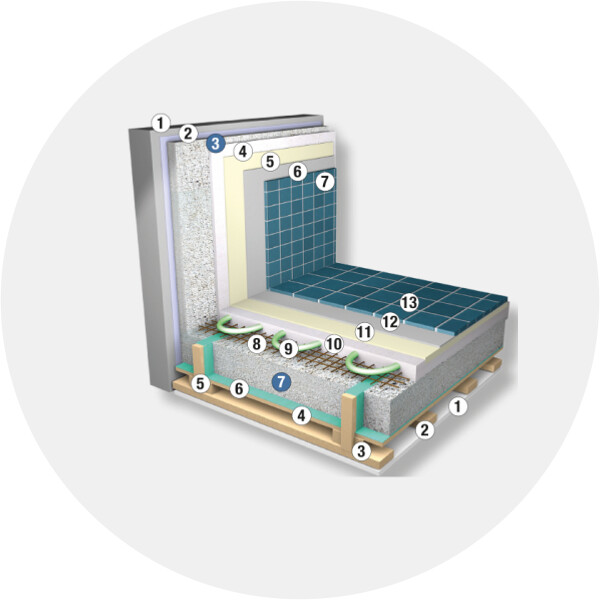
Now that they've demolished, you can clearly see how the chipboard under the shower area is wet (even though the bathroom hasn't been used for several months), almost black, and smells very moldy. One beam in the floor structure is damp in part of its stretch, but is probably in okay condition. Currently, the floor is only partially removed to reroute the plumbing. Parts of the black, damp chipboard remain at the room's edges. Both the chipboard and the beam have been checked (by me) with a moisture meter, and are beyond the measuring range of my cheap moisture meter (somewhere over 40-50%).
The builder thinks it’s not so bad and nothing more needs to be done because they're going to lay OSB and apply self-leveling compound on top directly. But I think that all moldy material should be removed and the structure should dry out before building a new floor. Otherwise, you're just sealing in mold and moisture in the new construction, I think.
What would your reasoning be?
Now that they've demolished, you can clearly see how the chipboard under the shower area is wet (even though the bathroom hasn't been used for several months), almost black, and smells very moldy. One beam in the floor structure is damp in part of its stretch, but is probably in okay condition. Currently, the floor is only partially removed to reroute the plumbing. Parts of the black, damp chipboard remain at the room's edges. Both the chipboard and the beam have been checked (by me) with a moisture meter, and are beyond the measuring range of my cheap moisture meter (somewhere over 40-50%).
The builder thinks it’s not so bad and nothing more needs to be done because they're going to lay OSB and apply self-leveling compound on top directly. But I think that all moldy material should be removed and the structure should dry out before building a new floor. Otherwise, you're just sealing in mold and moisture in the new construction, I think.
What would your reasoning be?
Last edited:

Self-builder
· Stockholm
· 8 227 posts
It definitely needs to dry out. You shouldn't build in moisture!H Hylman said:We have a company working on renovating a bathroom on the upper floor of our 70s house. We previously had water damage where water ran through the floor structure and dripped from the ceiling on the lower floor. We also suspected that there had been some kind of moisture problem for a long time, due to a musty smell.
Now that they've torn things down, you can clearly see how the chipboard under the shower area is wet (even though the bathroom hasn't been used for a few months), almost black, and smells a lot like mold. A beam in the floor structure is damp in part of its length but is likely in okay condition. Currently, the floor is only partially taken up to reroute the plumbing. Parts of the black, damp chipboard remain at the room's outer edge. Both the chipboard and the beam have been checked (by me) with a moisture meter, and they are beyond my cheap moisture meter's range (somewhere over 40-50%).
The builder thinks it's not too bad and nothing more needs to be done, as they will lay OSB and apply screed directly on top. But I think all moldy material should be removed, and the floor structure should dry out before building a new floor. Otherwise, you're just sealing in mold and moisture in the new construction, I think.
How would you reason?
But then the question is how damaged the floor structure is: You might try the "knife trick" - a Mora knife shouldn't be easy to insert too far with normal pressure (you can compare with a healthy beam). If it's okay, then you can just dry out the parts and probably don't need to replace them. If there are only a few "dark" areas, it's probably not a big problem as long as new moisture isn't introduced, but you can clean with something like JAPE or similar products if you want to remove most of it.
One thing with particularly moisture-damaged bathrooms is that these take an extremely long time to dry out in some cases. My neighbor had a construction fan running for 2 months, for example (though it was a concrete floor structure in that case).
Thank you! It feels reassuring to get support for my own thoughts.It definitely needs to dry out. You shouldn't build in moisture!
But then the question is how damaged the joist is: You might try the "knife trick" - a Morakniv shouldn't penetrate too far with normal pressure (you can compare it with a healthy joist). If it's okay, you can just dry out the parts, and you probably don't need to replace anything. If there are individual areas that are "dark," there are likely no major issues as long as no new moisture is introduced, but you can wash with JAPE or similar products if you want to remove most of it.
One thing about moisture-damaged bathrooms is that they take an incredibly long time in some cases as it needs to dry out. My neighbor had a construction heater running for 2 months, for example (in that case, it was a concrete joist).
Actually, the major damage seems to be in the particleboard. My guess is that there has been a minor leak in the waterproofing over a long period, causing the particleboard to become damp and moldy. The large leak at the beginning of the summer that ran through the joist probably soaked one of the joists because it is clearly wet but only slightly dark right where the particleboard lay against it. I've done the knife trick, and it doesn't seem bad. So now I might just need to convince the builders to tear out all the damp particleboard, insulation, etc., and set up a construction heater to dry out the joist. Better to do it properly, even if it's tedious to wait.
Thanks for the reminder about JAPE mold-free! It's just as well to use it if there's anything left of black mold.

You could check with your insurance company if they cover the costs for repairing damage to the bjälklagret, they often also pay for the electricity for drying fans if needed according to their moisture measurement.
Thanks, great tip! We have already had a damage inspection that identified water damage even before the demolition started. But I will probably get back to them now that the extent is clearer.BirgitS said:
Now that there will be a new bathroom, you can keep in mind that a wet room vinyl (instead of waterproofing + tiles) causes approximately zero water damage. But of course, it is not as expensive as tiles, so you might feel poor having it.
You are probably right, but in this case, tiles are already planned and ordered. 
Previously, there was actually a vinyl floor, but tiles were placed directly on top, done by previous owners more than 30 years ago. Perhaps not an optimal solution, even if it was reportedly approved at the time.
Previously, there was actually a vinyl floor, but tiles were placed directly on top, done by previous owners more than 30 years ago. Perhaps not an optimal solution, even if it was reportedly approved at the time.
G grovspacklarn said:
Ah, a water damage isn't enough to deter once tile ideas have settled in the head. As a compromise, maybe you could consider vinyl but then a gold toilet seat? Should be the same price.H Hylman said:
Now I'm mostly joking, hope it turns out well!
Almost two weeks ago, we removed all damp and moldy floor particle board. Sprayed JAPE mold treatment on the parts of the beams that were a little black or darker, and have since had a regular cheap floor fan (the kind you use for summer heat) running almost around the clock. The builders talked about a construction fan but seemed to think our floor fan was sufficient. They never brought one and are a bit hard to get in touch with.
When I now check with my cheap Biltema moisture meter, it looks good (under about 17%) in most places. However, in some places, it still shows up to 25% moisture. The moisture meter shows "dry" up to about 17%.
The question is, how dry does it need to be before building a new floor?
When I now check with my cheap Biltema moisture meter, it looks good (under about 17%) in most places. However, in some places, it still shows up to 25% moisture. The moisture meter shows "dry" up to about 17%.
The question is, how dry does it need to be before building a new floor?
The moisture content should go down to 15%.
In the event of moisture damage, insurance companies usually arrange proper adsorption dehumidifiers and dry out the area. It often takes at least 2-3 weeks. What kind of contact have you had with your insurance company?
A small heater doesn't do much, especially now that we are in a humid season with high humidity.
Edit: Make sure to measure with a proper meter; they can be rented if you don't want to buy one.
In the event of moisture damage, insurance companies usually arrange proper adsorption dehumidifiers and dry out the area. It often takes at least 2-3 weeks. What kind of contact have you had with your insurance company?
A small heater doesn't do much, especially now that we are in a humid season with high humidity.
Edit: Make sure to measure with a proper meter; they can be rented if you don't want to buy one.
Last edited:
Ok, thanks!mexitegel said:
The moisture content should be down to 15%.
In case of water damage, insurance companies usually arrange for proper desiccant dehumidifiers to dry out. It often takes at least 2-3 weeks. What contact have you had with your insurance company?
A small heater doesn't do much, especially now that we are in a humid season with high humidity.
The insurance company has conducted a damage inspection, and they are going to calculate compensation for a complete renovation. So we expect to receive money, although we don't yet know the total amount. I assume expenses for things like this will be included. However, since we will choose cash compensation instead of having their company handle the renovation, I guess it will simply be included in the cash compensation.
The big problem now is that the firm we hired doesn't have a project manager who responds to emails or calls. Instead, different craftsmen show up without an overall picture now and then, and you have to stay home and explain things like this to them. For example, convincing them that the moldy floor needs to be torn up, and then it needs to dry out. That's why I feel the need to keep track of details like this, which one would think professional builders should know themselves.
The insurance company's designated company for moisture measurement and drying set up a warm air drying fan to dry concrete vaults and surrounding sand/parquet during approximately that time, and it consumed about 200 kWh during those weeks, so they are quite substantial.