Is it a beam intended to take a load above an opening, or are you referring to regular blocks you intend to cut?
A beam just as stated in the post, I've cut blocks many times, the beam should of course be able to take a load and in this case, it's over an opening.
A beam just as it says in the post, I've cut blocks many times, the beam should of course be able to bear a load and in this case, it's above an opening.
I don't know, I found some beam for a reasonable price that is 2400mm so I'll see how it goes when opening the wall, maybe it will be possible to open 2400 without problems.
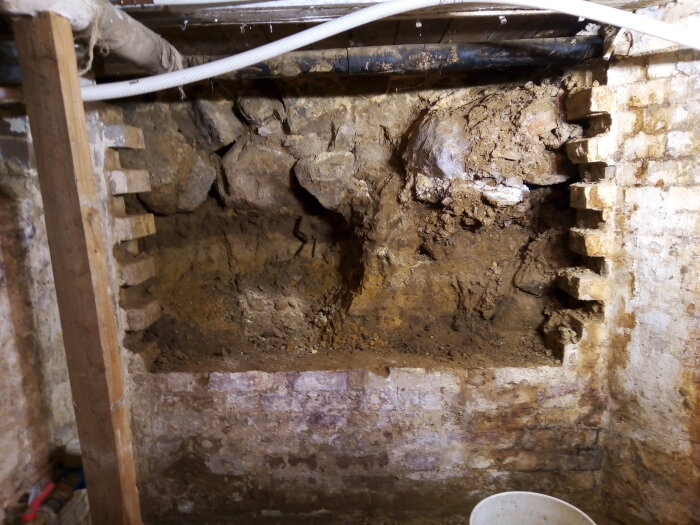
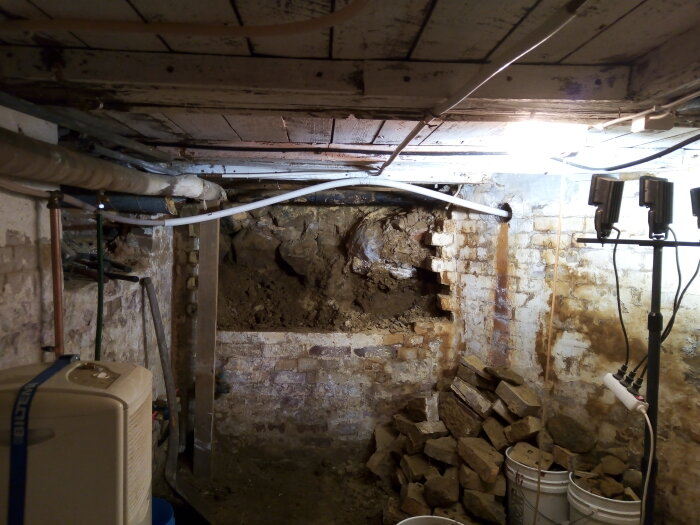
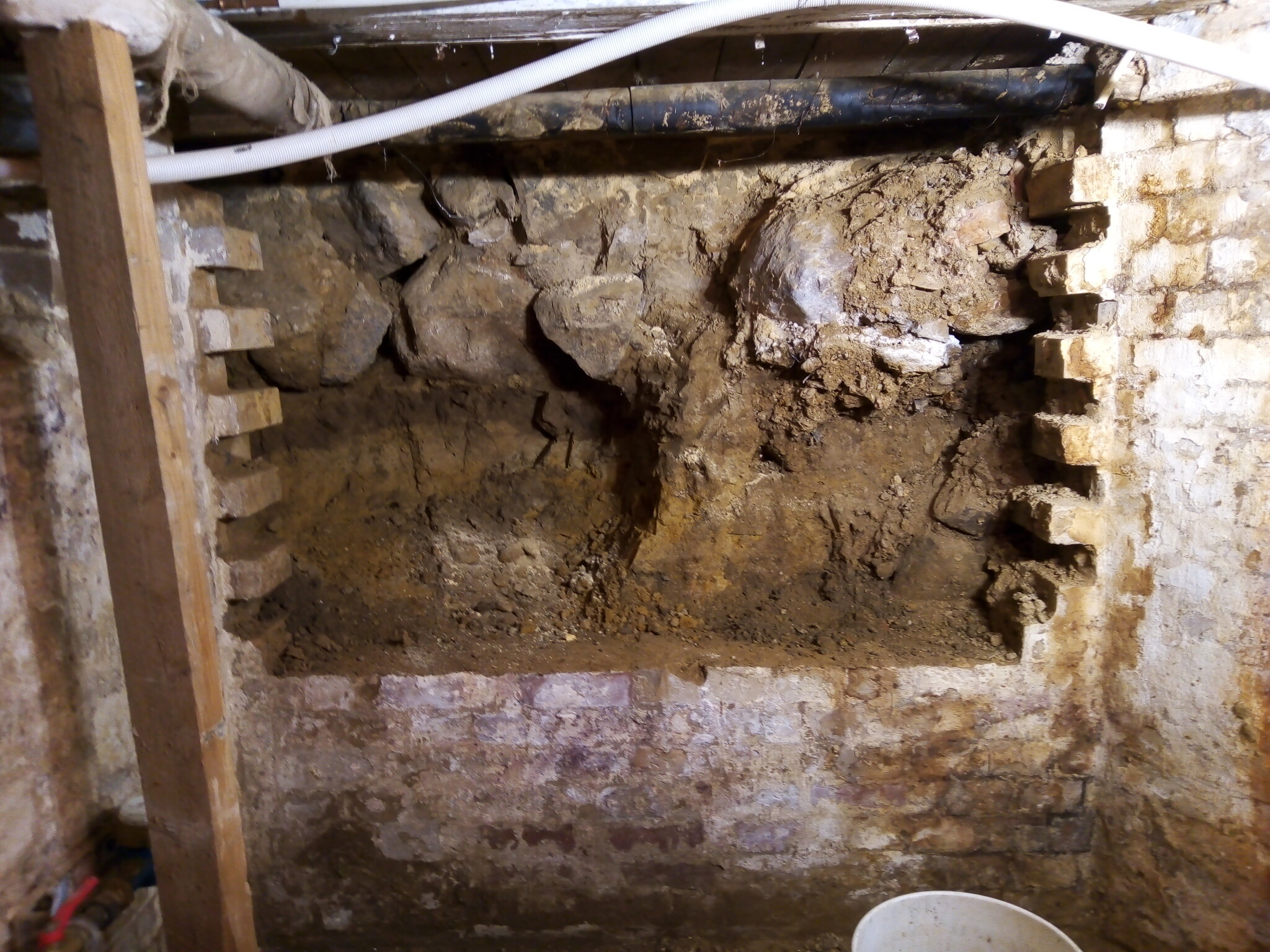
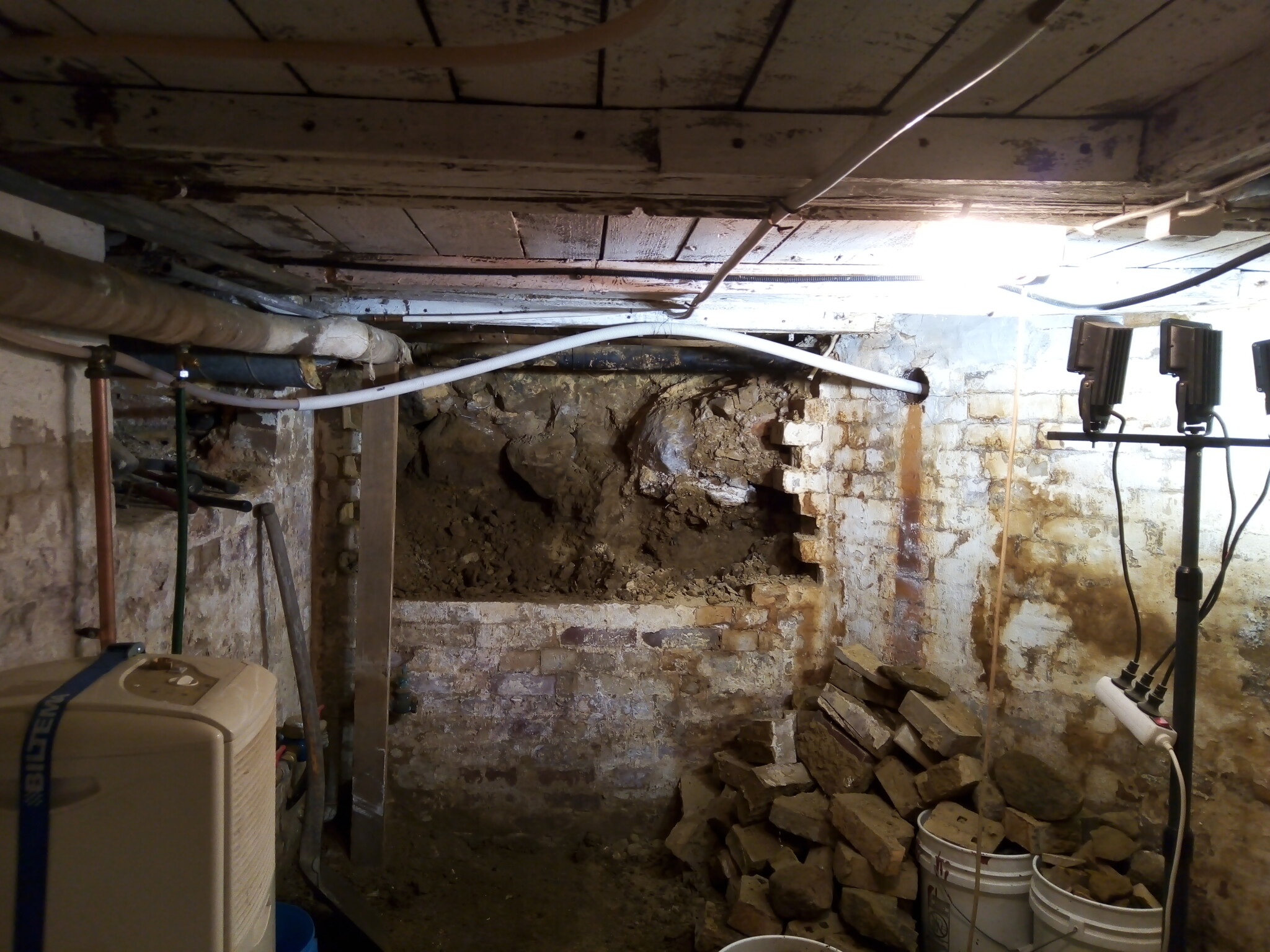
A couple of pictures of what needs to be removed to allow access to the next room in the basement, the reinforcement is intended to go into the wall above. The current ceiling height in the basement is about 162cm and the fool working there is 187cm.....
The stones beneath the brick wall go down about 70cm.
I'm going to get into the space on the other side and start tearing it down during the day.
There's nothing unusual about cutting a lintel, but it's reinforced, so the simplest way is a hefty concrete saw. Otherwise, you can carve with different cutting discs on the angle grinder.
But in all kindness: Do you have an understanding of the wall's load-bearing capacity and construction? What does the bottom course of bricks rest on? Just so you don't undermine the wall. Normally, one also braces before demolishing a load-bearing wall.
I would definitely opt for a steel beam and cast the sides to support it.
How should I do that? My thought is to remove a couple of courses at the bottom of the wall and insert a lecabalk and possibly some expanding concrete to avoid any settling in the wall.
Do you mean that a lecabalk won't hold?
It's difficult to answer. What is above the wall you are demolishing?
Also consider that you have earth pressure from the surrounding walls that can affect the forces the wall absorbs.
A brick wall, built almost exactly 150 years ago, so it should be built with lime mortar. I repaired damage to the gable wall that sloppy craftsmen caused and was then recommended to use Finja's hydraulic joint mortar due to the age of the house.

AXS said:
mexitegel said: