
7,454 views ·
10 replies
7k views
10 replies
Cracked concrete slab - what do I do?
I hired a "professional company" to pour a concrete slab of 22 square meters for my future sunroom. It was about two months ago. Now a crack has appeared across the entire surface. The crack is thin, but I'm afraid it will widen. I am planning to self-level the surface before finally laying tiles. I ensured that after the casting, the entire surface was kept moist/wet for about 2 weeks. They first dug down and removed about a 40 cm deep hole in my lawn and laid a layer of gravel (about 300 mm) which they compacted. On top of that is 30 cm of foam insulation. The reinforcement bars are positioned 50 mm up on spacers, and the underfloor heating pipes are tied to them. The cast concrete surface is 100 mm thick. I noted that the reinforcement was laid out in two parts with a main joint in the middle, right where the crack is now. Is this a serious defect? Will the crack widen? Can I lay self-leveling compound and tiles without them cracking? Do I need to take any measures, and if so, what?


By "general overlap," do you mean the general overlap as understood in the construction industry?
Reinforcement mesh (if it's 10 mm, as it likely is in your slab) should be overlapped by at least 20 cm in all directions! If you're prepared to bet your little finger that they haven't overlapped by at least 20 cm, then you should stop the construction and contact a concrete coring company to drill out a core, right in the middle of the crack, as evidence if it becomes a legal dispute leading to a trial. The "professional firm" will have to demolish the entire slab and replace it with a new slab. They're "doomed" if it goes to trial!
If, however, these are ordinary shrinkage cracks in the slab, then the slab has sufficient strength and is considered an approved indoor foundation for a house or villa construction of a habitable standard!
It's your decision, as you are the eyewitness. I definitely don't know the entire concrete industry, but when it comes to simple things like a house slab, I submit quotes more or less every day.
From what I can discern in your description, the groundwork was professionally executed, as was everything else! However, insulating with 30 cm of foam is more insulation than usual (which has nothing to do with the concrete crack). If you didn't specifically request 30 cm, I believe they've been almost excessively meticulous, and I'd find it hard to imagine that they'd slack on a simple 20 cm overlap on the reinforcement. If you pressure test the underfloor heating system, is it sealed? Is the crack almost perfectly straight - and indeed, right through the entire slab? If the heating system leaks and the crack is almost perfectly straight, right through the entire slab... then your contractor has some significant questions to answer.
Photograph the crack (evidence) and ask your contractor for an explanation - record their response and the entire discussion about the crack (evidence), do not be rude to the contractor - you must give them a chance. You can also contact the Swedish Ready-Mixed Concrete Association and listen to their opinions. You can even contact the concrete plant that supplied your concrete (they are entirely innocent and have nothing to do with the issue). However, their staff have undergone incredibly challenging education about concrete, and they possess significantly higher knowledge about concrete and reinforcement than I do (they must understand the theory of strength in concrete and reinforcement in bridge constructions - which I don't deal with at all). A bridge designer is the highest educated engineer - regardless of engineer profession! Because a bridge design must be adapted to the societal cost for every person who dies or is seriously injured if a bridge collapses. In other words, a bridge design is like the Rolls Royce of cars - nothing is left to chance regardless of construction cost!
To self-level the crack is to solve the problem, much like a girl in my school class in the 80s - no matter how much makeup she wore, she was still incredibly ugly!
I've done what I can, based on your information and my knowledge, but if they've messed up on an overlap... that's truly sad because everything else was by the book - except for the insulation which is top-notch.
Reinforcement mesh (if it's 10 mm, as it likely is in your slab) should be overlapped by at least 20 cm in all directions! If you're prepared to bet your little finger that they haven't overlapped by at least 20 cm, then you should stop the construction and contact a concrete coring company to drill out a core, right in the middle of the crack, as evidence if it becomes a legal dispute leading to a trial. The "professional firm" will have to demolish the entire slab and replace it with a new slab. They're "doomed" if it goes to trial!
If, however, these are ordinary shrinkage cracks in the slab, then the slab has sufficient strength and is considered an approved indoor foundation for a house or villa construction of a habitable standard!
It's your decision, as you are the eyewitness. I definitely don't know the entire concrete industry, but when it comes to simple things like a house slab, I submit quotes more or less every day.
From what I can discern in your description, the groundwork was professionally executed, as was everything else! However, insulating with 30 cm of foam is more insulation than usual (which has nothing to do with the concrete crack). If you didn't specifically request 30 cm, I believe they've been almost excessively meticulous, and I'd find it hard to imagine that they'd slack on a simple 20 cm overlap on the reinforcement. If you pressure test the underfloor heating system, is it sealed? Is the crack almost perfectly straight - and indeed, right through the entire slab? If the heating system leaks and the crack is almost perfectly straight, right through the entire slab... then your contractor has some significant questions to answer.
Photograph the crack (evidence) and ask your contractor for an explanation - record their response and the entire discussion about the crack (evidence), do not be rude to the contractor - you must give them a chance. You can also contact the Swedish Ready-Mixed Concrete Association and listen to their opinions. You can even contact the concrete plant that supplied your concrete (they are entirely innocent and have nothing to do with the issue). However, their staff have undergone incredibly challenging education about concrete, and they possess significantly higher knowledge about concrete and reinforcement than I do (they must understand the theory of strength in concrete and reinforcement in bridge constructions - which I don't deal with at all). A bridge designer is the highest educated engineer - regardless of engineer profession! Because a bridge design must be adapted to the societal cost for every person who dies or is seriously injured if a bridge collapses. In other words, a bridge design is like the Rolls Royce of cars - nothing is left to chance regardless of construction cost!
To self-level the crack is to solve the problem, much like a girl in my school class in the 80s - no matter how much makeup she wore, she was still incredibly ugly!
I've done what I can, based on your information and my knowledge, but if they've messed up on an overlap... that's truly sad because everything else was by the book - except for the insulation which is top-notch.
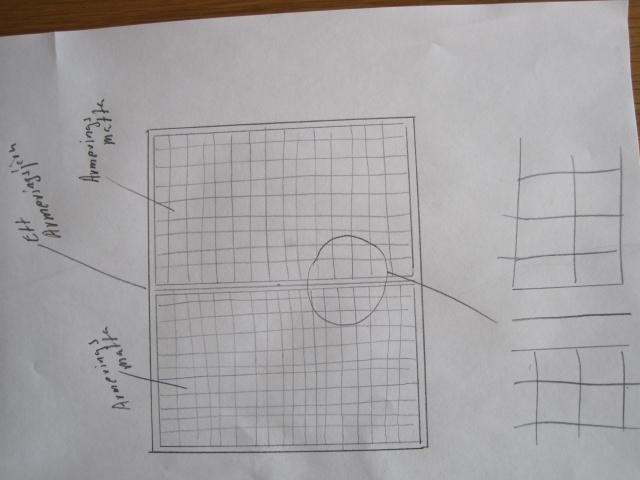
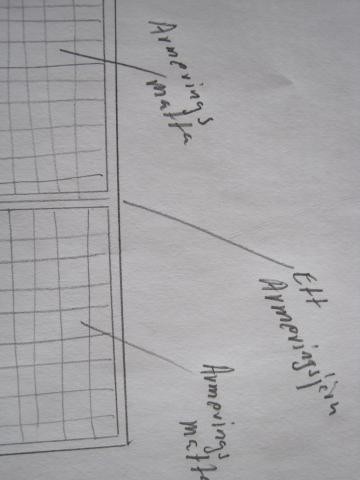
Thanks for all the answers. The designation "proffsfirma" was a bit ironic. After I paid and tried to get hold of them, it seems they've disappeared into thin air. They don't answer the phone, SMS, or email. I feel cheated and will probably have to solve the problem myself. By generalskarv, I mean there is no overlap of rebar across the entire surface of the slab. There is even a gap of about 100 mm across the entire surface between the reinforcement mats. In that gap, they have only placed one rebar along the length. I made a simple sketch where this is hopefully clear. I also took a picture of the crack (hopefully it's included here). If this is a real problem and the crack goes through the entire slab, is there any way to remedy the situation? Removing the entire slab seems very dramatic, plus I will probably have to cover all the costs myself. How can you know if the crack goes straight through and isn’t just a surface crack? I have an idea about chiseling a "trench" along the crack, about 300 mm wide and about 40 mm deep (deep enough not to damage the water pipes). Then reinforce the trench properly and fill it with some strong repair concrete. The tiler says he can start from the crack and apply a soft joint right there. If you think I don't have a problem, I would naturally also like to hear that. Opinions???

Yeah, that was really, really bad and unprofessional.
I wonder if even my mom wouldn't have understood that the reinforcement needs to overlap a little.
But is there a reinforcement bar around the edge? A 12mm?
Are these lapped, or did they mess that up too?
The overlap should be about 60 cm as a rule of thumb, I'm not the person to calculate the exact measurement.
But for concrete matters like this, rules of thumb work just fine.
Your slab is most likely guaranteed to have cracked right through.
The crack is at significant risk of getting bigger over time. If it gets damp and freezes now and then, nature would surely ensure that the crack becomes cm-sized eventually.
Now I'm dabbling a bit in the wilderness, but I think a passably decent repair method would be to chip out down to the reinforcement mesh in depth and about 20-30 cm out on each side.
Then lay in a new reinforcement mesh, about 40-50 cm wide there.
Prime or something (whatever is done..?) on the old concrete surface and then cast anew.
This way, you've "taped" the crack with mesh and a bit of new concrete.
But as I said, the wilderness, I'm not sure at all.
The underfloor heating loops also become extremely easy to break apart.
I wonder if even my mom wouldn't have understood that the reinforcement needs to overlap a little.
But is there a reinforcement bar around the edge? A 12mm?
Are these lapped, or did they mess that up too?
The overlap should be about 60 cm as a rule of thumb, I'm not the person to calculate the exact measurement.
But for concrete matters like this, rules of thumb work just fine.
Your slab is most likely guaranteed to have cracked right through.
The crack is at significant risk of getting bigger over time. If it gets damp and freezes now and then, nature would surely ensure that the crack becomes cm-sized eventually.
Now I'm dabbling a bit in the wilderness, but I think a passably decent repair method would be to chip out down to the reinforcement mesh in depth and about 20-30 cm out on each side.
Then lay in a new reinforcement mesh, about 40-50 cm wide there.
Prime or something (whatever is done..?) on the old concrete surface and then cast anew.
This way, you've "taped" the crack with mesh and a bit of new concrete.
But as I said, the wilderness, I'm not sure at all.
The underfloor heating loops also become extremely easy to break apart.
Damn..... Doing so much work, and not succeeding!!!
I hope you can fix it. It's a shame about all the work they've done. If it can be fixed, please tell me how. For god's sake, call someone knowledgeable, check with the supplier of the concrete if they can recommend someone.
Now I'm upset, and at the same time glad that my slab is holding. I reinforced it myself, got a bunch of rebar, more than I needed. Threw it in on the advice of the caster, so I avoided having to dispose of it myself. I almost have too much reinforcement in the slab...
Call the tax office and check the company (I know, it's a bit late). There you can get other contact info, if nothing else a bankruptcy trustee.......
Let me know what happens...
I hope you can fix it. It's a shame about all the work they've done. If it can be fixed, please tell me how. For god's sake, call someone knowledgeable, check with the supplier of the concrete if they can recommend someone.
Now I'm upset, and at the same time glad that my slab is holding. I reinforced it myself, got a bunch of rebar, more than I needed. Threw it in on the advice of the caster, so I avoided having to dispose of it myself. I almost have too much reinforcement in the slab...
Call the tax office and check the company (I know, it's a bit late). There you can get other contact info, if nothing else a bankruptcy trustee.......
Let me know what happens...
Yes, there are three 12 mm reinforcement bars around the edges and they are properly overlapped. The entire "frame" with the reinforcement bars is positioned 100 mm below the level of the reinforcement mesh. It will hopefully hold the slab together so the parts don't slide apart. If one is going to chisel up a "trench" and attempt a repair, one wonders if there is any way to detect where the floor heating pipes go. Maybe there is an instrument that can detect water or air in a pipe through concrete??? That would make chiseling much easier and you could also go all the way down to the existing reinforcement without damaging the pipes. As for the company, I believe that professional con artists are hard to deal with. It's probably just about accepting it and moving on with life.
The heating pipes can be detected/mapped using a thermal camera (which can be rented at a reasonable cost in most locations). If you pump hot water through, you will see in the thermal camera where the pipes are located, provided they are not too deep or you have not gotten a poor thermal camera. Consider the risk of leakage before connecting to water.
Yes, but with so much good work (according to the description) they did and totally missed it? Is it just a few bucks they saved on... And at what cost???Landsort said:
Do you have such vicious enemies, that they put in such work to... "scam" you like that...
As mentioned, let us know your solution to it all....
As soon as you start using the demolition hammer on the slab, you have taken full responsibility for it! It doesn't matter if you know where the heating coils are - the demolition hammer fractures the concrete unpredictably - and you are guaranteed to break a heating pipe.Landsort said:Yes, there are three 12 mm reinforcement bars around the edges, and they overlap properly. The entire "frame" with the rebar is located 100 mm below the level of the reinforcement meshes. Hopefully, it will hold the slab together so the parts don't slide apart. If you're going to chisel out a "trench" and try to fix it, you wonder if there's any way to detect where the pipes for the underfloor heating run. Maybe there's some instrument that can detect water or air in a pipe through concrete??? That would make chiseling significantly easier, and then you could also go down to the existing reinforcement without damaging the pipes. Regarding the firm, I believe that professional scammers cannot be reached. It's probably just something you have to accept and move on with your life.
On your invoice, there's the company's organization number, call the tax office and get the company's address and phone number.
According to your sketch, the company has made a mega-general splice in the reinforcement, without any logical reason. The rebar lying alongside serves no purpose; instead, they should place a bunch of 50 cm pins that tie the meshes together.
You can always file a civil lawsuit against the company's organization number, I would. Call a law firm and hear what they have to say.
If you've tried everything and you're completely without legal help, you can chisel a 50 cm wide channel right through reinforcement and heating coils, all the way down to the polystyrene. A plumber can repair the heating coils. Then you anchor rebar in both slabs, so they are "woven" together, and then it's just a matter of casting. Avoid chiseling all the way out to the edge beam reinforcement as it's the one holding the entire structure together.
But, as mentioned.....using a demolition hammer on the slab should be your absolute last resort! Do not continue building on the slab without resolving the issue, and if you choose to build without fixing the slab, it’s okay as long as you do not connect the heating coils. I sympathize with you; it's companies like that, which destroy the industry for all of us other professionals who are serious and have professional pride.
Click here to reply
Similar threads
-
Murat utekök på en betongplatta - klarar det vikten?
Grund & Markarbeten -
Foga eller inte? -sprucken altanstolpe
Färg, Måla & Tapetsera -
gjuta betongplatta för garage - var ska golvvärmeslangarna upp?
Grund & Markarbeten -
Stolpsko i gjuten betongplatta på mark - hur långt från kant?
Grund & Markarbeten -
Sprucken betongplatta - bör jag vara orolig?
Golv