
405 views ·
3 replies
405 views
3 replies
Consultation about loose plaster on interior wall
Hi! Anxious beginner here. There are many threads about plastering and similar questions but I still can't really find answers to my concerns. Hence a new thread.
We have a beautiful well-preserved townhouse from 1956 and have started to renovate one of the bedrooms. We are keen to carefully manage the house and its character. Two of the interior walls in the bedroom are in pretty bad shape after what I interpret as a water damage from the roof (there are signs of this in one of the corners where the raw wood in the ceiling has been replaced). I have removed all layers of old wallpaper and am now inspecting the plaster. There are some areas with loose plaster that sound hollow when I tap on them. My plan has been to knock off the loose plaster and apply new plaster. Many recommend putting up 6mm renovation gypsum instead, which I hesitate to do. I can't really justify it more than that it feels better and more respectful to the house to do it "properly." It's also fun to thoroughly learn about plaster and the house's walls. It's not important that it goes quickly as long as it's done correctly. So, now to the point. I have a few questions:
We have a beautiful well-preserved townhouse from 1956 and have started to renovate one of the bedrooms. We are keen to carefully manage the house and its character. Two of the interior walls in the bedroom are in pretty bad shape after what I interpret as a water damage from the roof (there are signs of this in one of the corners where the raw wood in the ceiling has been replaced). I have removed all layers of old wallpaper and am now inspecting the plaster. There are some areas with loose plaster that sound hollow when I tap on them. My plan has been to knock off the loose plaster and apply new plaster. Many recommend putting up 6mm renovation gypsum instead, which I hesitate to do. I can't really justify it more than that it feels better and more respectful to the house to do it "properly." It's also fun to thoroughly learn about plaster and the house's walls. It's not important that it goes quickly as long as it's done correctly. So, now to the point. I have a few questions:
- I have started to knock off loose plaster from the wall towards the neighbor. However, it feels like the area with loose plaster is growing as I knock off the old plaster. Is this to be expected or am I using the wrong technique? Quite a bit of plaster is coming off and the first cleaning has already resulted in a larger hole than I anticipated, see picture. I am knocking off the plaster by hand using a chisel.
- I have already bought a 10 kg bag of Husfix based on the fact that I didn't realize there was so much plaster that needed to be removed. If we disregard the financial aspect, is it suitable to use Husfix even when there are such large areas that need repairing, or should I use real plaster?
- Besides the hole in the picture, there is another large area with loose plaster on the same wall that extends almost from floor to ceiling. When do you get into the situation where you remove all plaster and replaster the entire wall instead? It seems like a tremendously large job.
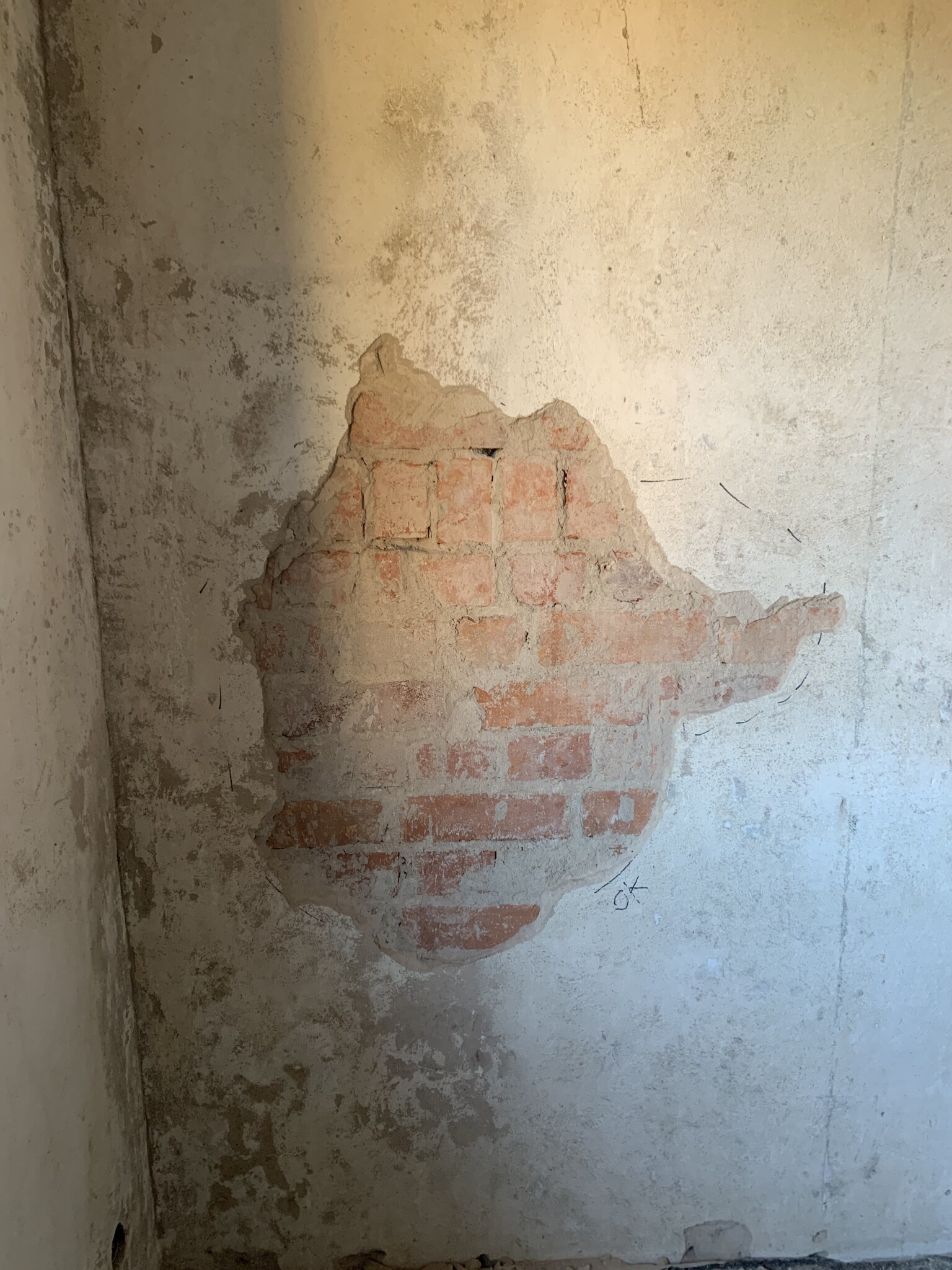
You should probably check with a mason who can look on-site. An inexperienced "mason" equipped with a hammer and chisel might easily think that all the plaster is loose, and then it becomes a big job.

Gently tap the plaster with something hard - if it sounds hollow, it is "bom" = sitting loose. It's easy to also pull off plaster with okay adhesion. Chiseling is the right technique if you want to retain as much "healthy" plaster as possible, as long as you chisel in the "right" direction and not at the junction between plaster and wall. That is, avoid breaking/prying off the plaster.C Crabfish said:
At the same time, don't be afraid to go all out and tinker. Plaster is cheap, and it's not much extra work to plaster a little more.
If there's only sporadically healthy plaster, you reach a point where it's not worth repairing. But that choice is made because it's the simplest/best way.
Use kalkputs for that, not husfix.
Hello! Thank you for your replies. I have moved on and chipped away the plaster that was clearly loose, now with better technique. The next problem is that there’s a hollow sound when I tap on some of the bricks in the corner. So it might be necessary to consult a murare after all. Worth noting is that there are lättbetong blocks next to the bricked area (the other walls in the house are made of lättbetong) so the question is whether parts of the wall were rebuilt in connection to the water damage in the ceiling.
Update: Aha, it might be the chimney breast against the neighbor that runs there, which would explain the brick. Something looks a bit odd though because the brick doesn’t line up straight. But maybe that’s not unusual, what do I know.
Update: Aha, it might be the chimney breast against the neighbor that runs there, which would explain the brick. Something looks a bit odd though because the brick doesn’t line up straight. But maybe that’s not unusual, what do I know.
Last edited:
Click here to reply
Similar threads
-
Börjar bli less på min Oneplus kamera! Någon som vet en lösning?
Teknik -
Någon som har en smart lösning
Golv -
Hjälp min glömska hjärna - få loss träskivan ur hålsågen
Övrigt Off Topic -
Hur löser jag ny anslutning till kommunens avlopp ?
Vatten & Avlopp -
Automower: Lyftsensorn löser ut allt oftare
Robotgräsklippare