
1,168 views ·
1 replies
1k views
1 replies
Condensation-damaged wall, how to proceed?

Hello! I have a shed that was built as a standalone, uninsulated structure in the 70s. Sometime in the 80s, the shed was connected to the house, and in the space between, a new entrance and hallway to the house were created. In connection with this, the shed was insulated in a rather questionable manner. The wall between the hall and the shed looks like this (from the hall view):
Wallpapered chipboard
Some kind of rough-sawn nail batten
Some kind of tarpaulin fastened between the studs (not sealed)
45x95 stud + 95 mm rock wool
Chipboard.
On the inside of this wall in the hallway, there is an electric radiator. Since the wall hasn't been vapor-tight, warm air has gone right through the wall and risen towards the ceiling inside the wall and condensed against a similar "tarpaulin" that has been placed ABOVE the insulation in the ceiling towards the attic, folded down towards the wall. This has resulted in condensation water running down inside the wall. It's a bit hard to explain, but I'm attaching pictures of the wall! Now, of course, I have to address this somehow. My first thought was to completely strip the wall and then put in 95 mm of mineral wool, then a vapor barrier towards the hall that is taped to the vapor barrier in the ceiling, then 45 x 45 + insulation and drywall. Then I thought I might extend the studs towards the shed side to add extra insulation. Does this sound sensible or am I thinking wrong? The idea is to re-insulate the shed and then keep it at 5-10 degrees over the winters. Is it unwise to have plastic in the wall against the hall in that case? The other wall in the shed borders the laundry room. It is built in the same way but not damaged by moisture, which I find strange since it often gets humid in the laundry room.. the idea is to fix that wall in the same way as the hall if it works. Feel free to come with ideas and suggestions! Regards
Wallpapered chipboard
Some kind of rough-sawn nail batten
Some kind of tarpaulin fastened between the studs (not sealed)
45x95 stud + 95 mm rock wool
Chipboard.
On the inside of this wall in the hallway, there is an electric radiator. Since the wall hasn't been vapor-tight, warm air has gone right through the wall and risen towards the ceiling inside the wall and condensed against a similar "tarpaulin" that has been placed ABOVE the insulation in the ceiling towards the attic, folded down towards the wall. This has resulted in condensation water running down inside the wall. It's a bit hard to explain, but I'm attaching pictures of the wall! Now, of course, I have to address this somehow. My first thought was to completely strip the wall and then put in 95 mm of mineral wool, then a vapor barrier towards the hall that is taped to the vapor barrier in the ceiling, then 45 x 45 + insulation and drywall. Then I thought I might extend the studs towards the shed side to add extra insulation. Does this sound sensible or am I thinking wrong? The idea is to re-insulate the shed and then keep it at 5-10 degrees over the winters. Is it unwise to have plastic in the wall against the hall in that case? The other wall in the shed borders the laundry room. It is built in the same way but not damaged by moisture, which I find strange since it often gets humid in the laundry room.. the idea is to fix that wall in the same way as the hall if it works. Feel free to come with ideas and suggestions! Regards
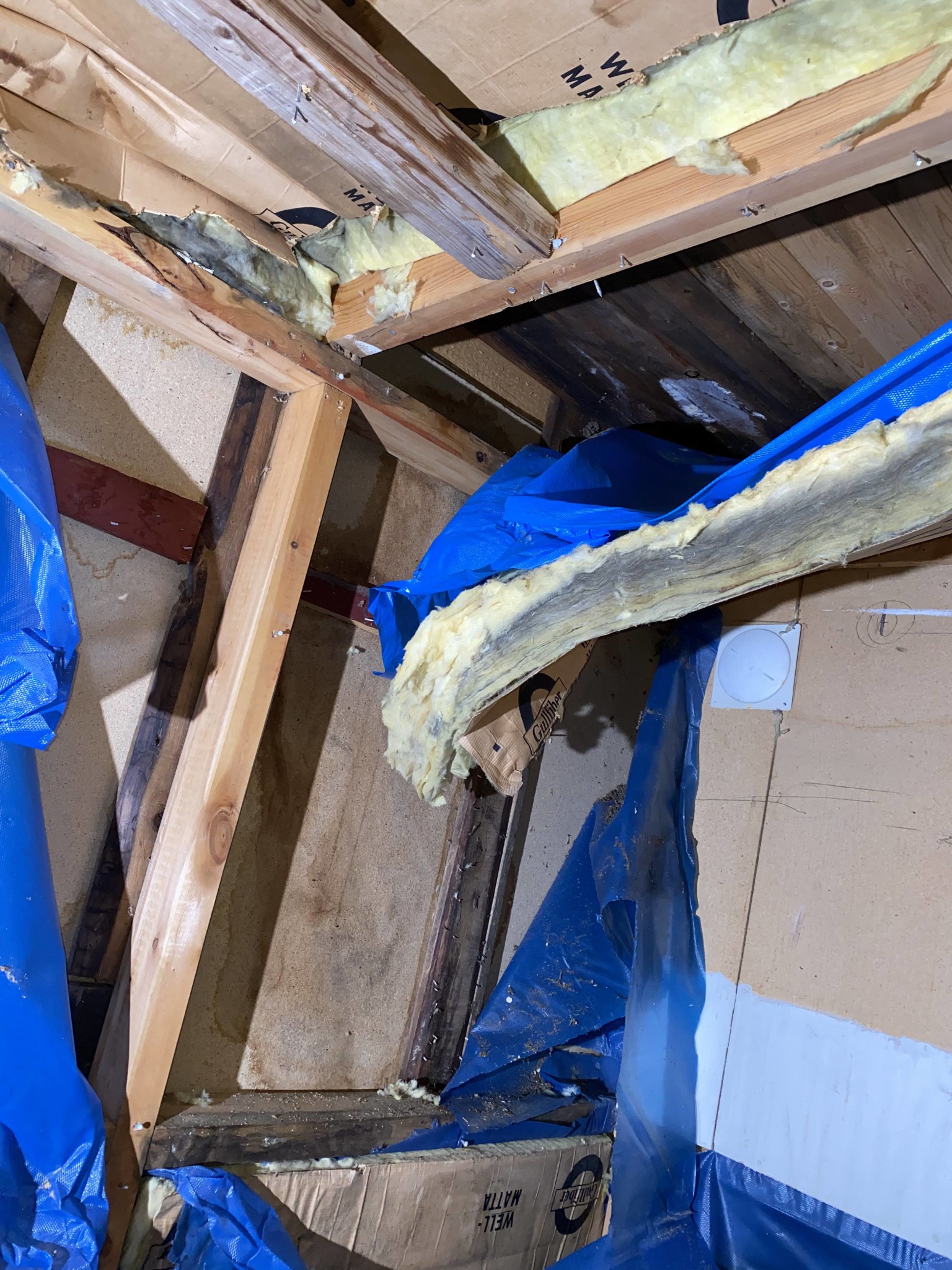
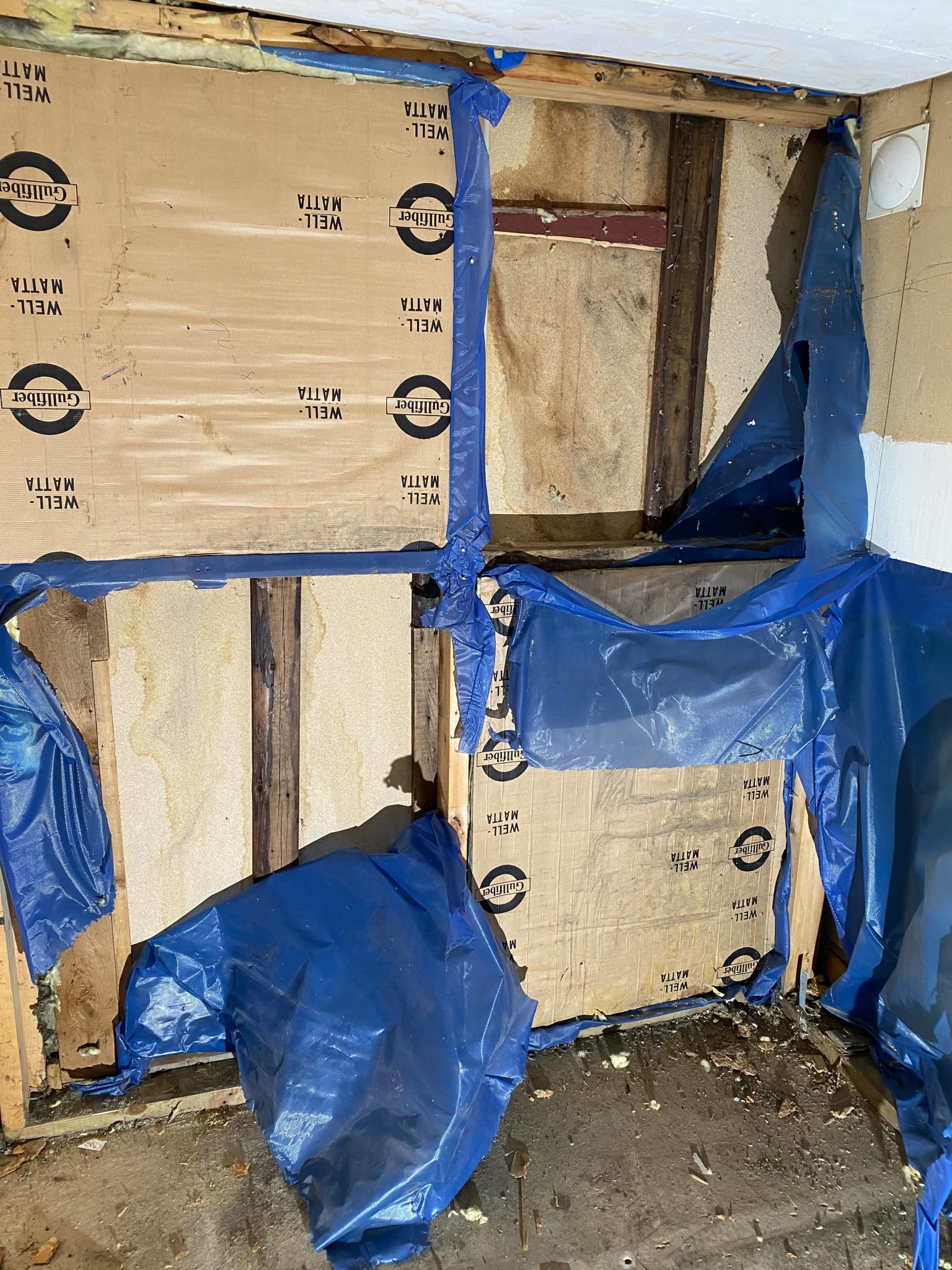
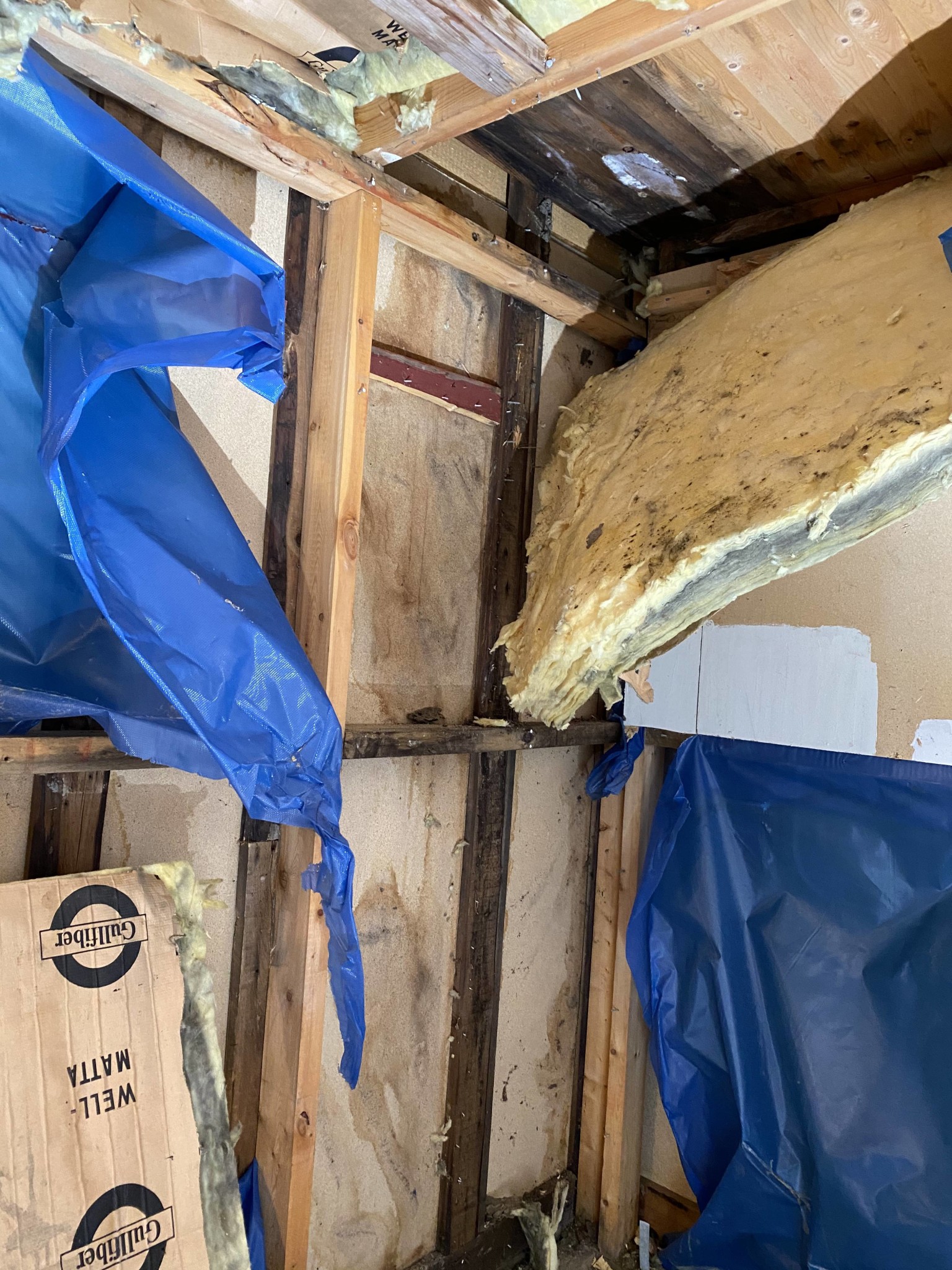
This is the wall facing the hallway, as seen from the storage.
Click here to reply
Similar threads
-
Måla invändigt isolerad vägg / garage.
Attefallshus, friggebod, garage & andra småhus -
Renovera innerväggar – Måste all gammal kalkputs bort?
Stenhus -
Build a brick wall against chimney stack
Building Materials and Construction Technology -
Building simple firewood storage against a wall
Building Materials and Construction Technology -
Laga källarvägg. Beläggning.
Stenhus