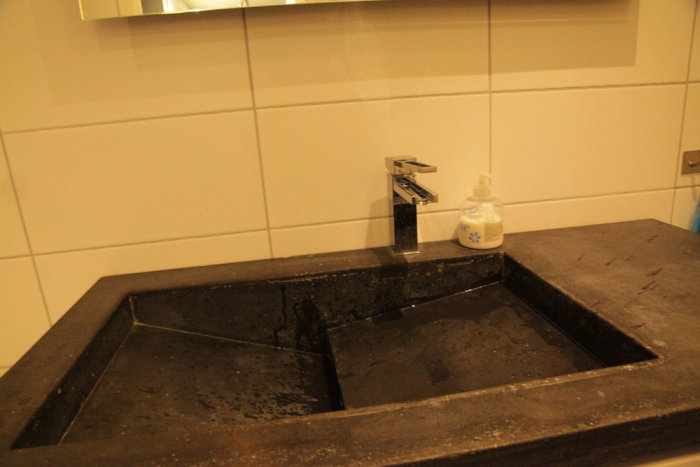
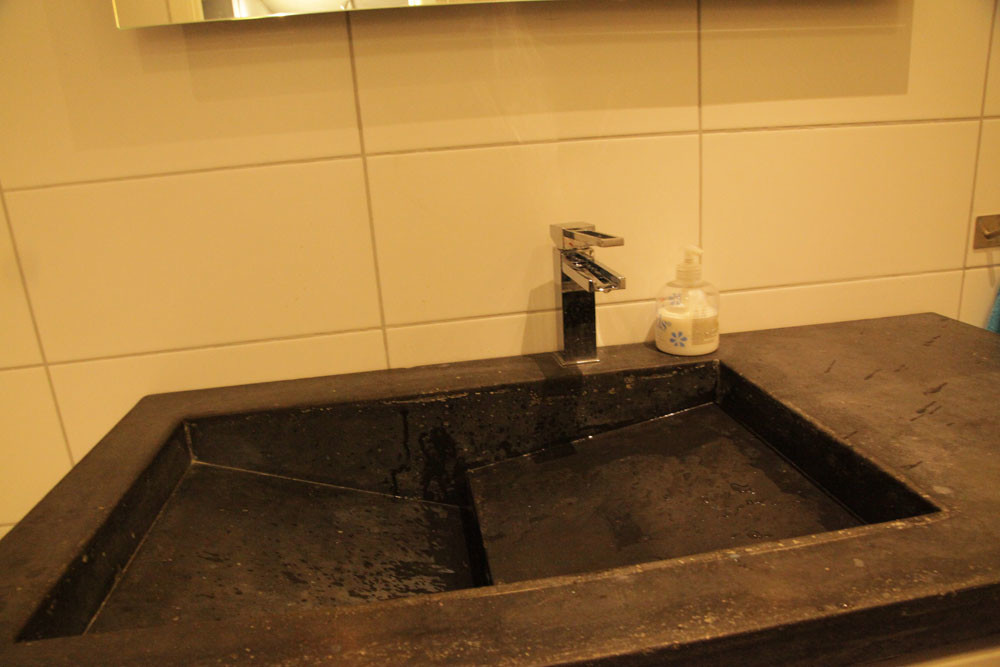
have you made the mold yet? otherwise, I have quite good tips, I've cast both a sink and a countertop.
You could say that bemix works well but it's hard to get air bubbles out,
I made my mold with melamine chipboard, a really good result except at the seams, doesn't need to be waxed at all.
For the edges, I used formply which I screwed onto 45x45 then down into the chipboard. The sink turned out best but had large bubbles, I had 3 different vibrators and one was a sex toy, though not really ideal, the best is an electric toothbrush because you can attach a stick with a little modification that you can drive into the concrete.
I have black iron oxide in both my castings, experimented until I reached 6% relative to the cement weight. A bit tricky to calculate but I ended up just throwing some in.
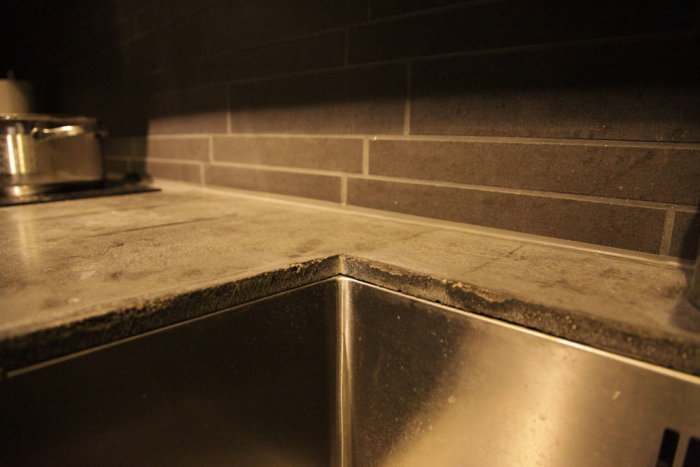
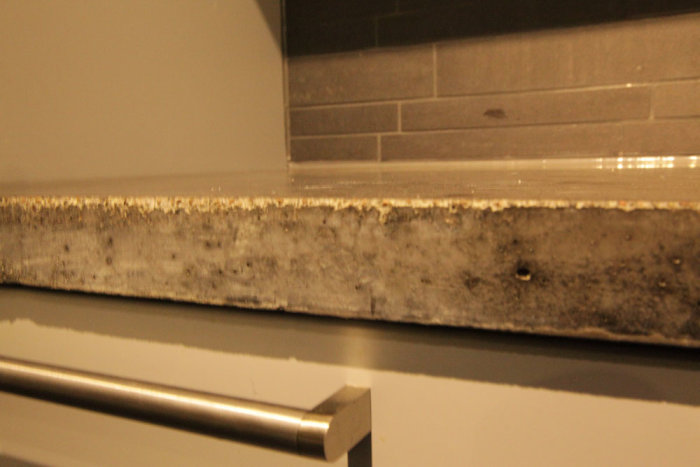
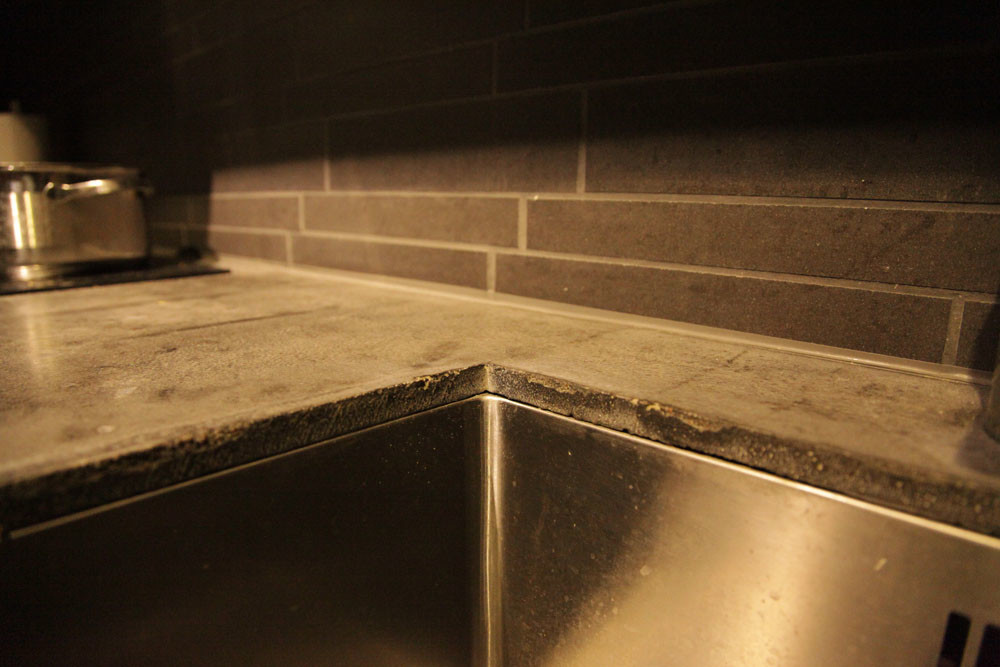
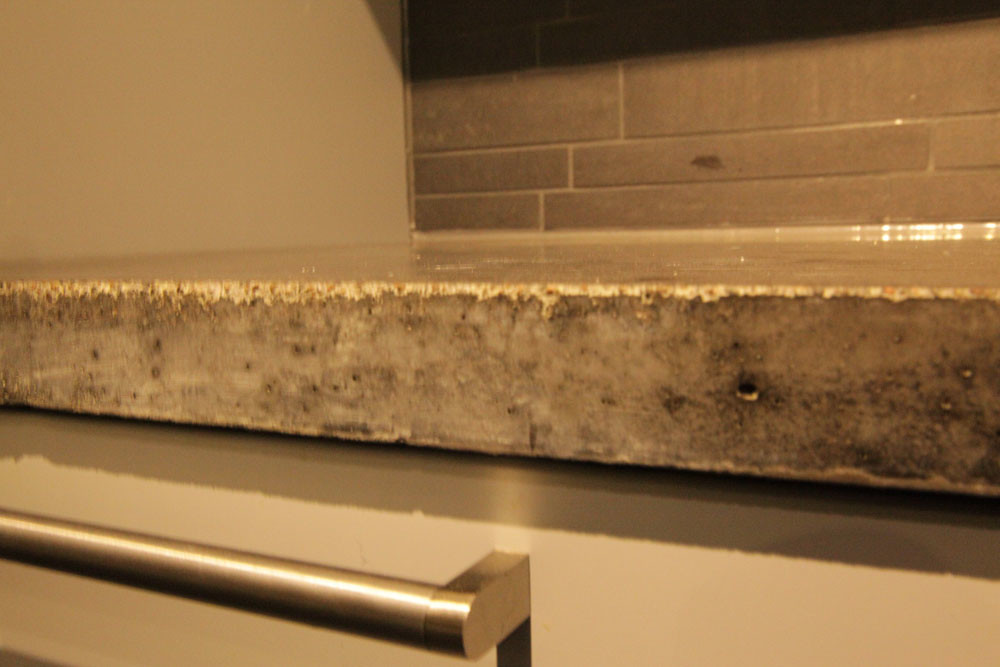
The one in the kitchen is made with regular fine concrete, there I missed that you shouldn't put the reinforcement in beforehand since I got runoff around it that shows on the top side, best is to pour the concrete, let it start curing a bit, then add the reinforcement, that way I think you get the best result.
My one in the kitchen is also a bit too long, about 3 meters, cracked it when I lowered it so I'll have to make a new one sometime. Too bad I complicated it by embedding the sink in it. Ask if you have more questions,
But I can't say bemix is the best, it depends on how you mix right, have the right mold, or good vibration capacity,
but if you feel the surface, it is denser than standard fine cast.
I saw that you couldn't find it, ask at Beijer or another and they will order it for you.
I bought mine at fellesons in Växjö, if a builder's merchant in Växjö has it on the shelf, it is guaranteed to be available in Stockholm.
Bermix is a concrete with high strength around C80. I also believe it is slightly expanding, so look for expanding concrete with high strength, i.e., over 40.
Poured a slab of 80x150 cm that we will have under the stove instead of tiles. Used expansive concrete (Weber 702), it flows almost like a thicker self-leveling compound. Got an amazingly nice surface, not a single air bubble. I vibrated very, very gently. Unfortunately, I also vibrated after filling the mold and placing the reinforcement mesh on the surface, so it sank a little too deep. Now the mesh's squares show through faintly on the top side as a dark shadow... Just have to redo everything and place the mesh WITHOUT vibrating it down. Then I'll probably use a finer mesh, like the type used when self-leveling. I had a regular rusty mesh and it's obviously too thick if you have a thinner slab (28mm).
You can manage the vibrating with a power drill with a bolt attached in the chuck. But if you're using expansive concrete, you should only vibrate very gently. I poured the windowsills for the basement a few years ago with regular fine concrete that I vibrated thoroughly, did not get nearly as good results. I’ll be making kitchen countertops in the future and will definitely use expansive concrete.
@AndersMalmgren Weber rep 931, just call any construction materials store and they will order it for you because, since it's not coarse concrete which is bulk material and the general public hasn't grasped that there's a difference between concrete and concrete, it's usually not on the shelf. Professional stores sometimes have this in stock, but you usually can't buy there without a company.
If you over-vibrate a concrete, no matter which, you'll get material separation, where the fine material, water, and aggregate separate...
thanks, I have a company but not in construction, but I've managed to register with Dahls, Malmbergs, etc., so it might work. Do you have any tips for a store in Stockholm? Otherwise, I might have to bite the bullet and wait for delivery.
ah, but that almost requires a real vibrostav to achieve that.
And how have you chosen to treat these surfaces to keep them clean from grease and soap residues?
No, we haven't chosen, soap is apparently supposed to give an untreated result, but not provide as much protection as, for example, wax which gives a slightly yellowed surface.
o best material for building a mold when the goal is to achieve smooth surfaces?
The best for reasonable money is probably formwork plywood, but if money is not an issue, you can certainly get even better results with other materials. I myself used a mistakenly purchased high-gloss closet door, it turned out to have an incredibly smooth surface!
@AndersMalmgren you can achieve separation with a budget vibrator without problems using expansion concrete, it should only be lightly vibrated to make it flow out.
@Caroline2014 the slabs I've cast I have first treated with concrete impregnation to stop the absorption and seal the pores, then you use oil, wax or whatever you want.
I use formplyfa for the base of the mold and then a lacquered chipboard from some IKEA furniture for the frame since I want a thicker form there so that I can fasten 45 brackets to clamp down the cell plastic for weight reduction.
Vi vill skicka notiser för ämnen du bevakar och händelser som berör dig.