As a beginner, I'm going to build a 600 mm high plinth for a greenhouse. The plinth will be built using 190*190*590 mm blocks and will be 3 courses high, possibly 4 courses on one short side, which will be largely below ground level. The greenhouse will be built on a 100mm insulated base plate. Parts of the plinth, as I mentioned, will be below ground level.
I am going to build for the first time and have some questions that I hope to get answers to. Some may be trivial but "better safe than sorry."
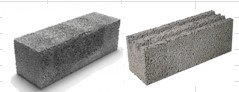
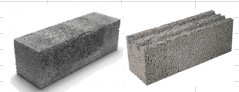
Question 1 - With slotted blocks, it is easier (?) to accommodate the reinforcement bars, but what are the advantages of using smooth blocks?
Question 2 - Do I need to anchor the 1st course to the base plate?
If so, is it okay to just drill an 8mm reinforcement bar into the base plate so it sticks up in the head joint between two blocks?
Question 3 - How much reinforcement do I need?
Is 1*8 mm between the 1st and second course enough, or do I also need reinforcement between the 2nd and 3rd courses?
Question 4 - Do I need to build with a 10mm head joint or is it okay to build without mortar in the head joints?
As a beginner, I'm going to build a 600 mm high foundation for a greenhouse. The foundation will be built with 190*190*590 mm masonry blocks and will be 3 courses high, possibly 4 courses on one short side that will largely be below ground level. The greenhouse will be built on a 100mm insulated slab. Portions of the foundation, as I mentioned, will be below ground level.
I'm going to do masonry for the first time and have a few questions that I hope to get answers to. Some may be trivial but "better safe than sorry".
Question 1 - With grooved blocks, is it easier (?) to accommodate the rebar, but what are the advantages of using smooth blocks?
Question 2 - Do I need to anchor the 1st course to the slab?
If so, is it okay to just drill down an 8mm rebar into the slab so it sticks up in the head joint between two blocks?
Question 3 - How much reinforcement do I need?
Is 1*8 mm between the 1st and 2nd course enough, or do I also need to reinforce between the 2nd and 3rd course?
Question 4 - Do I need to mortar with a 10mm head joint, or is it okay to lay without mortar in the head joints?
[image]
Thanks in advance.
//Jan
Most of the time, it's easiest to get grooved blocks. The last course can be turned upside down. How big is the greenhouse and how wide are the blocks? What is the foundation?
Most often, it's easiest to get hold of tracked blocks. The last shift can be turned upside down.
How big is the greenhouse and how wide are the blocks? What is the substrate like?
It will be about 15m2 and the substrate is a 10mm concrete slab + 100mm insulation + 200mm gravel 8/16.
Equally easy to get both types of blocks where I live, 1kr price difference.
The blocks I intend to use are 190*190*590 mm, i.e. the largest available where I live.
It will be about 15m2 and the base is a 10mm concrete slab + 100mm insulation + 200mm gravel 8/16.
It's equally easy to obtain both types of blocks where I live, 1kr price difference.
The blocks I intend to use are 190* 190*590 mm, i.e., the largest available where I live.
I would say that with those conditions it doesn't really matter how you choose to proceed. They will hold. But I would choose to go with butt joints. I'm guessing you plan to plaster afterwards.
The blocks themselves will provide enough weight for them to stay in place, so anchoring in the slab is not a requirement in my opinion. If it's very wind-exposed, sure... But...
Even though it's a concrete slab, consider if you want to include water and electricity if that hasn't been decided already.
I would say that given those conditions, it doesn't matter much how you choose to proceed. They will hold. But I would choose to use jointing. I guess you will plaster afterwards.
The blocks themselves will provide enough weight for them to remain, so anchoring in the slab isn't a requirement in my opinion. If it's very exposed to wind then sure.. But...
Even if it's a concrete slab, think about whether you want to bring in water and electricity if it hasn't already been decided
Thank you for your responses.
Yes, the base will be plastered and painted, no it's not wind-exposed, quite well protected, and yes water, electricity, and a well/sewer are connected.
How much reinforcement would you use yourself?
Thank you for your answers.
Yes, the plinth will be plastered and painted, no it's not exposed to the wind, it's quite well protected and yes, water, electricity, and well/sewage are installed.
How much reinforcement would you use yourself?
I placed 2 pieces of 8mm between 2 blocks but I placed them directly in topsoil. So no concrete slab for them to stand on.
Hi
Trying with some new questions.
The wall for the greenhouse is almost finished and I am about to start the plastering.
Can you take a break in the plastering, e.g., in the middle of a wall and resume plastering the next day?
Click here to reply
Vi vill skicka notiser för ämnen du bevakar och händelser som berör dig.

Hobbysnickarn said:
Hello