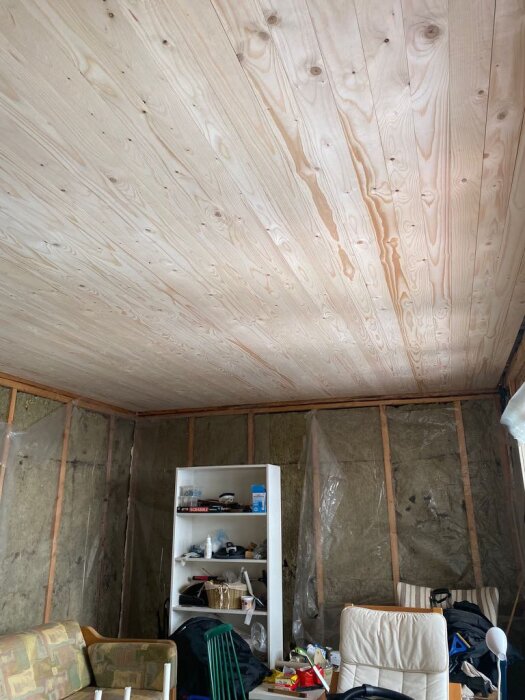
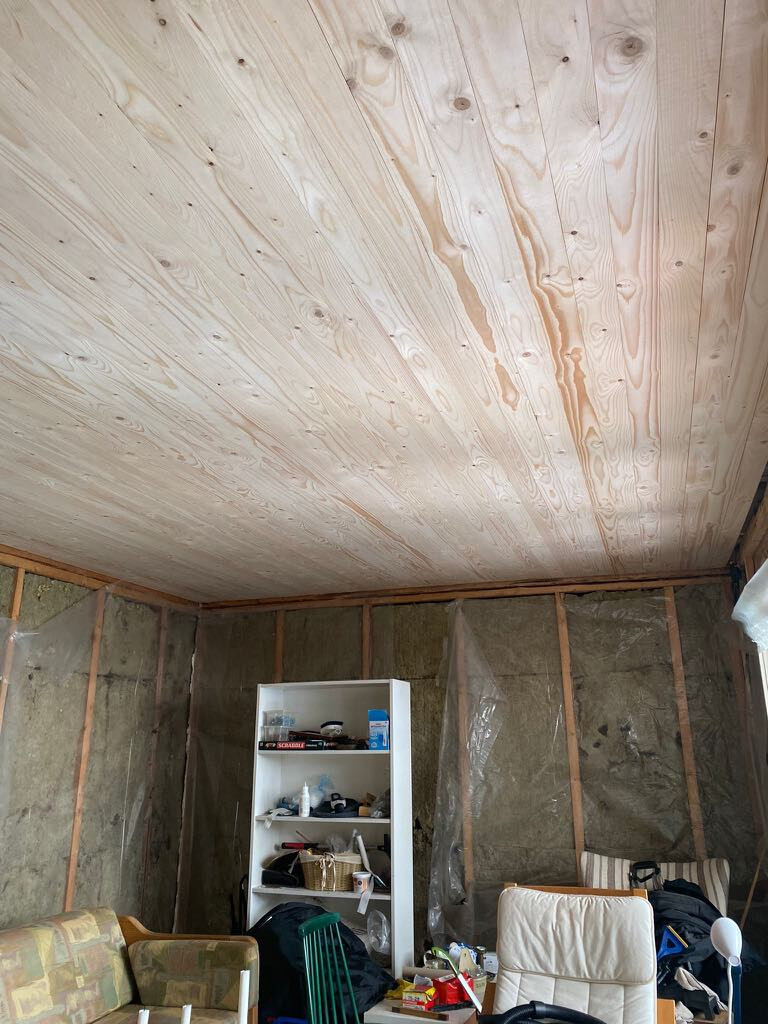
To make a long story short: We have a small unheated cabin in the woods that we took on as a renovation project to learn. We wanted tongue and groove (which needs to be treated) as the ceiling and installed them based on an (incorrect?) tip about hidden fastening (more on that below) and then put loose-fill insulation on top (temporarily old glass wool to be replaced with cellulose). This was in the summer and to us, it looked fine.
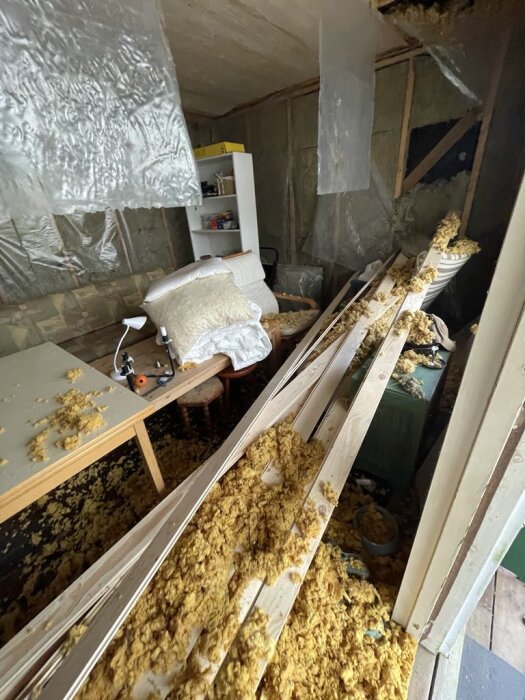
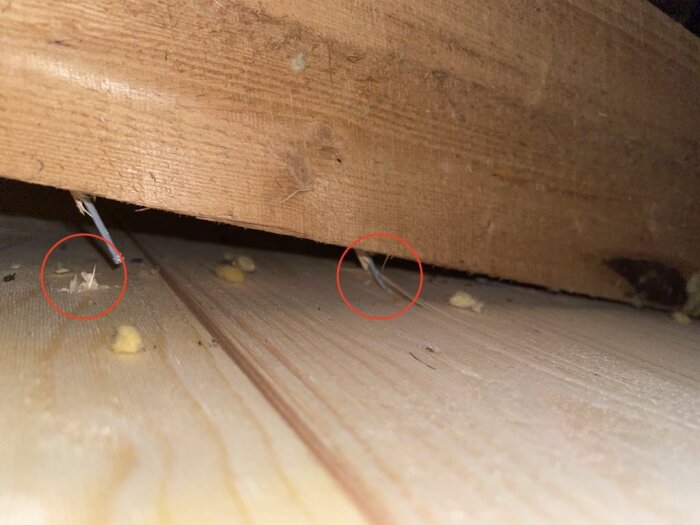
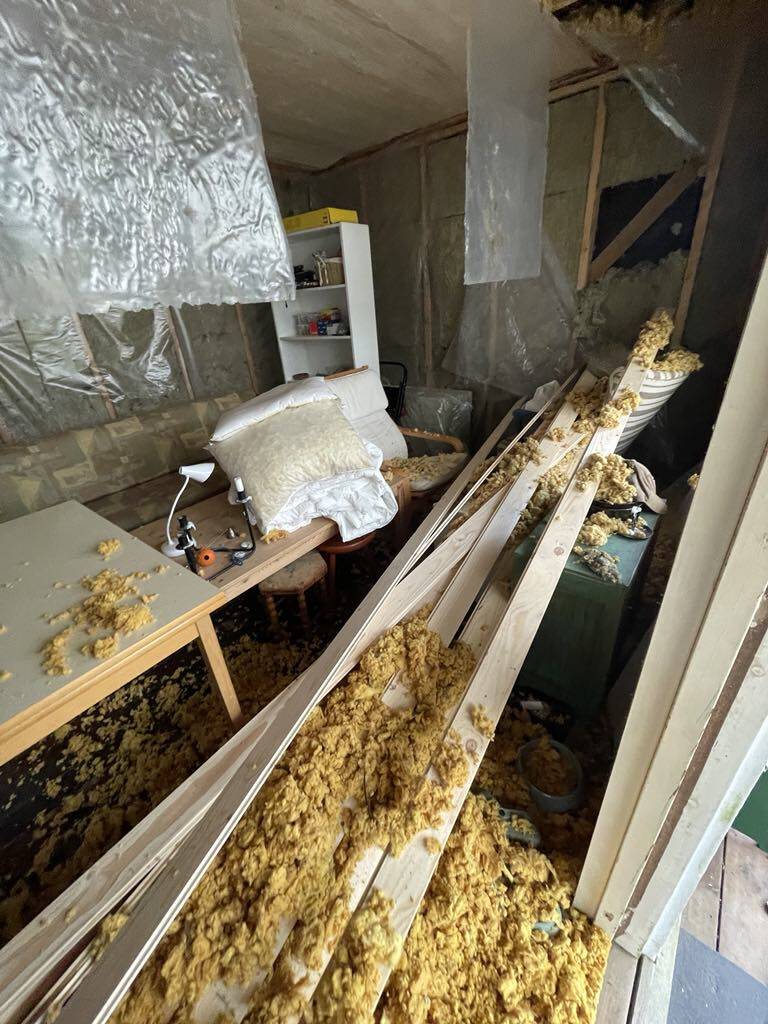
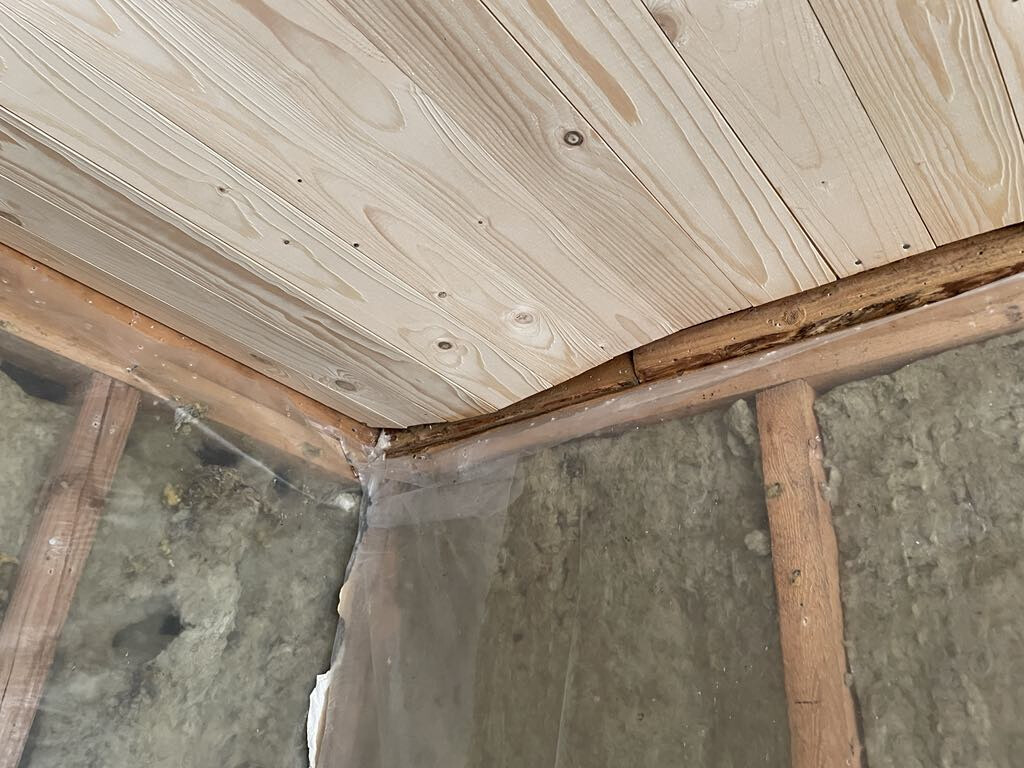
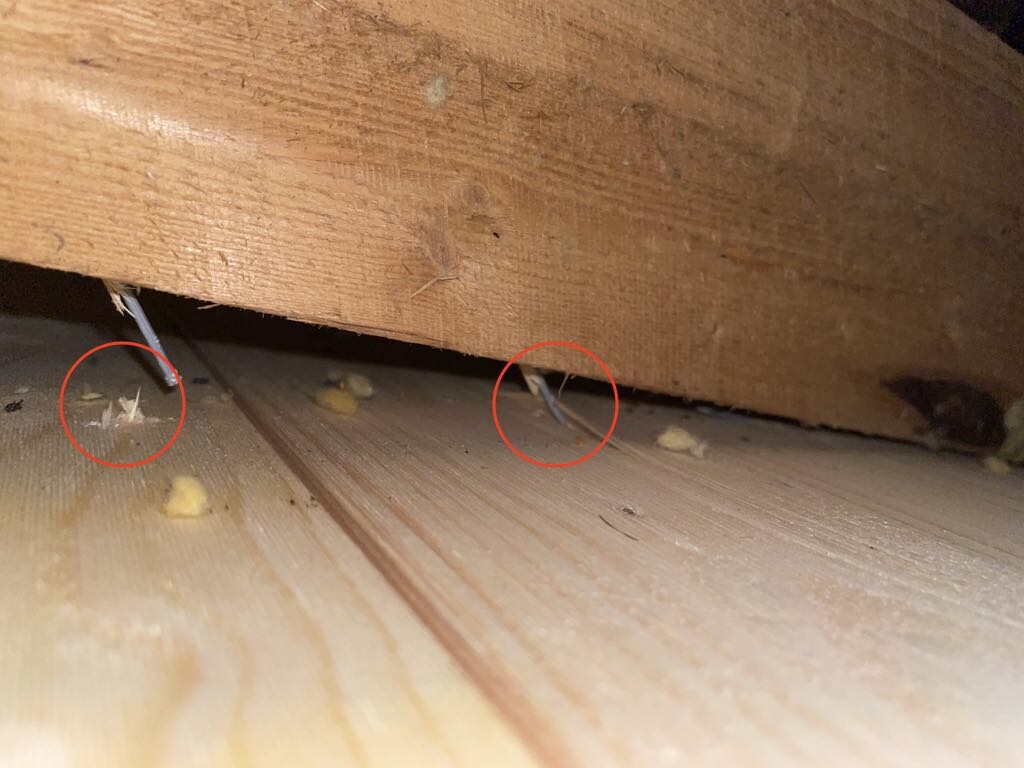
Now when we returned to the cabin after the winter, we found that a quarter had fallen straight to the floor while a large part remained but was either bulging or about to come loose, with nails either having torn through the planks or were on the verge of doing so.
I have various thoughts and ideas about why this has happened. Likely, the fastening was too poor in combination with the weight of the loose-fill insulation from above causing it to come loose. Or they may have become damp, expanded, and been too tight? (The idea is probably that they should fit snugly together?). Additionally, some of the planks were warped so we had to clamp them in place before nailing them, maybe they've sprung back?
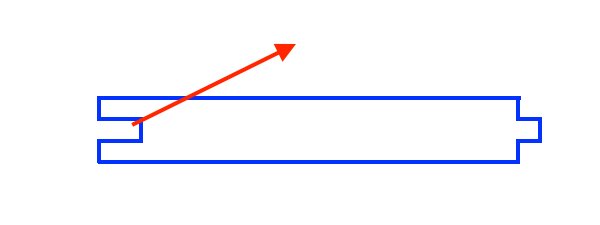
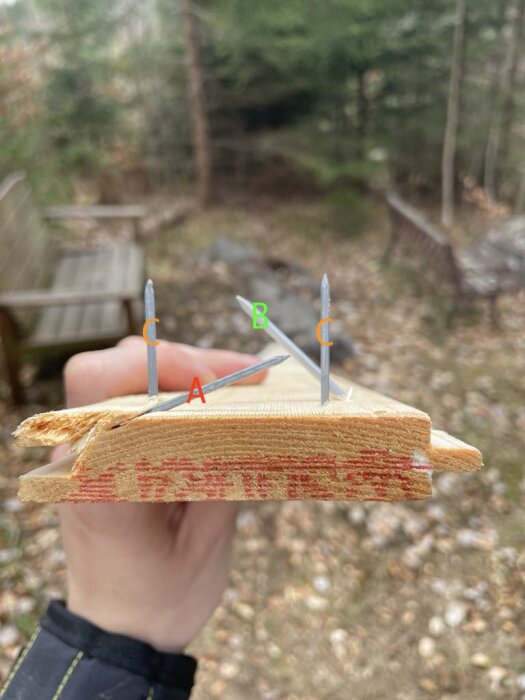
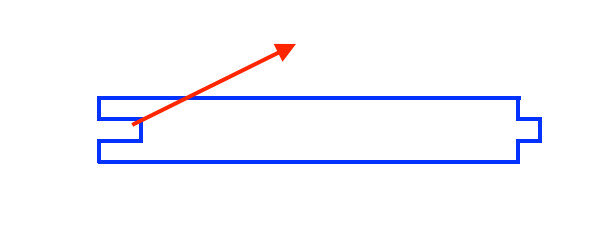
We installed them with "hidden fastening" by nailing with brads in the tongue, 50x2mm brads. In hindsight, I've realized that they should be nailed in the groove (and longer nails would be needed), so if it's given way because of the little wood supporting it in the tongue, that seems reasonable.
I guess I have the following options:
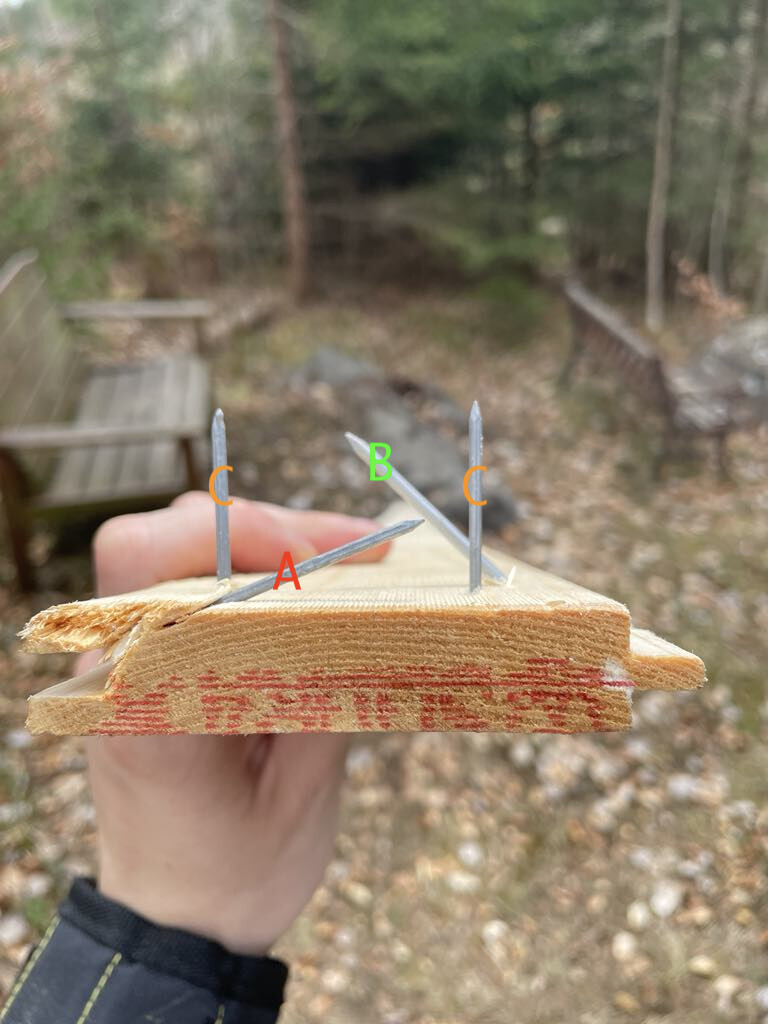
A: Nailing in the tongue with brads - this is not an option for obvious reasons 😅
B: Nailing through the groove with brads - is it strong enough and will it hold? What dimensions should be used?
C: Nailing directly from below with wire nails and ignoring hidden fastening - more durable than C, despite being vertical with weight from above?
Any other tips?
What, how, and why do you recommend what we should do? We aim to reuse as many of the planks as possible (since they've broken at the top by the tongue, it shouldn't affect the fastening ability otherwise, I think).
Grateful for any form of tips! ☀️ Planning to start the work by the weekend.
But have you nailed the tongue and groove boards directly to the rafters without battens? It feels spontaneously like a very weak construction?
You usually nail or screw battens with solid nails/screws and then attach the roof to that. What is the spacing on the rafters?
Yes, we have. The old roof (also tongue and groove-based) was nailed with brad nails from underneath and it has been in place for 50 years without battens, so we thought it would be fine 😅 We can add battens if needed, have good access from the attic so it should be doable.
If I remember correctly, the spacing is between 75-85, varies a bit between the rafters.
The old roof was attached with 12 brad nails (2 on each rafter) and the boards are 4.2 meters long.
It is commonly said to use a sparse panel to take the load. With plastic film or possibly diffusion-open fabric. Then there is no load on the panel. What the cc distance should be on the sparse panel, when you are going to have wood paneling underneath, I don't know. But for gypsum ceilings, they usually use cc 400mm or even better cc 300mm.
But I'm surprised by the pictures. I would have expected your fastening to be sufficient, but possibly that there would be a sag after a few years.
I believe the moisture played a crucial role in the collapse. As you mentioned, there was no movement visible during summer/autumn, but when you returned now in early spring, it had collapsed.
My theory is that:
- The loose fill has absorbed moisture and become heavier.
- The ceiling panel, super dry in the summer, was nailed tightly together. When it became moist during late autumn/winter, it swelled, and the only way to swell is outward from the roof trusses, which means the nails were pulled out enough that the weight of the loose fill then pushed down the entire structure from the attachment in the ceiling.
Another question is if the roof is 100% watertight, if it has leaked, then the moisture situation has worsened. I would thoroughly inspect the roof to ensure there is no leakage there.
EDIT: I have no personal experience with nailing up ceiling panels like this, but it's similar to wooden floors where you need a gap against the wall so the panel can move with changing humidity. Especially in an unheated house, it must be extremely important to have space for movement 🤔
There is probably nothing wrong with the attachment, the raw wood has swollen sideways and then there is nothing that can resist it. All timber twists and cracks. So the bottom line is that with a cold setting, the raw wood absorbs moisture and there must be some form of ventilation. If the insulation is directly on the timber, then there will be a temperature difference between the attic and inside. The sun shines on the roof and full shade in the house. Promises moisture/wetness directly under the insulation.
EDIT The insulation cannot, with its weight, achieve anything like that.
One must consider that you should also be able to move around in the attic. It would be unfortunate if the slightest misstep led to the entire ceiling crashing down.
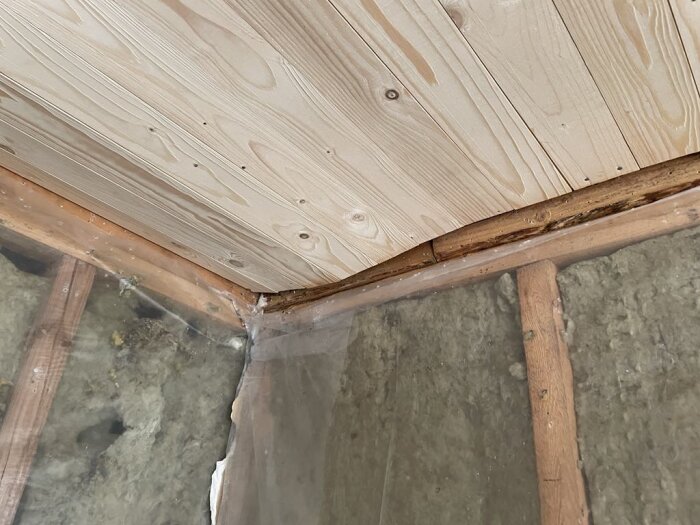
Then I think TS has a point about moisture movements as well. In picture 3, it looks like the panel is under tension. It's tricky depending on how dried the wood is when it's installed, and since it’s unheated and exposed to a wider range of humidity. For that reason, I would also be cautious with the plastic there. It could lead to condensation problems.
I believe moisture played a decisive role in the collapse. As you mentioned, no movement was visible during the summer/autumn, but when you returned in early spring, it had collapsed.
My theory is that:
- The loose fill insulation absorbed moisture and became heavier.
- The roof panel, super dry in the summer, was nailed completely tight together. When it became moist during late autumn/winter, it swelled, and the only way to swell was outward from the rafters, which meant the nails were pulled out enough that the weight of the loose fill insulation then pushed down the entire structure from the attachment in the roof.
Another question is whether the roof is 100% watertight; if there has been a leak, the moisture situation has worsened. I would seriously inspect the roof to ensure there are no leaks there.
EDIT: I have no personal experience of nailing up roof panels like this, but it's like wooden floors where you should leave a gap against the wall so that the panel can move with changing humidity. Especially in an unheated house, it must be extremely important to have room for movement 🤔
On the side where it bulged but didn't fall down, we set it too tight against the edge for sure. I believe the outermost plank stayed because I put a screw in it (which would then be covered with a trim anyway). So likely that's why it gave way on that side too.
When should you nail up tongue and groove if not during the fine summer months? It's somewhat dull to do such work in winter - unless you have a constantly heated place so it doesn't vary between seasons 🤓
The attic/roof looks good otherwise, and no leaks that I have been able to see 👍
Jjonaserik said:
There is probably nothing wrong with the fastening; the roof panels have swelled sideways, and then nothing can hold it back. All timber twists and cracks. So the gist is that with cold storage, the roof panels absorb moisture. And there must be some form of ventilation. If the insulation is directly on the wood, there will be a temperature difference between the attic and inside. The sun shines on the roof and full shade in the house. This causes moisture/water directly under the insulation.
EDIT The insulation cannot, with its weight, achieve such a result.
Interesting. So if I had used wire nails from underneath, the swelling wood wouldn't have burst the same way? The previous panels were installed that way for decades without falling.
I let the old plastic remain loosely on top of the wood to house the insulation for the time being, but maybe it doesn't make any difference anyway. With the old roof, the plastic was nailed to the rafters.
Ccpalm said:
You also have to consider that you should be able to move around in the attic. It would be unfortunate if the slightest misstep leads to the entire inner roof crashing down.
Then I think TS has a point regarding moisture movements too. In image 3, it looks as if the panel is under stress. It's tricky depending on how dried the timber is when installed and because it's unheated and exposed to a wider range of humidity. For that reason, I would also be cautious with the plastic there. There could be condensation problems.
Exactly! 😅 I leave the plastic loosely in place while we have fiberglass. The plan is to replace it with cellulose and then remove the plastic. Previously, it was nailed to the rafters between the old panels, but we've loosened those 👍
I've tried to reattach the roof panels with wire nails hammered from underneath, but it's really not an easy job without any power tools.
Now I'm considering switching to furring strips and plasterboard instead... A bit more work but perhaps fewer problems in the future? 😬
When should you nail up tongue and groove if not in the lovely summer season? It's a bit boring to do such work in the winter - unless you have a place that's constantly kept warm so it doesn't differ between seasons 🤓
Easier said than done, of course, but you need to adjust any gaps according to the season + especially the moisture content of the wood.
I'm speculating here, but if you nail up freshly sawn "construction dry" wood, it basically can't fail since the wood will only shrink.
DDilato said:
I would never nail up something that could fall down...unless the nail is at a big angle...
At the same time, ceilings have been nailed for hundreds of years without issues, so as long as you nail correctly, it holds.
Use floor screws. Screw according to b and c at the ends.
Do you think it will hold even with increased moisture and if the wood expands? Should I intentionally leave smaller gaps to allow for movement?
Ccpalm said:
Easier said than done, of course, but you have to adjust any gap according to the season + not least the moisture content of the wood.
I'm speculating here, but if you nail up newly-sawn "byggtorrt" wood, it's basically impossible to fail since the wood will only shrink.
I bought the tongue and groove from a cheap "byggvaruhus" where I had to stand in the lumberyard for hours to find planks in decent condition, so it probably wasn't that fresh 😅
Bought the tongue and groove from a cheap "hardware store" whose lumber yard I had to stand in for hours to find planks in okay condition, so it probably wasn't that fresh 😅
Ha ha, no, but it was probably dried. For example, outdoors the moisture content of wood varies between about 12-20%. Typically, lumber is dried to 8-16%, depending on the type of product, so depending on what you've purchased, it will swell more or less if you use it outdoors.
If you have thick paneling, it's quite feasible to do as you have done and let the insulation be supported directly by the paneling. It's just the nailing that's incorrect. Typically, two galvanized three-inch nails are required right through the board into each rafter.
Additionally, you should leave small gaps so the boards can expand and contract unless the weather is very damp when you nail them in place.
Vi vill skicka notiser för ämnen du bevakar och händelser som berör dig.



 is that:
Lovensson said:
Karl-Ove Qvarfordt said: