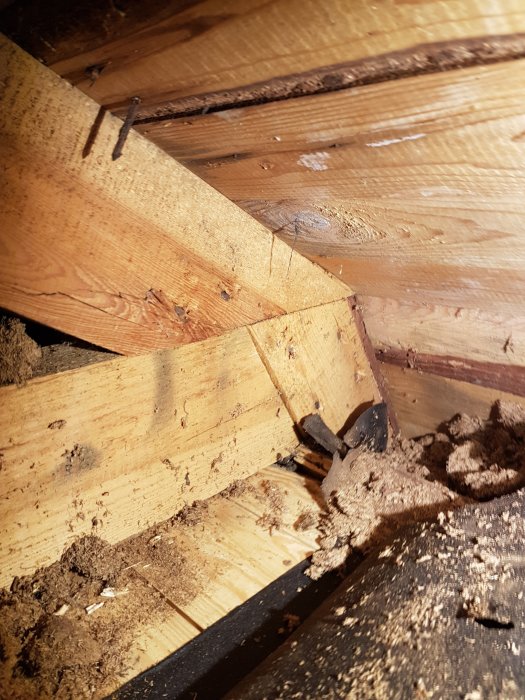
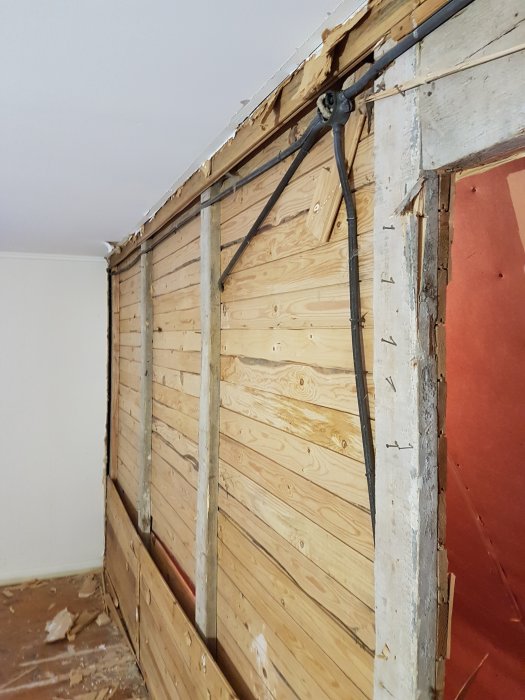
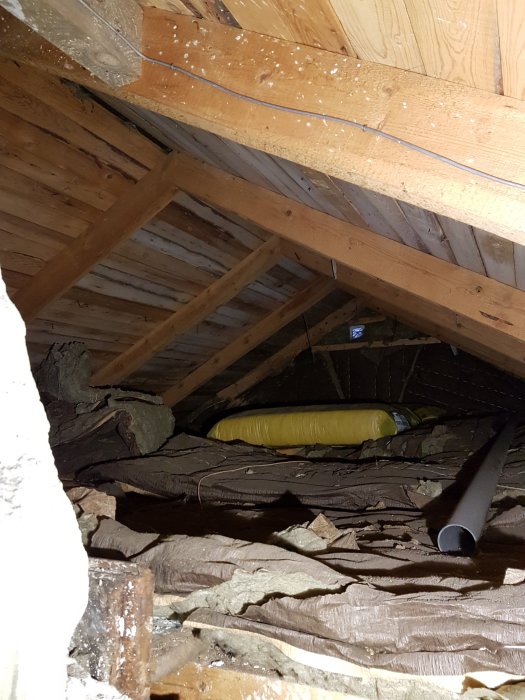
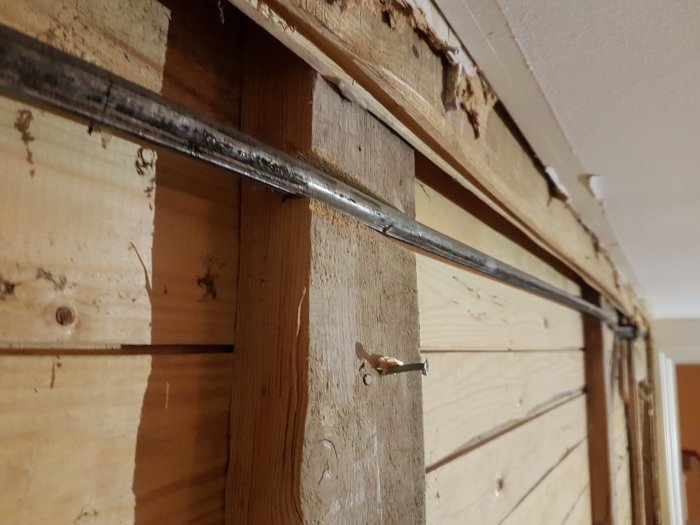
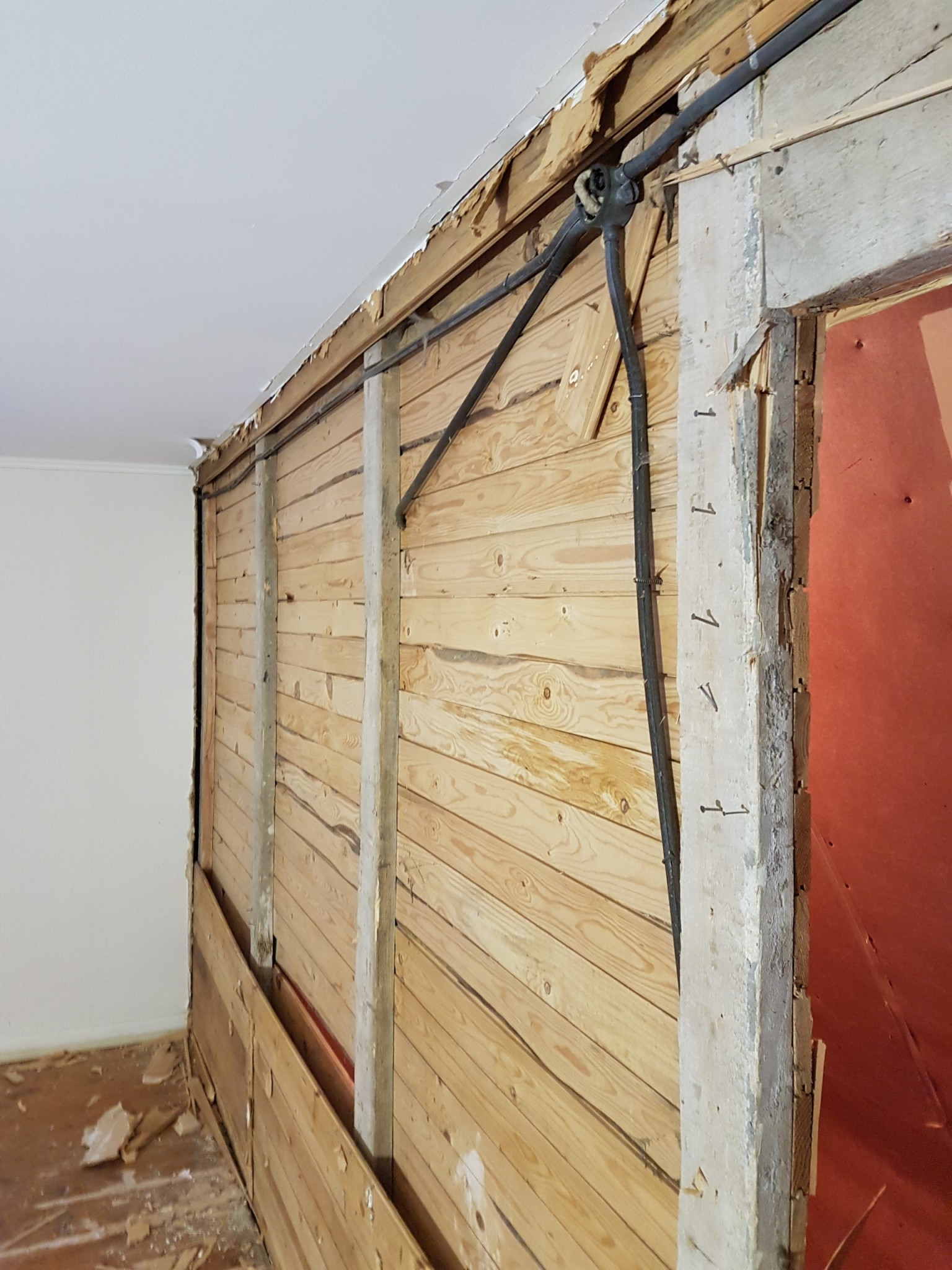
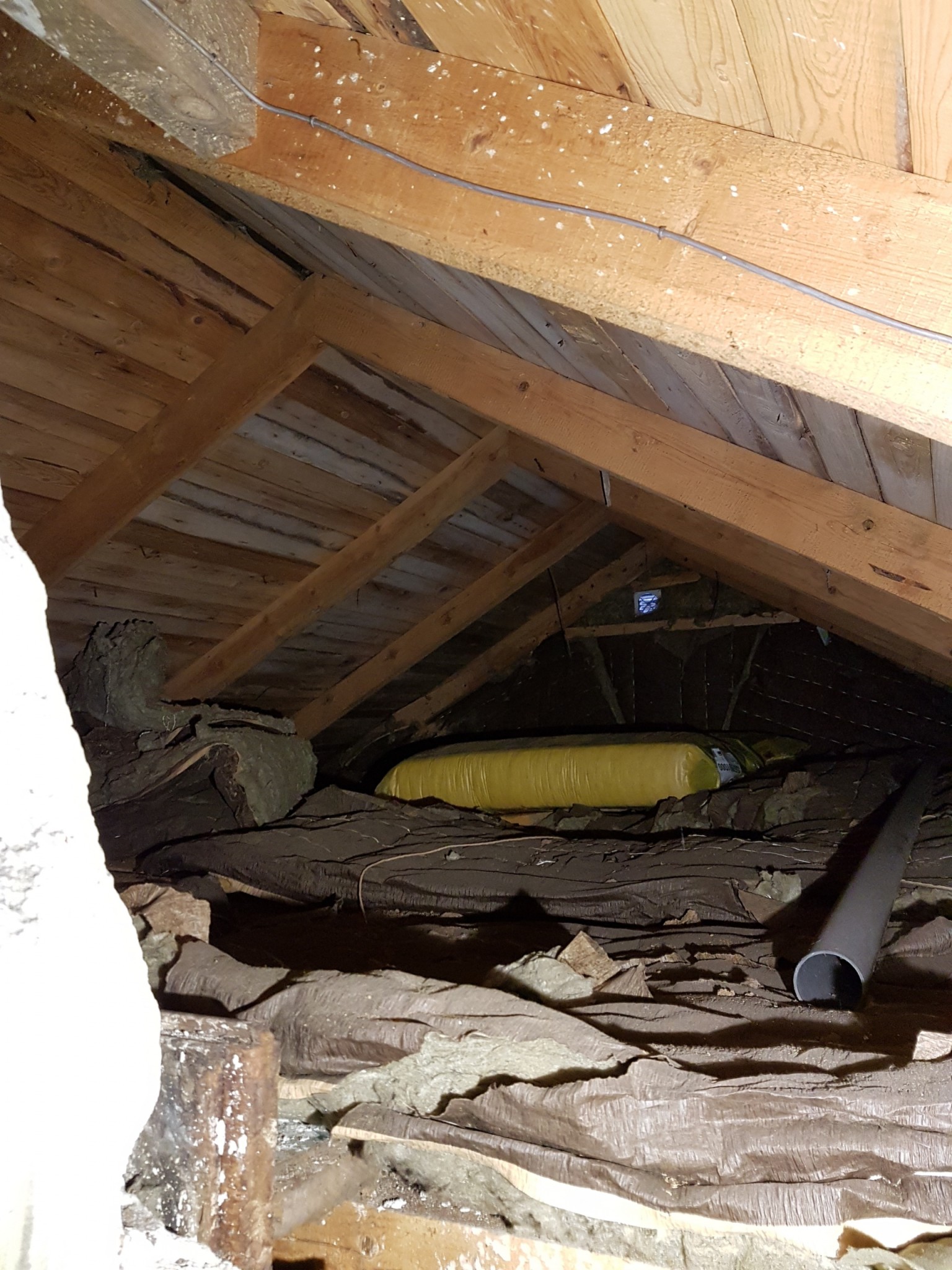
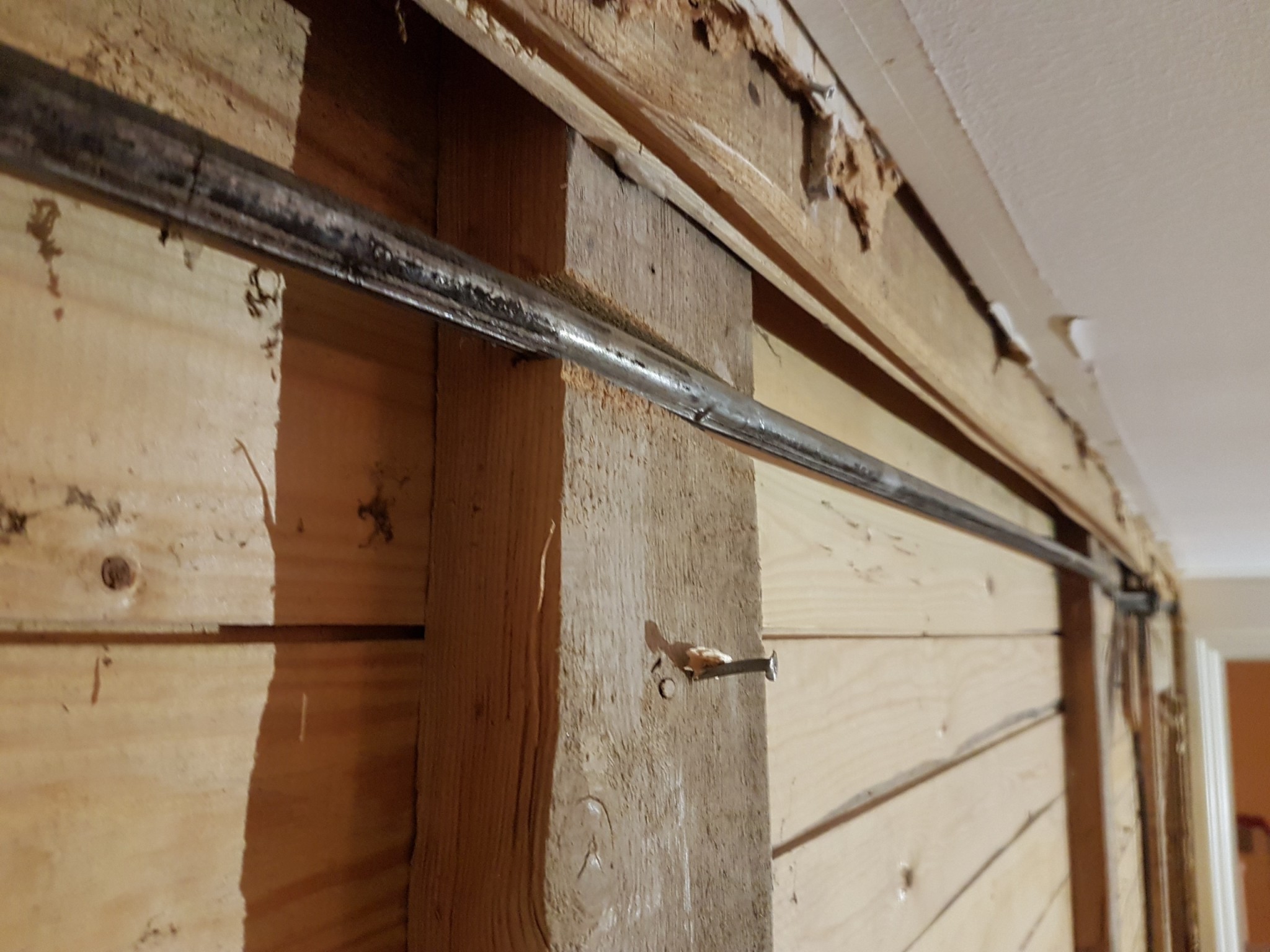
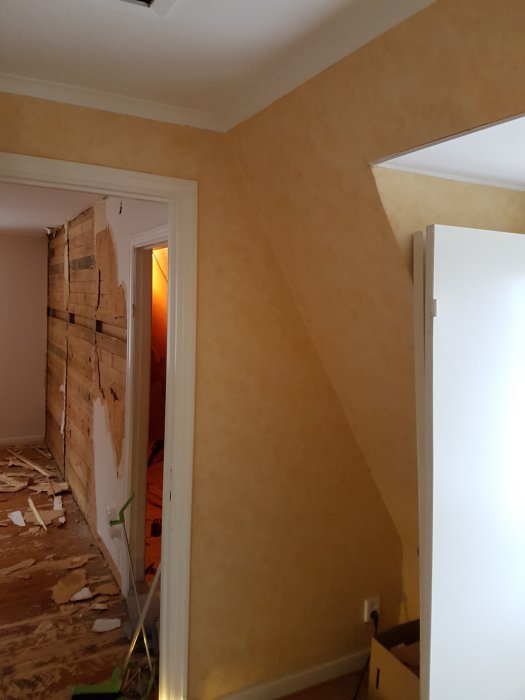
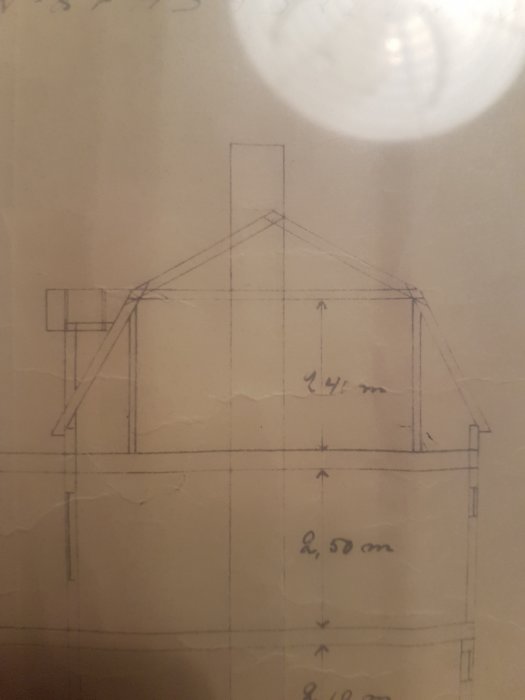
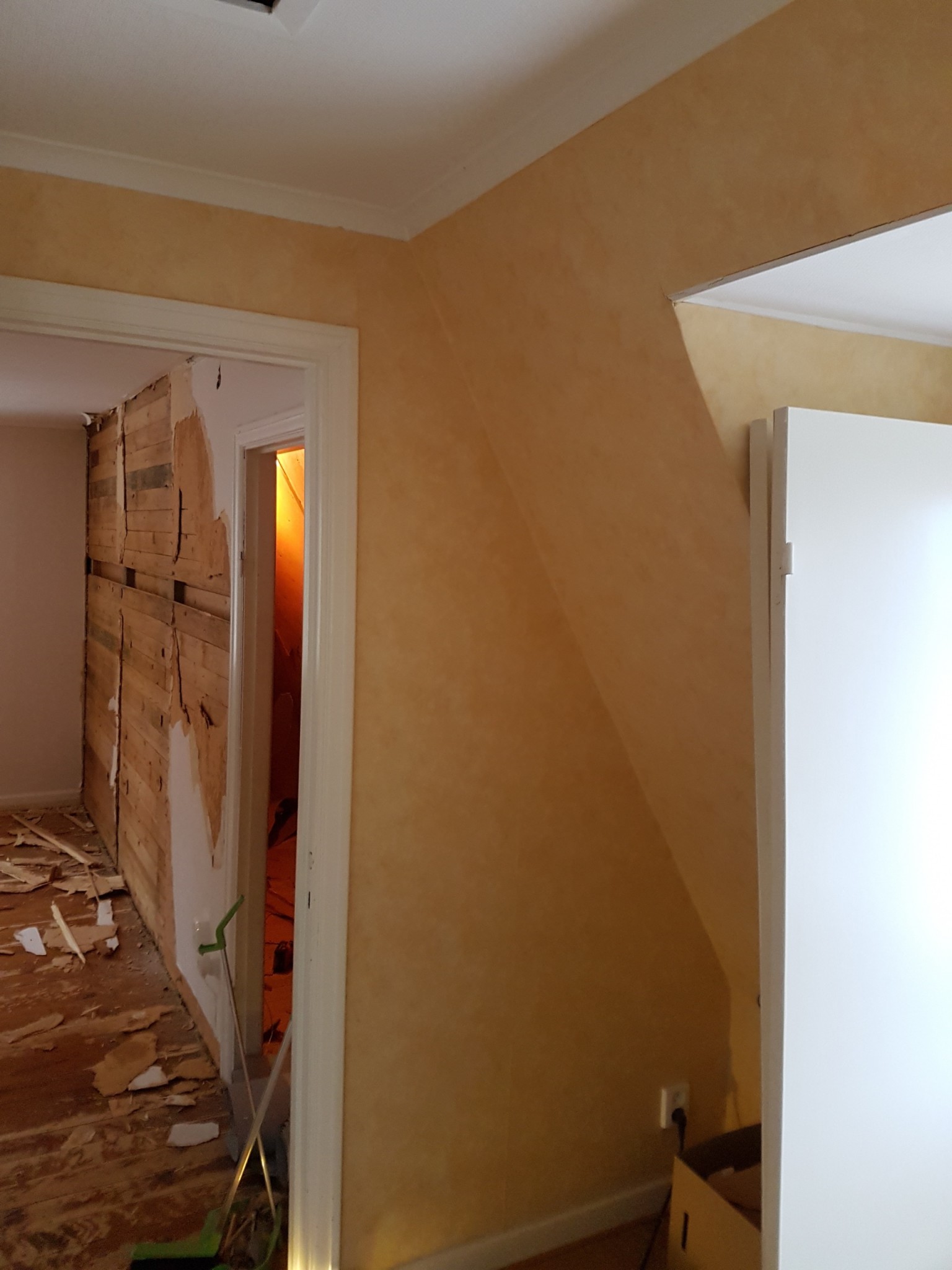
House from 1936 with crawl spaces that I want to take down. It has a mansard roof and the crawl spaces have some form of plank that functions as a rule where the tongue and groove timber in the crawl spaces is nailed against. It looks like the trusses rest on angled support legs that go diagonally down to the eaves. If that is the case, then the vertical studs shouldn't be supporting the trusses as well, right? They are rotated 90 degrees against the trusses and have notches for electrical wiring in them. What do you think?
The accounting is not perfect... It's a bit hard to see how the entire roof structure looks. However, one can undoubtedly say that the wall with rough sheathing on two sides can never be load-bearing. It's also wonderful to see roof beams with such a high proportion of heartwood pine. Are you sure you mean Mansard roof? According to my understanding, it is a broken roof that is also hipped (sloping towards the gables as well). It's also called a manor roof.
Thank you for the response. I understand that it's not entirely easy to see how it's built. It is the lower right board in the first of the previous images that I believe bears the load.
It goes diagonally down to the eave and follows the slanted wall in this picture.
The common practice with this type of truss is that the load from the upper truss section is carried by the vertical posts, which in turn, via a leveling batten, rest on floor joists that then transfer the load to the wall plate frame of the outer walls. I think your photographs do not match the drawing. The posts there are too slender. If instead, it is the lower rafters that are load-bearing, it should be evident at the point where these meet the outer wall.
Hello!
My house looks similar. I have easily been able to remove several of the "kattvindar." We determined that it was the "högbenen" that took up the forces. The studs in the "kattvindväggar" were not supporting the floor joists or rafters; the wall was built like a regular non-load-bearing wall. However, I think it's important not to remove "all" the walls on the upper floor. Even if the load-bearing capacity is okay, the structure can become shaky. I mainly mean interior walls 90 degrees to the "kattvindväggarna."
However, I would recommend that if you're not entirely sure, have a structural engineer who specializes in old houses come and take a look. That is, look in person and not just at the plans. Older houses can be a bit tricky sometimes... Good luck
Click here to reply
Vi vill skicka notiser för ämnen du bevakar och händelser som berör dig.