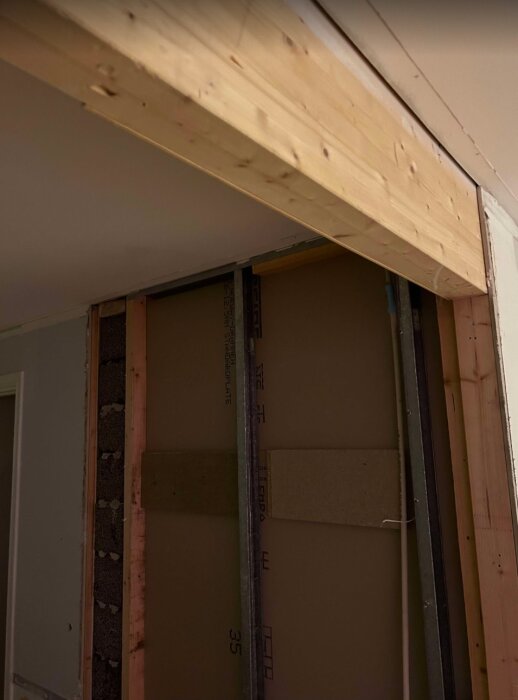
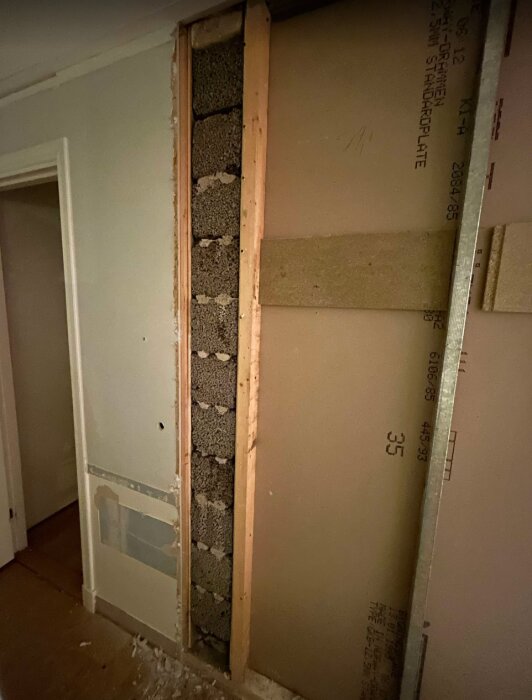
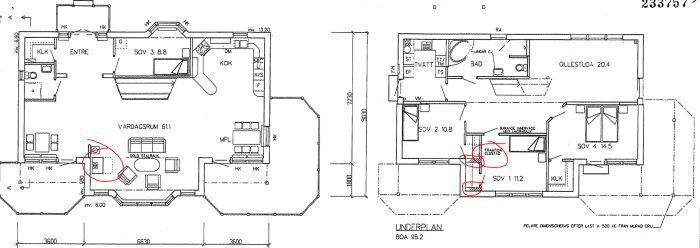
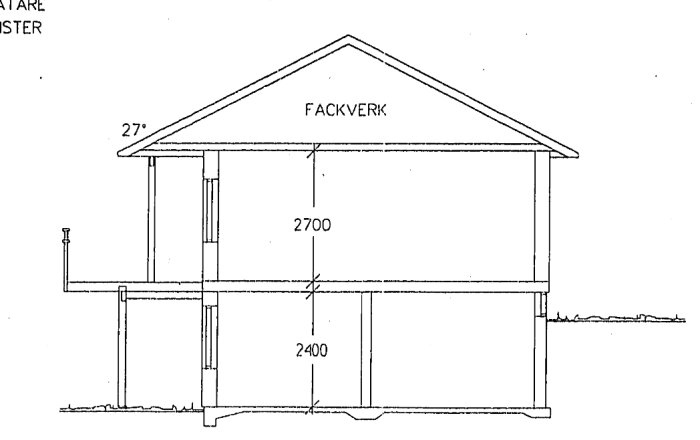
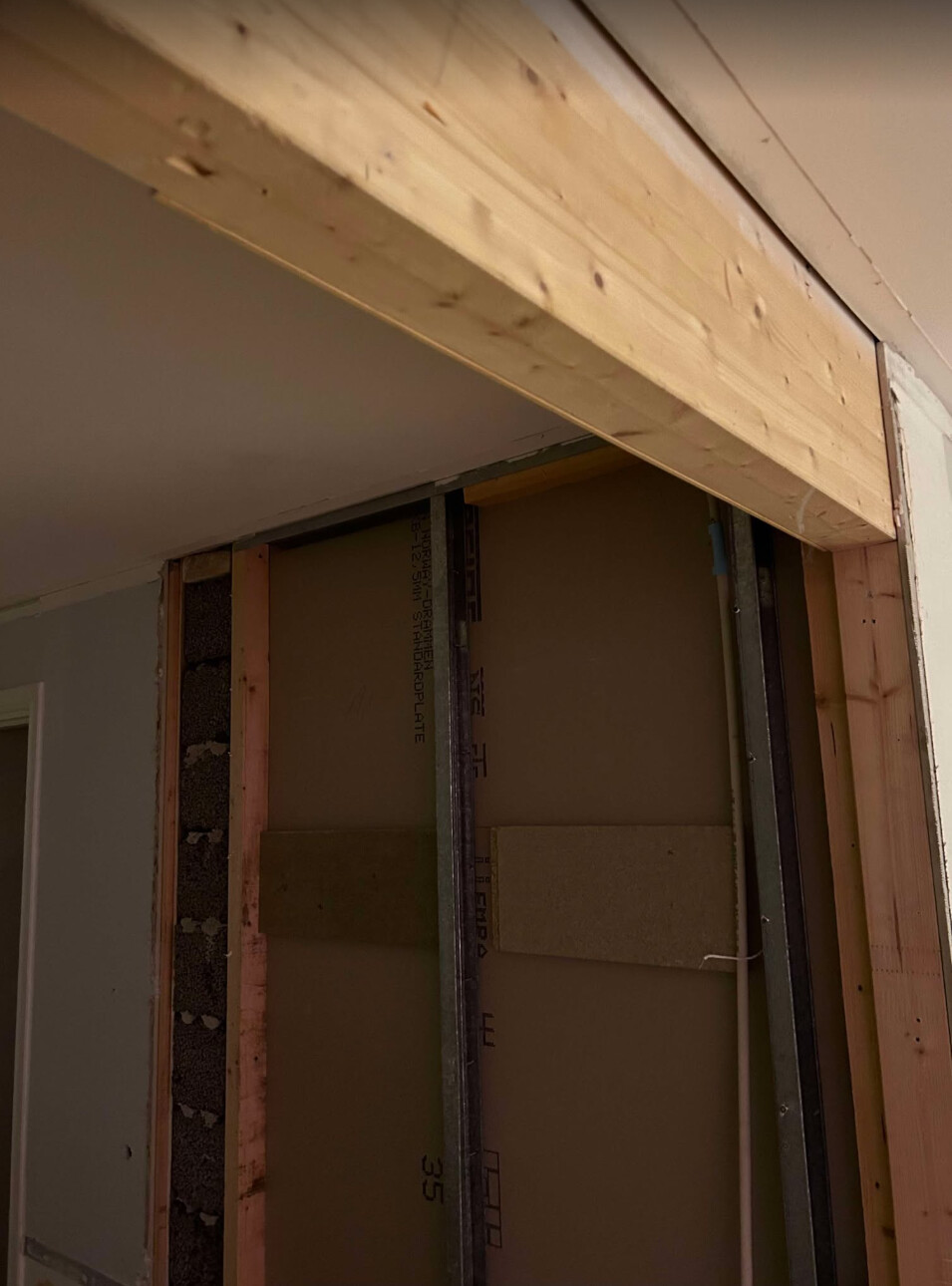
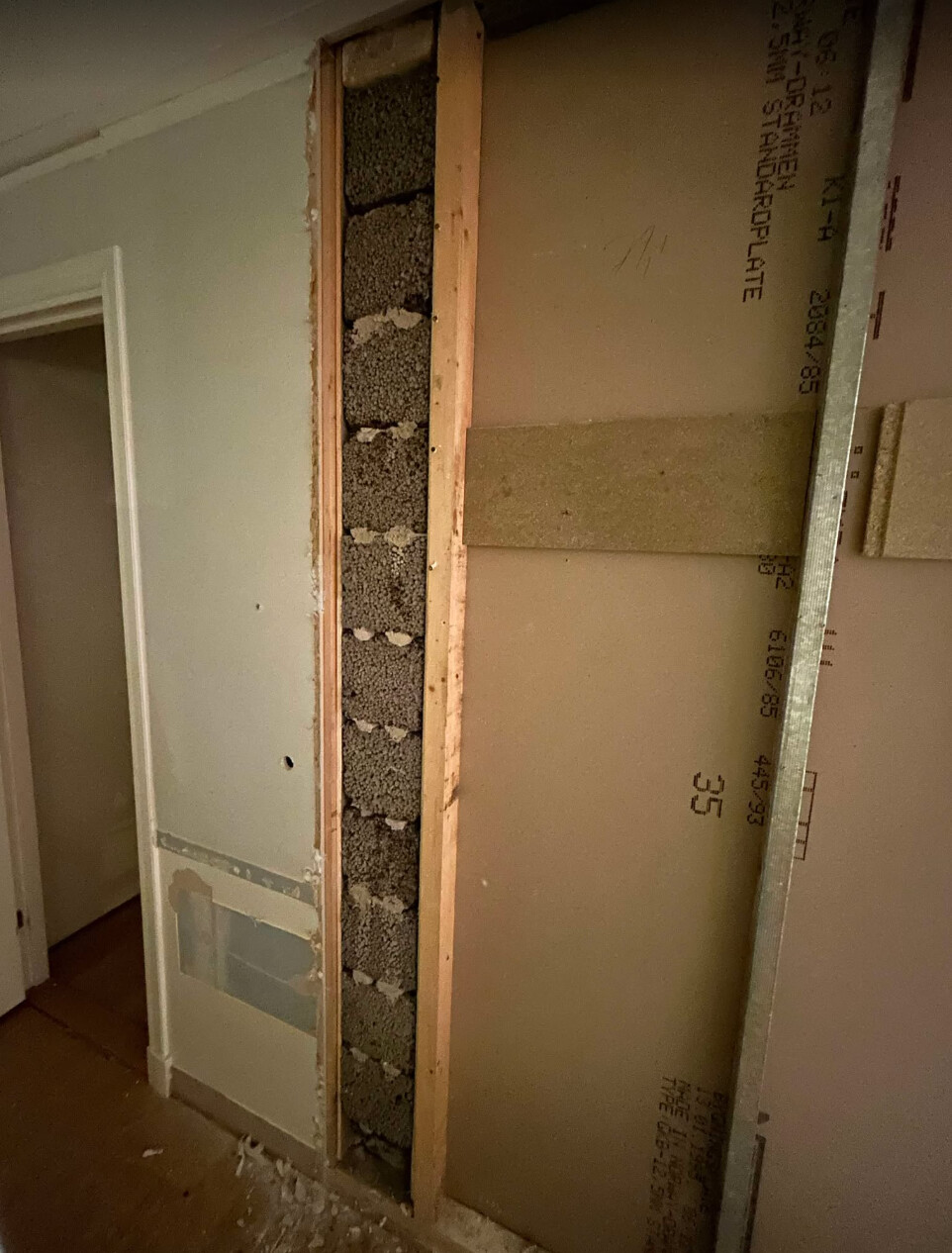
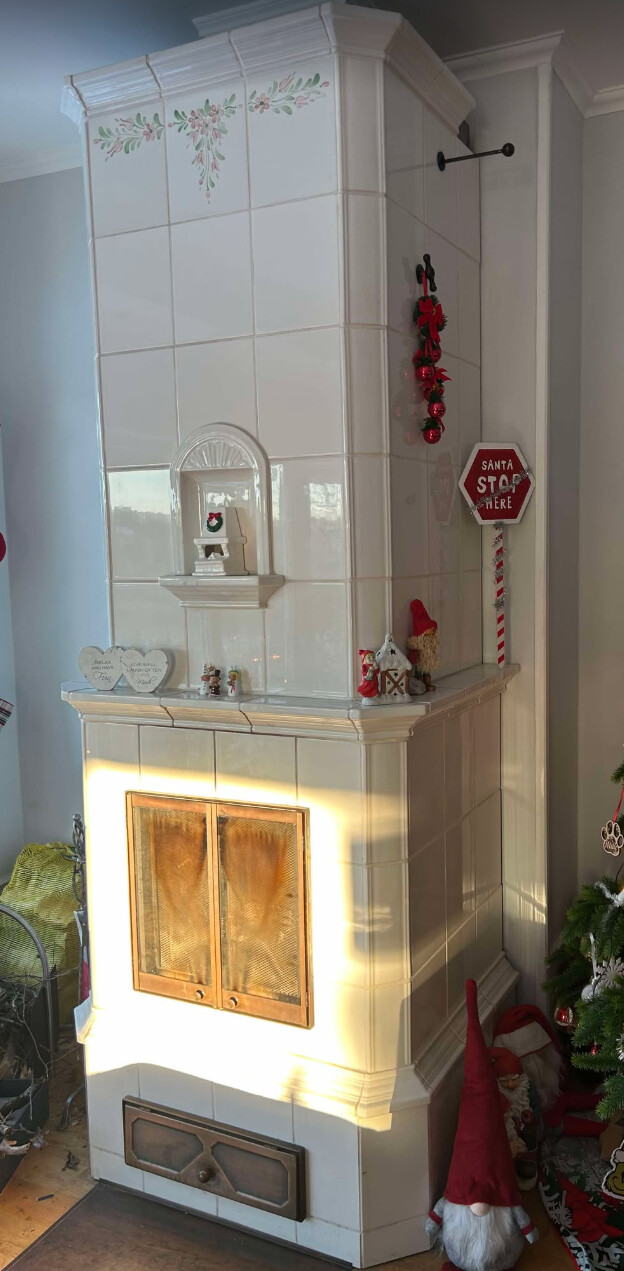
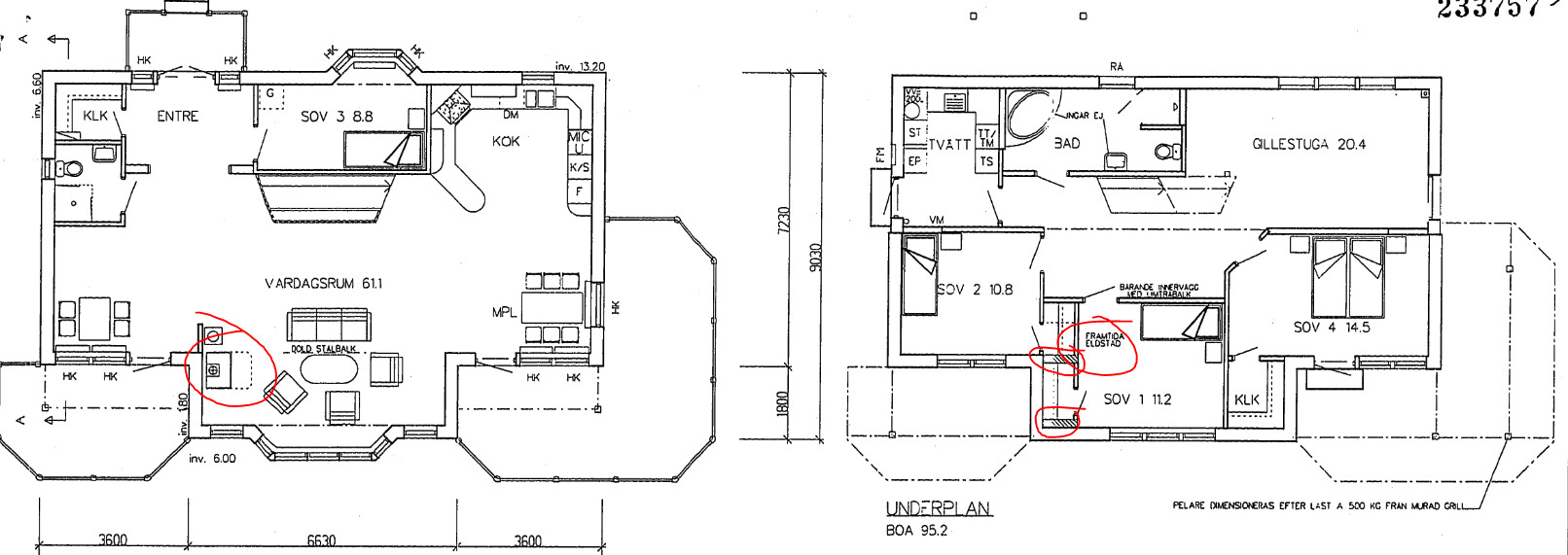
We were in the process of taking down some walls and came across a column of lecablock. I can see on the drawing that it is directly under a fireplace located on the upper floor, but it is also stated that it is a "future fireplace," some sort of fire protection?
What I'm wondering is if it's okay to just remove it? Or does it serve any function for the fireplace on the upper floor?
If there is a brick fireplace above the leca wall, I would assume it is load-bearing. I do not think you are allowed to place a heavy fireplace on a wooden joist floor today.
If it is a brick fireplace above the leca wall, I would assume that it is load-bearing. I don't think you are allowed to place a heavy fireplace on a wooden joist today.
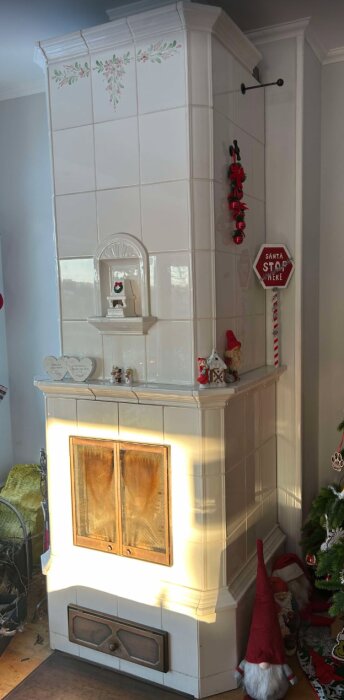
If it is specifically for the tiled stove or has some additional function, I don't know. But I find it hard to imagine that the wall is there for any other reason than to be load-bearing.
If it is specifically for the tiled stove or has some additional function, I don't know. But I find it hard to imagine that the wall is there for any reason other than to be load-bearing.
Ok! Thanks!
But isn't it strange that it doesn't appear as load-bearing on the drawing (as far as I can see), and what bothers me is also that it is specified as a "future fireplace," and there is also a similar wall at the bottom of the image in the drawing that I can't see how it can support the stove on the upper floor at all? What do you think about that?
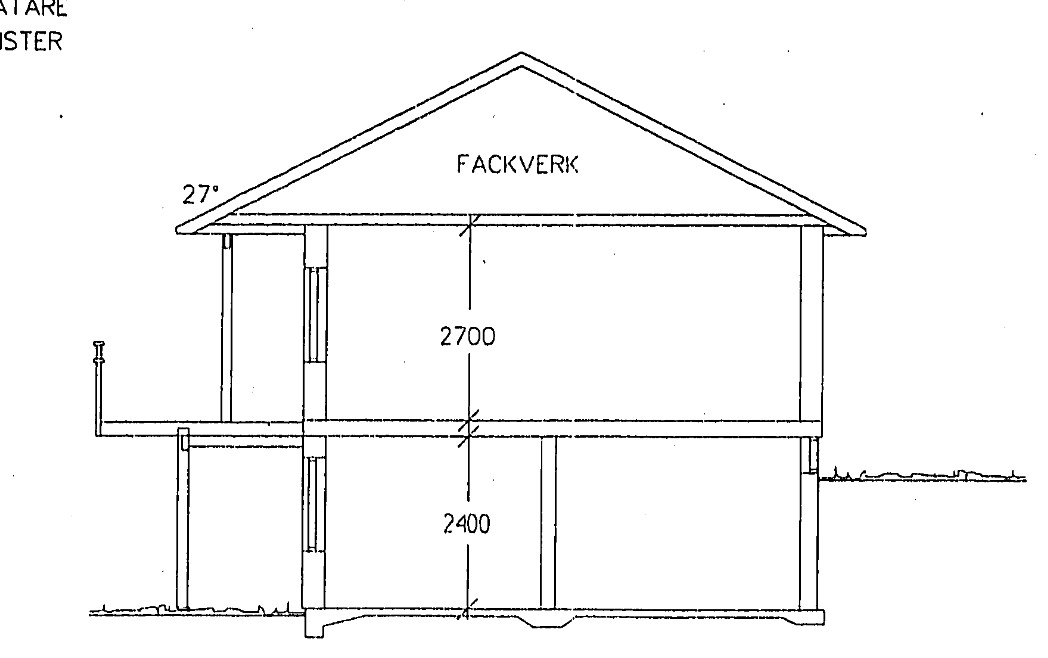
Find out if it is load-bearing. If it is not load-bearing, it is a life-threatening construction defect, and then you must build a load-bearing wall under the stove.
But isn't it strange that it's not shown as load-bearing on the drawing (as far as I can see), and what bothers me is also that it's specified as "future fireplace," and there's a similar wall at the bottom of the drawing which I can't see how it could support the stove on the upper floor at all? What do you think about that?
If I dare to guess, there is something load-bearing and non-combustible between the two walls whose job is to support the tile stove. I think it's the fire department that doesn't like it when tile stoves fall through the floor structure during a fire.
If I may venture a guess, there is something load-bearing and non-combustible between the two walls, whose task is to support the tiled stove. I believe it's the fire department that doesn't like it when tiled stoves fall through the floor structure during a fire.
If I dare to guess, there's something load-bearing and non-combustible between the two walls whose task is to support the stove. I believe it's the fire department that doesn't like it when stoves fall through the wooden beams during a fire.
It's also not very popular among residents when there's a fire behind the stove, and you have to jump out the window to avoid burning inside, shattering your knees in the fall. Wooden beams are too soft to place a masonry fireplace on. Sooner or later, the fire will escape through a crack. Such constructions were popular for a short period around 1900 but resulted in too many fires.
Click here to reply
Vi vill skicka notiser för ämnen du bevakar och händelser som berör dig.



Oopsjoppe said:
But isn't it strange that it's not shown as load-bearing on the drawing (as far as I can see), and what bothers me is also that it's specified as "future fireplace," and there's a similar wall at the bottom of the drawing which I can't see how it could support the stove on the upper floor at all? What do you think about that?