
3,259 views ·
19 replies
3k views
19 replies
Can a load-bearing wall support an overhanging floor?
Recently bought a house that I'm completely renovating and want to open up by the staircase since the opening is so small that you can easily hit your head on the third step.
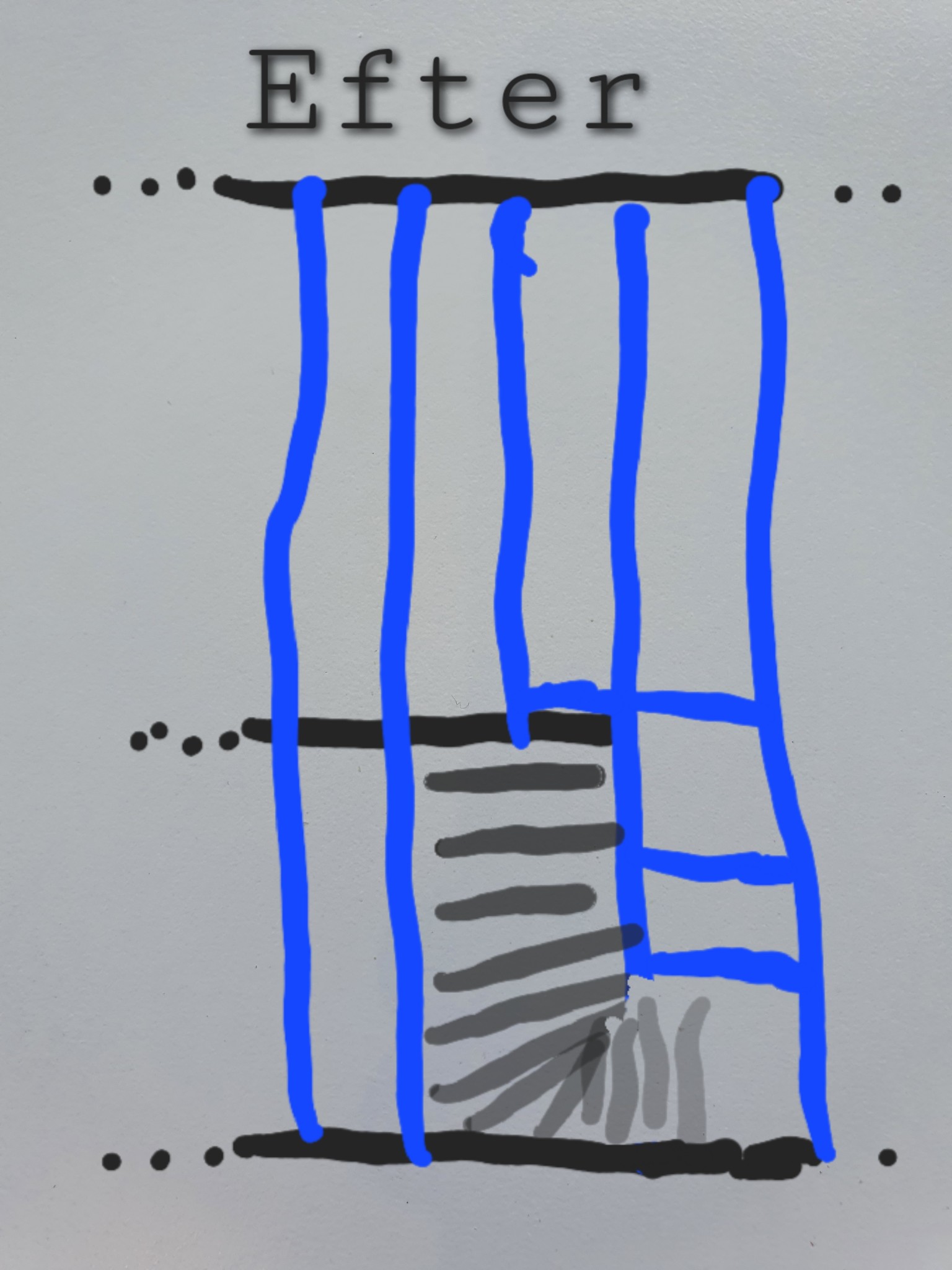
The question is if I can cut a joist (140mm x 40mm) right above the start of the staircase. The joist rests on a load-bearing wall about 1.5 meters into the room from where I want to cut it. Can the load-bearing wall support this overhang of the floor of approximately 1.5 meters given that I reinforce the cut joist against the next joist (600mm apart) or do I need to place a post where I want to cut the joist?
See the image for clarification: I want to cut the joist where the handsaw is. The load-bearing wall runs just under the floor when you come up the stairs.
P.S. I can't cut the joist at the load-bearing wall because part of the floor area after the load-bearing wall is needed.
Thanks in advance!
The question is if I can cut a joist (140mm x 40mm) right above the start of the staircase. The joist rests on a load-bearing wall about 1.5 meters into the room from where I want to cut it. Can the load-bearing wall support this overhang of the floor of approximately 1.5 meters given that I reinforce the cut joist against the next joist (600mm apart) or do I need to place a post where I want to cut the joist?
See the image for clarification: I want to cut the joist where the handsaw is. The load-bearing wall runs just under the floor when you come up the stairs.
P.S. I can't cut the joist at the load-bearing wall because part of the floor area after the load-bearing wall is needed.
Thanks in advance!


As you have drawn, I don't have much confidence, then you will have a 1.5m beam lacking some support. Risk of deflection.
Do these beams possibly constitute the lower arm in the truss as well? If so, you should consider handling the tensile force. Usually, you would then recess a horizontal stud in the lower arm if it is cut.
Do these beams possibly constitute the lower arm in the truss as well? If so, you should consider handling the tensile force. Usually, you would then recess a horizontal stud in the lower arm if it is cut.
Last edited:
Thank you for your response!B Bläcktudan said:As you have drawn, I don't really believe it, then you will have a 1.5m beam that lacks certain support. Risk of bending.
Are these beams possibly the lower arms of the truss as well? In that case, you should consider absorbing the tensile force. Usually, you then notch in a horizontal beam in the lower arm if it's cut.
Okay, I understand what you mean. Would it possibly work with a shorter overhang then, about 70cm?
I haven't checked yet if the beams are lower arms but thanks for the tip, and I'll take a look at this!


You should be able to make some welded solution you can screw up into the ceiling, around the hole, and to the wall. It doesn't need to extend much in height under the ceiling if it can go into the ceiling and stabilize.
Instead of a pillar in the corner going down, you could solve it with a hanger going up that you might be able to attach to the ceiling above. Since you need a railing around the hole anyway, continuing upwards after the railing shouldn't be particularly disruptive.

Member
· Västernorrland
· 11 692 posts
Now I can't see what type of stair it is, but if it's an older house, there would definitely have been a post there. An open stair in that manner also looks quite odd, so aesthetically, the stair would also benefit from having a post there that blends into the stair.
Yes, I understand what you mean. But it probably looks especially odd right now since we've removed the railing.S Stefan1972 said:
