
3,840 views ·
1 replies
4k views
1 replies
Building an office in the basement

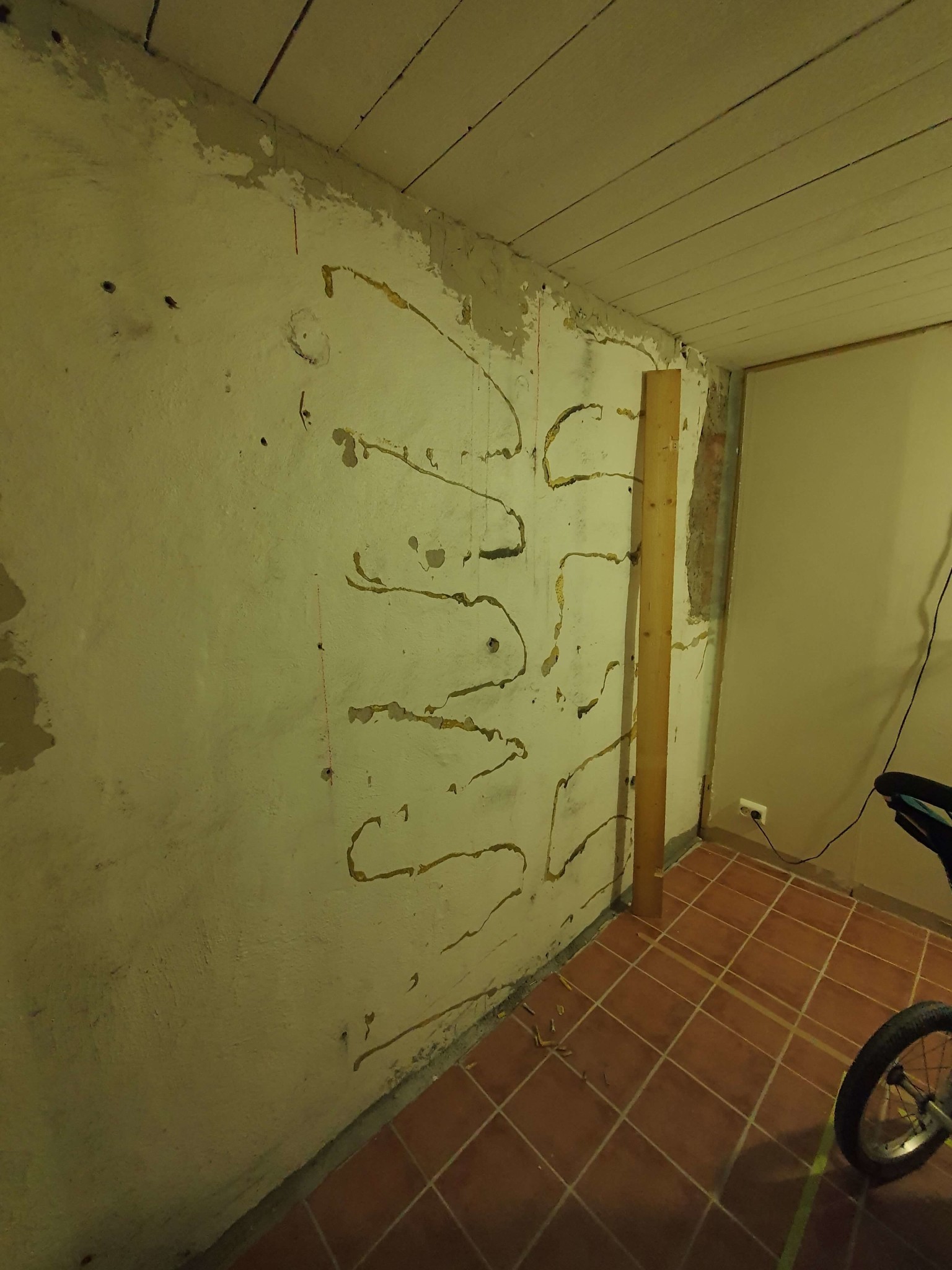
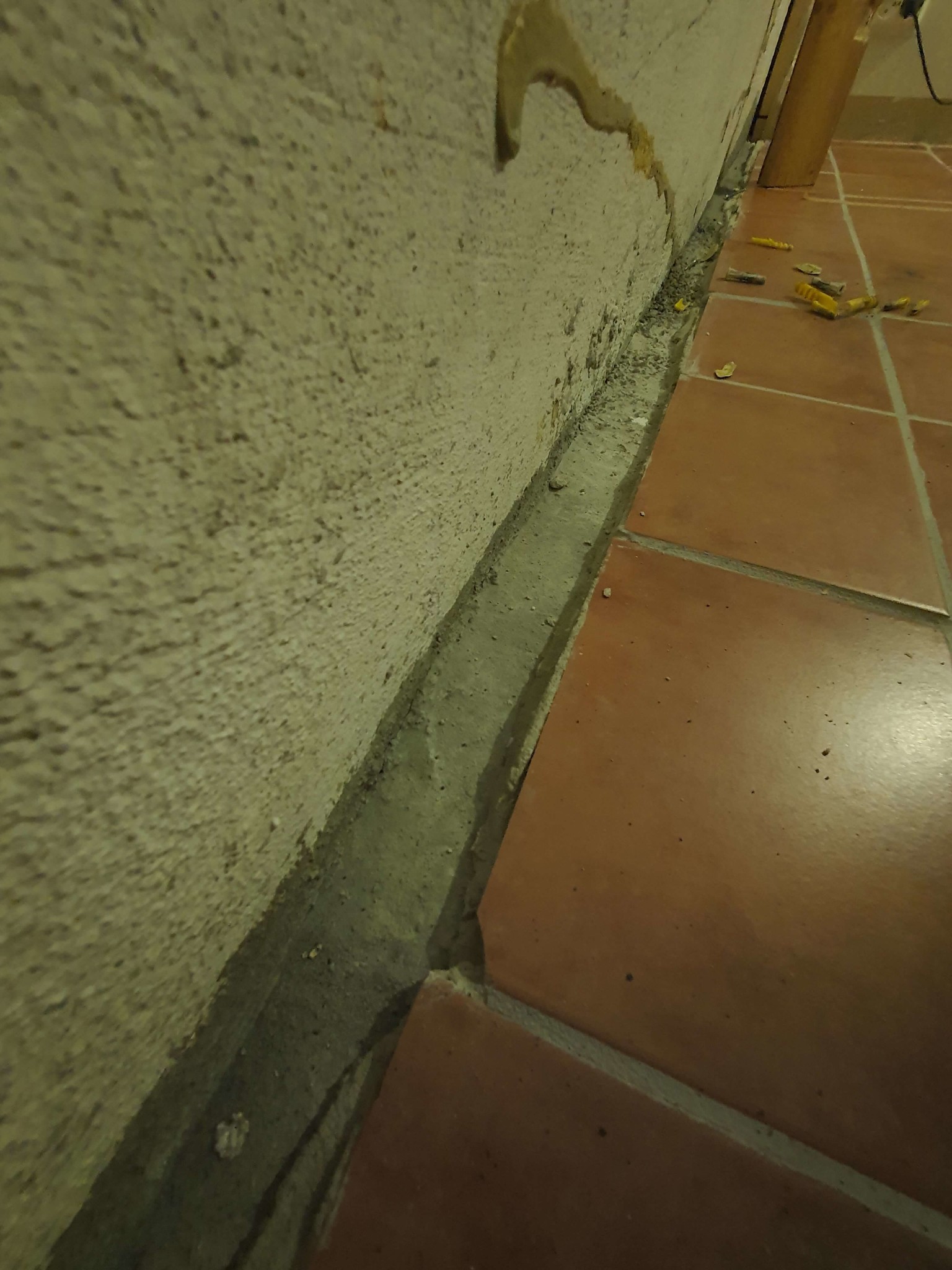
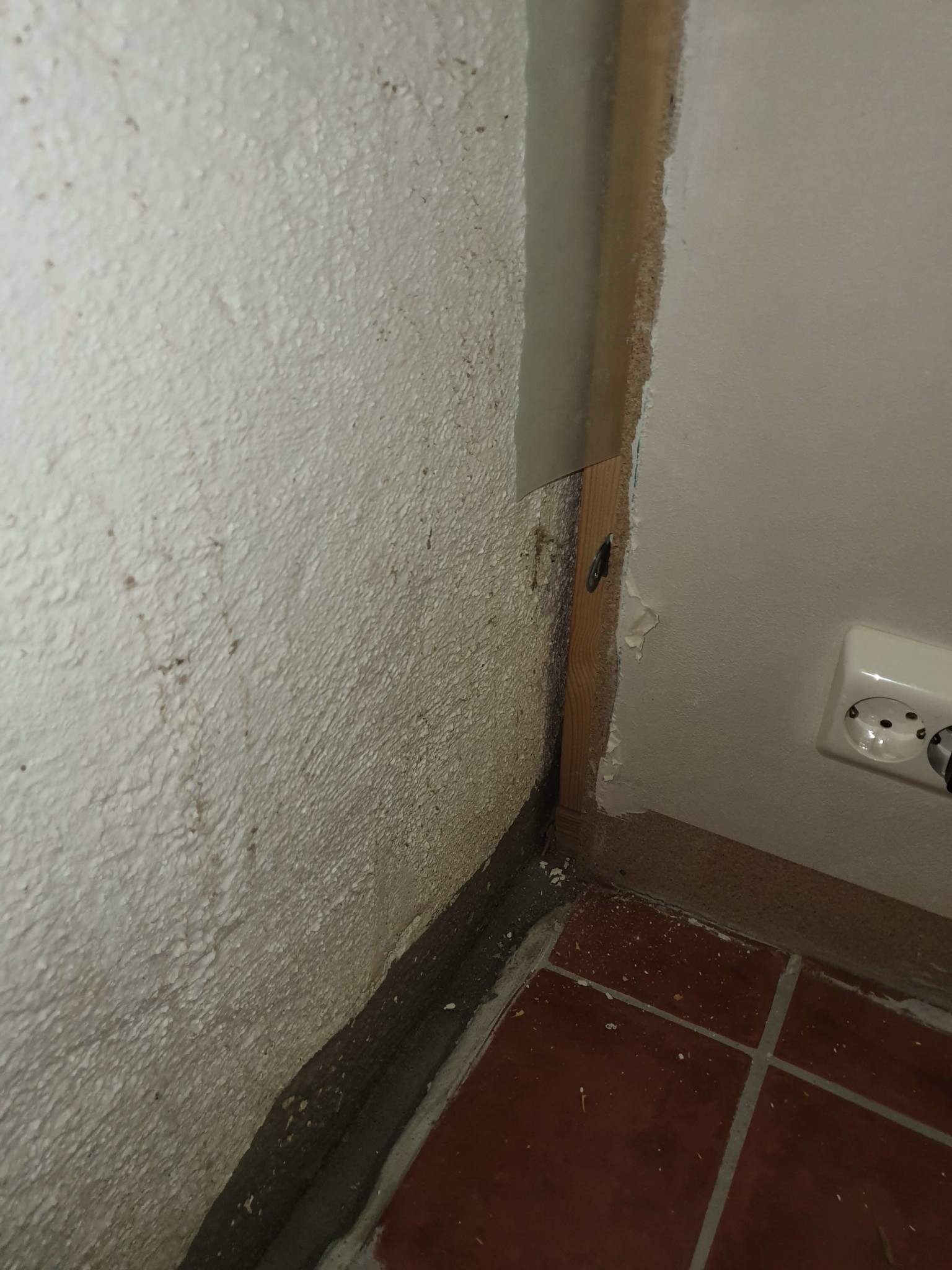
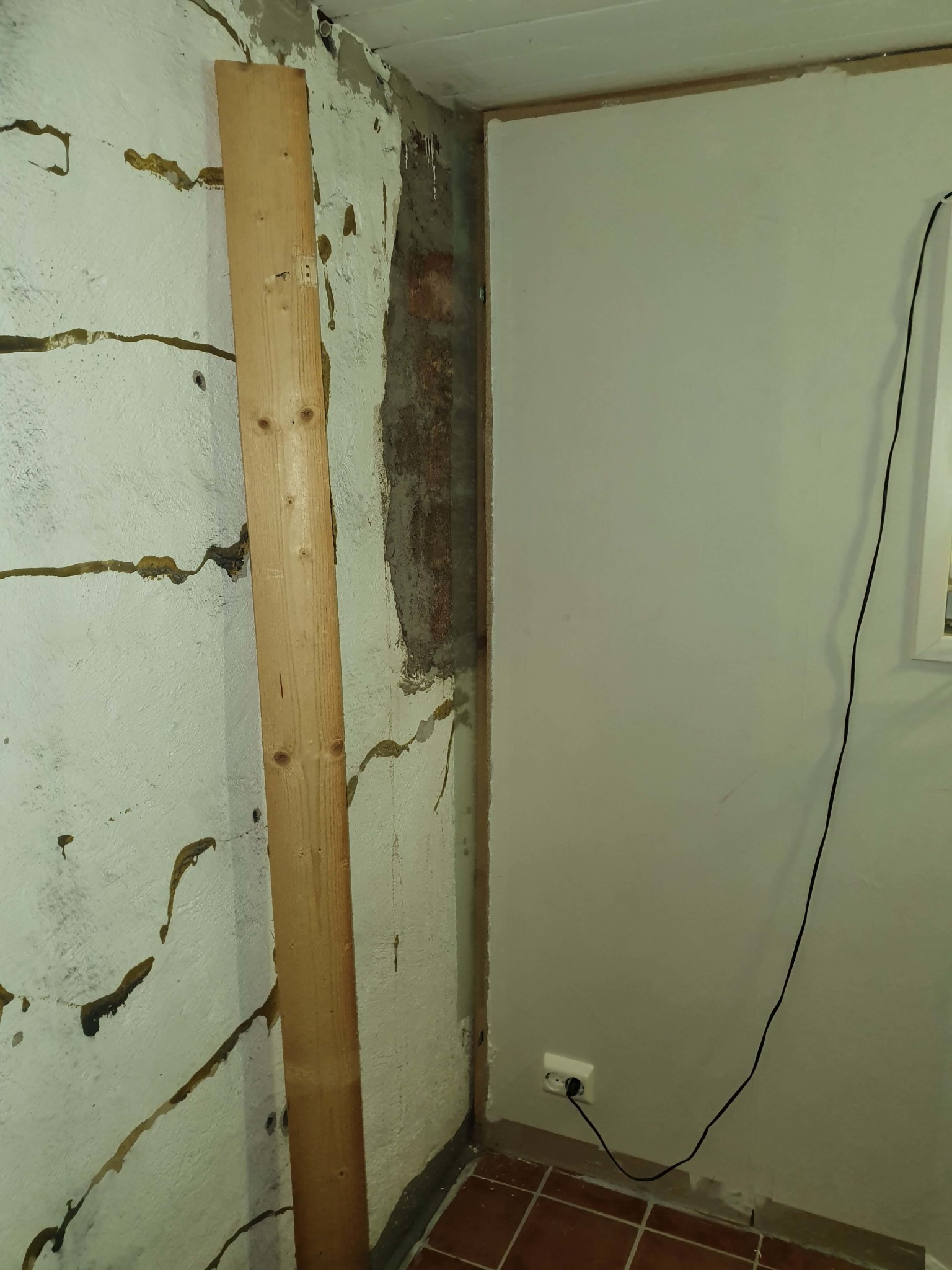
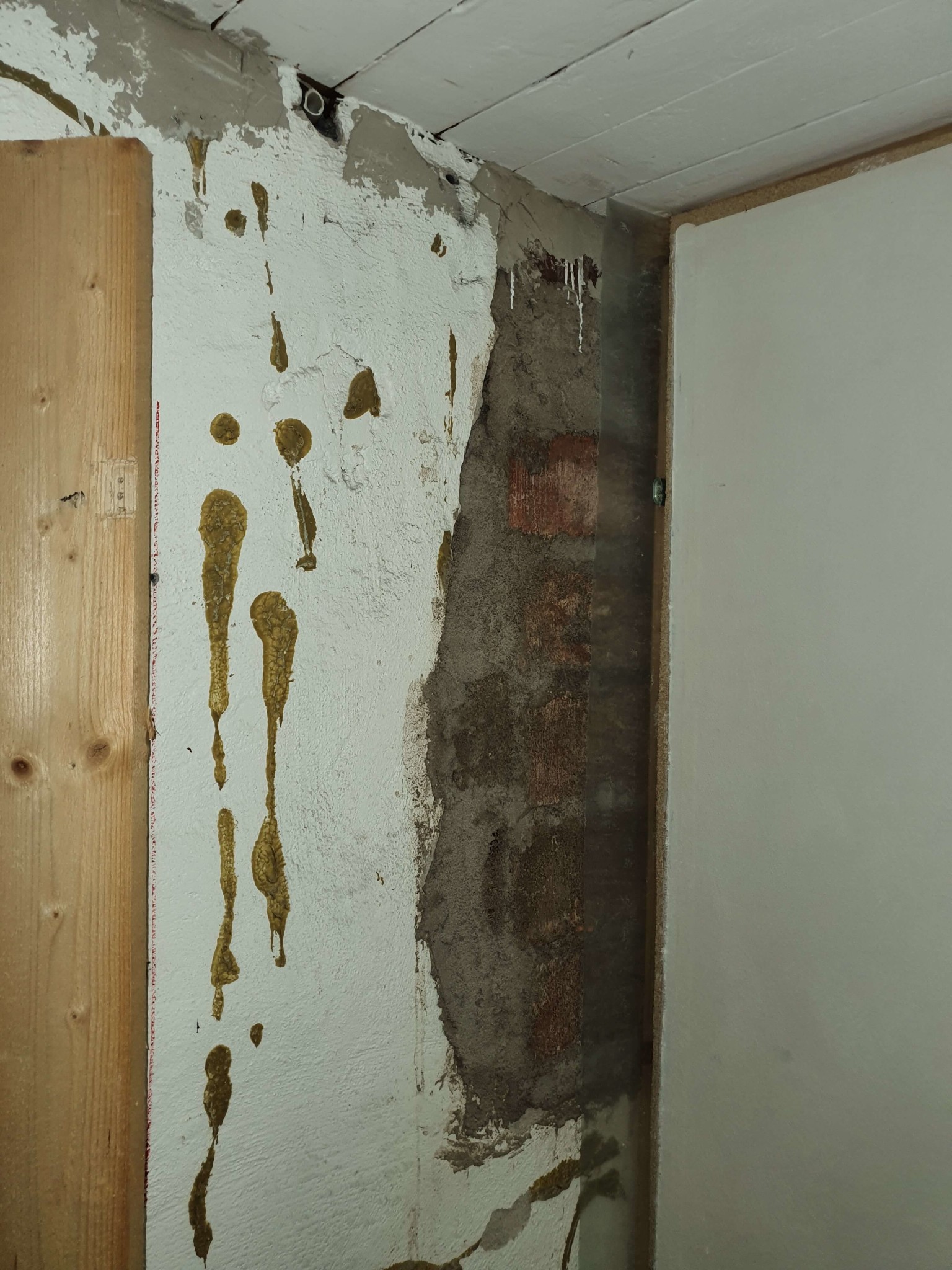
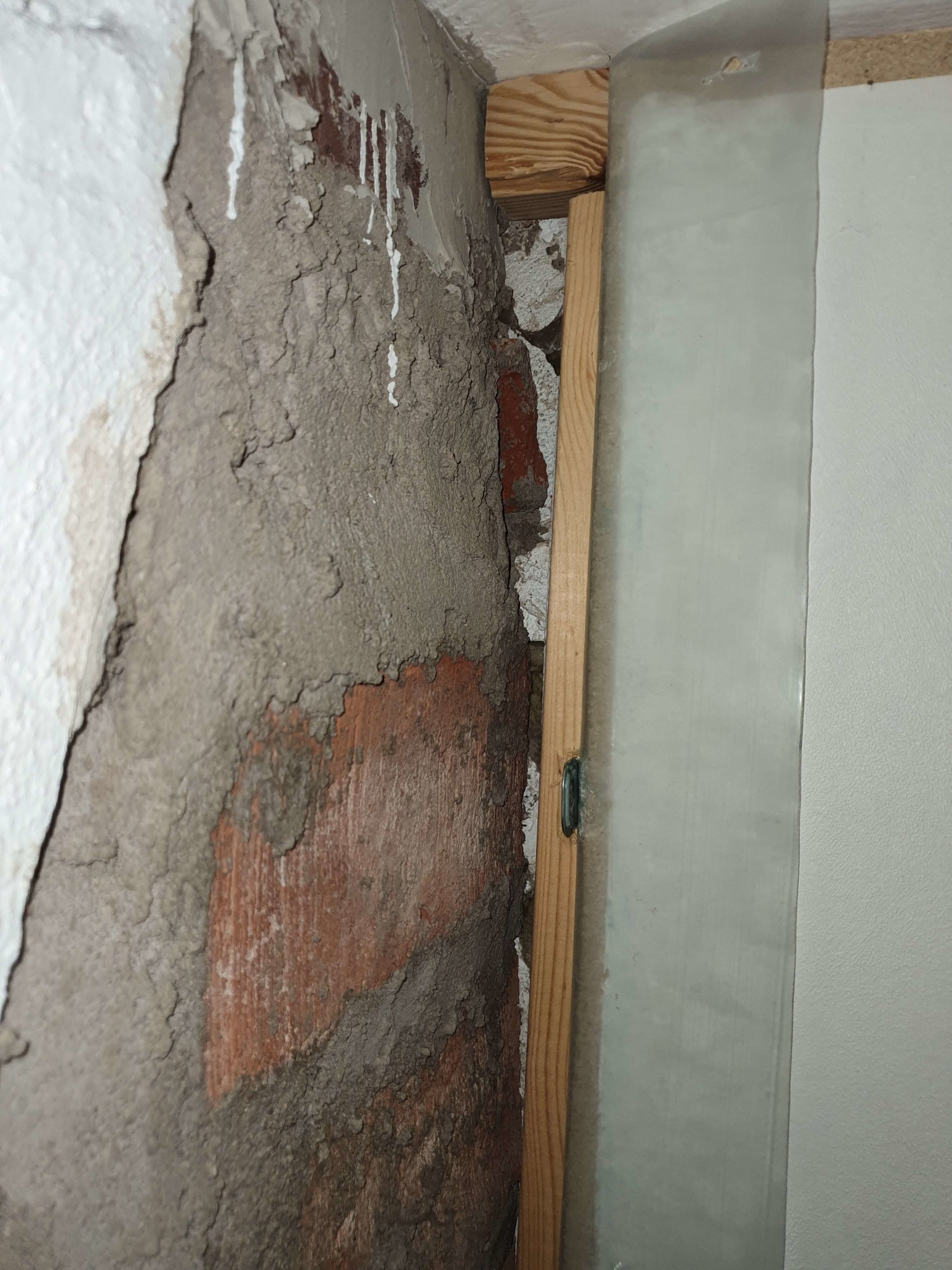
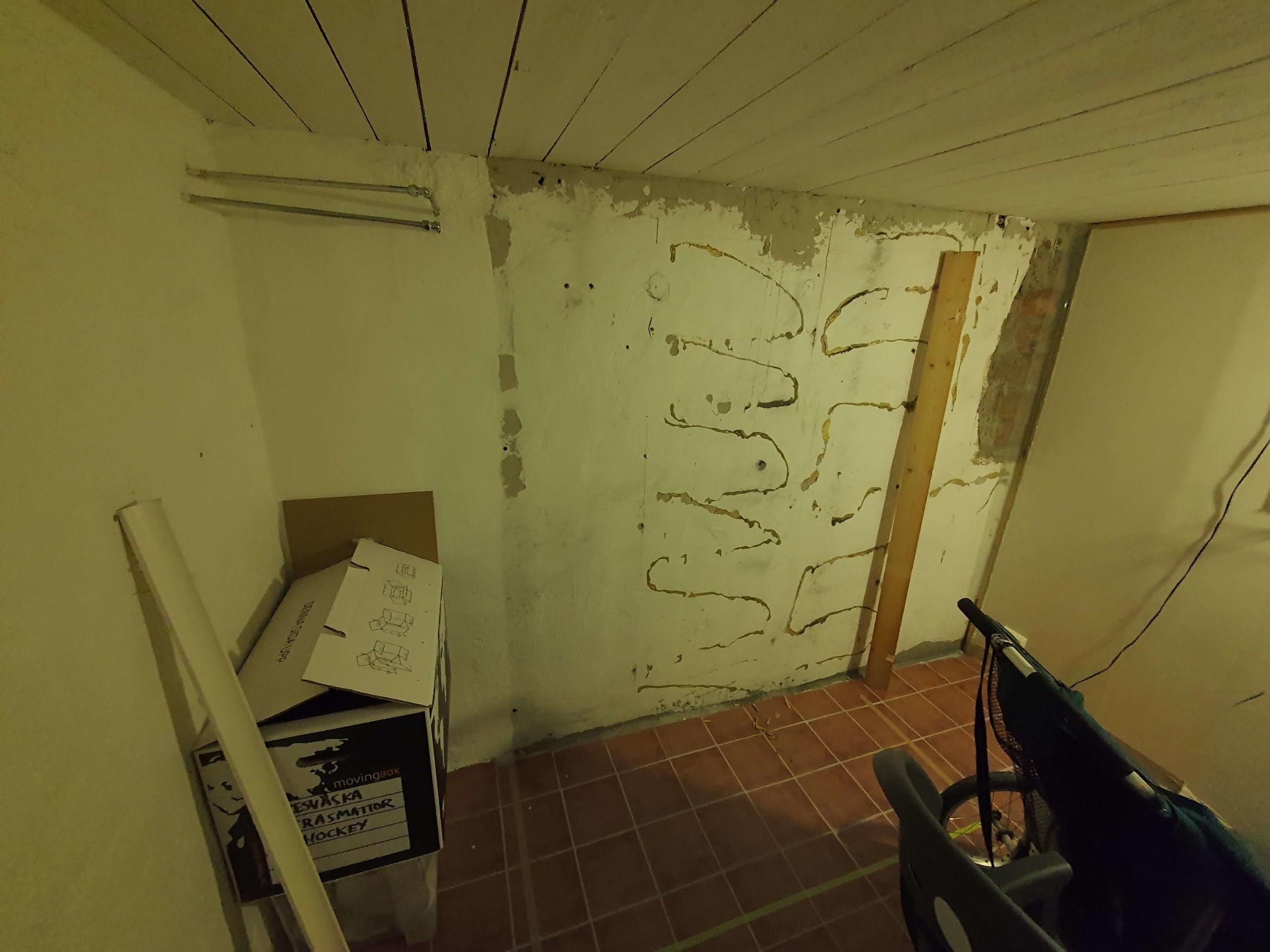
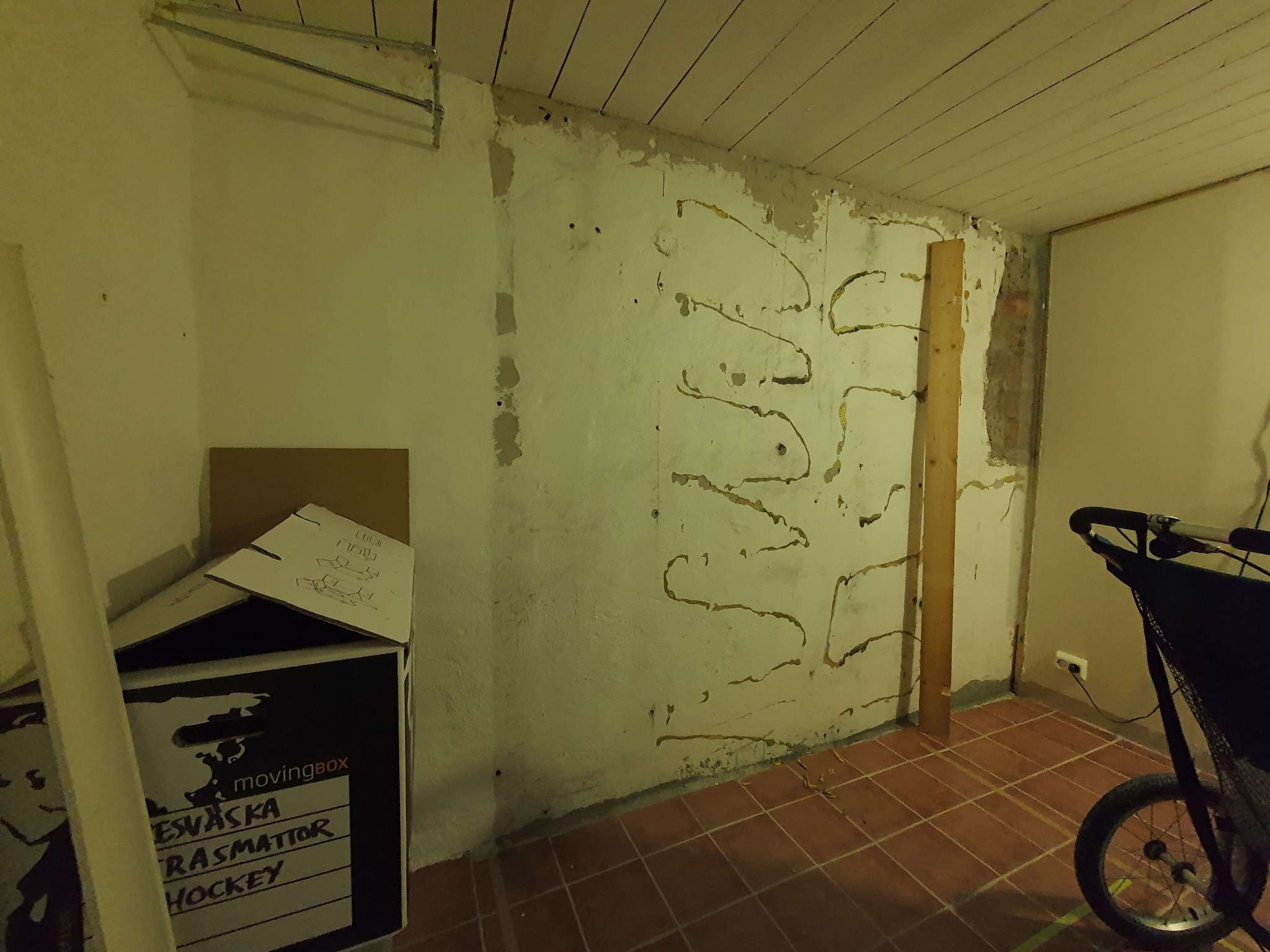
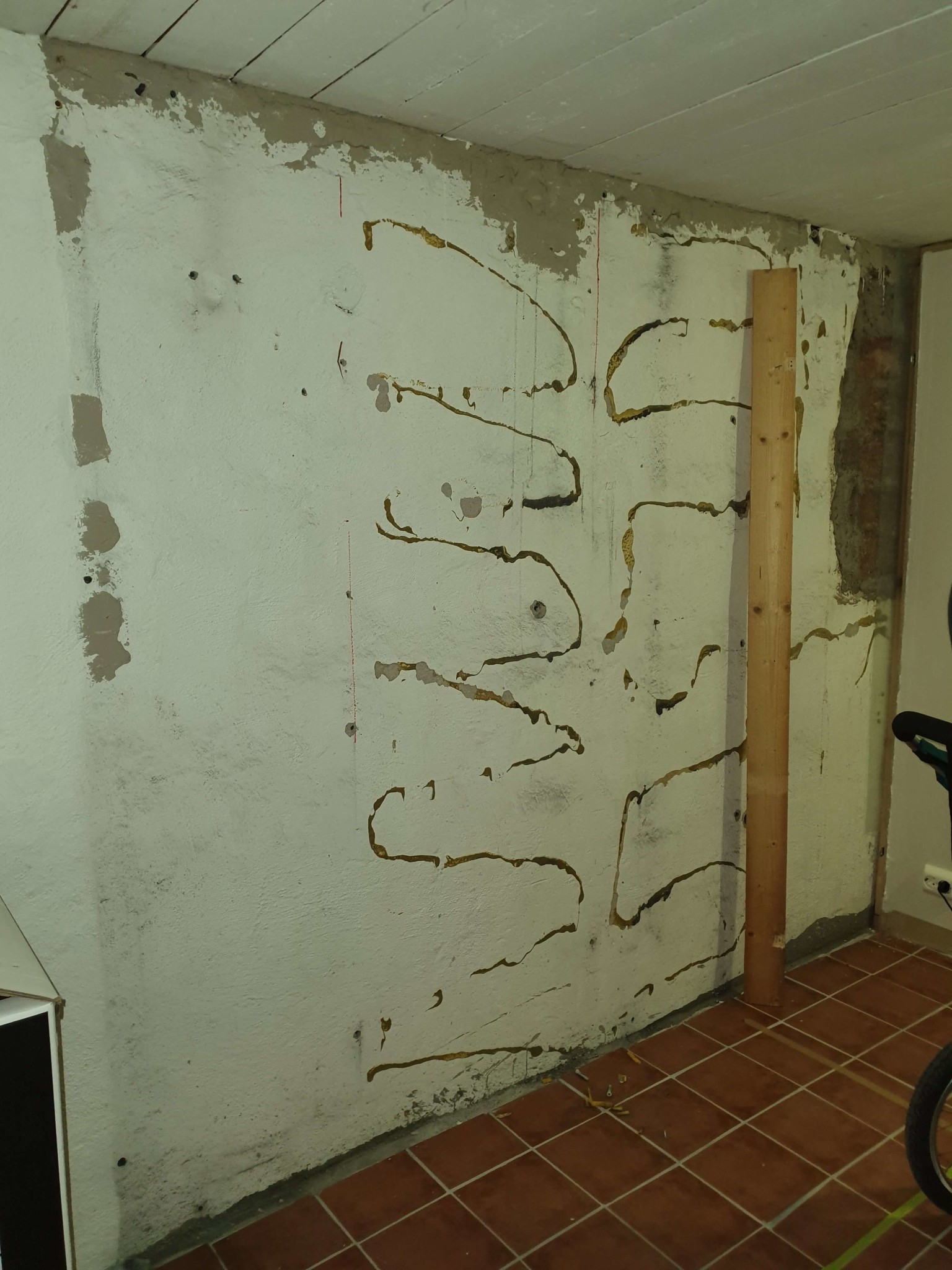
We are going to build offices in the basement, and some questions have now come up. We are complete novices, and this is our first house. The house is from the 1930s, semi-detached. However, all the room's exterior walls are above ground, additionally insulated, and plastered on the outside. The room was previously turned into an office, but we feel we need to freshen up all the surfaces. We have also removed a built-in closet, and therefore also a "half interior wall", see pictures.
Now to some questions:
1. Where we removed a previous interior wall (wooden studs, polystyrene board, chipboard, and wallpaper), is it best to plaster and paint with silicate? Or should one put up some kind of boards with new insulation?
2. Walls against the exterior wall: Here are wooden studs with polystyrene and chipboard and some plastic sheeting left — should this also be redone/replaced etc? Or can it remain as is?
3. The ceiling is currently composed of boards with gaps, can these be filled/sealed for a more uniform appearance, or is it good for them to vent slightly?
4. The floor was installed previously and has heating loops (not connected), can it just remain and have carpet laid? Anything to consider? Since the tiling is not completely even, we were thinking of laying some form of board under the carpet.
Super grateful for educational answers since we are not very knowledgeable on the subject
Now to some questions:
1. Where we removed a previous interior wall (wooden studs, polystyrene board, chipboard, and wallpaper), is it best to plaster and paint with silicate? Or should one put up some kind of boards with new insulation?
2. Walls against the exterior wall: Here are wooden studs with polystyrene and chipboard and some plastic sheeting left — should this also be redone/replaced etc? Or can it remain as is?
3. The ceiling is currently composed of boards with gaps, can these be filled/sealed for a more uniform appearance, or is it good for them to vent slightly?
4. The floor was installed previously and has heating loops (not connected), can it just remain and have carpet laid? Anything to consider? Since the tiling is not completely even, we were thinking of laying some form of board under the carpet.
Super grateful for educational answers since we are not very knowledgeable on the subject
1. You should specify which level you want. If you want a nice office, plastering might be preferable, but you should use an air gap and steel studs (not wood) and make it ventilated at the floor and ceiling so air can circulate, otherwise, you might encounter moisture problems. You shouldn't paint with silicate paint unless it was originally used.
2. See above regarding wood and damp basement walls.
3. It is fine to use caulking, but use the right type that is elastic and paintable.
4. It's fine, but you should check underneath occasionally to prevent trapped moisture or ensure the carpet can breathe. The board should not be organic.
5. You should check the ventilation here if you'll be working for longer periods, especially if doing computer work. I would recommend an airflow of 20 l/s.
2. See above regarding wood and damp basement walls.
3. It is fine to use caulking, but use the right type that is elastic and paintable.
4. It's fine, but you should check underneath occasionally to prevent trapped moisture or ensure the carpet can breathe. The board should not be organic.
5. You should check the ventilation here if you'll be working for longer periods, especially if doing computer work. I would recommend an airflow of 20 l/s.
Click here to reply
Similar threads
-
Build wall basement
Building Materials and Construction Technology -
How to build an interior wall in a basement split-level house 1967
Building Materials and Construction Technology -
Nybyggd källare, bygga badrum
Badrum -
Bygga ”gym” i källaren, målning?
Färg, Måla & Tapetsera -
bygga kontor i källare
Grund & Markarbeten