
15,218 views ·
33 replies
15k views
33 replies
Building a new base on a house?

thinking about whether it's possible to gradually replace concrete blocks in order to build studs/walls in wood instead? the entire lower part of the house is in concrete blocks that might not be in such good condition. On top of the four walls is a wooden frame with 8 roof trusses. A nice and insulated loft with standing height, skylights, and wooden floors. All the wood is in good condition. Feels like a totally crazy idea, but can you put in 4 corners and brace the house in some way, so that you can take down the concrete and make a wooden construction instead? ideally, I would like to achieve a traditional foundation with natural stone. the house is 8 x 5 meters. Can anyone advise me?

Everything is possible if you want it 
It's not enough to just put posts in the corners; you must support it in more places so the house doesn't collapse. It's probably most practical to do it in stages and not all at once. Break through the concrete at suitable places and stick a beam through which you brace on both the outside and inside.
It's not enough to just put posts in the corners; you must support it in more places so the house doesn't collapse. It's probably most practical to do it in stages and not all at once. Break through the concrete at suitable places and stick a beam through which you brace on both the outside and inside.
The wooden frame (wall plate) is securely built so it needs to rest on something strong along the entire way. You probably need to support it with vertical studs (2"x6") with 60 cm on center, and of course under the rafters. This will likely be more expensive than with new construction. May I suggest an alternative: build a wooden façade outside the concrete block, so you get additional insulation as a bonus, and all the included parts you would need to buy anyway.
it is an idea. and insulation is needed too. and in a way, the concrete hollow block is also a good insulation... if it weren't so worn out. The next problem is that in this old outbuilding, the floor or floor frame is probably load-bearing. so it won't be easy. But I wonder if one could remove a corner, both a piece of the floor, the concrete frame, and the entire corner row of concrete hollow blocks (up to the wall plate) then dig a bit into the ground, lay gravel and a big rock on top and then place a sturdy corner post to support the upper floor. Then one could just replace the corners and keep the concrete hollow blocks. so they might serve as insulation until they're done. can this be done?
Sounds strange that concrete hollow blocks can be worn out, and especially so worn out that the whole house except the roof trusses and what is within the volume of the roof trusses needs to be replaced.
If you have a picture, it's probably easier to get a sensible answer to such a unique question.
If you have a picture, it's probably easier to get a sensible answer to such a unique question.
Mexitegel! stick through a rule that you stamp on the inside and outside? what does it mean? maybe one could connect the inner walls with each other diagonally? in the meantime... But I think the worst-case scenario is that the house settles downward. Removing stones at the top is probably no problem. If one could do it from above in some way perhaps.
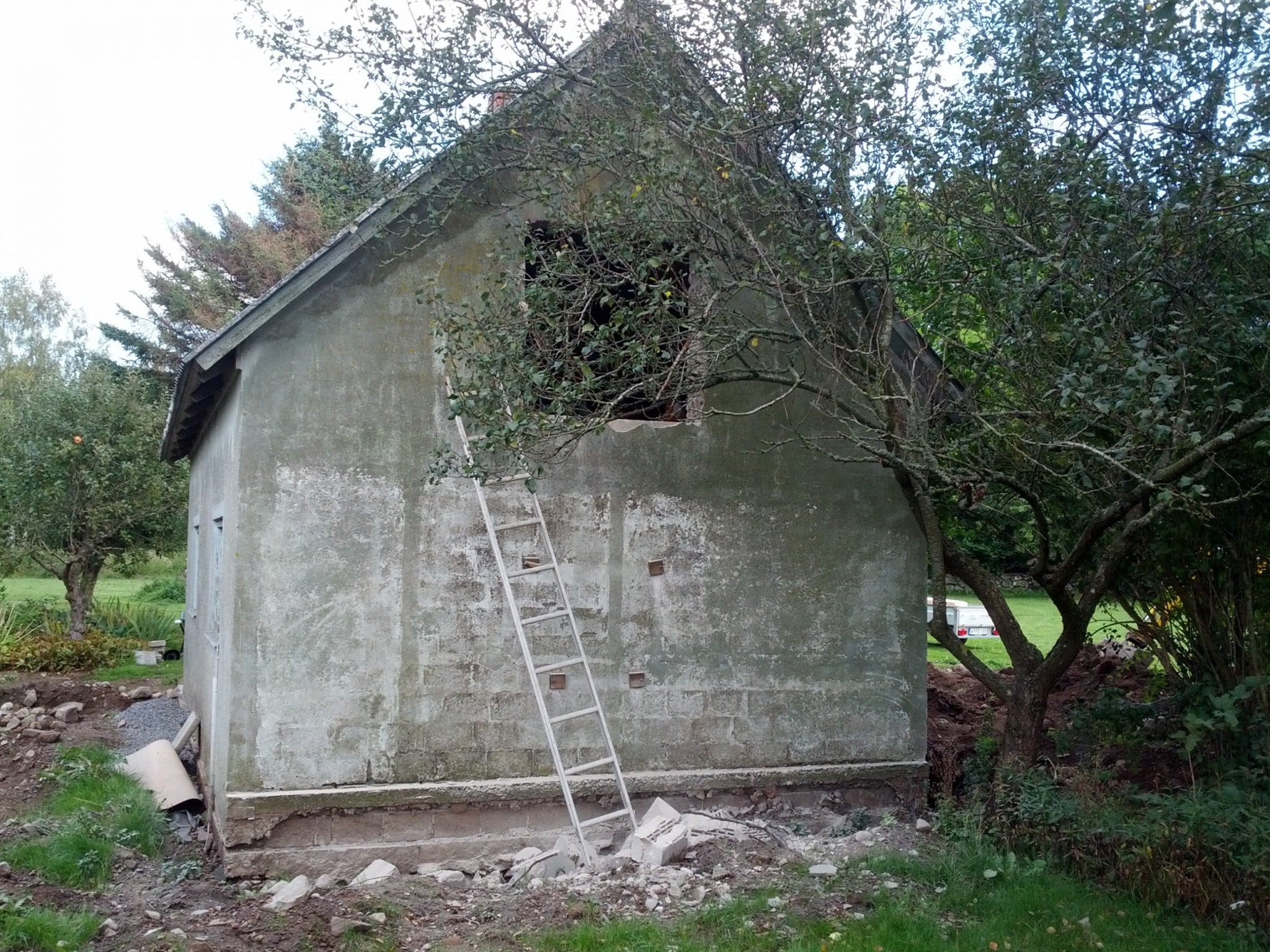
from the outside. the house was once attached to a barn that burned down a long time ago, you can see the support rim for that a bit up on the gable. the floor in the stone house is the lower concrete slab.
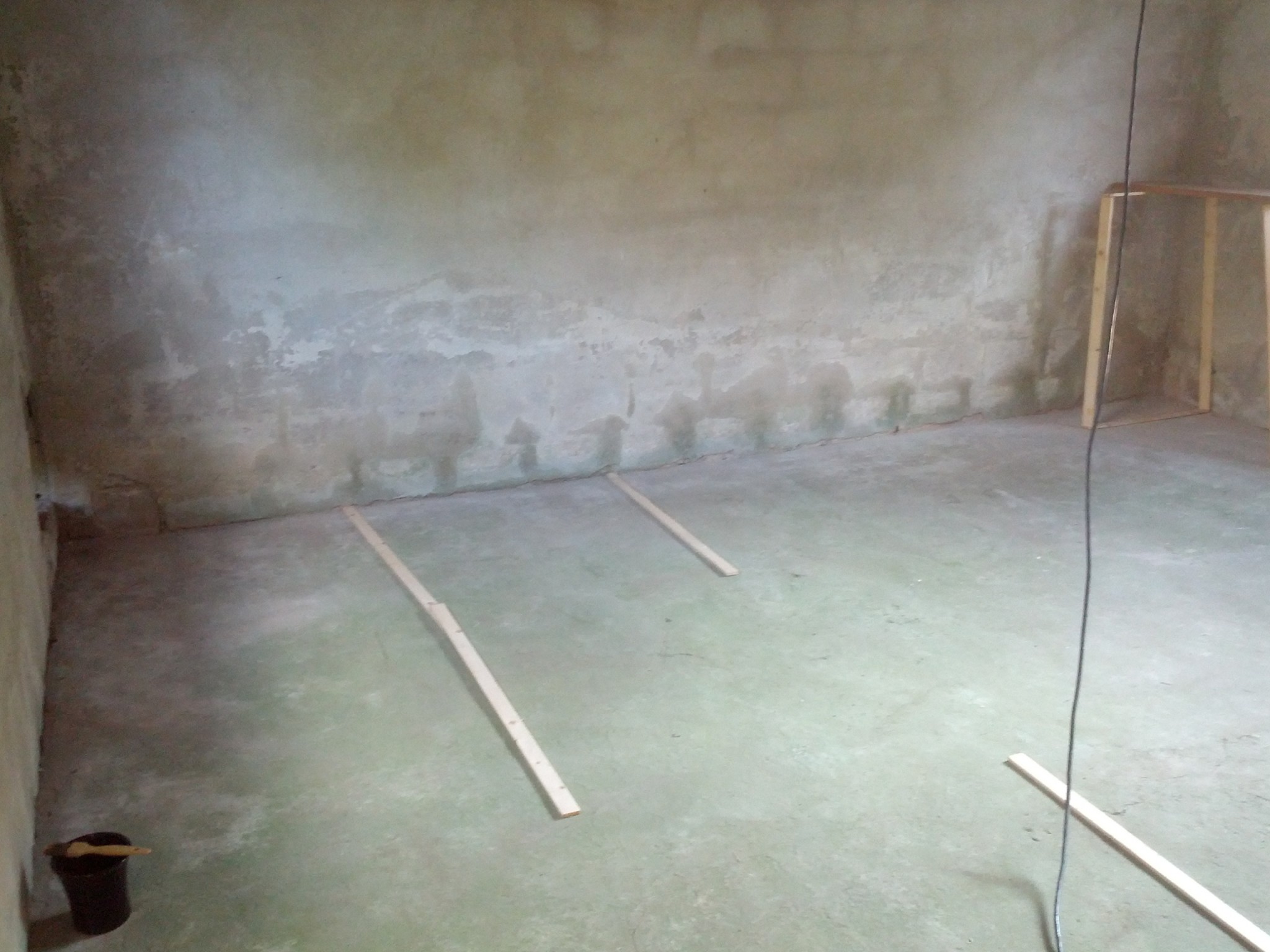
from the inside, same wall as the previous picture. the nice green floor paint is visible between the concrete hole stones also on the wall
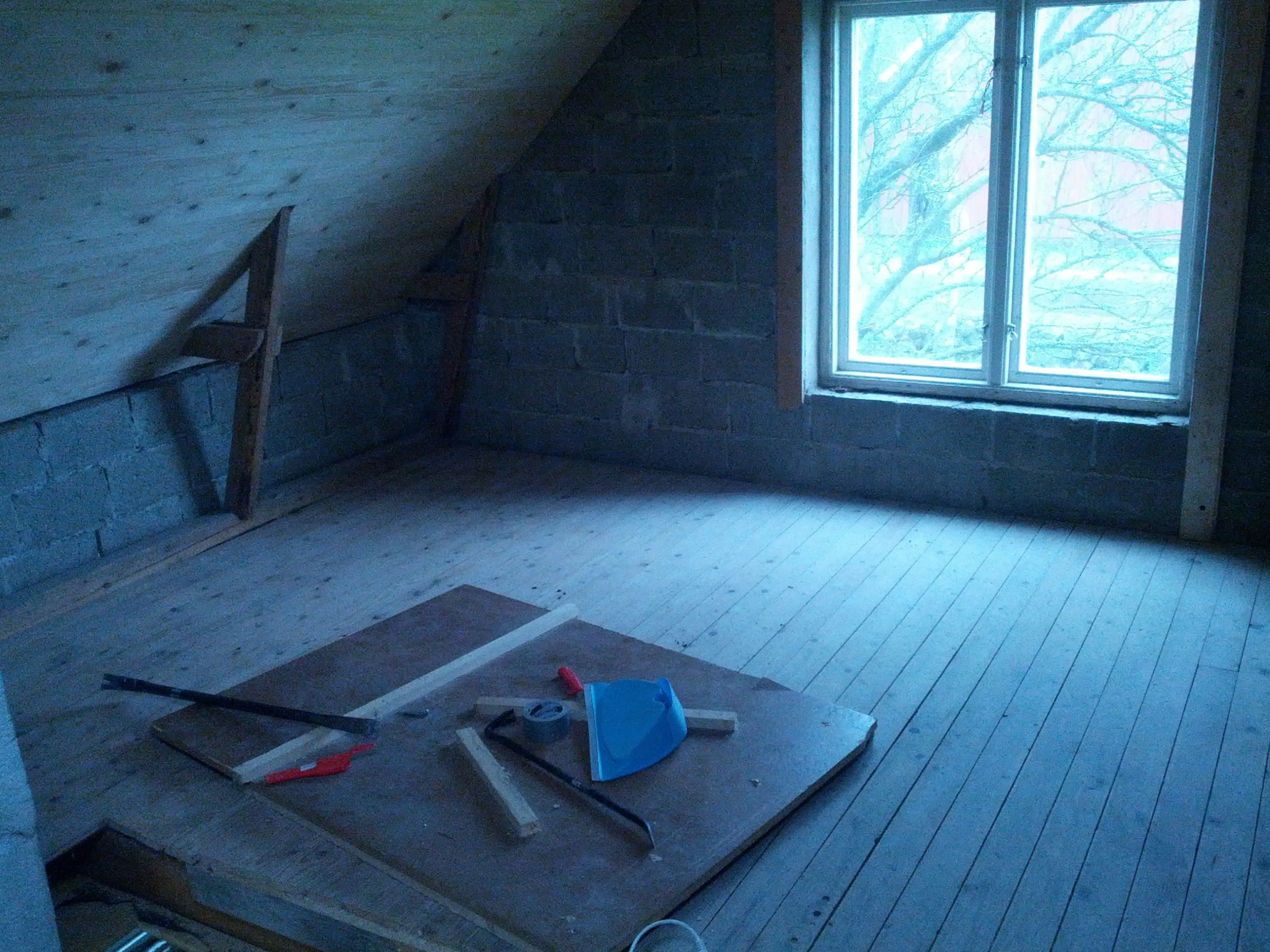
The lovely upper floor that I am so fond of. I have installed a window facing south (same wall as before, but on top)
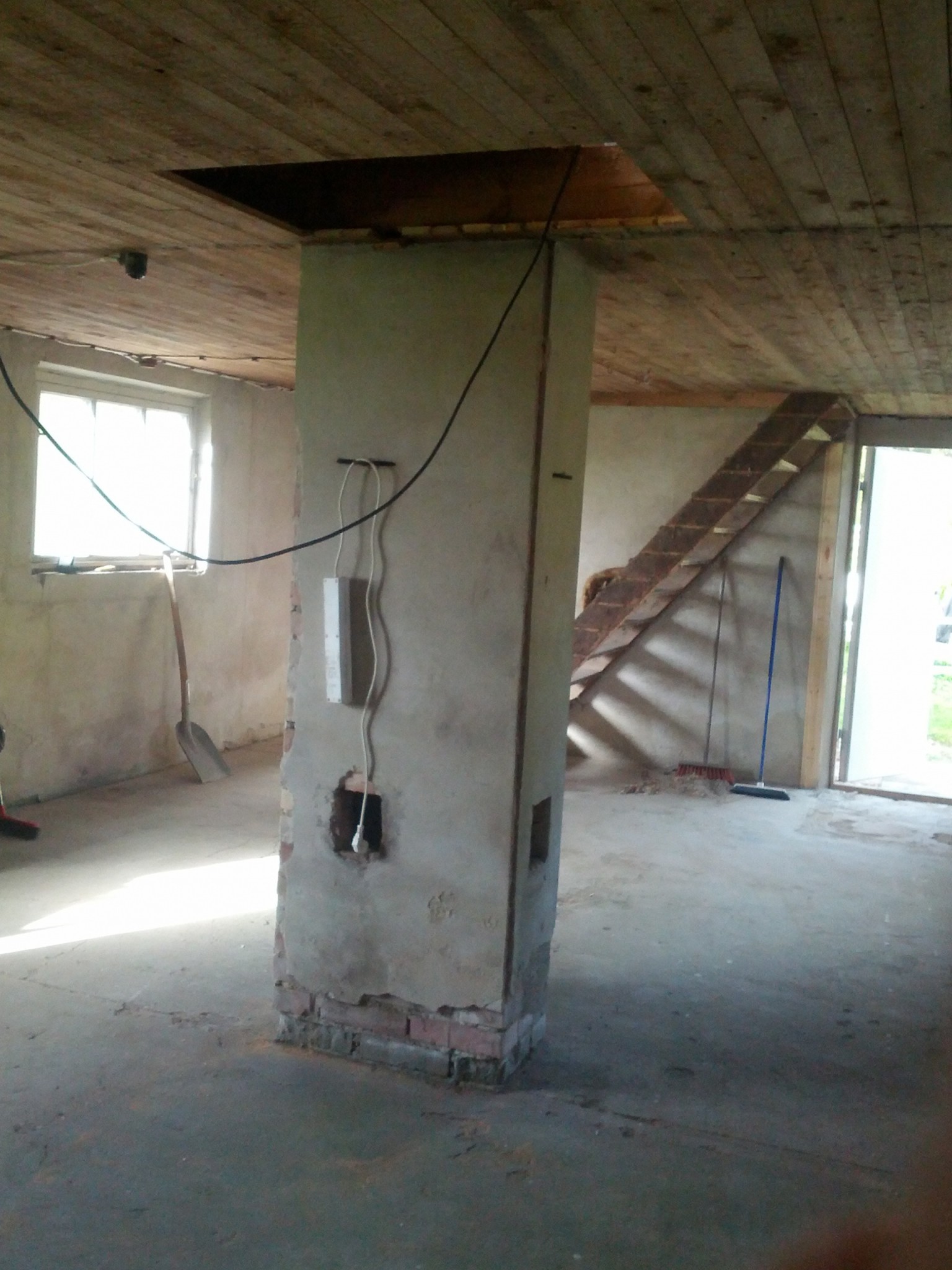
picture taken in the opposite direction on the lower floor. I have made an opening in the ceiling for the upcoming staircase that I plan to place there. by the chimney.
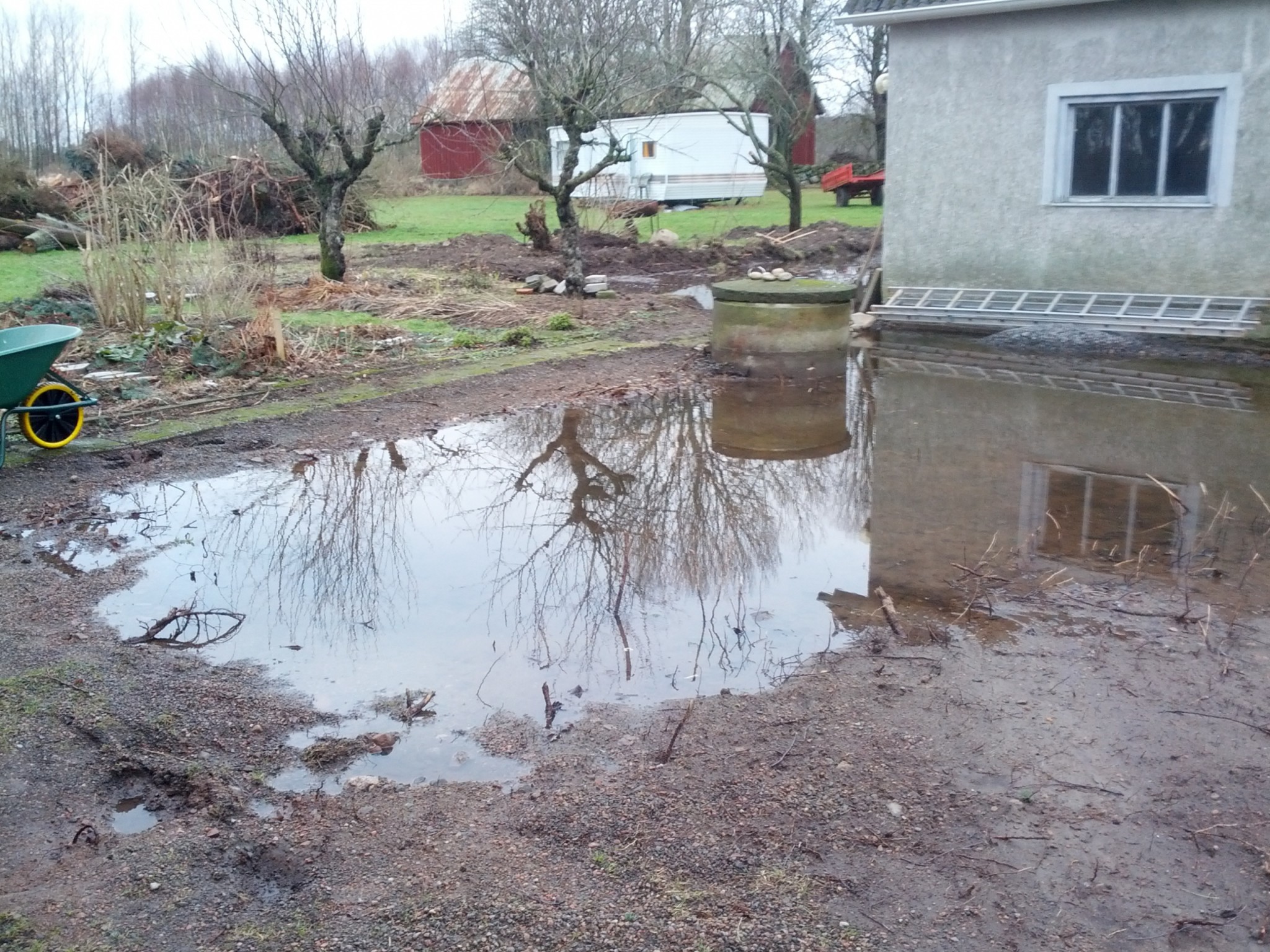
The reason I have started thinking in new ways. HAVE managed to remove the water now, with a submersible pump, but the concrete is surely not doing well. the floor in the stone house is uninsulated. apparently it's called sparsten.. a stone layer on which concrete is just poured out. (it looks like under the walls there is thicker concrete, like a frame) oh well.
I lifted my entire (approximately 40 sqm) summer cottage five centimeters using garage jacks, allowing me to remove the entire foundation wall all at once and replace it with cast piers and a new floor joist system. I connected the roof and walls with a complex truss construction inside and incorporated 11 lift points evenly distributed about 1 meter in from the outer walls. No external support, everything was inside. The house stood like that for just over a year.
Now, my cottage was completely empty inside so it wasn't a problem to connect the roof and walls, it doesn't sound like your house is empty? Maybe you could still do something similar from underneath? Or beams running from side to side and propped up from below.....?
edit:
Ah, you have a concrete floor! I understood it as the house was sitting on a wall and you could crawl under... Forget everything written above then!
Now, my cottage was completely empty inside so it wasn't a problem to connect the roof and walls, it doesn't sound like your house is empty? Maybe you could still do something similar from underneath? Or beams running from side to side and propped up from below.....?
edit:
Ah, you have a concrete floor! I understood it as the house was sitting on a wall and you could crawl under... Forget everything written above then!
Last edited:
But wait a minute... Do you want to save the roof, chimney, concrete floor, and intermediate floor and replace the rest? In that case, you should be able to prop up the intermediate floor on the concrete floor and the roof on the intermediate floor and then demolish the walls. Can it be sturdy enough? Well, geometry is your friend!
Then there's the drainage around the house, which is another problem, but maybe you've solved that?
Then there's the drainage around the house, which is another problem, but maybe you've solved that?
Oh, but that's how I've thought in my daydream... to be able to lift the entire upper floor, with the hammarband and everything (the chimney will have to be taken down a bit) and then tear down the whole thing underneath and put in a wooden frame so you can also make the house a little higher, to avoid the water hassle... oh my, what a project you had there! absolutely fantastic! what a thing!
ps. I do NOT want to keep the concrete floor, it just absorbs moisture. actually, the concrete walls and the whole house could have stayed as long as I could replace 1 m from the bottom to break the water damage and the moldy concrete at the bottom. ds.
so you can also make the house a little higher, to avoid the water hassle... oh my, what a project you had there! absolutely fantastic! what a thing!ps. I do NOT want to keep the concrete floor, it just absorbs moisture. actually, the concrete walls and the whole house could have stayed as long as I could replace 1 m from the bottom to break the water damage and the moldy concrete at the bottom. ds.
Last edited:
Yes, theoretically it's not impossible at all. It all depends on how sturdy the house is, but as long as you distribute the weights correctly and make sure that the truss structure can't buckle, you're good to go. If you want to avoid water damage to the wooden frame, you can lay a layer of stone first and place the wooden walls on that. You can extend the facade boards beyond the stone layer so it isn't visible. If you don't need more height for any other reason, you don't need to lift the house (you don't have to touch the chimney) but just make sure to support properly before you demolish the walls and install new studs at the same height. A lot of work but no problem.
Note that I am not knowledgeable about construction at all (not learned in any way), but when I lifted mine, I reinforced as much as I thought was enough plus about the same amount more and then I lifted it. It held. If you're going to do this, talk to someone who can calculate how they should do it. Or by all means, go with your gut feeling, like I did.....
Note that I am not knowledgeable about construction at all (not learned in any way), but when I lifted mine, I reinforced as much as I thought was enough plus about the same amount more and then I lifted it. It held.
If you're going to do this, talk to someone who can calculate how they should do it. Or by all means, go with your gut feeling, like I did.....but what on earth does "stämpas" mean
I mean.. it's a completely solid concrete block house (except for the upper floor) both floor, frame, and walls are made of concrete, there isn't a piece of wood anywhere. so as I said, the walls are on a questionable concrete slab. I think they first laid a bunch of stone. then they made some kind of concrete frame, which they started building the walls on. then they "poured" the concrete on stone and earth to get it flat. so it's not the latest building technique.
I mean.. it's a completely solid concrete block house (except for the upper floor) both floor, frame, and walls are made of concrete, there isn't a piece of wood anywhere. so as I said, the walls are on a questionable concrete slab. I think they first laid a bunch of stone. then they made some kind of concrete frame, which they started building the walls on. then they "poured" the concrete on stone and earth to get it flat. so it's not the latest building technique.
Last edited:

Stämp = supports/temporary columns used to hold up a construction.
I think the idea is as crazy as it feels; I've never heard of anything similar. The best way to handle the moisture addition in the floor is by draining around the house, and then you can install a leveling floor/granab floor inside. It works excellently on uninsulated slabs and becomes warm and comfortable.
What's wrong with the walls? The concrete doesn't look frost-damaged. If the strength is severely undermined, I don't think the concrete is replaced either, but the wooden frame is reinforced with standing beams under the rafters.
I think the idea is as crazy as it feels; I've never heard of anything similar. The best way to handle the moisture addition in the floor is by draining around the house, and then you can install a leveling floor/granab floor inside. It works excellently on uninsulated slabs and becomes warm and comfortable.
What's wrong with the walls? The concrete doesn't look frost-damaged. If the strength is severely undermined, I don't think the concrete is replaced either, but the wooden frame is reinforced with standing beams under the rafters.

As mentioned, to me it seems much easier to fix the existing walls than to replace them.
Welcome to my world It has been done - though to replace a stud wall, but the principle is the same.
But as previously written, I also think it seems unnecessary based on the images. If TS furthermore doesn't want to keep the floor, I think it's time to tear it down and build new. It will probably go faster.
It has been done - though to replace a stud wall, but the principle is the same.But as previously written, I also think it seems unnecessary based on the images. If TS furthermore doesn't want to keep the floor, I think it's time to tear it down and build new. It will probably go faster.