
2,069 views ·
17 replies
2k views
17 replies
Load-bearing walls hulstfredshus 1978.
Hello!
A single-story house with a basement, 115m2 per floor.
The house was built in 1978 by the house manufacturer Hultsfredshus. I would like to tear down quite a few walls in the house for an open floor plan. The walls are fiberboard, 34x34 + panel material, and the walls are a total of 65mm thick.
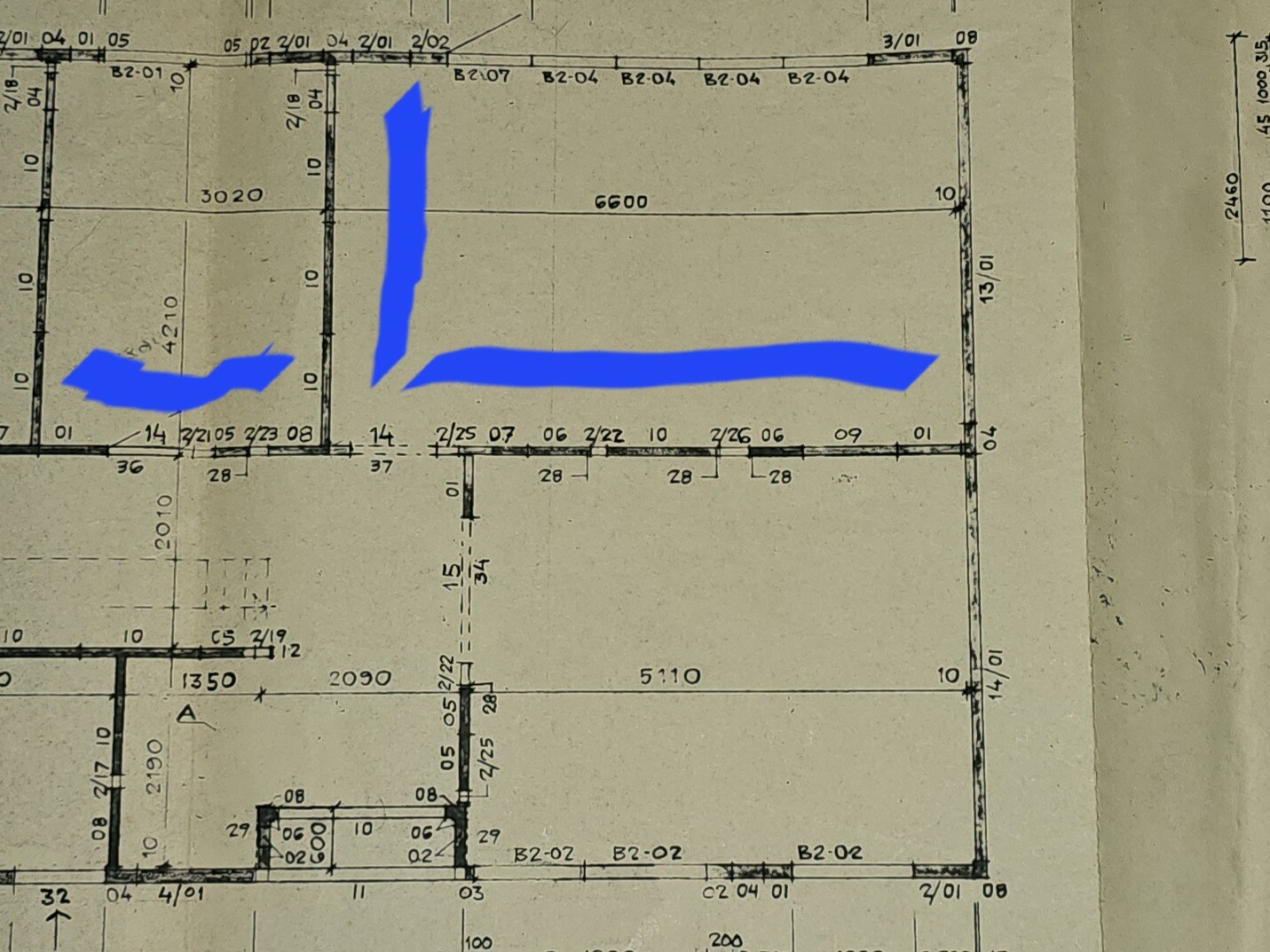
How do I figure out from the drawing if they are load-bearing or not, as the walls shake when you hit them hard.
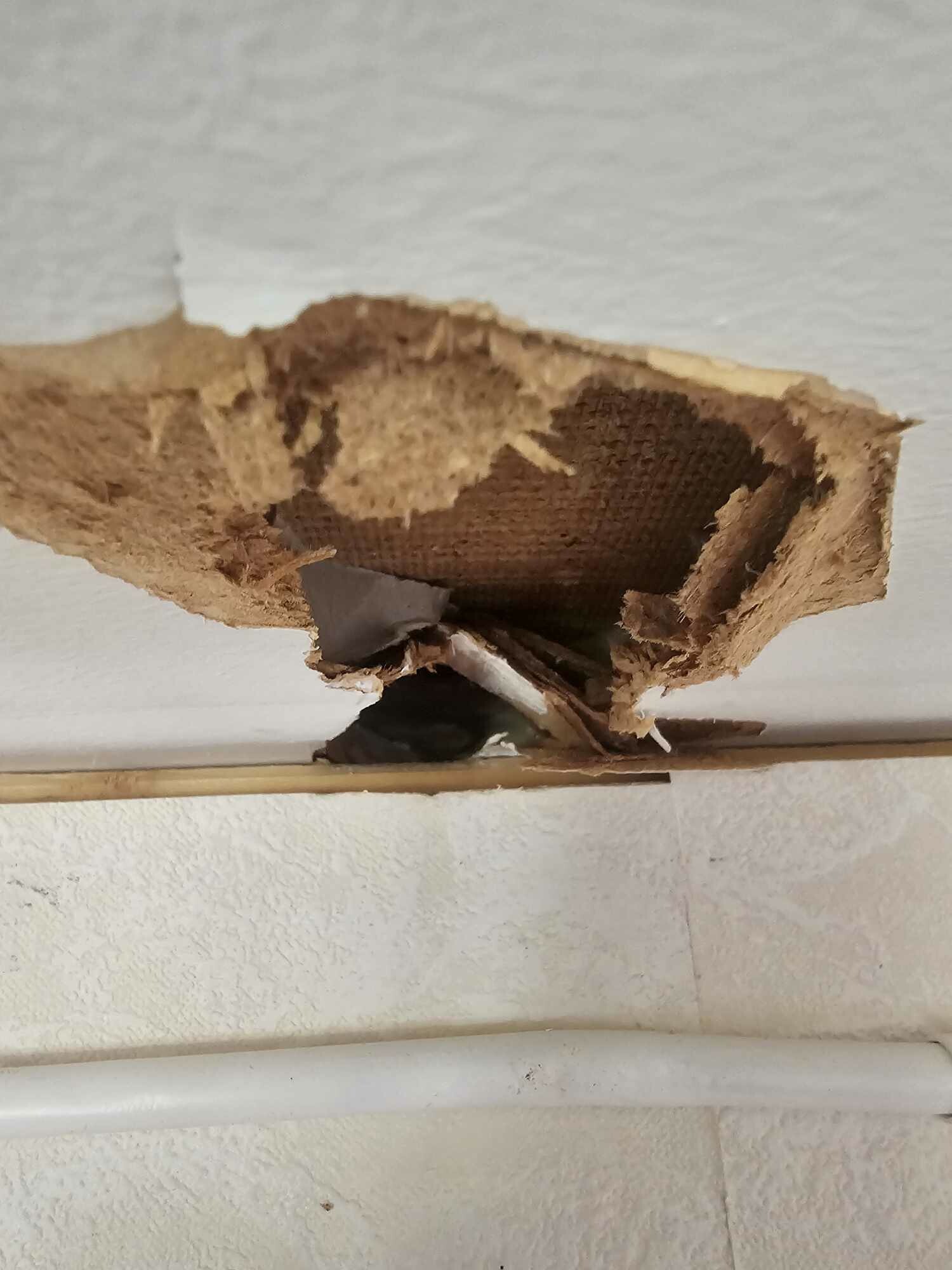
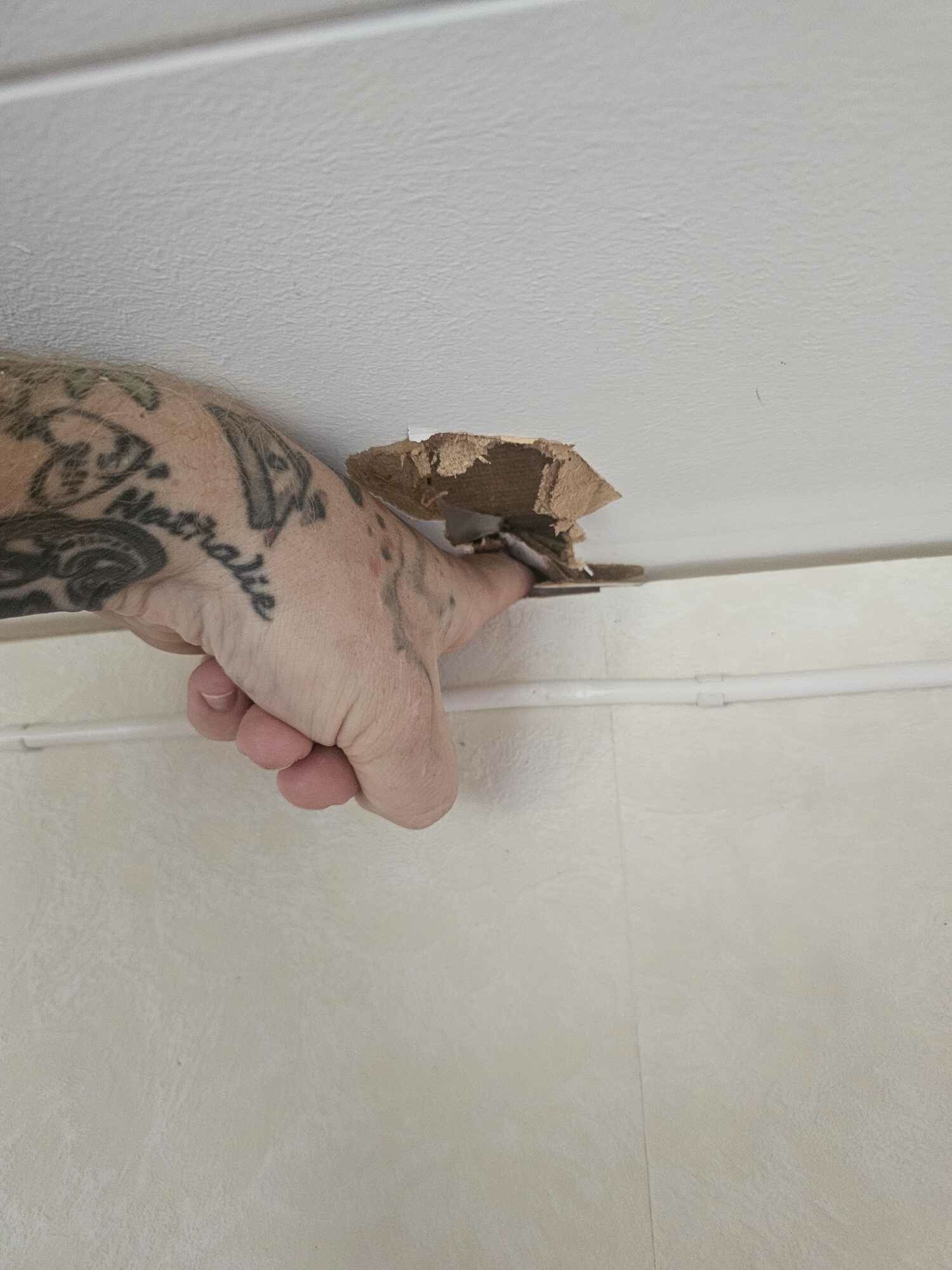
I have removed the ceiling moldings, and the interior walls are built after the ceiling is installed. I am attaching drawings and some pictures, the walls marked in blue are the ones I want to remove.
A single-story house with a basement, 115m2 per floor.
The house was built in 1978 by the house manufacturer Hultsfredshus. I would like to tear down quite a few walls in the house for an open floor plan. The walls are fiberboard, 34x34 + panel material, and the walls are a total of 65mm thick.
How do I figure out from the drawing if they are load-bearing or not, as the walls shake when you hit them hard.
I have removed the ceiling moldings, and the interior walls are built after the ceiling is installed. I am attaching drawings and some pictures, the walls marked in blue are the ones I want to remove.
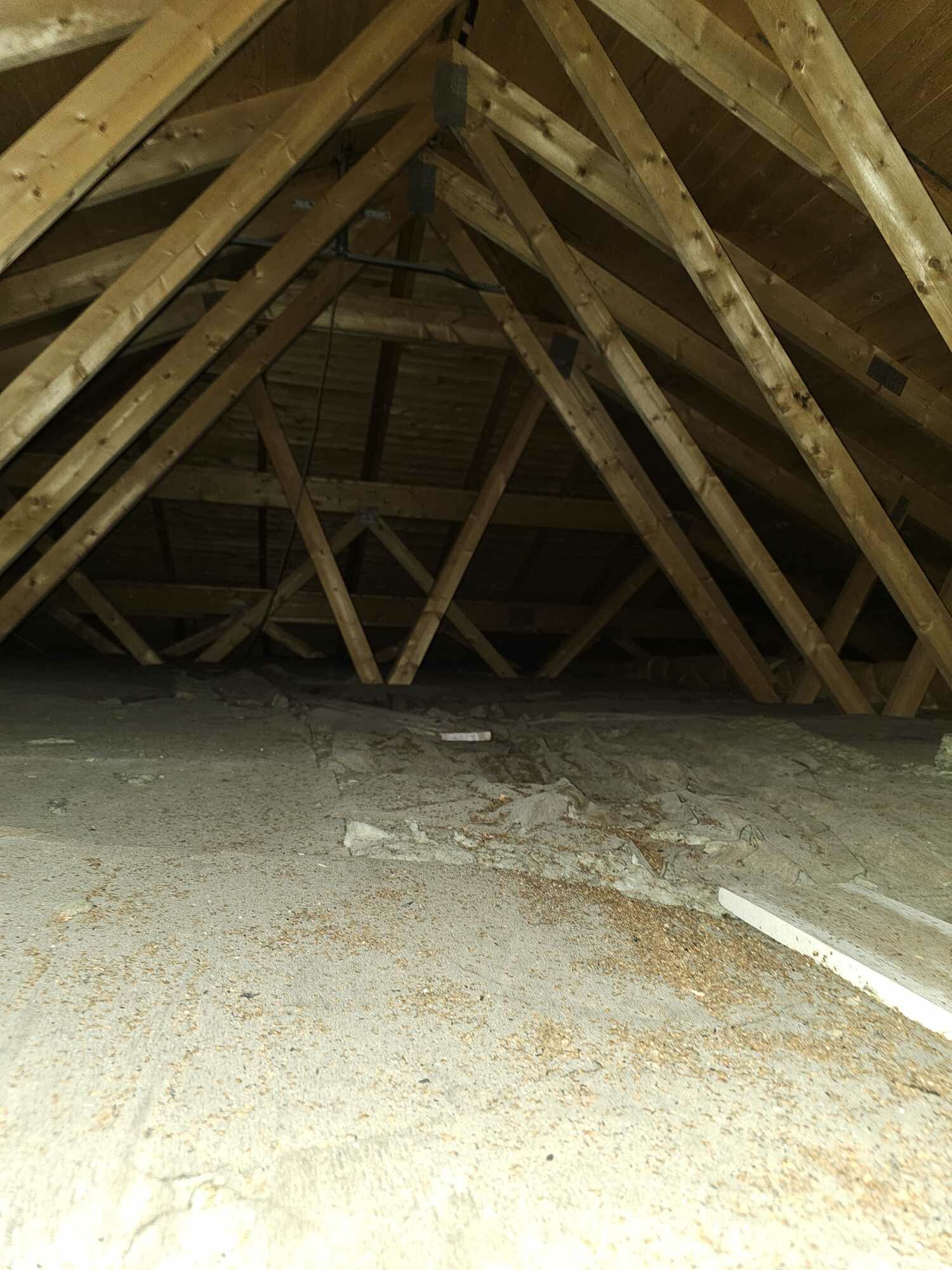
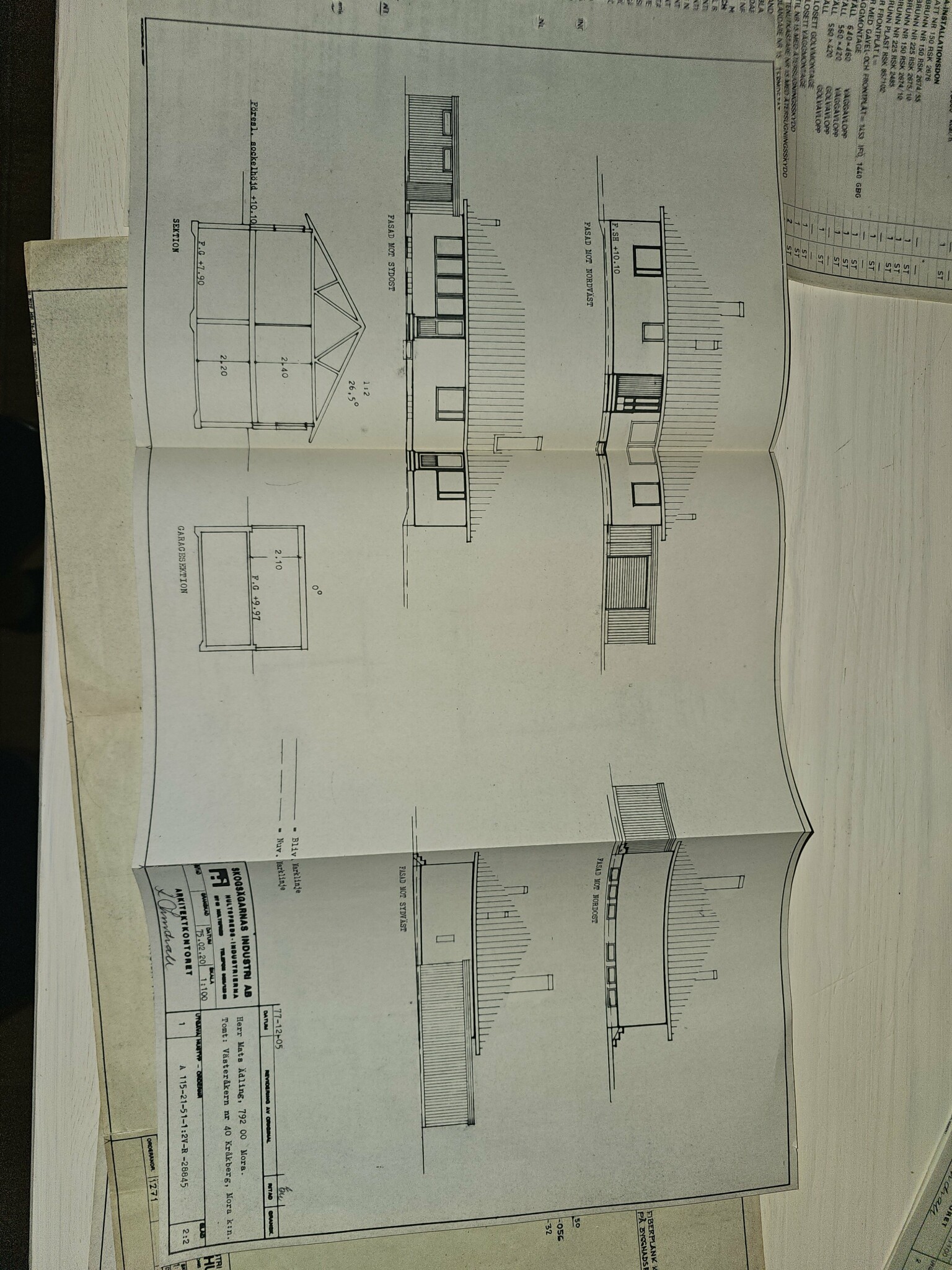
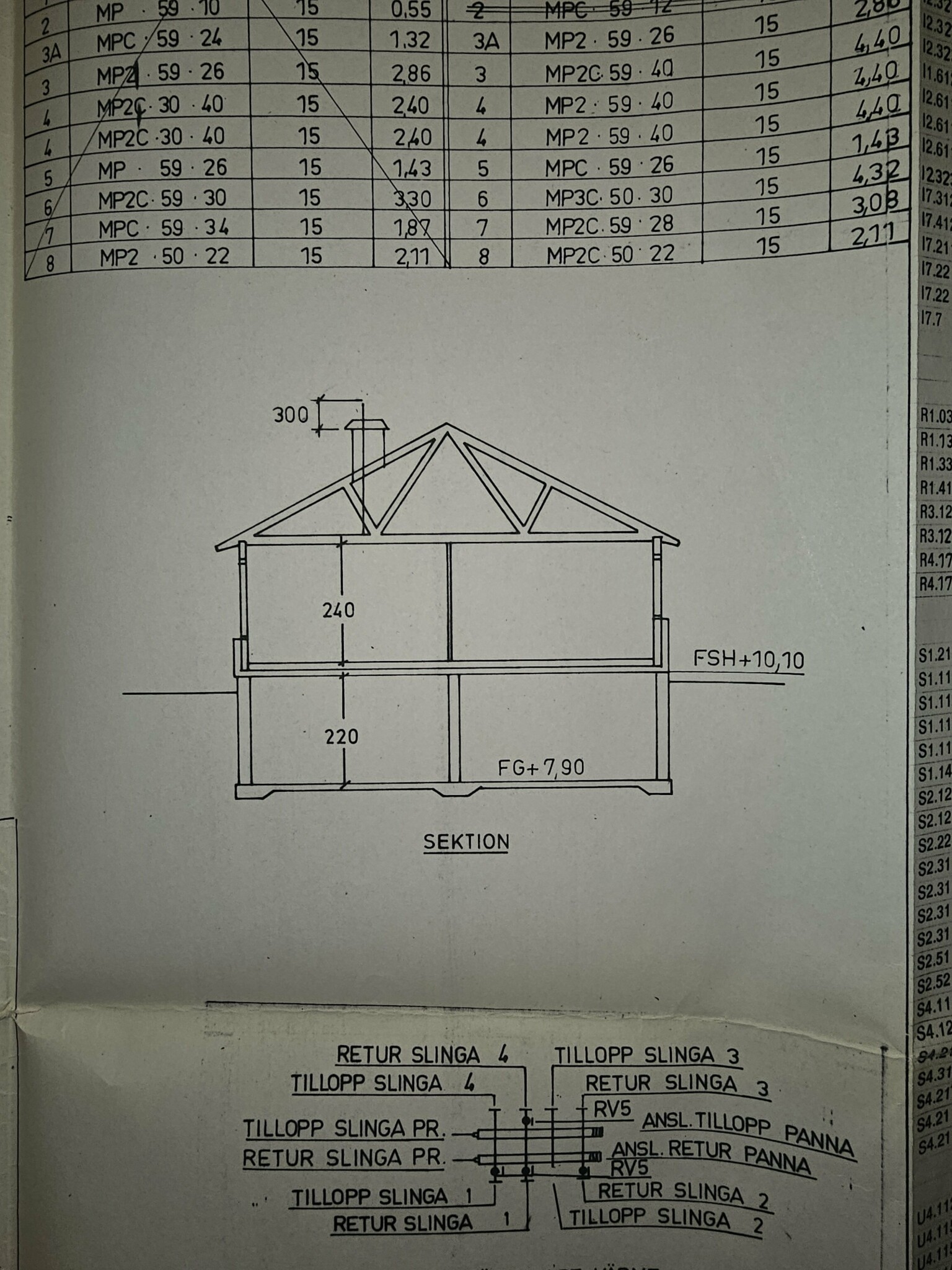
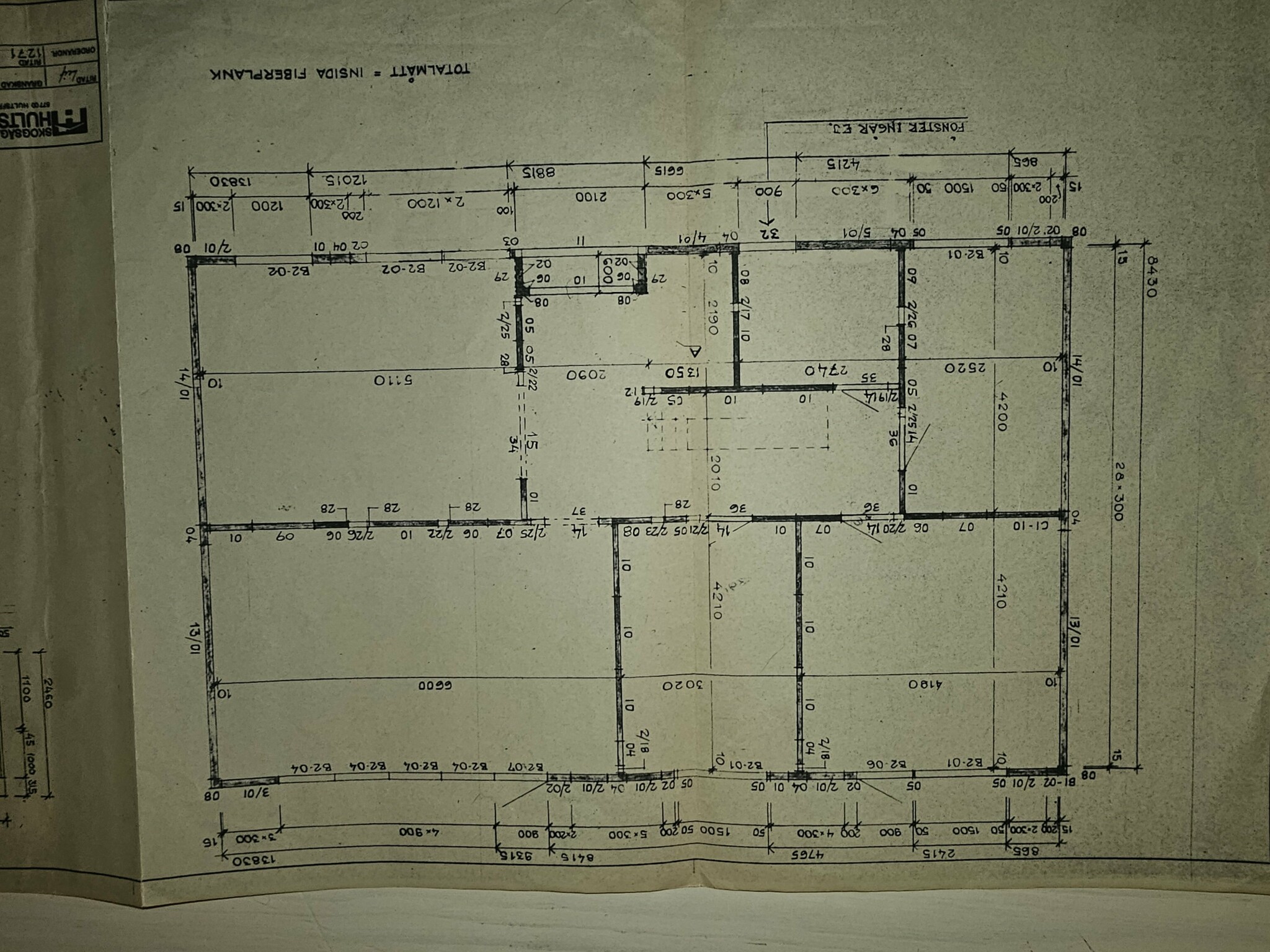

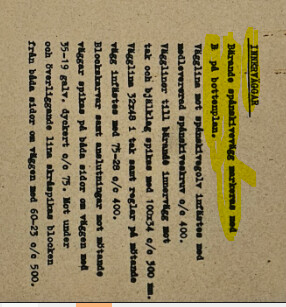


Usually, no interior walls are load-bearing on the floor below an attic with truss roof rafters, the kind that look like a W. That being said, it's not advisable to demolish all the walls due to stability.
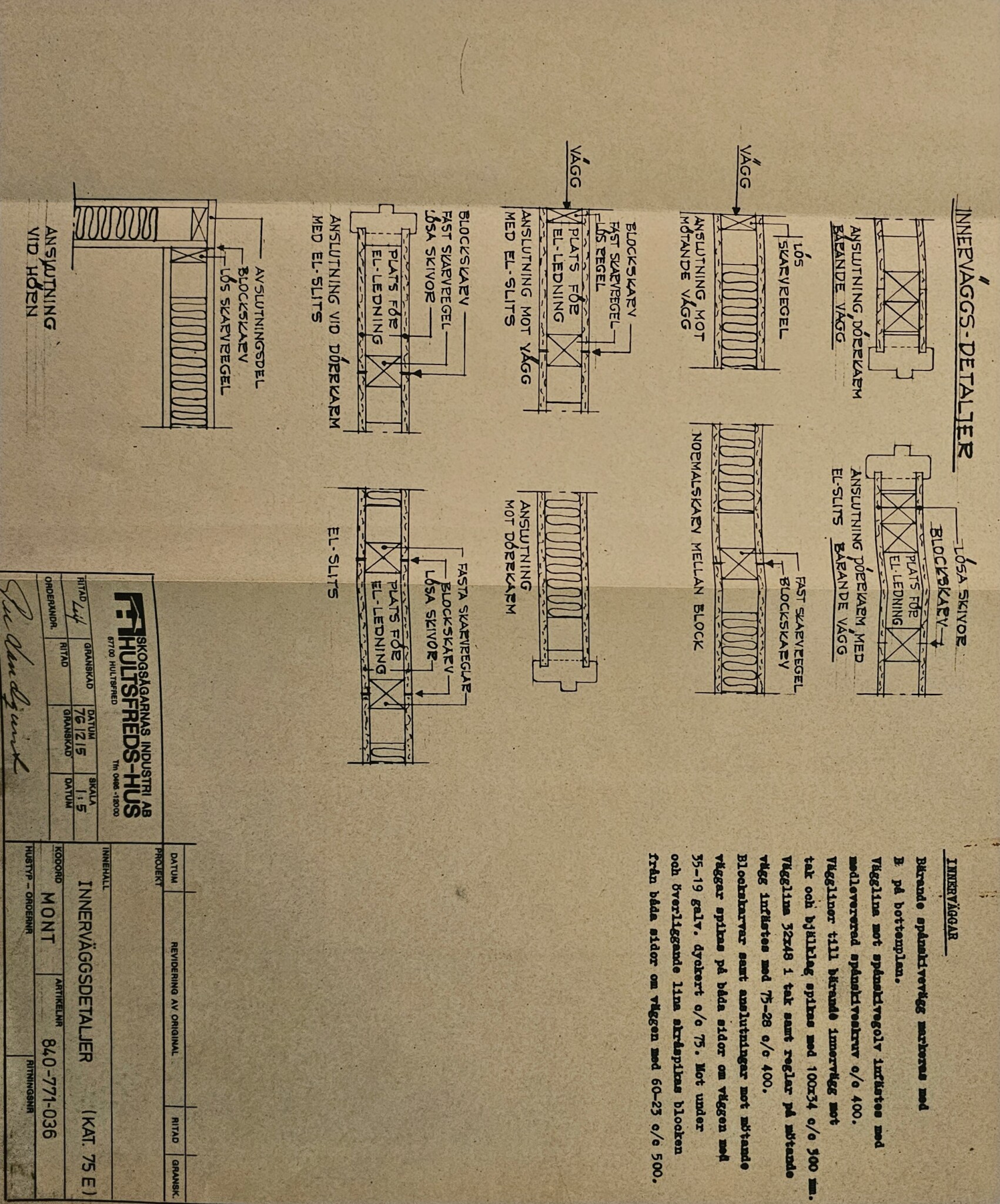
The sectional drawing sometimes shows load-bearing walls. Also thinking that the text about load-bearing interior walls shouldn't have been included in the drawing if there are no load-bearing interior walls. Unless it's just a standard text that was always included from that manufacturer?

Normally, the wall at the center is called the heart wall and is load-bearing; the trusses rest on it. Then with W-trusses, that's not my thing, so it might work. But if it spans, then weight and snow load can press down, so the trusses rest on it. It's not a small part you want to remove, half the wall through the house.
Yes, but a heart wall should be more robust than 34x34mm.
The big question mark I have is that the trusses are about c/c 600mm apart; if you look from the trusses, it is constructed as follows.
* truss - masonite - ceiling - wall.
The ceiling is just air and can be poked through with a finger, and that's where the inner wall rests. That's what puzzles me.
The big question mark I have is that the trusses are about c/c 600mm apart; if you look from the trusses, it is constructed as follows.
* truss - masonite - ceiling - wall.
The ceiling is just air and can be poked through with a finger, and that's where the inner wall rests. That's what puzzles me.
Now I don't know how they do it. But a bit further back, the roof was fully completed first, and all the electricity was run on the top side of the ceiling with pipe stubs down. Then the partition walls were erected or nailed and anchored in the ceiling; there aren't many nails in the top beam, only where a roof truss is. So keep an eye on where the switches and wall outlets are; all the electric pipes probably come from above and might have a box in the wall as well. During demolition, parts of the room might go dark, no electricity left there. So it's not just a matter of tearing down a wall. If you're lucky, switches and outlets in the wall go directly from the ceiling box, and then pipes and wiring from the ceiling can be removed. But you probably want light in the large room that results and a switch. It can be a bit tricky to connect it with the wall removed.
I have drawings of how all the electricity is run, and I'm surprised at how simply they've done it all. 👌J jonaserik said:Now I don't know how they do it. But a little further back, the roof was completely finished first and all the electricity was run on the top side of the roof with stubs of pipes sticking down. Then partition walls were erected or nailed and anchored to the roof, there probably aren't many nails in the upper beam, only where a roof truss is. So keep an eye on where the switches and wall outlets are. All the pipes for electricity surely come from above and there may be an outlet box in the wall as well. When demolishing, parts of the room may become dark, with no electricity left there. So it's not just about tearing down a wall. If you're lucky, the switches and wall outlets in the wall go directly from the ceiling box, and then the pipes and wiring from the ceiling can be removed. But you probably want light in the large room that is created and switches. It can be a bit tricky to connect it with the demolished wall.
If you have electrical drawings, you can see how the pipes are routed, (at that time with those houses, the electrician followed the drawing 98% religiously) maybe from a ceiling box directly to the switch, the problem is if there's a box in the wall.Perzz00n said:
The electricity is the least of the problems in this case, the problem is how things should be demolished, the wall is a total of 8m that I want to demolish. Plus 1 more wall going in the other direction. 👍J jonaserik said:
Has been discussed on BH previously about Hulstfredshus you can read here
https://www.byggahus.se/forum/threads/hultfredshus-och-baerande-vaeggar.228275/
You should never fully trust the advice you get on an internet forum.
That being said, and as mentioned earlier, truss roof supports with a span of under approximately 8 meters are normally self-supporting. In your case, the wall thickness of the wall you want to demolish is only 34 mm, which is too flimsy to be designed to carry any load considering the construction year of the house.
However, the drawings show that you have a load-bearing wall in the basement (which supports the intermediate floor) as indicated by a thicker concrete footing under it. This requires a bit more consideration before starting any demolition, should it ever become relevant.
That being said, and as mentioned earlier, truss roof supports with a span of under approximately 8 meters are normally self-supporting. In your case, the wall thickness of the wall you want to demolish is only 34 mm, which is too flimsy to be designed to carry any load considering the construction year of the house.
However, the drawings show that you have a load-bearing wall in the basement (which supports the intermediate floor) as indicated by a thicker concrete footing under it. This requires a bit more consideration before starting any demolition, should it ever become relevant.
The brick wall will remain forever, as it supports the entire ground floor. 😁 I don't fully rely on the advice here but bring everything up for discussion. I will go up and measure and take a closer look at the trusses tomorrow. I have also contacted the municipality to see if they have any more construction drawings of this house. 🙂mexitegel said:
Now, you should never fully trust advice you receive on an internet forum.
That said, and as mentioned earlier, truss roofs with a span of less than about 8m are normally self-supporting. In your case, the wall thickness of the wall you want to remove is only 34 mm, which is too weak to be designed to bear any load considering the construction year of the house.
However, it can be seen from the drawings that you have a load-bearing wall in the basement (which supports the intermediate floor) because there is a thicker concrete footing under it. That requires a bit more thought before you start tearing it down, if it ever becomes relevant.