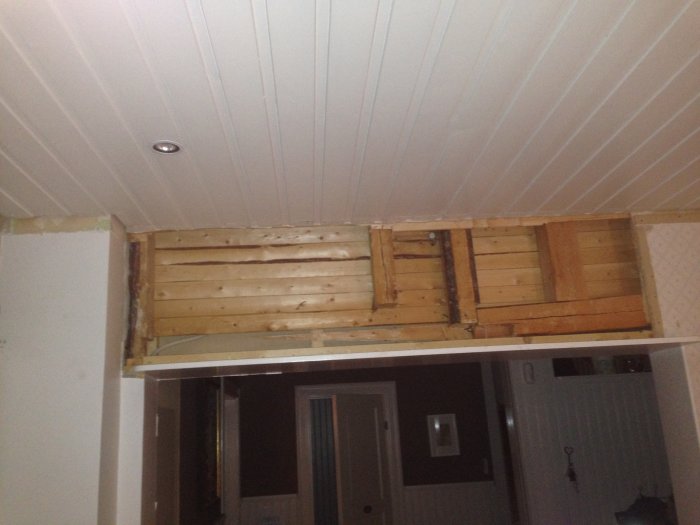
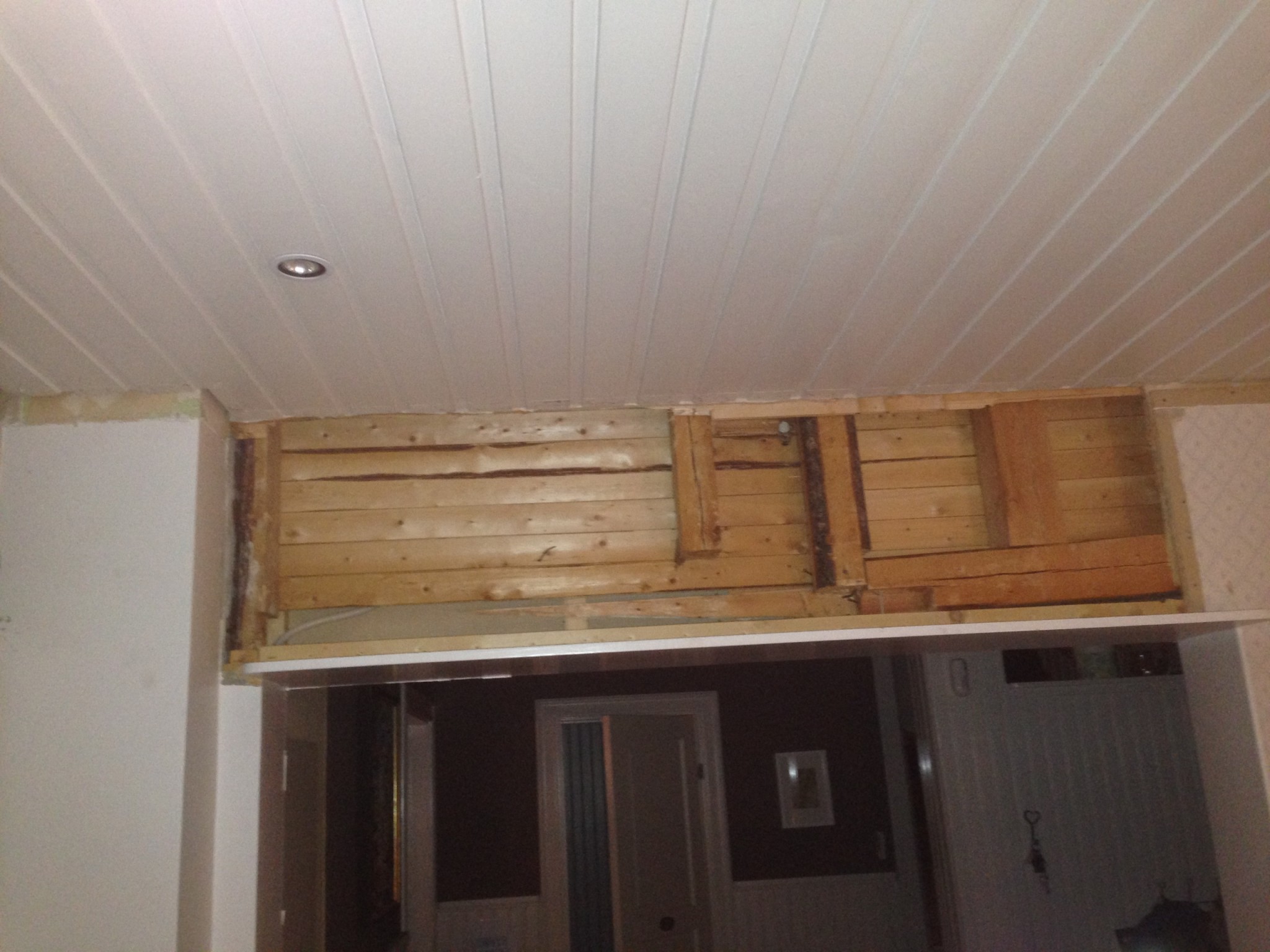
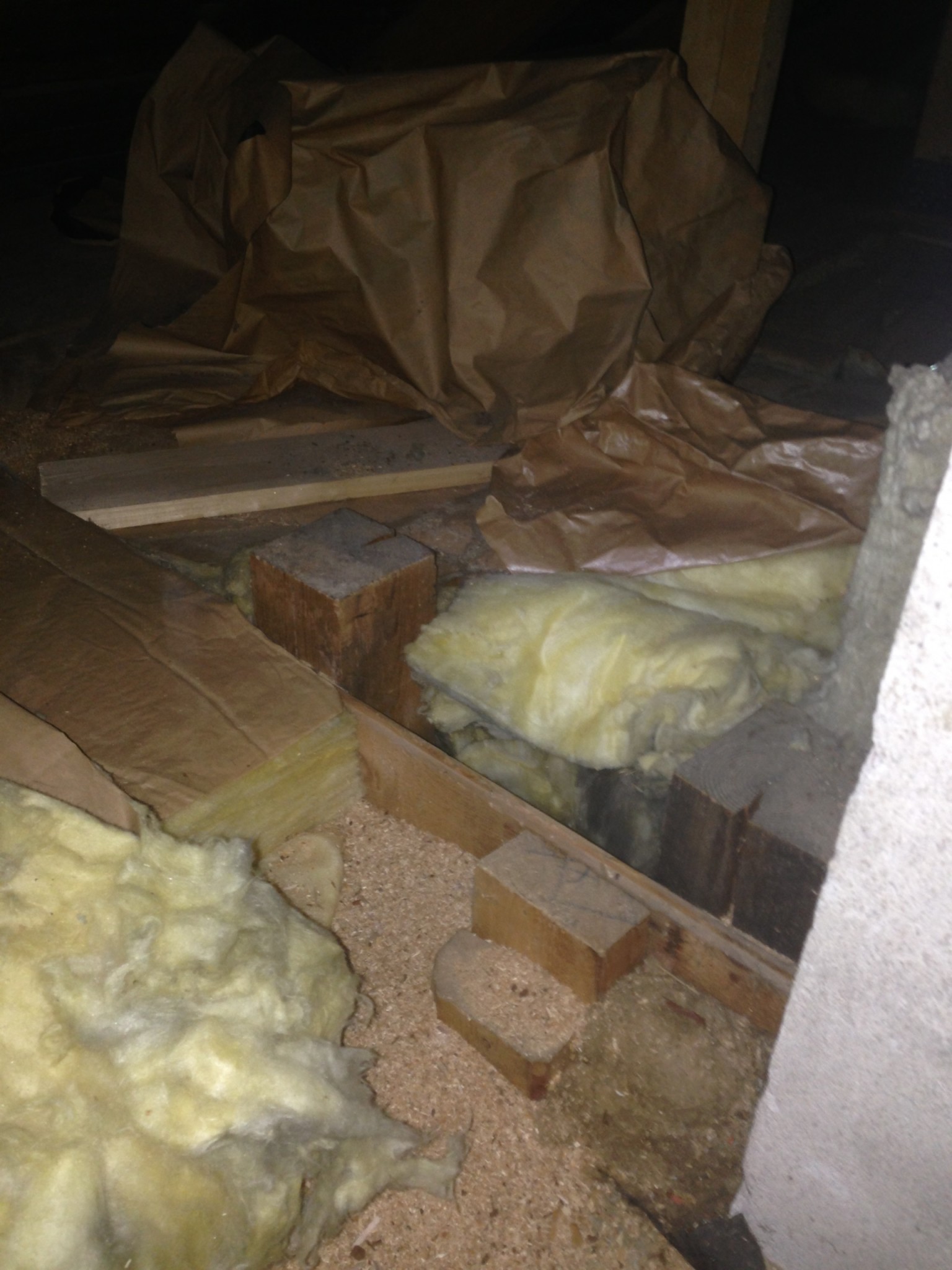
That looks like it might actually be some kind of makeshift solution to absorb some forces. What's above? An upper floor, in which direction is the joist if so? Width, other load-bearing partition walls/beams?
Now there are a lot of difficult questions. There is an upper floor at least, and as I mentioned earlier, the wall on the upper floor is directly above this wall.
I’m not sure in which direction the joists lie because it's a double roof. The roof in the picture is lowered from the existing roof.
The width of the joists you can see is about 100mm. The rest of the wall with chipboard/air gaps/tongue and groove/masonite is probably around 300mm.
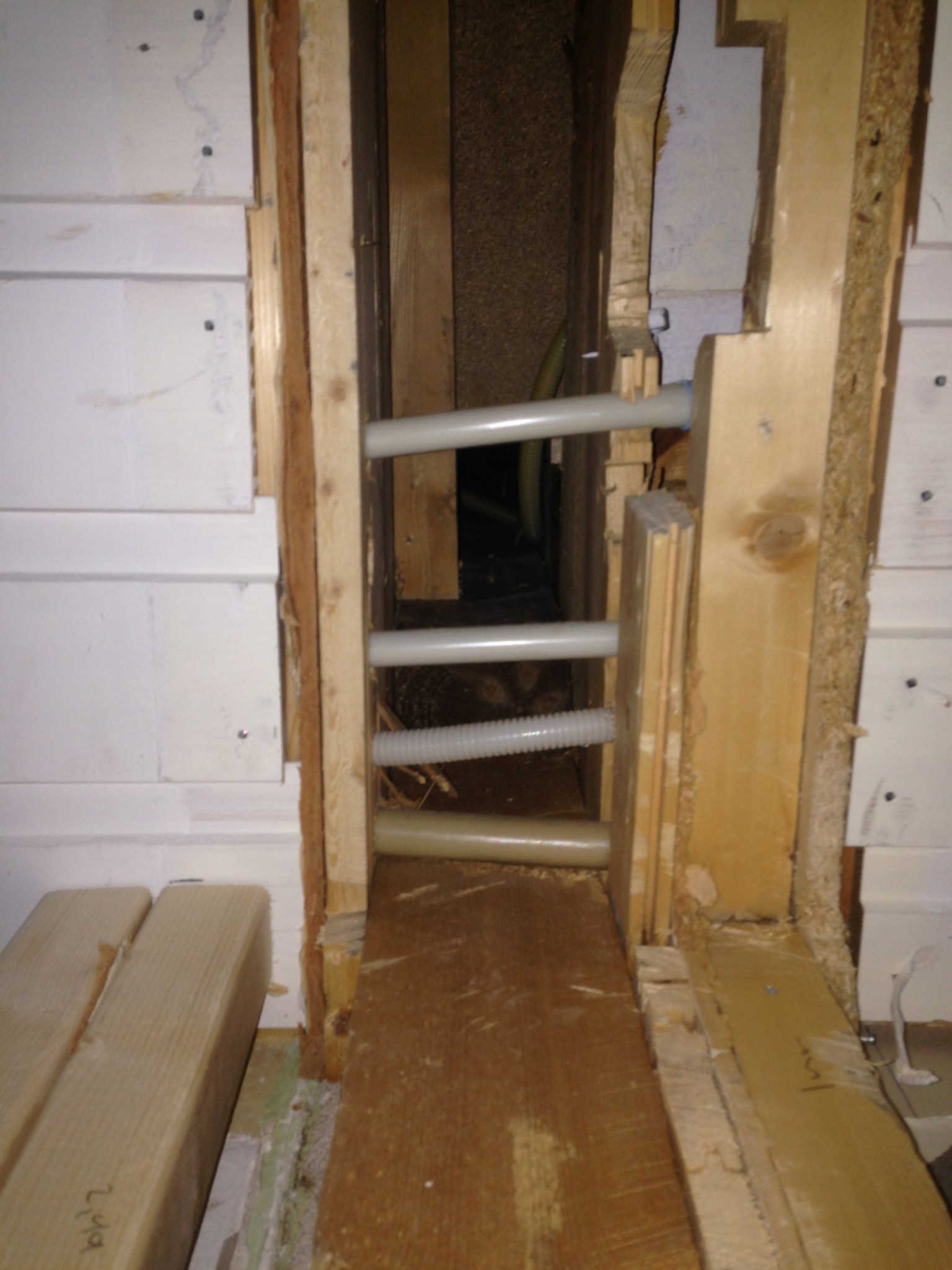
In my eyes, it looks like the horizontal beam could very well be a load-bearing stud that has been cut when the door opening was made. If that's the case, it doesn't look good at all; there should be a post at each end and a stud above the door opening.
That doesn't quite look like how load-bearing headers over door openings are usually constructed.
But I'm thinking something like this. After creating the opening, they discovered that the upstairs floor was sagging and solved it by reinforcing with the horizontal studs to the right in the picture, which go a bit into the wall and are anchored there. Then a couple of vertical wood pieces provide upward support.
Otherwise, those studs seem quite unnecessary.
But why they haven't, in a completely conventional way, allowed any stud/beam to go across the entire opening is a bit hard to understand. :x
Isn't there a stud on the other side of the wall? Feels like a type of old exterior door where the hole has been made larger during an extension.
There's a larger stud about 300mm above where the hole currently ends, at least further away (not a glulam beam or anything like that and hard to see what it rests against). Then inside the wall to the right, there seems to be a stud going down just like the one visible on the left.
At some point, they have opened this up and placed chipboards above (they look new) and a lot of construction debris fell down when I emptied the compartments of sawdust.
It doesn't look like that slanted cut stud should support much at the moment, but it's really hard to know. The first vertical stud from the left presses quite hard against the horizontal one.
If it hasn't already been made clear, I'll be a bit more explicit.
I speculate, in what those joists you see on the right in the picture above the opening might be for.
I believe it might be a bit foolish to assume they don't have any load-bearing function.
If it were my own house, I would investigate further.
But, for example, if there is another strong beam/joist higher up, resting against stable supports, it's quite likely that the joist transfers the forces around the opening.
If you want to add more security, you could also reinforce such a beam if you find one.
If it wasn't already clear, let me be a bit explicit. I speculate about what the beams you see on the right in the picture, above the opening, might be for. I believe that it might be a bit unwise to assume outright that they have no load-bearing function. If it were my own house, I would investigate more. But if there is, for example, another strong beam/horizontal bar higher up that lies against stable supports, then it is quite likely that the beam is distributing the forces around the opening. If you want to complement the belt with suspenders, you could also reinforce such a beam if you find one.
Pretty much how I reason, in other words
What do you think about screwing the vertical beams together with blocks/beam stubs just above the ceiling? How much would such a measure reinforce compared to having that somewhat strange horizontal beam at the bottom?
It doesn't seem like there is any other logical explanation for these beams than that they were at some point load-bearing, and now have less load-bearing/deficient functionunless there is a load-bearing beam higher up.
Personally, I think it looks dangerous, at least to start cutting without knowing, my suggestion is to shore up and then start investigating, I assume you brought that up to get full ceiling height instead of the hole? I would have shored up, demolished, and installed a glulam beam, at least in the situation where you don't know or haven't seen a drawing, the notches on the horizontal beams make you suspect that they were load-bearing.
It could be that the wall is load-bearing and is supposed to support the beam higher up. Then it would be completely wrong to try to hang up these load-bearing parts on the beam; instead, support from below is necessary, i.e., a beam across the entire opening with "supports" on the sides. As it seems to have been in the smaller opening.
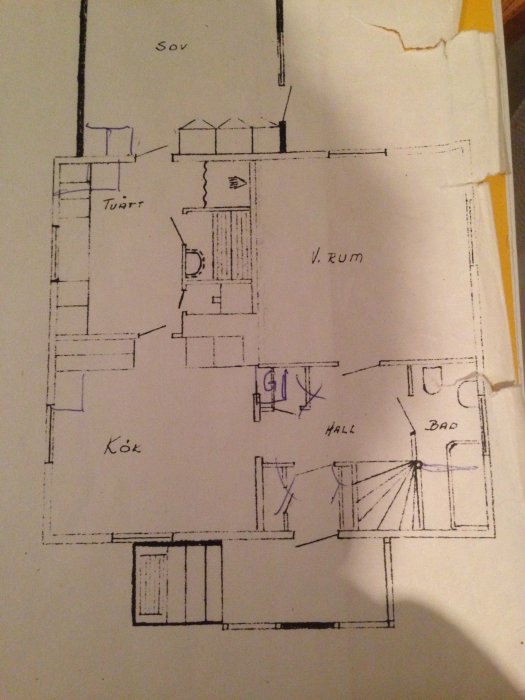
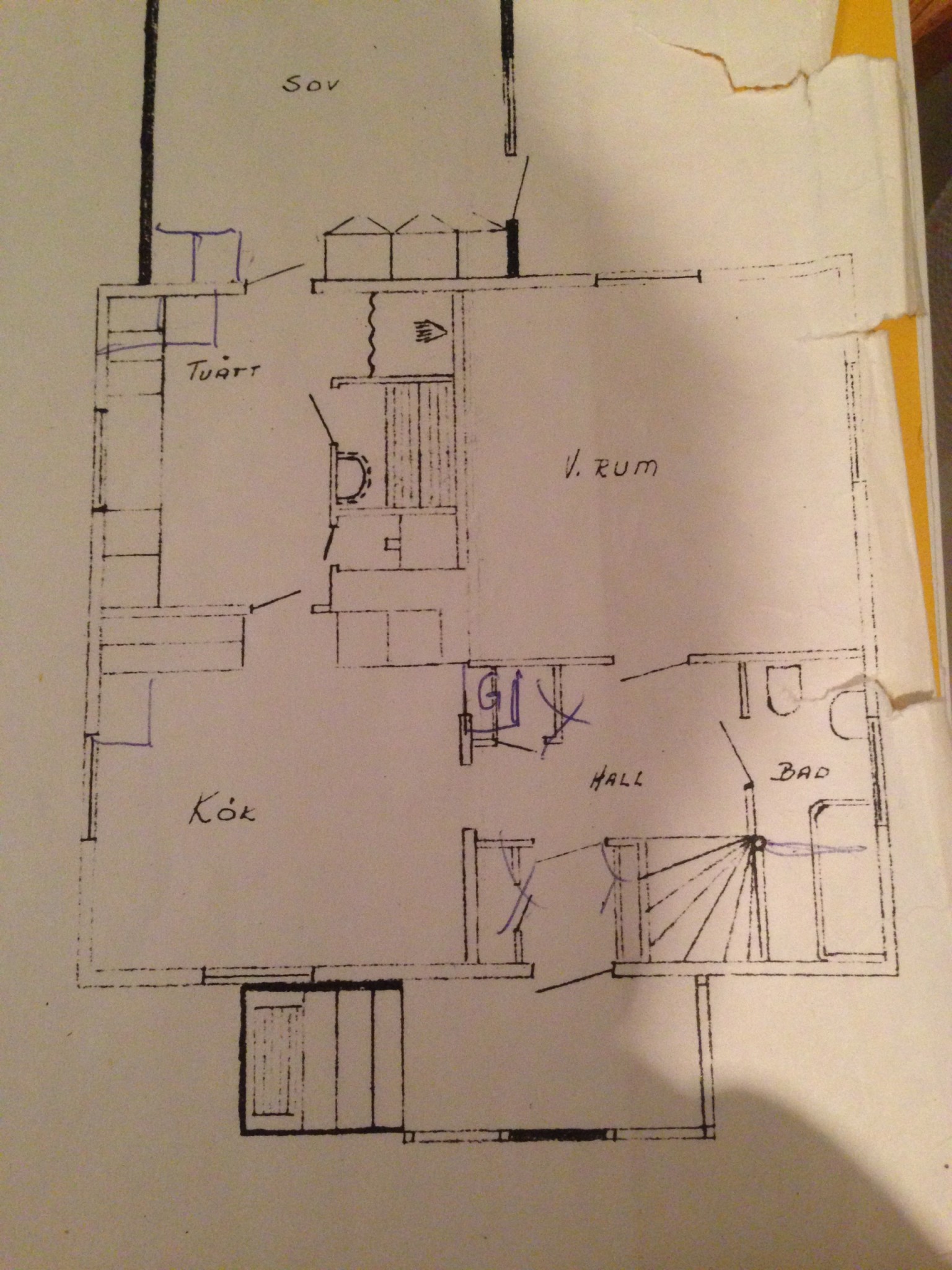
I've found the drawings and went up to the attic to check the situation.
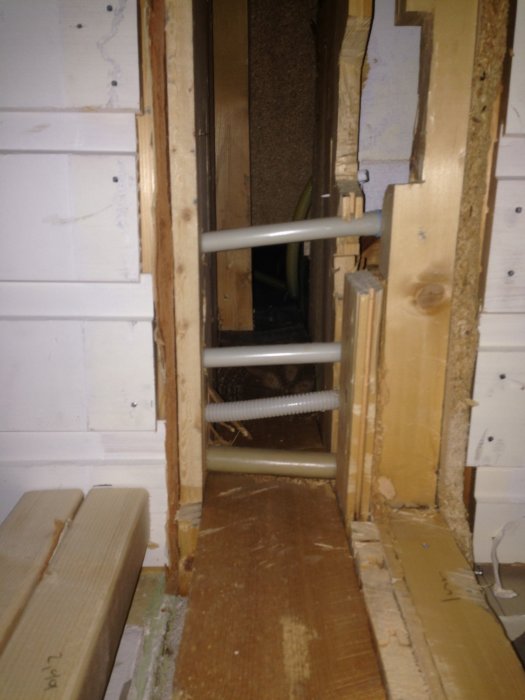
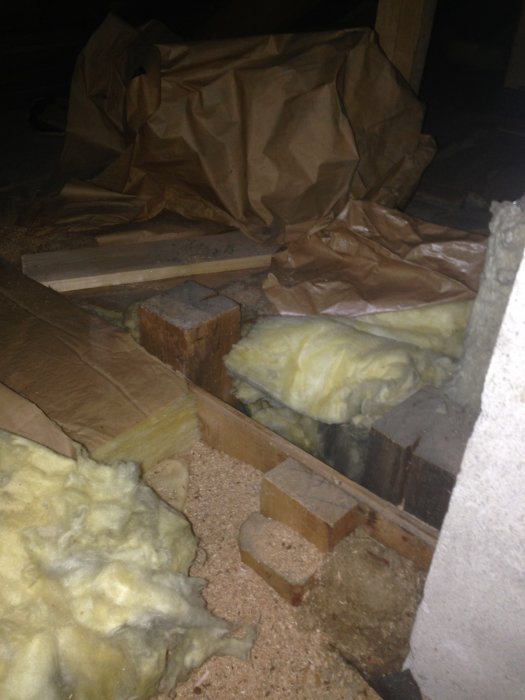
This image is seen directly upwards to the left in the first post. Straight pipes up to the attic.
In this image, you can see that there was a door directly across the horizontal stud from the first post. The wall below is new G that it's about. There seems to have been only a support in the middle right here.
Same kind of wood stumps for studs in this image. Some are only 50 cm long.
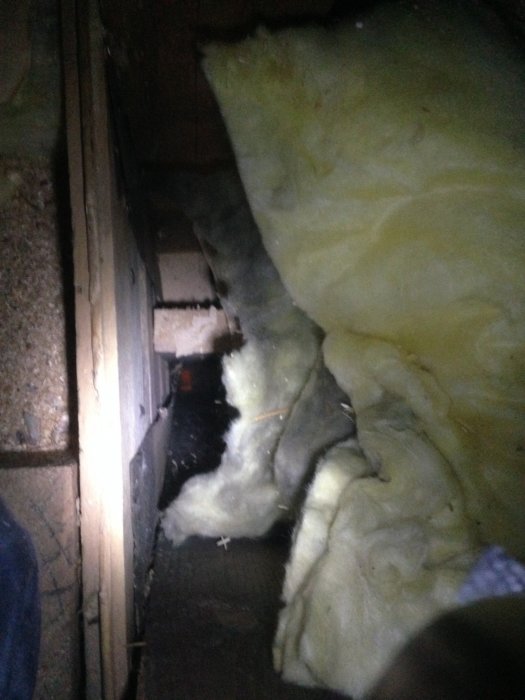
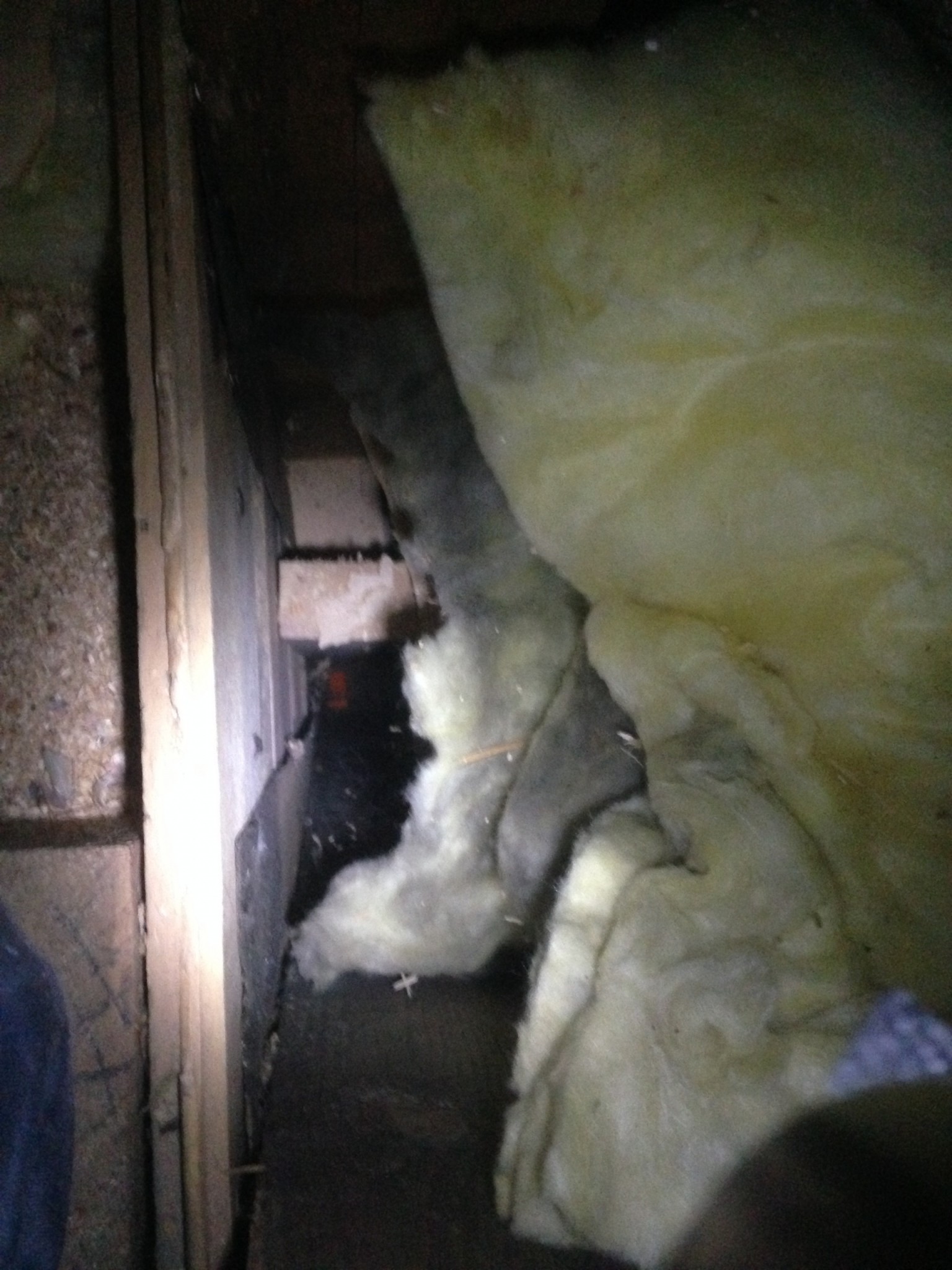
Seen from the attic down into the kitchen. The orange-like field is light from the kitchen. You can also see the tongue-and-groove plank wall all the way past floor 2 and down into the kitchen. No roof truss seems to have bent directly here.
As I see it, just cut and be happy. What do you think? If you now became any wiser from the images.
Vi vill skicka notiser för ämnen du bevakar och händelser som berör dig.