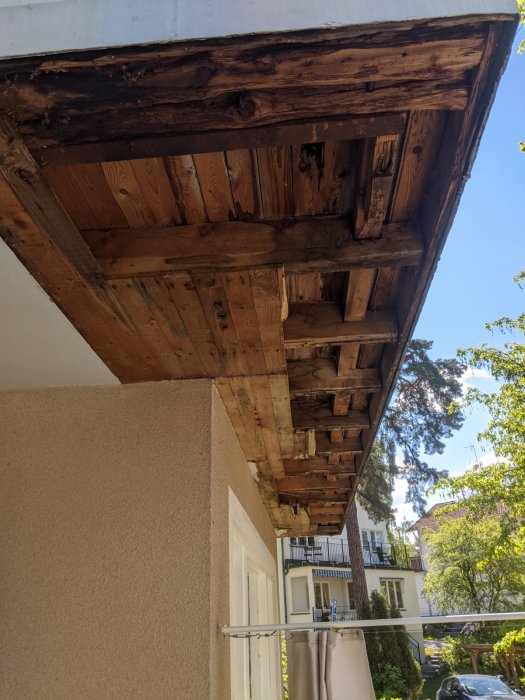
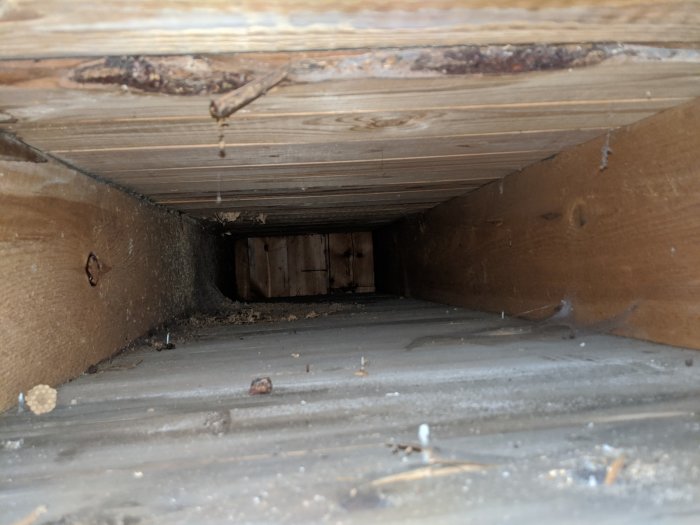
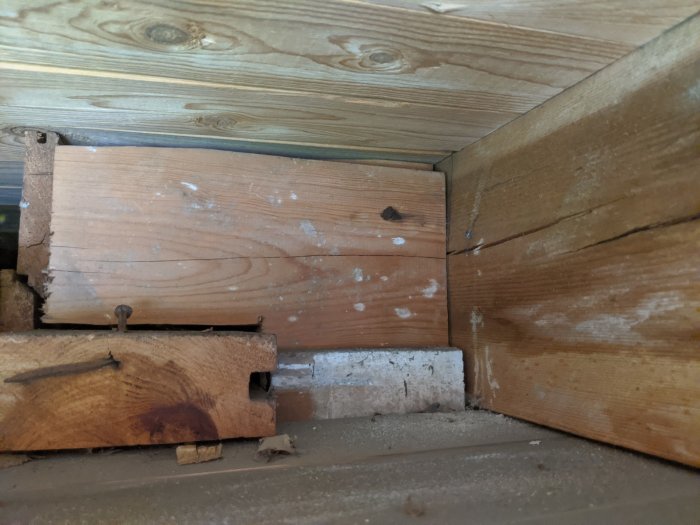
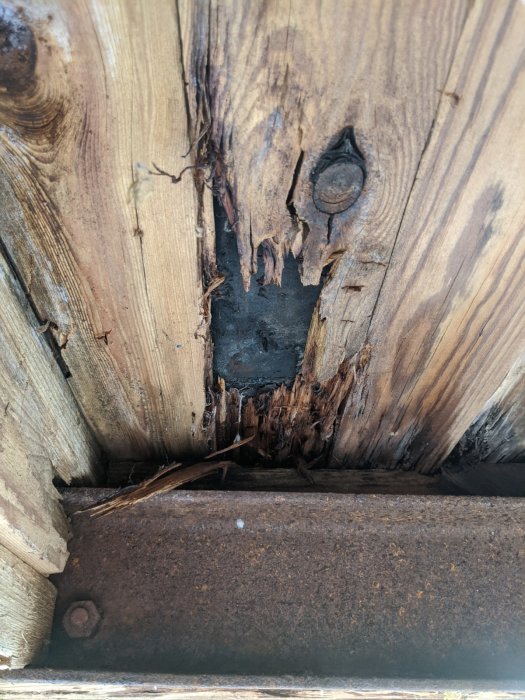
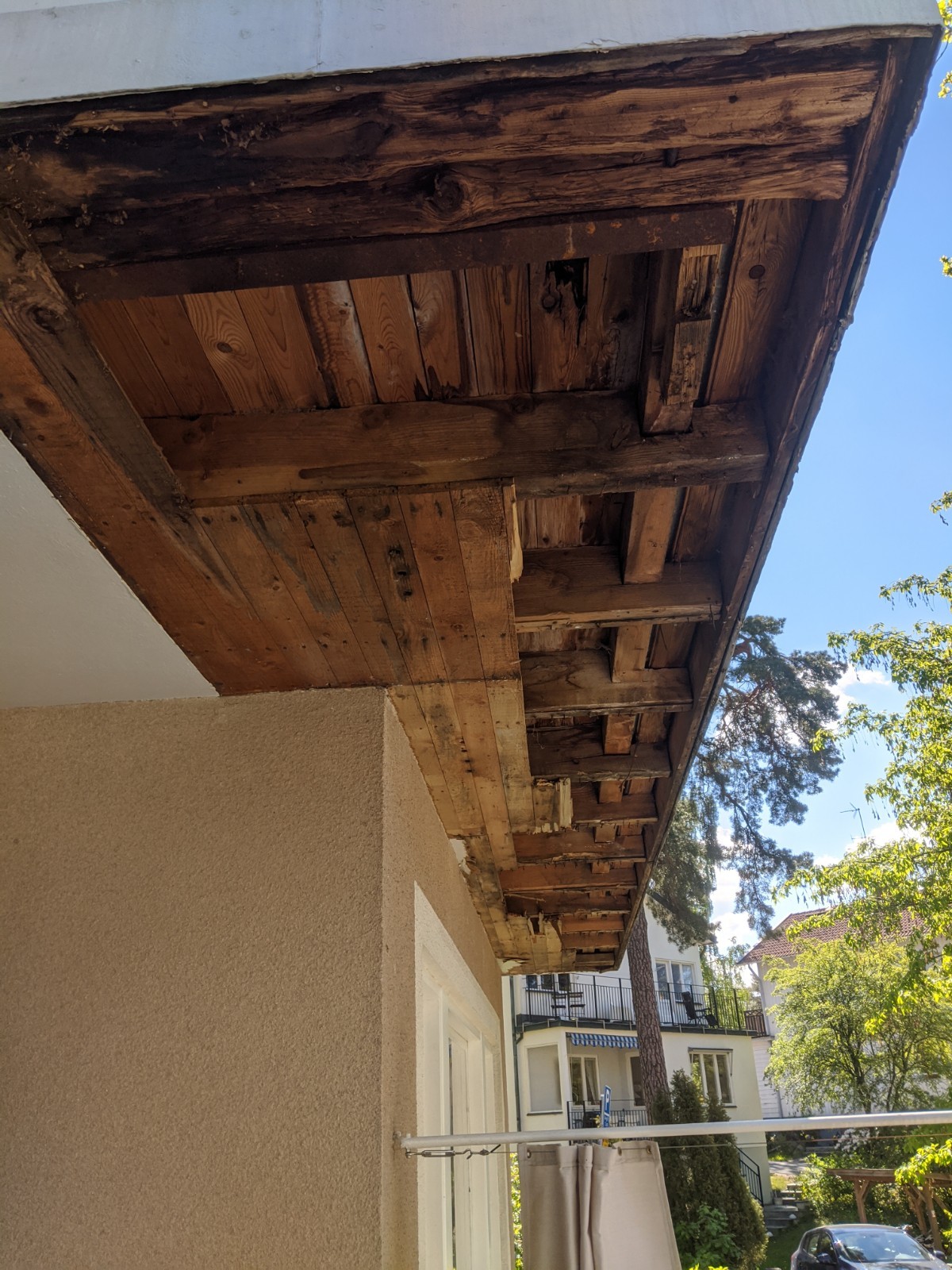
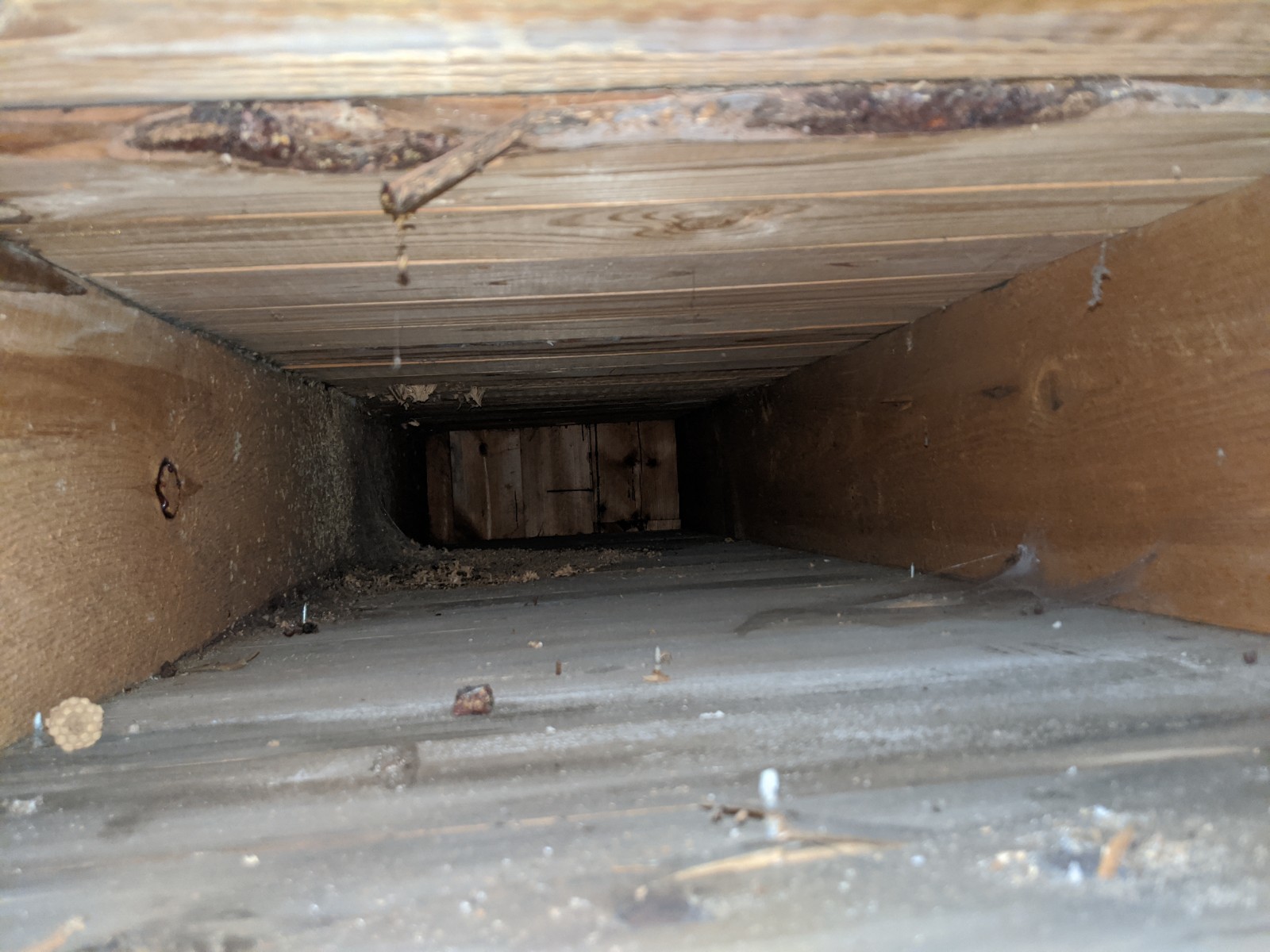
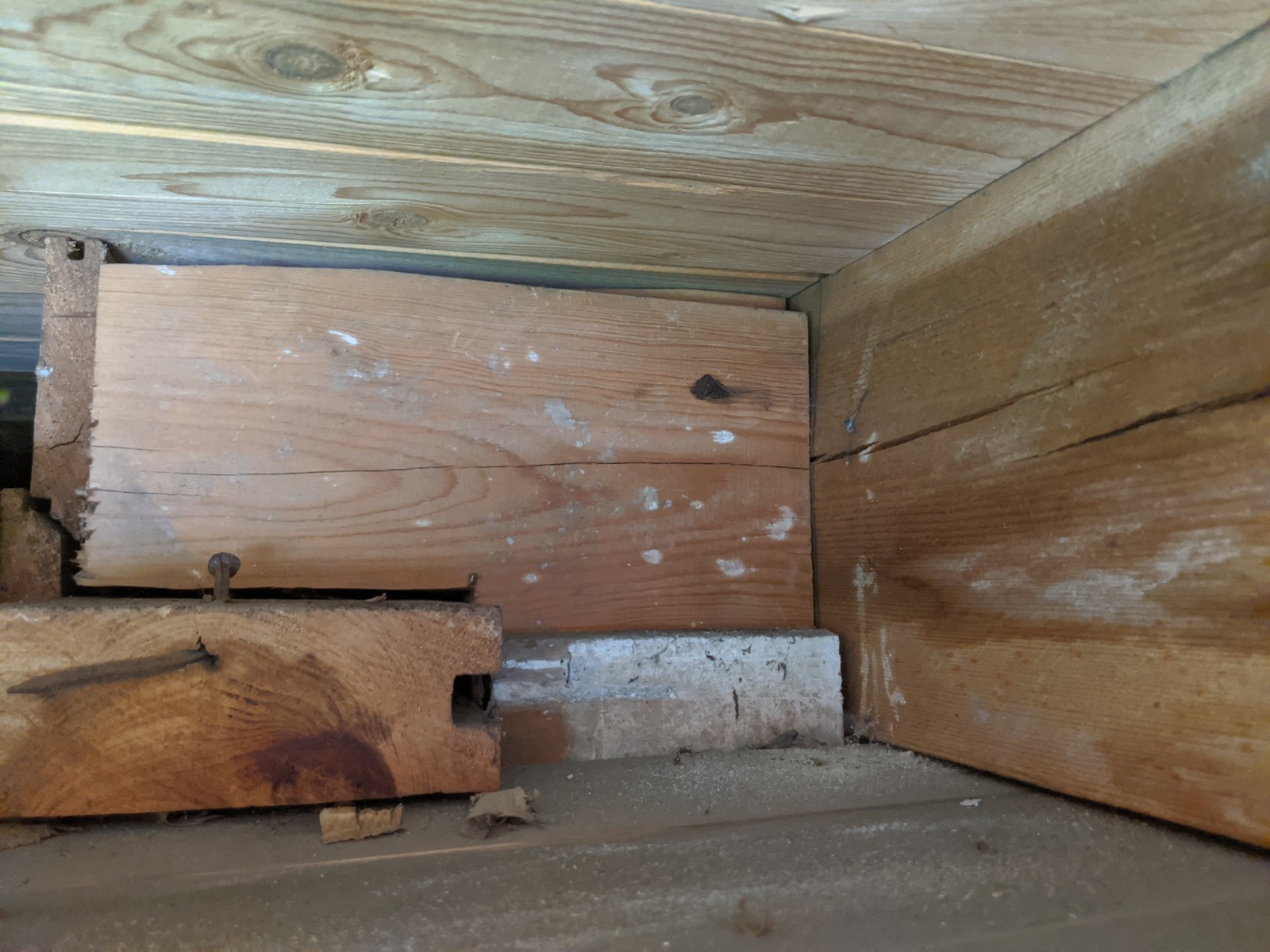
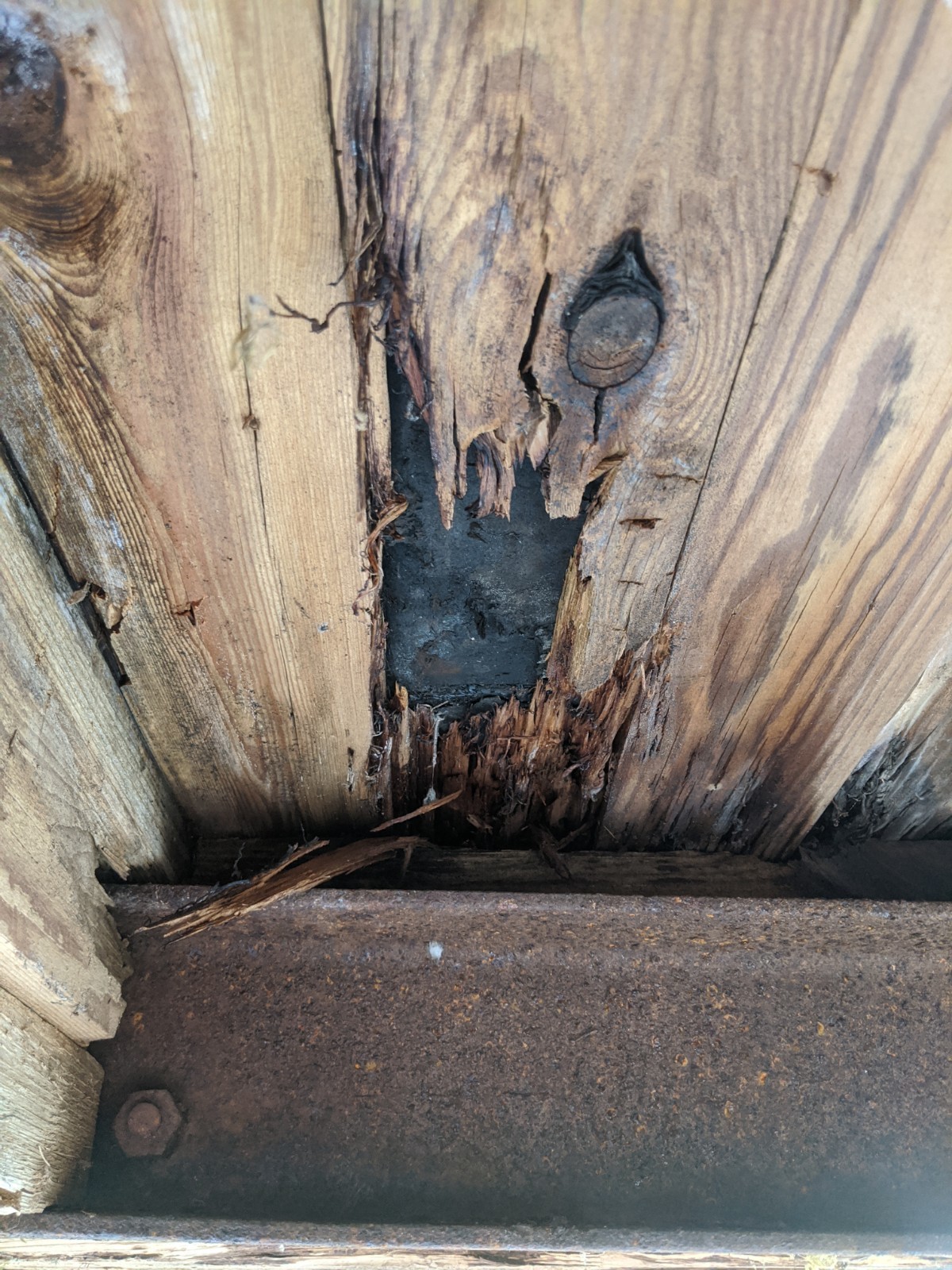
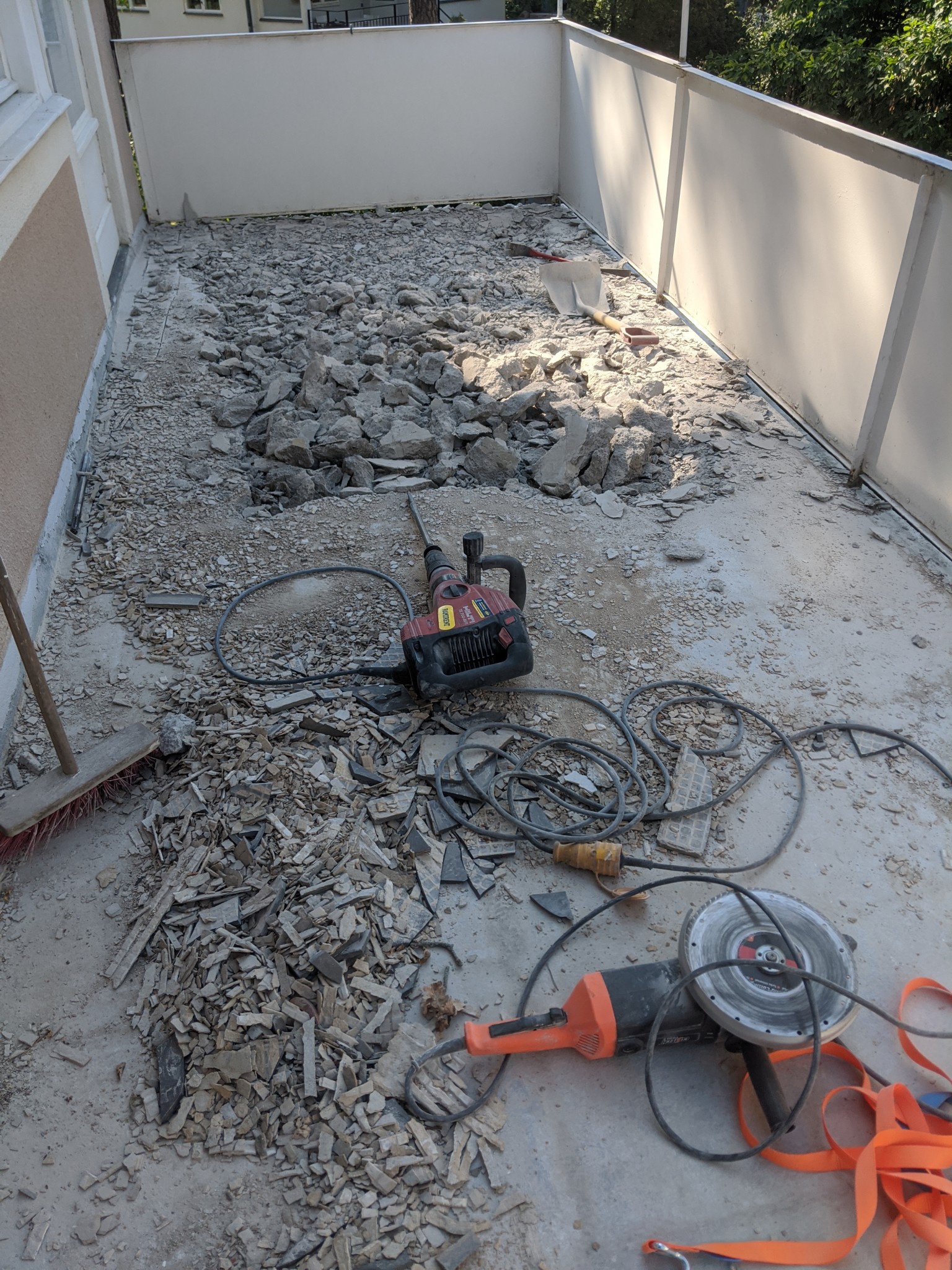
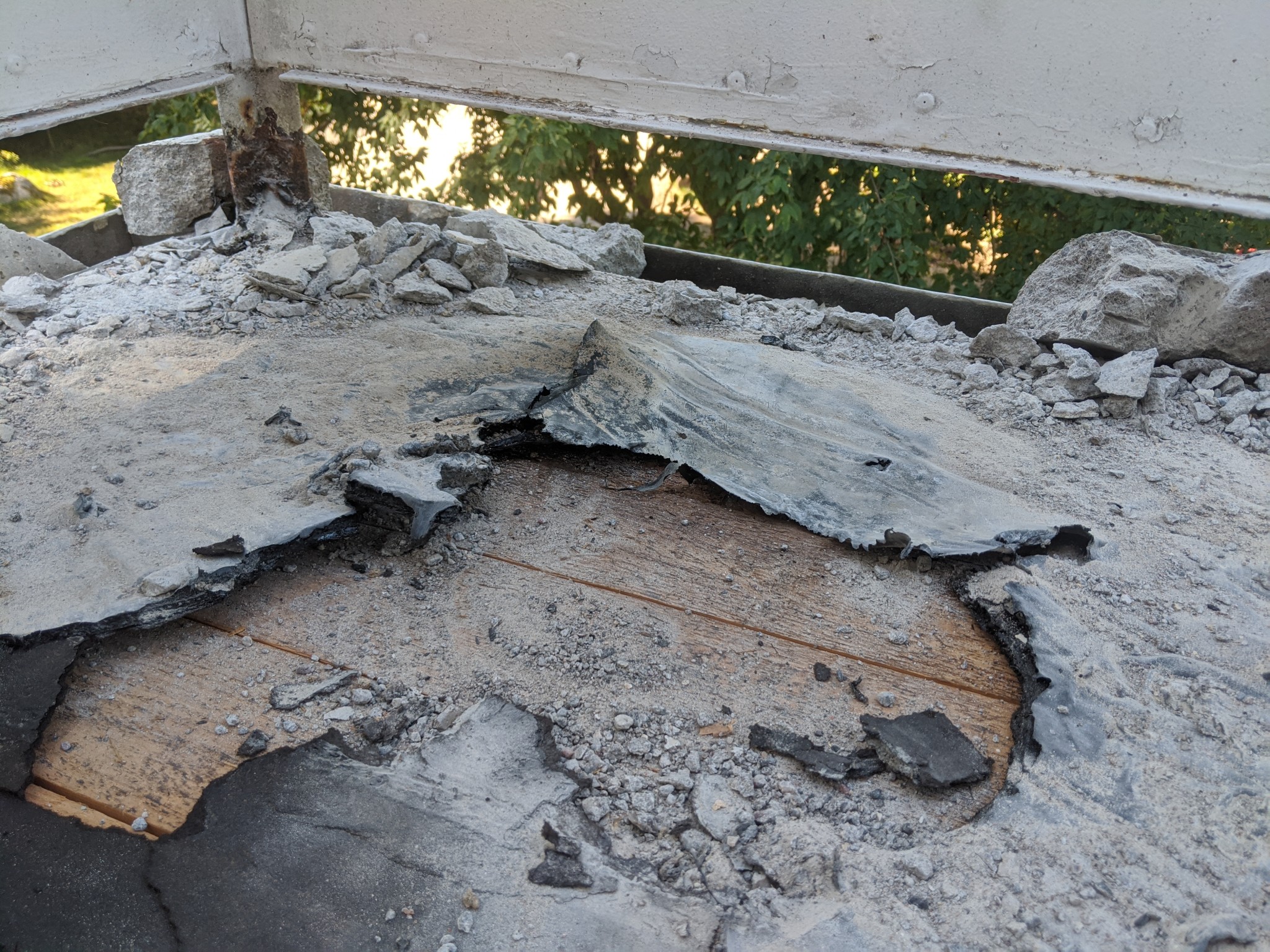
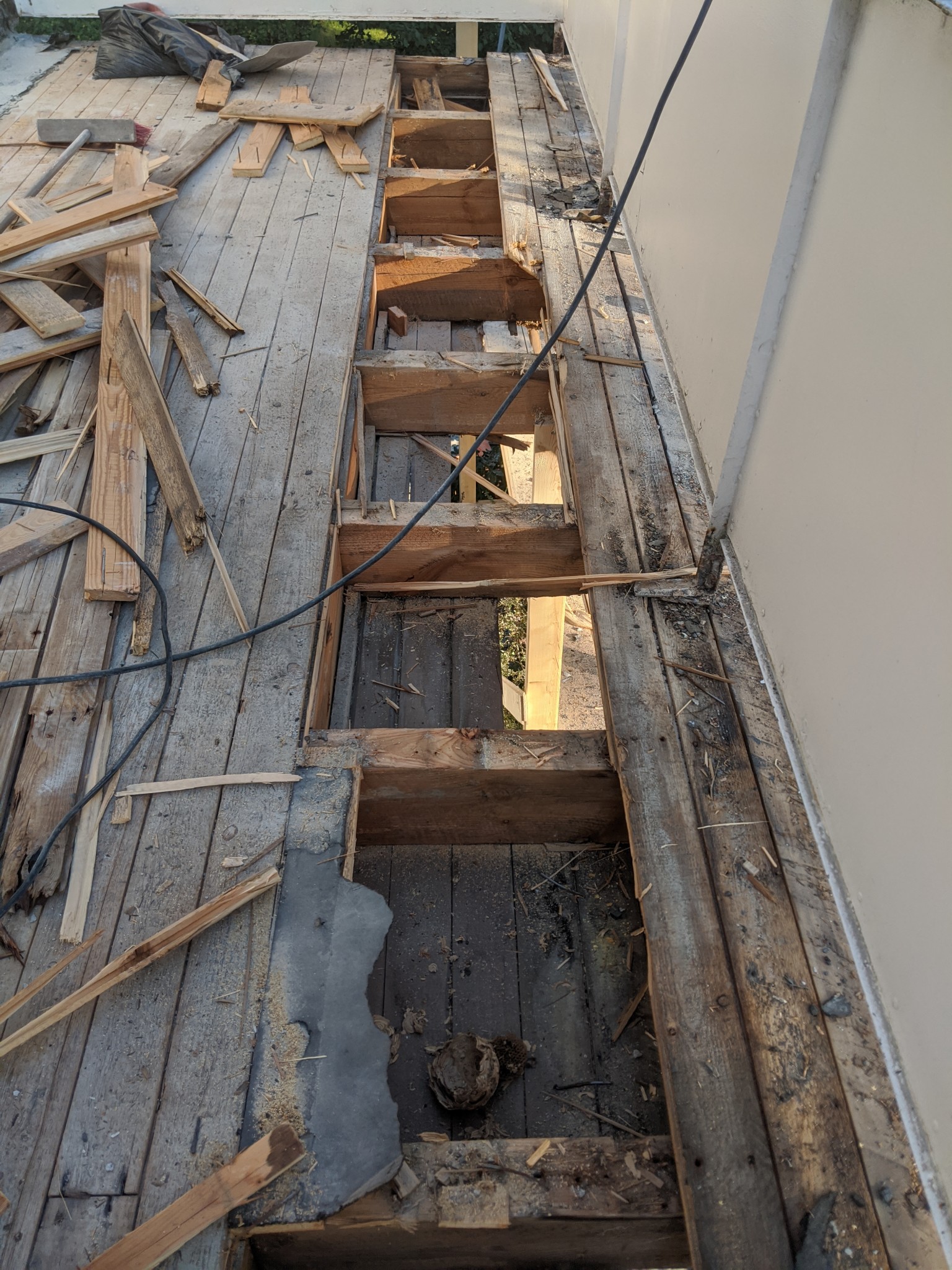
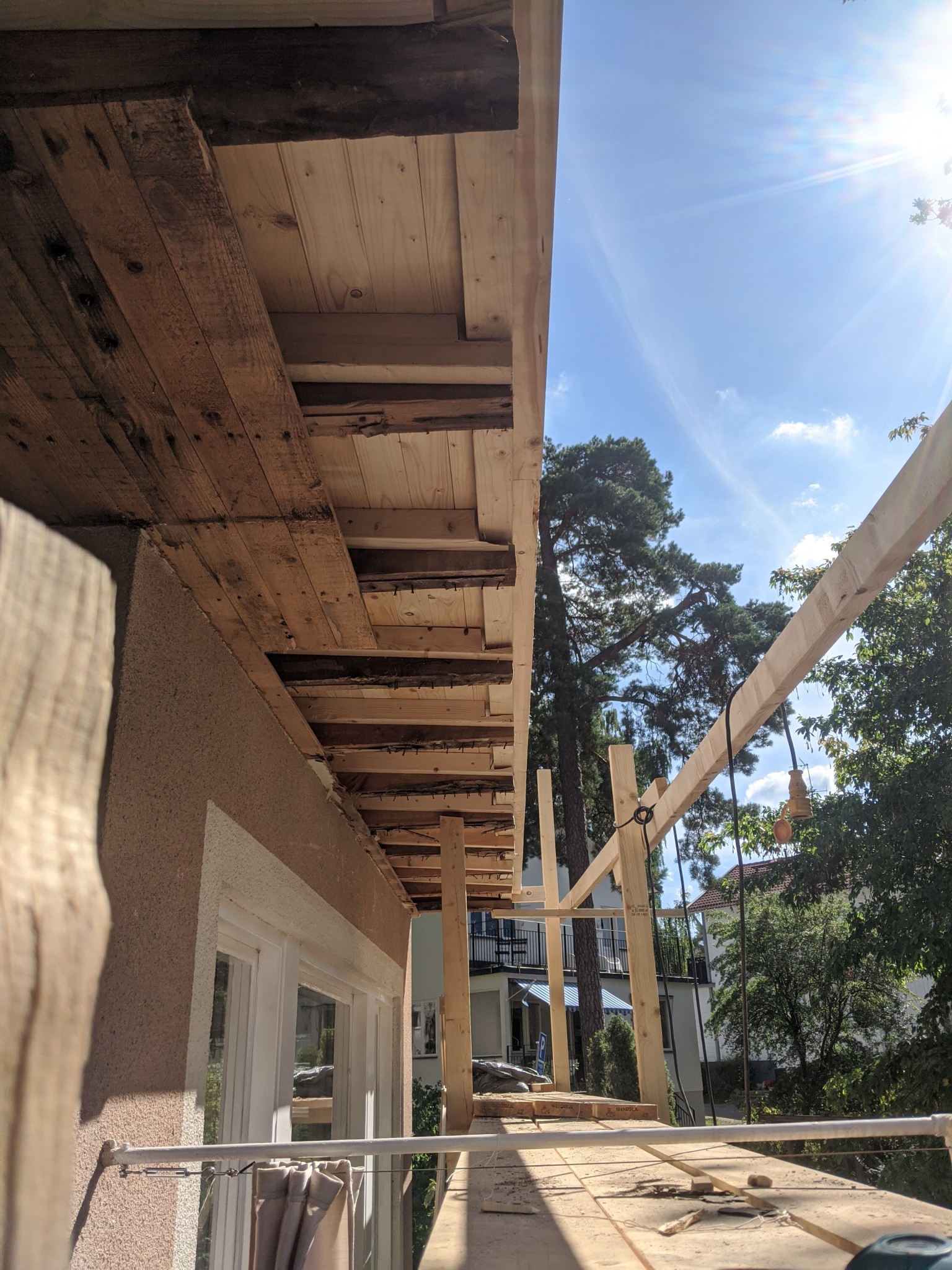
I have a villa from '38 with a balcony where the inner part is above a living room and the outer part is outside the facade (see pictures below). The balcony is supported by a wooden beam structure (probably an extension of the beams that support the upper floor), on top of this beam structure is raw wood paneling, probably some form of old roofing felt, and then a cast concrete slab. Additionally, there is raw wood paneling under the beams on the part that sticks out from the facade (i.e., the beam structure is in a "box" with raw wood paneling both on top and underneath). The gutter that drains the balcony is "built-in" (not a great design but perhaps common in the 30s), and it turns out that it has been leaking water into the structure. The outer part outside the facade, 0.5m-1m closest to the gutter, of the raw wood paneling on both sides of the beam structure is damaged, but the beam structure seems to be in good condition. Further in towards the facade, it appears to be dry and fine, so water doesn't seem to have run into the house. The concrete appears healthy as far as I can judge.
How should this be addressed?
1) Replace the damaged wood at the outer end from underneath, new gutter, and a proper waterproof layer on the balcony (e.g., welded roofing felt with tiles on top)?
2) Chisel away all the concrete (i.e., demolish the balcony) and cast a new one according to proper construction methods?
Option 1 is significantly less work (and cost) than 2, but is it good enough? What do you construction-savvy folks say?
a small update on my balcony project, maybe it can be of help to others in the same situation. After talking to a few balcony companies, none of which were interested in my project, the plan was for the company that redid our roof (which went well) to also take on the balcony. However, they backed out at a late stage, so I decided to renovate the balcony myself by chipping away the concrete, reinforcing the floor joist to get a better slope, and applying roofing felt. On top of the roofing felt, I built a wooden deck.
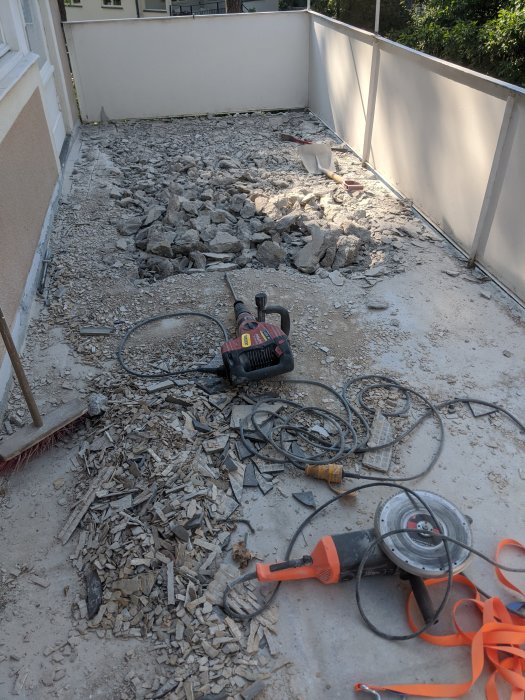
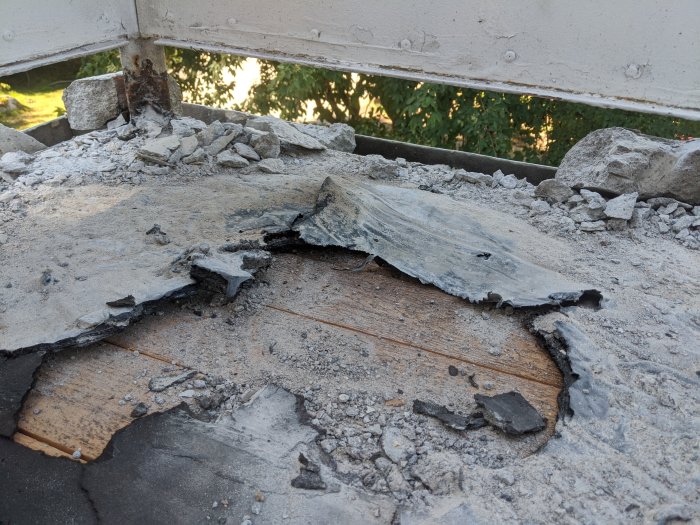
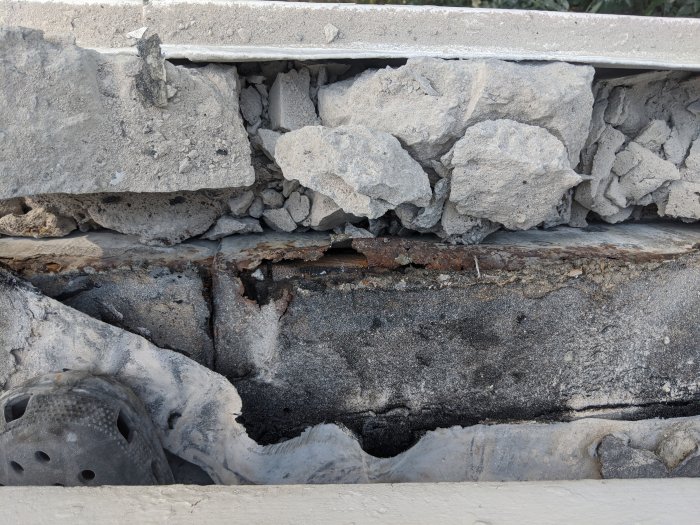
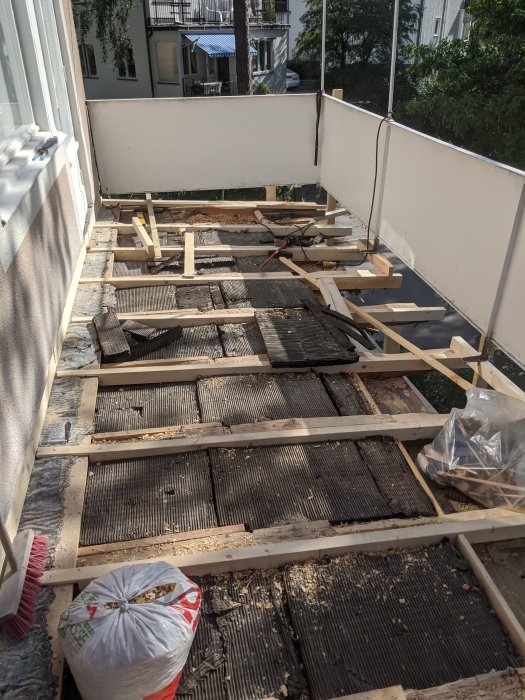
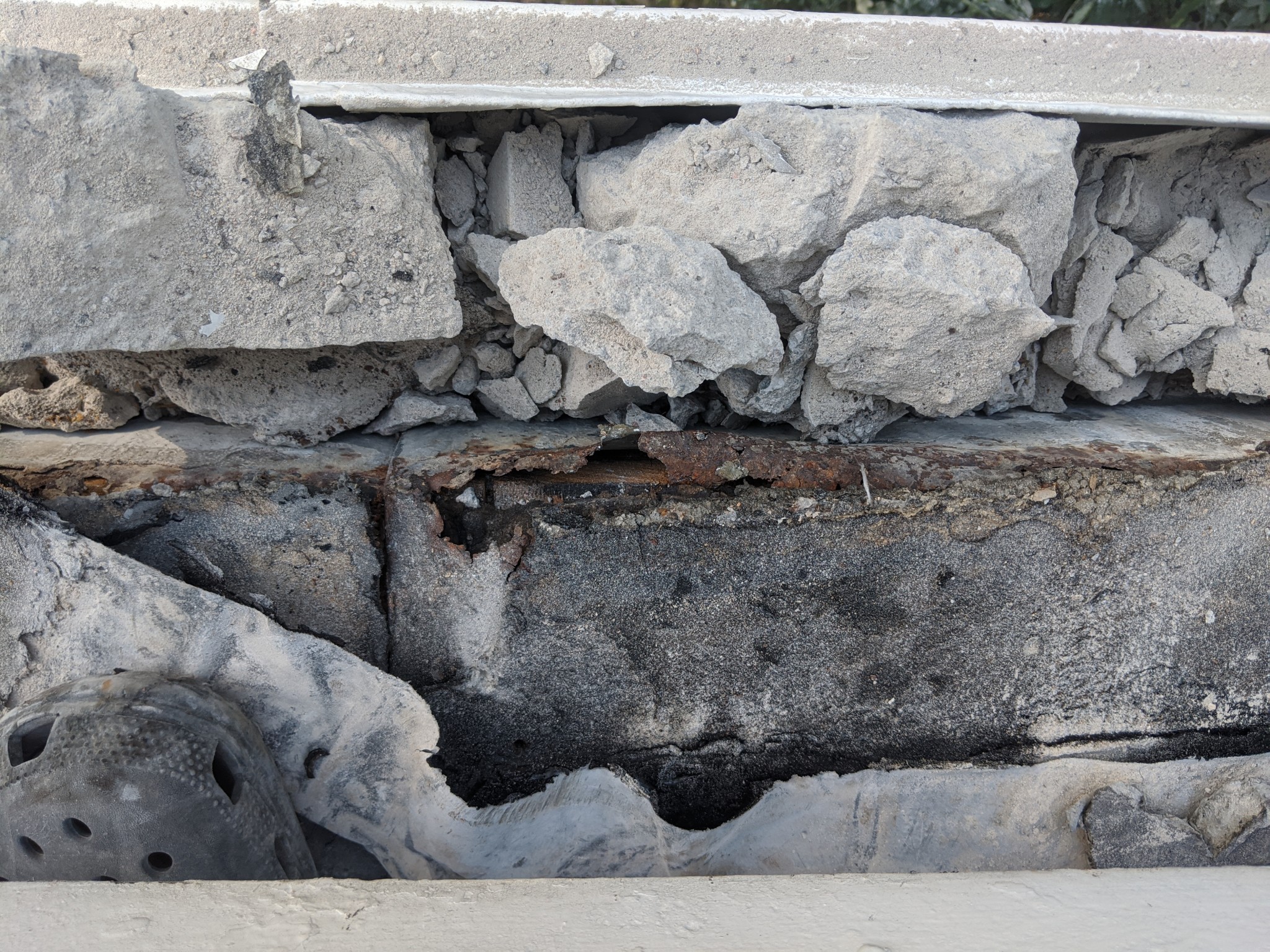
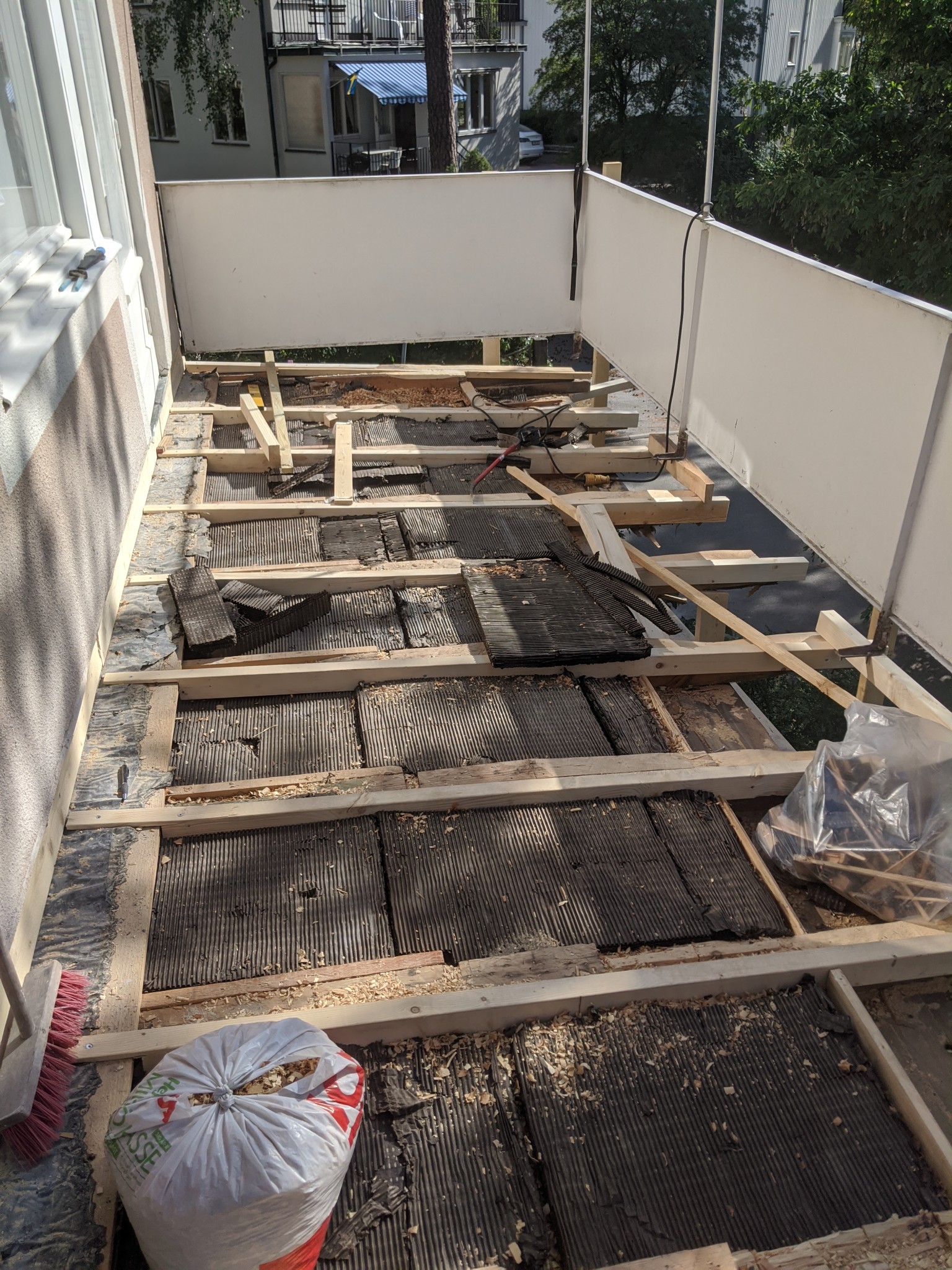
I rented a demolition hammer and chipped away the concrete, more than 10 cm thick. Quite hard concrete but after some practice, it went well. This was during the heatwave in mid-August, so it got really hot on the southwest-facing balcony in the afternoon... Under the concrete was a thick layer of asphalt on top of the sheathing and beneath that the wooden joists that the balcony rested on. The built-in gutter was attached under the asphalt layer, but it had started to rust right at the attachment point (which was only visible during the demolition) leading to water seeping into the joists. Luckily, only in the outermost part of the balcony, so no major damage was done. One might think it's not the best construction, but on the other hand, it has lasted for 80 years, and how many of today's constructions will do that...
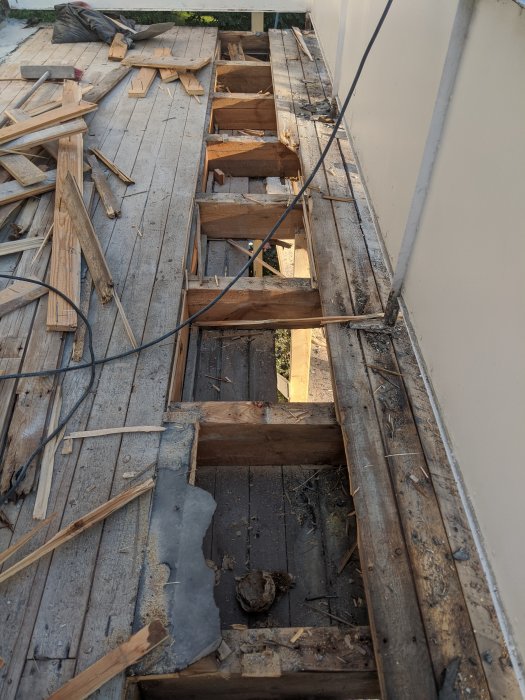
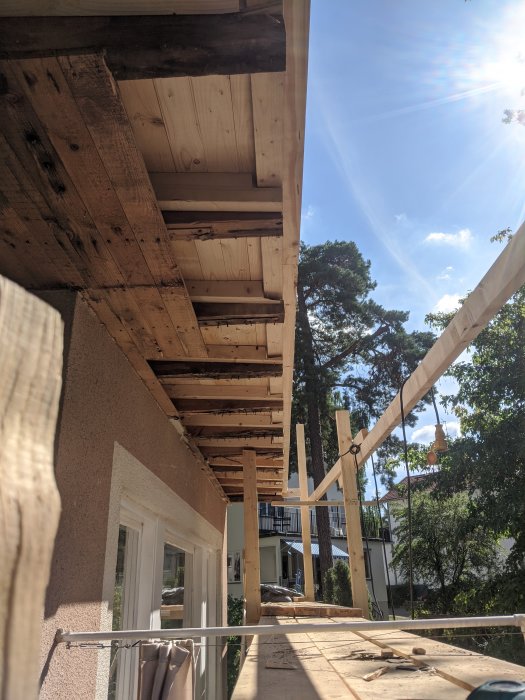
After removing all the concrete, the asphalt layer, and the "metal gutters," I tore away the sheathing underneath. Except for a few water-damaged boards at the very edge, it was in good condition, but the slope was only about 1 degree, which was too little. With fully welded felt, it might have worked, but I was tired of troublesome contractors and wanted to lay the felt myself and needed at least 3 degrees.
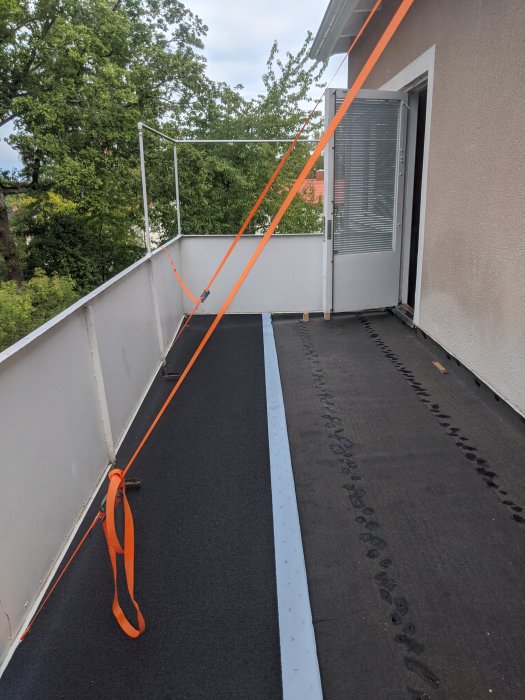
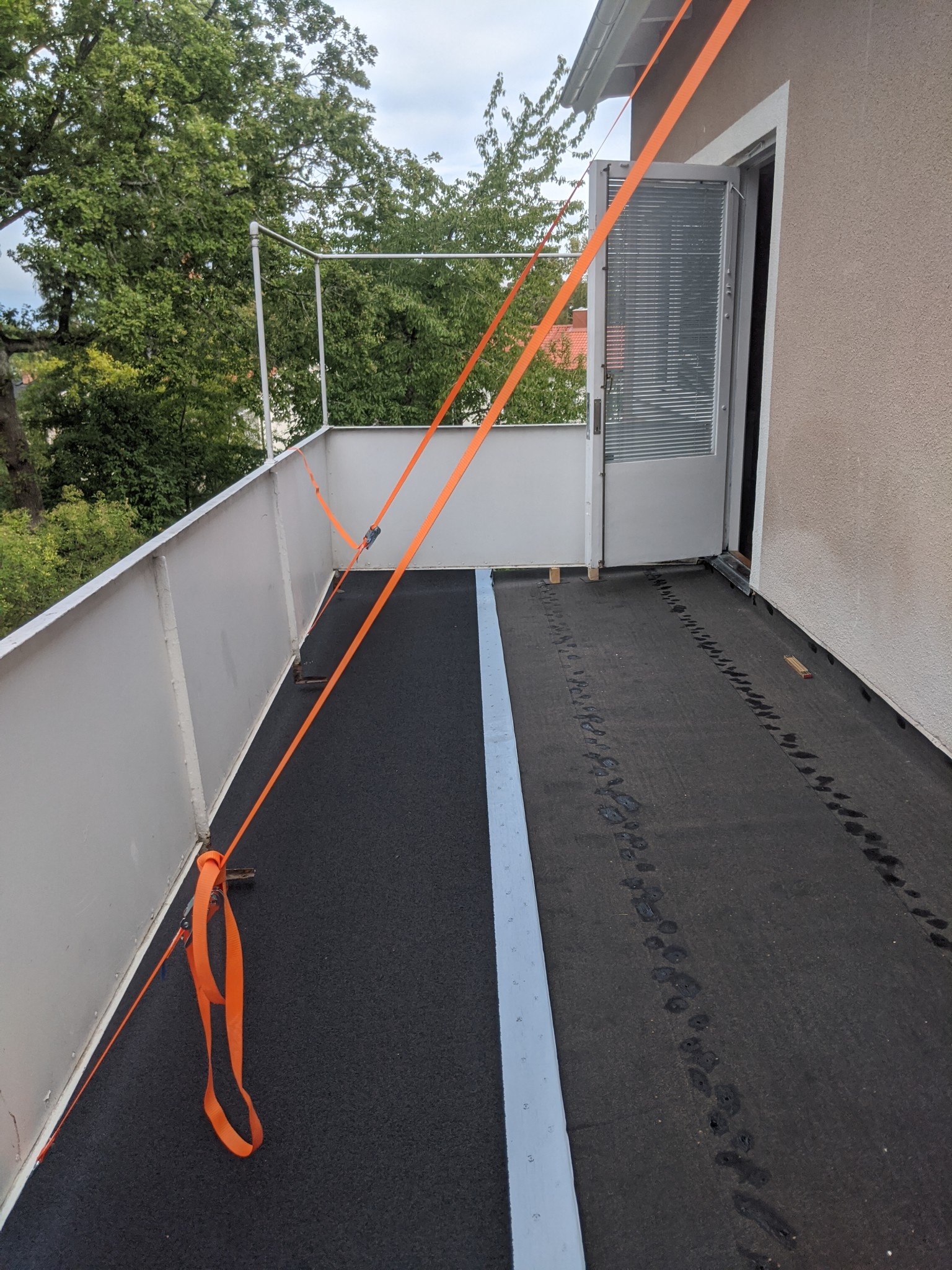
The existing joists (170 mm thick and undamaged, 50 cm apart) remained. To get the right slope, I reduced the thickness of the front joists a bit and screwed new beams onto the side of each joist. On top of these new beams, I nailed new sheathing. The part of the balcony located above the living room was insulated with wood shavings, topped with some form of cardboard-like felt. The wood shavings looked fresh, so I kept the insulation. I also wanted to retain the existing metal railing, which was attached behind the facade plaster and fixed in the concrete, and therefore propped it up in different ways, including with ratchet straps to the eaves, during the construction process.
Once the sheathing was in place, I installed base flashing, gutters, and laid underlayment felt and surface felt (Icopal TopSafe 3°). On top of the roofing felt, I placed "wedges" (on strips of roofing felt) onto which I screwed the decking. I secured the railing at the front of these "wedges"; the deck construction became quite heavy and is steady, so the railing should sit securely.
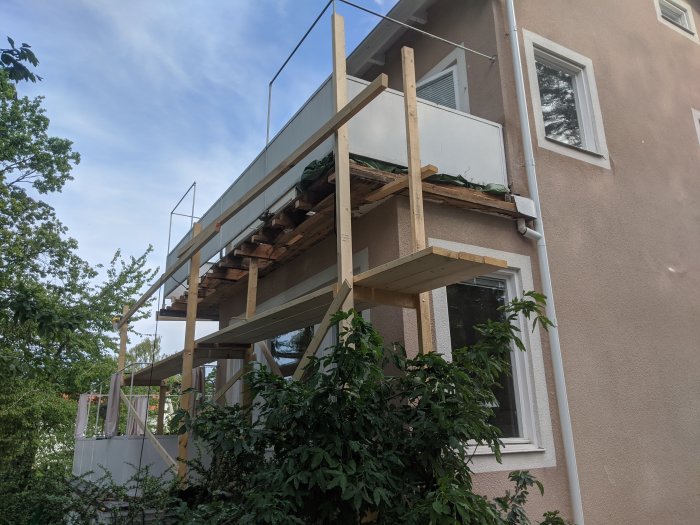
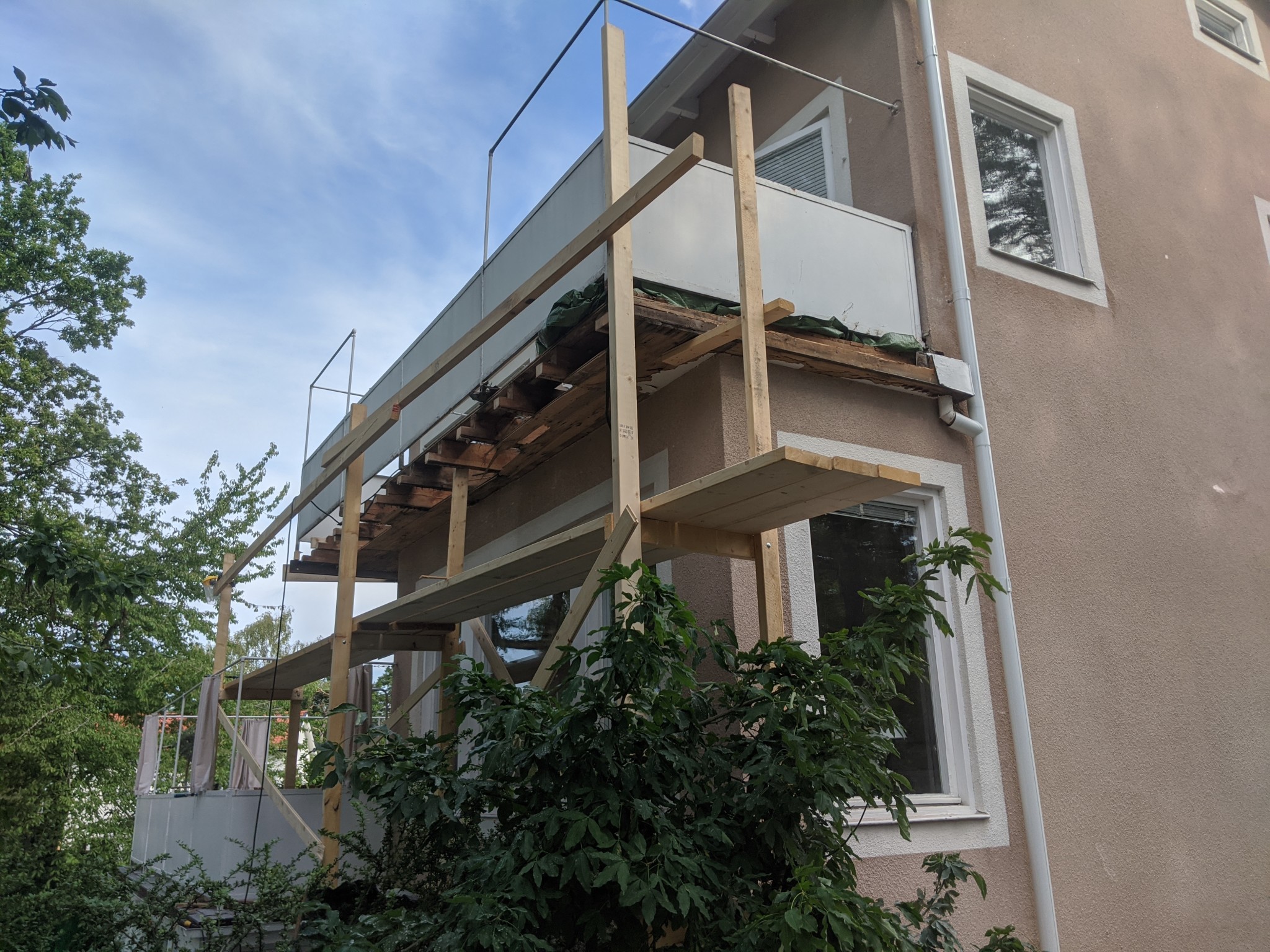
Throughout the work, I had a homemade scaffolding in place. Buying timber for this was cheaper than renting scaffolding, and I could keep it as long as needed (which turned out to be just over two weeks).
Hopefully, this text and these pictures can help others facing similar projects.
Click here to reply
Vi vill skicka notiser för ämnen du bevakar och händelser som berör dig.