
5,384 views ·
8 replies
5k views
8 replies
Attaching stair railing - impact nut or coach screw?
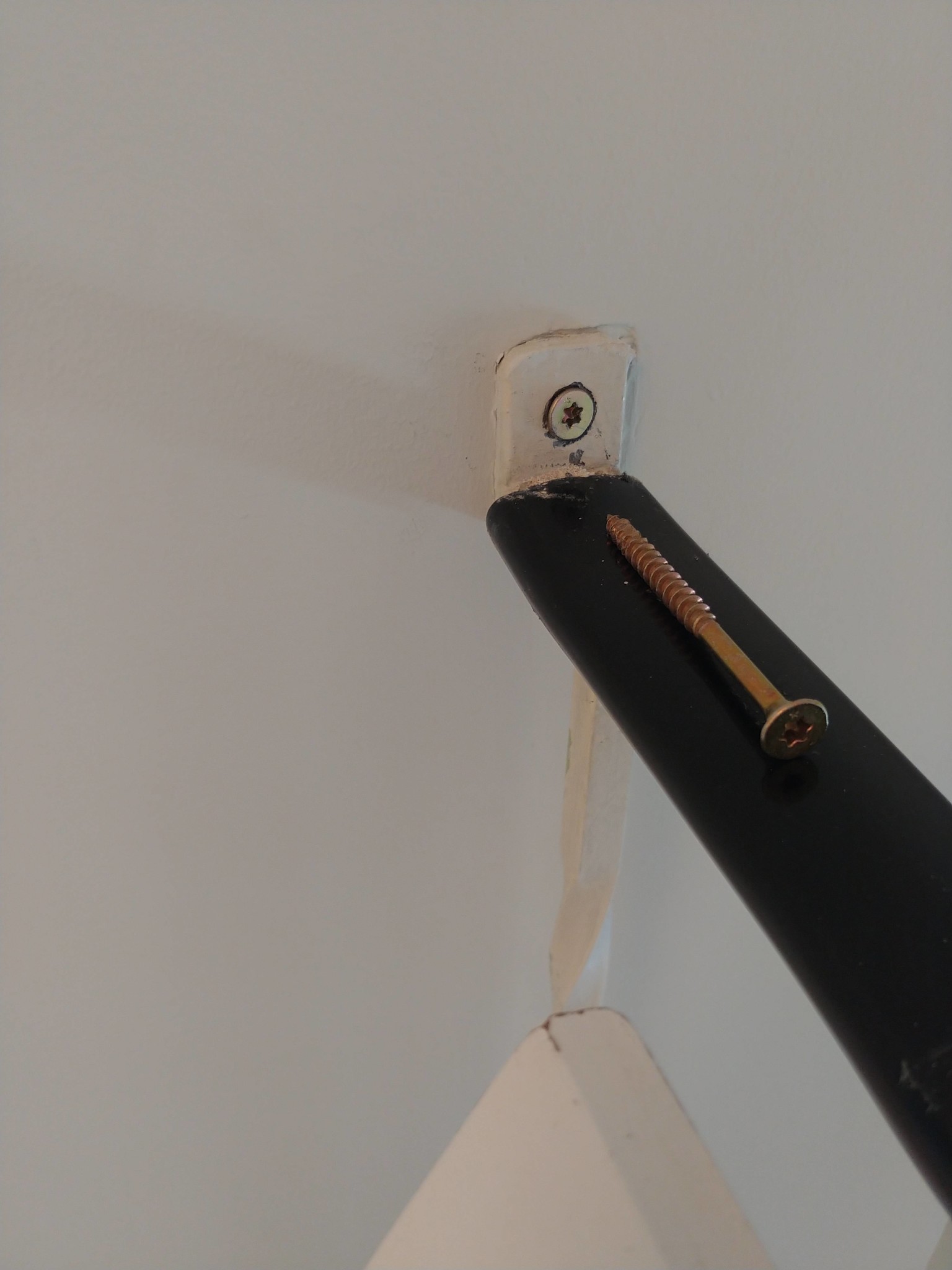
I have a handrail where the end of the handrail is loose today. There's a mounting hole about 6-8mm where I'm considering whether to use a lag screw/hex screw or a bolt with a knock-in nut. The wall for mounting is only drywall and sheathing, which isn't sufficient. I opened up the wall on the other side and intend to insert a stud to secure the mounting. Should I use a lag screw or a bolt with a knock-in nut? Pros/cons of each? Of course, I don't want to open up the wall again after this is mounted.
Best regards, Richard
Best regards, Richard
Best answer

Member
· Västerbottens län
· 18 024 posts
Insert nut in wood?, possibly a rampamuff.
Coach screw I've stopped liking.
Regular but coarse wood screw I think will work.
Protte
Coach screw I've stopped liking.
Regular but coarse wood screw I think will work.
Protte
Regarding the inslagsmutter. I was thinking of pre-drilling a hole in the plank that is attached on the inside and then using an inslagsmutter to drive an M6-M8 bolt from the railing side.
https://www.byggmax.se/inslagsmutter-3206-habo-p7240316
Aesthetically, I would like to have a hexagon head on the railing side, but perhaps there are robust wood screws with such a head?

Sounds like a good solution with the tee nut. Just where the nut is located, a larger diameter for the hole is needed. Avoid having the larger diameter all the way through, it's good if the bolt gets support from the hole.

You mean like this:G Gue said:

https://www.biltema.se/bygg/fastelement/specialskruvar/skruvstift-2000022750
If they can just be screwed into the wall, it's probably a good solution.
Hello
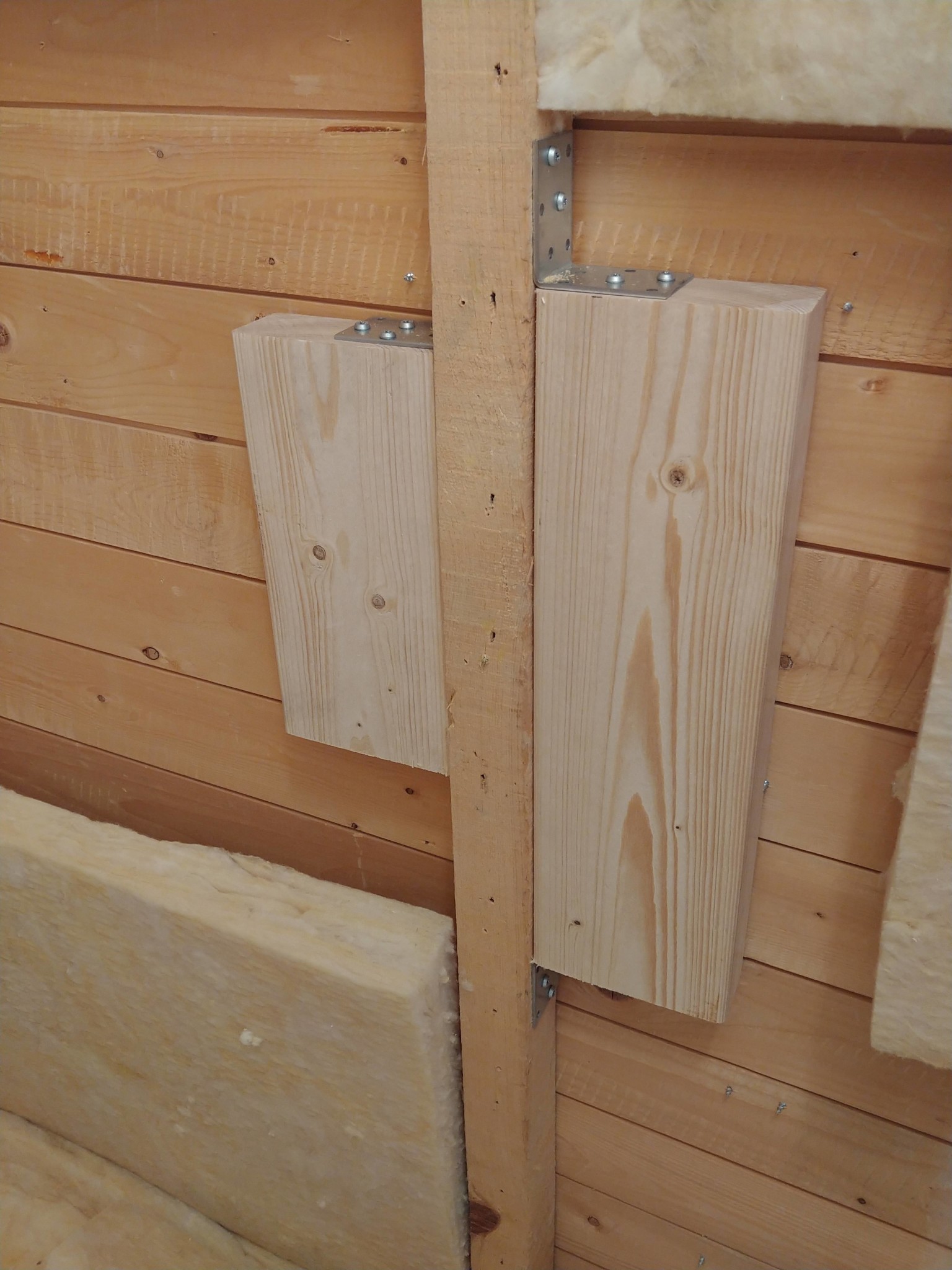
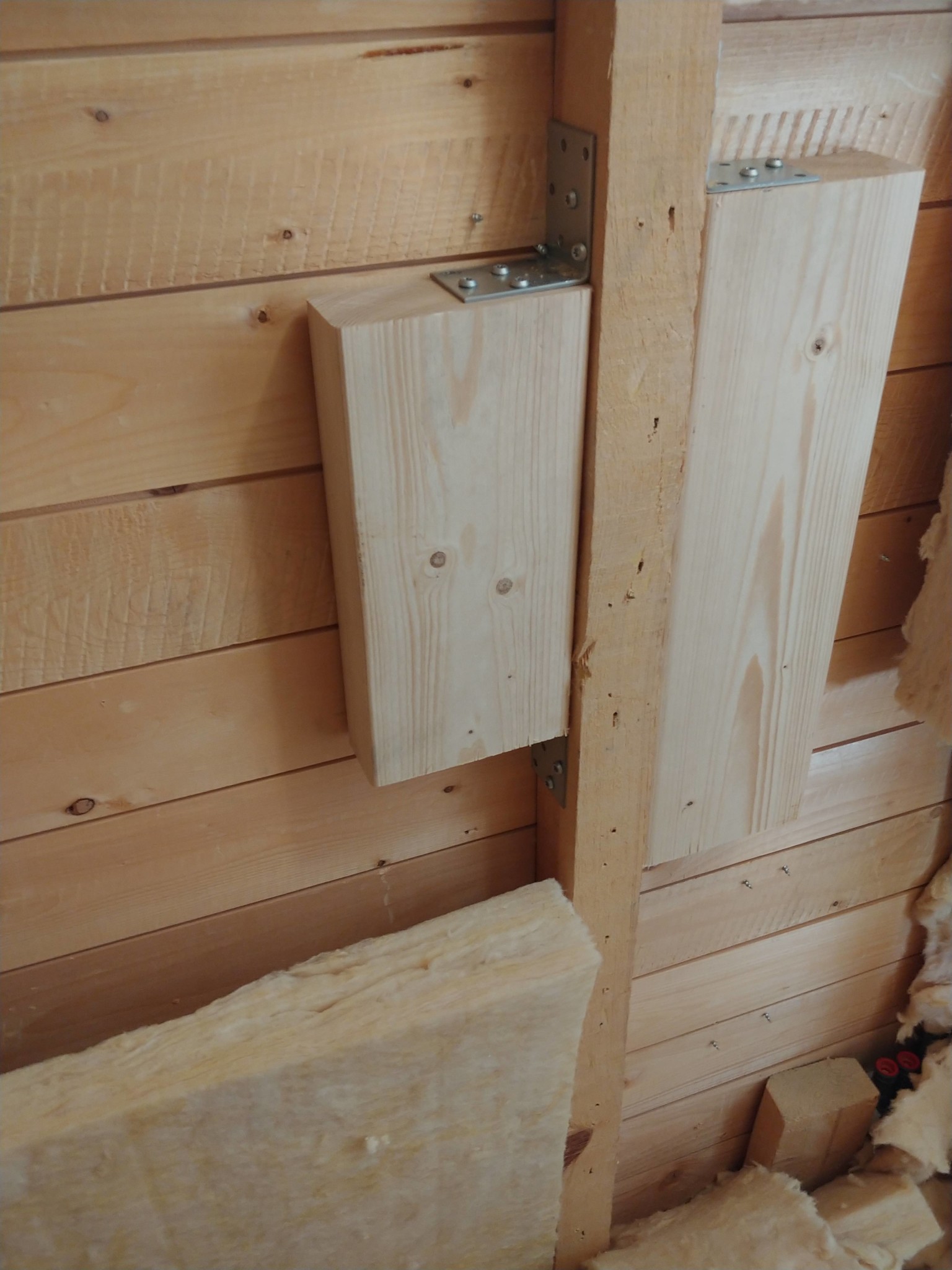
I ended up using regular heavy-duty wood screws. When I opened the wall on the inside, there was an old 50x50 stud there. I determined that there wasn't enough depth for a T-nut. It also turned out that the previous screw for the rail was screwed in completely crooked, so it was barely attached to the 50x50 stud. I managed to angle a new screw into a new slot so I landed right in the middle of the stud. I also took the opportunity to set up supports/small studs so that if this attachment doesn't hold, in the future I can use wider brackets for attaching the stair rail.
I ended up using regular heavy-duty wood screws. When I opened the wall on the inside, there was an old 50x50 stud there. I determined that there wasn't enough depth for a T-nut. It also turned out that the previous screw for the rail was screwed in completely crooked, so it was barely attached to the 50x50 stud. I managed to angle a new screw into a new slot so I landed right in the middle of the stud. I also took the opportunity to set up supports/small studs so that if this attachment doesn't hold, in the future I can use wider brackets for attaching the stair rail.
Click here to reply
Similar threads
-
Hur tusan ska denna taklampa - utanpåliggande spots på skena fästas?
Belysning -
"Papptak" - livslängd, fästa i?
Tak & Vind -
Fästa fågelpiggar på äldre taknock av betongplattor - hur?
Tak & Vind -
Remove stair railing - cover side
Building Materials and Construction Technology -
Fästa trappa mot L-stöd
Altan & Uteplats